There’s something magical about snipping fresh mint leaves whenever the craving strikes, whether it’s for your morning tea or an evening mojito.
Growing mint indoors converts your kitchen into a fragrant herb garden that thrives year-round, regardless of the weather outside. This vigorous plant practically grows itself, ideal for windowsill gardens and small spaces.
We’ll walk you through everything you need to know, covering container selection, soil preparation, watering techniques, and harvesting tips that keep your mint plants healthy and productive.
Get ready to enjoy abundant harvests of this refreshing herb without ever stepping outside.
Choosing the Right Mint Variety
Mint comes in delightful varieties, each bringing its own unique personality, flavor profile, and growing characteristics. Choosing the right type can make your indoor growing experience even more rewarding.
Here are the best varieties for indoor cultivation:
- Spearmint: Sweet and mild, perfect for teas and desserts, grows compactly
- Peppermint: Bold, cooling flavor ideal for hot chocolate and savory dishes, vigorous grower
- Chocolate Mint: Hints of cocoa with minty freshness, beautiful dark stems, moderate growth
- Mojito Mint: Citrusy undertones made for cocktails, tender leaves, stay bushy
Consider your culinary preferences and available space when selecting your variety. Some grow more aggressively than others, but all adapt beautifully to container life.
Best Containers & Soil for Growing Mint Indoors
The foundation of thriving indoor mint starts with choosing the right home for your plants. Your container and soil combination directly impacts growth, flavor, and overall plant health.
Selecting the Perfect Container
Mint needs room to stretch its roots, so opt for pots that are at least six inches deep and wide. Drainage holes are non-negotiable; they prevent water from pooling at the bottom, which can quickly lead to root rot.
Terracotta pots work beautifully as they’re porous and allow excess moisture to evaporate, while plastic and ceramic containers retain water longer.
Whatever material you choose, make sure it accommodates mint’s spreading nature while keeping those roots well-drained and happy.
Creating the Ideal Soil Mix
Your mint deserves nutrient-rich, well-draining soil that supports healthy root development.
Here are proven combinations that work beautifully:
| Soil Component | Proportion | Purpose |
|---|---|---|
| Potting soil | 2 parts | Provides nutrients and structure |
| Compost | 1 part | Enriches with organic matter |
| Perlite or sand | 1 part | Improves drainage and aeration |
Mix these components thoroughly before planting. This balanced blend prevents waterlogging while delivering the nutrients mint craves for lush, aromatic growth.
Light & Location Requirements for Healthy Mint Indoors
Mint thrives with the right balance of light, and finding that sweet spot in your home makes all the difference.
Here’s how to give your plants the illumination they need:
- South or east-facing windows provide ideal natural light with bright, indirect sun exposure
- Aim for six hours of sunlight daily to keep leaves vibrant and flavor potent
- Supplement with grow lights during darker months or in low-light spaces
- Position lights 6-12 inches above plants for optimal coverage without burning foliage
- Rotate pots every few days so all sides receive equal light and growth stays balanced
With proper lighting, your mint will develop strong stems and those gorgeous, aromatic leaves you’re after. Pay attention to how your plant responds and adjust placement as needed for the best results.
Keeping Your Mint Hydrated and Happy
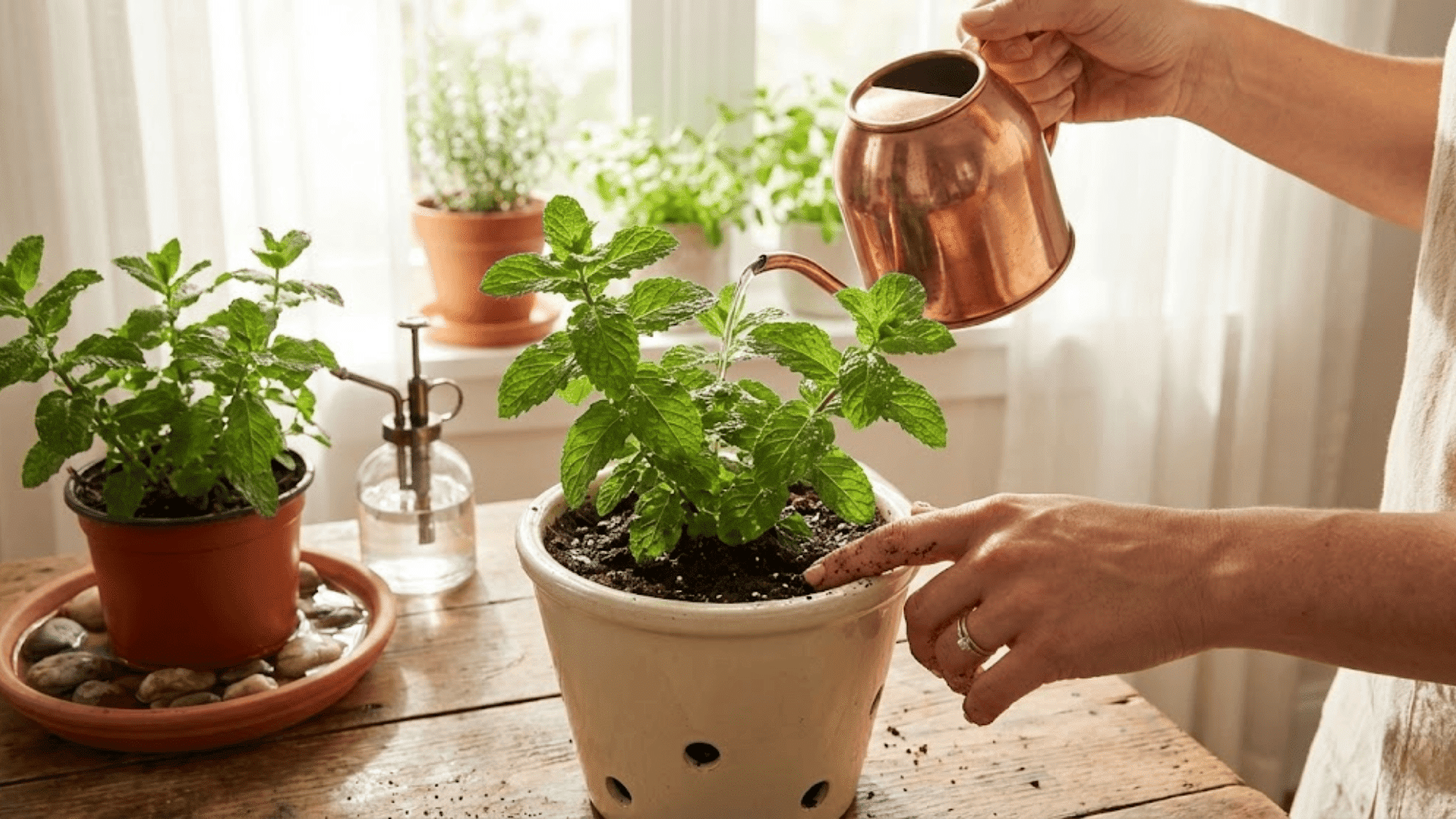
Mint loves consistent moisture but despises soggy soil; it’s all about finding that perfect balance.
Getting your watering routine and humidity levels right keeps your plants lush and prevents common problems like root rot or crispy leaves.
Mastering the Watering Schedule
Check the top inch of soil with your finger before reaching for the watering can. When it feels dry to the touch, it’s time to water thoroughly until excess drains through the bottom holes.
Mint prefers evenly moist soil, but overwatering invites root rot and yellowing leaves. During warmer months or in heated indoor spaces, you’ll likely water more frequently, while cooler seasons require less.
Watch your plant’s cues: drooping leaves signal thirst, while mushy stems indicate too much water.
Creating the Right Humidity
Mint appreciates a humid environment that mimics its natural habitat.
- Mist your plants lightly every few days to boost moisture around the foliage, especially during dry winter months when indoor air gets crisp.
- Place pots on pebble trays filled with water, ensuring the container sits above the waterline so roots don’t become saturated.
- Grouping multiple plants together also creates a microclimate with naturally higher humidity levels.
Maintaining the Right Indoor Climate
Mint is surprisingly adaptable, but it performs best when temperatures stay comfortable and consistent. Creating a stable environment protects your plants and encourages vigorous, flavorful growth.
The Ideal Temperature Range
Mint thrives within a specific temperature window that aligns beautifully with typical indoor conditions. Understanding these ranges helps you position your plants in the best spot possible.
| Temperature Range | Plant Response |
|---|---|
| 65-75°F | Optimal growth with lush, aromatic foliage |
| 55-65°F | Slower but healthy growth, tolerates cooler nights |
| Below 50°F | Growth stunts, plant experiences stress |
| Above 80°F | May wilt, requires more frequent watering |
Protecting Plants from Environmental Stress
Keep your mint away from heating vents, air conditioning units, and drafty windows that create sudden temperature fluctuations. These rapid changes shock the plant and can cause leaf drop or stunted growth.
Radiators and space heaters dry out both air and soil too quickly, forcing you into a constant watering cycle. Similarly, cold drafts near doors or poorly insulated windows chill roots and weaken plants.
Find a spot with stable conditions where your mint can settle in and flourish without environmental surprises.
Growing Mint Indoors: Fertilizing Basics
Mint isn’t a heavy feeder, but a little nutritional boost keeps those leaves vibrant and aromatic. The key is feeding lightly and consistently rather than overwhelming your plants with nutrients.
- Feed every 4-6 weeks during the growing season with a balanced liquid fertilizer.
- Dilute fertilizer to half strength to prevent nutrient burn and maintain flavor quality.
- Skip fertilizing in the winter months when growth naturally slows down.
- Use organic options like compost tea or fish emulsion for gentle, steady nutrition.
- Overfertilization diminishes flavor and creates leggy growth with fewer essential oils.
Less is truly more when it comes to feeding mint. A light touch preserves that intense, refreshing flavor you’re growing it for in the first place.
Multiplying Your Mint Collection
Mint propagates effortlessly, making it one of the easiest herbs to multiply.
Expanding your collection or sharing with friends becomes incredibly simple with stem cuttings that root quickly and reliably, using either water or soil methods.
| Propagation Method | Process | Timeline |
|---|---|---|
| Water propagation | Place 4-6-inch stem cuttings in a glass of water, and change the water every few days | Roots appear in 7-14 days |
| Soil propagation | Insert cuttings directly into moist potting mix, keep consistently damp | Roots establish in 2-3 weeks |
| Potting up rooted cuttings | Transfer water-rooted cuttings to soil once roots reach 2 inches long | Immediately after root development |
Choose healthy stems with several leaf nodes, remove lower leaves, and keep your cuttings in bright, indirect light while they develop roots. Both methods work beautifully.
Keeping Your Mint Bushy and Productive
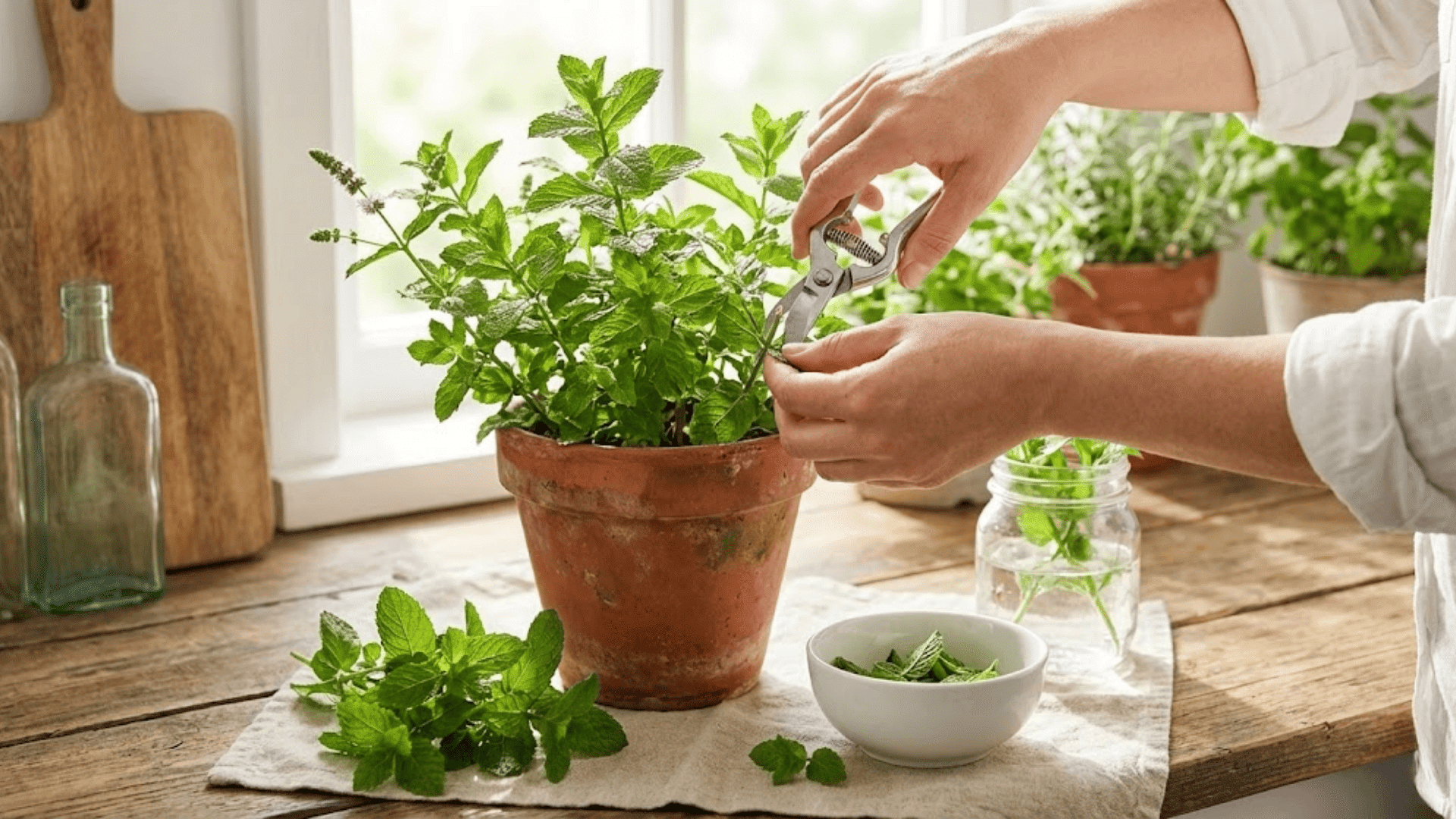
Regular pruning and harvesting keep your mint plants productive and prevent them from becoming leggy or sparse.
These simple techniques encourage bushier growth while providing you with fresh herbs whenever you need them.
- Pinch back stem tips regularly to encourage branching and create fuller, bushier plants.
- Harvest in the morning after dew dries but before the afternoon heat for peak flavor and oils.
- Cut stems just above a leaf node so new growth emerges where you snipped.
- Remove flower buds as they appear to redirect energy into leaf production instead of blooms.
- Snip what you need for teas, cocktails, salads, and desserts while keeping plants shapely and thriving.
The more you harvest, the more your mint produces. Think of pruning as an invitation for your plant to grow even more generously, rewarding you with abundant, aromatic leaves all season long.
Common Indoor Growing Problems for Mint
Even the easiest houseplants encounter occasional hiccups, and mint is no exception. Understanding these common issues helps you troubleshoot quickly and get your plants back on track.
Problem 1: Yellowing Leaves
Solution: Yellow leaves often signal overwatering or poor drainage, causing roots to sit in soggy soil and suffocate. Check that your pot has adequate drainage holes and allow the top inch of soil to dry between waterings.
Problem 2: Leggy, Stretched Growth
Solution: When mint grows tall and sparse with long spaces between leaves, it’s reaching for more light. Move your plant closer to a bright window or supplement with grow lights positioned 6-12 inches above the foliage.
Problem 3: Pests Like Spider Mites and Aphids
Solution: Indoor mint occasionally attracts tiny pests that cluster on leaf undersides and new growth. Rinse leaves with lukewarm water, wipe them down gently, or spray with diluted neem oil solution.
Growers in communities like r/herbs regularly discuss overwatering mishaps, lighting adjustments, and pest control specific to indoor mint. Browse their threads for real-world solutions to the exact problems your plants are facing.
Enjoying Your Fresh Mint Harvest
Your thriving mint plants offer so much more than just fresh flavor. Put your harvest to work in delightful culinary creations and charming gifts that showcase your green thumb.
- Brew soothing herbal teas by steeping fresh leaves in hot water with honey and lemon.
- Muddle mint into mojitos, lemonade, and cocktails for instant refreshment with homegrown flair.
- Toss leaves into salads, fruit bowls, and yogurt parfaits for bright, aromatic pops of flavor.
- Pot-rooted cuttings in mason jars tied with twine as thoughtful, living gifts for friends and family.
Your indoor mint garden becomes a renewable resource that keeps giving. Each snip brings new possibilities, turning everyday moments into something special with just a few fragrant leaves.
Wrapping Up
Learning how to grow mint indoors opens up a world of aromatic possibilities right on your windowsill.
With the right container, consistent care, and a little attention to light and water, your mint will reward you with lush, flavorful leaves that brighten everything you make.
The beauty of growing mint indoors lies in its forgiving nature and generous growth, making it the perfect companion for both new and experienced plant parents.
Now it’s your turn to get those hands dirty and watch your kitchen garden flourish.
Drop a comment below sharing your favorite way to use fresh mint or any growing tips you’ve found along the way!