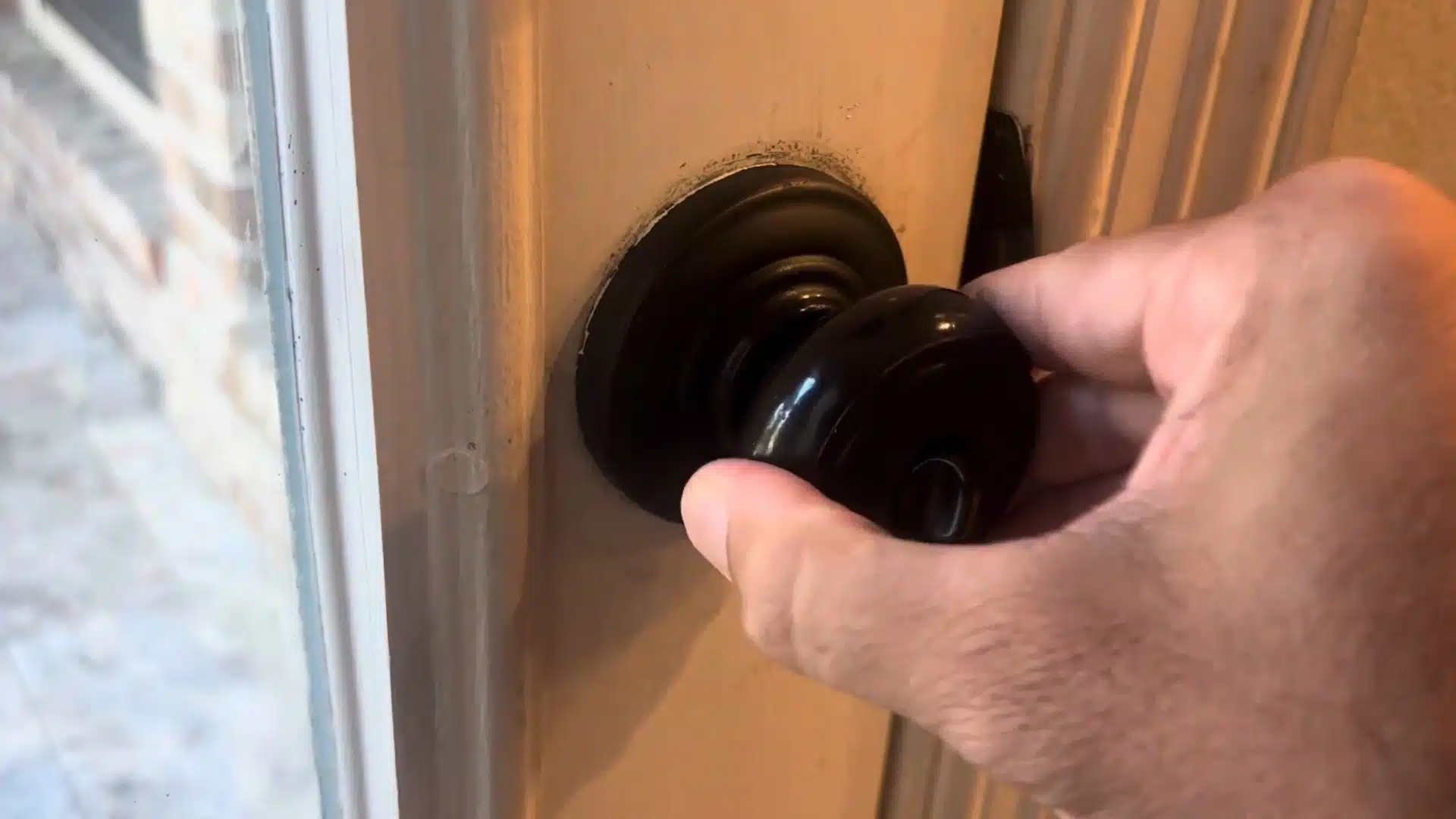
A doorknob that spins in your hand or barely catches the latch usually is not broken; it has just come loose from normal use.
Learning how to fix a loose doorknob is one of the simplest repairs in the house, and figuring out how to tighten a doorknob rarely takes more than a few minutes with tools you already own.
Grabbing a screwdriver and setting aside a little time is really all it takes to get everything tight and working the way it should again.
Signs Your Doorknob is Loose
A loose doorknob usually announces itself before it stops working altogether.
Watch for these signs:
- Wobble or side-to-side play when you grip the knob, before it even turns.
- Spinning freely without engaging the latch mechanism.
- Rattling when the door opens or closes.
- A latch that won’t catch the strike plate cleanly, so the door does not stay shut.
- Visible gaps between the knob’s rose and the door surface.
Any one of these on its own is worth a quick tightening. Several at once usually means the mounting screws have backed out enough to throw the whole mechanism off center.
What Makes a Door Knob Turn Loose?
A doorknob works because a spindle connects the outside and inside pieces, holding both sides tight against the door.
Small screws on the interior side lock that spindle in place, so the knob stays snug when it turns.
Over time, those screws back out slightly with every turn until they no longer hold as tight as before. That shift throws the mechanism off center, which is why the knob wiggles, spins loosely, or resists turning.
Doors that get slammed often or sit in humid spaces tend to loosen faster than ones used gently.
Knowing this explains why the fix stays simple. Nothing is broken; it just needs to be centered and tightened again.
Tools Needed For This
Fixing a loose doorknob takes two tools, both of which are already sitting in most homes.
- Flathead screwdriver
- Phillips head screwdriver
The flathead presses the release tab and pries the plate off, while the Phillips head tightens the screws holding everything together. Nothing else is required: no drills, no replacement hardware, and no specialty kits.
Anyone without these on hand can grab an affordable set that covers both. Here are a few good and affordable options that you can buy:
- STANLEY 6-Piece Screwdriver Set
- CRAFTSMAN Screwdriver Set, Bi-Material, 8 Piece
- Klein Tools 6-Piece Screwdriver Set
How to Fix Loose Doorknob: Step-By-Step Guide
Most interior knobs without visible exterior screws hide a small release tab along the shank. These five steps cover that hardware type.
Step 1: Remove the Door Knob
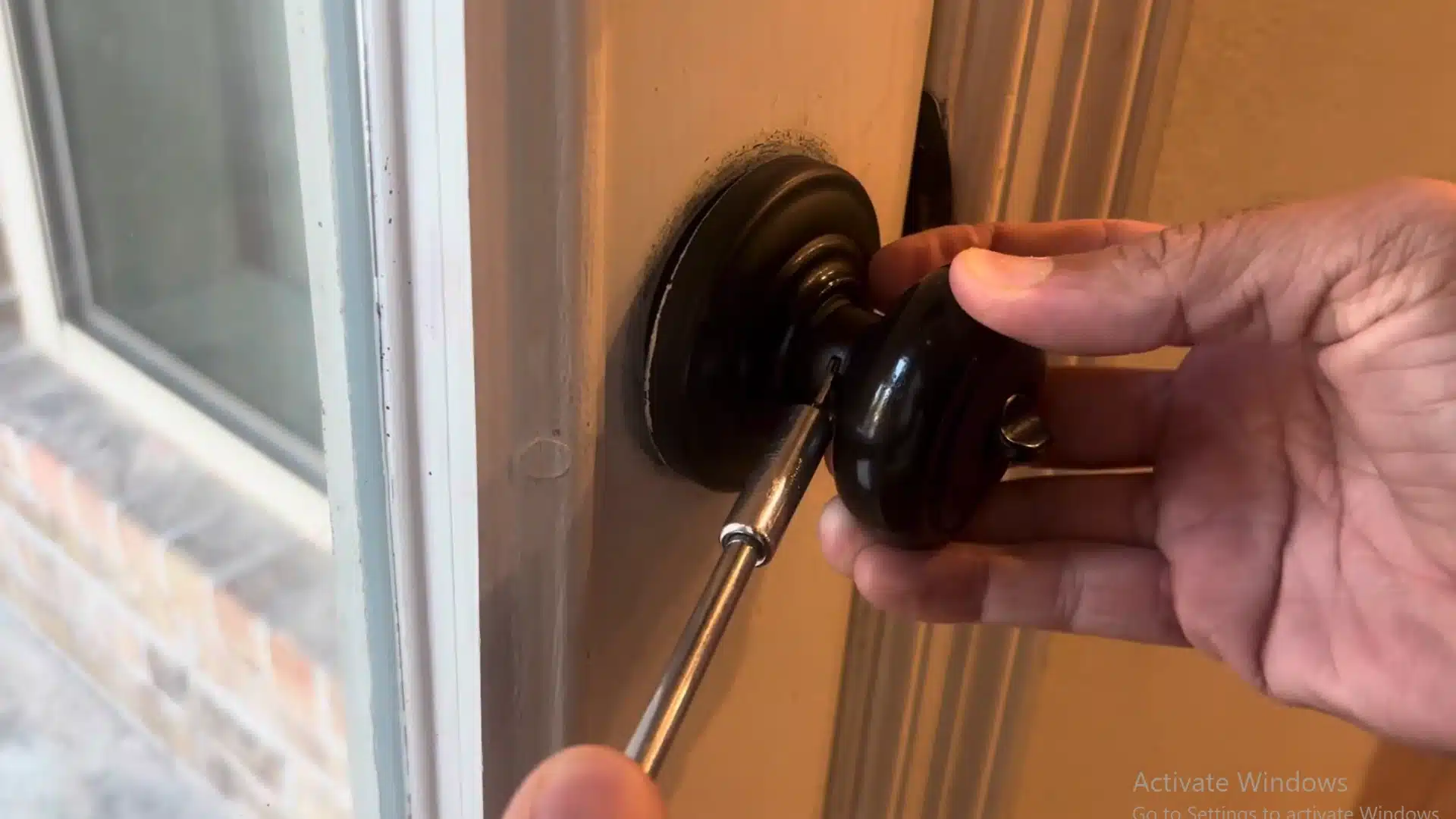
Every doorknob without visible exterior screws has a small tab hidden along its side that holds it firmly in place.
Press that tab in using a flathead screwdriver, applying gentle and steady pressure until it gives way completely.
Once the tab is pressed down all the way, the knob slides right off the spindle without needing any extra force or wiggling to loosen it further.
Step 2: Pop Off the Plate
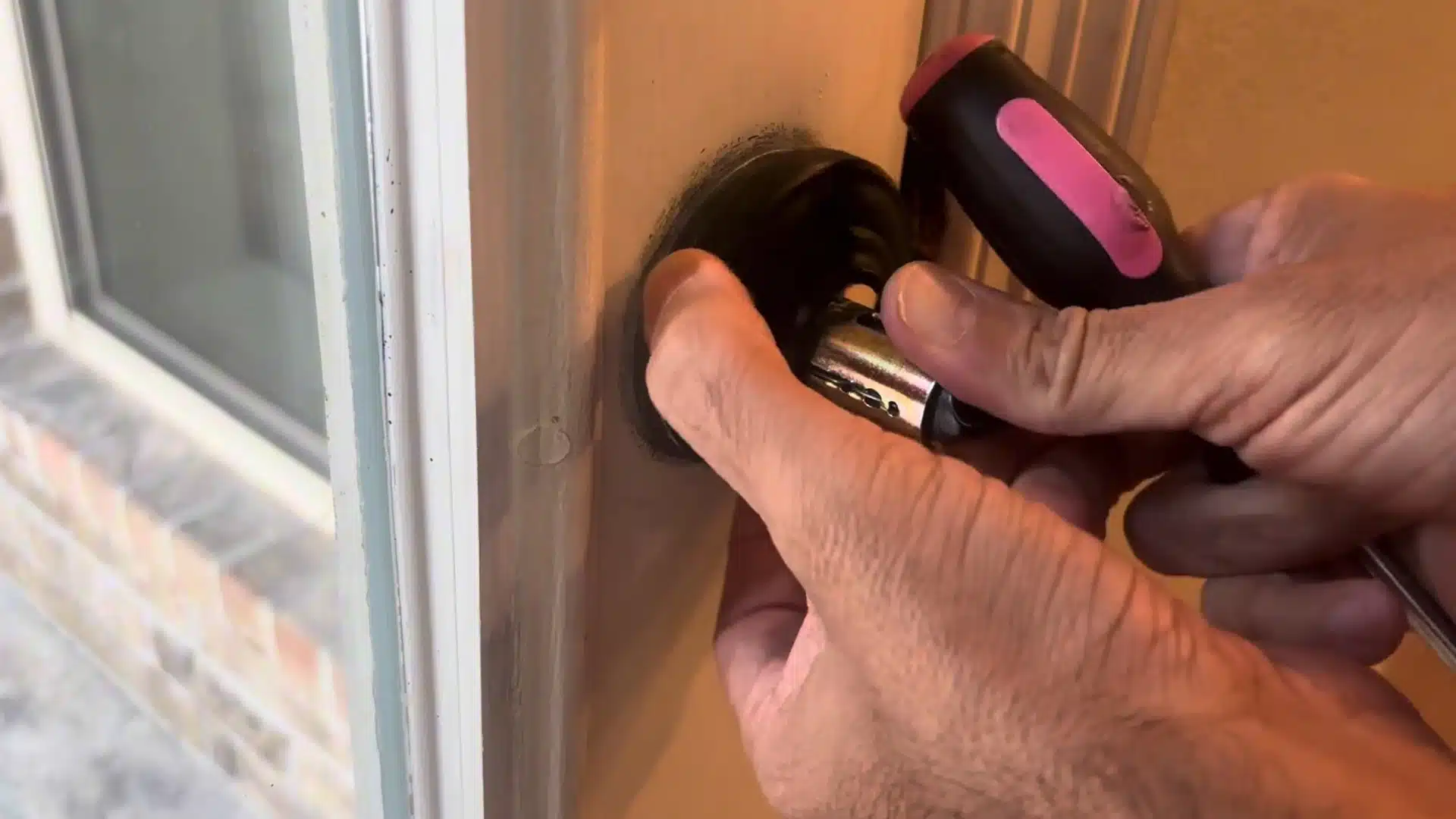
With the knob removed, the plate sitting underneath usually has a small slot cut into one of its sides.
Slide a flathead screwdriver into that slot and gently pry it against the door to loosen the plate from its current position.
If the plate is already loose, it slides right off without much resistance at all, exposing the mechanism and screws underneath that need attention next.
Step 3: Push the Mechanism Back Into Place
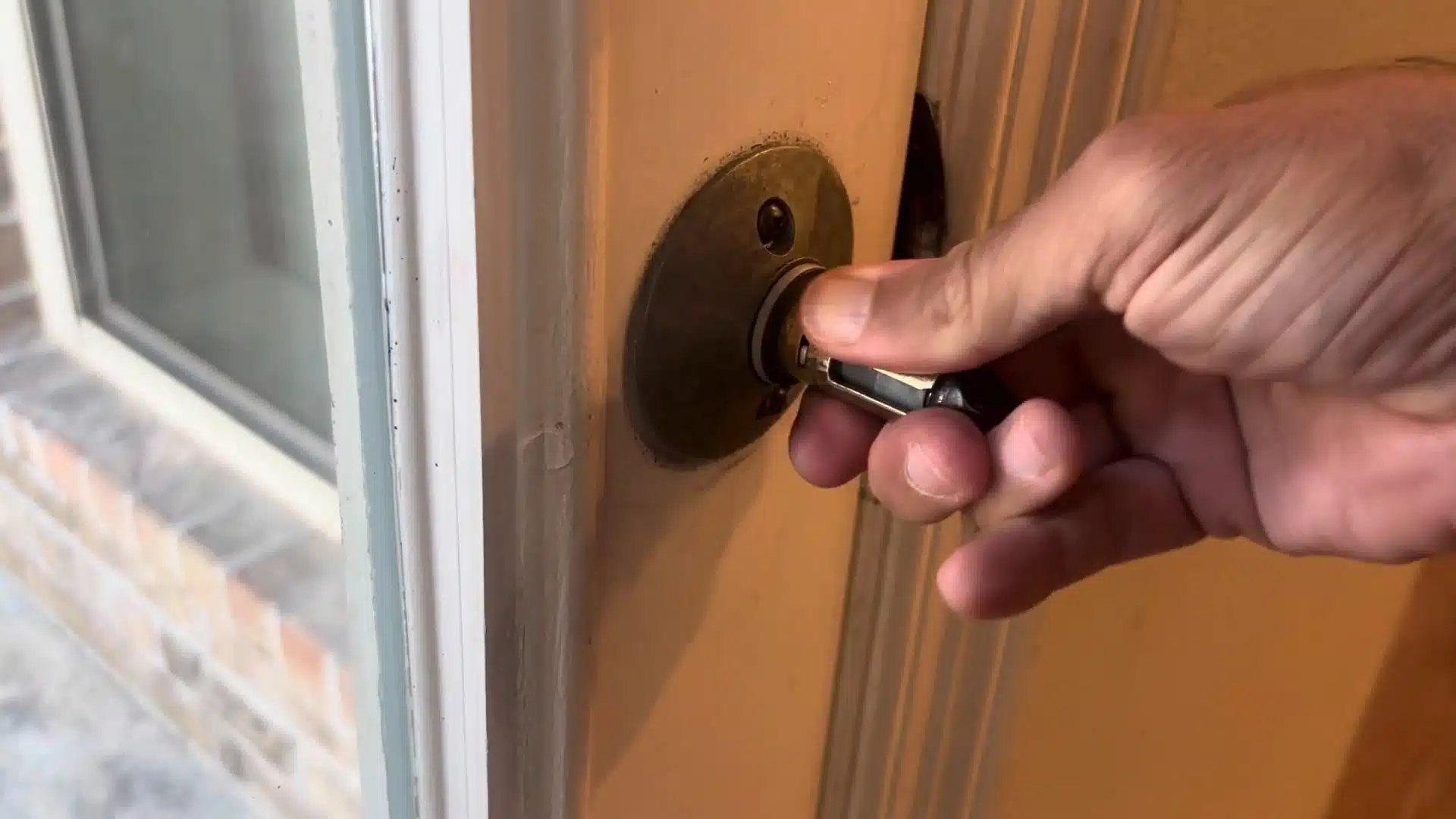
With the knob and plate both removed, the internal mechanism can now be pushed back into its centered position inside the door frame.
This step matters because a shifted mechanism is exactly what causes the latch to stop turning properly in the first place.
Once everything is pushed back and centered correctly, the door should open again, confirming the mechanism is sitting where it needs to be.
Step 4: Tighten Both Screws Firmly
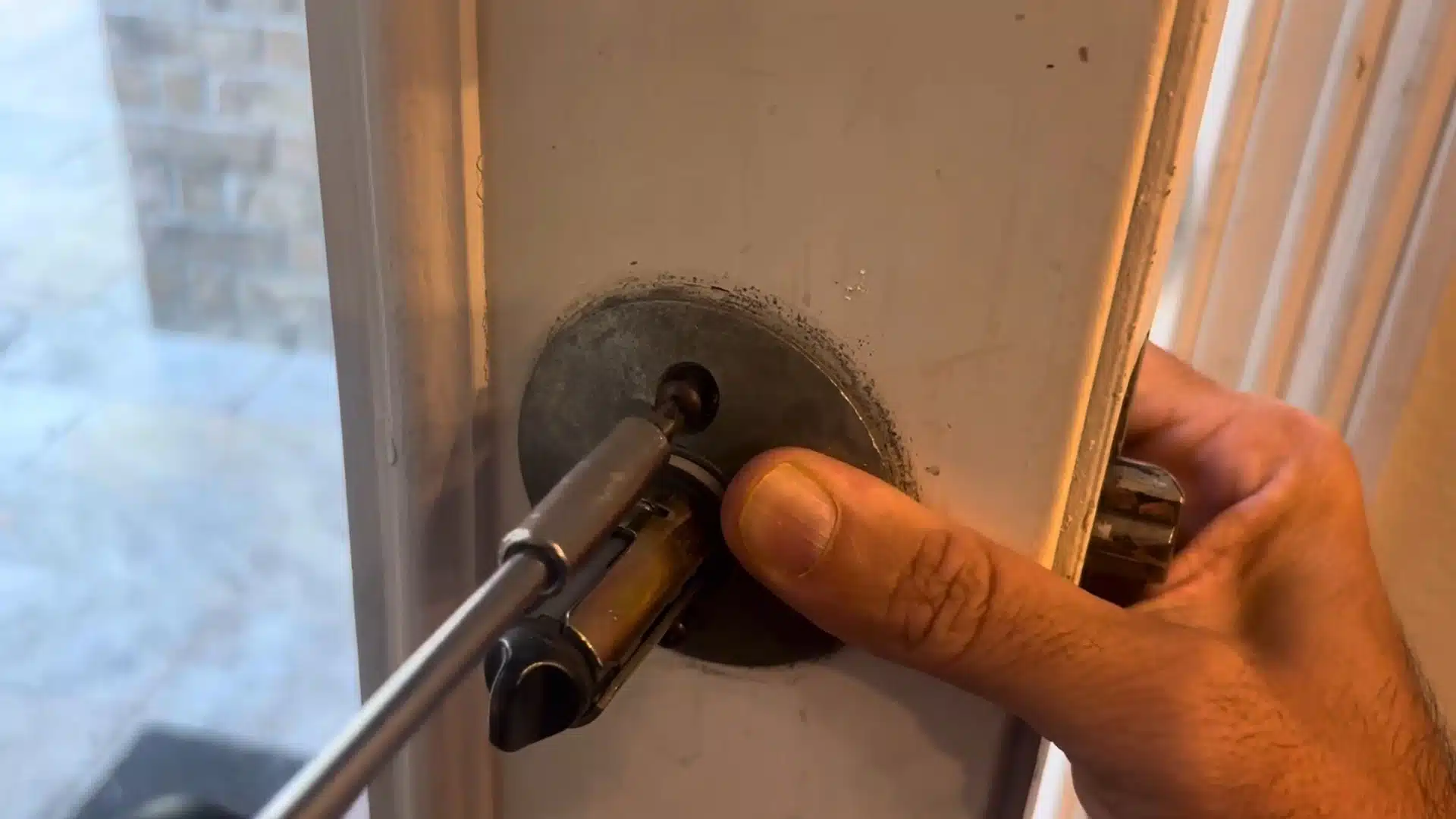
Open the door fully to access both sides of the knob assembly at the same time.
Hold one side flush and firm against the door while working from the opposite side with the other hand.
Switch to a Phillips head screwdriver and tighten both screws until each side sits completely flush, with no gap or wiggle remaining.
Note: Avoid overtightening the screws, since forcing them too tight can strip the threads and cause the same looseness to return sooner than expected.
Step 5: Snap Trim and Knob Back On
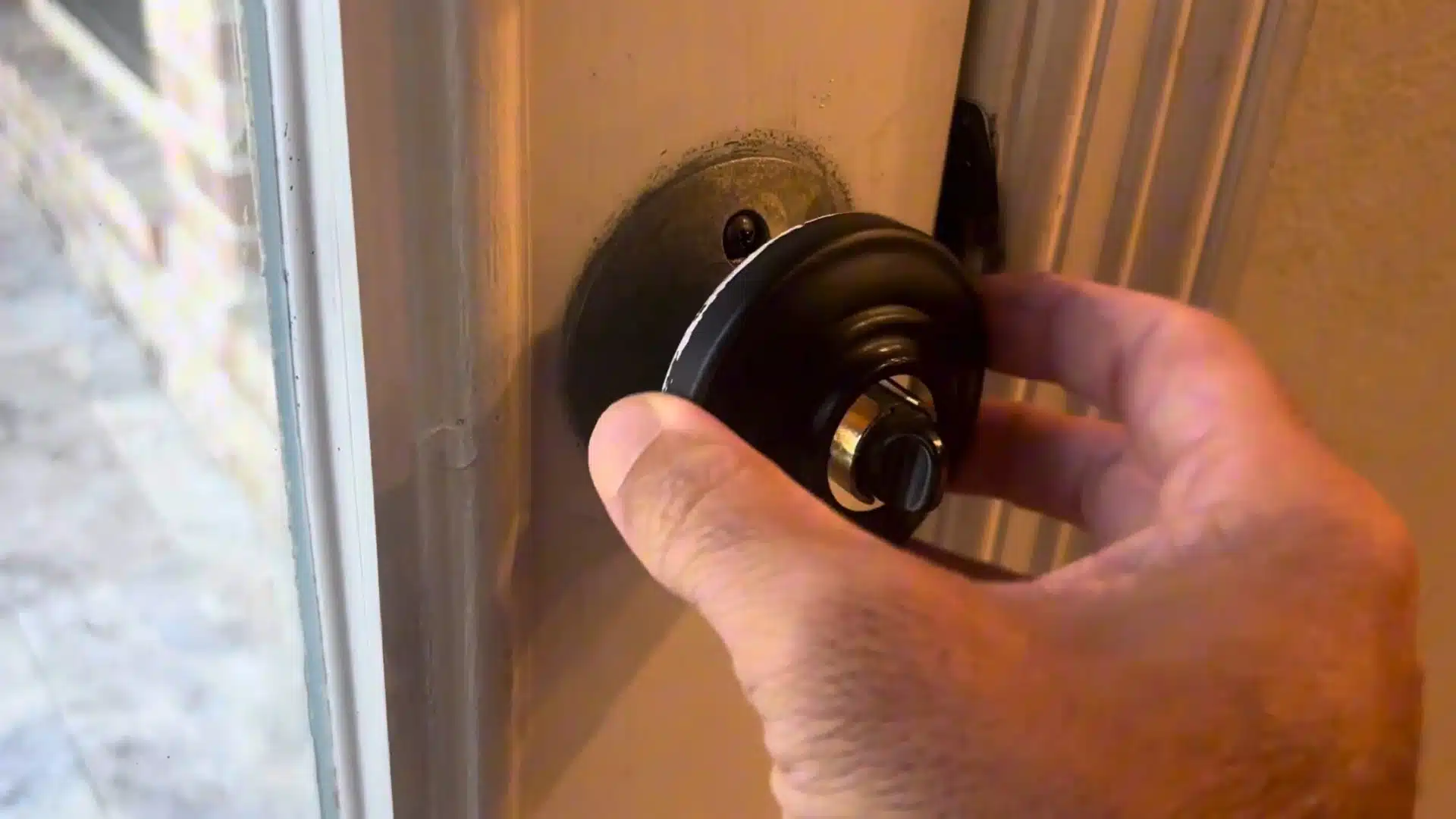
Slide the trim piece back onto the door first, applying light and even pressure until it snaps firmly into place.
Next, line up the knob so its internal slot matches the tab that was pressed earlier to remove it.
Slide the knob back on until it clicks securely into position and feels tight, confirming everything is firm and ready for use again.
For a more detailed tutorial to fix a loose doorknob, watch the tutorial by Dad Does It All.
Do You Need to Replace the Knob Instead?
Most loose knobs fix themselves with a simple tightening, but a few signs point to replacement being the smarter option instead.
- A knob that keeps loosening again within days usually has worn-out internal threads that no longer hold a screw in place
- Visible rust, a cracked housing, or a spindle that feels bent point to failed hardware rather than a shift in position
- Knobs older than a decade or two tend to wear out this way over time
If none of these apply, tightening the existing knob is the faster and cheaper fix to go with.
If you do end up replacing hardware, hanging new latch and handle hardware follows a similar logic of matching the spindle, plates, and screws to the door’s bore size.
A Quick Heads Up: Check if the knob is still under manufacturer warranty before buying a replacement, since many home hardware brands cover some defects for several years after purchase.
How to Prevent a Loose Doorknob From Coming Back?
A little upkeep goes a long way toward keeping a freshly tightened knob from loosening again.
- Check the mounting screws twice a year, especially on doors used often, like a front entry or a kids’ bedroom.
- Avoid slamming the door where possible, since repeated impact is what shakes screws loose fastest.
- Don’t overtighten during the original fix, since stripped threads loosen faster the second time around.
- Consider a dab of thread-locking adhesive on screws in high-traffic doors that loosen repeatedly, applied sparingly so the screw can still be removed later, if needed.
- Protect hardware finishes from humidity, particularly in bathrooms or entryways, since moisture is what corrodes screws and plates fastest over time.
In my own repairs, leaving the screws snug rather than maxed out has kept the threads from stripping the next time the knob needed attention.
Frequently Asked Questions (FAQs)
Why Does My Doorknob Keep Getting Loose?
Regular use over time causes the internal screws to shift slightly with each turn, throwing the mechanism off center and making the knob wobble or spin loosely.
Can I Fix a Loose Doorknob Without Removing It?
No, the knob needs to come off first to access the plate and screws underneath, which is the only way to reach and tighten the internal mechanism properly.
What Screwdriver Size Works for Doorknobs?
Most doorknobs use standard flathead and Phillips head screwdrivers; no specialty sizes needed, making this an easy fix with tools already on hand.
How Long Does This Fix Take?
This fix usually takes under ten minutes from start to finish, since it only involves a few simple steps and two common screwdrivers.
Do All Doorknobs Work This Way?
Most standard interior knobs without visible exterior screws follow this same mechanism, though older or specialty hardware may look slightly different inside.
The Bottom Line
Small layouts do best with see-through furniture and vertical storage, while larger rooms need distinct zones and one strong focal point.
Either way, the small choices around rugs, lighting, and furniture scale end up shaping the room more than square footage does.
Start with one or two changes and see how the room feels before doing more.
Which of these ideas fits your space best? Share it in the comments below.