

Half the azaleas sold every spring die within two summers. Not because the buyer did anything wrong, exactly, but because the plant on the tag looked nothing like the yard waiting for it. Yellow leaves, no flowers, a shrub that sulks for a season and then quits. I’ve watched it happen on my own patio, and it’s almost always a mismatch, not bad luck.
Here’s the fix in one line: match the plant to your light, soil, and winter before you fall in love with the color. This guide walks you through that match, from reading a sales tag like a pro to a quick five-minute check you can run in the nursery aisle before you pay. You don’t need a horticulture degree. You need to know what your yard is actually like.
Most people buy azalea on flower color alone, and I get it, the blooms are ridiculous in the best way. But color is the last thing to look at, not the first. Start with the spot where the shrub will live, then let that spot pick the plant for you.
What’s the Number One Reason New Azaleas Fail?
Bad drainage. Full stop. Azaleas are shallow-rooted acid lovers, and they’ll rot in soil that stays wet. If you’ve ever planted one in a low spot near a downspout and watched it decline, this is why.
The fix is boring and it works: plant slightly high, amend with organic matter, and check how water drains before you dig. The Missouri Botanical Garden has long noted that these shrubs want consistently moist but well-drained, acidic soil, which is the opposite of the heavy, soggy clay that makes up a lot of American backyards. You can test your own drainage by digging a hole about a foot deep, filling it with water, and seeing how fast it disappears. Slow soak-in tells you to build a raised bed or pick a different spot.
My honest take after killing three of these plants: if your soil puddles for more than a few hours after rain, don’t fight it. Plant in a mound or switch to a container. Azaleas do beautifully in pots, and you get to control the soil mix completely.
Read the Light Before the Label
Most azaleas want morning sun and afternoon shade. That’s the sweet spot. Brutal midday heat bleaches the leaves and stresses the roots, while deep shade gives you a healthy green bush that never bothers to flower.
Walk your yard at three in the afternoon, not at breakfast. Where the sun sits at 3 p.m. is what your plant will feel. If that spot is dappled or shaded by a fence, you’re in business. If it’s cooking against a south wall with no relief, look at your timing differently: many gardeners in hot climates plant azaleas where they get filtered light through a canopy all day and skip direct midday exposure entirely.
One more thing I’d tell a friend: don’t trust a “sun” or “shade” icon on a plastic tag as gospel. Tags describe ideal conditions at the grower’s operation, not your particular corner. Your eyes and a walk around the yard beat any sticker.
Cold Hardiness Decides More Than You Think
Azaleas fall into two broad camps: deciduous types that drop leaves and handle cold winters, and evergreen types that keep their foliage year-round and lean warm. If you’re in a cold winter zone, choose the deciduous kind. It’s not a compromise, it’s just the right tool.
The Brandywine Conservancy has documented how native azalea species evolved in eastern woodlands and forest edges, thriving in the leaf litter and filtered light those settings provide. That’s a useful mental picture: think woodland edge, not exposed lawn. You aren’t trying to grow a fussy exotic. You’re recreating a forest margin in your own yard, and the closer you get, the easier the plant makes it for you.
Match Your Growing Zone to the Plant, Not the Other Way Around
Check your USDA hardiness zone before you browse, then only look at plants rated for your number or colder. Buying a warm-climate evergreen in a cold zone is the single fastest way to waste forty dollars. If the tag says a warm-zone plant, trust it, even if the nursery is selling it fifty miles north of you.
Evergreen or Deciduous: Which Would I Pick?
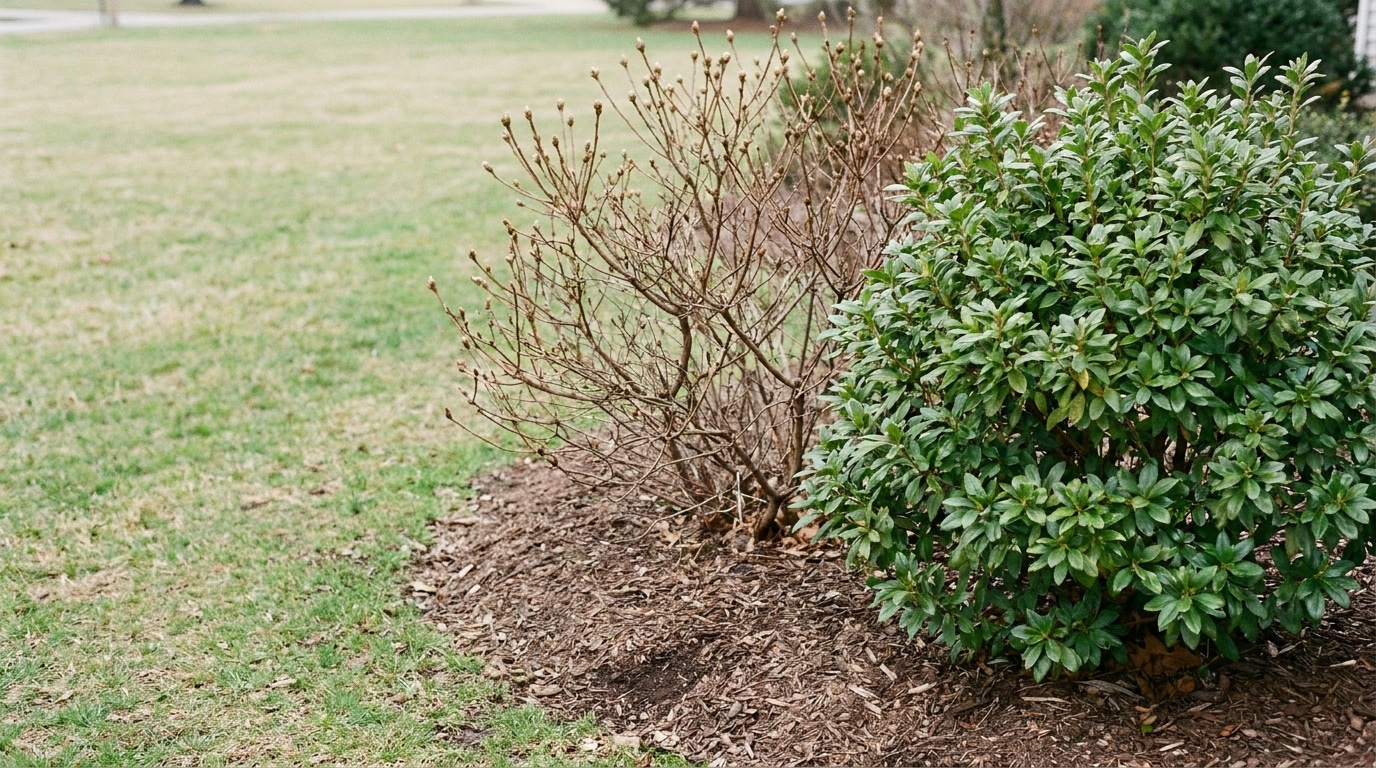
Evergreen, if you want year-round structure and live somewhere mild. Deciduous, if your winters bite and you’d rather not baby a shrub through February. It really is that simple, and I’d rather pick the boring correct plant than the beautiful doomed one.
- Evergreen types: steady green all year, more heat-sensitive, great for mild climates and containers.
- Deciduous types: bare in winter, tougher in cold, spectacular fall color and spring bloom.
- Encore and reblooming lines: flower more than once a season, but they’re thirstier and want more feeding.
- Dwarf varieties: stay compact, perfect for small patios and edging borders.
Notice what isn’t on that list: bloom color. That’s a preference, not a survival factor, and the sooner you separate the two, the better your odds.
The Five-Point Check Before You Buy
Run this in the aisle. It takes five minutes and it’ll save you a season of regret.
1. Check the roots at the pot’s base. Roots spiraling out of the drainage holes mean the plant has been sitting too long. Skip it, or expect to untangle them at planting.
2. Look at leaf undersides. Fine webbing or tiny flecks signal pest pressure that travels home with you.
3. Feel the soil. Bone dry or dripping wet both spell stress. Middle ground is what you want.
4. Confirm the zone tag matches yours.
5. Ask when it was last fed. A nursery that can answer that question knows what it’s doing.
The Penn State Extension consistently advises that healthy nursery stock starts with healthy root systems rather than top growth, which is why a plant with great flowers but a root-bound pot is a worse buy than a plain green bush with fresh white roots. Blooms sell plants. Roots grow them.
Planting Day, Without the Drama
Dig a hole three times wider than the pot but no deeper than the root ball. After that, tease the roots outward so they aren’t circling, site the top of the root ball just at or slightly above soil grade, and water thoroughly. Apply a two-to-three-inch layer of mulch, but keep it off the trunk.
The first year is the thirsty year. Water deeply once a week when rain stays thin, and skip the fertilizer entirely until the plant is established. More young azaleas die from overfeeding than starvation. I’d rather see a new planting get its second spring before you touch the fertilizer bag at all.
A new azalea isn’t asking you for much. It wants oxygen at the roots, moisture with a drain to carry it away, and a little shade at the worst part of the day. Give it those three and stay out of the way.
Start With the Spot, Not the Bloom
The azalea that survives is the one that matched your yard before it ever left the nursery. Check drainage, walk your light, respect your zone, pick the right leaf type, then run the five-point check when you buy. That order does the work, and the flowers show up as a reward rather than a gamble.
So here’s your question to sit with before spring: which spot in your yard passes the drainage test right now, today? Find it, and you’ve already solved the hardest part. Everything after that is just choosing a color you’ll like in three years.