Snake plants often confuse new plant owners with their simple care needs. Checking the soil tells you more than any fixed calendar ever could.
Knowing how often to water snake plants actually helps it grow strong for years. A simple check-in with your plant is really all it takes.
I used to water mine every week out of habit alone. That habit nearly killed my plant before I learned better. You just need to read the signs your plant gives you.
Get the timing right, and your snake plant will stay full and green. A little attention now means a happier plant later.
What Amount of Water Does a Snake Plant Need?
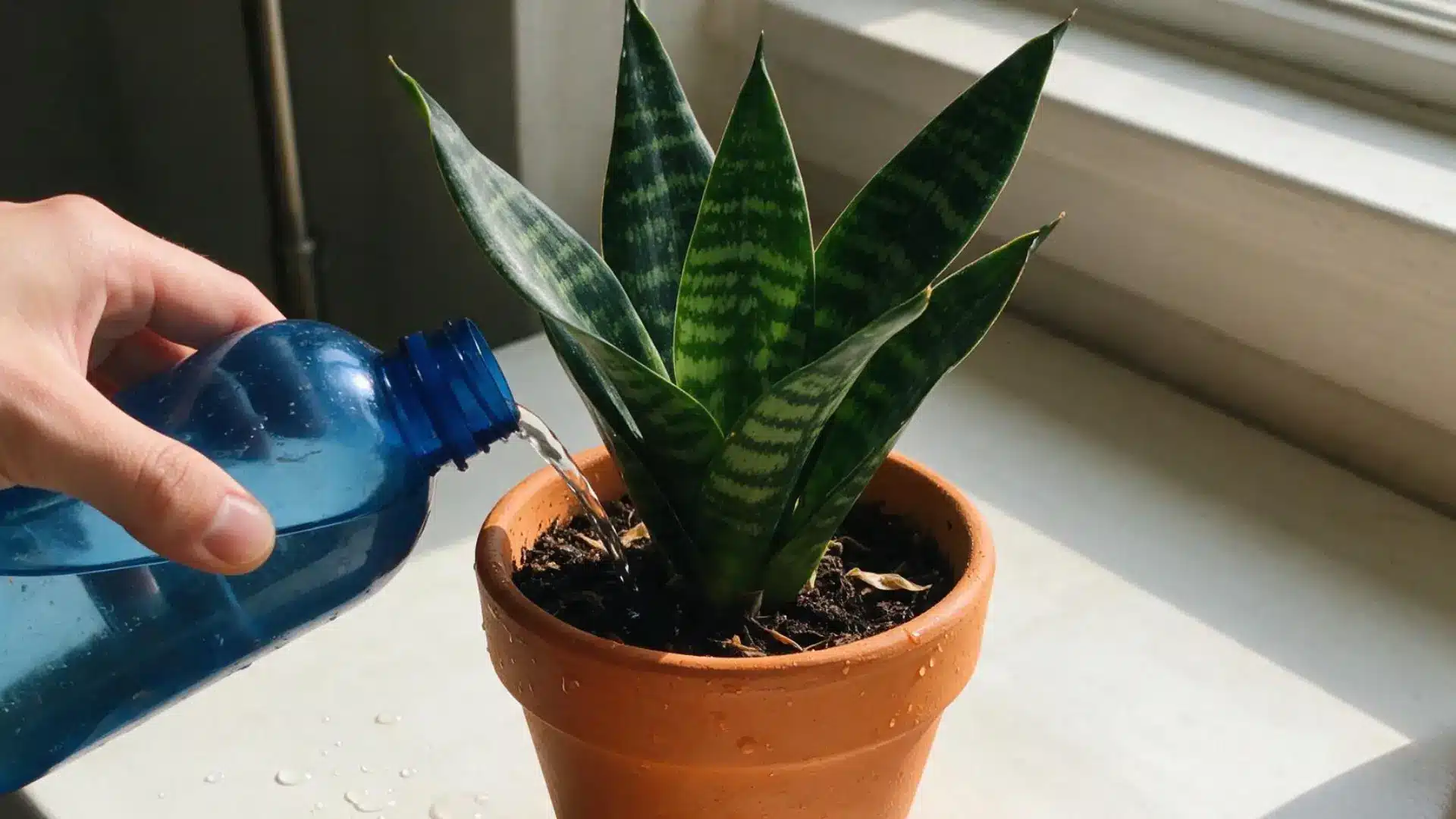
Snake plants typically need water only once every 2 to 6 weeks to grow well. They store water inside their thick, fleshy leaves, which lets them go two to eight weeks without water.
Because of this, dry soil suits them better than soil that stays wet. Constant moisture around the roots can lead to rot. The potting mix should dry out fully between each watering.
This dry period gives the roots time to rest. Watering thoroughly means soaking the soil until water drains from the bottom.
Frequent watering adds small amounts on a regular schedule. This drought tolerance is also why the snake plant shows up on most lists of low-maintenance houseplants.
Snake plants need the first method, not the second, to grow well. Check the soil before adding more water.
How Often to Water a Snake Plant: Factors to Consider
Many factors have taught me how fast my snake plant’s soil dries out. Here’s a closer look at what I’ve learned about each one and what it means for watering:
1. Light Exposure
Bright light speeds up water loss from the soil. Sunlight warms the potting mix and pulls moisture out faster. A snake plant in a sunny spot may need water every two to three weeks.
One kept in low light can often wait three to four weeks or longer. Always check the soil first. Water only when the top few inches feel completely dry to the touch.
2. Temperature
Warm rooms dry out soil faster than cool ones. Heat speeds up evaporation, pulling water from the mix more quickly. I’ve learned that a snake plant needs water every two to three weeks during warm months.
In cooler rooms or winter months, watering once a month is often enough. Lower temperatures slow the plant’s growth and its need for water. Always test the soil before adding more.
3. Humidity
Dry household air pulls moisture from the soil faster than humid air. Homes with heaters or air conditioners often have lower humidity levels.
This can mean watering every two weeks instead of three. Humid rooms, like bathrooms, help soil hold moisture longer.
This can stretch watering to three or four weeks. Checking the soil remains the best way to know when water is truly needed.
4. Pot Size
Small pots hold less soil, so they dry out faster than large ones. A small pot may need water every two weeks.
Large pots hold more soil and moisture and often need water every three to four weeks. Extra soil in bigger pots also means roots take longer to use up available water.
Matching pot size to the plant helps keep watering needs steady and predictable.
5. Pot Material
Terracotta pots are porous and let moisture escape through the sides. Plants in these pots may need water every two weeks.
My ceramic pots hold moisture a bit longer, often stretching watering to three weeks. In my experience, plastic pots trap the most moisture, allowing four weeks between waterings.
Material choice changes drying speed even when the soil and plant stay the same.
6. Soil Type
Fast-draining soil keeps roots from sitting in water too long. This type of mix often needs watering every two to three weeks.
Dense or heavy soil holds moisture longer, which can lead to root rot. A well-draining mix suits snake plants best year-round.
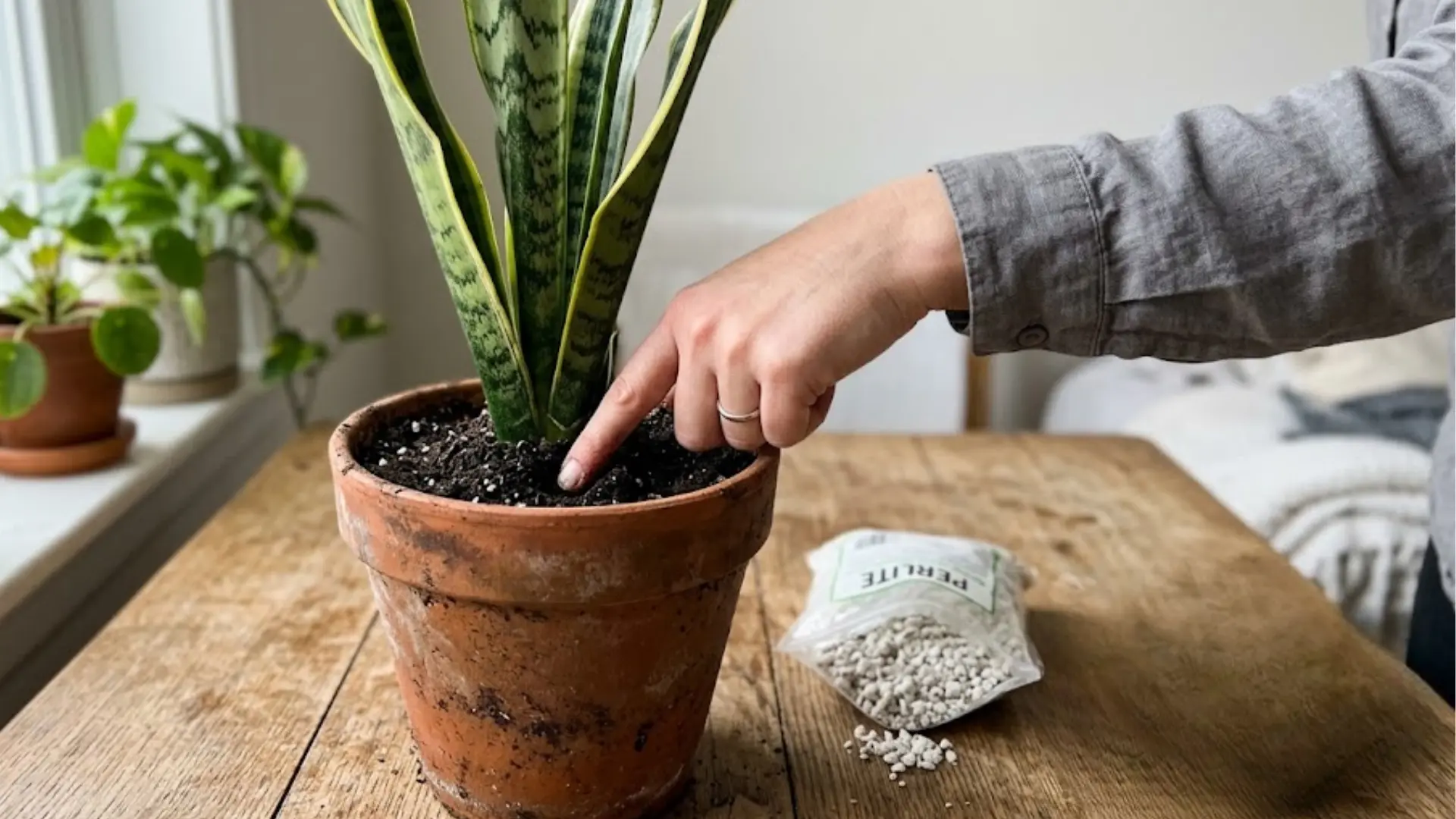
Adding sand or perlite improves drainage and helps roots stay healthy between waterings.
7. Season
Growth slows down during fall and winter months. This means snake plants often need water only once a month during this time.
Spring and summer bring more active growth, raising water needs to every two to three weeks. Indoor heating and cooling systems also shift humidity levels across seasons.
Adjusting the watering schedule with each season keeps the plant healthy year-round.
How to Water a Snake Plant the Right Way?
Frequency only tells half the story. How you water matters just as much as how often, since the wrong technique can cause root rot even on a correct schedule.
- Check the soil first. Push a finger or a wooden skewer about two inches into the soil. If it comes out dry, it’s time to water.
- Water at the soil level. Pour room-temperature water evenly around the base of the plant, avoiding the leaves, until water runs out of the pot’s drainage hole.
- Let the pot drain fully. Empty the saucer within 30 minutes so the roots never sit in standing water.
- Try bottom watering if the soil is very dry. Set the pot in a few inches of water for 15 to 20 minutes and let the roots pull up what they need, then remove it and let it drain.
- Skip ice-cold water. Water straight from the tap is fine for most homes, but letting it sit out overnight helps if your water is heavily chlorinated.
Stick with these steps, and your snake plant will stay happy for years. When in doubt, wait a few more days, because snake plants handle dry soil better than soggy soil.
Spotting Watering Trouble in Your Snake Plant
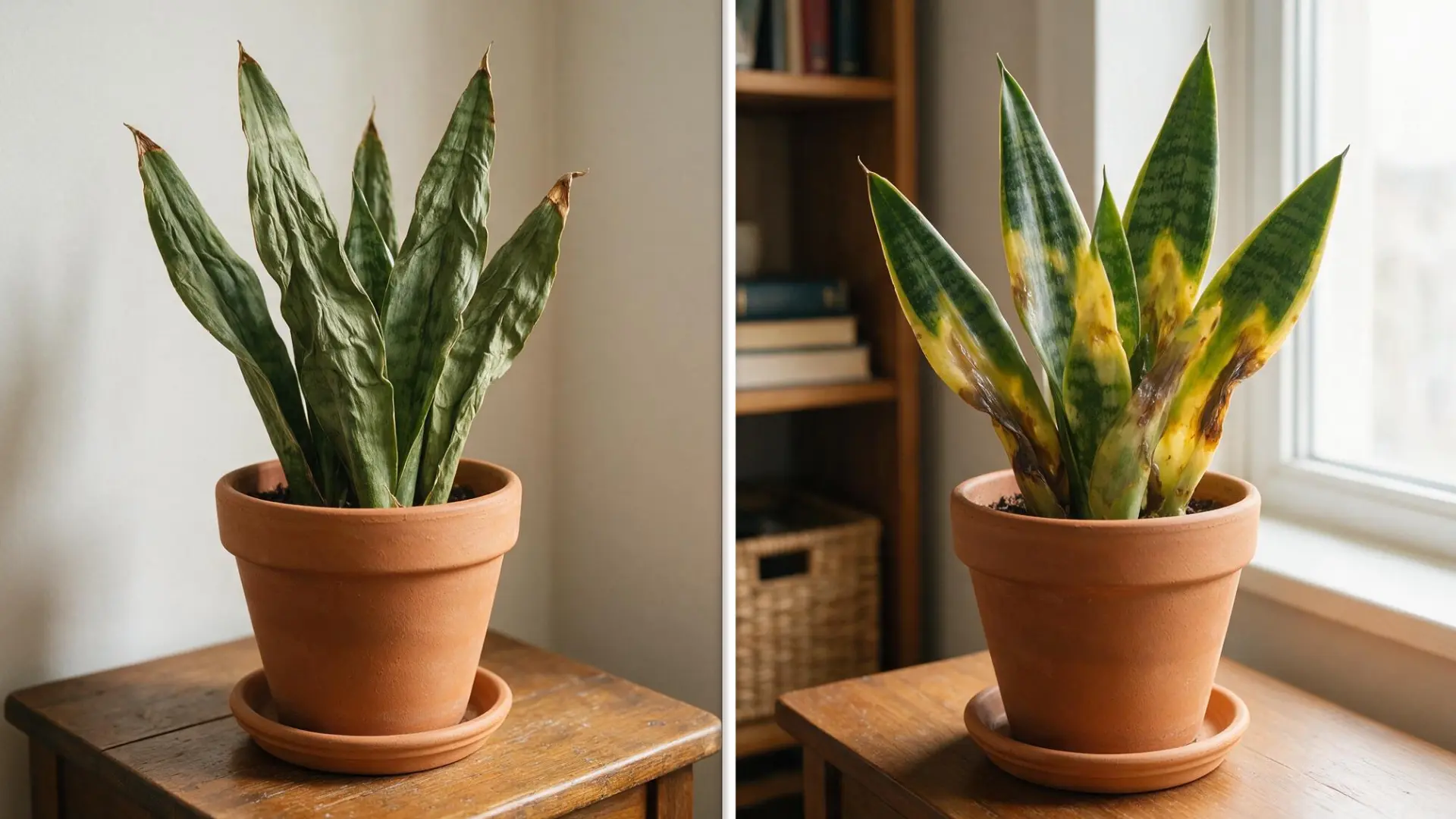
Snake plants often show clear signs when you water them too little. Here’s what to look for and what each sign means:
Signs of an Underwatered Snake Plant
A snake plant that needs water usually shows a few clear warning signs. These signs often appear together, but they should be considered alongside soil moisture:
- Wrinkled leaves that look thinner and less firm than usual
- Curling leaves as the plant tries to hold onto moisture
- Dry or crispy edges, especially near the tips of each leaf
- Very dry potting mix that pulls away from the pot’s sides
No single sign confirms underwatering on its own. Checking the soil first gives the clearest answer.
Signs of an Overwatered Snake Plant
Overwatering often causes a different set of symptoms than underwatering. Here are the signs that point to too much water:
- Yellowing leaves that spread across several parts of the plant
- Soft or mushy foliage that feels weak when gently touched
- Leaves collapsing near the base where they meet the soil
- Persistently wet soil that never seems to fully dry out
Consistently wet soil is the clearest clue for me when telling overwatering apart from underwatering. It usually confirms the real problem.
Common Watering Problems and How to Fix Them
Snake plants can run into other watering-related issues beyond the basics. Here’s a closer look at common problems, their causes, and how to fix them:
| Problem | Likely Cause | What to Do |
|---|---|---|
| Yellow leaves with wet soil | Overwatering | Reduce watering, check for root rot |
| Brown, crispy leaf tips | Low humidity | Water consistently, boost humidity |
| Mushy leaves at the base | Root rot | Remove affected leaves, check roots |
| Slow or no new growth | Poor light or overwatering | Check light, avoid overwatering |
| Soil stays wet too long | Poor drainage | Improve drainage, use lighter soil |
| Foul smell from soil | Root rot | Inspect roots, repot if needed |
| Leaves leaning or falling | Root damage or low light | Check roots, adjust light |
| White, crusty soil buildup | Mineral salt buildup | Flush soil to remove buildup |
These problems have been easy for me to fix once I spot the cause. Catching them early has kept my plant healthy long-term.
Tips to Get Your Snake Plant Watering Routine Right
A few simple habits can make watering feel less like guesswork. Here are some tips to help build a routine that works:
- Lift the pot occasionally to learn how light it feels when dry.
- Choose containers with drainage holes so excess water can escape.
- Keep a simple log of watering dates to track how fast your plant dries out.
- Look at light, temperature, and pot size together instead of relying on one factor alone.
- Revisit your routine every few months as your home conditions change.
A little observation goes a long way with this plant. Small adjustments over time lead to a routine that fits your space perfectly.
Frequently Asked Questions (FAQs)
Should I Mist My Snake Plant?
Misting isn’t necessary for snake plants. They prefer dry air and soil over added moisture on their leaves and stems.
Does the Plant Need Less Water in a Bathroom?
Bathrooms often have higher humidity, which can slightly reduce watering needs compared to drier rooms elsewhere.
Can I Water My Snake Plant with Ice Cubes?
Ice cubes aren’t recommended since cold water can shock the roots. Room-temperature water is gentler and safer for regular use.
Final Words
In the end, a healthy snake plant depends on attention, not a calendar. Light, soil, and season all play a part in how often a snake plant needs water.
My own snake plant taught me this lesson after a few close calls. Now I check the soil first, every single time. Check the soil before you reach for the watering can.
Dry soil means it is time to water. Damp soil means you should wait a bit longer. Watch for wrinkled leaves or soggy stems as clear warning signs.
Trust your instincts over a fixed calendar date. Save this to keep your snake plant’s watering routine handy anytime. Share it with anyone who needs simple plant care tips!