Building a garage is one of those home investments that quietly pays for itself over time, a simple covered spot for the car, a full-on workshop, or something with a little more personality baked in.
But before the first shovel hits the ground, the big question on every homeowner’s mind is the same: what is this actually going to cost?
And honestly, the answer depends on more than most people expect.
Size, materials, location, finishing touches, all of it shapes the final number in ways that can catch first-timers off guard.
Knowing what drives garage costs makes planning a build that much more rewarding.
Average Cost to Build a Garage in 2026
Garage pricing rarely follows a straight line, and size is one of the biggest reasons why.
A larger footprint pulls up costs across every category, concrete, framing, roofing, and labor all scale together, which is why even a modest jump in dimensions can noticeably shift the final number.
| Garage Size | Sq. Footage | Average Cost | Cost Per Sq. Ft. | Best For |
|---|---|---|---|---|
| 12×20 | 240 sq. ft. | $7,200 – $28,800 | $30 – $120 | Single car, tight lots |
| 18×20 | 360 sq. ft. | $10,800 – $43,200 | $30 – $120 | Single car with storage |
| 20×20 | 400 sq. ft. | $12,000 – $48,000 | $30 – $120 | Standard two-car |
| 22×22 | 484 sq. ft. | $14,500 – $58,100 | $30 – $120 | Two-car with workspace |
| 32×34 | 1,088 sq. ft. | $23,000 – $92,200 | $30 – $120 | Large workshop or multi-car |
Most garages fall between $30 and $120 per square foot, with $50 per square foot sitting as a reliable middle-ground estimate for budgeting purposes.
Cost by Garage Type
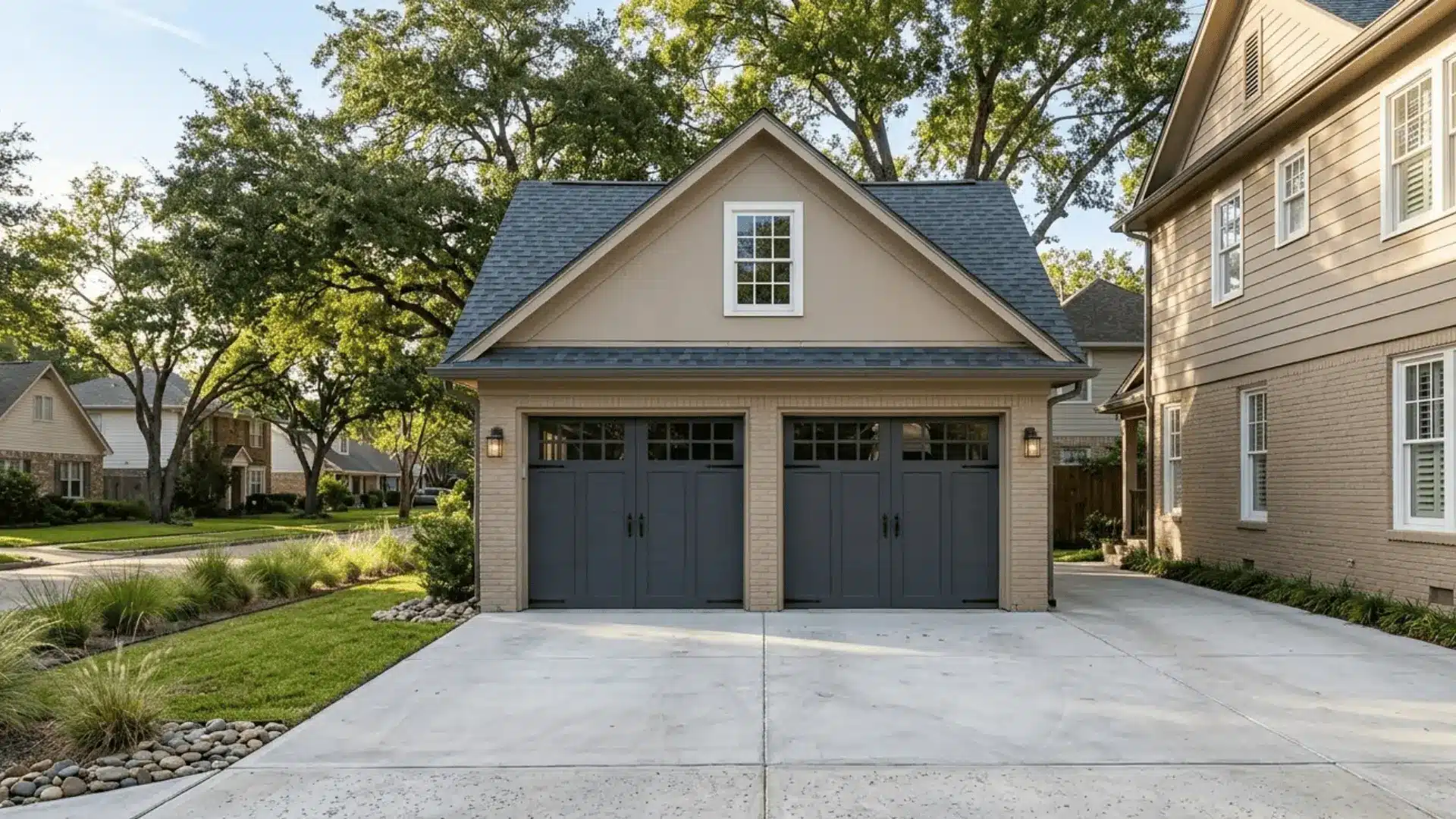
Not all garages are built the same, and the type chosen shapes the budget just as much as size does. Attached, detached, prefab, or one with a living space above, each comes with its own cost logic.
1. Attached Garage Cost
An attached garage is generally the more budget-friendly route since it shares a wall with the existing home, cutting down on materials and labor. That shared structure means less foundation work and reduced framing costs overall.
Most attached builds land between $30 and $60 per square foot, making it a practical choice for homeowners working with a tighter budget without compromising on convenience.
2. Detached Garage Cost
A detached garage stands completely on its own, which means a full foundation, independent framing, and separate utility hookups if needed. All of that adds up.
Costs typically run $50 to $100 per square foot, and while the price is higher, the flexibility a detached structure offers, in terms of placement and future use, makes it a popular choice for many homeowners.
3. Prefab Garage Cost
Prefab garages come as ready-to-assemble kits, making them the fastest and most affordable entry point. Material kits generally run $4,000 to $11,000, though labor and site prep are separate costs to factor in.
They work well for straightforward needs and smaller budgets, though customization options are more limited compared to a fully custom build.
4. Garage With Apartment Above
Adding a living space above the garage takes the project into a completely different budget tier. Plumbing, electrical, insulation, and interior finishes all stack onto the base construction cost.
Depending on the size and quality of finishes, these builds can reach $60,000 to well over $140,000, but the added living or rental space can make the investment well worth it.
Garage Cost by Number of Cars
Car count is one of the first decisions that shapes a garage budget, and the cost jump between each size tier is more noticeable than most people anticipate.
Here is a straightforward breakdown.
One-Car Garage: $10,500 to $27,000
- Smallest footprint, lowest material and labor costs
- Works well for compact lots or secondary storage needs
- A practical starting point for first-time builds
Two-Car Garage: $15,000 to $40,000
- The most popular choice among homeowners
- Balances cost, space, and everyday functionality well
- Leaves room for a small workbench or storage area
Three-Car Garage: $28,000 to $57,000
- Significantly more square footage drives the higher cost
- Foundation, roofing, and framing costs scale up considerably
- Ideal for larger households or a dedicated workshop space
Note: Pricing can vary quite a bit by region, and a little comparison shopping can go a long way in keeping the build on budget.
Garage Construction Cost Breakdown
Every garage is essentially a sum of its parts, and understanding what each component costs makes it much easier to spot where the budget is going and where there might be room to adjust.
Here is how the major cost categories typically break down.
| Component | Details | Estimated Cost |
|---|---|---|
| Foundation | Concrete slab, standard pour | $4 – $8 per sq. ft. |
| Framing & Structure | Lumber or steel frame, structural labor | Varies by size and material |
| Roofing | Standard residential roofing | $4 – $5 per sq. ft. |
| Garage Doors | Per door, standard to mid-range | $750 – $1,700 |
| Siding | Vinyl, wood, fiber cement, brick, or stone | Varies by material choice |
| Electrical Installation | Outlets, lighting, panel hookup | $1,000 – $3,800 |
| Insulation & Drywall | Common in colder climates, optional elsewhere | Varies by coverage area |
No two builds land on the same number here, but having a per-component view of costs makes conversations with contractors a lot more grounded and keeps surprise line items from derailing the overall budget.
Key Factors That Affect Garage Construction Costs

Getting a realistic number means looking beyond just size and materials. Several moving parts quietly shape the final cost, and knowing them up front makes budgeting a much smoother process.
1. Location
Labor rates and permit fees shift quite a bit depending on the state and even the city. Building in a high-cost-of-living area can noticeably inflate what would otherwise be a straightforward budget.
Local demand for contractors, regional material pricing, and municipal permit requirements all feed into the final number in ways that are easy to underestimate.
2. Garage Size
More square footage means more of everything: concrete, lumber, roofing material, and hours on the job.
Larger garages scale costs across every component simultaneously, which is why even a small size upgrade can produce a surprisingly large jump in the total estimate.
3. Materials Used
The choice of material does a lot of heavy lifting in the budget.
Common options include:
- Wood: Classic look, moderate cost, requires maintenance
- Brick: Durable and low-maintenance, with a higher upfront cost
- Metal: Affordable and fast to build, with less aesthetic flexibility
- Fiber Cement: A strong mid-range option balancing looks and durability
4. Custom Features
Upgrades and add-ons are where budgets tend to quietly balloon.
Popular custom features include:
- Windows and skylights for natural light
- Smart garage door openers
- Built-in workbench areas
- HVAC systems for year-round comfort
Each addition is worth evaluating individually against both budget and long-term value.
5. Permits and Design Fees
Skipping the permit conversation early is one of the more common budgeting oversights.
Plans and permits typically add $1,200 to $1,500 to the overall cost, sometimes more in stricter municipalities. Factoring this in from the start keeps the final number from feeling like an unwelcome surprise later.
Cost of Adding Living Space Above a Garage
Adding a living space above the garage is a serious investment, but one that can add real long-term value, whether as a rental unit, guest suite, or home office.
The moment living space enters the picture, the project scope expands considerably.
Plumbing, insulation, HVAC, and staircase installation all become non-negotiable additions that stack onto the base build cost.
Depending on the size and quality of finishes chosen, total costs can comfortably exceed $100,000. It is the kind of upgrade worth planning for early rather than retrofitting later.
Hidden Costs When Building a Garage
The base build cost is rarely the final number, and these overlooked expenses are usually what catch homeowners off guard mid-project.
- Site Preparation: Clearing, grading, and leveling the land before construction even begins.
- Excavation: Digging out the foundation area, especially costly on uneven terrain.
- Drainage Systems: Proper water runoff planning to protect the foundation long-term.
- Electrical Trenching: Running underground wiring from the main panel to the garage.
- Driveway Extension: Connecting the new garage to the existing driveway.
- Landscaping: Restoring or regrading the surrounding area after construction wraps up.
Budgeting a contingency of around ten to fifteen percent on top of the main estimate is a reasonable buffer that keeps these kinds of surprises from stalling the project halfway through.
DIY vs. Hiring a Contractor
How the build gets done matters just as much as what gets built.
Going the DIY route and hiring a professional both have genuine merit, and the right call usually comes down to skill level, available time, and how much risk feels comfortable to take on.
| Factor | DIY Build | Hiring a Contractor |
|---|---|---|
| Estimated Cost | $5,000 – $25,000 (materials only) | Varies, labor alone is 50–70% of the total cost |
| Time Investment | High, hands-on throughout | Low, mostly oversight and decisions |
| Skill Requirement | Moderate to high | None required |
| Quality Control | Dependent on personal skill | Professional standard expected |
| Permit Handling | Owner’s responsibility | Typically managed by a contractor |
| Flexibility | High, work at your own pace | Tied to contractor’s schedule |
| Risk Level | Higher, errors can be costly | Lower, work is usually insured |
| Best For | Budget-conscious, experienced builders | First-timers or complex builds |
Both paths can lead to a great result. A DIY build rewards those with the right skills and patience, while hiring a contractor brings peace of mind and a more predictable timeline, especially for larger or more complex projects.
Is Building a Garage Worth It?
For most homeowners, the answer leans pretty clearly toward yes.
A garage adds measurable resale value to a property, creates storage space that the rest of the house quietly runs out of, and offers reliable protection for vehicles against weather and wear.
For those willing to invest in a build with a living space above, rental income potential makes the numbers even more compelling.
It is a long-term addition that tends to earn its place on the property many times over.
Final Thoughts
Building a garage is one of those decisions that keeps paying off long after the construction dust settles.
With the right size, materials, and a budget that accounts for the details, the whole process becomes a lot less overwhelming and a lot more exciting.
Costs vary widely, but so do the possibilities, and there is genuinely something for every budget and vision.
Ready to start planning? Drop your questions or share what kind of garage build is on the radar in the comments below. I would love to help point things in the right direction.
Frequently Asked Questions
How Much Does a 20×20 Garage Cost?
A 20×20 garage usually costs $12,000 to $48,000, depending on materials, location, and finish. It’s a popular size for a two-car build, balancing space and affordability.
Is It Cheaper to Build or Buy a Prefab Garage?
Prefab kits are generally the more affordable option upfront, with material costs coming in well below a custom build. The tradeoff is limited flexibility in design, size, and long-term customization.
Does Adding a Garage Increase Home Value?
Yes, a garage consistently adds resale appeal and can meaningfully boost overall property value. It is one of the few home additions that tends to return a solid portion of its cost at resale.