Most backyard gardens are designed from the ground up. Soil, seeds, planting plans, compost schedules. All of that is exactly right. But there is a whole other dimension to a garden that plants alone cannot give you: structure. The hardscape, the paths, the sitting areas, the walls that define where the garden begins and ends.
Tile is one of the most underused tools in the backyard design toolkit, and that is mostly because homeowners do not always realize what is available for outdoor use. When you hear the word tile, you might think bathroom or kitchen. But handcrafted exterior tile has a completely different character: dense, weather-resistant, full of natural variation, and designed to live outside in all conditions.
The result, when tile is woven into a backyard design well, is a garden that feels finished in a way that planting alone cannot achieve. A path that reads as designed rather than improvised. A courtyard wall with real depth and warmth. A patio that looks as good in October as it does in July. This guide walks through where and how tile earns its place in a backyard garden.
Why handcrafted tile is different from what you find at a hardware store
Walk into a hardware store and the outdoor tile section is dominated by porcelain and concrete pavers in a range of neutral tones. They are practical, they are consistent, and they look exactly like what they are: a functional surface chosen for price and availability rather than character.
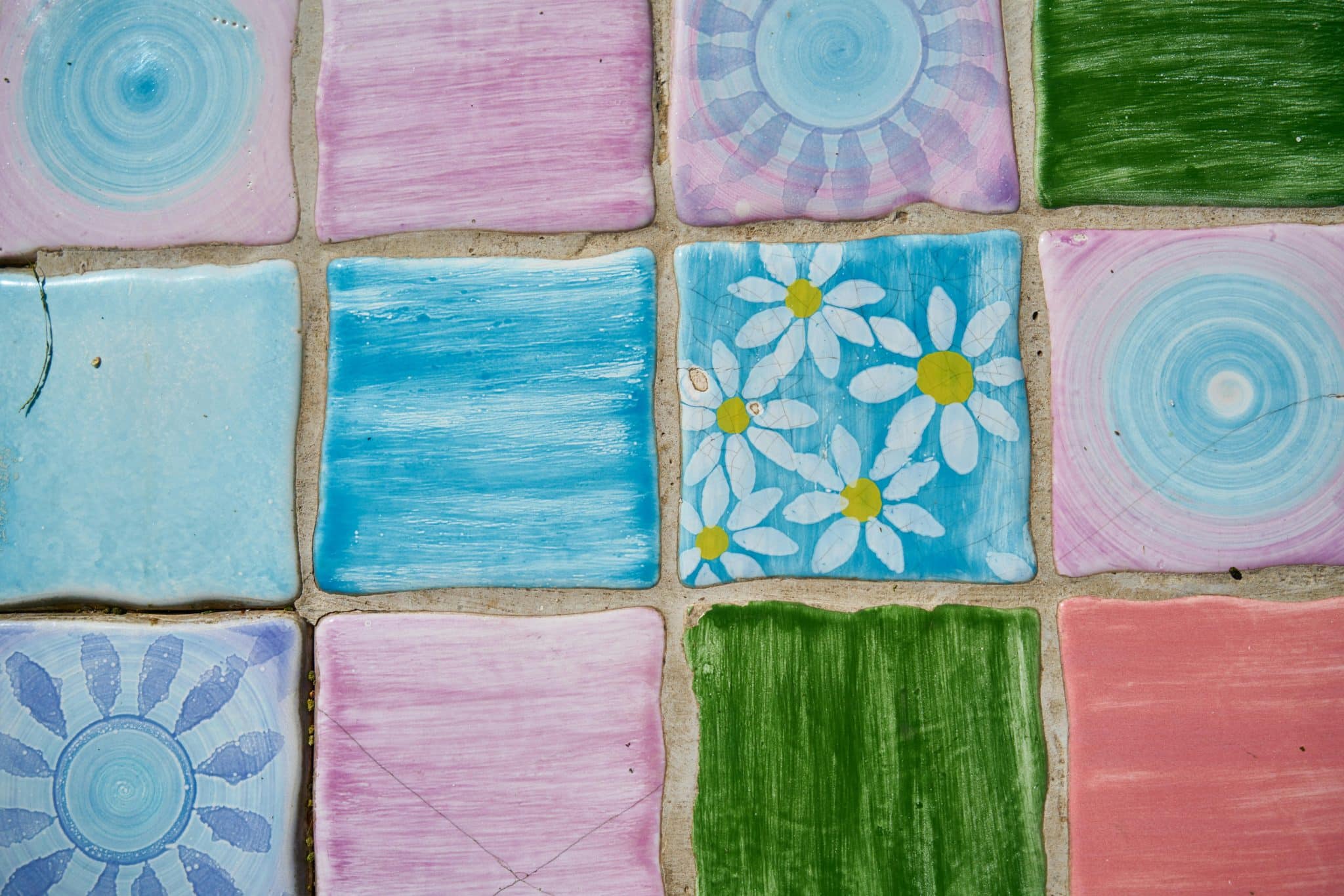
Handcrafted exterior tile works differently. The materials are natural, clay, cement, terracotta, stone aggregate, and the color comes from mineral pigments fired or pressed into the body of the tile rather than applied as a surface coating. This means two things that matter enormously for outdoor use.
- First, the color does not fade when the surface weathers, because the pigment runs all the way through.
- Second, each tile is slightly different from the next, with natural variation in tone, surface texture, and the way it catches light, which is exactly what gives a finished surface its depth and warmth.
This is the quality that makes old European gardens and Mexican courtyards so visually rich. The tile has genuine material character, not a printed pattern that mimics it.
Over time, instead of looking tired, a well-specified handcrafted tile develops a patina that makes it look more like it belongs in the garden than it did when it was first installed.
Garden paths that actually look like they were meant to be there
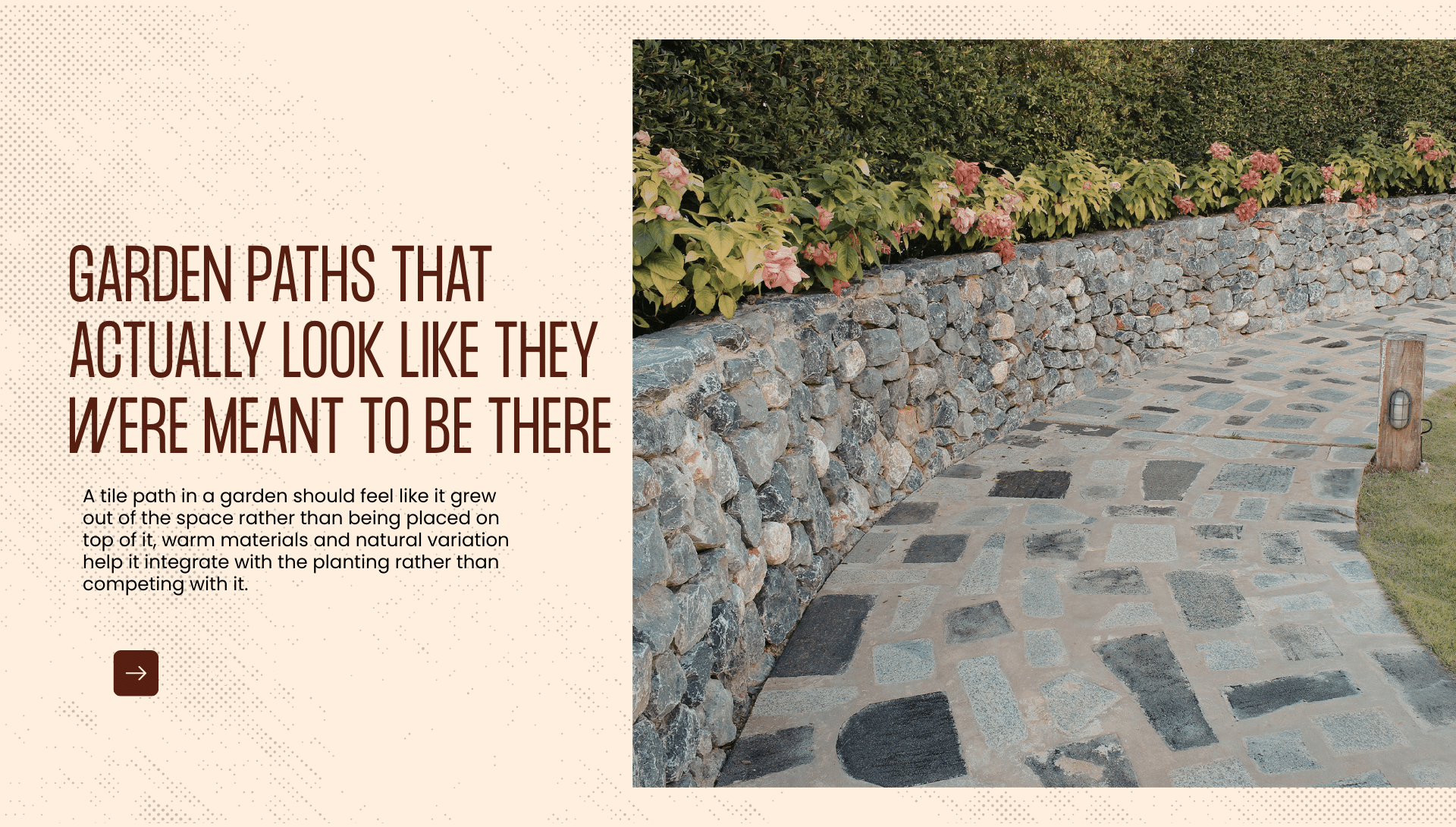
A garden path does practical work, but it also shapes how you move through and experience a garden.
A straight concrete path from the back door to the lawn is functional. A path made from handcrafted tile, with warm terracotta tones or a simple encaustic pattern, turns that same journey into something worth noticing.
The key to a garden path that feels right is material integration.
The tile should feel like it belongs to the same family as the soil, the planting, and the surrounding garden elements. Warm clay-bodied tiles, earthy cements, and natural stone all do this naturally. They reference the material palette of the outdoor world rather than imposing something foreign on it.
When you choose the right exterior tile from OUTERclé for a garden path, the range covers exactly this quality: handcrafted surfaces with mineral color, natural variation, and the freeze-thaw performance needed for a surface that lives outside year-round.
Layout is the other variable worth thinking about carefully.
A straight path in a straight-lined formal garden reads well. In a more relaxed, cottage-style garden, a gently curved path with occasional stepping stone gaps feels more natural.
Smaller format tiles or irregular arrangements integrate better with organic planting than large-format porcelain slabs, which can feel too hard-edged for an outdoor planting space.
One practical point: garden paths need adequate drainage built into their installation, either through a slight cross-fall away from the path centre or through a permeable base layer.
A path that holds water will push against the tile from below in freezing conditions, which is the main cause of premature path failure. Getting this right at installation is a lot cheaper than repairing it later.
Patio surfaces that give the garden a room to live in
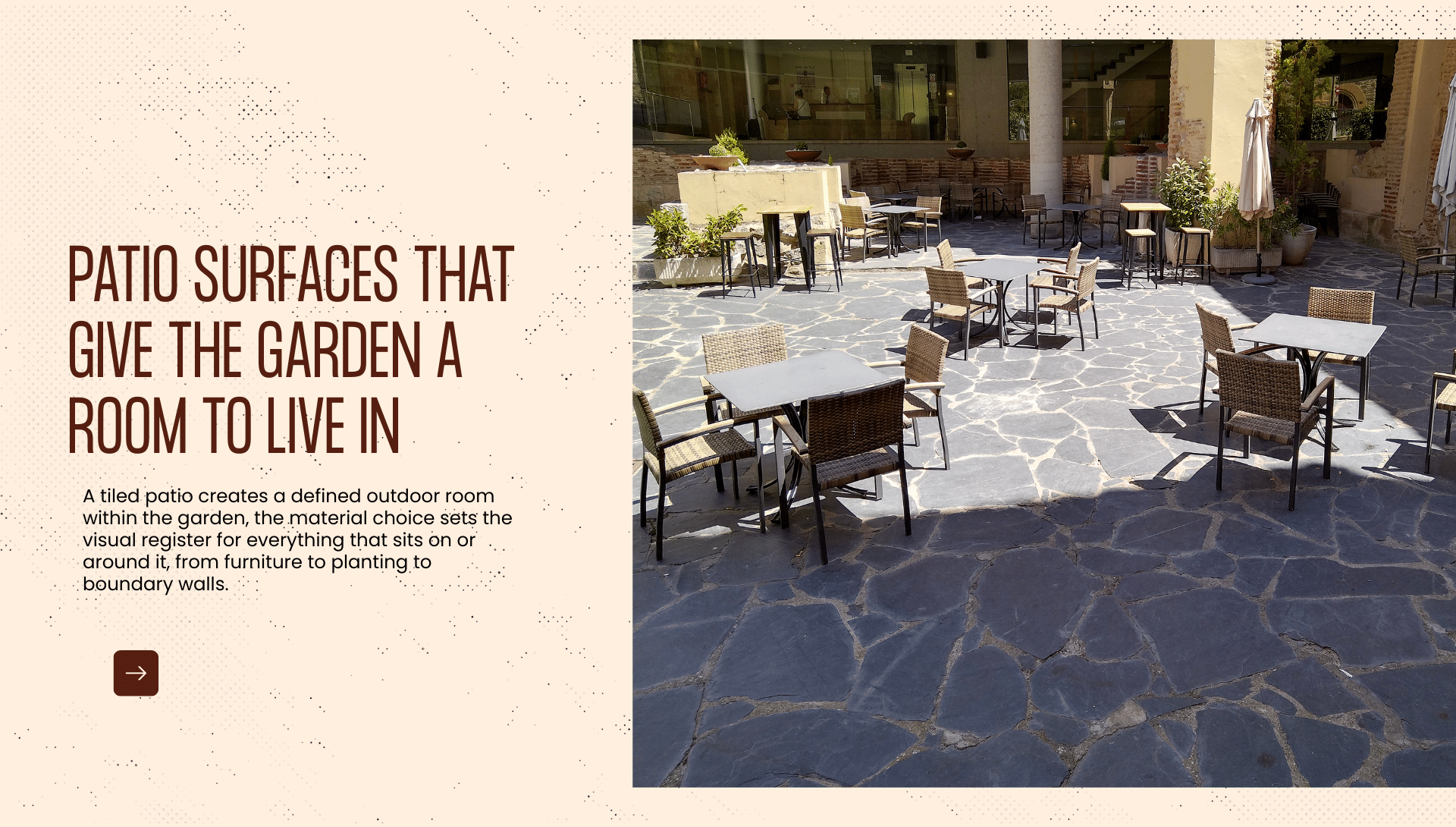
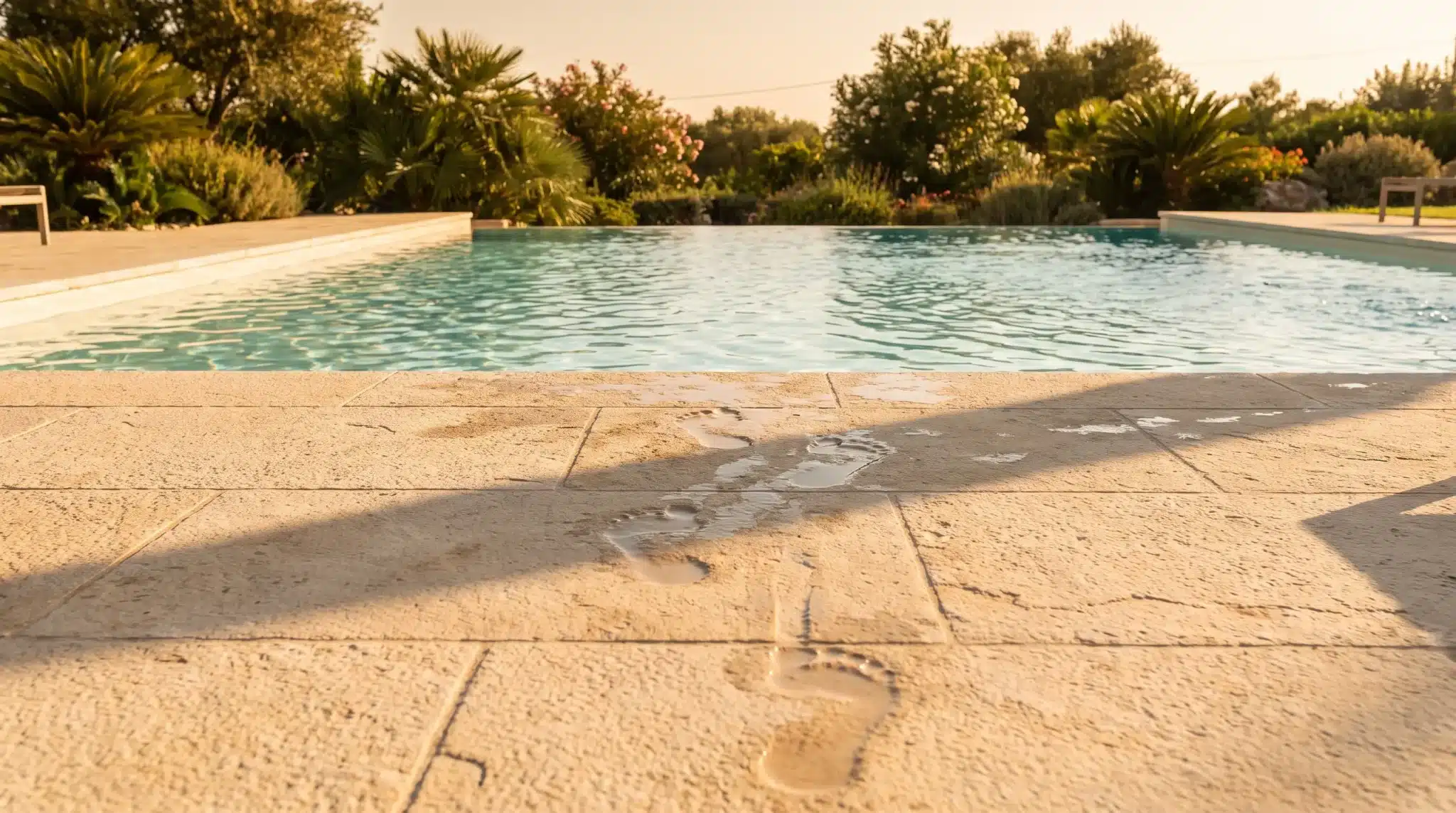
The patio is where the garden gets its sense of inhabitation. It is the part of the outdoor space that tells people where to put down a drink, pull up a chair, and stay. And because it is the most used outdoor surface, it is also the one that repays the most considered material choice.
Handcrafted tile on a patio surface does something that concrete pavers and porcelain slabs rarely manage: it gives the space warmth at a distance. You can feel the difference from across the garden before you step onto it.
The slight variation in tone between tiles, the way the surface catches afternoon light, the sense that the material has genuine depth rather than a printed finish, all of these things communicate quality in a way that is hard to articulate but immediately felt.
- Cement tile stands out on patios where you want pattern and visual impact.
- Encaustic geometric cement tiles can be especially effective in smaller or more contained patio spaces.
- Because the color is mineral-based and pressed into the top layer, cement tile tends to weather more naturally over time.
- Terracotta offers a warmer, more organic look and develops the kind of patina often associated with Mediterranean and Spanish-inspired gardens.
- Covered patios expand your material options because they are exposed to less direct moisture.
- In sheltered outdoor spaces, you can consider materials like polished terrazzo, finer cement tile formats, and more intricate patterned surfaces.
- For porches and covered entertaining areas, the tile choice should also support the transition between indoor and outdoor spaces, not just the patio surface itself.
Garden walls and boundaries worth looking at
Most backyard garden walls are afterthoughts. Painted brick, rendered concrete block, or timber fence panels that do their job without adding anything to the visual story of the space. Tile changes that calculus entirely.
A low garden wall clad in handcrafted brick tile carries the same warm, natural quality as a planted border. The variation in color and texture references the garden’s own material language rather than the built environment around it.
A feature panel of encaustic cement tile on a rendered wall section introduces pattern and artisan quality at a scale that the rest of the garden can absorb without feeling overwhelmed.
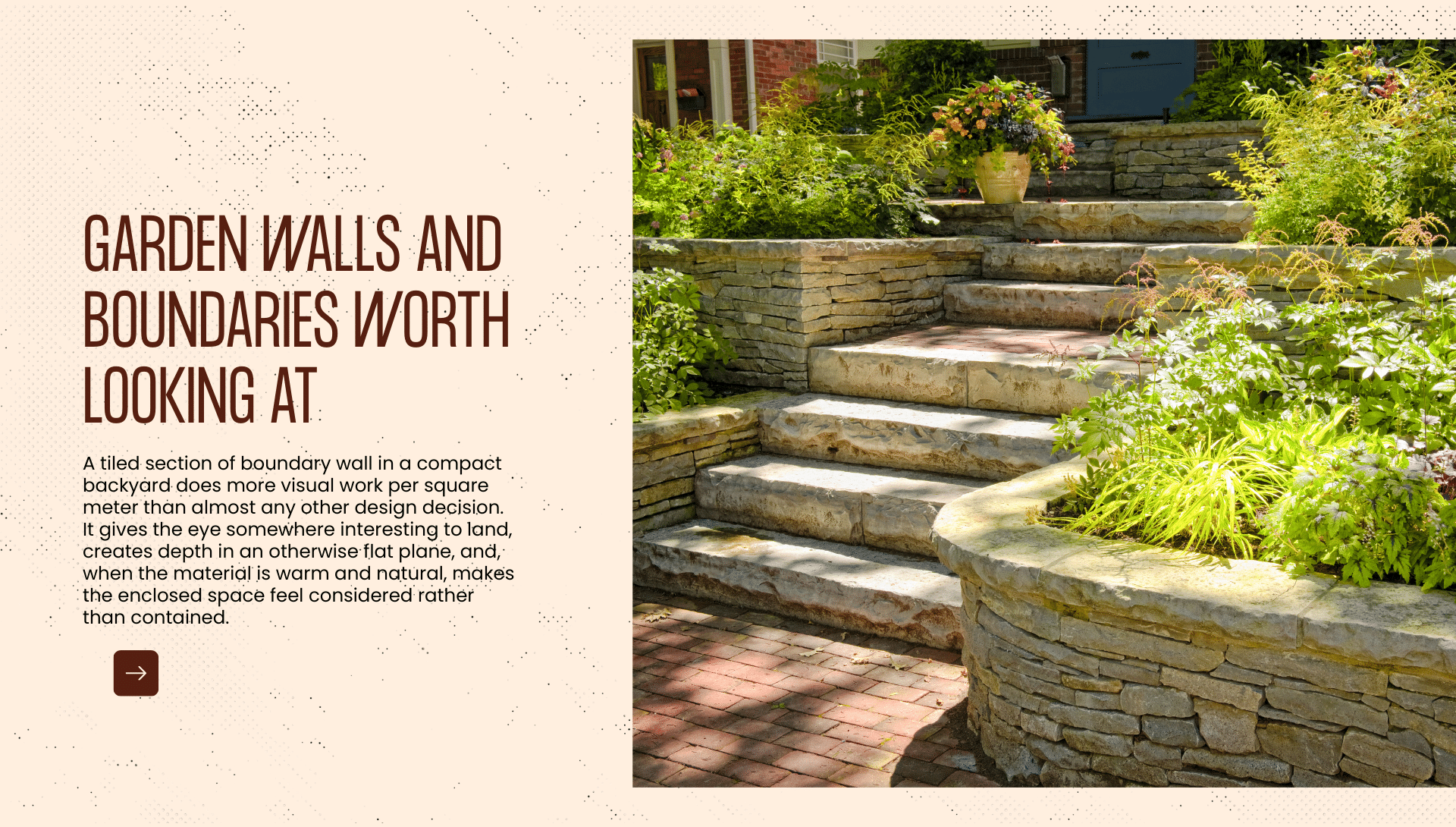
In smaller gardens, the boundary wall is one of the most valuable design surfaces available because it is vertical, which means it is visible from almost everywhere in the space.
This is particularly relevant if you are also thinking about the spaces where your garden connects to the rest of the home, the entryway from the street, the passage from front to back, the porch that bridges inside and outside.
Tile used consistently across those transition points creates a material thread that gives the whole property a sense of design coherence. Getting the entryway right as the opening statement of your home’s aesthetic is a decision that carries more weight when the garden surfaces beyond it are equally considered.
A few things to sort out before you start
Before any tile goes into the ground or onto a wall, a few practical questions are worth answering properly.
Climate first.
If your winters involve real frost, every tile you consider needs to carry a tested freeze-thaw rating. Water gets into tile pores, freezes, expands, and can crack the surface from the inside out. This is the single most common cause of outdoor tile failure in cold climates, and it is entirely avoidable by checking the rating before you buy rather than after.
Slip resistance.
Any tile that will be walked on outdoors, path, patio, stepping stone, needs adequate grip when wet. Matte and textured surfaces are generally safer than smooth or high-gloss finishes, and for garden paths that will be wet for extended periods after rain, this is not a detail to skip over.
Sealing and maintenance.
Cement tile, terracotta, and natural stone all need sealing before installation and at intervals afterwards. The frequency depends on the material and the level of weather exposure, but it is a simple step that protects the surface and keeps the color looking its best. Factor this into your planning from the start rather than discovering it after installation.
And finally, think about the whole picture before committing to any single surface. The patio material will look different alongside the path material alongside the boundary wall material.
The best outdoor renovations are the ones where those decisions feel coordinated rather than individual. If the garden connects to a covered porch or veranda, thinking about how the covered outdoor space functions as part of the overall garden design before choosing surfaces means you can select materials that work across the whole range of conditions from sheltered to exposed.
A garden that looks as good as it grows
The best backyard gardens are the ones where the plants and the hardscape feel like they belong to the same design intention.
Where the path invites you in, the patio keeps you there, and the walls give the whole space a sense of enclosure that feels generous rather than confining.
Handcrafted tile earns its place in that picture because it brings the one quality that mass-produced outdoor materials rarely have: genuine material character. It ages the way good things age, developing depth and patina over time, becoming more itself rather than less.
In a garden, where patience and the long view are already part of the mindset, that is exactly the kind of surface worth investing in.