Ever wonder why that gorgeous arrangement from your local florist stays perky for two whole weeks while your grocery store bouquet droops after three days?
The difference isn’t just about fresher blooms or fancy vases.
Professional florists know a handful of surprisingly simple techniques that completely change how long cut flowers last, and most of these tricks don’t require any special equipment or expertise.
The precise angle they cut stems, the water temperature they choose, these small but intentional steps make all the difference. Ready to bring those professional results into your own home?
Let’s walk through exactly what florists do behind the scenes to keep their flowers looking gallery-worthy, and how you can easily do the same.
The Science Behind Flower Freshness
Understanding why flowers fade helps you keep them alive longer.
Once cut, stems struggle with water uptake as air bubbles block their vascular system, essentially leaving them thirsty even when sitting in water.
Bacteria multiply quickly in the stem ends, creating a slimy barrier that prevents hydration.
Then there’s ethylene gas, released naturally by ripening fruit and aging flowers themselves, which speeds up wilting.
Temperature plays a massive role, too. Florists maintain a cold chain from farm to shop, keeping blooms between 33 and 35 degrees Fahrenheit.
This controlled environment slows metabolism and bacterial growth, buying precious time before flowers reach your home.
Step 1: Proper Flower Selection at the Source
Freshness starts long before flowers hit your vase. Florists know that picking blooms at the right stage and getting them into water immediately makes or breaks longevity.
Look for tight buds with a hint of color showing rather than fully opened flowers since buds have more life left to give. Run your fingers gently along petals and stems to check for soft spots, browning edges, or bruising.
The moment a stem is cut, air rushes in and blocks water pathways, so florists recut stems at a sharp 45-degree angle and plunge them straight into clean water within seconds.
Step 2: Conditioning Flowers Like a Florist
Conditioning is florist-speak for prepping blooms to drink deeply and last beautifully. These foundational steps happen before flowers ever touch a display vase.
Stem Preparation
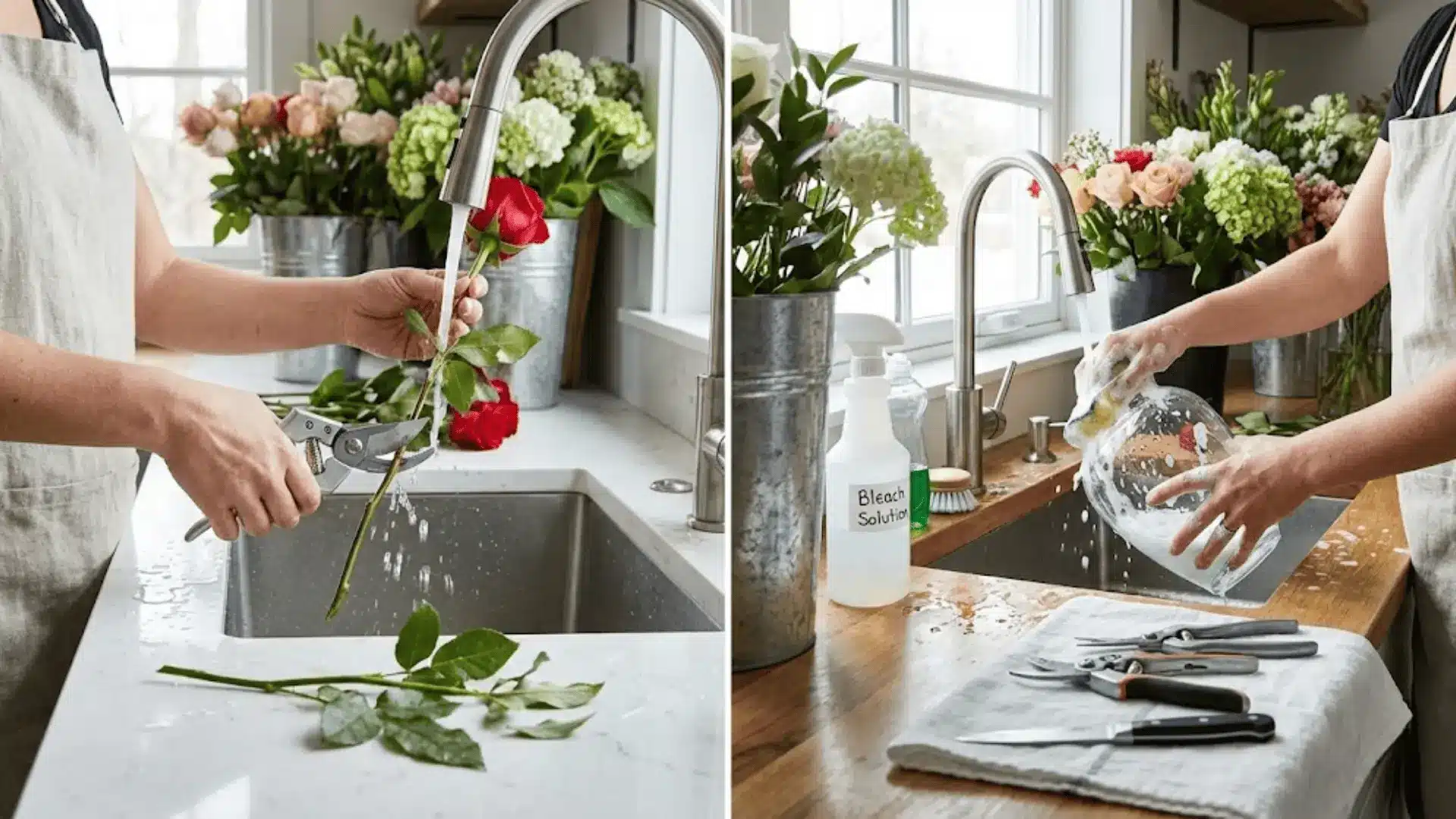
Remove any foliage below the waterline since submerged leaves create a bacterial breeding ground that clogs stems. Always cut at a 45-degree angle using sharp, clean shears to increase surface area for water absorption.
Florists often cut under running water to prevent air bubbles from entering the stem and blocking the vascular system.
Sanitation Matters
Bacteria are the silent killer of cut flowers. Florists sanitize their buckets, vases, and cutting tools between uses because even invisible residue shortens vase life dramatically.
Wash everything with hot, soapy water or a diluted bleach solution before adding fresh blooms. This simple hygiene step adds multiple days to your arrangement.
Step 3: Using Professional Flower Food
Those little packets florists include aren’t just a nice gesture. Flower food is scientifically formulated to address exactly what cut flowers need to thrive.
Commercial mixes contain three essential ingredients: sugar for energy since flowers can’t photosynthesize, an acidifier to lower pH and improve water uptake and color vibrancy, and a biocide to control bacteria growth.
Homemade recipes using sugar, lemon juice, and bleach can work in a pinch, but getting the ratios right is tricky. Too much sugar feeds bacteria, too little bleach won’t control growth, and incorrect pH actually harms flowers.
Commercial mixes are precisely balanced for optimal results and cost pennies per use.
Step 4: Temperature & Storage Secrets
Temperature control separates professional results from wilted disappointments. Florists obsess over keeping blooms cool because heat accelerates aging exponentially.
- Professional coolers maintain 34 to 38 degrees Fahrenheit, slowing metabolism and extending bloom life significantly.
- Tropical flowers like orchids and anthurium hate cold storage, while roses, tulips, and lilies thrive with overnight refrigeration.
- Display arrangements away from sunny windows, heating vents, and ripening fruit, which releases ethylene gas.
- Never leave flowers in a hot car during transport, even briefly, as ambient heat wilts blooms in minutes.
These temperature considerations might seem fussy, but they’re exactly why florist arrangements outlast grocery store bunches by a full week or more.
Step 5: Water Management & Maintenance
Fresh water is non-negotiable for long-lasting flowers. Florists treat water quality and levels with the same care as initial conditioning.
Daily water changes flush out bacteria before they accumulate and clog stems.Recutting stems every two to three days removes the sealed-off ends and restores water uptake through fresh vascular tissue.
Monitor water levels closely since some flowers like hydrangeas and sunflowers are thirsty, drinking their vase dry in under 24 hours, while others sip slowly. Mixed arrangements benefit from the 3-5-8 rule for balanced stem placement.
Ethylene Control: The Hidden Freshness Factor
Ethylene gas is an invisible flower killer that most people don’t even know exists. This naturally occurring plant hormone triggers aging and wilting in cut flowers, and it’s everywhere.
Ripening bananas, apples, and tomatoes release significant amounts, as do car exhaust fumes and even dying flowers themselves.
Florists store blooms far from produce sections and use ethylene scrubbers in their coolers for this exact reason. At home, keep your vase away from fruit bowls and ensure good ventilation.
According to research published in Horticulturae, exposure to ethylene accelerates petal wilting and abscission, with sensitivity varying among different varieties.
Even low concentrations trigger premature death in sensitive blooms like carnations and orchids.
Flower-Specific Freshness Tips
Different flowers have their own quirks and preferences when it comes to staying fresh. What works beautifully for roses might actually harm tulips, and hydrangeas need completely different care than sunflowers.
Here’s how to tailor your approach to the most popular blooms.
| Flower | Key Technique | Water Preference | Average Vase Life |
|---|---|---|---|
| Roses | Remove guard petals, apply the five-leaf rule when selecting stems | Deep hydration soak for several hours | 7 to 12 days |
| Tulips | Rotate the vase daily | Cooler water than most flowers | 5 to 7 days |
| Hydrangeas | Mist petals daily, recut stems frequently | Submerge the entire bloom for 30 minutes, if wilted | 5 to 7 days |
| Sunflowers | Strip excess foliage completely | Warm water for initial conditioning | 6 to 12 days |
That’s a Wrap
Keeping flowers fresh like florists do isn’t about expensive products or professional secrets. It’s about understanding what cut blooms actually need and giving them consistent care through simple, intentional steps.
Clean tools, fresh water, proper conditioning, and smart placement make all the difference between wilted disappointment and week-long beauty.
Now that you know how florists keep flowers fresh, you’re equipped to bring that same professional longevity into your own home.
Which tip surprised you most, or do you have a flower care trick that works wonders for you? Share your thoughts in the comments below, and let’s keep learning from each other’s experiences.