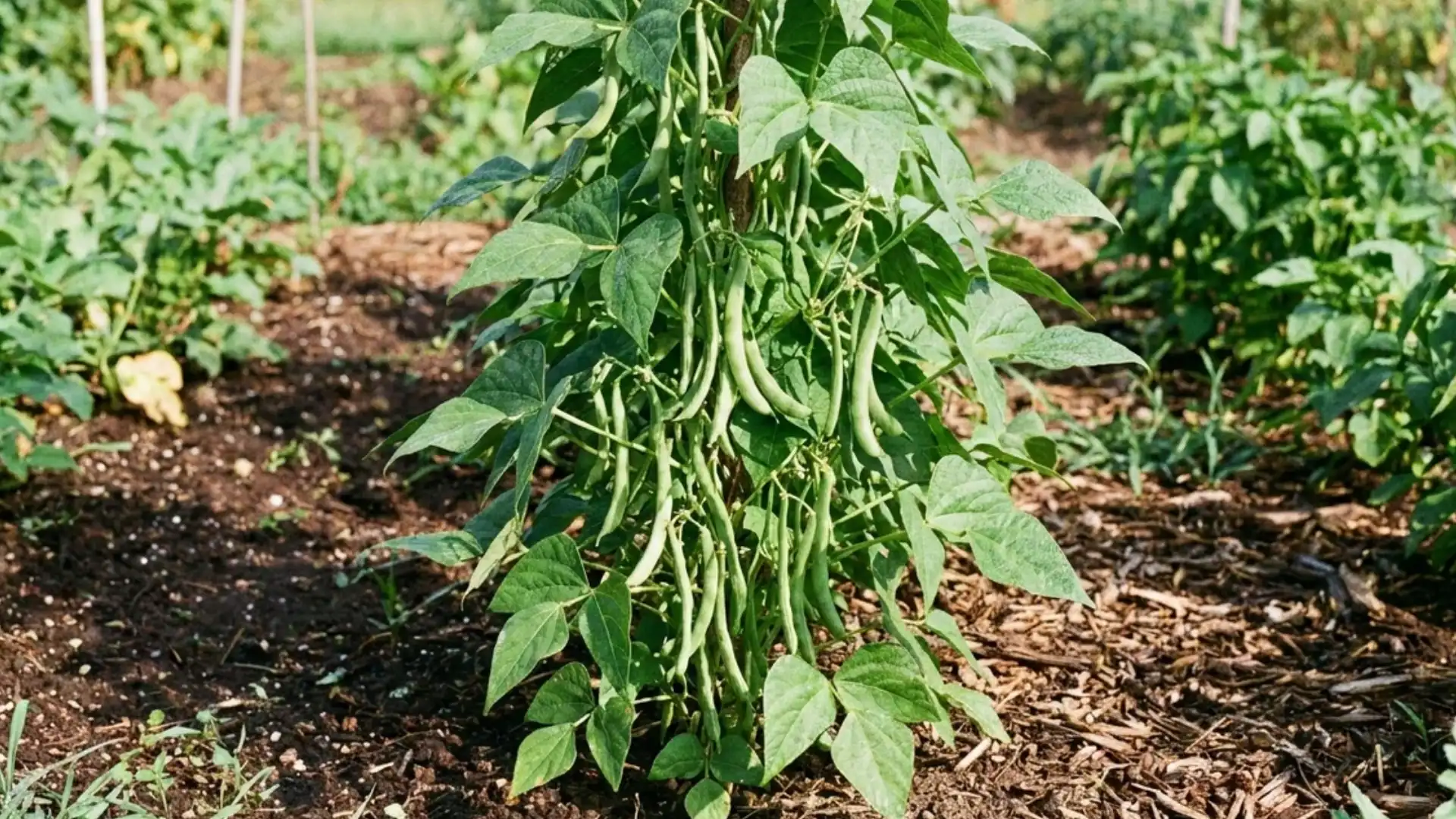
A green bean seed may seem like a small, hard pebble in your hand, but after roughly two months, it changes into a plant abundant with pods.
The jump from seed to harvest happens through specific plant stages, each serving its role.
Roots stretch, leaves multiply, flowers open for a single day, and pods fatten up fast once pollination is done.
This blog gathers green bean plant stages. Knowing these stages by sight means you stop guessing and start noticing exactly where your plant stands, week by week, from the first crack in the soil.
Green Bean Plant Life Cycle
Green beans belong to the legume family, alongside peas and lentils.
They’re annuals, completing their entire life in a single season. Each plant is frost-sensitive, so a cold snap can end growth early. Beans grow best when sown directly in the ground instead of starting indoors and transplanting.
For a fuller walkthrough on growing green beans at home, direct-sow timing and spacing make the biggest difference early on.
Roots host bacteria that pull nitrogen from the air, enriching the soil as the plant grows. Both the pod and the seed inside are edible, depending on when you pick.
Left unpicked, a plant slows production and redirects energy toward drying out its seeds.
Green Bean Growth Timeline (Week-by-Week)
Monitor a green bean plant carefully, and you’ll see its growth stage clearly through its appearance and actions.
| Timeframe | Stage | Details |
|---|---|---|
| Week 1 | Germination | The seed sprouts and pushes its first root downward |
| Week 2 | Seedling | The first true leaves begin to open |
| Weeks 3–5 | Vegetative Growth | The plant gains height and fills out with foliage |
| Weeks 5–6 | Flowering | Small blooms form, setting the stage for pods |
| Weeks 7–8 | Pod Development | Pods grow fuller and approach harvest size |
| Weeks 8–9 | Harvest | Most varieties are ready to be picked |
Green Bean Plant Stages From Seed to Harvest
All plants go through the same stages from seed to pod, but the speed varies slightly depending on the variety.
Stage 1: Planting the Seeds
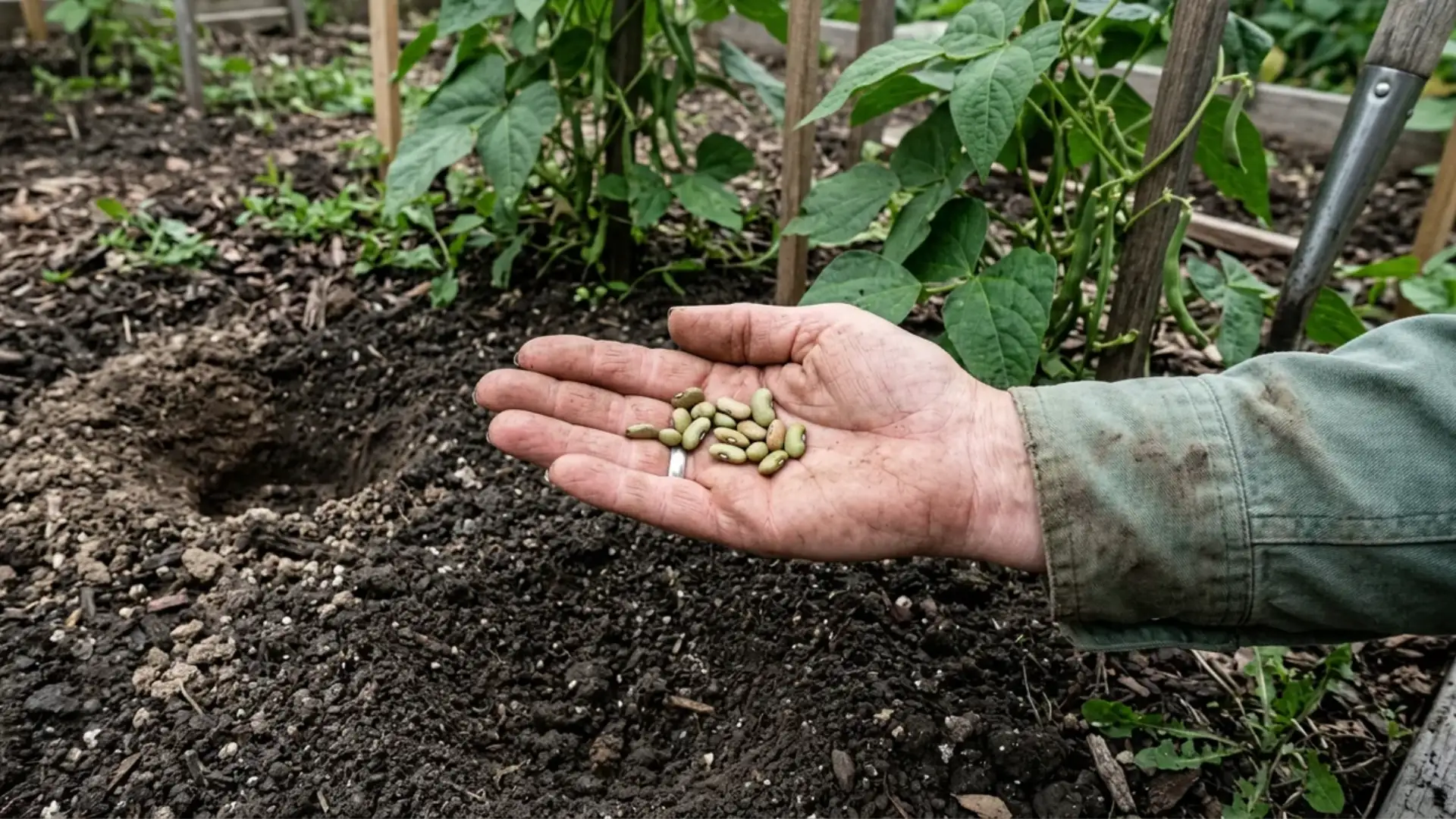
Green bean seeds are larger than most vegetable seeds, so they’re easy to handle and plant by hand.
Each seed stores enough energy to push a root down and a shoot up on its own, with no outside nutrients needed yet. Plant seeds about an inch deep in warmed soil; cold soil causes seeds to rot instead of sprouting.
- Plant seeds roughly 1 inch deep.
- The soil temperature should be at least 60°F.
- Space the seeds a few inches apart.
Stage 2: Germination – Seed Cracks Open
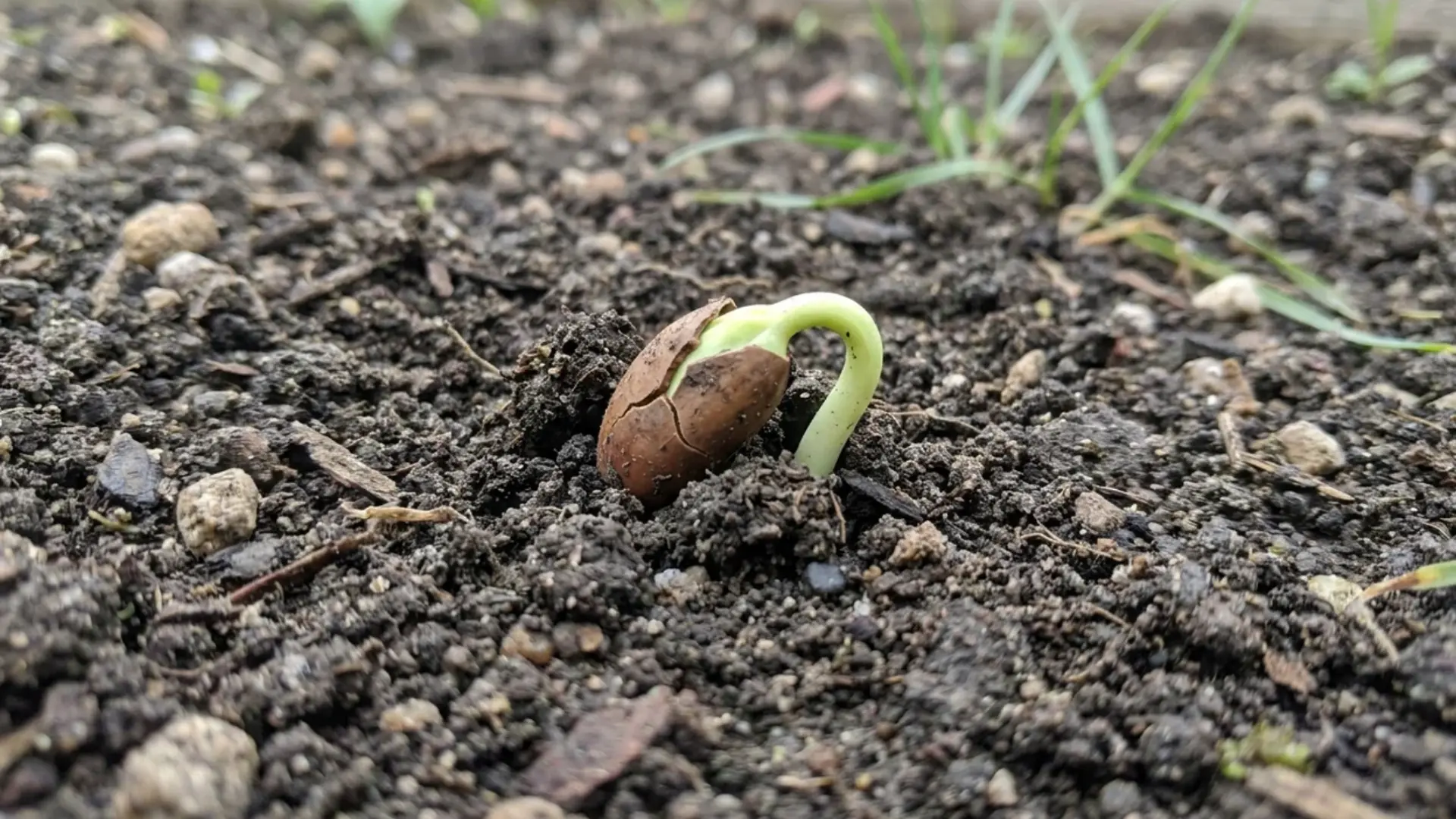
Germination occurs when the seed cracks open and begins to grow. The initial root, known as the radicle, emerges and grows downward to secure the plant and begin absorbing moisture from the soil.
Consistent moisture is crucial, as a seed drying out during germination typically stops and cannot recover.
- Generally takes around 6 to 10 days.
- Maintain soil moisture without making it too wet.
- The first shoot typically occurs between days 8 and 10.
Stage 3: Seedling and Sprout
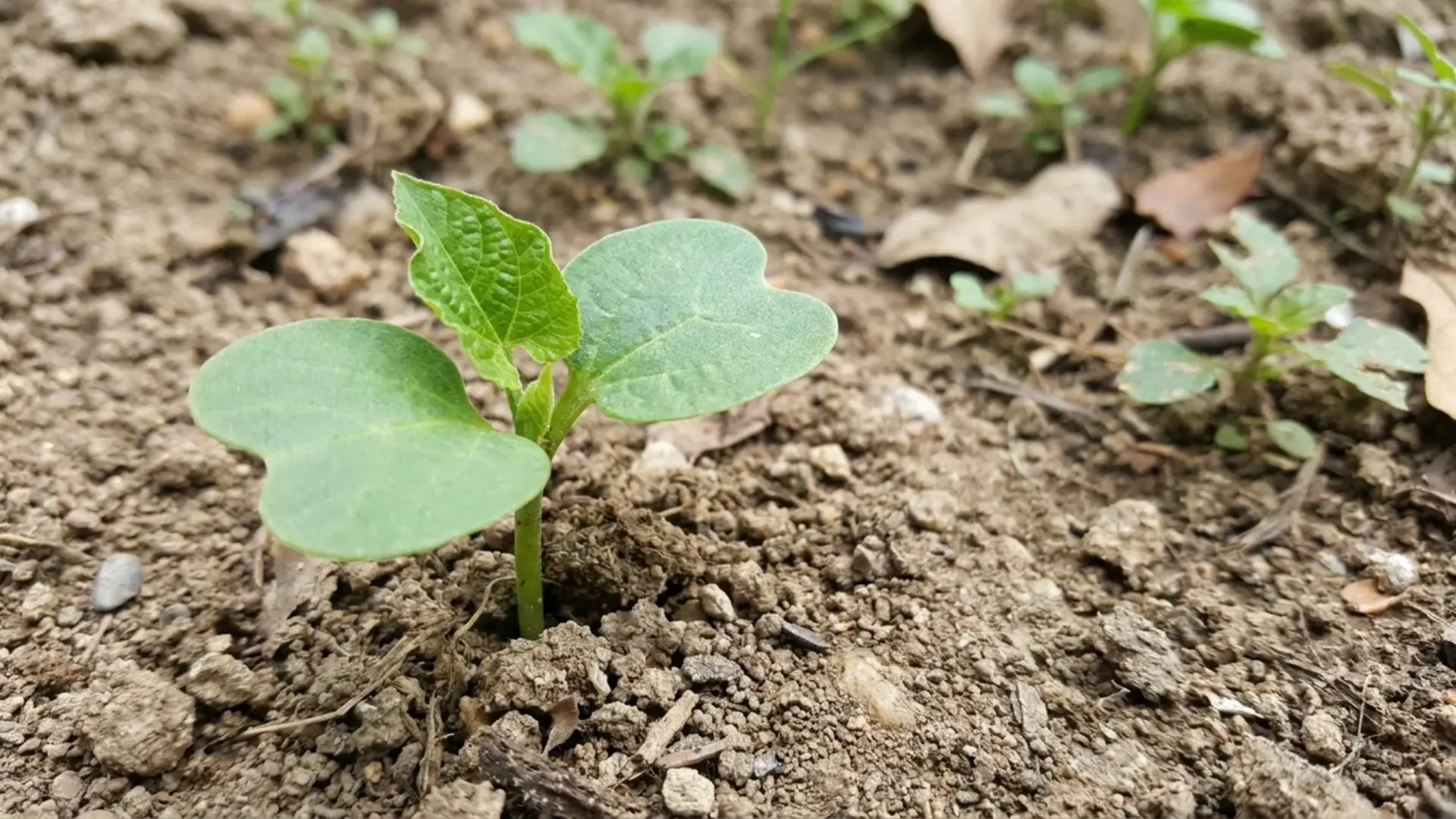
Once the shoot breaks through, the plant enters the seedling stage and begins to resemble an actual plant.
The first leaves to appear are called cotyledons, rounder and plainer than the true leaves that follow. The plant is putting most of its energy into building a strong root system during this window.
- Extends approximately from day 10 to day 15.
- Cotyledons emerge initially, followed by the true leaves.
- Root development is more important than visible growth.
Stage 4: Vegetative Growth
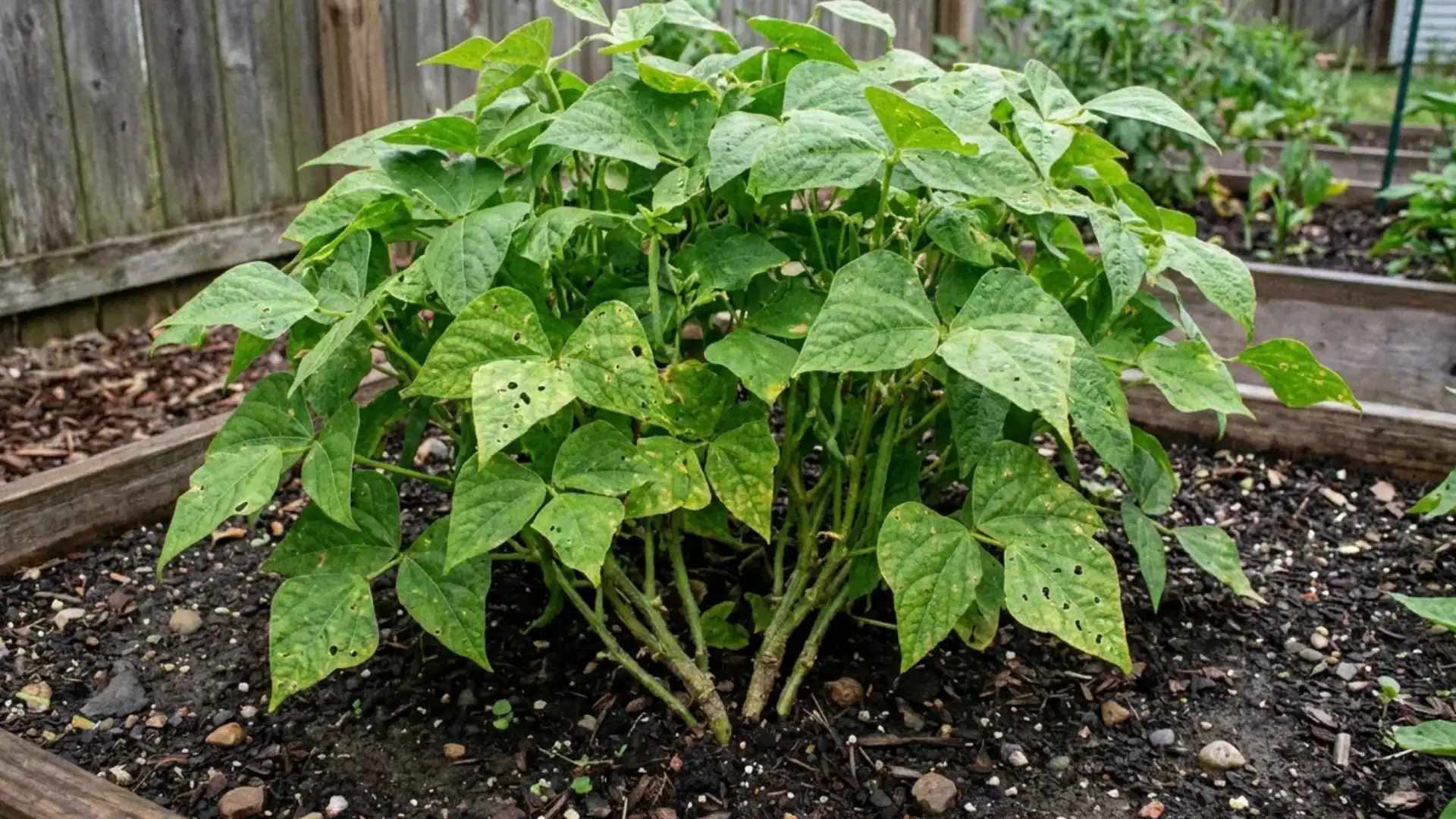
By day 15 to 25, the plant shifts into serious growth mode.
This is when trifoliate leaves show up, meaning each leaf now grows in a cluster of three leaflets instead of one. The stem thickens, more branches form, and pole varieties begin reaching for something to climb.
- Spans approximately days 15 to 25.
- Trifoliate leaves indicate robust growth.
- Pole varieties begin sending out tendrils
Stage 5: Blooms Start Opening Along the Stem
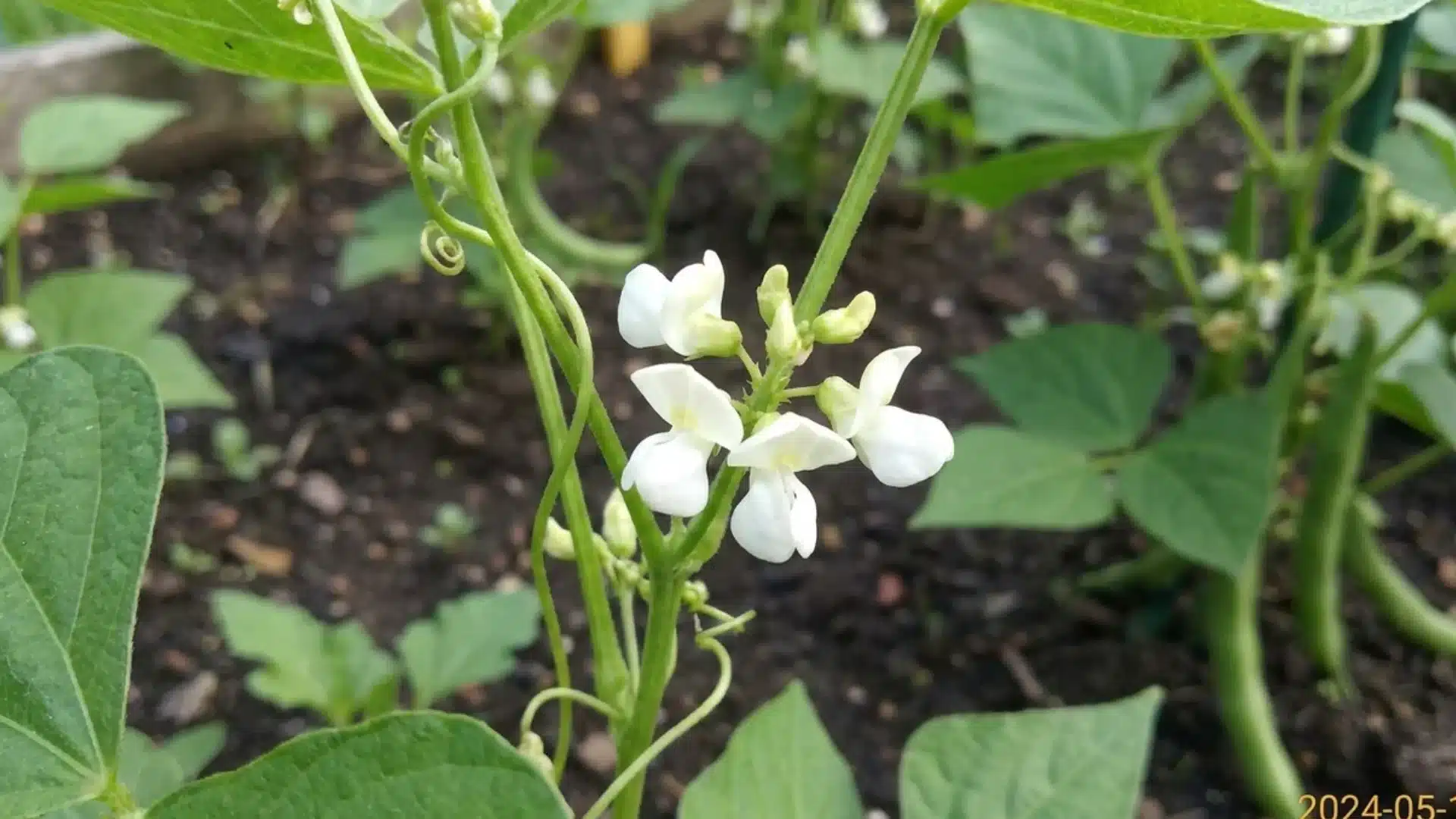
Around days 25 to 35, small white or lavender flowers start opening along the stems, usually in small clusters.
Green beans are self-pollinating, so you don’t need bees or other insects to get a good set, though pollinators visiting does not hurt. This stage moves quickly, so it’s worth checking daily once buds start forming.
- Occurs between days 25 and 35.
- Pollinates itself; no insects needed.
- Each flower blooms for only a day or two.
Stage 6: Pods Stretch Out and Fill In
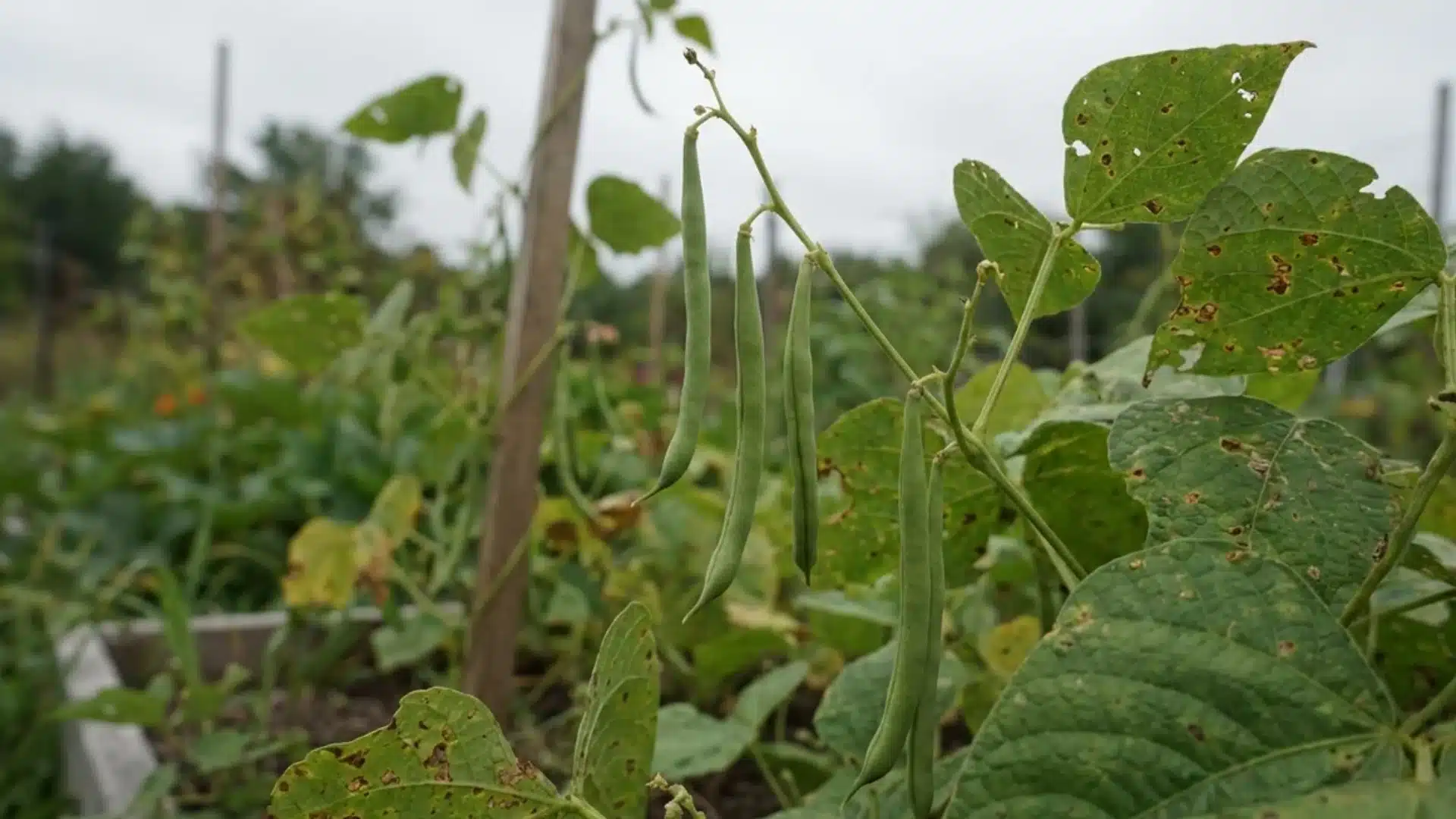
Once a flower is pollinated, a tiny pod starts forming right where the bloom used to be. Over the next 10 to 14 days, that pod stretches out and fills in, going from a thin thread to a full-sized bean.
Pick pods while they’re firm and snap cleanly, since leaving them too long slows down new flower production.
- Pods take 10 to 14 days to develop.
- Inspect the plants every few days after pods appear.
- Firm, snapping pods indicate they are ready to be picked.
Stage 7: Harvest Time to Start Picking
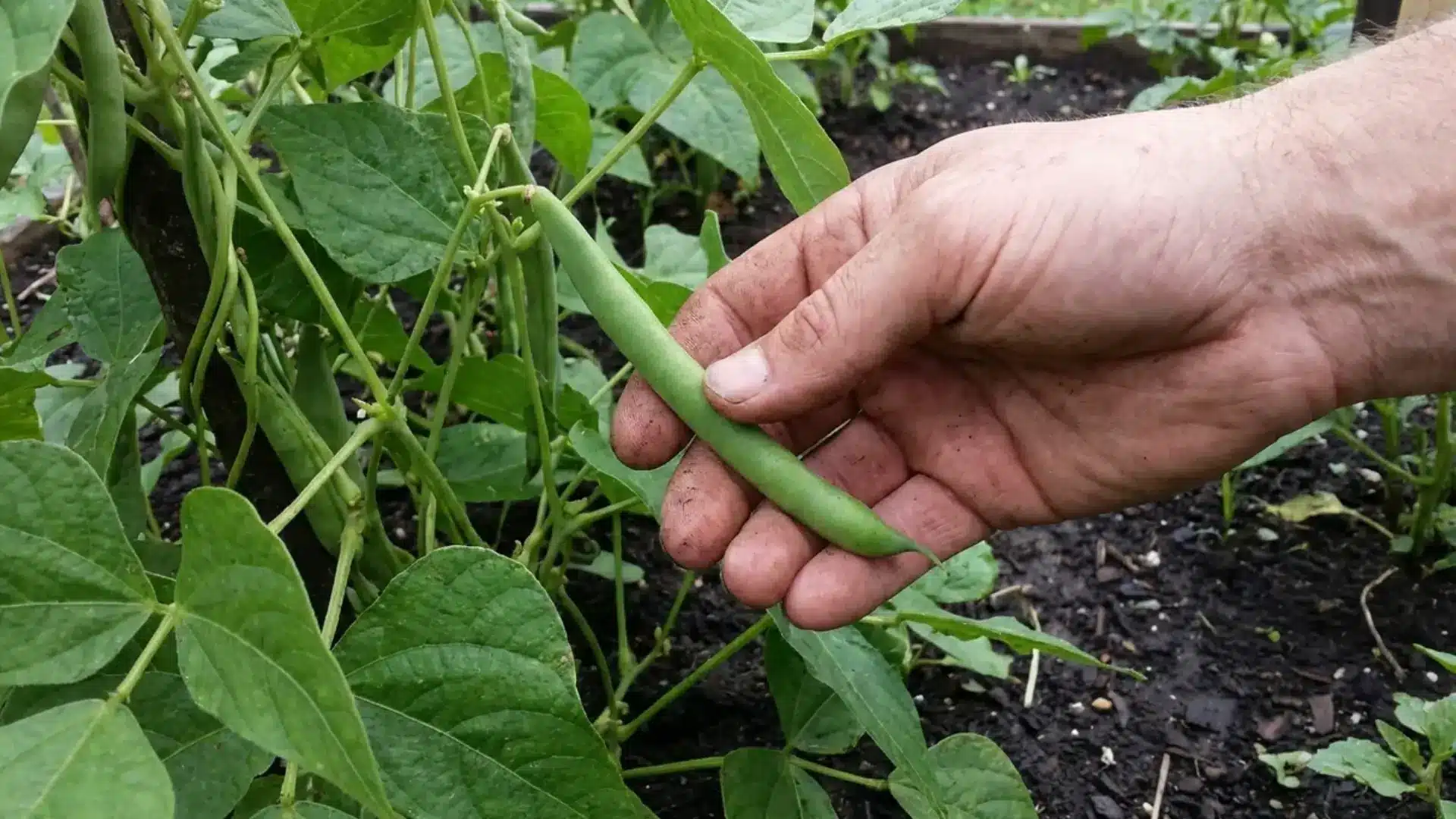
Harvest typically begins around day 50 for bush beans and closer to day 60 for pole beans.
Bush beans tend to produce most of their pods within a two- to three-week window, then taper off. Pole beans keep producing for six to eight weeks or longer if you keep picking regularly.
- Bush beans: Harvest begins approximately on day 50.
- Pole beans: Harvesting begins around day 60.
- Regularly harvesting pole beans helps sustain their production over a longer period.
Signs that Your Bean Plant is Growing Normally
| Plant Part | Normal Signs | What to Watch For |
|---|---|---|
| Leaves | Bright green, firm, evenly colored | Yellowing, spotting, or curling at the edges |
| Stems | Upright and sturdy | Thin, weak, or floppy stems |
| New Growth | Steady leaf production every few days | Stalled growth or no new tips forming |
| Flowers | Small white or lavender blooms in clusters | Flowers dropping before pods form |
| Pods | Smooth, firm, uniformly green, growing longer daily | Curling, brown spots, or stunted pods |
| Roots | White or light tan, firm | Dark, mushy, or foul-smelling roots |
How the Root System Changes Through Each Stage?
Beneath the soil, a green bean plant’s roots go through just as much change as the leaves and pods above ground.
- Germination: A single taproot pushes down, anchoring the seed and pulling in early moisture.
- Seedling: Lateral roots spread near the surface; nitrogen-fixing nodules start forming.
- Vegetative Growth: Taproot deepens to 12–18 inches; nodules multiply, feeding the plant from within.
- Flowering: Root growth slows as energy shifts upward, though water needs increase.
- Pod Development: Nitrogen fixation tapers off as stored energy goes toward filling pods.
- Maturity: Roots weaken, and nodules break down, releasing leftover nitrogen back into the soil.
What Green Bean Plants Need at Each Growth Stage?
Green beans require full sun exposure throughout all growth stages, with a minimum of six hours daily.
Good airflow between plants prevents fungal issues as foliage thickens.
Pole varieties need a trellis or stakes in place before vines start climbing. Browsing a few trellis ideas for climbers ahead of planting time makes it easier to pick a support that fits the space.
Mulch helps hold moisture and keeps soil temperature steady. Avoid high-nitrogen fertilizer throughout, since it pushes leaves over pods. Water at the soil line rather than overhead to keep foliage dry.
Protect young plants from late frosts and sudden cold snaps.
Consistent care through each stage builds a plant that produces all season reliably.
Bush Bean vs. Pole Bean Growth Stages
Bush and pole beans go through similar growth stages, but their individual growth patterns distinguish them.
| Growth Trait | Bush Beans | Pole Beans |
|---|---|---|
| Growth Habit | Self-supporting, stays compact | Climbing vine, needs support |
| Mature Height | 1 to 2 feet | 6 to 10 feet |
| Support Needed | None | Trellis, stakes, or netting |
| Stem Behavior | Stops elongating once bushy | Keeps extending all season |
Problems That Commonly Appear at Different Growth Stages
Problems seldom remain confined to a single stage.
Stress early in a plant’s life often shows up later as weak flowering or poor pod fill.
Overwatering is the most common root cause across every stage, not just one.
Weather swings cause more damage than pests in most home gardens. Catching an issue within a day or two of first symptoms usually saves the plant. Waiting even a week can mean losing the whole row.
Inspect leaves and stems every time you water, not just when issues arise.
Environmental Factors that Influence Every Growth Stage
A few key environmental conditions shape how well a green bean plant grows, no matter the stage.
- Soil Temperature: Above 60°F supports steady germination and growth throughout the cycle.
- Sunlight: Six to eight hours daily strengthens stems, blooms, and pod development.
- Water: Needs shift slightly by stage, but both drought stress and overwatering cause problems.
- Humidity: Affects pollination success and raises disease risk when levels stay high.
- Soil pH: Between 6.0 and 7.0 supports nutrient uptake at every stage.
- Temperature Swings: Sudden heat or cold often triggers stunted growth or blossom drop.
Tips to Extend Your Green Bean Harvest
A few small habits at harvest time can stretch your green bean season by weeks.
- Pick in the morning after dew dries, since wet foliage handled early spreads disease faster.
- Snip pods with scissors instead of pulling, so you do not strip next week’s flowers.
- Rotate beans to a new bed each year to avoid bean-specific fungal spores in old soil.
- Cut back fertilizer after flowering so plants put energy into pods, not leaves.
- Add a light row cover in early fall to buy a few extra weeks before frost.
None of these take extra work, just a slightly closer eye on timing and handling.
Frequently Asked Questions (FAQs)
How Deep Should You Plant Green Bean Seeds?
Plant seeds about one inch deep in soil that has already warmed up.
Can You Grow Green Beans in Containers?
Yes, bush varieties grow well in containers at least 12 inches deep.
Do Green Beans Need Full Sun?
Yes, green beans need six to eight hours of direct sunlight daily.
How Often Should You Water Green Bean Plants?
Water deeply once or twice a week, more often during hot, dry spells.
Can You Save Seeds from Green Bean Pods?
Yes, let pods dry fully on the vine before collecting seeds inside.
The Bottom Line
Once you know these stages, your bean plant stops being a mystery. A yellow leaf or a dropped flower actually tells you something, instead of just looking wrong.
Bush beans give you one big harvest and call it quits. Pole beans keep climbing and producing for weeks longer if you keep picking.
Which one are you growing this year? Let me know in the comments, or ask if you are still deciding.