Once you start digging into plant genealogy, some weird connections surface. Here’s one most gardeners miss: the tree behind your morning coffee and the tree behind one of Southeast Asia’s oldest folk remedies are botanical cousins.
Here’s the family in question – Rubiaceae. It sits among the four biggest flowering plant families out there, carrying roughly 13,500 species across 611 genera. Most plant folks know it through Coffea. Also in there: gardenia, cinchona (quinine), sweet woodruff, and deeper in the tropical branches, Mitragyna speciosa. The kratom tree.
What Ties Rubiaceae Together
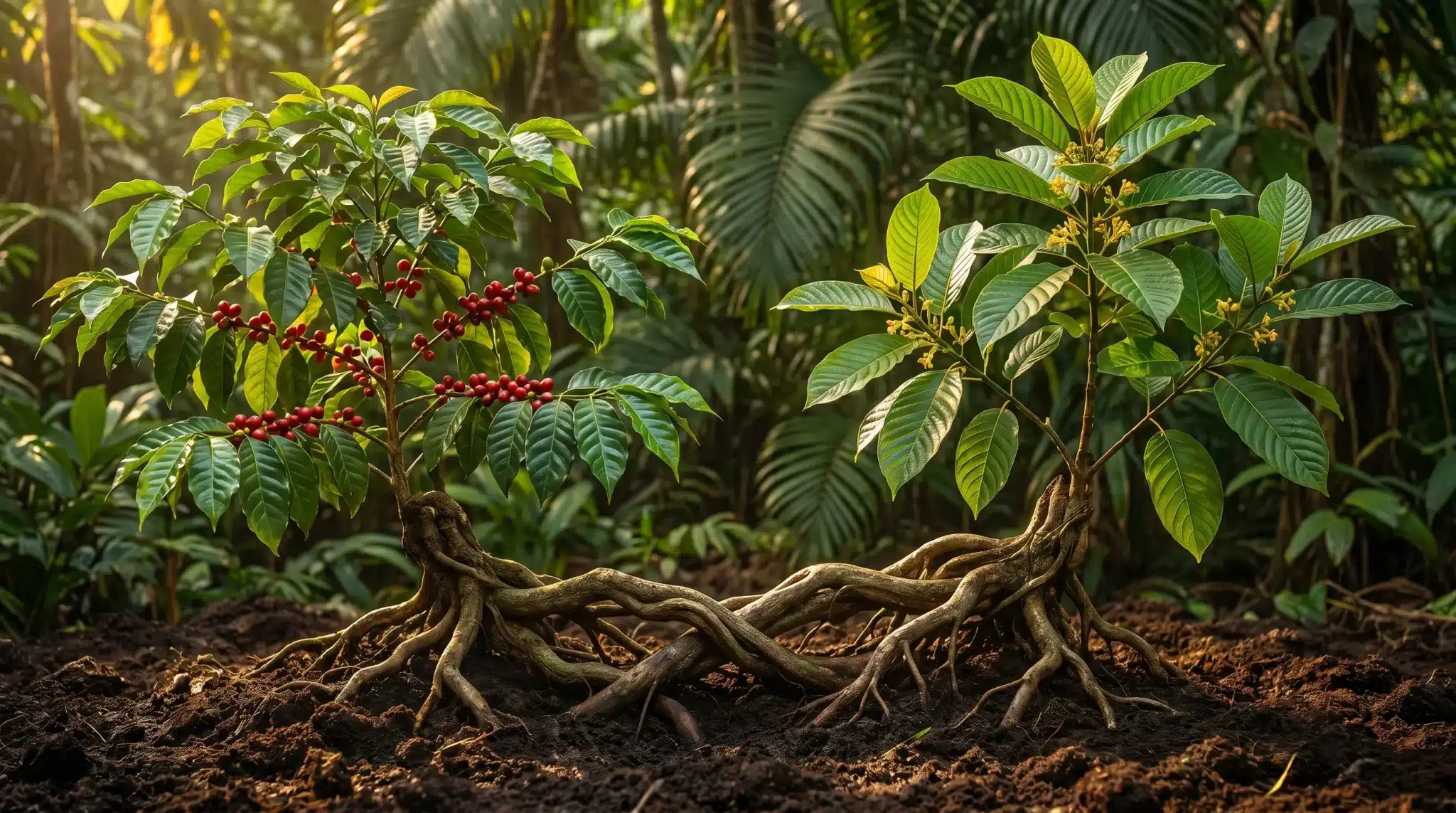
Plant families are grouped by shared traits. Rubiaceae has some consistent markers – opposite leaves with little stipules between the bases, tubular flowers with four or five fused petals, an ovary sitting below the flower rather than above.
Spotting Rubiaceae plants in a botanical garden is easier than you’d think once you know the leaves. Take coffee, gardenia, pentas, ixora — each one wears that same paired-leaf signature, tiny leafy fragments sitting between the bases. Distribution-wise, the family reaches every continent bar Antarctica, with tropical regions (Southeast Asia, Central Africa, the Amazon basin particularly) carrying the lion’s share of the diversity.
The Greatest Hits
Coffea arabica and Coffea canephora lead the lineup. Arabica makes up roughly 60% of the world’s coffee, with robusta handling the remainder. Both trace back to African origins as evergreen shrubs, though you’ll now find them cultivated right through the tropical belt. The caffeine in them is actually a natural pesticide – the plant evolved it to keep pests and nearby competition at bay.
Gardenia needs no introduction. Waxy white blooms, heavy perfume, 140-ish species. Walk into most garden centres and the gardenia on the shelf is almost always Gardenia jasminoides.
Cinchona is less famous now but historically enormous. The bark gave us quinine – the anti-malarial drug that shaped entire colonial disease responses before synthetic versions arrived.
Galium odoratum — sweet woodruff — is a low-growing perennial you’ll come across on shaded European forest floors. Germans flavour May wine with it. Dried, it smells like clean hay.
Madder, ixora, pentas round out the ornamental and dye members.
Mitragyna Speciosa: The Tropical Outlier
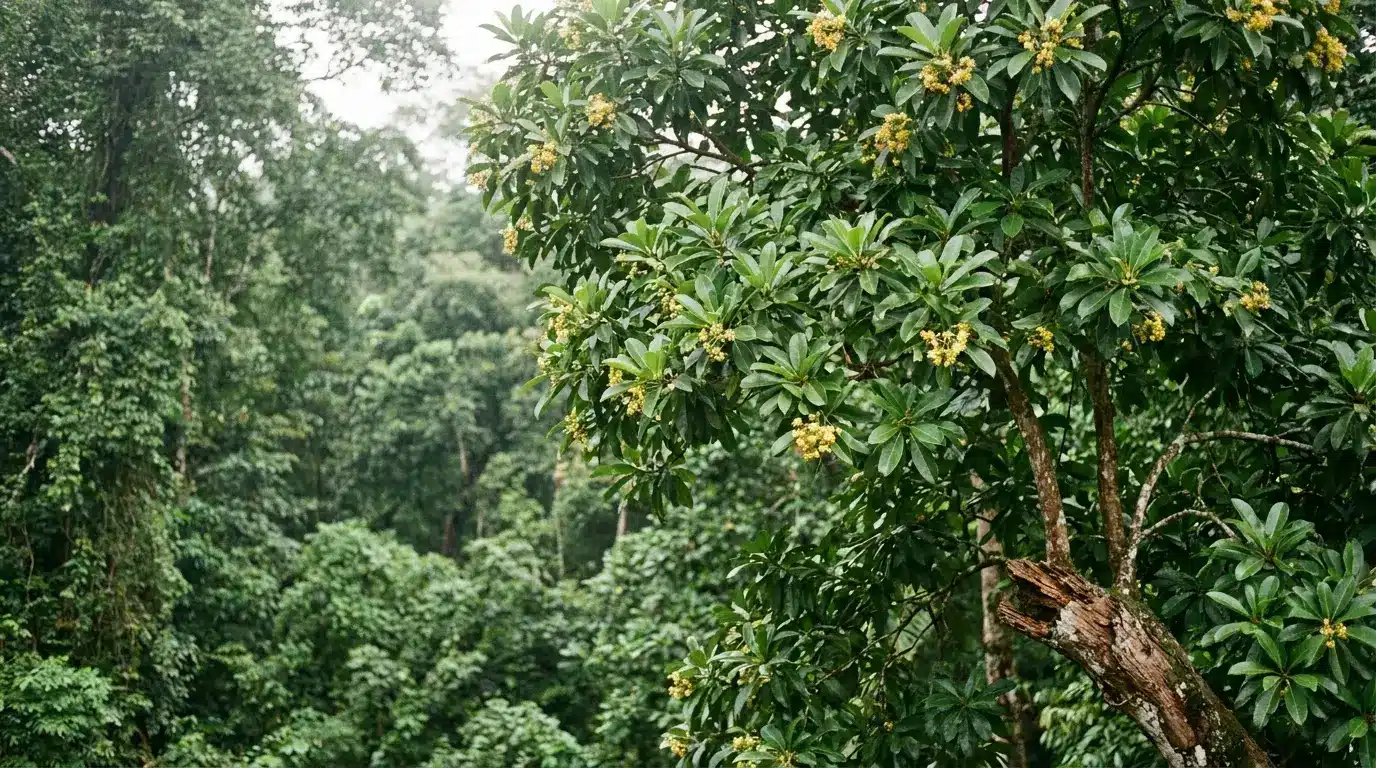
Kratom traces back to Mitragyna speciosa, a species native across Thailand, Indonesia, Malaysia, Papua New Guinea, and pockets of the Philippines. In the wild, these are serious trees – up to 25 metres tall, glossy oval leaves, small yellow flower clusters showing the same tubular Rubiaceae pattern you’d spot on a coffee bush.
Traditional Southeast Asian use goes back centuries. Fresh leaves chewed by labourers and farmers for stamina during long days. Dried leaves brewed as evening tea. Caffeine it isn’t — the working alkaloids here are mitragynine and 7-hydroxymitragynine — but the overall story tracks: another tropical tree, another leaf worth paying attention to, another long stretch of regional practice shaped around it.
Over the past ten years or so, kratom has crossed from its regional home into wider commercial markets. The kratom brand “Black Sheep” is one example of the modern commercial side – flavoured shots and tinctures (Orange Creamsicle, Tiger’s Blood, Strawberry Dragonfruit) designed to make the famously bitter leaf drinkable for people who’d never touch a traditional powder.
Whether that’s a net positive for the plant’s cultural story is fair to debate. The botany underneath is the same. Same Rubiaceae tree. Longer ingredient list on the label.
Why Plant Families Actually Matter
Family groupings aren’t just trivia. They predict shared traits.
Rubiaceae members, as a group, produce alkaloids prolifically. Coffee ended up with caffeine, cinchona with quinine, kratom with mitragynine – all drawing from a shared biochemical inheritance, each species running its own variation on the same theme.
Cultivation conditions also track. Most Rubiaceae prefer well-drained acidic soil, warm humidity, and dappled light. Anyone who’s kept coffee or gardenia as a houseplant is essentially running conditions that would also suit Mitragyna speciosa – though kratom’s eventual size makes it wildly impractical as a home plant.
Shared diseases cut both ways too. Take coffee leaf rust – it’s wrecked plantations across multiple continents, and the fungus isn’t picky about staying on coffee alone; other Rubiaceae species are on the menu.
A Few More Surprising Relatives
Noni (Morinda citrifolia) – a Pacific Islands fruit tree with a medicinal reputation stretching back thousands of years. The ripe fruit smells terrible. Polynesian culture values it regardless.
Galium aparine (cleavers) – that persistent sticky weed that grabs hold of your trousers every time you cut through long grass. Humble, common, technically Rubiaceae.
Uncaria tomentosa (cat’s claw) – an Amazonian vine with deep roots in traditional medicine, currently getting a second look from researchers interested in its anti-inflammatory potential.
Every one of these sits in the same family as your morning coffee.
The Bottom Line
Plant family trees are full of these quiet connections. Commercial staples, ornamental favourites, medicinal plants, and obscure regional species end up sharing branches more often than feels plausible at first glance. Rubiaceae happens to be an exceptionally rich example.
If you’re the kind of gardener who enjoys plants more when the backstory’s attached, these connections genuinely shift how familiar and unfamiliar species start to read. Coffee and kratom turn out to be far closer neighbours than you’d guess, and the family linking them has been shaping human culture in the background for a very long time.