
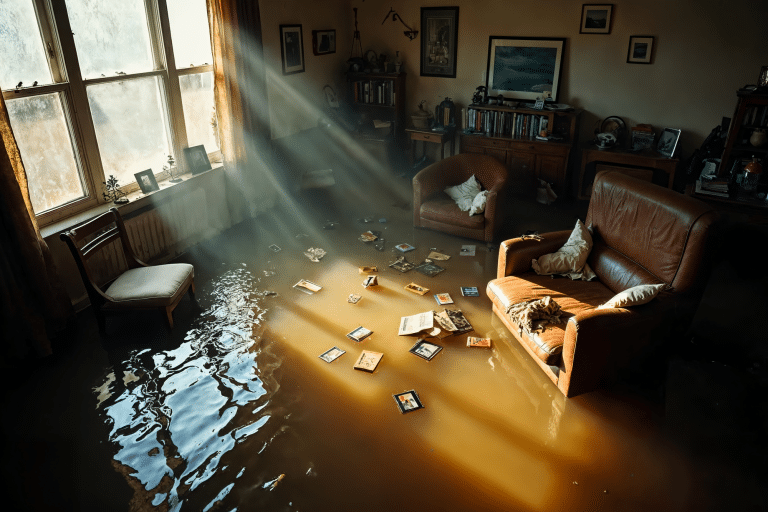
I’ve talked to enough homeowners who went through a flood to know the pattern. The water recedes, the panic fades, and the instinct kicks in; grab the mop, point some fans at the walls, throw out what’s visibly ruined, and get back to normal as fast as possible. It feels productive. It looks like progress.
And in most cases, it quietly sets the stage for far worse damage down the road.
What gets people in trouble isn’t laziness. It’s not knowing what they don’t know. That’s why calling in professional flood damage restoration services early makes such a financial difference. But even before that call, the decisions you make in the first hours matter enormously.
Starting Too Late
The first mistake happens before any actual cleaning begins. People want to wait until their adjuster visits, or the weather clears, or they can get a full day free. A wet house doesn’t wait.
Mold can start forming on damp surfaces within 24 to 48 hours of a flood, and once it takes hold inside wall cavities or beneath subfloor material, the cost multiplies fast. Wood swells in minutes, drywall softens within hours, and the framing behind your walls absorbs moisture that won’t simply air out on its own.
Every hour tightens the window for a full recovery.
Treating Visible Water as the Whole Problem
You pump out the standing water, run some towels across the floor, and it looks dry. But flooded materials hold moisture far deeper than the surface suggests. Insulation, subfloors, wall cavities, and wood framing all absorb water and hold it long after the floor feels dry underfoot.
Without industrial-grade dehumidifiers and air movers, that trapped moisture has nowhere to go. It sits there, feeding mold and rotting wood over weeks and months.
A box fan and a consumer dehumidifier from the hardware store can help a little, but they don’t come close to the capacity needed to properly dry a flooded room.
Skipping the Contamination Assessment
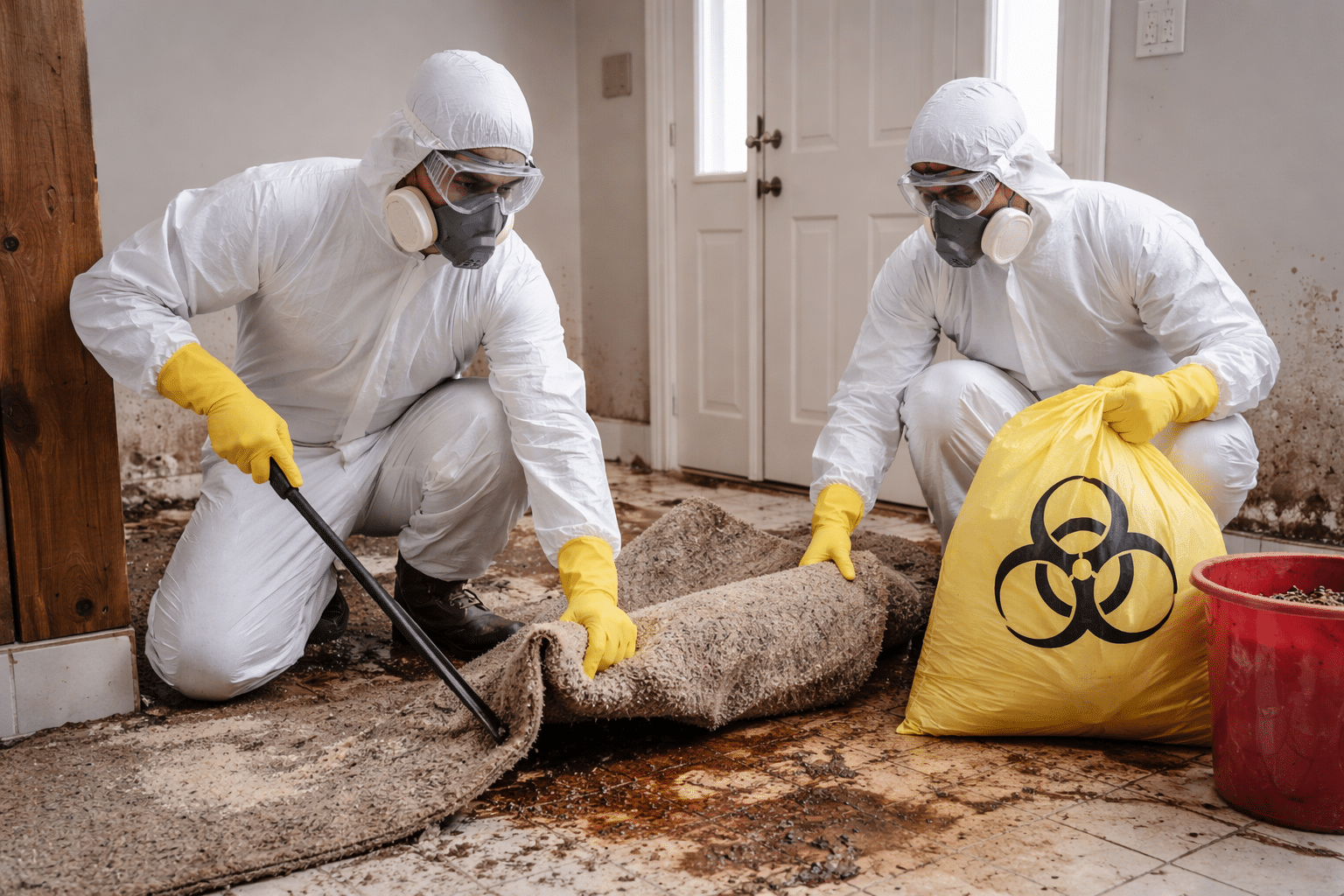
When that water soaks into flooring, drywall, or carpet padding, those materials need to be properly disposed of, not just dried out. Bleach on the surface doesn’t address what’s absorbed deeper into porous materials.
People who skip this step and simply dry in place often end up with bacterial hazards locked inside their walls, with health consequences they don’t connect back to the flood until months later.
Missing Hidden Moisture
The surface looks fine. The floor doesn’t squeak. The walls aren’t visibly wet. Then three months later, there’s a musty smell that won’t leave, or a soft spot in the subfloor, or a dark patch at the base of a wall.
Moisture moves. It wicks up through concrete, travels along framing, and collects in pockets with no obvious access point. Without a moisture meter, you’re guessing. Materials should read at 15% moisture content or below before any refinishing begins, and that reading has to come from inside the material, not just the surface.
Painting over or refinishing walls that are still wet traps moisture and creates ideal conditions for mold to grow completely out of sight.
Using the Wrong Products the Wrong Way
Bleach has a place in post-flood cleanup, but it’s not universal. It doesn’t penetrate porous materials, so it addresses surface contamination without touching what’s absorbed below.
Beyond that, mixing household cleaners during a fast-paced cleanup is genuinely dangerous. Bleach combined with ammonia, which appears in many common cleaning products, produces toxic chloramine vapors.
In a poorly ventilated space, that’s a real respiratory hazard. Contaminated surfaces need EPA-registered disinfectants suited to the specific material, applied correctly, with proper contact time.
Refinishing Before the Structure Is Ready
The desire to get back to normal is understandable, especially when you’re displaced and watching your home stay torn up. But laying new flooring before the subfloor has dried, or hanging fresh drywall over wet framing, is one of the most expensive mistakes you can make.
98% of U.S. counties have experienced flooding, and contractors everywhere have seen this play out: new materials installed over residual moisture trap it in place, and fixing what follows, warped floors, mold behind fresh walls, rotting supports, means tearing out the new work entirely.
Verify moisture at every layer before anything goes back in.
Not Following Where the Water Actually Went
Water doesn’t stay where you think it does. It gets into HVAC systems, soaks into insulation in adjacent rooms, wicks up through walls nowhere near the main flood zone, and pools inside cabinets and behind built-ins.
Most homeowners clean the obvious area and stop there, then spend months puzzling over problems in rooms that seemed untouched. A proper post-flood inspection follows the water’s likely travel path, not just its visible footprint.
Mold that develops inside an HVAC system doesn’t stay there either. Every time the system runs, it distributes spores through the entire house.
How to Spot Hidden Water Damage After a Flood
The Part That Actually Protects Your Home
The difference between a flood that disrupts your life for a few weeks and one that costs tens of thousands in secondary repairs usually comes down to how fast and thoroughly the initial response was handled.
Remove water immediately, dry completely, verify moisture before refinishing, dispose of contaminated materials properly, and trace the full path the water traveled.
Those are the steps that protect your home long-term, and skipping any one of them is where the real damage begins.