Have you ever wondered why some rose bushes burst with blooms while others seem reluctant to flower? The answer might be simpler than you think.
The five-leaf rule for roses is a pruning principle that helps gardeners know exactly where to make their cuts for maximum flowering power.
When you snip your roses just above a set of five leaflets, you’re essentially telling the plant where to channel its energy for the strongest new growth. This works with your rose’s natural rhythm rather than against it.
Both beginners and experienced gardeners use this technique to encourage healthier plants and more abundant blooms.
Once you understand where and why to cut, your roses will respond with the kind of flowering display that makes all that careful attention worthwhile.
What is the Five-Leaf Rule for Roses?
When you look closely at a rose stem, you’ll notice the leaves come in sets of leaflets attached to one stem.
Some have three leaflets, others have five, and occasionally you’ll see seven. These are called compound leaves, and understanding them is key to smart pruning.
The five-leaf rule is straightforward: make your cuts just above a stem with five leaflets.
Why does this matter?
Stems with five leaflets are typically more mature and robust, which means they have the strength to push out vigorous new growth.
When you prune above these points, the plant sends energy to that spot, and a strong flowering shoot emerges from the bud just below where you cut.
Why the Five-Leaf Rule Works?
The five-leaf rule isn’t just gardening folklore. It’s based on how roses actually grow and allocate their resources.
Here’s why it works so well:
- Five-leaf nodes are more mature, which means they have stronger, more developed buds ready to produce vigorous new growth.
- Three-leaf stems typically produce weaker shoots that may not support the full, abundant blooms you’re hoping for.
- Cutting above five-leaf sets encourages outward-facing growth, which helps your rose bush develop a more open, balanced shape.
- Better air circulation results from this outward growth pattern, reducing the humid conditions where fungal diseases thrive.
- Stronger stems mean sturdier support for those heavy, beautiful blooms without drooping or breaking.
When you consistently prune at these stronger growth points, you’re setting your roses up for success season after season.
Step-by-Step: How to Apply the Five-Leaf Rule?
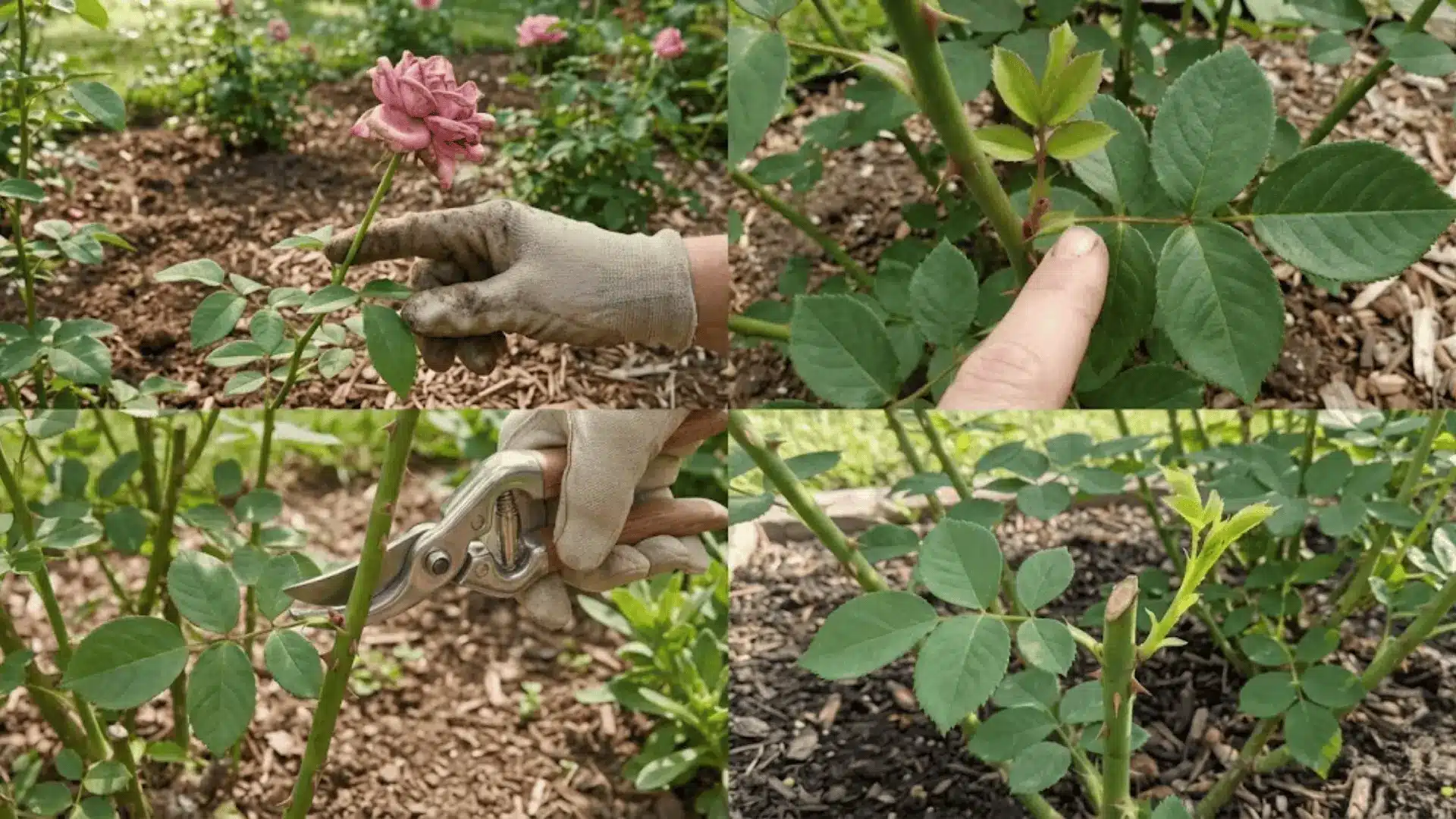
Applying the five-leaf rule becomes second nature once you’ve done it a few times. Here’s how to prune your roses with confidence and precision.
Step 1: Identify the Flowered Stem
Start by locating a spent bloom or one you’ve just cut for a vase. If you’re cutting roses to bring indoors, knowing how long roses last helps you choose the right stage of bloom.
Follow that stem downward with your eyes, tracing it back toward the main body of the plant. This is the stem you’ll be working with, and somewhere along its length, you’ll find the perfect spot to make your cut.
Step 2: Find the First Five-Leaflet Set
Look for the first set of five leaflets as you move down the stem. Make sure it’s facing outward from the center of the plant, not inward.
Check for a small bump or bud eye at the base where the leaf meets the stem. This is where your new growth will emerge, so you want it pointing in the right direction.
Step 3: Make the Cut Correctly
Position your sharp, clean pruners about a quarter inch above the five-leaf node. Angle your cut at roughly 45 degrees, sloping away from the bud.
This angle helps water run off instead of pooling on the cut surface. Clean cuts heal faster and reduce the chance of disease sneaking in.
Step 4: Monitor Regrowth
Within two to three weeks, you should see a new shoot emerging from that bud eye. It’ll start small but will grow quickly if conditions are right.
Healthy new growth appears green and vigorous, reaching upward and outward. If nothing appears after a month, the bud may have been dormant, but don’t worry, as other buds will activate.
When to Use the Five-Leaf Rule?
The five-leaf rule isn’t meant for every pruning situation. Knowing when to apply it helps you get the best results without accidentally cutting back too much.
- Deadheading during bloom season is where this rule shines, encouraging repeat flowering on hybrid teas, floribundas, and other reblooming varieties.
- Throughout spring and summer, use it each time you remove spent blooms to redirect energy into fresh flowering shoots.
- Light mid-season shaping can follow this rule when you’re managing leggy growth or keeping your rose bush tidy.
- Not for major spring pruning, which involves structural decisions like removing old canes or cutting back to the plant’s base.
- Save this technique for active growing periods when you want to promote new blooms rather than reshape the entire plant.
Think of the five-leaf rule as your go-to for maintenance pruning, not the heavy lifting your roses need once a year.
Do All Roses Follow the Five-Leaf Rule?
Not all roses are created equal, and while the five-leaf rule works beautifully for wide varieties, some roses have their own preferences.
Here’s how different types respond:
| Rose Type | Follows Five Leaf Rule? | Special Considerations |
|---|---|---|
| Hybrid Tea Roses | Yes, responds very well | Produces long stems ideal for cutting |
| Floribunda Roses | Yes, reliable results | Encourages clustered blooms |
| Climbing Roses | Use selectively | Focus on lateral shoots, not main canes |
| Shrub & Landscape Roses | Flexible approach | Seven-leaflet sets work equally well |
The key is understanding your specific rose variety and adjusting your approach accordingly, rather than applying the same technique to every plant in your garden.
Pro Tips for Better Rose Blooms
The five-leaf rule is just one piece of the puzzle. Combine it with these practices to get the most spectacular blooms possible:
- Fertilize after deadheading to give your roses the nutrients they need for that next flush of growth and flowers.
- Water deeply after pruning to reduce stress and help the plant heal while supporting new shoot development.
- Remove inward-growing stems even if they have five leaflets, since outward growth keeps your rose bush open and healthy.
- Ensure six or more hours of daily sunlight, as even perfect pruning can’t compensate for inadequate light.
When you pair smart pruning with proper care, including techniques that florists use for freshness, your roses will reward you with the kind of blooms that stop people in their tracks.
Final Thoughts
Mastering the five-leaf rule for roses doesn’t require years of gardening experience, just a little observation and practice.
Once you identify what to look for, those five-leaflet sets are easy to spot, making your pruning more intentional. Your roses will grow stronger stems, healthier, and bloom repeatedly each season.
Start applying this simple technique during your next deadheading session and watch how your plants convert.
Have questions about your specific rose varieties or pruning challenges? Drop a comment below and let’s chat about what’s working in your garden.