Introduction
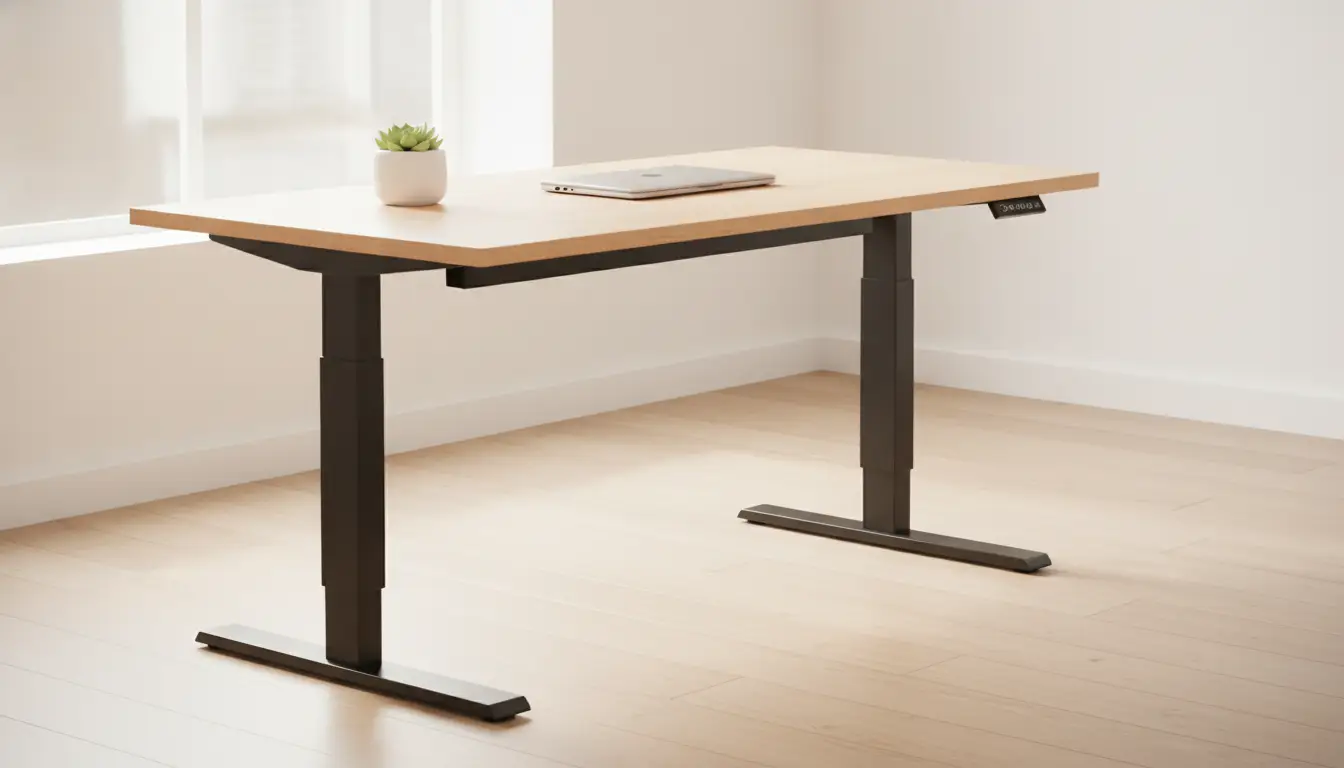
Prolonged sitting has become one of the most discussed workplace health concerns of the past decade, and it’s changed how offices think about desk design entirely. What started as a niche request from a handful of employees has turned into a standard consideration for procurement teams furnishing new offices. An ergonomic sit stand desk gives employees the option to alternate between sitting and standing throughout the day, and the right model can meaningfully improve comfort during long working hours.
This guide covers what actually separates a well-built sit stand desk from a disappointing one, so office managers and procurement teams can order with confidence.
Why Sit Stand Desks Have Become Standard
Extended sitting has been linked to a range of posture and circulation concerns, and employees have grown increasingly vocal about wanting the option to stand during parts of their workday. Employers, in turn, have shifted from treating standing desks as a perk to treating them as a baseline expectation in modern office design.
That shift is why an ergonomic sit stand desk now shows up on nearly every office furniture request list, regardless of industry — it’s no longer a specialty item reserved for design-forward companies.
Key Features of a Quality Ergonomic Desk
Stable lift mechanism — A sturdy frame with minimal wobble at full height, particularly important with monitors or other equipment on the desktop.
Adequate height range — A range low enough and high enough to comfortably suit the shortest and tallest employees expected to use the desk.
Quick, quiet adjustment — Motors that move smoothly and quietly encourage more frequent position changes throughout the day.
Memory presets — Programmable height settings that let employees switch between saved sitting and standing positions without manual adjustment each time.
Weight capacity — Enough lifting capacity to support monitors, laptops, and other desktop equipment without strain on the motor system.
Buying Guide: What to Check Before Ordering
Frame Stability
Look for a desk with a reinforced crossbar or dual-motor lift system, both of which reduce wobble significantly at higher desk positions compared to lighter, single-support frames.
Height Range
Confirm the minimum and maximum height against actual employee height ranges, especially in shared or hot-desking environments where multiple people use the same desk.
Control Panel Usability
A simple, intuitive control panel with programmable presets encourages more consistent daily use than a desk requiring manual height adjustment every time.
Surface Material and Size
Desktop material affects both durability and the overall feel of the workspace. Laminate surfaces resist scratches and daily wear well, while surface size should account for monitors, keyboards, and any additional equipment.
Warranty Coverage
Confirm warranty terms specifically for motor and lift components, since these parts see the most mechanical stress over a desk’s lifespan.
Benefits of Sit Stand Desks
- Gives employees the flexibility to alternate between sitting and standing
- Supports better posture during long working hours
- Improves comfort and can reduce fatigue-related complaints
- Adds a modern, wellness-focused element to office design
- Adapts to different employee preferences without requiring separate furniture
Common Mistakes to Avoid

Buyers sometimes choose the cheapest available model without checking weight capacity, only to find the lift mechanism struggles once monitors and accessories are added. Others skip confirming height range against actual employee heights, resulting in desks that don’t adjust comfortably for shorter or taller team members.
A frequent oversight involves control panel design — desks without memory presets require manual adjustment every time, which often leads to employees skipping the standing position altogether simply because it’s inconvenient to switch.
Expert Tips
Test the desk’s lowest and highest settings against real employee height ranges rather than relying on general specifications alone. Ask about lift speed and noise level specifically, since slower or noisier motors tend to discourage frequent position changes. And prioritize desks with dual-motor systems for offices where equipment loads are heavier or height adjustments happen multiple times per day.
Choosing a Height Adjustable Desk Manufacturer
Not every supplier builds desks to the same standard. Working with an established height adjustable desk manufacturer matters because lift mechanisms, motor quality, and frame stability vary significantly between budget and commercial-grade products, even when specifications look similar on paper.
This distinction becomes especially important for bulk office rollouts, where inconsistent quality across desks can create uneven experiences for employees using different units.
Why Choose LiftDesk
Sourcing an ergonomic sit stand desk at scale requires attention to stability, weight capacity, and control features that hold up under daily office use. LiftDesk works directly with procurement teams and office managers to match desk specifications to real employee needs and equipment loads.
As an established height adjustable desk manufacturer, the range covers single desks, benching configurations, and accessories designed to support a consistent, reliable rollout across an entire office or multiple locations.
FAQs
What’s the main benefit of an ergonomic sit stand desk? Sit stand desks allow employees to alternate between sitting and standing throughout the day, which can improve posture and reduce discomfort from prolonged sitting.
How much weight can a sit stand desk typically support? Weight capacity varies by model, but quality desks generally support 150–250 lbs or more, depending on the lift mechanism and frame design.
What height range should I look for in a sit stand desk? Look for a range that comfortably accommodates the shortest and tallest expected users, particularly important for shared or hot-desking arrangements.
Are dual-motor sit stand desks worth the added cost? For offices with heavier equipment loads or frequent daily adjustments, dual-motor systems typically offer better stability and durability than single-motor alternatives.
How long do sit stand desk motors typically last? With quality components and moderate daily use, lift motors generally perform reliably for several years before requiring service.
Can sit stand desks be programmed with preset heights? Many models include memory presets, allowing users to save preferred sitting and standing positions for quick, consistent daily adjustment.
What should I ask a height adjustable desk manufacturer before ordering in bulk? Ask about motor warranty length, weight capacity testing, and lead times for bulk or custom orders to avoid surprises during a larger office rollout.
Conclusion
Choosing the right ergonomic sit stand desk comes down to matching stability, height range, and control features to how employees actually use the desk day to day. Buyers who prioritize these details over price alone tend to see better long-term adoption and fewer complaints once desks are installed across the office.