

You’ve probably stood in your kitchen, coffee mug in hand, wondering if heating that beautiful porcelain dish is secretly releasing something harmful into your food.
It’s a valid concern in a world where we’re increasingly aware of what our cookware might be adding to our meals.
The confusion gets even thicker when you’re trying to decode the difference between porcelain, ceramic, and those nonstick pans with their mysterious coatings.
Here’s what matters: properly made porcelain is naturally inert and stays stable at typical cooking temperatures.
We’ll walk through everything from safe temperature ranges and glaze quality to lead testing and how porcelain stacks up against other materials, so you can cook with confidence and clarity.
What is Porcelain Made Of?
Porcelain starts with a refined blend of kaolin clay, feldspar, and quartz that gets fired at exceptionally high temperatures, typically between 2,300°F and 2,600°F.
This intense heat fuses the materials into a glassy, vitrified structure that sets porcelain apart from regular ceramic, which fires at lower temperatures and remains more porous.
The key difference lies in density: porcelain becomes non-porous and incredibly hard, meaning it won’t absorb liquids, odors, or bacteria the way earthenware might.
This tight molecular structure also makes it more resistant to chips and thermal shock, which is why it’s favored for both fine dinnerware and functional cookware.
Is Porcelain Chemically Stable When Heated?
Porcelain earns its reputation for safety because it’s fired at temperatures far exceeding anything your home oven can reach.
Once it goes through that high-temperature vitrification process, the clay particles fuse into a glass-like structure that becomes chemically inert.
This means properly fired porcelain won’t leach chemicals or react with acidic foods like tomatoes or citrus.
When cookware is described as “non-reactive,” it simply means the material stays stable and won’t transfer metallic tastes or unwanted compounds into your food.
Unlike some metals that can interact with ingredients, vitrified porcelain maintains its integrity whether you’re baking lasagna or reheating leftovers.
Can Porcelain Release Toxic Chemicals?
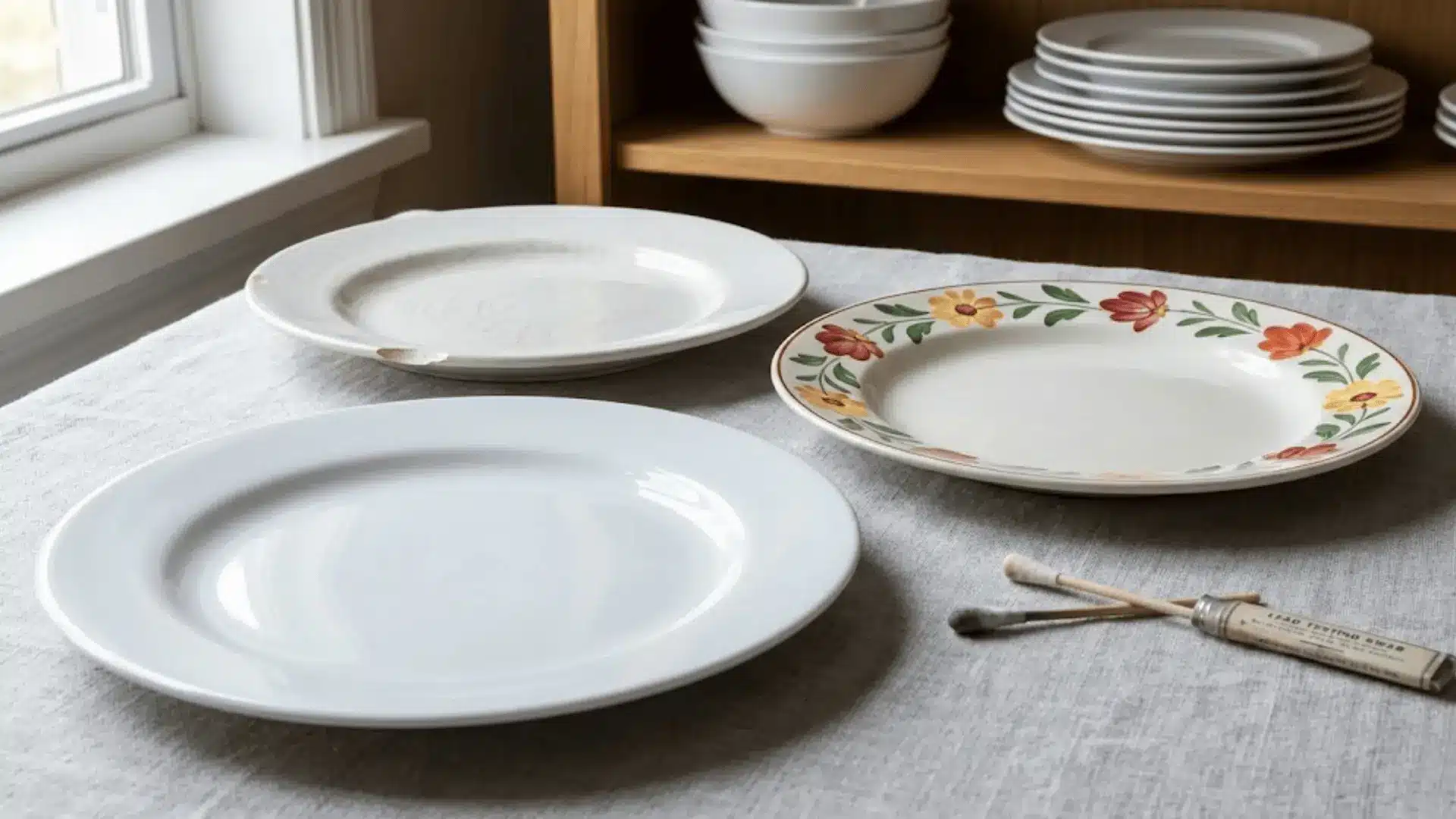
Porcelain itself is inert, but the glaze that gives it color and shine can be a different story. Most concerns about toxicity come down to what’s been added to the surface, not the porcelain body itself.
Lead in Glazes
Decades ago, lead-based glazes were common for their brilliant colors and smooth finish. Now, U.S. regulations restrict lead in dinnerware, though the lead ban timeline shows this protection evolved gradually.
Look for items labeled “lead-free” or “food-safe,” and when in doubt, test older or imported porcelain with an at-home lead testing kit before using it for food.
Cadmium Concerns
Cadmium sometimes appears in brightly colored glazes, particularly reds, oranges, and yellows, because it creates vivid pigments that withstand high firing temperatures.
- FDA limits cadmium leaching in cookware and dishware to safe levels.
- Decorative porcelain may contain higher amounts since it’s not meant for food.
- Brightly colored vintage or handmade pieces warrant extra caution.
- Reputable manufacturers now use cadmium-free alternatives for food contact surfaces.
Damaged or Cracked Porcelain
Once porcelain chips or cracks, the protective glaze barrier breaks down, potentially exposing raw clay or allowing bacteria to settle into crevices.
If your porcelain has visible damage, especially along eating surfaces, it’s time to retire it from kitchen duty. Even hairline cracks can harbor moisture and compromise the inert qualities that make porcelain safe for food contact.
Porcelain in the Oven: Is it Safe?
Most porcelain can handle typical oven temperatures between 350°F and 500°F without releasing chemicals, but thermal shock is the real concern.
Sudden temperature swings, like moving a cold dish straight into a hot oven, can cause cracking that compromises the glaze.
Always check the manufacturer’s oven-safe rating on the bottom of your dish, as decorative pieces or those with metallic accents aren’t meant for high heat.
Let refrigerated porcelain come to room temperature before baking, and avoid placing hot dishes directly on cold surfaces. When used within its intended temperature range, porcelain remains chemically stable and safe.
Porcelain in the Microwave: Any Risks?
Porcelain itself is microwave-safe and won’t release chemicals when heated, but a few factors deserve attention before you hit start.
Microwave safety considerations:
- Plain, undecorated porcelain heats food without any chemical interaction or leaching.
- Metallic trims, gold leaf, or silver patterns can spark and damage both your dish and microwave.
- Overheating can cause thermal stress, especially if the dish gets hotter than the food inside.
- Check for a microwave-safe symbol on the bottom, particularly with painted or decorated pieces.
- Uneven heating may create hot spots that stress the glaze, so use medium power for longer times rather than high heat.
Porcelain Cookware vs. Porcelain-Enamel Cookware
Porcelain cookware and porcelain-enamel cookware sound similar but are fundamentally different products with distinct safety profiles.
| Feature | Solid Porcelain Bakeware | Porcelain-Enamel Cookware |
|---|---|---|
| Construction | Pure vitrified clay fired at high temperatures | Metal base (cast iron, steel) coated with glass-like enamel |
| Heat tolerance | Typically 350°F to 500°F, oven use only | Stovetop and oven use, up to 500°F+ |
| Chemical stability | Completely inert, no chemical leaching | Enamel coating is inert when intact |
| Durability concerns | Prone to chipping from impacts | Enamel can chip, exposing metal underneath |
| Comparison to PTFE | No synthetic coatings | No PTFE or PFOA, safer than Teflon |
| Best uses | Baking, casseroles, roasting | Stovetop cooking, braising, frying |
Both options avoid the concerns associated with PTFE nonstick coatings, which can release harmful fumes when overheated above 500°F.
How to Tell If Your Porcelain is Safe?
If you’re unsure whether your porcelain is truly safe, a few simple checks can give you peace of mind.
- Look for FDA-compliant or “food-safe” labeling on the bottom, especially if the piece has decorative glazes or bright colors.
- Skip using antique dishes or unknown imports for food, since older pieces and unregulated products may hide lead or cadmium.
- Grab a lead testing kit from the hardware store if you’re curious about vintage or hand-me-down porcelain.
- Toss any chipped, cracked, or crazed pieces, as damaged glaze can leach contaminants and trap bacteria.
If something feels off about a dish or you can’t verify its safety, keep it on the shelf as decor and explore lead-free dinnerware brands for certified modern options.
Final Thoughts
So does porcelain release chemicals when heated? The short answer is no, not when it’s properly made and used within its limits.
Quality porcelain stays chemically stable through everyday cooking and reheating, making it one of the safer choices in your kitchen. Just keep an eye on vintage pieces, avoid chipped dishes, and respect those temperature guidelines.
Your porcelain is likely doing exactly what it should: holding up beautifully without adding anything unwanted to your food.
Have questions about a specific piece or want to share your porcelain finds? Drop a comment below.





One Response
Hello, I have a plain white (unpattern) (with thin gold gilding around the edges) Winterling Schwarzenbach Bavaria (QUALITÄTS-PORZELLAN) tea set, probably made in the 1960s. I’m worried if I put hot tea or coffee in it and drink it; could harmful substances mix in? I’m concerned because I use it every day. Thank you for your time.