Most DIY tool collections don’t start with a grand plan. They begin with a single cordless drill needed to hang shelves, assemble furniture or tackle a weekend repair. Before long, another project calls for an impact driver, then a circular saw, then perhaps a hedge trimmer or an oscillating multi tool. Over time, the collection grows, often without much thought about how each purchase fits with the next.
Taking a step back before buying the next tool can make a surprising difference over the years. Thinking about building a reliable cordless tool ecosystem rather than simply replacing or adding individual tools can reduce unnecessary spending, minimise clutter and make future DIY projects far more straightforward. The goal is not to buy everything at once, but to make each purchase work alongside the last.
Why Most DIY Tool Collections Grow by Accident
For many homeowners, buying tools is driven by immediate need. A decorating project requires a drill. Building a raised planter calls for a circular saw. A broken fence necessitates an impact driver. Each purchase makes perfect sense at the time because it solves a specific problem.
The difficulty comes a few years later. Those individual purchases often span several brands, battery systems and charging platforms. A garage shelf that once held a single charger gradually becomes home to multiple chargers, spare batteries and accessories that only fit one particular tool.
This happens because each purchase is viewed in isolation. A discounted tool from one manufacturer may seem like a bargain, while another brand offers a better price on a different project six months later. There’s nothing inherently wrong with mixing brands, and many experienced DIY enthusiasts do exactly that for specialist tools. The issue arises when every new purchase creates another battery platform that needs its own charger and spare batteries.
The result is often unnecessary duplication. Instead of investing in expanding an existing collection, money is spent replacing accessories that already perform the same function in another system.
Planning ahead does not mean predicting every future project. It simply means asking whether today’s purchase will still make sense when the next three or four tools are added.
Looking Beyond the Initial Purchase Price
Price is usually the first specification people compare, particularly when buying tools for occasional use. It is understandable to focus on the cost printed on the shelf label, especially when similar products appear to perform the same task.
The purchase price, though, is only one part of the overall cost of ownership.
A cheaper cordless drill may eventually require a separate battery system if you later decide to buy a matching circular saw or hedge trimmer from another manufacturer. That means purchasing additional batteries, another charger and perhaps different storage solutions. What initially looked like the least expensive option may become considerably more costly over several years.
Replacement batteries deserve careful consideration too. They are consumable products that naturally lose capacity with age and repeated charging cycles. If replacement batteries become difficult to source or are disproportionately expensive, the long-term value of the original purchase starts to change.
Accessories also contribute to ownership costs. Different brands sometimes use proprietary fittings or cases, while warranty support and spare parts availability can vary between manufacturers.
Thinking about these ongoing costs does not mean the most expensive tool always offers the best value. Rather, it encourages looking beyond the ticket price and considering how today’s purchase will fit into tomorrow’s collection.
The Benefits of Choosing a Compatible Tool Platform
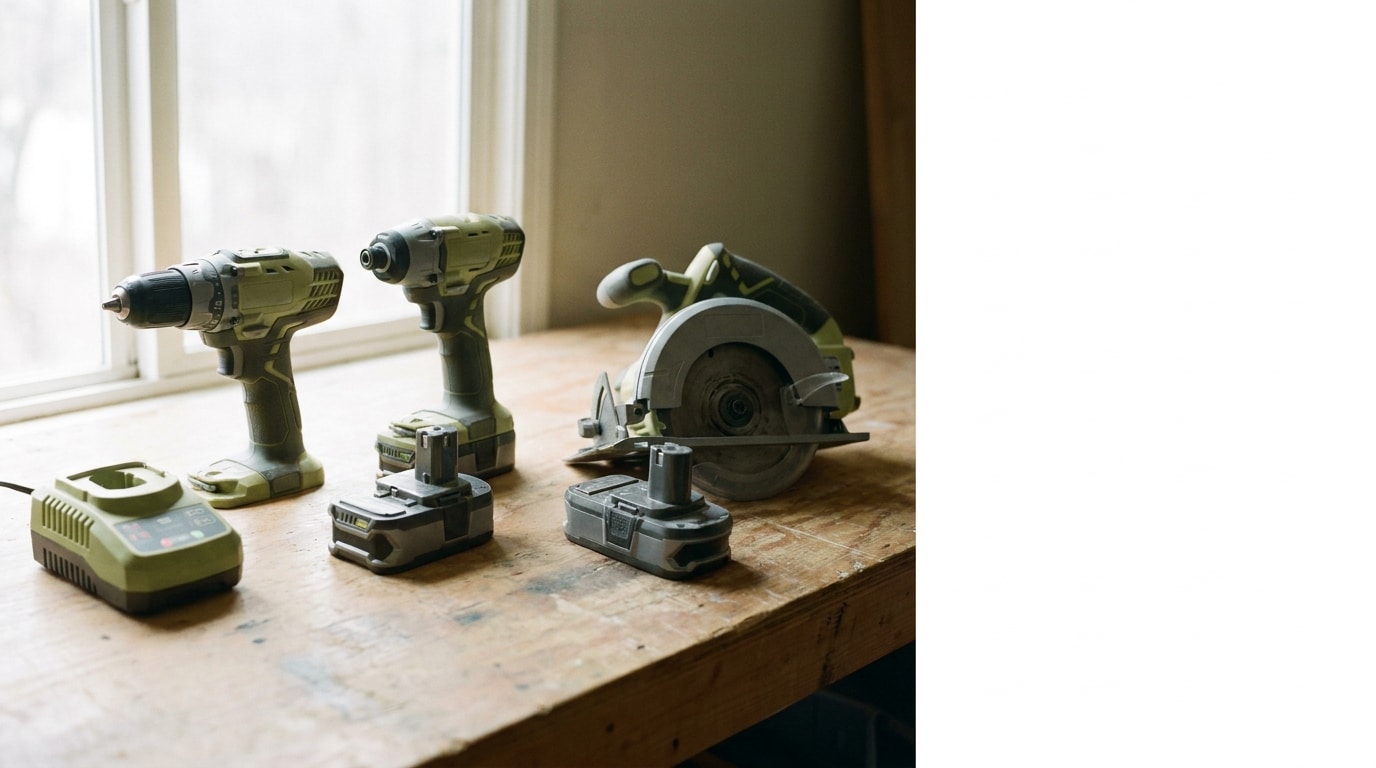
Cordless tool platforms have become much broader than many people realise. What may begin as a drill and impact driver can often expand to include saws, grinders, inflators, outdoor power equipment, lighting and dozens of other tools that all operate from the same battery family.
This compatibility offers practical advantages that become more noticeable as a collection grows.
Sharing batteries between tools reduces the number of spares needed around the workshop. Chargers can remain permanently set up in one location rather than scattered throughout storage cupboards or garages. When batteries are interchangeable, it also becomes easier to keep projects moving without waiting for a particular battery to recharge.
Storage tends to become simpler as well. Matching cases, chargers and batteries are easier to organise, and it becomes much quicker to prepare for a project because everything belongs to the same system.
Compatibility also supports gradual expansion. Rather than purchasing complete kits every time a new tool is needed, homeowners can often buy body-only versions because compatible batteries and chargers are already available.
This doesn’t mean every cordless tool in the workshop has to come from the same manufacturer. Some specialist equipment may justify its own platform. For many DIY enthusiasts, though, reducing unnecessary duplication makes day to day use noticeably more convenient while lowering long term ownership costs.
Planning Around the Types of Projects You Actually Complete
One of the easiest ways to overspend on tools is buying equipment for projects that rarely happen.
It’s easy to be drawn towards specialist tools because they promise to make a particular task faster or easier. The reality is that many homeowners spend far more time assembling furniture, installing shelving, decorating rooms and carrying out routine maintenance than they do undertaking major structural work.
Looking back at the projects completed over the past few years can provide useful guidance.
Someone who regularly builds decking, fencing or timber garden structures may benefit from expanding their woodworking equipment. Another homeowner might gain more value from investing in decorating tools, lighting and compact cordless equipment suited to indoor renovation work.
Choosing tools that match recurring projects generally leads to a more practical collection than buying for occasional ambitions.
Quality Often Becomes More Important as Collections Grow
As a tool collection expands, reliability often becomes just as valuable as versatility.
A tool that performs well once or twice a year may be perfectly adequate for occasional DIY tasks. If that same tool becomes part of regular home improvement projects, expectations naturally change. Comfortable handling, dependable battery performance and consistent results become far more noticeable when equipment is used frequently.
Ergonomics also deserve attention. A drill that feels slightly heavy during a five-minute task may become tiring during a full afternoon of installing kitchen cabinets or building decking. Small improvements in balance, grip and control can make longer projects more enjoyable and reduce fatigue.
Long service life should be considered in the same way. A well-maintained tool that continues performing reliably for many years may represent better value than repeatedly replacing lower-cost alternatives that wear out sooner.
This does not mean every homeowner needs premium trade-grade equipment. Someone carrying out occasional repairs has very different requirements from a keen DIY enthusiast tackling projects every weekend. The key is matching quality to expected use, allowing the collection to evolve alongside growing skills and ambitions.
Organising Your Tools Makes Every Project Easier
Buying tools is only one part of building an effective collection. Keeping everything organised is equally important.
Many DIY enthusiasts have experienced spending twenty minutes searching for a charger, the correct drill bit or the battery they were sure was fully charged the previous week. Time lost looking for equipment can become surprisingly frustrating, especially when a simple repair should only take half an hour.
Creating dedicated storage areas helps avoid these interruptions. Chargers kept together in one location are easier to monitor, while batteries stored correctly are less likely to become damaged through poor handling or unsuitable temperatures.
Accessories benefit from organisation too. Clearly labelled boxes for drill bits, screws, blades and sanding discs make preparation much quicker and reduce the temptation to buy replacements simply because existing items cannot be found.
As collections grow, workshop layout also becomes worth considering. Frequently used tools should be easy to access, with less commonly used equipment stored separately. Even modest improvements in organisation help projects run more smoothly while protecting the investment already made in the collection.
Building Your Collection One Project at a Time
One of the biggest misconceptions about cordless tools is that a complete collection needs to be purchased from the outset.
For most homeowners, that simply isn’t necessary.
A far more practical approach is to begin with a few versatile tools and allow the collection to grow naturally as new projects arise. Each purchase should solve a genuine need while also fitting into the wider collection.
Before buying another tool, it helps to ask a few simple questions.
Will it be used regularly?
Does it work with existing batteries and chargers?
Could a different purchase offer greater value across several future projects?
Will it still make sense a few years from now?
Taking a little extra time to answer those questions often prevents impulse purchases that see very little use after the first weekend.
Researching compatibility before buying also pays dividends. A few minutes spent comparing battery platforms, available tools and future expansion options can avoid unnecessary expense later.
Building a useful tool collection is rarely about acquiring the largest number of tools. It is about making thoughtful choices that continue delivering value as new projects emerge.
Planning Today Reduces Costs Tomorrow
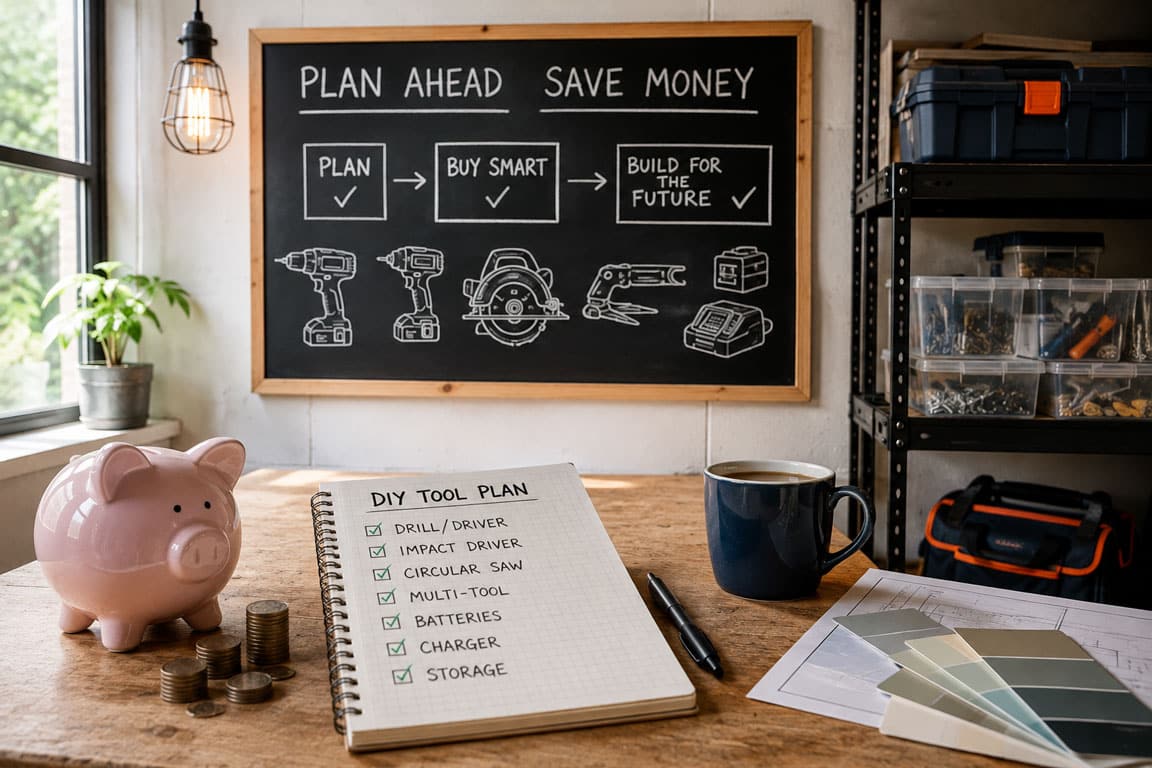
A DIY tool collection reflects the projects completed over time, but it does not have to grow by chance alone. Looking beyond individual purchases and considering how each new tool fits into the wider collection can reduce unnecessary duplication, simplify future upgrades and make everyday DIY work far more enjoyable.
Planning ahead does not require a large budget or buying every tool at once. Expanding gradually, choosing compatible equipment where it makes sense and organising tools properly all contribute to a collection that remains practical for years.
With a little long-term thinking, every new purchase becomes part of a more capable, more efficient workshop that is ready for whatever project comes next.
FAQ
How do I start building a DIY tool collection?
Start with versatile core tools that cover the jobs you complete most often, such as a cordless drill and impact driver. Expand gradually as new projects arise rather than trying to buy everything at once.
Should every power tool I buy use the same battery?
Using one battery platform offers clear advantages, including shared batteries, fewer chargers and lower long-term costs. There are situations where specialist tools from another manufacturer make sense, but many homeowners benefit from keeping most cordless tools within one compatible system.
Is it worth spending more on better quality tools?
That depends on how often the tools will be used. Frequent DIY projects often justify higher-quality equipment because of improved durability, comfort and reliability, while occasional users may find mid-range products provide excellent value.
What are the most useful cordless tools for homeowners?
A cordless drill, impact driver, circular saw, oscillating multi tool and suitable garden equipment provide a solid foundation for many common home improvement and maintenance projects.
How can I avoid buying tools I rarely use?
Plan upcoming projects before making purchases and focus on equipment that supports recurring tasks. Expanding a collection gradually helps avoid spending money on specialist tools that may only be used once.