I planted two tomato seedlings six inches apart one May, and by August they looked nothing alike.
One was a tidy three-foot bush loaded with ripe fruit. The other was ten feet up a trellis and still setting blossoms.
That is determinate vs. indeterminate tomatoes in action, not just a line on a seed packet.
Knowing which one you bought changes your cage size, your pruning schedule, and even your canning calendar.
Determinate vs. Indeterminate Tomatoes at a Glance
If you’re planning a canning weekend or want fresh tomatoes all summer, understanding the difference before planting helps you choose the right cage and avoid waiting for a harvest that doesn’t bunch up.
| Feature | Determinate | Indeterminate |
|---|---|---|
| Height | 3 to 4 feet | 6 to 10+ feet |
| Growth Habit | Bushy, self-limiting | Continuous vining |
| Harvest Window | 2 to 3 weeks, concentrated | Spread across the season |
| Support Needed | Small cage or short stake | Tall stake, trellis, or Florida weave |
| Pruning | Little to none | Regular suckering required |
| Best For | Canning, sauces, small spaces | Fresh eating, larger gardens |
| Container Friendly | Yes | Only with large pots and tall support |
| Days to Maturity | Often earlier | Often later |
What are Determinate Tomatoes?
Determinate tomatoes stop growing once they set a flower cluster at the top of the stem.
That signal shifts the plant’s energy from height to fruit.
Growers use them for a single, reliable harvest suited to canning, sauce-making, or small-space gardening where a defined plant size matters. The fixed size also makes them easier to plant.
Since you already understand the approximate space and support the plant requires before it blooms.
What are Indeterminate Tomatoes?
Indeterminate tomatoes keep growing and flowering until frost since they never form a terminal cluster.
Growers use them for a steady supply of fresh tomatoes across the season, best suited to larger gardens with room for ongoing growth.
Because the plant never really finishes, it rewards steady attention.
Regular pruning and support checks keep it productive instead of unruly.
Differences Between Determinate and Indeterminate Tomatoes
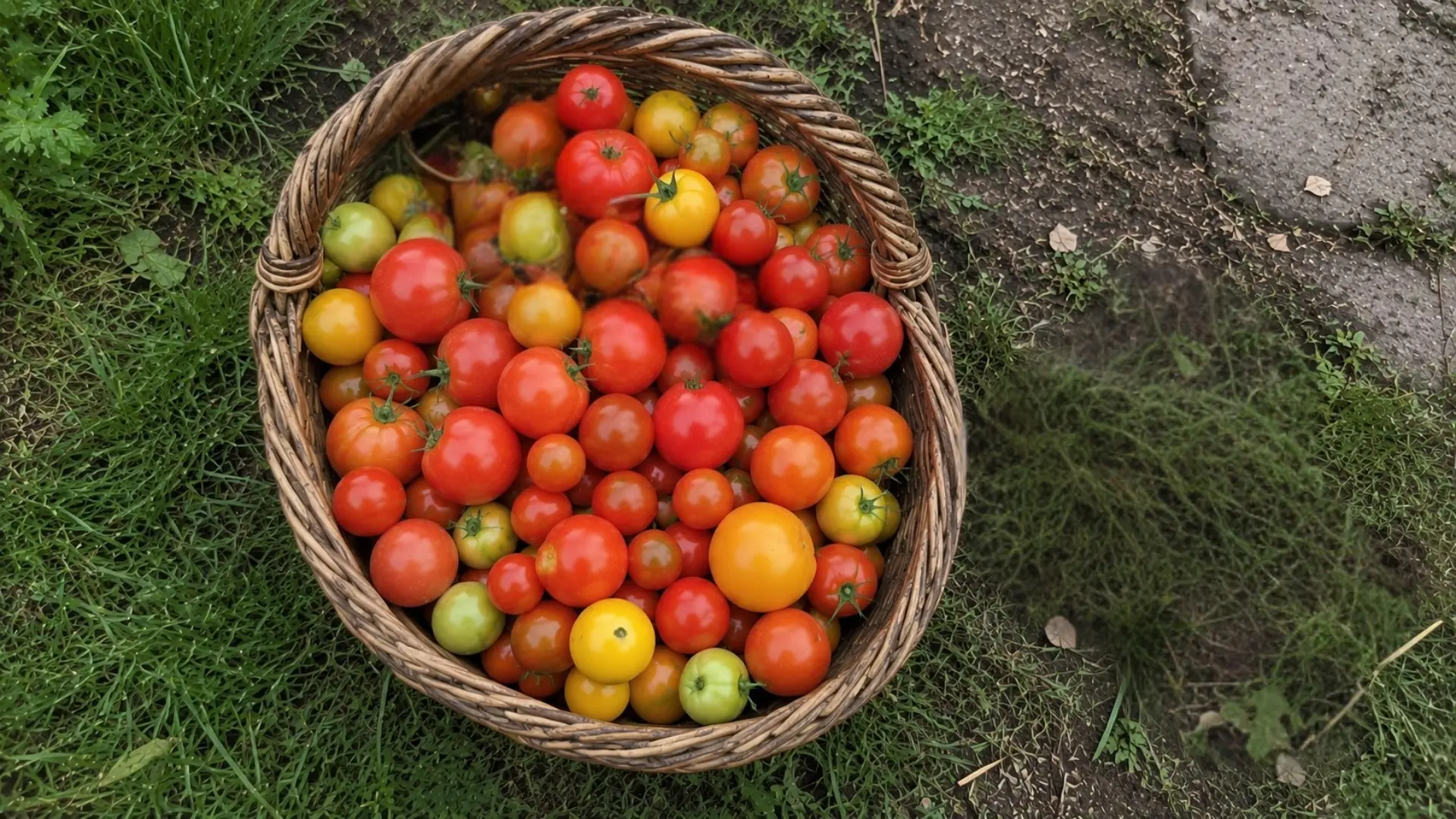
Once you know what each type looks like on its own, the real value comes from lining them up side by side.
Growth Habit and Plant Profile
The most obvious difference between the two types shows up early, right in how the plant grows.
Determinate plants grow into a tight, rounded bush with dense foliage clustered near the base.
Stems stay thick and short, giving the whole plant a squat, compact profile.
Indeterminate plants send up a single long main stem with sparser leaf cover along its length. That stem keeps stretching all season upward, so the plant’s shape stays narrow and tall rather than rounded.
Determinate roots stay shallow and contained, while indeterminate roots reach wider to support the larger frame.
How and When the Fruit Ripens?
Growth habit isn’t the only thing that sets these two apart; timing matters just as much once fruit starts forming.
| Feature | Determinate | Indeterminate |
|---|---|---|
| Ripening Order | Most fruit turns at once | Fruit turns in waves |
| Ripening Pace | Fast, clustered | Slow, staggered |
| Color Change | Even across the plant | Uneven, spread over weeks |
| Heat Impact | Short stall in a heat spike | Longer, spread-out lulls |
Harvest Quantity and Timing
Total yield differs as much as timing does.
Determinate plants produce a fixed, predictable amount, since the plant stops setting new flowers once it reaches full size. Indeterminate plants keep flowering all season, so total output climbs the longer the plant survives.
A determinate harvest arrives in one heavy batch, good for a single big kitchen session.
An indeterminate harvest trickles in smaller amounts, week after week, often outproducing determinate plants by season’s end.
Staking, Caging, and Trellising Needs
Support needs scale with height, so the wrong choice early on means restaking mid-season.
- Determinate: Standard 3–4 ft cage is enough
- Determinate: Short stake works as a backup option
- Indeterminate: Needs a 6–8 ft stake driven deep
- Indeterminate: Trellis keeps vines organized and off the ground
- Indeterminate: Florida weave suits row plantings
- Both: Unsupported plants risk toppling or fruit rot
For extra height without buying a taller cage, a tomato cage trellis idea using connected cages along a fence line works well for indeterminate rows.
Pruning Requirements
Determinate plants need little intervention.
Fruit sets along the entire plant, so removing suckers cuts into future yield instead of boosting it.
Once staked, they mostly manage themselves. Indeterminate plants need consistent pruning.
Removing side shoots redirects energy toward fruit and improves airflow. This stays an ongoing task, since the vine keeps extending well past the point where a determinate plant would have stopped.
Getting into a weekly habit of pruning suckers for bigger fruit keeps the plant’s energy focused on the tomatoes already forming instead of new growth.
Spacing and Garden Footprint
Bed space needed depends on the same growth habit already covered.
Determinate plants stay compact, so 2 feet between plants is usually enough.
Indeterminate plants sprawl and require taller support, so they need 3 feet or more.
Tight spacing traps humidity and blocks airflow, raising disease risk on either type. Planning spacing before planting avoids a crowded bed and lets the support structure fit without competing for room later.
Growing Season Requirement
Season length decides which type actually has time to finish producing before frost.
Determinate plants reach maturity faster, suitable for short seasons and early spring or fall plantings.
Indeterminate plants need more time to fully grow and should start early indoors in cooler areas. Always check the variety’s days-to-maturity against local frost dates before planting.
How to Tell Whether a Tomato Plant is Determinate or Indeterminate?
Observe the plant’s behavior rather than guessing.
- Count leaf sets before the first flower cluster: fewer than 8–9 usually means determinate.
- Watch node spacing: tight nodes suggest determinate; longer gaps suggest indeterminate.
- Check regrowth after pruning: fast, vigorous regrowth signals indeterminate.
If the plant keeps producing new growth points well past its first flush of flowers, it’s indeterminate.
A plant that flowers, sets fruit, then visibly slows its upward growth is determinate. Stem thickness offers a clue too: indeterminate vines stay thinner relative to their length because energy focuses on extension, not bulk.
Common Mistakes When Choosing Tomato Types
A few minor mistakes repeatedly appear, even among seasoned growers.
| Mistake | Fix |
|---|---|
| Buying by fruit name alone | Check the tag for growth type |
| Planting too late for the type | Match planting date to maturity speed |
| Using one cage size for every plant | Size support to expected height |
| Judging type from seedling size | Growth pattern shows later, not at transplant |
| Mixing types without labeling rows | Tag or map rows to avoid mix-ups |
| Assuming all types need the same watering | Taller vines often need deeper, more frequent watering |
| Skipping end-of-season cleanup planning | Indeterminate vines need more teardown work |
Popular Determinate and Indeterminate Tomato Varieties
Now that you know the difference, here are reliable varieties for each type based on your garden goals.
Determinate Varieties
- Roma: Classic paste tomato, great for sauces and canning.
- Celebrity: Disease-resistant and reliable, good for beginners.
- Rutgers: Heirloom-style flavor with a compact growth habit.
- Patio: Bred specifically for containers and small spaces.
Indeterminate Varieties
- Beefsteak: Large, meaty slicing tomatoes for sandwiches and fresh eating.
- Cherokee Purple: Heirloom with rich, complex flavor.
- Sun Gold: Sweet, prolific cherry tomato that produces all season.
- Brandywine: Heirloom favorite known for its size and flavor.
Choosing the right variety for your space, climate, and harvest goals is key to a productive tomato season.
Determinate vs. Indeterminate Tomatoes: Which is Better for Your Garden?
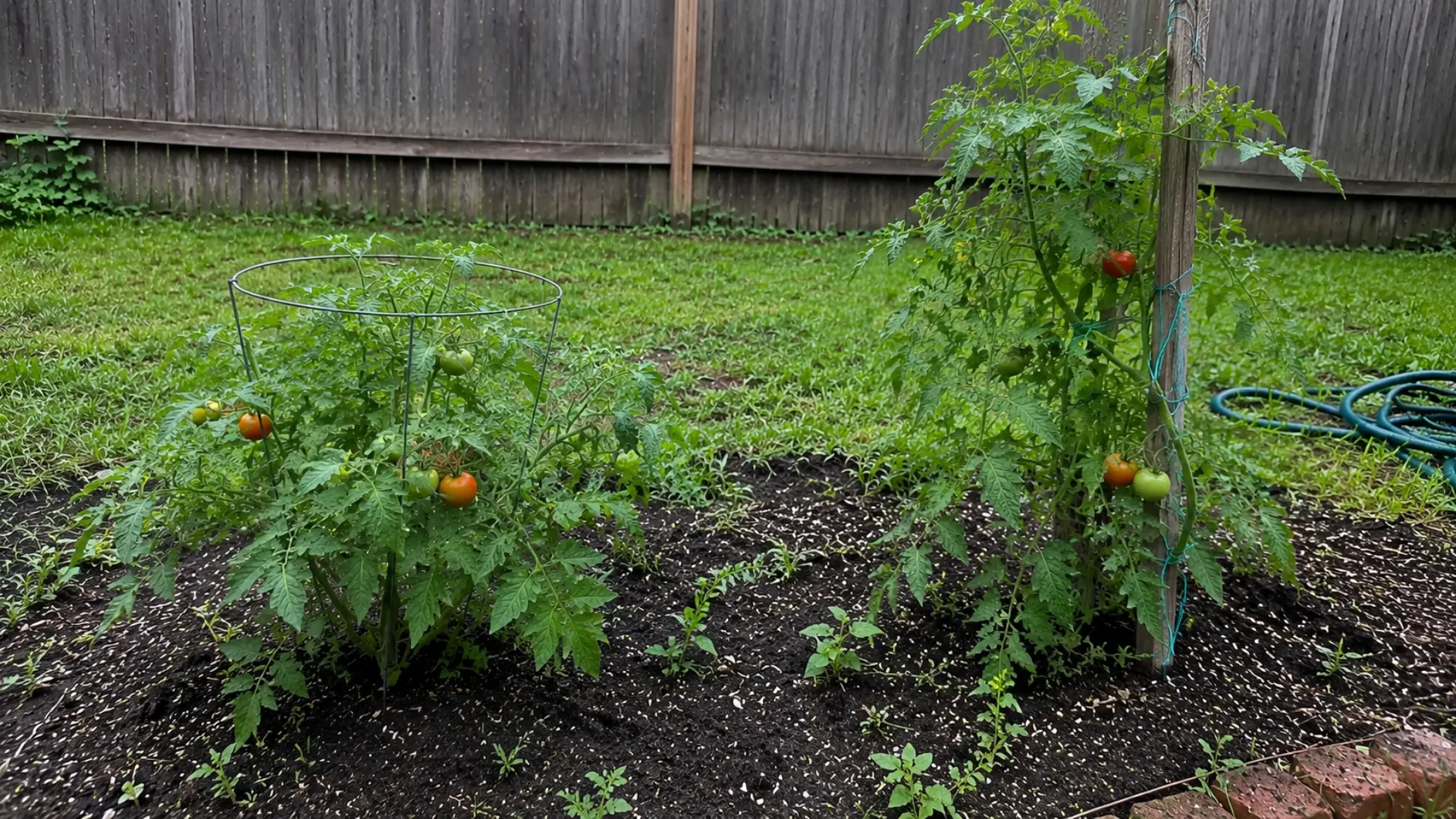
Neither type is objectively better; the right pick depends on your goals.
Busy gardeners with little daily time often prefer determinate plants, since they need fewer check-ins. Gardeners who enjoy tending vines daily may prefer indeterminate types instead. Think about your cooking habits too.
Batch cooks prefer determinate varieties, but snackers who eat fresh summer tomatoes favor indeterminate.
Beginners often start with determinate plants for simplicity, then try indeterminate varieties as confidence grows.
Choose plants that fit your routine, not only your garden size.
Can You Grow Both in the Same Garden?
Yes, and it’s actually one of the smartest ways to plan a tomato garden.
Growing both gives you the best of both benefits: a big determinate harvest for canning, plus a steady trickle of indeterminate tomatoes for fresh eating all summer.
Place them by mature size. Keep compact determinate plants toward the front or edges.
Put taller indeterminate vines toward the back or center. This mix delivers a productive canning batch early, then keeps fresh tomatoes coming long after the determinate plants finish.
What are Semi-Determinate Tomatoes?
Semi-determinate tomatoes fall between the other two types.
They grow larger than a determinate plant but still stop at a defined height instead of vining indefinitely.
- Moderate height, typically 4 to 5 feet.
- The extended harvest window is longer than determinate but less continuous than indeterminate.
- Medium support needs; a sturdy cage or short stake works.
Semi-determinate varieties are ideal for gardeners seeking more fruit than determinate types provide but without the larger size and maintenance of indeterminate plants.
They offer a convenient middle ground for those with limited space or who prefer a shorter harvest period.
Frequently Asked Questions (FAQs)
Is a Beefsteak Tomato Determinate or Indeterminate?
Beefsteak tomatoes are indeterminate, so the vine keeps growing and producing fruit until frost.
Do Determinate Tomatoes Need a Cage?
Yes, a smaller support like a 3-4 foot cage or stake is usually enough for their compact growth.
Which Type Produces More Tomatoes Overall?
Indeterminate plants produce more fruit over a season, while determinate plants yield a smaller harvest.
Are Cherry Tomatoes Determinate or Indeterminate?
Cherry tomatoes come in both types, so checking the plant tag or seed packet is the only reliable way to know.
The Bottom Line
Picking between determinate and indeterminate really comes down to what your kitchen looks like at harvest time.
A stacked batch ready for the canner points one way, while a slow trickle of fruit for salads and sandwiches points the other.
Match the plant to the right stake, spacing, and pruning routine, and neither type asks for much beyond that.
Which one are you growing this year, or are you doing both? Let me know in the comments, or ask if you’re still deciding.