There’s a particular kind of satisfaction that comes from growing something yourself. You plant a few seeds, check the soil every morning, and suddenly find yourself celebrating a tiny green shoot as though you’ve accomplished something extraordinary.
Before long, those five minutes of watering turn into twenty minutes of pruning, rearranging pots, or figuring out why one tomato plant looks happier than the others. Gardening has a way of making time disappear.
But while we’re busy looking after our plants, there’s something we tend to forget. We’re spending a lot more time in the sun than we realize.
And unlike our plants, our skin doesn’t need hours of direct sunlight to thrive.
The Five-Minute Gardening Trap
Most of us don’t think of gardening as an activity that requires sun protection. We associate sunscreen with beach holidays, swimming pools, and long summer afternoons.
Watering the basil? That hardly feels like an occasion to reach for sunscreen.
But gardening rarely happens in one uninterrupted session. We step outside to check the seedlings, return to pull a few weeds, and come back later because the tomatoes need another look.
Each visit adds another little period of outdoor exposure.
The American Academy of Dermatology explains that repeated everyday exposure to ultraviolet radiation can contribute to skin damage over time. Even brief periods outdoors are worth considering when building sun-safe habits.
That doesn’t mean we need to become anxious about every minute outside. It simply means our ordinary routines deserve the same attention we give to planned outdoor activities.
After all, we wouldn’t forget to water our plants for weeks and expect them to flourish. Looking after our skin also benefits from consistency.
Your Plants Love the Sun. Your Skin Has Different Rules.
Sunlight is essential for most garden plants. Tomatoes need adequate light to grow and produce fruit, while herbs such as basil generally prefer plenty of sunshine.
Our skin has a different relationship with sunlight.
Ultraviolet radiation can damage skin cells, contribute to premature aging, and increase the risk of skin cancer. And although sunlight helps the body produce vitamin D, deliberately exposing unprotected skin to UV radiation isn’t a recommended way to meet vitamin D needs.
The CDC’s sun safety guidance explains that UV rays can reach us even on cloudy or cool days. In the continental United States, they’re generally strongest around the middle of the day.
This is particularly relevant to gardeners because the hours that work well for certain plants aren’t necessarily the most comfortable or safest hours for prolonged outdoor activity.
Fortunately, we can work around that.
Watering, harvesting, and light maintenance can often be scheduled for earlier mornings or later afternoons. Your garden still receives the light it needs, while you reduce the time you spend working outdoors when UV radiation is strongest.
The Gardening Spots We Forget to Protect
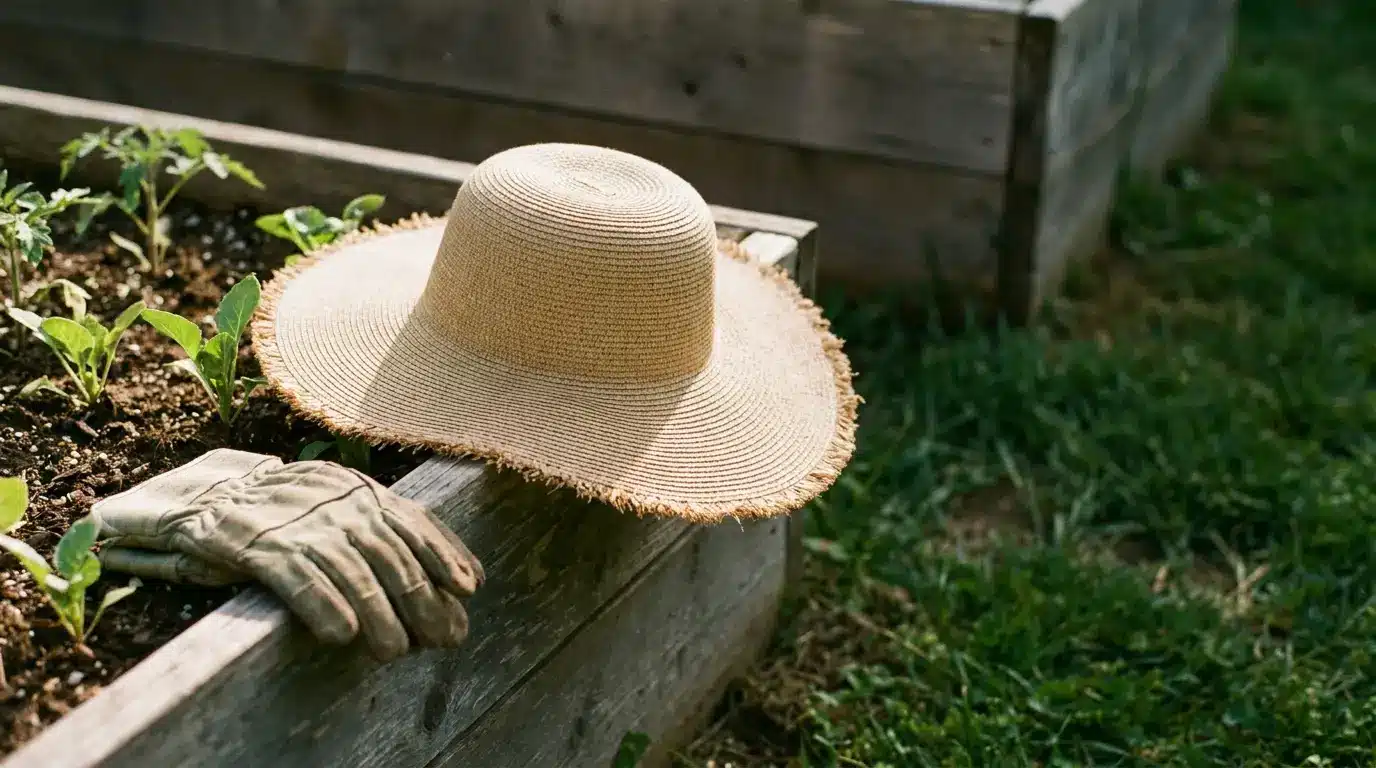
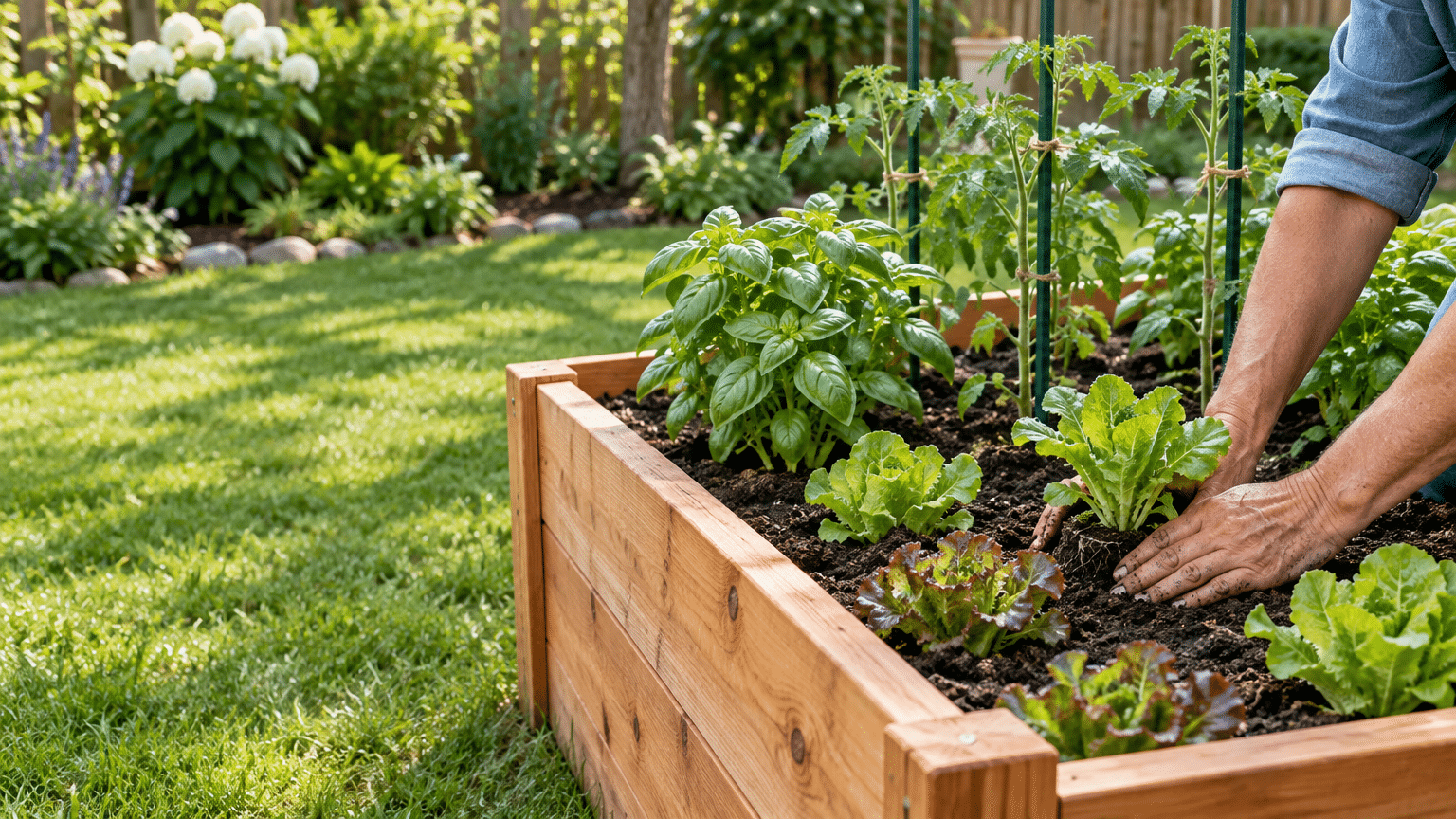
Think about your usual gardening position. You’re probably bending over a planter, reaching across a raised bed, or kneeling beside a row of vegetables.
Now think about which parts of your body are exposed.
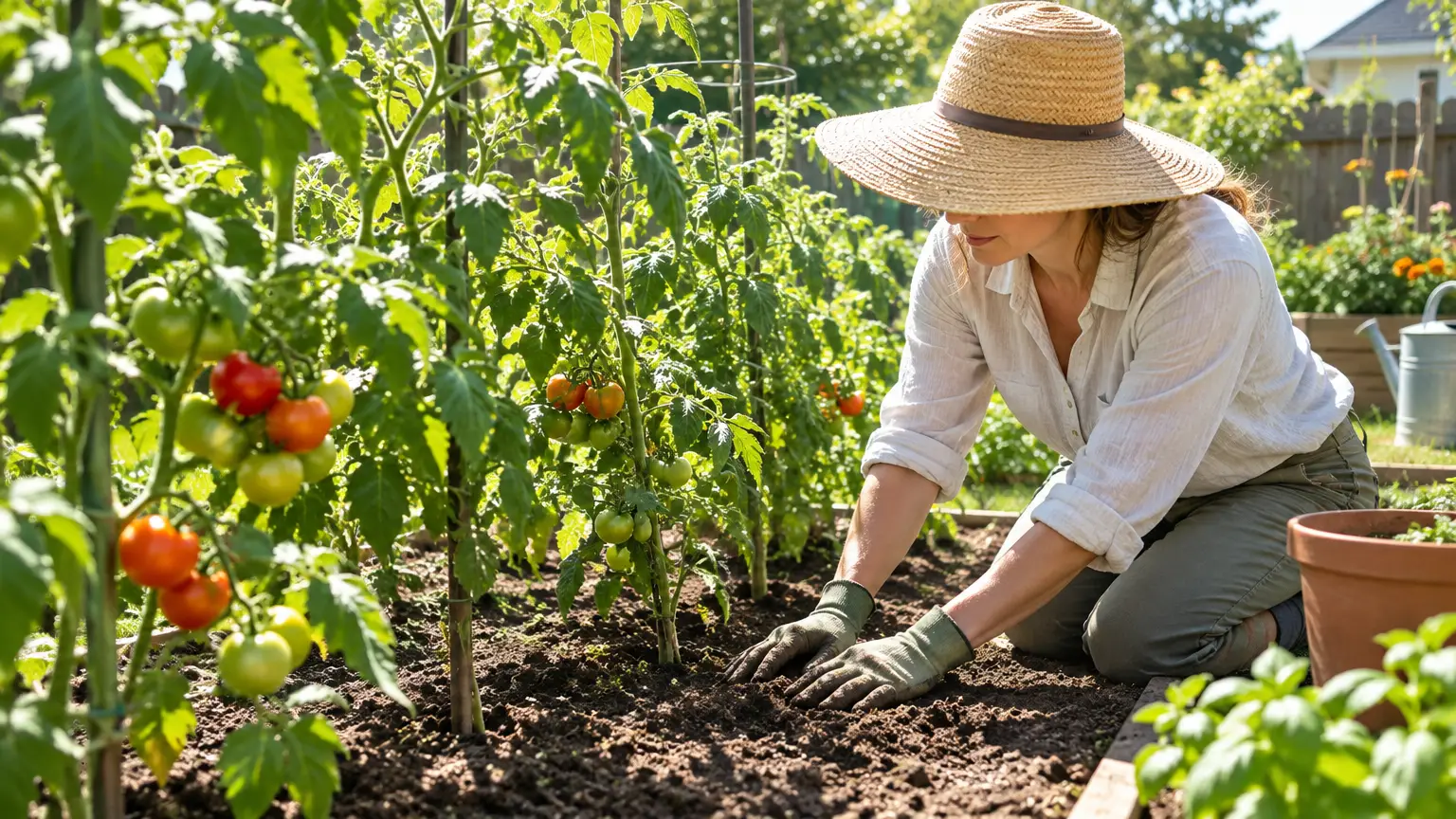
The back of your neck, ears, forearms, hands, and shoulders can spend a surprising amount of time facing the sun. If you’re wearing sandals, the tops of your feet may be exposed too.
These aren’t always the areas we remember when applying sunscreen.
A wide-brimmed hat can help shade your face, ears, and neck. Lightweight, long-sleeved clothing offers another practical layer of protection, especially when you’re spending a longer afternoon outdoors.
Gardening gloves are useful for protecting your hands from soil, thorns, and rough surfaces. They can also provide some coverage from sunlight, depending on their material and design.
And for skin that remains exposed, sunscreen becomes an important part of the routine.
The American Academy of Dermatology recommends choosing a broad-spectrum, water-resistant sunscreen with SPF 30 or higher, applying it before going outdoors, and reapplying every two hours while outside, or after sweating.
It’s a small adjustment, but one that makes sense when gardening becomes a regular habit.
A Cloudy Morning Isn’t a Free Pass
Some of my favorite gardening weather involves a little cloud cover. The air feels cooler, the light is softer, and working outside becomes much more pleasant.
It’s easy to assume that softer sunlight means there’s nothing to worry about.
Unfortunately, clouds don’t completely block ultraviolet radiation.
The CDC notes that people working outdoors can still be exposed to UV radiation on cloudy days. Cooler temperatures can also make it harder to judge how much exposure we’re getting because we don’t feel the same heat.
This is especially relevant during spring and autumn, when gardening conditions can feel comfortable enough to spend hours outside.
Instead of judging sun exposure by temperature alone, it helps to check the day’s UV Index. It gives you a better indication of the strength of ultraviolet radiation and can help you plan longer gardening sessions.
Cloudy weather may be perfect for transplanting seedlings. It just shouldn’t be the only reason you skip sun protection.
Make Sun Protection Part of Your Gardening Setup
One of the best things about gardening is how quickly small habits become automatic.
We learn to check the soil before watering. We keep pruning shears somewhere convenient. We know which plants need attention and which ones are better left alone.
Sun protection can fit into that same rhythm.
Keep a hat near your gardening tools. Choose comfortable clothing that covers your arms when practical. Apply sunscreen before heading outside, and keep it somewhere easy to find when it’s time to reapply.
If you prefer mineral sunscreens, you’ll often see zinc oxide listed as a UV-filter ingredient. In a finished mineral sunscreen formulation, its concentration, dispersion, and the surrounding ingredients all contribute to the product’s performance and feel on the skin.
For gardeners, though, the practical considerations are straightforward. Choose a sunscreen that offers appropriate protection, feels comfortable during outdoor work, and is easy enough to use consistently.
A product you dislike wearing is unlikely to become part of your daily routine.
It’s also worth remembering that sunscreen works best alongside shade and protective clothing, not as a reason to spend unlimited time in direct sunlight.
Your Garden Doesn’t Need You Outside All Day
There’s a funny thing about gardening. The more you enjoy it, the more reasons you find to go outside.
A new leaf needs inspecting. A pepper is almost ready to pick. Something has been eating the lettuce, and you’re determined to find out what.
But being a good gardener doesn’t require standing in the sun for hours.
You can check plants in the morning, do more demanding tasks when conditions are comfortable, and save a few jobs for another day. A shaded seat nearby can also make gardening more enjoyable, especially when you’re working through a larger project.
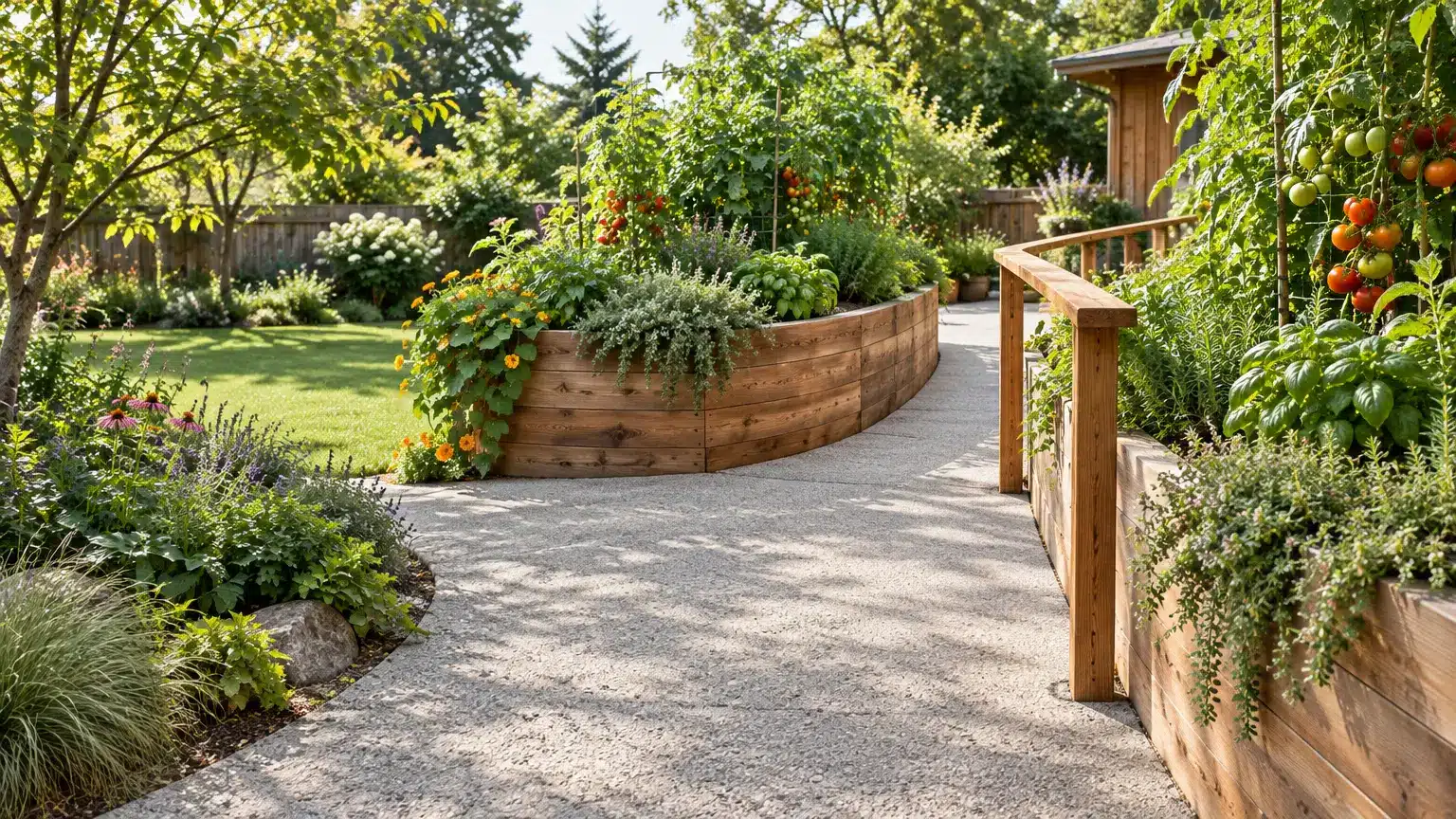
If you grow herbs or vegetables in containers, arranging them for easier access can reduce unnecessary time spent bending, stretching, and working in exposed areas.
Gardening should feel restorative. A little planning helps keep it that way.
Grow Something Good. Look After Yourself, Too.
There’s a lot to love about growing your own food. Watching seeds become herbs, vegetables, and flowers gives us a reason to slow down and pay attention to small changes.
And perhaps that’s the lesson worth carrying into our own routines.
We already understand that healthy plants need the right amount of sunlight, water, and care. Our skin deserves a little thought as well, especially when we’re spending more time outdoors.
You don’t need an elaborate skincare routine to enjoy gardening responsibly. A comfortable hat, suitable clothing, sunscreen, and a little attention to the time of day can go a long way.
So the next time you step outside to water your tomatoes and somehow spend half an hour rearranging the entire garden, remember to look after the person doing all that growing, too.
Your plants are in good hands. Make sure your skin is as well.