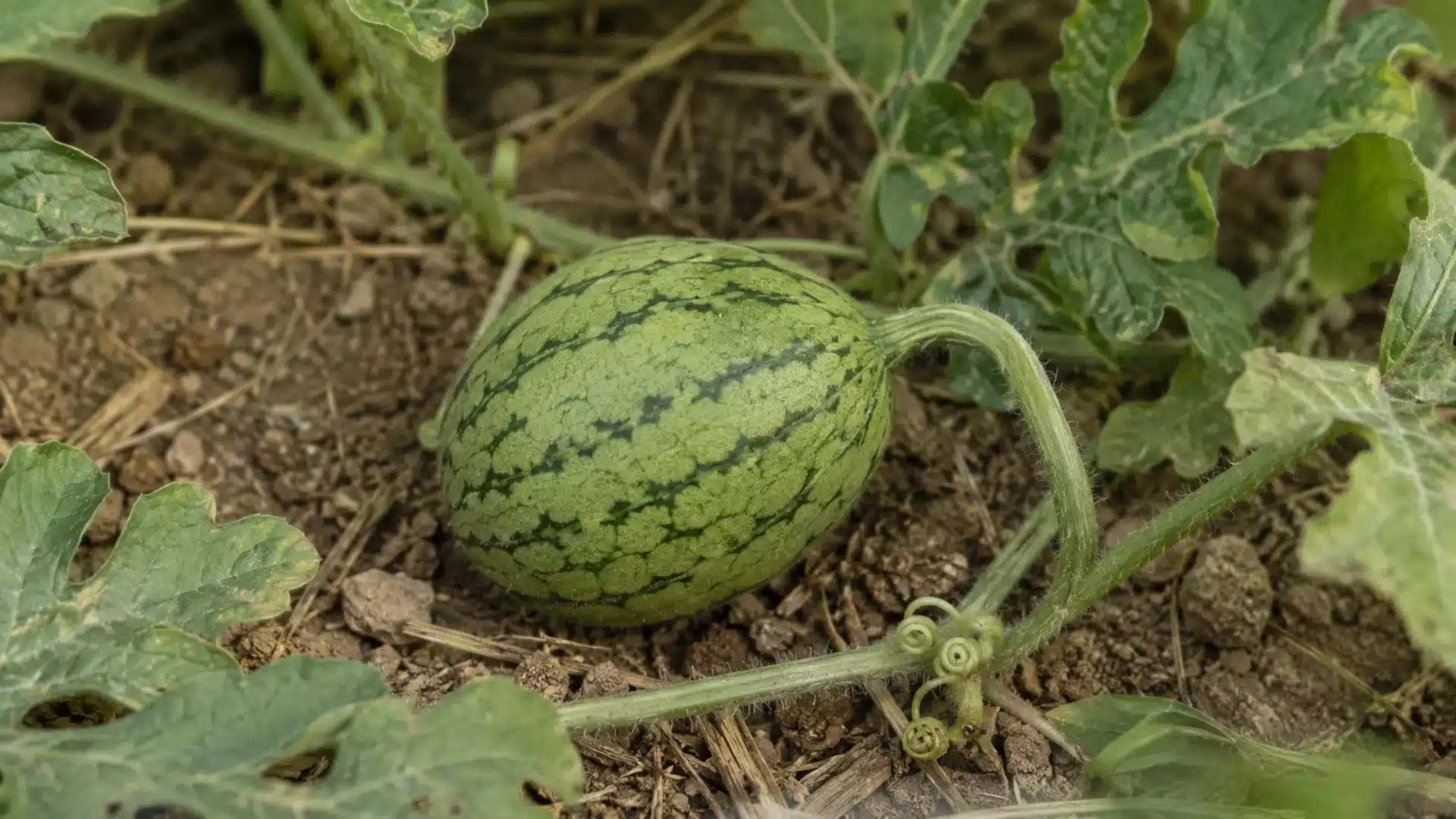
I get asked how long watermelon takes to grow more than almost any other timing question. The honest answer is, it depends more than most people expect.
Soil temperature, sunlight, and the variety you picked all shift the timeline in different directions.
Some of my vines took off within days, while others sat quiet for weeks before doing much of anything.
So instead of chasing an exact number, it helps to know what the vine itself is telling you at each stage.
How Long Does It Take for Watermelon to Grow?
From seed to slice, most watermelons need two and a half to three and a half months in the ground.
Because it is longer than tomatoes, peppers, or cucumbers, patience is more important here.
Warmer regions trim the wait; shorter seasons stretch it further. A backyard patch and a commercial field often finish in similar timeframes because heat and sunlight influence pace more than size.
Monitor your specific variety’s expected range to reduce guesswork in the countdown.
Watermelon Growth Timeline Week by Week
Zooming into a weekly calendar aids planning stages, though pace varies with weather and activity diversity.
| Week | What’s Happening |
|---|---|
| Week 1–2 | Seed germinates, cotyledons break the soil |
| Week 3–4 | True leaves form, roots establish, vines start extending |
| Week 5–6 | Vines spread rapidly, several feet of growth |
| Week 7–8 | Male flowers open first, female flowers follow |
| Week 8–9 | Pollination occurs, fruit begins to set |
| Week 10–13 | Fruit bulks up steadily; consistent watering matters most |
| Week 10–14+ | Ripening signs show; icebox types finish near this week |
Growth Stages: How Long Does It Take for Watermelon to Grow
Understanding the duration of watermelon growth begins with recognizing what occurs at each stage.
Stage 1: Germination (5–10 Days)
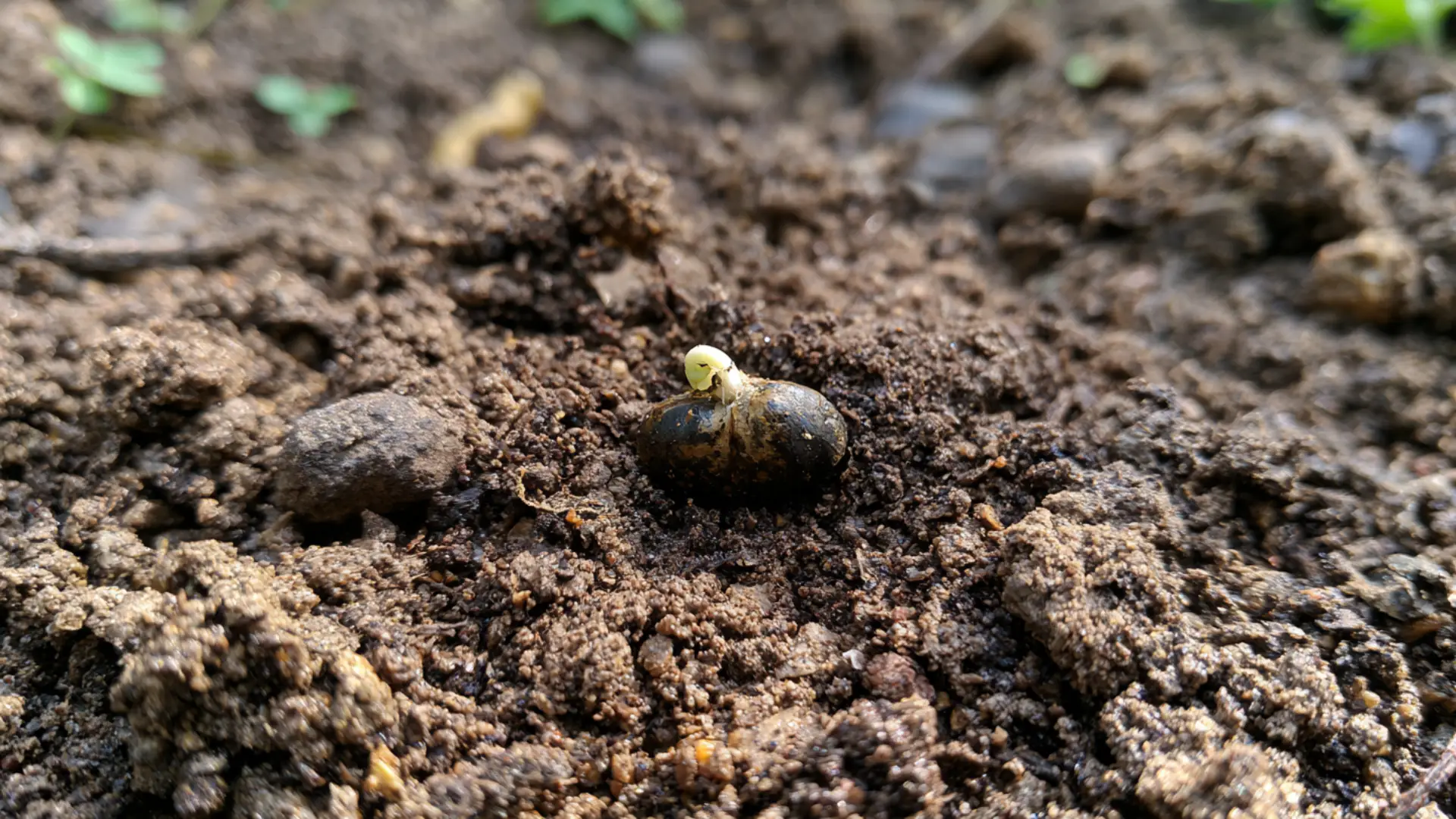
Watermelon seeds germinate best at temperatures between 70°F and 95°F with consistently moist (not soggy) soil.
Below 70°F, germination slows considerably or may stall altogether.
Within a week or two, you’ll see the seed leaves, called cotyledons, push through the soil surface.
These first leaves look rounder and smoother than the true leaves that follow, and they’re your earliest sign the plant has successfully sprouted. Plant seeds about an inch deep so they stay in contact with warm soil.
Overwatering at this stage raises the risk of seed rot before it ever sprouts.
Stage 2: Seedling & Vegetative Growth (2–3 Weeks)
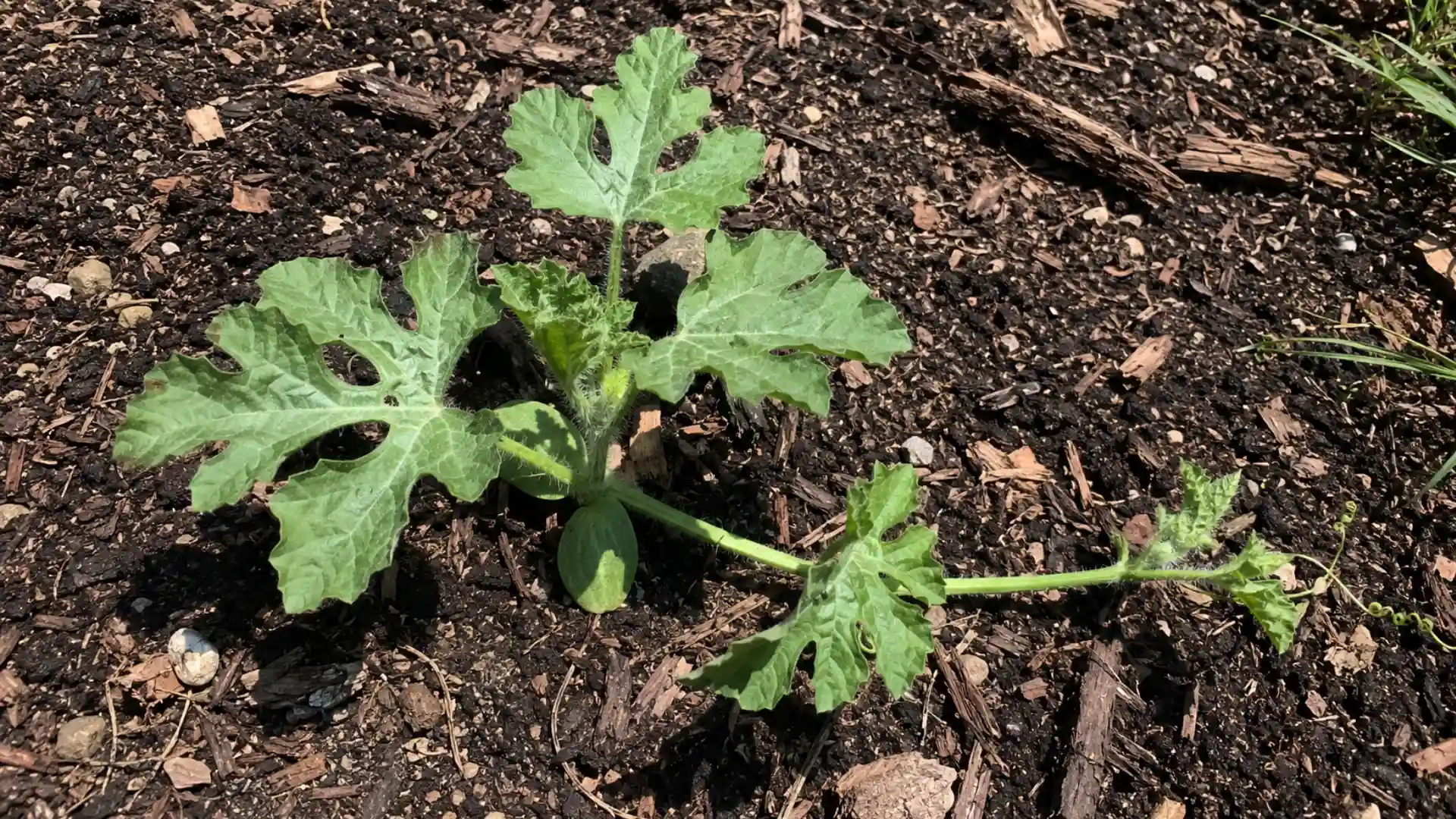
Once cotyledons appear, the plant directs energy to producing true, jagged, melon-like leaves.
Roots also develop quickly during this window, anchoring the plant and preparing it for rapid vine growth.
As the seedling matures into a young plant, vines extend 6 to 8 feet in about 30 days under good conditions.
This critical spacing period prevents overcrowding, which can hinder sunlight, nutrients, and later fruit development. Thin to one strong seedling per hole once true leaves appear.
A light, diluted feeding now supports faster leaf and root growth.
Stage 3: Flowering (40–50 Days After Planting)
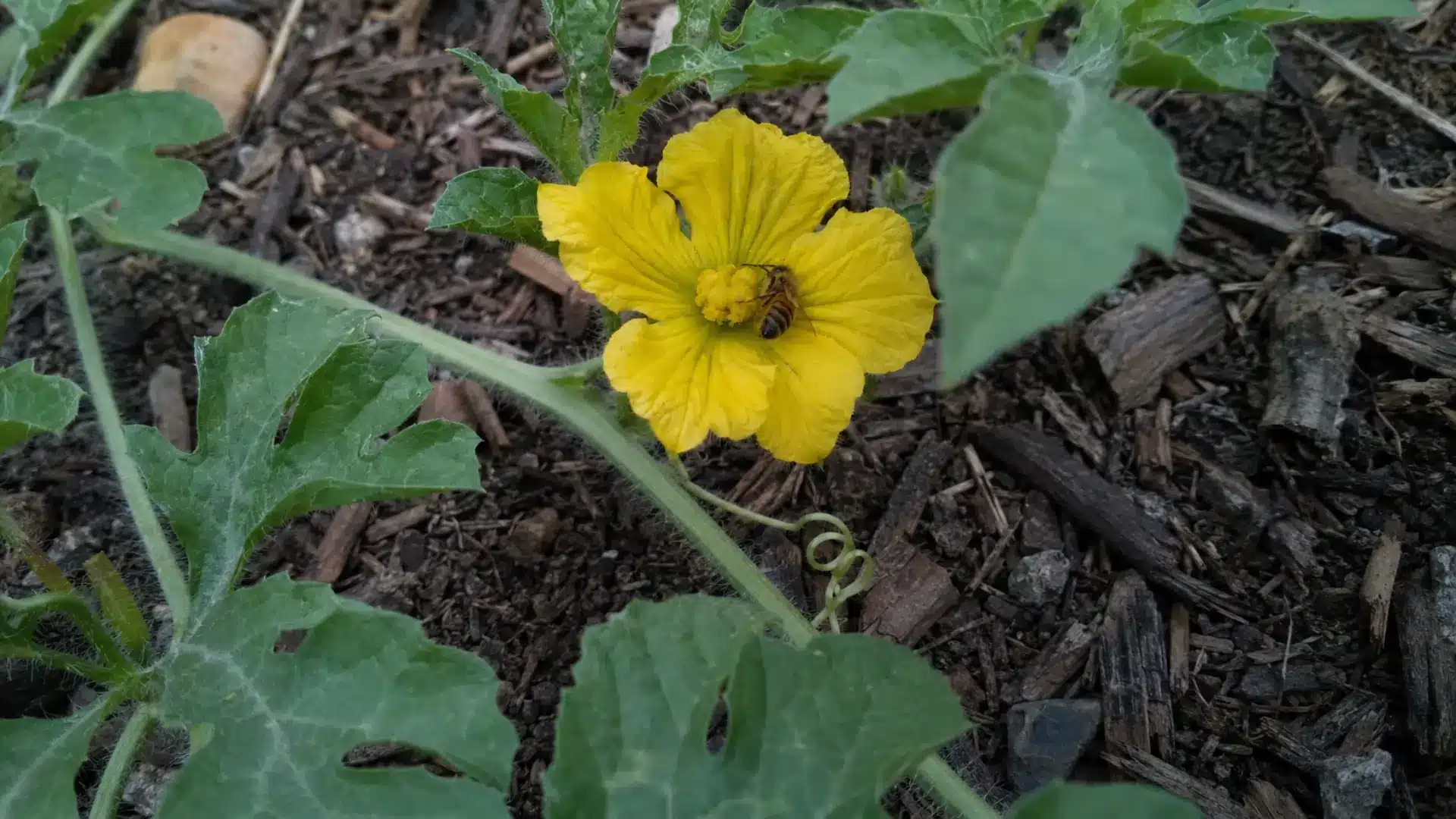
About 40-50 days after planting, watermelon vines produce flowers, starting with male blooms on thinner stems and then female blooms with a small bulb at the base, indicating upcoming fruit.
Pollination depends heavily on bees moving pollen from male to female flowers.
This applies to seedless watermelons too, which still require a seeded variety nearby for pollen to form fruit.
Each flower usually opens for a single day before closing for good. Morning hours bring the highest bee activity, so pollination odds peak early.
Since fruit set depends entirely on bee visits, it is worth taking steps to help pollinators in your garden well before the flowers even open.
Stage 4: Fruit Set & Development (30–45 Days)
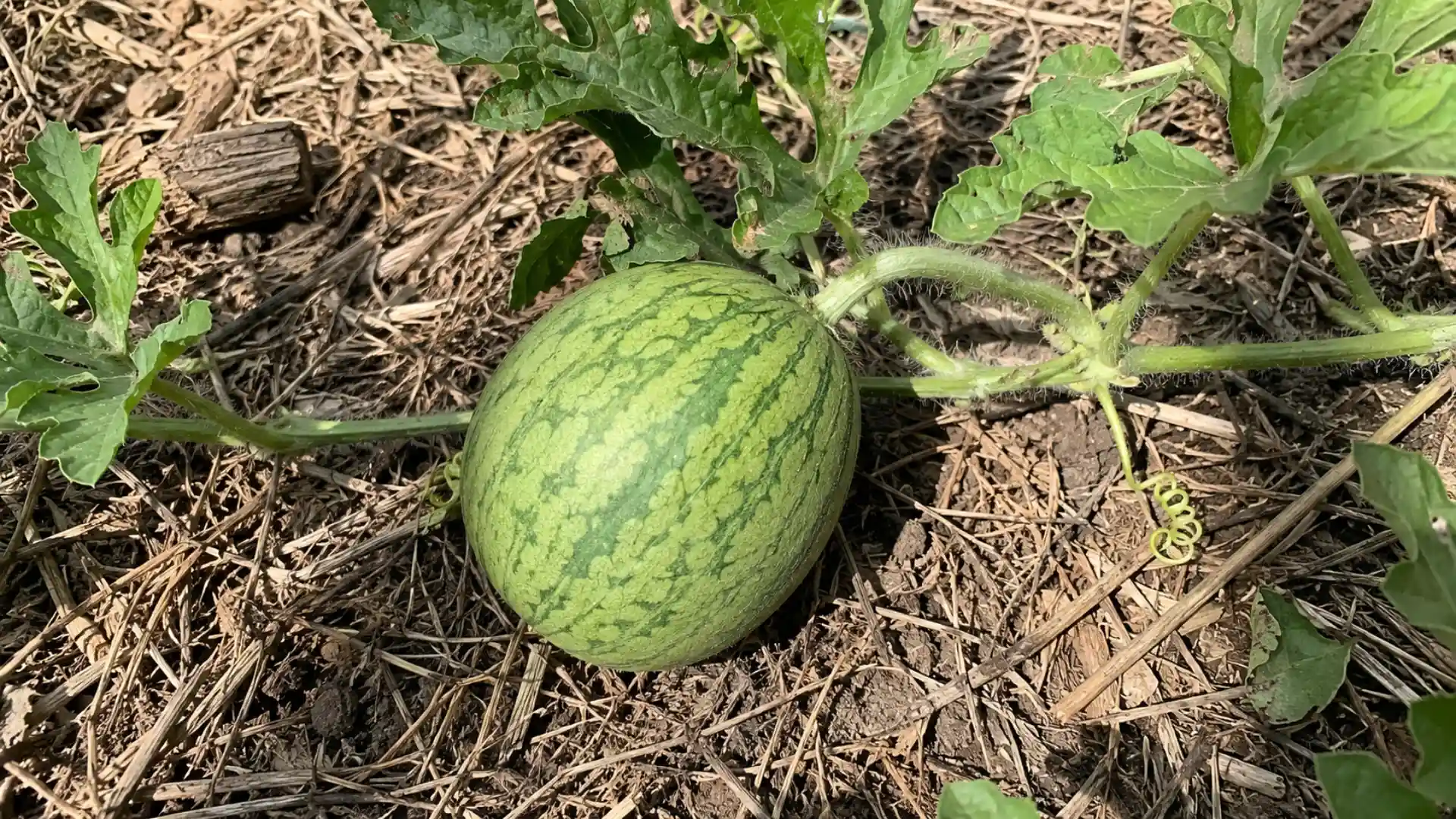
Once pollination succeeds, the small bulb at the base of the female flower begins swelling into a young melon.
Over the next 30 to 45 days, the fruit grows steadily, drawing energy from the vine’s leaves through photosynthesis.
Growth rate depends on type, water, and health; larger varieties take longer to reach full size than compact types.
Consistent watering during this stage is especially important, since moisture fluctuations can cause cracking or uneven growth. Slide a piece of cardboard or straw under the fruit to keep it off damp soil.
Avoid shifting or rotating the melon once it starts sizing up, since this can strain its vine connection.
Stage 5: Ripening & Harvest Window
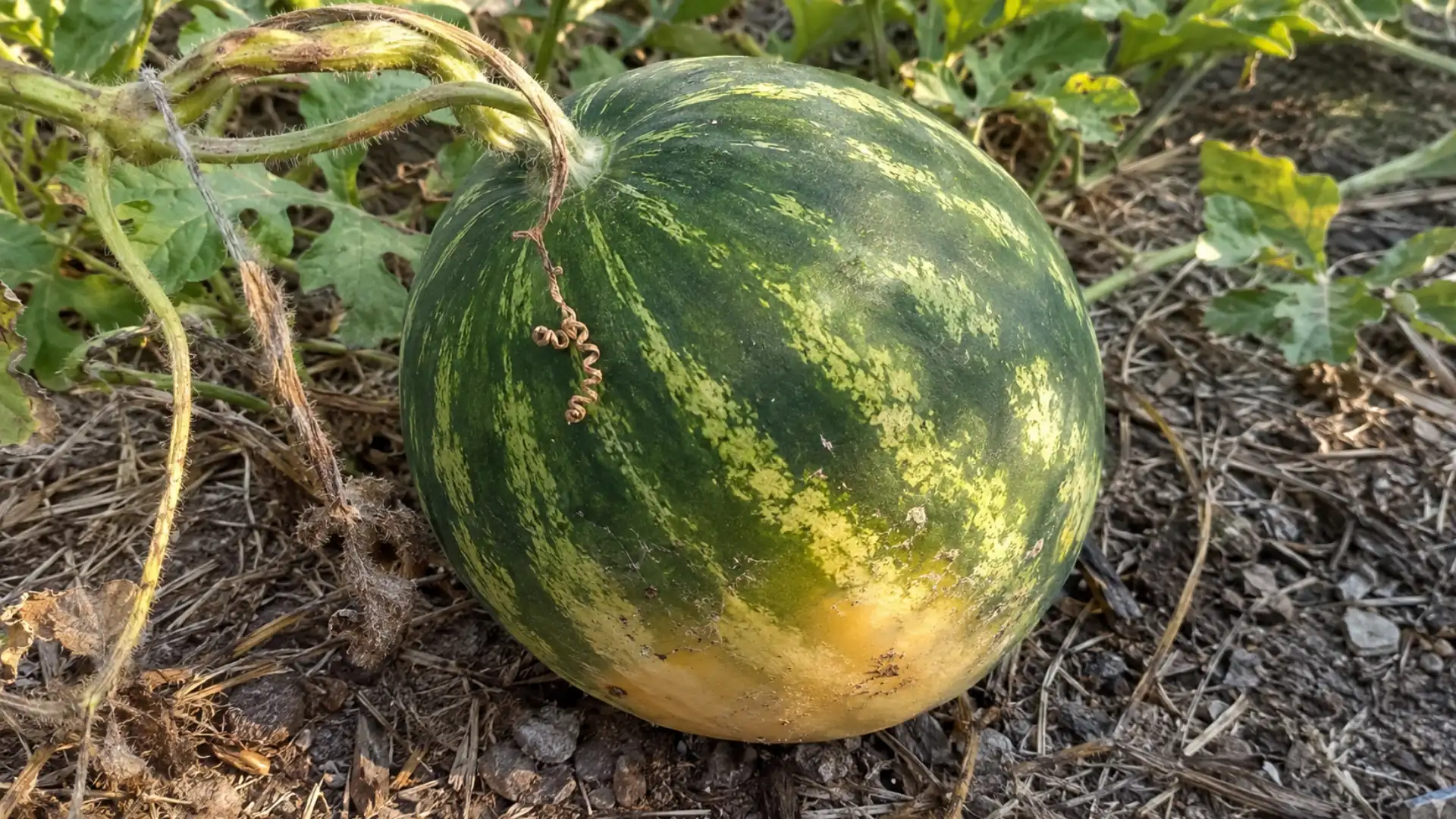
As harvest approaches, multiple visible signs indicate the fruit is ripe.
The underside spot shifts from white to creamy yellow, the skin dulls, and the near tendril dries and browns.
Growers thump the melon, listening for a deep, hollow sound instead of a sharp pitch.
Fruit size levels off here while sugar content keeps building.
Harvest promptly once ripe, since the melon stops improving after this point on the vine. Laying the stages out this way makes it easier to see where watermelon growth time comes from and why it varies.
How Long Do Different Watermelon Varieties Take to Mature?
Different varieties have varying maturity times; checking specific ones beyond general categories helps.
| Variety | Days to Maturity | Average Fruit Weight |
|---|---|---|
| Golden Midget | 70 days | 3 lbs |
| Yellow Crimson | 80 days | 20–25 lbs |
| Jubilee | 90 days | 25–40 lbs |
| Orangeglo | 90–100 days | 20–25 lbs |
| Moon and Stars | 90–100 days | 30–40 lbs |
How to Read Days to Maturity (DTM) Correctly?
That DTM number on a seed packet only means something once you know where the count starts.
Most seed companies calculate it from the transplant date, not the day seeds go into a tray indoors.
Direct-sowing skips that indoor head start, so add roughly 10 extra days to whatever number the packet lists.
Skipping this detail is why two gardeners with the same variety often harvest weeks apart. Match the packet’s DTM against your actual sowing method, not just the date on the calendar, and the estimate holds up far better.
Factors That Affect Watermelon Growth
Multiple factors affect how fast a watermelon plant progresses from seed planting to harvest.
- Climate & Temperature: Ideal range is 75–95°F, with nights staying above 65°F.
- Sunlight: Plants need 6 to 10 hours of direct sun daily.
- Soil Type & Drainage: Sandy loam with neutral to slightly acidic pH works best.
- Watering Consistency: 1 to 2 inches per week, avoiding fluctuations.
- Starting Method: Transplants save time versus direct sowing seeds.
- Growing Zone: USDA zone and last frost date set the planting window.
- Pollination Success: Poor bee activity can delay or prevent fruit set.
Getting these factors right keeps watermelon growth on schedule and closer to the shorter range.
How Long Does It Take a Watermelon to Grow After Flowering?
After a female flower is pollinated, the fruit takes about 30 to 45 days to reach full size and ripeness.
Growth is fastest in the first two to three weeks, when the melon gains most of its bulk.
Sugar builds up gradually in the final stretch, which is why an early pick often tastes bland. Hot, sunny days speed this window along, while extended cloud cover or cool nights stretch it out.
Seedless varieties usually sit at the longer end of this range.
Checking the calendar from bloom date onward gives a more reliable harvest estimate than guessing by eye alone.
Why Your Watermelon is Taking Longer Than Expected?
Sometimes the plant isn’t stalled; it’s just behind schedule from the start.
A late planting date after a slow spring pushes the whole timeline back. Transplant shock from disturbed roots can delay growth. Compacted soil limits root growth, slowing nutrient uptake and fruit size.
Heat stress over 95°F causes blossoms to drop before pollination.
Shallow, frequent watering weakens roots and doesn’t support the deep systems fruit needs.
Comparing your plant to a seed packet’s DTM without setbacks can make growth seem slower.
Signs Your Watermelon is Growing Normally
A healthy plant shows several consistent, obvious signs throughout its growth.
- Leaves remain deep green and firm, without turning pale or curling.
- Vines extend consistently week over week without stalling.
- Fresh flowers continue to bloom in a consistent order.
- Fruit feels firm and gains noticeable size every few days.
- Stems and tendrils stay green and pliable, not dry or brittle early on.
- Root zone stays evenly moist without standing water or cracked, dry soil.
- Plant recovers quickly from midday wilting once evening temperatures drop.
How to Make Watermelons Grow Faster Naturally?
Building healthy soil naturally speeds growth without synthetic shortcuts.
Mix compost into the bed before planting to feed roots gradually. Straw mulch keeps soil steady and locks in moisture. Pruning excess side vines redirects the plant’s energy toward fewer, faster-growing fruit.
Knowing how much mulch to use keeps that layer thick enough to hold moisture without smothering the vine’s shallow roots.
Planting on a slight south-facing slope captures more warmth in cooler regions.
Watering at the base in the morning reduces stress and encourages deeper roots. Companion planting with marigolds or nasturtiums can support pollinator activity nearby.
These small, natural adjustments work together rather than relying on any single fix
Watermelon Growth Timeline in Different Growing Conditions
Growing setup changes the timeline too, independent of variety or region.
| Growing Condition | Effect on Growth Time |
|---|---|
| Raised bed | Warms faster in spring, often shortens timeline slightly |
| Greenhouse or hoop house | Extends the warm season, allows earlier and later planting |
| Open field | Follows natural climate pace with no added protection |
| Container growing | Root restriction can add a few extra days to maturity |
| Vertical trellis support | Improves airflow and light, keeping growth steady |
Browsing a few trellis ideas for vining plants ahead of time makes it easier to pick a support sturdy enough for melon vines.
Common Watermelon Growing Timeline Mistakes
A few unnecessary mistakes can disrupt the entire growth timeline more than gardeners realize.
- Planting before soil has actually warmed, not just after the calendar frost date.
- Picking a variety with a longer DTM than the local season allows.
- Judging harvest by the calendar alone instead of confirming ripeness signs.
- Applying high-nitrogen fertilizer late in the season, which favors leaves over fruit.
- Losing track of the exact planting date, making DTM estimates unreliable.
- Letting every fruit on the vine mature at once instead of selecting the strongest ones.
The Bottom Line
The real answer comes down to the variety you picked, how warm your soil got, and how closely you tracked those first few weeks.
Mark your planting date, watch for the signs we covered, and trust the tendril and thump test over guesswork every time.
Growth time is a range, not a promise, and paying attention is what turns that range into a reliable harvest.
Which variety are you growing this season? Tell me in the comments, or ask if your vine seems behind schedule.
Frequently Asked Questions (FAQs)
How Long Does a Watermelon Take to Grow Overall?
Roughly 65 to 100 days from planting to harvest, depending on variety.
Can I Speed up Watermelon Growth Naturally?
Yes, warm the soil early and hand-pollinate for faster results.
What Month Should I Plant Watermelon?
Plant after the last frost, typically April through June, depending on your region.
How Do I Know if Growth is Delayed?
Compare current size against your variety’s expected days-to-maturity milestones.
Does Watermelon Size Affect Growth Time?
Yes, larger varieties generally take more days than smaller ones.