
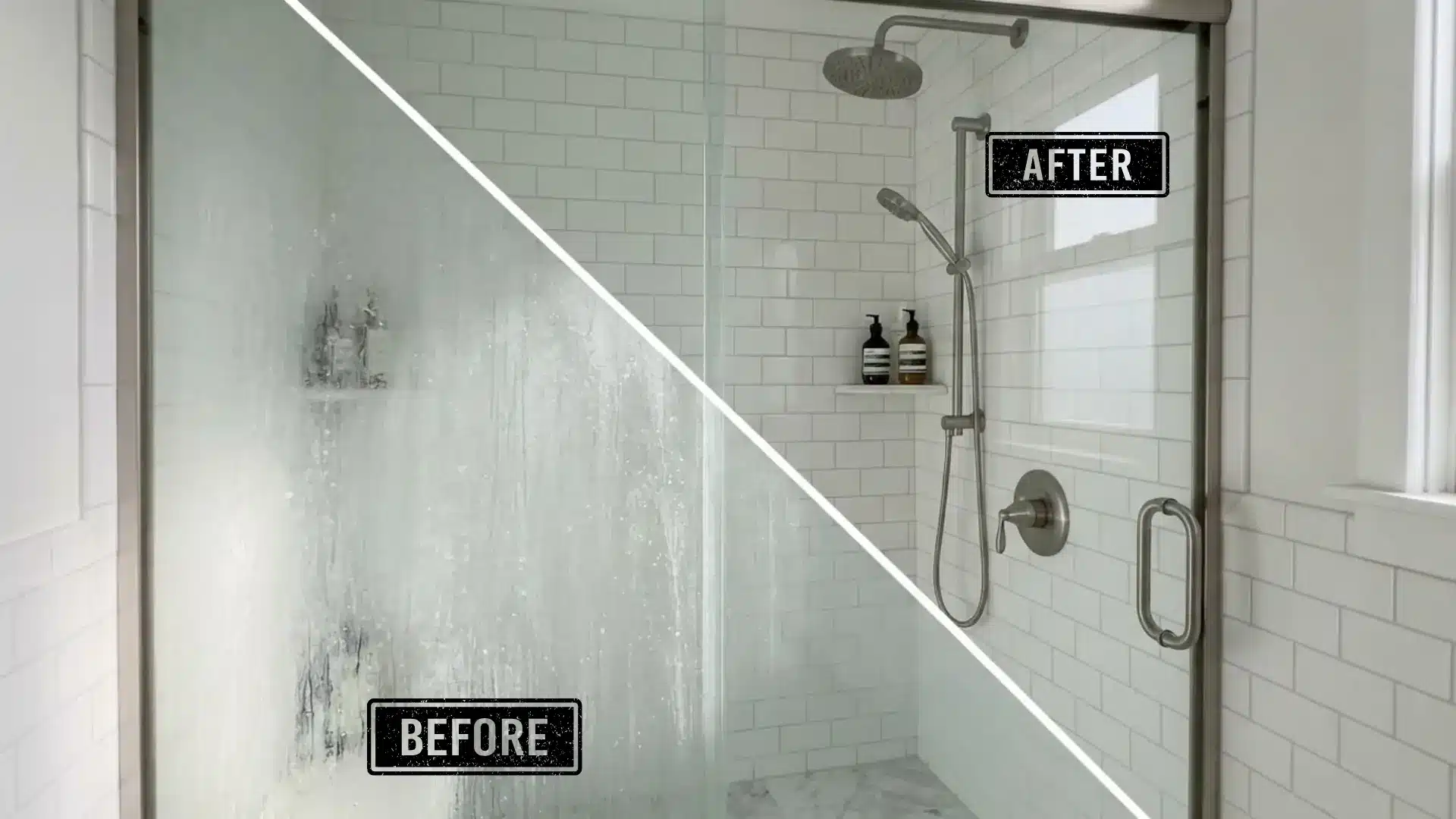
A clean shower door makes your whole bathroom look brighter. But getting it that clear takes more than a quick wipe. Some spots come off easily, while others need extra effort.
Switching cleaners without a plan can waste your time and energy. Learning how to clean shower glass properly helps you skip that guesswork.
It isn’t about grabbing every bottle under your sink. It’s about picking the method that fits your exact problem. Simple ingredients often work just as well as pricey products.
I’ve tried different tricks, and some beat others by far. So grab a cloth, choose your method, and get that glass shining again.
Why Shower Glass Gets Cloudy Over Time
Shower glass gets cloudy mostly from hard water. Every time water dries on the glass, it leaves behind tiny mineral deposits that build up over weeks until the surface looks foggy instead of clear.
Soap scum adds to the problem too, especially in a shower used daily by more than one person.
Regular glass cleaners are made for grease and dust, so they do little once mineral spots have hardened onto the surface.
Some people try scrubbing harder, but that usually just scratches the glass without lifting the buildup.
Vinegar breaks down mineral deposits better than a standard spray, especially paired with dish soap.
Catching buildup early matters, since removing rust and mineral stains gets harder once deposits harden.
How to Clean Shower Glass: Simple Solutions to Try
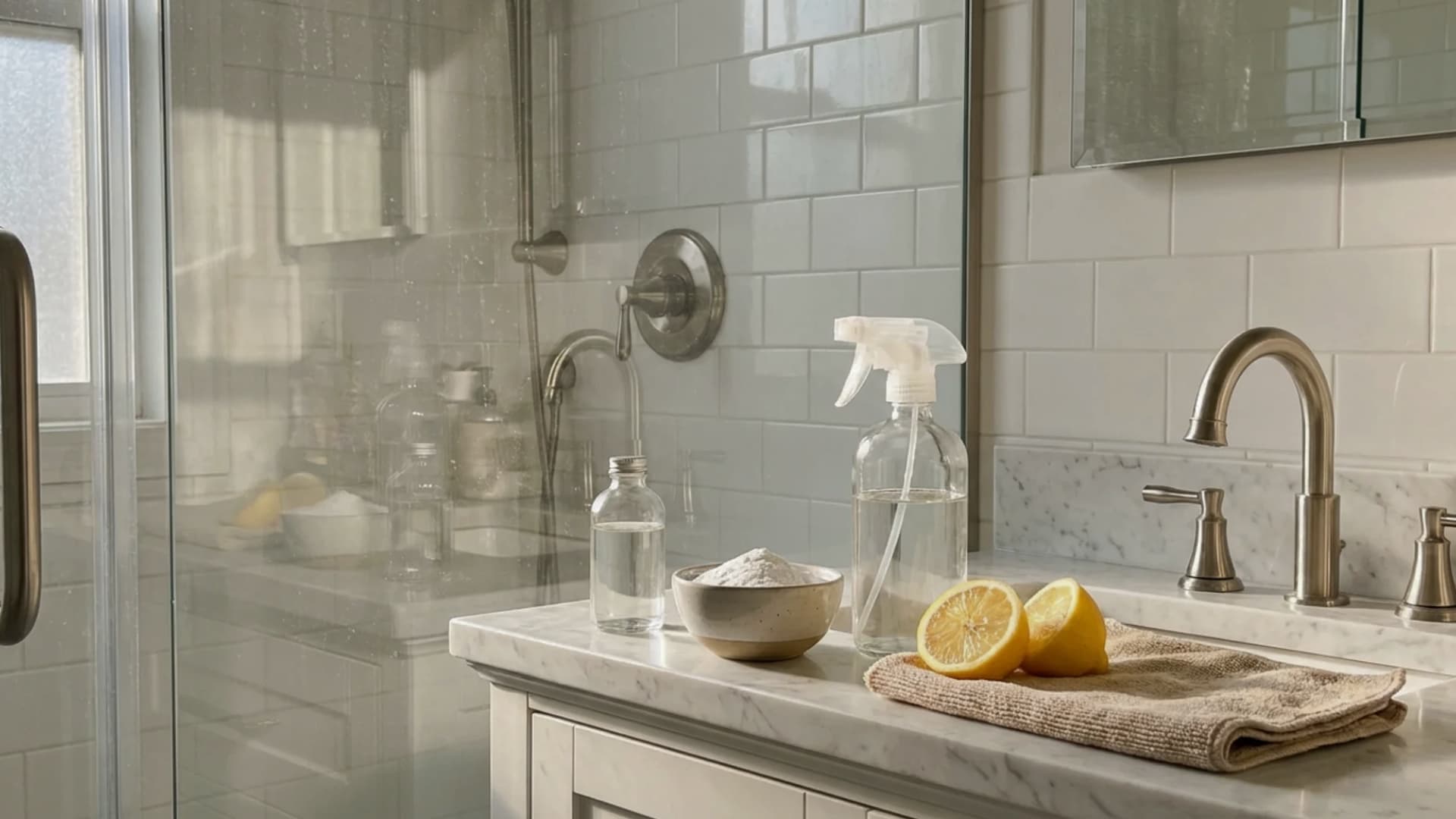
I’ve tried nearly every trick in the book to keep my own shower glass spotless. Here are my go-to methods, ranked from gentle to heavy-duty.
1. Mild Dish Soap and Warm Water
Dish soap cuts through body oils better than plain water alone. It breaks up light soap residue that builds up over time. This mix is gentle enough for daily use.
It won’t harm your glass or leave a filmy layer behind. Many people already have these supplies at home. It’s an easy first step before trying stronger solutions.
How to Do It:
- Mix a few drops of dish soap into a bowl or bucket of warm water.
- Dip a soft cloth or sponge into the solution and wipe the glass in small sections.
- Rinse the glass thoroughly with clean warm water to remove any soapy residue.
- Dry the surface with a microfiber cloth to leave it clear and streak-free.
2. Rubbing Alcohol and Water Solution
Rubbing alcohol breaks down greasy films that soap alone can’t handle. It leaves glass looking clearer and streak-free. This solution works fast and dries quickly on its own.
Good airflow makes the process more pleasant and safer. It pairs well with a final polish for extra shine. This option suits glass with a light greasy buildup.
How to Do It:
- Mix equal parts rubbing alcohol and water in a spray bottle, then open a window for airflow.
- Spray the solution directly onto the glass, covering greasy or filmy areas evenly.
- Wipe with a soft cloth in gentle strokes, rinsing with water if any residue remains.
- Polish the glass dry with a clean microfiber cloth for a streak-free finish.
3. Lemon Juice and Water
Lemon juice offers a natural, mild acid that lifts light mineral spots. It also helps loosen soap residue on glass.
The citrus scent leaves a fresh smell behind too, which I honestly look forward to. This method feels gentle and won’t overwhelm sensitive noses.
It works best on spots that aren’t too deep-set. Many people like this option for a natural touch.
How to Do It:
- Mix lemon juice with an equal amount of water and pour it into a spray bottle.
- Spray the mixture evenly across the glass surface, focusing on spotted areas.
- Let it sit for a few minutes before wiping with a soft cloth.
- Rinse thoroughly with warm water and dry with a clean, soft cloth.
4. White Vinegar and Water
White vinegar is a trusted go-to for breaking down hard-water deposits. Its acidity works well on moderate mineral buildup.
This solution is affordable and easy to find in most kitchens. It tackles cloudy spots that plain soap can’t touch. Give it a little time to work before wiping.
This step often makes a noticeable difference on its own.
How to Do It:
- Mix equal parts white vinegar and warm water in a spray bottle.
- Spray it generously over the glass and let it sit for five to ten minutes.
- Wipe gently with a soft cloth or sponge to lift loosened mineral deposits.
- Rinse well and dry with a microfiber towel for a clear, spot-free finish.
5. Vinegar and Dish Soap Solution
Combining vinegar and dish soap tackles two problems at once. Vinegar breaks down mineral deposits while soap lifts oily scum. This duo works harder than either ingredient alone.
It’s a smart pick for glass with mixed types of grime. The two ingredients balance each other out nicely. This method saves time compared to doing two separate steps.
How to Do It:
- Mix equal parts white vinegar and dish soap, then add it to a spray bottle.
- Spray it evenly across the shower glass and let it sit for a few minutes.
- Scrub gently with a soft sponge or cloth to loosen stuck-on grime.
- Rinse thoroughly with clean water and dry with a microfiber cloth.
6. Baking Soda Paste
Baking soda paste helps lift stubborn residue that sprays can’t fully remove. It has a slightly gritty texture that adds gentle scrubbing power.
This makes it useful for tougher spots on the glass, and it’s one of my favorite tricks. Because it’s mildly abrasive, use it with care.
A soft touch protects the glass from tiny scratches. This method works well for occasional deep cleaning.
How to do it:
- Mix baking soda with a small amount of water until it forms a thick paste.
- Apply the paste to problem areas using a soft cloth or sponge.
- Rub gently in small, circular motions, avoiding heavy pressure that could scratch the glass.
- Rinse thoroughly with warm water and dry with a clean microfiber cloth.
7. Vinegar-Soaked Paper Towels for Hard-Water Buildup
This method keeps vinegar in contact with tough mineral stains longer than spraying does. Extended contact time gives the acid more chance to break things down.
It’s especially helpful for stubborn hard-water buildup on glass. This trick requires little effort once it’s set up. Just let the towels sit and do the work. It’s a favorite for hands-off deep cleaning.
How to do it:
- Soak paper towels in undiluted white vinegar and press them against stained areas.
- Let the towels sit for fifteen to thirty minutes so the vinegar can work.
- Remove the paper towels and wipe the area gently with a soft cloth.
- Rinse well and dry with a microfiber towel.
8. Citric Acid Solution for Heavy Mineral Deposits
Citric acid is the strongest option on this list for heavy scale buildup. It’s ideal when other methods haven’t fully worked. This solution needs a bit more caution during use.
Gloves and good airflow help keep the process safe and comfortable. Save it for truly stubborn mineral deposits. Repeat sparingly since it’s the most powerful choice here.
How to Do It:
- Dilute citric acid with water according to the product’s instructions, then put on gloves and open a window for airflow.
- Apply the solution to the affected areas and let it sit briefly, following label guidance.
- Scrub gently with a soft sponge or cloth, then rinse thoroughly with clean water.
- Repeat only if needed, waiting between applications to protect the glass surface.
Best Products for Cleaning Shower Glass
DIY methods work great, but sometimes a dedicated product speeds things up. I’ve rounded up trusted options that actually get results:
| Product | Category | What to Look For |
|---|---|---|
| CLR Calcium, Lime and Rust Remover | Hard-Water Stain Remover | Cuts through tough mineral scale on glass without heavy scrubbing. |
| Kaboom Foam-Tastic Bathroom Cleaner | Soap Scum Remover | Breaks down oily soap residue on contact; foam clings to glass. |
| OxiClean Foam-Tastic Bathroom Cleaner | Soap Scum Remover | Color-changing foam lifts soap scum and grime without hard scrubbing. |
| Clorox Plus Tilex Daily Shower Cleaner | Daily Shower Spray | Bleach-free, no-rinse mist that prevents buildup between deep cleans. |
| Method Daily Shower Spray | Daily Shower Spray | Plant-based formula that dissolves and repels soap scum with daily use. |
Any of these can make your shower glass upkeep a lot easier. Pick one that matches your biggest problem, whether that’s hard water or daily buildup.
What Not to Use on Shower Glass
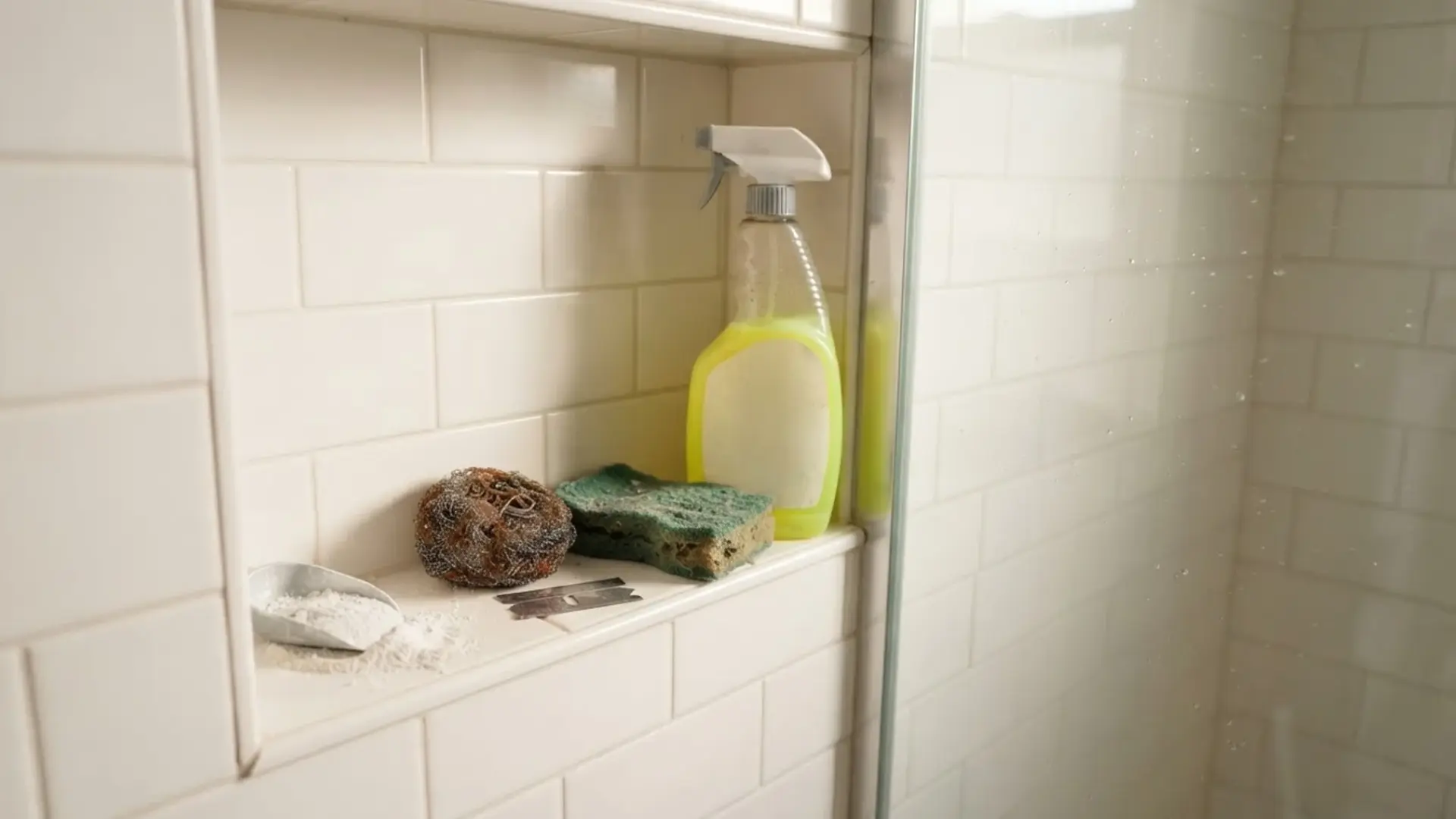
I once grabbed the wrong cleaner and accidentally scratched my shower glass. Skipping a few common products can help you avoid that same mistake:
- Steel wool and other highly abrasive scrubbers, which can leave fine scratches on the surface.
- Aggressive scraping tools, since sharp edges can dig into glass and cause permanent marks.
- Cleaners that are not safe for protective coatings, as they can wear the coating down over time.
- Mixing different household cleaning chemicals together, which can create harmful fumes or damage the glass.
- Excessive use of abrasive powders, which can dull the glass and leave a hazy finish.
Sticking to gentle, glass-safe products helps protect both the glass and any nearby stone, metal, or seals. A little care now can save you from costly repairs later.
How Often You Should Clean Shower Glass
There’s no single answer that fits every bathroom. It really depends on your water type and how often the shower gets used:
| Factor | Cleaning Frequency | Why |
|---|---|---|
| Quick wipe-down | Weekly | Prevents everyday grime from building up |
| Full vinegar treatment | Every few weeks | Clears mineral deposits before they harden |
| Hard water homes | More frequently | Mineral deposits build up faster |
| Soft or filtered water homes | Can stretch longer | Less mineral content slows buildup |
| Heavy daily use | Sooner rather than later | More showers mean more soap scum and oils |
| Glass doors | More attention than curtains/panels | They catch more direct splashing |
Once you know your water type, it’s easy to build a routine that actually works. A little consistency goes a long way toward keeping glass clear.
Tip: A water softener installed at the main line can cut down on hard water spots throughout the whole house, not just on shower glass.
How to Keep Shower Glass Clean and Spot-Free
A little daily effort saves me from tackling stubborn buildup later. Here’s what actually keeps my glass looking clear:
- Squeegee the glass after every shower. This simple habit clears water before it can dry into spots.
- Improve bathroom ventilation. Good airflow helps everything dry faster and cuts down on lingering moisture.
- Wipe down problem areas and address soap scum early. A quick pass over corners and edges stops residue from building up.
- Use a daily shower spray when needed. This adds an extra layer of protection between deeper cleans.
- Keep tracks, seals, and frames dry. These spots trap moisture and grime if they’re left unchecked.
I’ve found that sticking to these small habits makes a real difference over time. It’s a lot easier than scrubbing away months of buildup all at once.
Frequently Asked Questions (FAQs)
Why Does My Shower Glass Still Look Cloudy After Cleaning?
Cloudiness often means etching from long-term mineral damage, not just surface residue. Etched glass may need professional polishing since cleaning alone won’t reverse it.
Is It Safe to Clean Shower Glass with a Razor Blade?
Razor blades can scratch glass and damage protective coatings if used incorrectly. Professional-grade scrapers designed for glass are safer if scraping feels necessary.
Should I Clean Shower Glass Before or After Showering?
Right after showering works best since the glass is warm and residue hasn’t dried yet. Warm, damp surfaces respond better to cleaning solutions than cold, dry ones.
The Bottom Line
Shower glass stays clear longer when you stick to a simple routine. Once you learn how to clean shower glass, keeping it clear gets easier.
Pick a method that matches your mess, whether it’s soap scum or hard water spots. Stay consistent with quick wipe-downs and skip tough scrubbing later.
Small habits like squeegeeing after each shower keep glass fresh longer. You don’t need every product on the shelf to get results.
Steady effort and the right approach work every time. Try one of these methods today and drop a comment below to share what worked for you!