Swedish ivy is one of the easiest trailing plants you can grow indoors. It works well for people new to houseplants.
Swedish ivy care mostly comes down to a few habits you can learn quickly. This plant fits well on shelves, in hanging baskets, or near a window.
It grows fast, so small mistakes show up early and are easy to catch. Beginners often pick it because it forgives a missed watering here and there.
I’ll cover what keeps this plant full and healthy year-round. Swedish ivy care is simple once you know what to check.
Getting to Know Swedish Ivy First
Swedish ivy, known botanically as Plectranthus verticillatus, is not a true ivy at all. It belongs to the mint family and grows as a bushy, trailing plant.
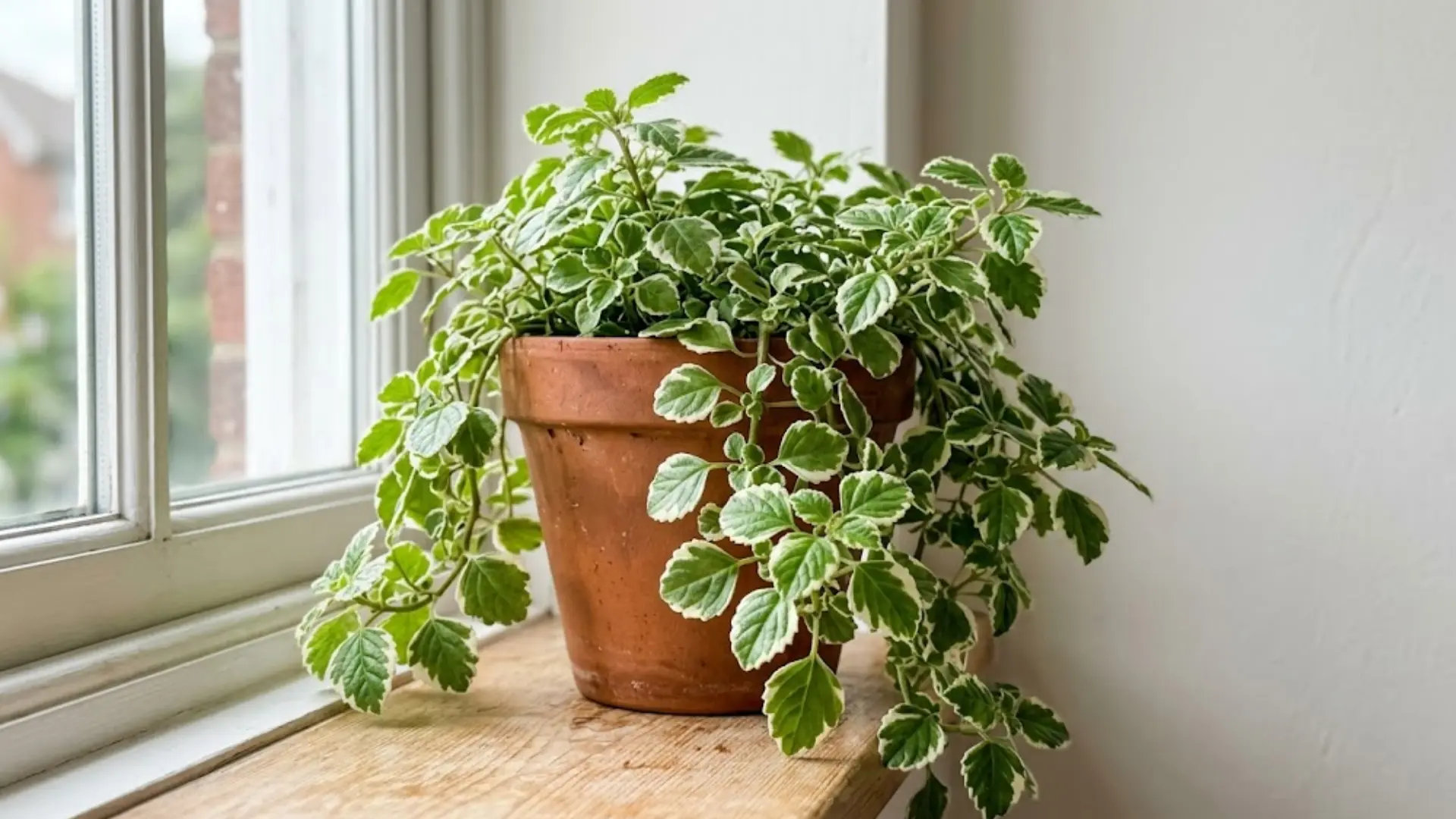
Long stems spill over pots, making it a common choice for hanging baskets. Its leaves are round, glossy, and scalloped along the edges, with a light green color.
The plant grows fast and can trail several feet indoors or outdoors in warm climates.
It’s often grouped with other easygoing starter plants for people building their first indoor plant collection. Most people grow it as a houseplant, though it also does well outside in mild weather.
According to the ASPCA, Swedish ivy is non-toxic to cats and dogs. Knowing its natural growth habits helps spot real problems early.
How to Care for Swedish Ivy?
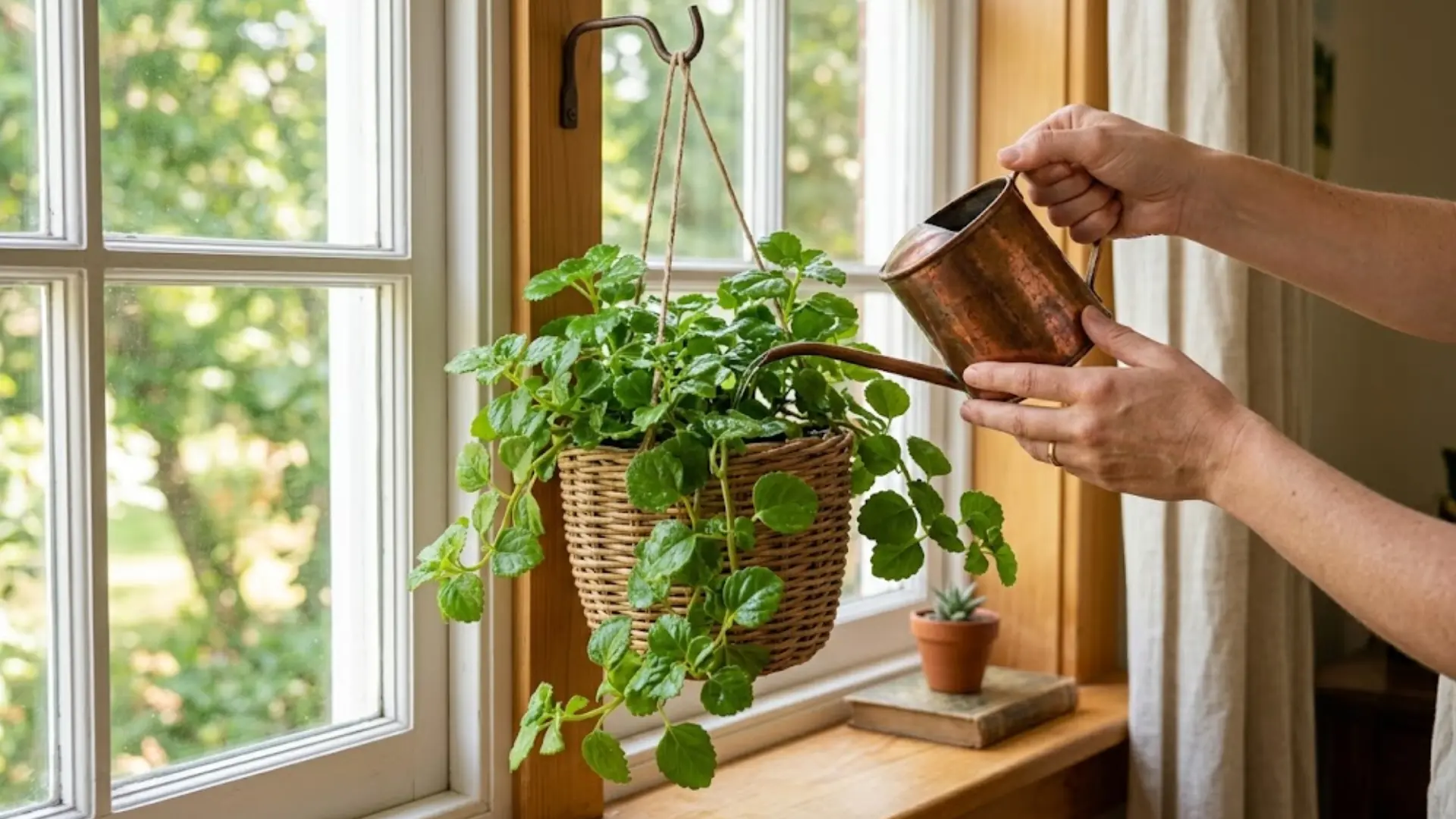
I’ve found Swedish ivy pretty easy to care for once it’s clear what to do. Here’s what I pay attention to with mine:
1. Give the Right Amount of Light
Swedish ivy grows best in bright, indirect light. Low light causes weak stems and fewer leaves. Direct afternoon sun can scorch the leaves and cause brown spots.
An east- or west-facing window works well for steady light. Turn the pot every week or two for even growth. Move the plant closer to a window during darker winter months.
2. Water Swedish Ivy Properly
Check the soil before watering Swedish ivy. Water thoroughly when the top inch feels dry. Let extra water drain out of the pot completely. Soggy soil can lead to root rot over time.
Bottom watering keeps the topsoil from staying soggy while still giving the roots enough water.
A fixed schedule never worked well for my plant. I adjust watering based on temperature, season, pot size, and light levels. This keeps the roots healthy and prevents stress.
3. Use Well-Draining Soil
Swedish ivy needs a well-draining potting mix. A mix with perlite or coarse sand works well. Good drainage keeps roots from sitting in water too long.
Compacted soil holds too much moisture and blocks air. This can lead to root rot and slow growth. Avoid heavy garden soil in containers, since it drains poorly indoors.
4. Maintain a Comfortable Temperature
Swedish ivy prefers stable indoor temperatures year-round. Keep it away from cold drafts near doors and windows.
Sudden temperature swings can stress the plant and slow growth. My own plant sits far from heating vents and air conditioners, since those spots dry out the air and cause quick temperature changes.
Bring the plant indoors before cold weather arrives in fall.
5. Maintain Suitable Humidity
Normal household humidity usually works fine for Swedish ivy. Very dry air can cause brown, crispy leaf edges over time.
Grouping plants together can raise humidity naturally around them. A small humidifier nearby also helps in dry climates.
A pebble tray with water under the pot works too. Constantly wet leaves are not needed and can cause spots.
6. Fertilize During Active Growth
Swedish ivy grows most actively in spring and summer. Use a balanced houseplant fertilizer during these months. Follow the label for the right dilution and feeding schedule.
Reduce or stop feeding in fall and winter, when growth slows down. Too much fertilizer can burn the roots and damage the leaves. Always feed on damp soil, not dry soil.
7. Prune Swedish Ivy for Fuller Growth
Pinch the growing tips to keep Swedish ivy full and bushy. Trim back long or leggy stems whenever they appear. Remove any damaged or yellowing leaves right away.
Regular pinching encourages new branching and thicker growth. You can trim lightly any time the plant is actively growing.
Save bigger pruning sessions for early spring before new growth starts.
Where Is the Best Place to Put Swedish Ivy?
Swedish ivy grows best in bright rooms that get indirect sunlight. Direct rays can scorch the leaves and dry out the soil too fast.
A few placement details make a real difference over time:
- East-facing windows work well because they offer gentle morning light without the harsh intensity that afternoon sun tends to bring.
- West-facing windows can work fine too, as long as the plant sits a little further back from the glass.
- South-facing windows need extra distance between the plant and the glass since the light coming through runs much stronger.
- Hanging baskets give the trailing stems room to spill over the edges naturally while still catching plenty of light.
- Shelves and open window areas both offer steady, reliable light throughout the day without crowding the plant against other items.
Cold drafts and heating vents can stress the plant, so keep it away from both areas. Wilting leaves or slow, stalled growth often mean the plant needs a new spot.
Common Swedish Ivy Problems and What They Mean
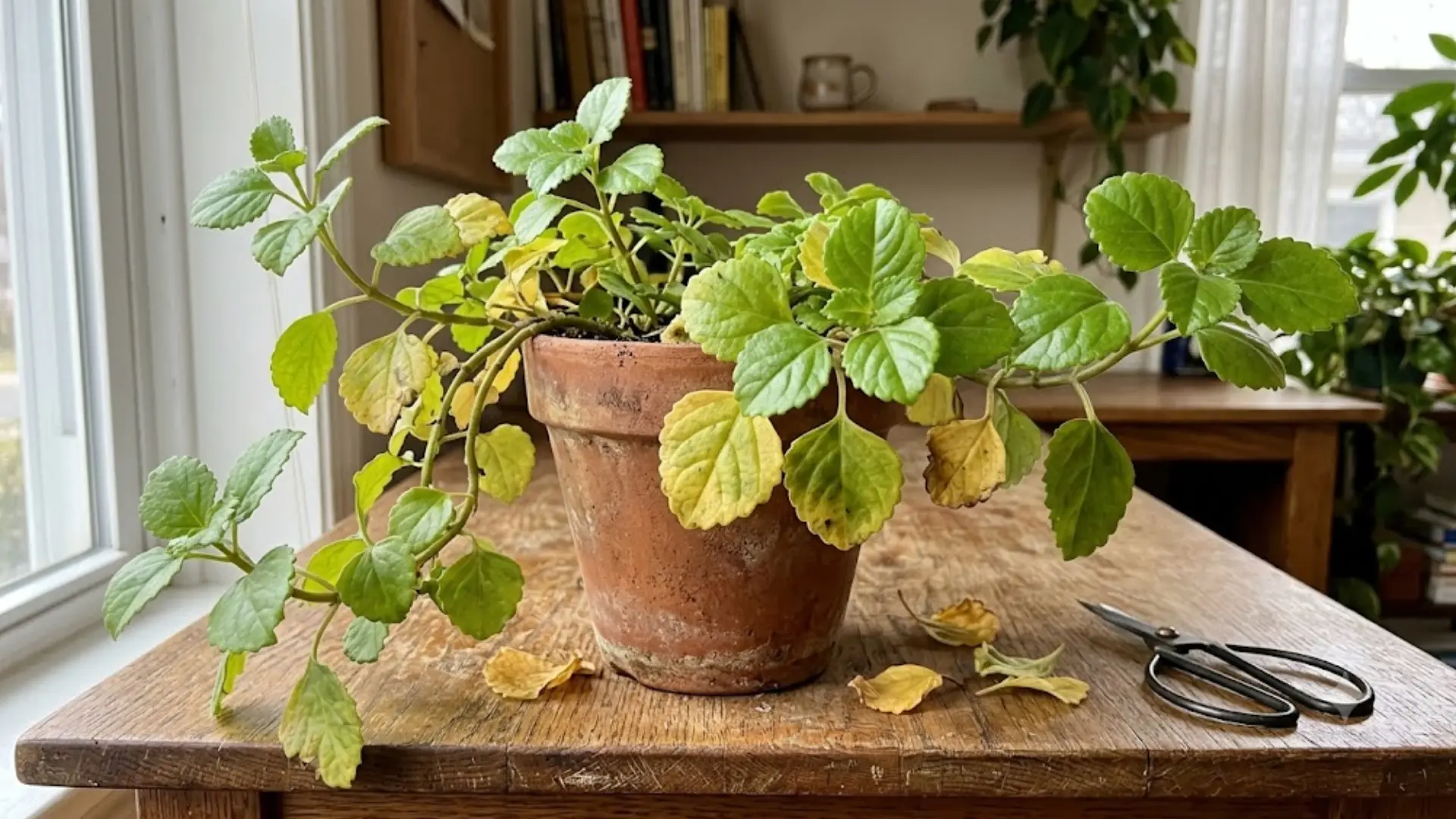
Every plant runs into a few problems, and Swedish ivy is no exception. These issues often come down to light, water, or temperature:
1. Leaves Turning Yellow
Yellow leaves usually point to overwatering or soil that drains too slowly. Roots sitting in wet soil can start to rot over time.
Sometimes a few older leaves turn yellow simply from age, and that is normal. Nutrient gaps can also cause yellowing, especially in plants that have not been fed in a while.
Solution:
- Let the top inch of soil dry out before watering again.
- Move the plant to a pot with better drainage holes.
- Feed the plant every few weeks during spring and summer.
2. Dropping Leaves
Leaf drop often follows a big change in the plant’s routine. Moving it to a new spot or changing its watering schedule can cause stress.
Cold drafts or sudden temperature swings also trigger leaf loss. Low light can weaken the plant enough that it starts shedding leaves. Root stress from repotting can cause the same result.
Solution:
- Keep watering and light conditions steady from week to week.
- Place the plant away from doors, vents, and drafty windows.
- Give the plant a few weeks to adjust after any changes.
3. Swedish Ivy Wilting
Wilting can mean the soil is too dry or far too wet. Dry soil pulls moisture from the leaves, causing them to droop fast.
Soggy soil damages roots, which stops the plant from taking up water at all. Heat stress and recently disturbed roots can also cause wilting.
Solution:
- Stick a finger into the soil before watering.
- Water only when the top layer feels dry to the touch.
- Move the plant out of direct heat or hot windows.
4. Leaves Turning Brown
Brown leaves often follow long stretches without enough water. Too much direct sun can also scorch the leaf edges and tips.
General stress from poor conditions can cause spots of brown to spread. Built-up salts or fertilizer in the soil can also cause browning.
Solution:
- Water on a steady schedule instead of letting soil dry out fully.
- Move the plant back from harsh, direct afternoon sun.
- Flush the soil with water to clear out built-up salts.
5. Becoming Leggy
Legginess often happens when the plant does not get enough light. Stems stretch out searching for a stronger light source nearby.
Skipping regular pruning can also lead to longer, thinner stems over time. Trailing growth is normal for this plant, but weak, stretched stems are not.
Solution:
- Move the plant closer to a brighter window or light source.
- Pinch back the tips to encourage fuller, bushier growth.
- Prune leggy stems back to healthier, stronger sections of the plant.
6. Leaves Curling
Curling leaves often point to moisture stress from too little or too much water. Extreme heat or cold can also cause leaves to curl inward.
Pests like spider mites sometimes trigger curling as they feed on the leaves. Sudden changes in humidity or light can add to the stress.
Solution:
- Check the soil moisture and adjust the watering routine right away.
- Inspect the leaves closely for any signs of small pests.
- Keep the plant away from sudden temperature or humidity swings.
What Other Gardeners Say About Swedish Ivy Care
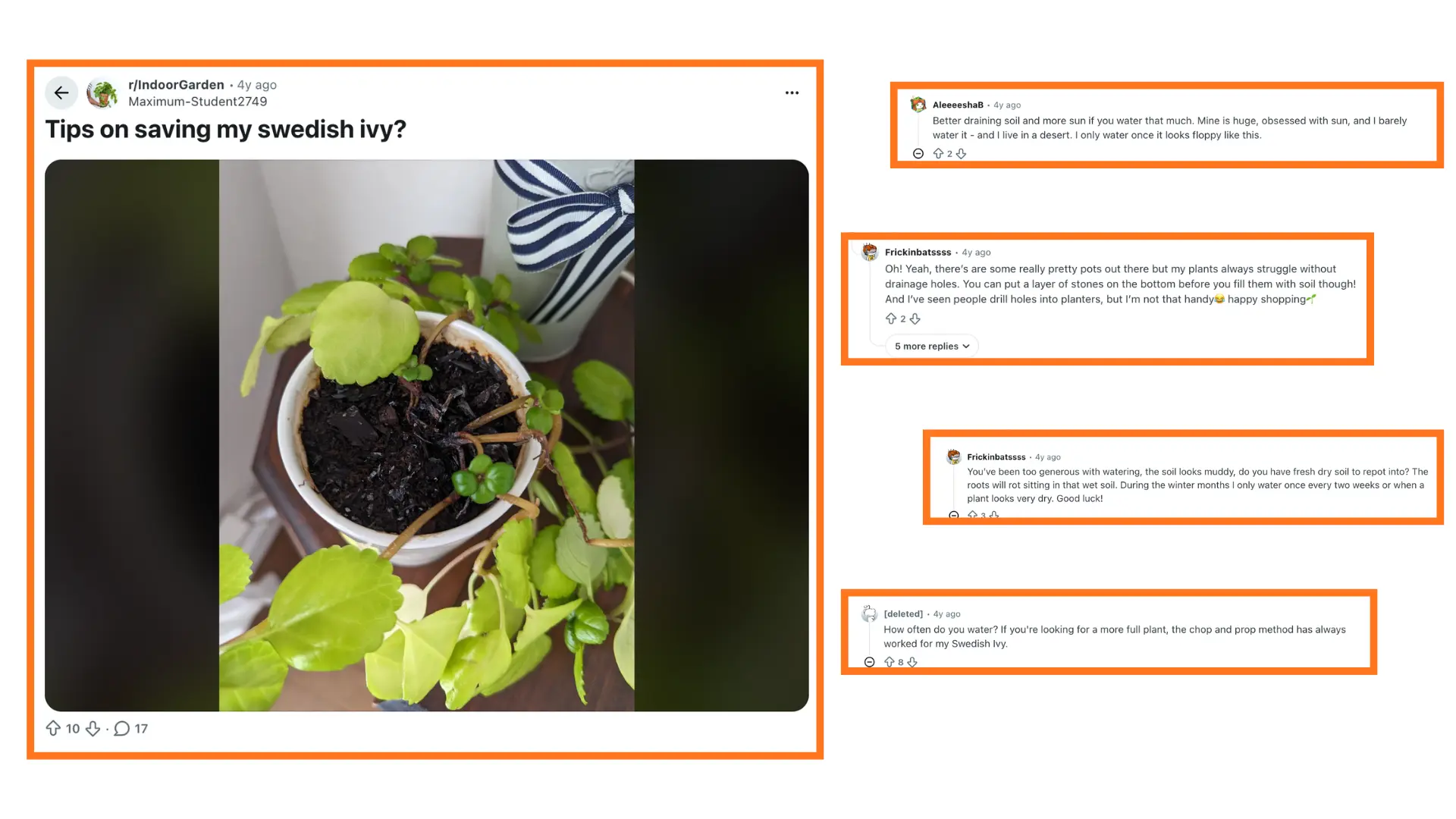
Plenty of gardeners share tips and struggles with Swedish ivy on forums like Reddit. One common thread covers overwatering and how to fix it.
In one discussion, a gardener explained, “Better draining soil and more sun if you water that much. Mine is huge, obsessed with sun, and I barely water it – and I live in a desert. I only water once it looks floppy like this.”
This lines up with what most experienced growers say. More sunlight and better drainage often solve problems that too much water only makes worse.
Waiting until the plant droops slightly before watering again seems to work well for many.
How to Repot Swedish Ivy?
Swedish ivy needs a new pot when roots grow out of the drainage holes or circle tightly inside. Repotting at the right time keeps the plant healthy and growing strong. Here’s how to go about it:
- Choose a pot just one size bigger, with drainage holes, since oversized containers hold too much water.
- Fill it with fresh, well-draining potting mix instead of reusing old, compacted soil.
- Gently remove the plant and check the roots for rot, damage, or overcrowding.
- Set the plant at the same depth it was growing at before, without burying the stem.
- Water it well right after repotting, then keep it in bright, indirect light for a few days.
New growth within a few weeks usually means the plant has settled in well. Avoid fertilizing right away and let the roots adjust first.
How to Propagate Swedish Ivy?
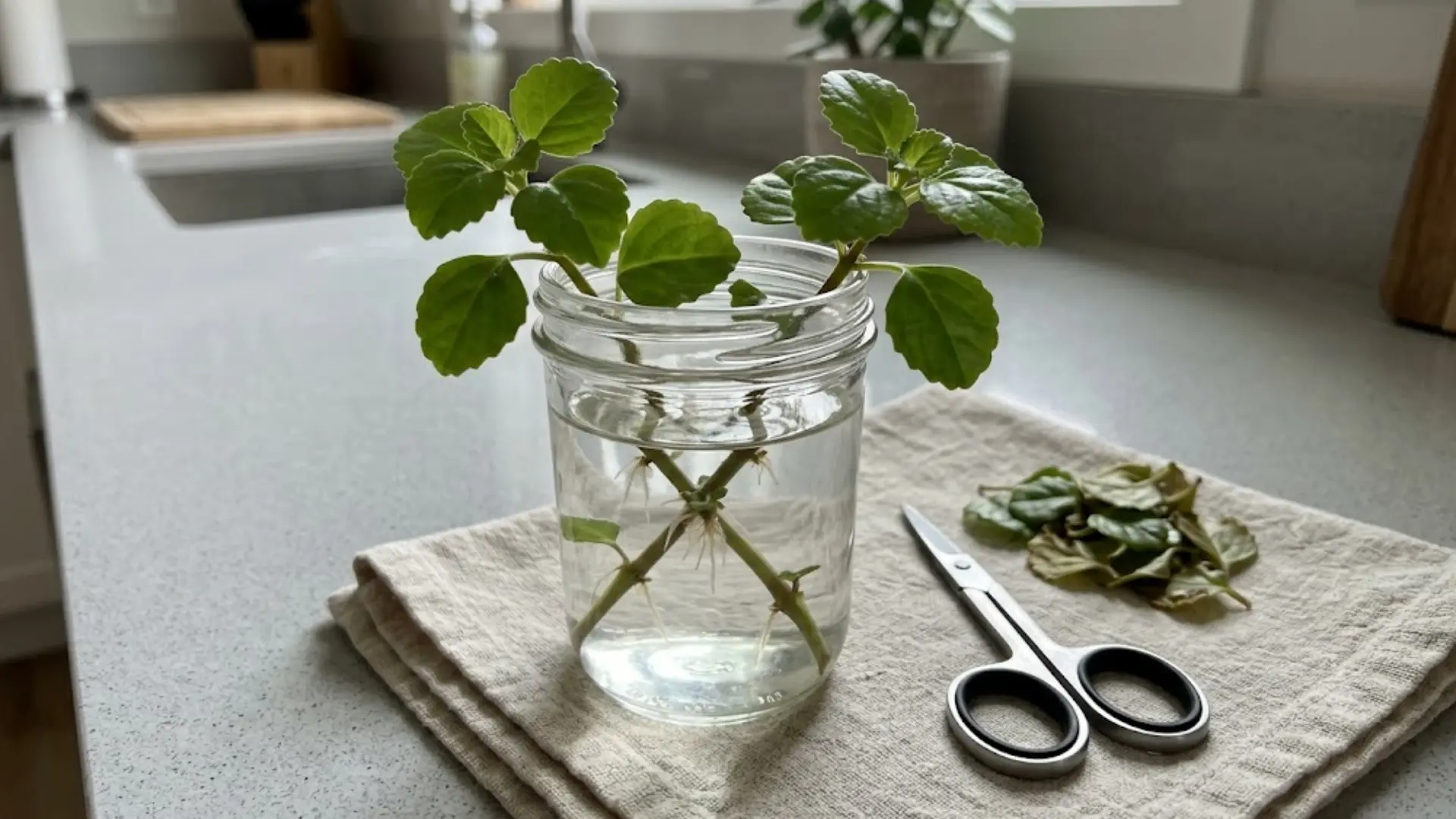
You can propagate Swedish ivy in either water or soil, and I’ve had good results with both. Here’s a closer look at each method:
Propagating Swedish Ivy in Water
Rooting Swedish ivy in water is one of the simplest ways to grow new plants for free. A glass of water and a healthy stem can do the job. Here’s how it works:
- Step 1: Pick a healthy stem with a few full, undamaged leaves on it.
- Step 2: Cut the stem just below a node using clean scissors.
- Step 3: Strip off the lower leaves so the bottom nodes stay bare.
- Step 4: Set the cutting in a glass with the bare nodes underwater.
Keep the cutting in bright, indirect light and swap the water every few days. Once a good tangle of roots forms, move the cutting into soil.
Propagating Swedish Ivy in Soil
I use this method when I want the plant to settle into its pot right away, skipping the water step entirely. It’s just as simple, and I find it works well for cuttings that root fast. The process goes like this:
- Step 1: Snip a healthy cutting a few inches long from the parent plant.
- Step 2: Remove the leaves along the bottom portion of the stem.
- Step 3: Push the bare nodes into moist, well-draining potting mix.
- Step 4: Place the pot somewhere it gets steady, indirect light.
Keep the soil lightly moist but never soggy while roots form. A gentle tug that meets resistance means the cutting has rooted well.
Swedish Ivy Seasonal Care Guide
Swedish ivy care shifts quite a bit between the warmer and cooler months. Here’s how the two seasons compare:
| Care Aspect | Spring and Summer | Fall and Winter |
|---|---|---|
| Growth rate | Growth speeds up during these warmer months | Growth slows down noticeably during this period |
| Watering | Soil needs more frequent checks as it dries faster | Water demand drops, so checks can be less frequent |
| Fertilizing | Regular fertilizing supports active growth | Fertilizer needs drop off almost entirely |
| Maintenance | Good time for pruning and propagating cuttings | Focus shifts to protecting plants from cold drafts |
| Light | Stronger sunlight calls for closer monitoring |
Lower indoor light means finding a brighter spot |
Once I started tracking these seasonal shifts, my Swedish ivy became much easier to care for. Adjusting water and fertilizer with the seasons keeps it healthy year-round.
Frequently Asked Questions (FAQs)
Can Swedish Ivy Live Outside All Year?
It only survives outdoors in warm, frost-free climates. Cold weather quickly damages the leaves and stems. Bring potted plants inside before temperatures drop in fall.
Should I Worry About Swedish Ivy Taking Over My Garden?
It can spread quickly in warm, humid regions outdoors. Some areas treat it as a mild garden nuisance. Check local guidelines before planting it directly in the ground.
Is Swedish Ivy a Good Choice for Terrariums?
It can work in larger, open terrariums with good airflow. Closed containers trap too much moisture for this plant. Stick to containers that allow some ventilation.
Final Words
Swedish ivy care comes down to light, water, and a little regular trimming. Yellow leaves, droopy stems, and leggy growth all point to something simple you can fix.
Keep the light bright but indirect, and let the soil dry a bit between waterings. Trim it often and it’ll stay full instead of stringy.
I’ve kept mine alive for years just by watching it closely and adjusting as seasons shift. You don’t need a green thumb, just a little patience and attention.
Swedish ivy care rewards small, steady habits more than big fixes. Try these tips on your own plant and comment below with how it turns out.