Proper watering can make all the difference between a thriving plant and one that struggles to grow strong, healthy, and productive roots.
Likewise, tomatoes need consistent moisture, but too much water can be just as harmful as too little.
Overwatering is a common problem for beginners and experienced gardeners alike, especially when soil stays wet for long periods.
Recognizing the symptoms early can help you take action quickly. In this blog, I will explain how to identify, save, and prevent an overwatered tomato plant.
How Often Should You Water Tomato Plants?
The National Garden Association recommends watering tomato plants 2 to 3 times a week, but the right frequency depends on the weather, soil, and growing conditions.
During hot, dry days, tomato plants may need water more often, especially those grown in containers.
In cooler weather or after rainfall, they may need less. Instead of following a strict schedule, check the soil before watering.
Push your finger about 1 to 2 inches into the soil, and if it feels dry, it is usually time to water. If it still feels moist, wait another day and check again.
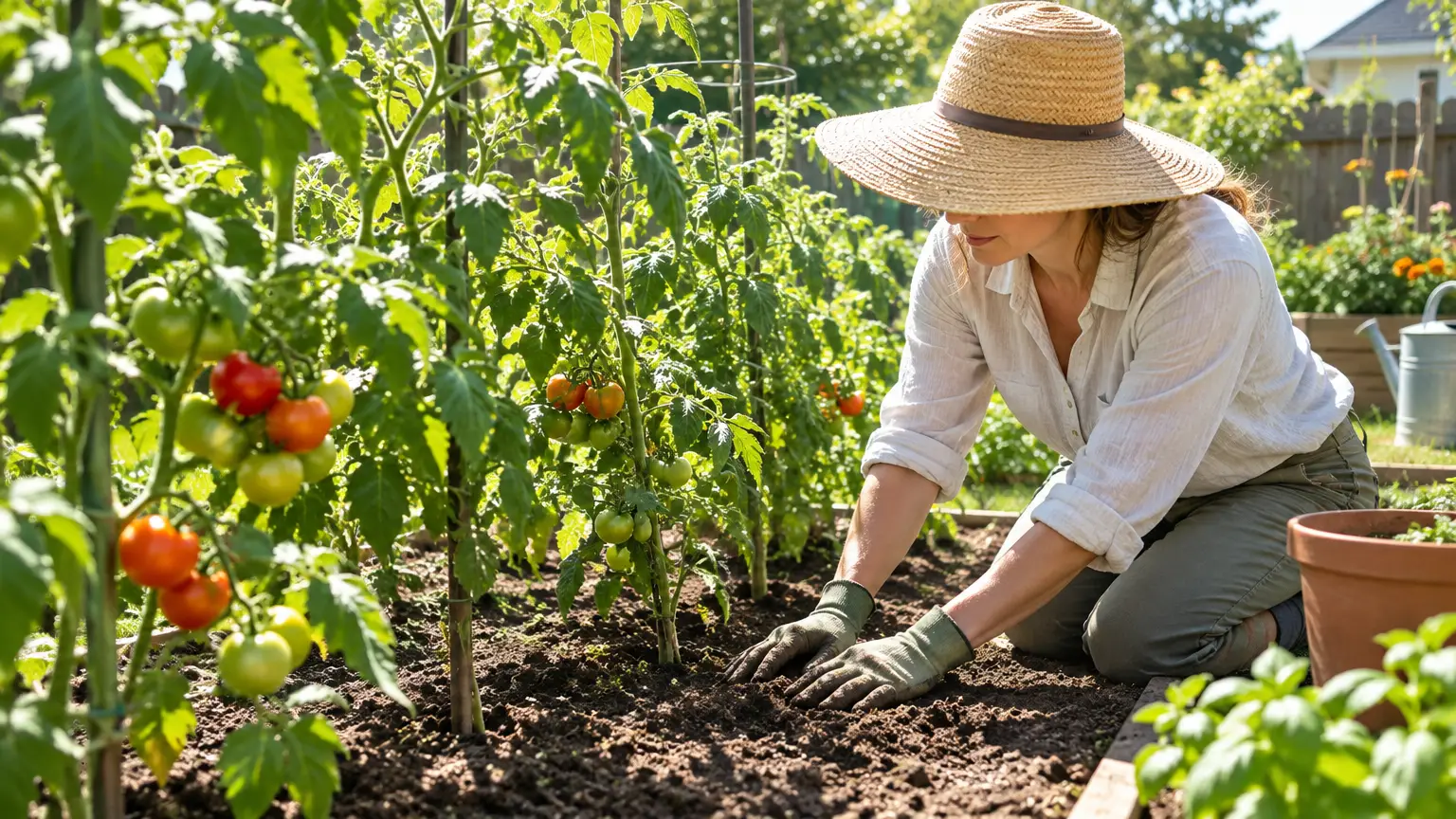
Water deeply at the base of the plant so moisture reaches the roots.
Keeping the soil evenly moist without making it soggy helps prevent overwatering and supports healthy growth and fruit development.
Signs of an Overwatered Tomato Plant
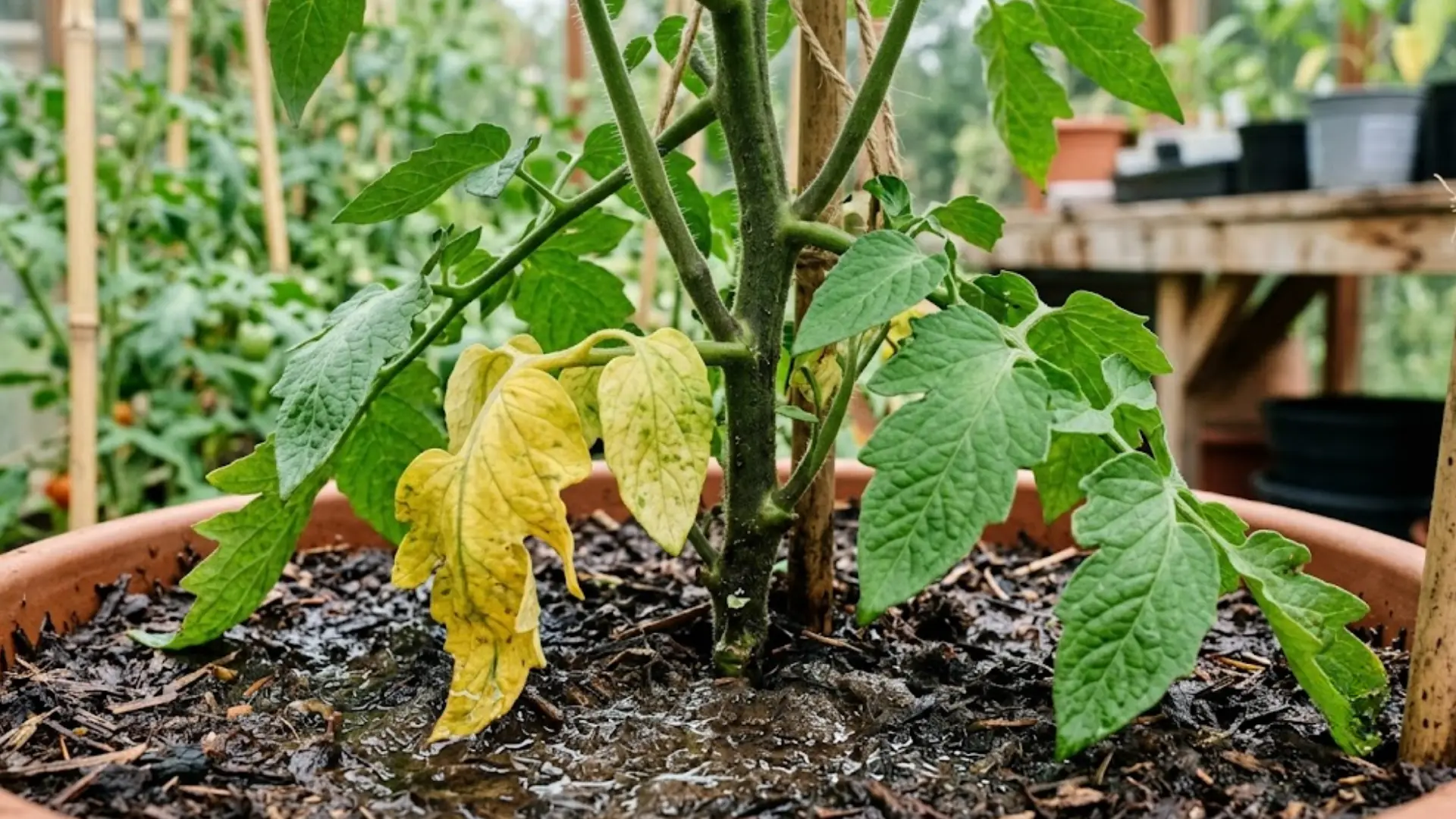
An overwatered tomato plant often shows clear signs that something is wrong. The leaves, stems, fruit, and even the soil can provide useful clues.
1. Yellowing Leaves
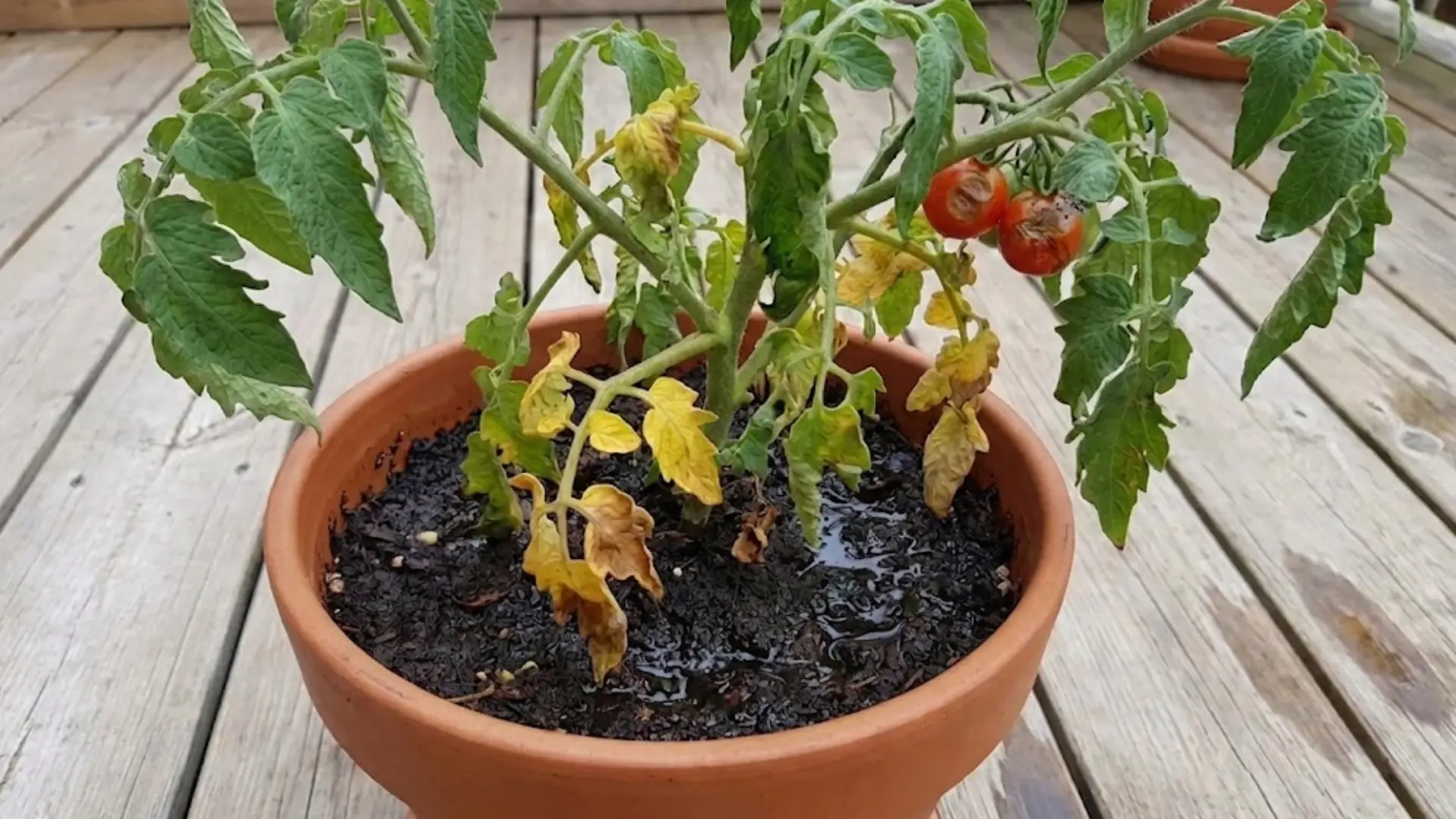
Yellowing leaves are one of the most common signs of an overwatered tomato plant.
The problem often starts with older leaves near the bottom of the plant. When soil stays wet for too long, the roots may struggle to get enough oxygen and absorb nutrients properly.
A single yellow leaf is not always a concern, especially as the plant ages.
However, if several leaves are turning yellow at the same time and the soil stays wet, overwatering may be the cause.
2. Wilting Despite Wet Soil
It may seem strange for a tomato plant to wilt when its soil is wet, but overwatering can cause this problem.
Roots need oxygen as well as water to function properly.
When the soil stays soaked, the roots may become stressed and have trouble supplying water to the rest of the plant.
3. Soft or Mushy Stems
Soft or mushy stems can signal that your tomato plant has been sitting in overly wet conditions for too long.
Pay close attention to the lower stem near the soil, where moisture problems may be easier to spot. The area may look dark, feel soft, or appear weak.
In severe cases, the stem can begin to rot. Check whether water is collecting around the plant base or the container is draining poorly.
4. Curling or Drooping Leaves
Too much water can cause tomato leaves to droop or curl because constantly wet soil stresses the roots.
The leaves may look limp even though the plant has plenty of moisture available. However, curled leaves do not always mean you are overwatering.
Hot weather, strong sunlight, pests, diseases, and other environmental stresses can produce similar symptoms.
5. Cracked or Splitting Tomatoes
Cracked or split tomatoes can develop when the fruit suddenly receives more water.
For example, heavy watering after the soil has become dry can cause tomatoes to absorb moisture quickly.
The inside of the fruit expands faster than the skin can handle, which can lead to cracks. Heavy rainfall can cause the same issue.
6. Blistered or Swollen Spots on Leaves
Overwatering can cause small, raised blisters to form on tomato leaves, a condition called edema.
This happens when plant cells take in water faster than the plant can use or release it, causing the cells near the leaf surface to swell and eventually rupture.
The blisters tend to show up on the undersides of the lower leaves first and may look tan, corky, or scarred as they age.
Edema by itself will not kill a plant, but it signals that the soil has been too wet for too long.
7. Mold or Fungus on the Soil Surface
A layer of white, fuzzy, or greenish growth on top of the soil is an easy-to-spot warning that conditions are too damp.
Constantly wet soil creates a humid environment where mold and fungus multiply quickly, especially in containers with poor airflow.
Most surface mold will not harm the plant directly, but it signals that the top layer of soil is not drying out between waterings.
What Causes Tomato Plants to Become Overwatered?
Tomato plants become overwatered when their roots stay wet too long, which limits oxygen and causes stress.
- Frequent Watering: Watering too often keeps soil constantly wet, preventing tomato roots from getting enough oxygen.
- Poor Drainage: Heavy, compacted soil holds excess moisture around roots, making it difficult for water to escape.
- Heavy Rainfall: Frequent or prolonged rain can saturate garden soil and leave tomato roots constantly waterlogged.
- Improper Containers: Pots without enough drainage holes trap excess water, keeping tomato roots wet for longer.
- Incorrect Watering Schedule: Following a fixed schedule without checking soil moisture can easily lead to overwatering.
Overwatered vs Underwatered Tomato Plant: How to Tell the Difference
Overwatered and underwatered tomato plants can show similar symptoms, especially wilting and drooping leaves.
The easiest way to tell the difference what I follow, is to check the soil and look closely at the leaves, stems, and roots. The table below can help you identify the problem quickly.
| Sign | Overwatered Tomato Plant | Underwatered Tomato Plant |
|---|---|---|
| Soil | Feels wet, soggy, or waterlogged | Feels dry and may pull away from the container |
| Leaves | Often yellow, soft, and droopy | Usually wilted, dry, or crispy |
| Stems | May become soft, weak, or mushy | May look thin, dry, or limp |
| Roots | Can become brown, soft, or rotten | May appear dry, brittle, or damaged |
| Growth | Growth may slow because roots cannot absorb nutrients properly | Growth slows because the plant lacks enough water |
| Fruit | Tomatoes may crack or develop poorly | Fruit may remain small or develop slowly |
| After Watering | Plant may stay wilted despite moist soil | Plant often begins recovering after proper watering |
Can an Overwatered Tomato Plant Recover?
Yes, an overwatered tomato plant can recover if you identify the problem early and correct the watering conditions.
Start by stopping watering until the top 1 to 2 inches of soil feels dry. Make sure excess water can drain freely from the soil or container.
If the roots are still healthy, the plant may start to improve within several days. Yellow or damaged leaves may not turn green again, so focus on healthy new growth.
Recovery can take longer if the roots have started to rot from staying wet for too long. Brown, mushy, or foul-smelling roots indicate serious damage.
In severe cases, remove damaged roots and repot the plant in fresh, well-draining soil to improve it chances of recovery.
How to Save an Overwatered Tomato Plant?
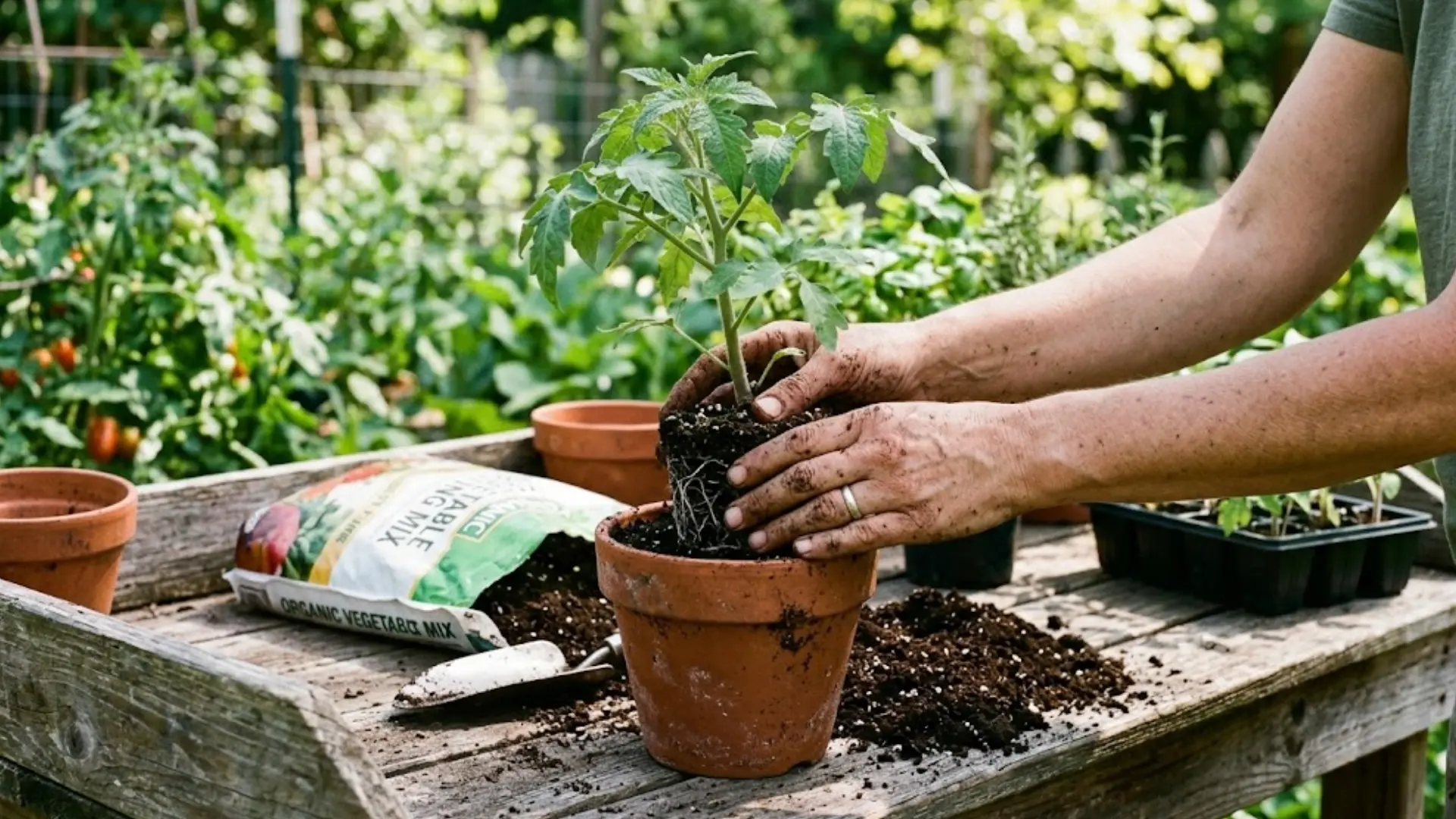
The main goal is to reduce excess moisture, improve drainage, and give the roots time to recover. Follow these simple methods to help your tomato plant return to healthy growth.
1. Stop Watering & Let the Soil Dry
Stop watering the tomato plant until the soil has dried out.
For container plants, move the pot to a spot protected from heavy rain while keeping it in suitable light. Do not let the soil stay completely dry for long periods.
The goal is to remove excess moisture and restore a healthy balance around the roots.
2. Improve Soil & Container Drainage
Good drainage helps excess water move away from tomato roots. If your plant is in a container, check the drainage holes and clear any blockages.
Avoid letting the pot sit in a saucer filled with water. For garden plants, compacted or heavy soil may hold moisture for too long.
Adding organic matter can improve soil structure over time. Better drainage lets more air reach the roots and reduces the risk of continued stress from waterlogged soil.
3. Check the Roots & Repot if Needed
If your tomato plant continues to decline, carefully inspect its roots. Healthy roots are generally firm and light-colored, while damaged roots may appear brown, soft, or mushy.
Trim away badly rotted roots using clean pruning shears.
For a container-grown plant, repot the plant it in fresh, well-draining potting mix and make sure the new container has drainage holes.
Give the plant time to adjust, and watch for healthy new leaves as a sign of recovery.
Tips to Prevent Overwatering in Tomato Plants
Once your tomato plant recovers, a few simple watering habits can prevent excess moisture and support healthier growth throughout the season.
- Check Soil Moisture: Use your finger or moisture meter before watering to avoid adding unnecessary water.
- Add Mulch: Apply mulch around plants to maintain even soil moisture and reduce the need to water as often.
- Choose Proper Containers: Use pots with several drainage holes to prevent excess water from collecting around roots.
- Water in the Morning: Watering in the morning lets surface moisture dry during the day, reducing prolonged damp conditions.
- Adjust After Rain: Skip watering after significant rainfall and check soil moisture before watering your tomato plants again.
Conclusion
An overwatered tomato plant does not always mean the growing season is lost. Once you recognize the warning signs, you can take the right action.
Your tomato plant’s watering needs can change with the weather, soil type, container size, and growing conditions.
So always check the soil instead of relying on a fixed schedule. With a little attention, you can prevent overwatering and keep your plants growing strong.
Have you dealt with an overwatered tomato plant before? Share your tried methods in the comments below!
Frequently Asked Questions
How Long Does it Take for Tomato Plants to Recover From Overwatering?
Tomato plants may recover within one to two weeks, depending on root damage, drainage, weather conditions, and overall plant health.
Can Overwatered Tomato Plants Still Produce Fruit?
Yes, mildly overwatered tomato plants can still produce fruit, but prolonged overwatering may reduce flowering, fruit quality, growth, and overall yield.
Should I Fertilize an Overwatered Tomato Plant?
No, not until the plant shows signs of new, healthy growth. Fertilizing a stressed plant can burn roots that are already struggling and unable to process nutrients well.