Rose of Sharon, or hibiscus – are we even talking about two different flowers here? I hear this question so often, and honestly, the answer is prettier than you would think.
Rose of Sharon is just the cozy, old-fashioned name for a hibiscus variety, so really, it has been hibiscus all along.
The confusion tends to bloom when someone pictures those big tropical hibiscus flowers lounging on sunny patios instead.
And if you have also stumbled on the term hardy hibiscus, that is yet another lovely cousin in this leafy little family worth getting to know.
Is Rose of Sharon a Hibiscus?
Yes, quite literally. Its botanical name, Hibiscus syriacus, belongs to the Malvaceae family, and it simply goes by prettier names like Rose of Sharon and shrub althea in everyday conversation.
What trips most people up is one small detail: hibiscus is a genus, not a single plant, and Rose of Sharon is only one species within that wider family tree.
So the comparison people are really reaching for is not hibiscus versus Rose of Sharon, but Rose of Sharon against its two better-known relatives, laid out simply below.
| Plant | Botanical name | Typical growth habit |
|---|---|---|
| Rose of Sharon | Hibiscus syriacus | Deciduous woody shrub |
| Tropical/Chinese Hibiscus | Hibiscus rosa-sinensis | Evergreen tropical shrub |
| Hardy Hibiscus/Rose Mallow | Hibiscus moscheutos and related | Herbaceous perennial |
How to Tell Rose of Sharon and Hibiscus Apart?
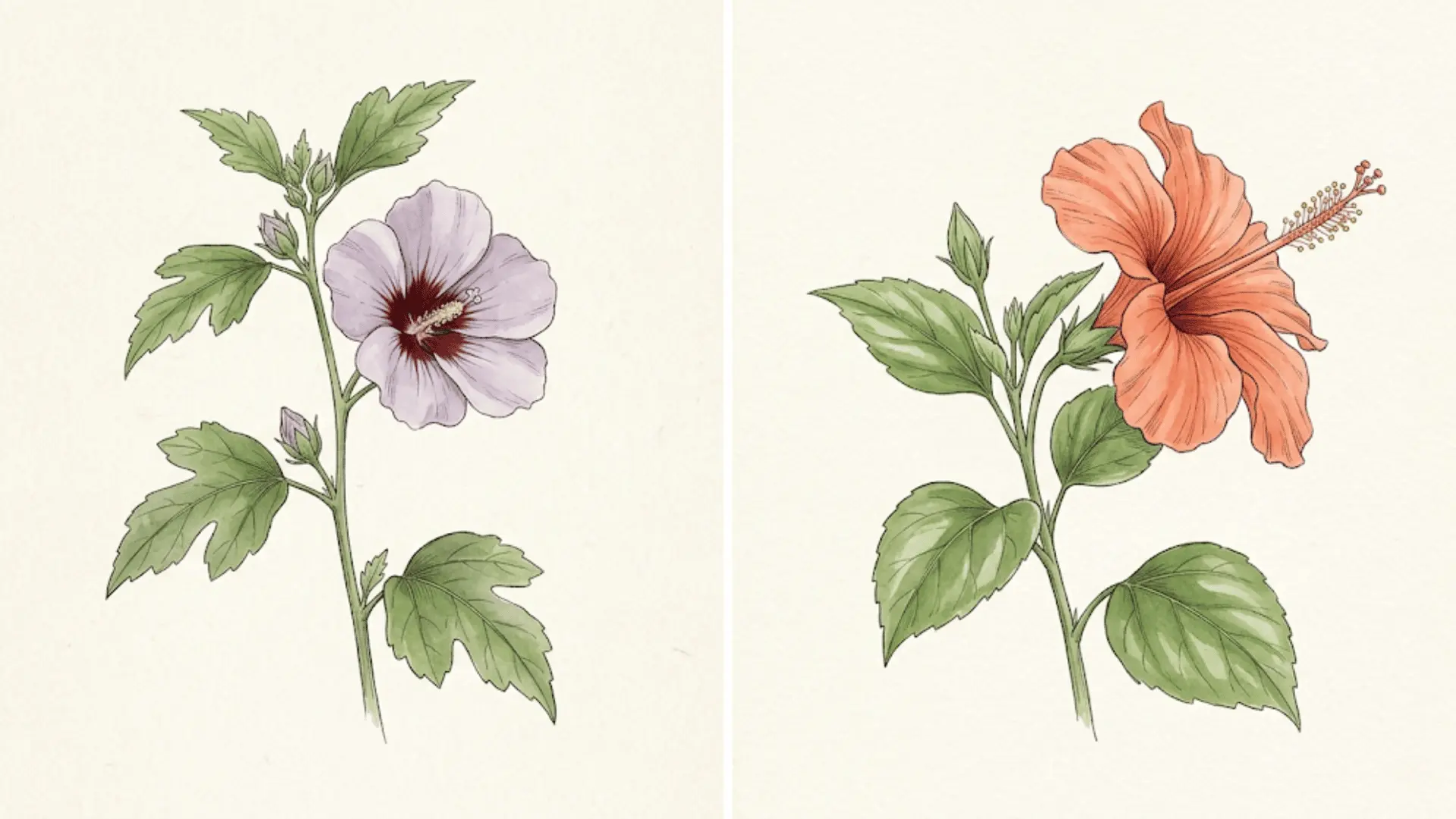
Some clues sit right there in plain sight; you just have to know where to look. Leaves, petals, and shape practically do the talking once you slow down and notice them.
1. Look at the Leaves First
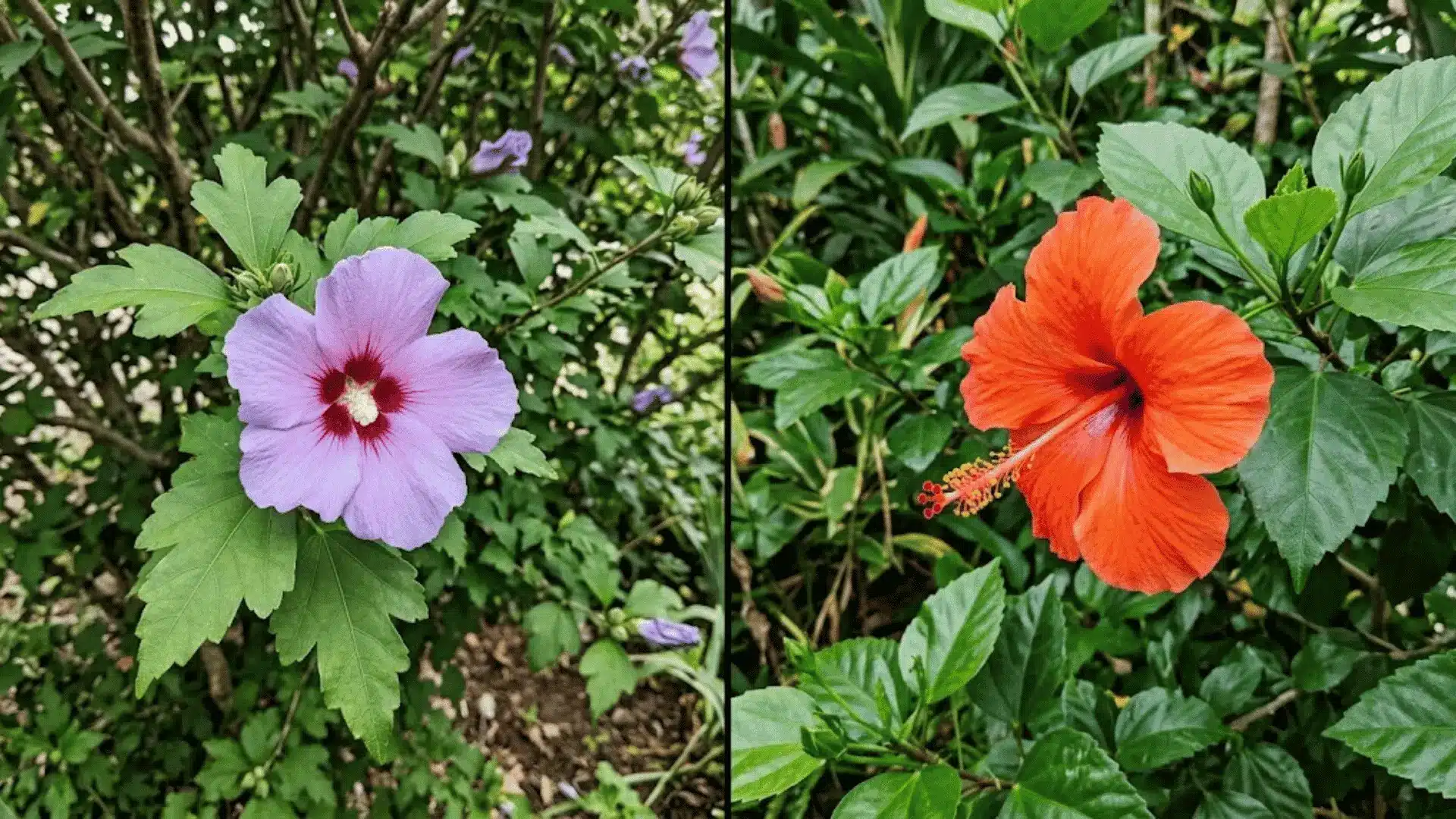
Rose of Sharon leaves are medium green with coarsely toothed edges, often shaped in three distinct lobes, and they drop completely come autumn.
Tropical hibiscus leaves tend to be broader and glossier, rarely show that deep lobing, and stay put year-round in warm enough climates.
I have watched a Rose of Sharon hedge lose every last leaf by mid-November while a potted tropical hibiscus just a few feet away stayed fully leafed until the first real frost hit.
2. Compare the Flowers
Rose of Sharon blooms tend to run smaller, usually with five petals and a contrasting dark throat, in soft shades of white, pink, lavender, and blue-purple, with both single and double forms floating around.
Tropical hibiscus flowers go bigger and bolder, dressed in saturated, almost tropical colors, with that unmistakable protruding staminal column reaching outward.
According to horticultural references from university extension programs, this staminal column is a defining structural trait across most Hibiscus rosa-sinensis cultivars, which makes it a sturdier identifier than color or size.
Just do not lean on size alone, though, since cultivar variation muddies that line more often than you would expect.
3. Check the Plant’s Overall Shape
Rose of Sharon grows upright and vase-shaped, multi-stemmed, often climbing 8 to 12 feet tall, and can even be trained into a tidy little tree.
Tropical hibiscus stays rounder and more classically shrub-like, frequently living out its life in a container on porches across cooler parts of the U.S.
This same upright, structured growth shows up in crepe myrtle’s care needs, another flowering shrub that builds its shape slowly over years rather than all at once.
4. Watch What Happens in Winter
This might be the clearest tell of all. Rose of Sharon sheds its leaves and settles into dormancy once temperatures drop, while tropical hibiscus stays evergreen wherever warmth allows.
This kind of region-driven foliage change also applies to azaleas’ evergreen status, which shifts entirely depending on where the plant is grown.
In colder regions, tropical hibiscus usually needs to come indoors or get wrapped up for protection. Their hardiness alone tells two very different stories.
Rose of Sharon vs. Tropical Hibiscus vs. Hardy Hibiscus
Three plants, one shared genus, and just enough overlap to keep the confusion alive. Worth untangling once and for all so nothing gets mislabeled again.
| Plant | Growth type | Flowers | Winter behavior |
|---|---|---|---|
| Rose of Sharon (Hibiscus syriacus) |
Woody deciduous shrub, upright growth | Smaller blooms | Cold-hardy, sheds leaves in winter |
| Tropical hibiscus (Hibiscus rosa-sinensis) |
Evergreen shrub, often container-grown | Large, showy blooms | Frost-sensitive, needs protection in cold climates |
| Hardy hibiscus (Hibiscus moscheutos and related) |
Herbaceous perennial | Enormous, dinner plate-sized blooms | Dies back to the ground, returns from the roots |
And here is the clarification worth holding onto: hardy hibiscus and Rose of Sharon are not the same plant, either. They just happen to share a family tree, nothing more.
Which is Better for Your Garden?
Honestly, it comes down to climate, patience, and how permanent you want your plant to be. Here is how to match the right hibiscus to your garden’s personality.
Rose of Sharon fits your garden if
This one rewards patience, settling in slowly but sticking around for the long haul.
- A cold-hardy shrub that shows up year after year
- A natural hedge or privacy screen
- A permanent, woody landscape feature
- Blooms that arrive later in the season
- Low fuss once it settles in
Tropical or hardy hibiscus fits your garden if
These two lean more seasonal, asking for a bit more attention in exchange for those show-stopping blooms.
- That unmistakable tropical, oversized bloom
- A statement patio or container plant
- Huge dinner plate flowers even in colder climates
- A plant that regrows from its roots each year
- Something herbaceous rather than woody and permanent
Does Rose of Sharon Come Back Every Year?
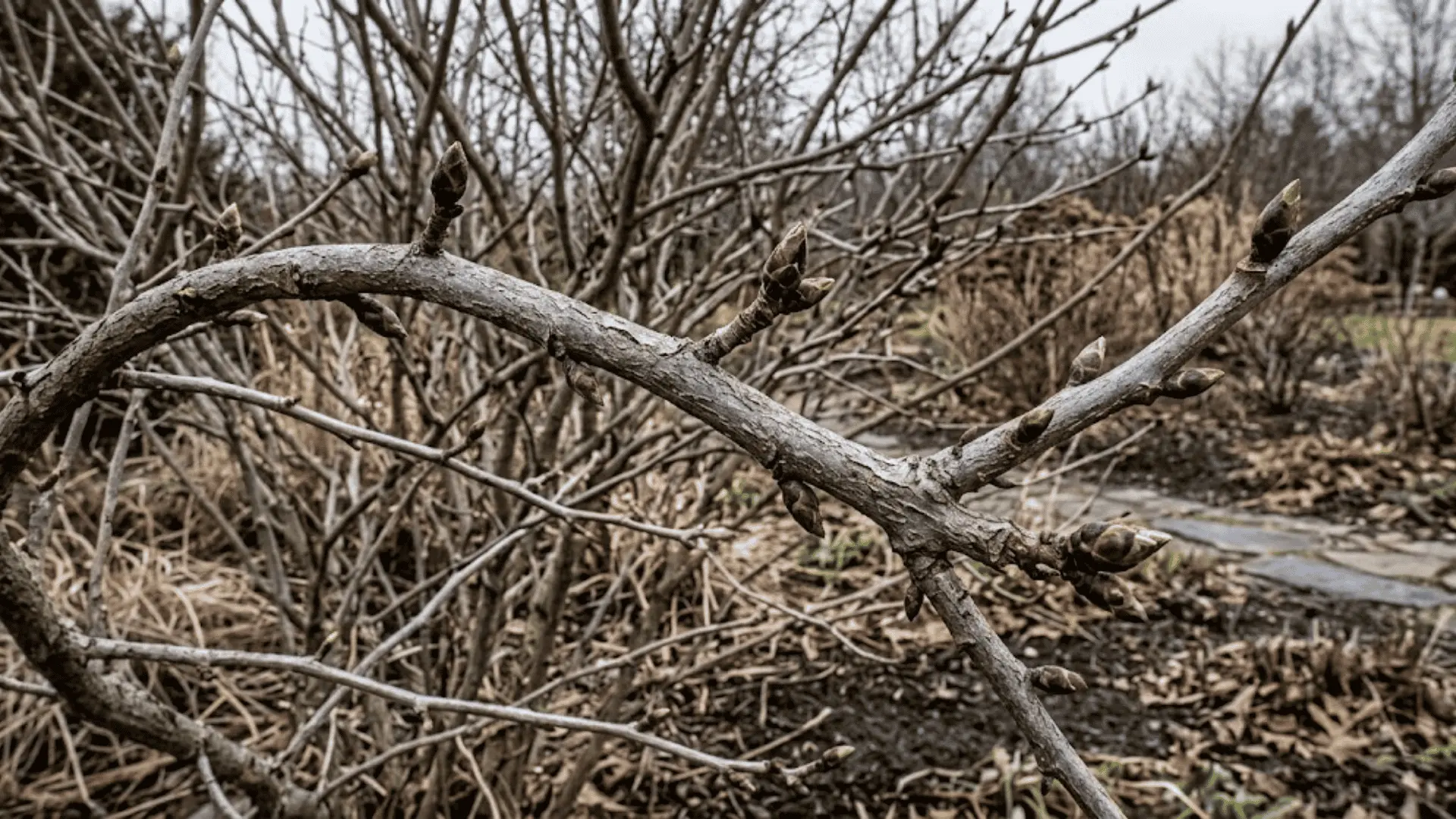
Yes, without fail. Rose of Sharon is a perennial woody shrub, which means it is built to return year after year, not a one-season wonder.
Come fall, it sheds its leaves and settles into a bare, dormant look that can honestly seem a little lifeless if you are not expecting it.
Spring brings it back, though it tends to wake up slower than many other shrubs in the garden.
So if yours is looking bare into late spring while everything else has leafed out, it is very likely just taking its time, not dying.
Is Rose of Sharon a Rose?
No, not even distantly. Despite the name, Rose of Sharon has nothing to do with true roses at all.
It belongs to the hibiscus genus, tucked within the Malvaceae family, worlds apart from roses botanically speaking.
The name likely stuck around simply because of how lovely and rose-like the blooms once seemed to whoever named it centuries ago.
So if you have been picturing a rose bush this whole time, it is worth letting that image go.
What you are actually growing is a hibiscus, wearing a rose’s name quite beautifully, but nothing more than that.
Are Rose of Sharon and Hibiscus Care the Same?
Not quite, though they share more habits than you would expect. Here is the quick rundown before you assume one care routine fits both.
Similarities
Both plants actually lean on the same basic needs to thrive and bloom well.
- Full Sun: Both need plenty of direct sunlight to bloom well.
- Warm-Season Flowering: Both flower through the heat of summer.
- Showy Flowers: Both are grown mainly for their eye-catching blooms.
- Pollinator Interest: Both attract bees, butterflies, and hummingbirds.
- Related Botanically: Both belong to the same hibiscus genus.
Differences
Once you look past the basics, though, their care paths split pretty quickly.
- Winter Survival: Rose of Sharon tolerates cold; tropical hibiscus does not.
- Deciduous vs. Evergreen Habit: One drops leaves, the other often keeps them.
- Water Needs: Tropical hibiscus generally drinks more than Rose of Sharon.
- Growth Habit: One is a woody shrub, the other can be herbaceous or evergreen.
- Pruning Approach: Timing and technique differ based on woody versus soft growth, and learning general pruning techniques ahead of time makes both far easier to manage.
- Typical Growing Climate: Rose of Sharon suits temperate zones; tropical hibiscus prefers warmth.
Rose of Sharon vs. Hibiscus: Which One Do You Have?
Not sure which one is actually growing in your yard? Run through this quick checklist and let the answers point you in the right direction.
- Are the leaves three-lobed and toothed?
- Does the plant lose its foliage in fall?
- Is it a tall, woody shrub?
- Are the flowers relatively modest in size with a darker center?
- Does the plant survive winter outdoors in a cold climate?
The more yeses you are nodding along to, the more likely you are standing in front of a Rose of Sharon.
Just don’t lean on a single trait to settle it, though, since cultivar variation can blur these lines more than expected, and it is really the full picture together that tells the true story.
The Closing Note
So the next time someone brings up rose of Sharon vs. hibiscus, you will have the answer ready without missing a beat.
It is less about two rival flowers and more about one big, beautifully varied family, each member with its own personality and preferences.
Whichever one ends up in your garden, you are really just choosing which side of hibiscus charm speaks to you most.
Which one caught your eye first, the hardy Rose of Sharon or the bold tropical bloom? Drop a comment below and let me know; I would love to hear which one you are leaning toward.
Frequently Asked Questions (FAQs)
Why Does My Hibiscus Look Like a Rose of Sharon?
Because they are genuinely related, both sitting under the same hibiscus genus with plenty of shared traits. That family resemblance in leaf shape and flower structure is not a coincidence at all.
Is Rose of Sharon a Tropical Hibiscus?
No, they are entirely different species. Rose of Sharon is Hibiscus syriacus, while the tropical variety is Hibiscus rosa-sinensis, and the two behave quite differently outdoors.
How Can I Tell Rose of Sharon from Hardy Hibiscus?
Look at the stems, not the flowers. Rose of Sharon keeps woody, permanent stems through winter, while hardy hibiscus dies back to the ground and regrows fresh each year.
Does Rose of Sharon Lose Its Leaves in Winter?
Yes, it does. It is a deciduous shrub, so bare branches through winter are completely normal and nothing to worry about.
Can You Grow Tropical Hibiscus Where Rose of Sharon Grows?
It depends entirely on your winter temperatures and frost exposure. In colder regions, tropical hibiscus usually needs to live in a container and come indoors before the first real cold snap hits.