Moving onto a few acres sounds idyllic until the first heavy rain washes your gravel into the grass and you realize you have 400 feet of fence down. A piece of land doesn’t care about your plans for the weekend. If you don’t stay ahead of the dirty, unglamorous chores, the weeds take over the fence line, water pools right by the outbuildings, and you spend your days putting out fires instead of enjoying the place.
Digging Swales Before the Driveway Washes Out
Water always finds the easiest path, and that path is usually right down the middle of your tire tracks. If you just keep throwing crushed limestone into the ruts every spring without giving the runoff somewhere to go, you are literally throwing cash into the dirt. A weekend with a backhoe digging a wide, shallow ditch along the high side of the lane saves the roadbed and stops you from bottoming out a car in your own front yard.
Keeping Locust Trees Off the Electric Wire
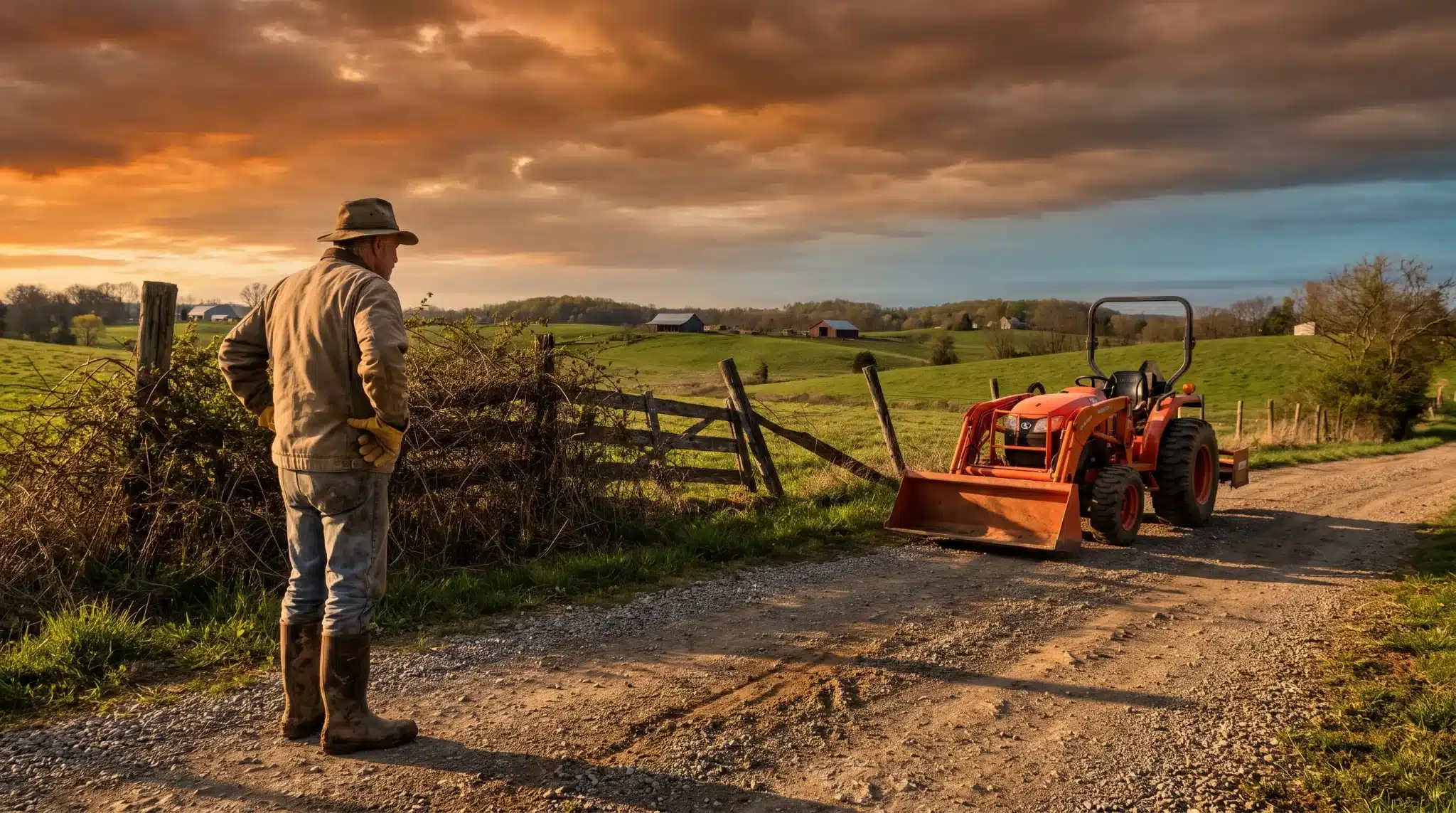
Locust and wild rose will swallow a wire fence in two seasons flat if you turn your back on them. Walking the perimeter every month with a good pair of loppers and a spray bottle of remedy is boring, but chasing a couple of heifers out of the neighbor’s bean field on a Sunday night is a lot worse. Cut the brush back before it grounds out your charger or shorts against high-tensile wire.
Keeping Spare Pins on the Rig
Nothing kills momentum faster than driving a half-mile out to the back field only to realize you left the hitch pin or a pair of pliers sitting on the shop workbench. Zip-tying an ammo can or a small steel toolbox right to the loader frame with some wire, cotter pins, and an adjustable wrench saves you miles of walking back and forth on foot.
Getting Some Roof Over Open Equipment
Anytime you cut tight along an overgrown fence line, you spend half the time dodging cedar branches and wild thorn bushes. You either hit the brakes to avoid getting slapped across the neck, or you rip your shirt trying to duck under some low scrub oak. Having a heavy-duty lawn mower shade canopy overhead acts like a hard shield that just deflects those branches up and over the roll bar so you don’t have to duck every five seconds or take a stick to the eye.
Stacking Firewood on Concrete Blocks
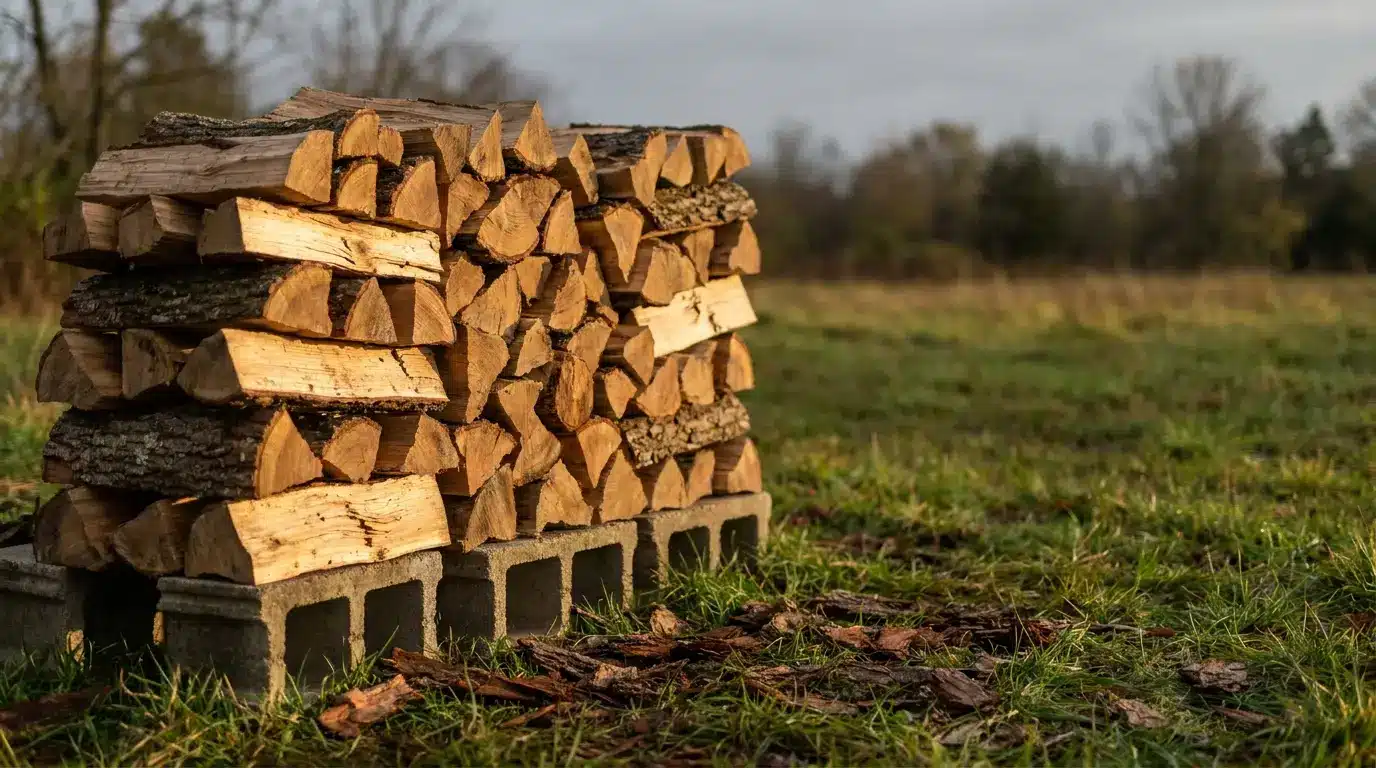
A pile of oak cutoffs dumped straight on the damp dirt will rot from the bottom up before you ever get around to burning it. Throw down some old cinder blocks or scrap pressure-treated 4x4s first to get the wood three inches off the wet grass. Air needs to pull underneath the stack, otherwise you end up with a soggy layer of bark full of termites and mold that won’t take a spark when winter rolls around.
Putting Real Lights in the Lean-To
Trying to hook up an implement in the dark with a flashlight held between your teeth while your fingers are numb is pure misery. Spend fifty bucks on a couple of basic outdoor-rated LED strip lights and screw them straight to the barn rafters. You’ll actually be able to see the three-point hitch pins and spot hydraulic fluid leaks before they pump ten gallons of oil into the dirt.
Storing Gas Cans Under Cover
Plastic fuel jugs left out in the open swell up like balloons in the heat and suck in morning moisture through the vent caps when the temperature drops. Water in your diesel or gas creates a gelatinous sludge in the fuel bowl that kills an engine right when you’re halfway through clearing a pasture. Keep the cans inside a ventilated metal locker or on a wooden shelf off the dirt floor.
Setting Up Boot Scrapers at Every Door
The mud out past the driveway is brutal, sticky clay that clings to boot lugs like concrete. If you don’t bolt a heavy-duty cast-iron scraper and an old stiff broom directly to the bottom step of the porch, that muck ends up ground into the floorboards inside within ten minutes. Clean the boots outside before you even touch the doorknob.
Conclusion
Nobody ever finishes all the chores on a piece of property, and that’s just part of the bargain. The trick is cutting down on the stupid, repetitive headaches—diverting water early, protecting your gear, and setting up your tools so you aren’t fighting the land every single time you step outside.