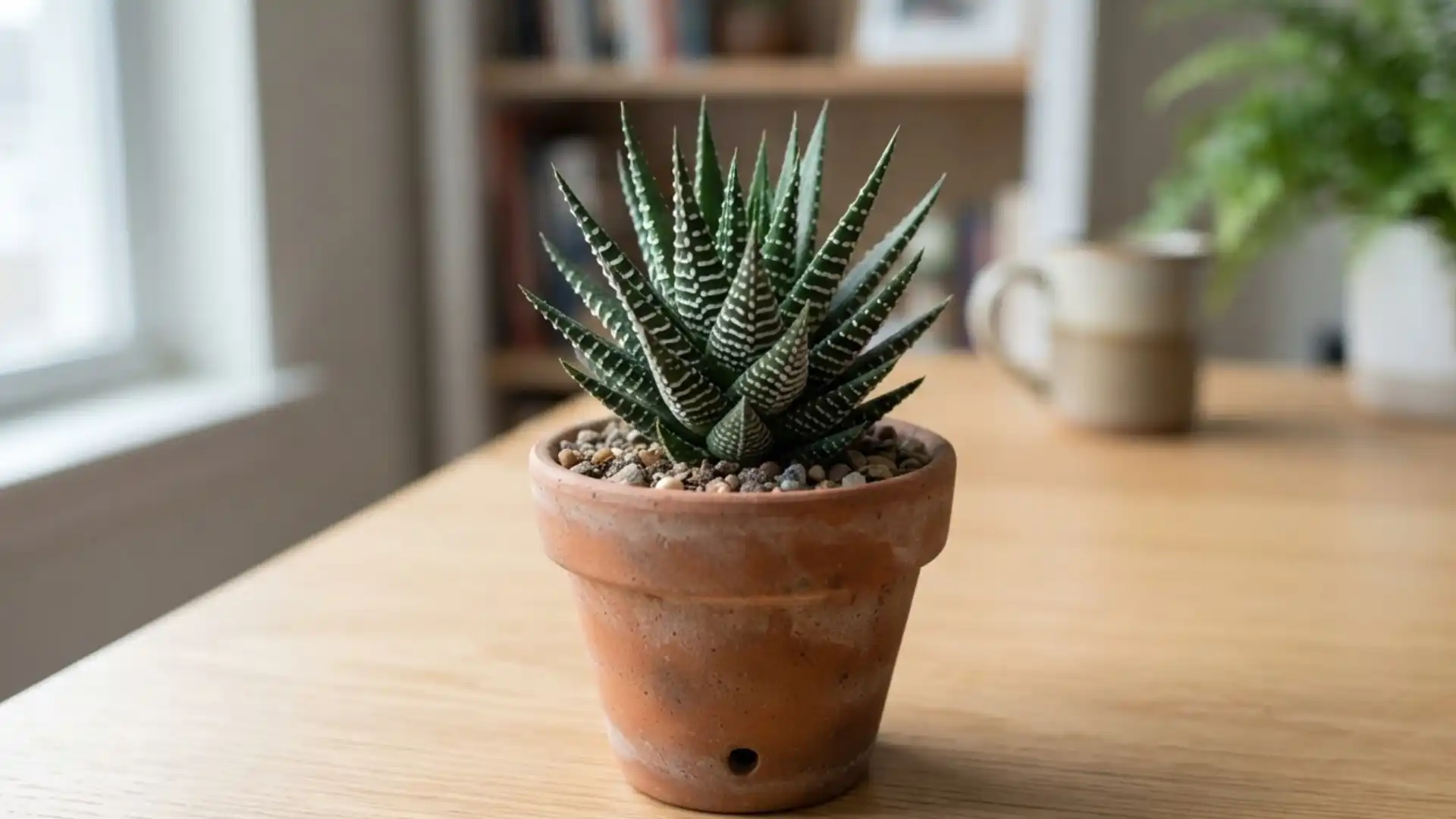
The zebra haworthia is a small succulent with dark green leaves and raised white stripes that make it easy to recognize.
Its compact size also makes it a popular choice for desks, shelves, and sunny indoor spots.
A zebra haworthia succulent is often considered easy to grow, but it can still develop problems if it gets too much water or harsh sunlight.
Even small changes in its leaves can tell you that something is off. With the right care, I have too kept this striking little succulent healthy, compact, and looking its best for years.
Zebra Haworthia Succulent: An Overview
The zebra haworthia succulent is a small, slow-growing plant known for its pointed green leaves covered with raised white stripes.
The table below gives a quick overview of its basic features and other key characteristics:
|
Attribute |
Detail |
|
Botanical Name |
Haworthiopsis fasciata / Haworthiopsis attenuata |
|
Common Name |
Zebra Haworthia, Zebra Plant, Zebra Cactus |
|
Family |
Asphodelaceae |
|
Native Region |
Eastern Cape, South Africa |
|
Growth Habit |
Rosette-forming, clumping |
|
Mature Size |
3-5 inches tall, 5 inches wide |
|
Leaf Color |
Dark green with white tubercle bands |
|
Soil Type |
Well-draining succulent/cactus mix |
|
Toxicity |
Non-toxic to humans and pets |
|
Bloom Time |
Occasional small white flowers (spring/summer) |
|
Hardiness Zone |
USDA 10-11 |
|
Difficulty Level |
Beginner-friendly |
How Can You Identify a Zebra Haworthia?
Zebra Haworthia is easy to recognize once you know which features to look for. Its compact size, pointed leaves, and white striped markings make it stand out from many other small succulents.
- Leaf Shape: The plant has thick, narrow, pointed leaves that grow upright and curve slightly outward from the center.
- White Stripes: Raised white bumps form horizontal bands across the outer leaf surface, creating the plant’s distinctive zebra-like pattern.
- Rosette Growth: Leaves grow closely together in a compact rosette, giving the plant a neat and structured appearance.
- Small Size: Zebra Haworthia usually stays compact, making it easy to grow on windowsills, desks, shelves, and other small indoor spaces.
- Dark Green Color: Healthy leaves are generally deep green, although their color may become lighter or reddish when the plant receives too much sun.
Where Should You Place Zebra Haworthia Indoors?

Place zebra haworthia in a bright indoor spot where it receives plenty of indirect light without sitting in harsh afternoon sun.
An east-facing window is often a good choice because it provides gentle morning sunlight, while a south- or west-facing window may need a sheer curtain for protection.
Keep the plant a short distance from the glass if the light feels intense. Avoid dark corners, since too little light can cause weak, stretched growth and faded color.
A shelf, windowsill, desk, or side table near a bright window can work well. Also keep it away from cold drafts, heating vents, and areas with sudden temperature changes.
Rotate the pot every few weeks so all sides receive even light.
How to Care for Zebra Haworthia?
Caring for Zebra Haworthia is not complicated, but it does help to know what this little succulent actually wants.
Below, I have made a simple breakdown of the conditions that matter most for keeping your Zebra Haworthia healthy.
1. Light & Temperature
Avoid harsh afternoon rays; they can scorch the leaves and cause brown, crispy patches.
If your space is naturally dim, this plant still tolerates lower light better than most succulents, though growth may slow down.
As for temperature, keep it anywhere between 65°F and 80°F works well. It’s not a fan of frost, so bring it indoors before winter chill sets in.
2. Water
Zebra Haworthia stores water in its thick leaves, so it doesn’t need frequent watering. Follow the soak-and-dry method: water thoroughly, then let the soil dry out completely before watering again.
During spring and summer, this might mean every 2-3 weeks. In fall and winter, cut back even further.
Overwatering is the fastest way to kill this plant, so when in doubt, wait it out or be vigilant enough to know how much to water.
Mushy, translucent leaves are a clear sign you have overwatered the plant.
3. Soil
Good drainage is non-negotiable for Zebra Haworthia. Regular potting soil holds too much moisture and can quickly lead to root rot.
Instead, use a well-draining cactus or succulent mix; you can buy one ready-made or blend your own with potting soil, coarse sand, and perlite.
A loose, gritty texture mimics the rocky, arid conditions this plant naturally grows in back home.
4. Pot and Drainage
Choose a pot with at least one drainage hole; this step is essential. Terracotta pots work especially well because they are porous and help excess moisture evaporate faster.
Pick a container that is just slightly larger than the plant’s root ball; too much extra space holds unnecessary moisture.
Zebra Haworthia does not mind being a little snug, and it actually prefers it. Repotting is only needed every couple of years, once roots start crowding the pot.
5. Fertilizer
During the growing season (spring through summer), feed it once a month with a diluted, balanced succulent or cactus fertilizer; mix it at half strength to avoid overwhelming the roots.
Skip fertilizing entirely in fall and winter, when the plant naturally slows down and rests.
Too much fertilizer can actually do more harm than good, leading to weak, leggy growth instead of the compact rosette shape you want.
Signs Zebra Haworthia Needs Repotting
Zebra Haworthia does not need frequent repotting, but a few clear signs can show when it has outgrown its current container.
Checking the roots, soil, and overall growth can help you decide when it is time to move the plant.
- Roots Filling the Pot: Roots growing through the drainage holes or circling tightly inside the container usually mean the plant needs more space.
- Pups Crowding the Parent Plant: Too many offsets around the base can make the pot crowded and leave little room for healthy growth.
- Soil Drains Slowly: Old or compacted soil may hold water longer than it should, increasing the risk of root rot.
- Plant Becomes Top-Heavy: If the zebra haworthia keeps tipping over or looks unstable, a slightly wider pot may provide better support.
- Growth Has Slowed Noticeably: Very slow growth combined with crowded roots or poor soil can be a sign that fresh soil and a new pot are needed.
Can Zebra Haworthia Grow From Leaf Cuttings?

Yes, zebra haworthia can sometimes grow from leaf cuttings, but this method is slower and less reliable than propagation through offsets.
To try it, remove a healthy, mature leaf as close to the base as possible without damaging it.
Let the cut end dry for a few days until it forms a callus, then place it in a well-draining succulent mix.
Keep the soil mostly dry and provide bright, indirect light while roots begin to develop. Avoid overwatering, because the cutting can rot before new growth appears.
Leaf propagation may take several weeks or even months, and some cuttings may fail completely.
For most growers, separating healthy pups from the parent plant is the easier and more dependable propagation method.
How to Repot Zebra Haworthia?
Repotting is not something Zebra Haworthia needs often; this slow-growing succulent is happy to stay put for a couple of years at a time.
But when roots start crowding the pot or growth stalls, a fresh start gives it room to thrive.
- Choose the Right Time: Repot during spring or early summer, when the plant is actively growing. This timing helps roots recover quickly and reduces transplant shock.
- Let the Soil Dry Out First: Skip watering for a few days before repotting. Dry soil is easier to remove from the roots and lowers the risk of root damage.
- Remove the Plant Gently: Turn the pot on its side and ease the plant out, supporting the base of the rosette. Avoid pulling from the leaves, as they can snap off easily.
- Inspect and Trim the Roots: Shake off old soil and check for mushy, blackened, or rotting roots. Trim away any damaged sections with clean, sharp scissors.
- Repot with Fresh, Well-Draining Mix: Place the plant in a slightly larger pot with fresh succulent soil, and wait about a week before watering. This gives any small root injuries time to heal.
Common Zebra Haworthia Problems & Solutions
Zebra Haworthia is generally easy to care for, but problems can appear when its light, watering, or soil conditions are not right.
The table below covers the most common issues, their likely causes, and simple ways to fix them.
|
Problem |
Likely Cause |
Solution |
|---|---|---|
|
Mushy or soft leaves |
Overwatering |
Let the soil dry fully and reduce watering frequency. |
|
Brown leaf tips |
Dry conditions or stress |
Check watering habits and keep the plant away from hot vents. |
|
Pale or stretched growth |
Too little light |
Move the plant to a brighter spot with indirect sunlight. |
|
Red or brown leaves |
Too much direct sun |
Provide filtered light and avoid strong afternoon sun. |
|
Root rot |
Wet soil or poor drainage |
Remove damaged roots and repot in fresh, well-draining soil. |
|
Slow growth |
Low light or seasonal slowdown |
Improve light and avoid overfeeding or overwatering. |
Conclusion
Zebra Haworthia, with its striking striped leaves and easygoing nature, is the kind of plant that is perfect for decor inspiration.
Get the basics right: bright indirect light, sparing water, well-draining soil, and a snug pot, and you will have a resilient little succulent that quietly thrives for years.
Have you grown Zebra Haworthia before, or are you just getting started?
Drop a comment below and share your experience, questions, or even a photo of your own zebra-striped beauty.
Frequently Asked Questions
Is Zebra Haworthia Safe for Cats and Dogs?
Zebra Haworthia is generally considered non-toxic to cats and dogs. Still, keeping pets from chewing the leaves can prevent plant damage and possible stomach upset.
How Long Does a Zebra Haworthia Live?
With proper care, Zebra Haworthia can live for about 50 years. Good drainage, careful watering, and suitable light help the plant remain healthy for a long time.
Can Zebra Haworthia Grow Under Artificial Light?
Yes, Zebra Haworthia can grow under a suitable grow light. Place it close enough to receive bright light without exposing the leaves to excessive heat.