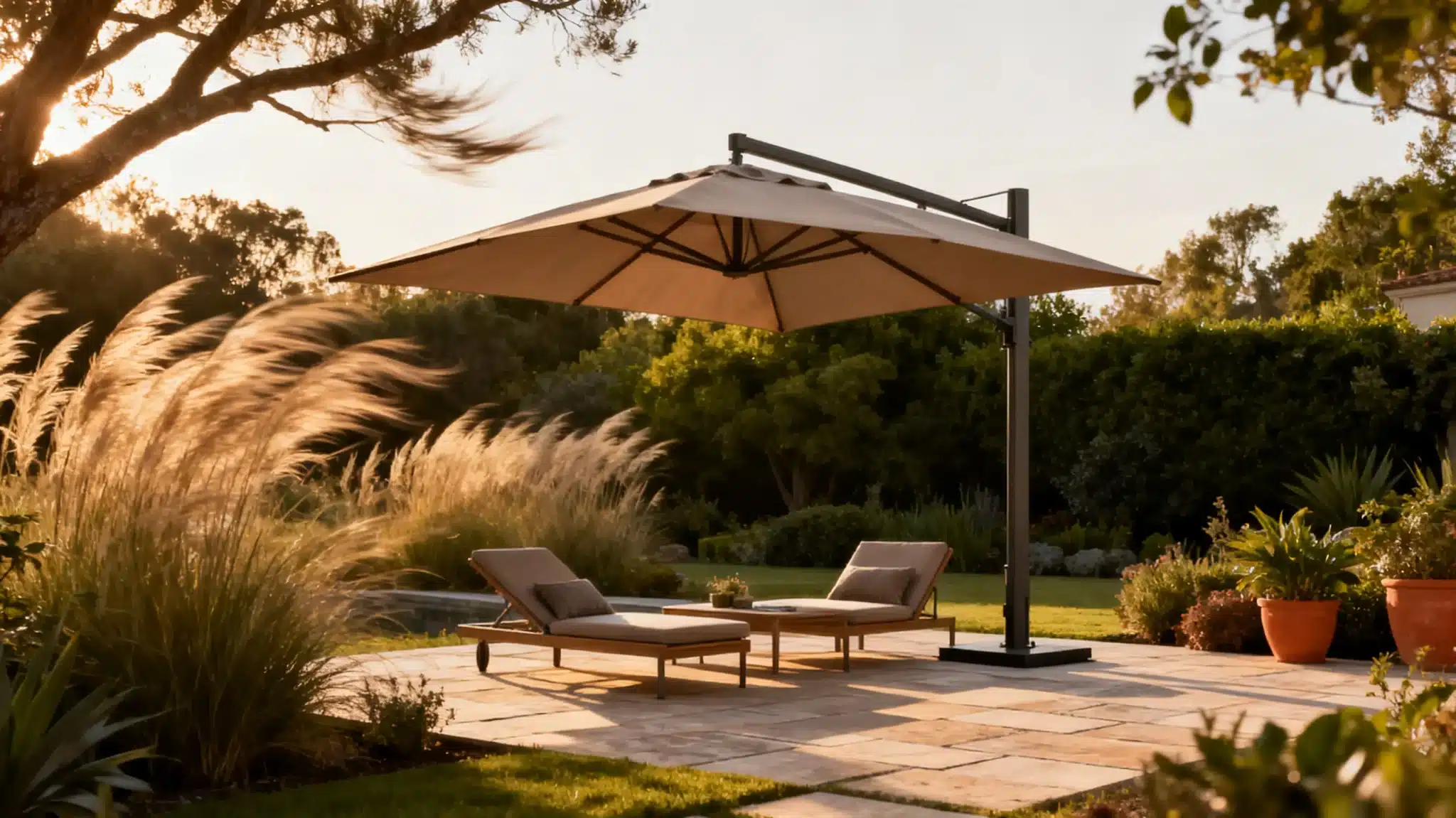
Picture this: you’ve set up the perfect afternoon on your patio—cold drinks, a good book, and the gentle shade of your umbrella overhead. Then a sudden gust sweeps through, sending your umbrella tumbling across the deck, narrowly missing your carefully arranged flower beds. It’s a frustrating scenario that garden enthusiasts know all too well. Standard patio umbrellas simply weren’t built to handle nature’s unpredictability, leaving you with bent frames, torn canopies, and constant worry every time the breeze picks up.
Sunbrella patio umbrellas offer a premium solution engineered specifically for those who refuse to compromise between durability and elegance. These wind-resistant umbrellas combine robust construction with sophisticated design, ensuring your outdoor space remains both protected and beautiful regardless of weather conditions. In this guide, we’ll explore the science behind their wind-resistant engineering, share practical techniques for securing your umbrella with the proper base weight, and show you how to coordinate these functional pieces with your existing outdoor furniture. Whether you’re designing a new garden retreat or upgrading your current setup, understanding these essentials will transform your outdoor experience from anxious to effortless.
1. Understanding Sunbrella Patio Umbrellas: The Ultimate Outdoor Solution
Sunbrella patio umbrellas represent the gold standard in outdoor shade solutions, built around a simple philosophy: outdoor living should never require sacrificing quality for durability. The Sunbrella brand has earned decades of trust among homeowners and designers alike, consistently delivering products that withstand the elements while maintaining their visual appeal season after season. What sets these umbrellas apart starts with their materials—solution-dyed acrylic fabrics that resist fading even under relentless UV exposure, paired with frames constructed from powder-coated aluminum or fiberglass that won’t rust or corrode.
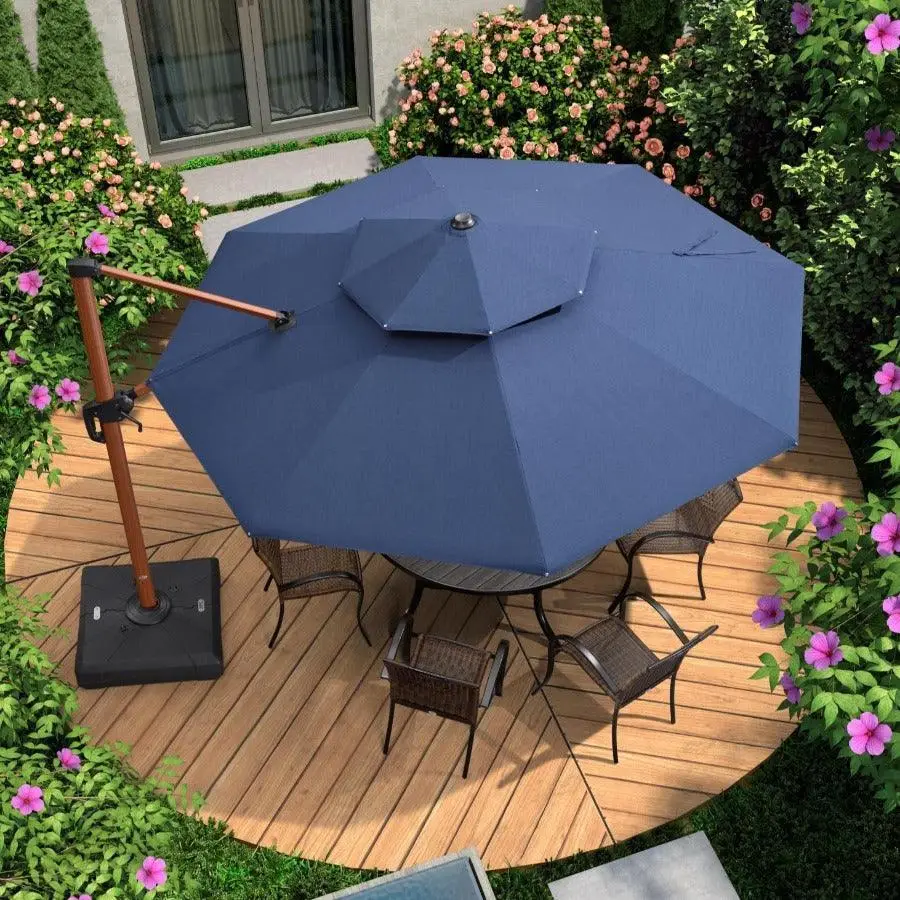
These umbrellas are designed to integrate seamlessly with your existing outdoor furniture, functioning as both a protective canopy and a design anchor for your patio or garden seating area. Rather than being an afterthought, a well-chosen Sunbrella umbrella ties together dining sets, lounge chairs, and conversation areas into a cohesive outdoor room. Beyond aesthetics, their wind-resistant engineering is what truly distinguishes them from budget alternatives. When gusts arrive unexpectedly, the structural integrity of these umbrellas protects not only the umbrella itself but also the furniture and people beneath it—making wind resistance not just a convenience feature but an essential safety consideration for any serious outdoor space.
2. The Science of Wind-Resistant Umbrellas: How Sunbrella Stands Out
Wind resistance in patio umbrellas isn’t achieved through a single feature—it’s the result of deliberate engineering across every component. Standard umbrellas typically use rigid frames and flat canopy surfaces that act like sails, catching wind and creating lift that tips the entire structure. Sunbrella’s approach fundamentally rethinks this relationship between umbrella and airflow, transforming what would be a liability into a manageable force.
The most visible innovation is the vented canopy design. By incorporating one or two tiers of ventilation panels near the top of the canopy, air passes through rather than building up beneath the fabric. This pressure-release system dramatically reduces the upward force that causes tipping, allowing the umbrella to remain stable in gusts that would send conventional models airborne. Cantilever umbrellas from Sunbrella take this further with offset pole designs that distribute weight differently, lowering the center of gravity and improving overall balance during wind events.
Frame construction plays an equally critical role. Rather than using rigid aluminum that snaps under stress, many wind-resistant models incorporate fiberglass ribs that flex with gusts instead of fighting them. These flexible frames absorb energy and return to their original shape, much like a tree bending in a storm rather than breaking. Reinforced joints at connection points—where ribs meet the hub and where the pole meets the canopy mechanism—prevent the weak-point failures that plague cheaper alternatives. Together, these features create an umbrella that works with the wind rather than against it, maintaining its position and structural integrity through conditions that would destroy ordinary models.
3. Securing Your Sunbrella Umbrella: Essential Tips for Stability
Even the most expertly engineered wind-resistant umbrella needs a solid foundation to perform at its best. For garden enthusiasts who invest time creating beautiful outdoor spaces, the last thing you want is an improperly secured umbrella becoming a projectile during an unexpected gust. Stability starts from the ground up, and understanding how to anchor your Sunbrella umbrella correctly is the difference between confident relaxation and constant vigilance every time the wind shifts direction.
3.1 Step-by-Step Guide to Choosing and Installing the Correct Base
Getting your umbrella base weight right requires matching several factors to your specific setup. First, assess your umbrella’s canopy diameter—a 7.5-foot umbrella demands far less counterweight than an 11-foot model catching significantly more wind. As a general rule, you need approximately 10 pounds of base weight for every foot of canopy diameter, though high-wind locations should increase this by 25 to 50 percent. Next, select your base type based on your surface and aesthetic preferences. Weighted bases filled with concrete or granite work well on hard patios and offer a permanent, low-profile solution. Sand-filled bases provide flexibility since you can adjust their weight seasonally or move them more easily. For soft ground installations in garden settings, anchor-style bases with ground stakes driven deep into soil provide exceptional hold without the bulk of freestanding weights. Position your chosen base on level ground—even slight slopes create uneven force distribution that compromises stability. Once placed, confirm the pole fits snugly within the base collar with no wobble, and add supplemental anchoring like ratchet tie-downs connected to deck railings or ground anchors if your area experiences regular gusts above 20 miles per hour.
3.2 Advanced Wind-Proofing Techniques for High-Wind Areas
If your garden sits on an exposed hillside, near the coast, or in a region prone to sudden storms, standard securing methods may need reinforcement. Consider pairing your primary base with secondary weight plates that stack or bolt together, effectively doubling your umbrella base weight without requiring a larger footprint. Seasonal adjustments matter too—during months when storms are more frequent, lower your umbrella’s tilt angle to reduce its wind profile, or close it entirely when you’re not actively using the space. Monitoring local weather forecasts becomes a practical habit rather than an inconvenience; setting a simple phone alert for wind advisories gives you time to close and secure your umbrella before conditions escalate. For permanent installations, some garden enthusiasts install flush-mount ground sleeves that anchor directly into concrete footings beneath their patio surface, creating an incredibly stable connection point that handles sustained winds far beyond what freestanding bases can manage.
4. Aesthetics and Functionality: Complementing Your Garden with Style
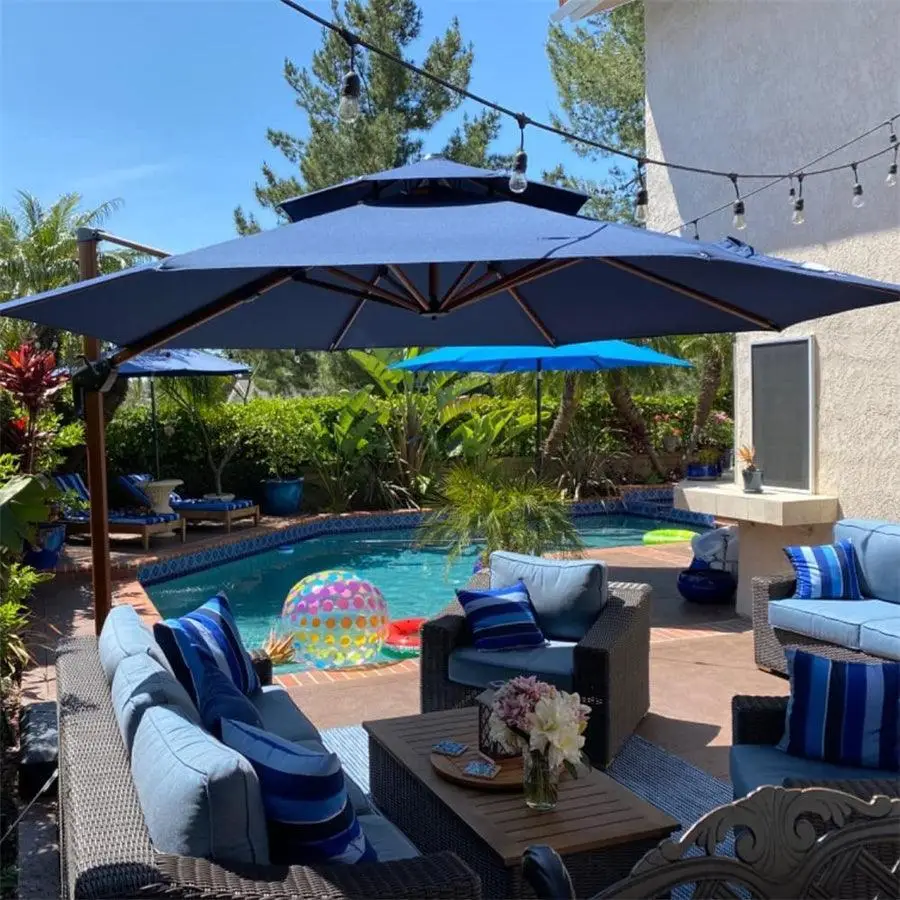
One of the most persistent myths about wind-resistant outdoor equipment is that durability demands sacrificing visual appeal. Sunbrella dismantles this assumption entirely with a fabric collection spanning hundreds of colors, patterns, and textures designed specifically for outdoor environments. From deep navy solids that anchor a nautical-themed poolside area to warm terracotta stripes that echo Mediterranean garden aesthetics, the range allows you to treat your umbrella as a deliberate design choice rather than a utilitarian necessity. The solution-dyed acrylic fabric retains its vibrancy for years without the fading that plagues conventional outdoor textiles, meaning the color you choose today remains the color you enjoy five seasons from now.
Coordinating your Sunbrella umbrella with existing outdoor furniture creates the kind of intentional, pulled-together look that transforms a basic patio into a genuine outdoor room. Consider your umbrella canopy as the ceiling of this room—it sets the tone for everything beneath it. Match it to your cushion fabrics for a monochromatic elegance, or select a complementary accent shade that adds visual interest without clashing. For garden enthusiasts working with lush green landscapes, warm neutrals like canvas or wheat tones create sophisticated contrast, while bolder choices like forest green or pacific blue harmonize with natural surroundings. The structural elements contribute to aesthetics too—sleek aluminum poles in bronze or champagne finishes complement wrought iron dining sets, while natural wood-grain options pair beautifully with teak or eucalyptus furniture collections. Wind-resistant engineering remains invisible within these elegant forms, proving that the strongest umbrellas can also be the most beautiful.
5. Choosing the Right Sunbrella Umbrella: Cantilever vs. Traditional
The decision between cantilever umbrellas and traditional center-pole models ultimately comes down to how you use your outdoor space. Traditional center-pole umbrellas work beautifully with dining tables that have umbrella holes built in, providing direct overhead shade in a compact footprint. They’re straightforward to set up, generally lighter, and suit smaller patios or balconies where space is limited. However, the center pole can restrict furniture arrangement and limit how many people comfortably gather beneath the canopy.
Cantilever umbrellas eliminate this constraint entirely by suspending the canopy from an offset arm, freeing the entire area beneath for flexible furniture placement. This design proves ideal for larger garden lounging areas, poolside setups, or conversation groupings where a center pole would interrupt the flow. Brands like PURPLE LEAF have also embraced this cantilever approach, offering models with Sunbrella fabric options that combine adjustable rotation and tilt mechanisms with robust wind-resistant frames. Their adjustable features let you chase shade throughout the day without moving furniture, which garden enthusiasts particularly appreciate when protecting delicate container plants or seating areas from shifting afternoon sun. The modern architectural profile of cantilever models also creates a striking visual statement, though they require more robust base systems due to their offset weight distribution. Consider your garden’s layout honestly—if you entertain groups around a central table, traditional works perfectly; if you want versatile, unobstructed shade across a broader area, cantilever designs deliver superior flexibility.
6. Maintenance and Care for Long-Lasting Outdoor Furniture
Protecting your investment in a Sunbrella umbrella requires minimal effort but delivers significant returns in longevity. Clean your canopy quarterly by brushing off loose debris, then washing with a mild soap solution and rinsing thoroughly—never use bleach or harsh chemicals that could compromise the fabric’s water-repellent finish. Before winter or extended periods of non-use, ensure the canopy is completely dry before closing to prevent mildew, then store in a breathable protective cover. Inspect your frame and hardware at the start of each season, tightening any loose bolts and checking ribs for hairline cracks that could worsen under wind stress. Apply a silicone-based lubricant to the crank mechanism and tilt joints annually to keep operation smooth. These simple routines preserve both the structural integrity and visual beauty of your umbrella, ensuring it continues anchoring your outdoor space beautifully for years to come.
Building Your Worry-Free Outdoor Retreat with Sunbrella
Creating a truly enjoyable outdoor space means eliminating the worry that comes with unpredictable weather, and Sunbrella wind-resistant umbrellas deliver exactly that peace of mind. Throughout this guide, we’ve seen how their engineered vented canopies, flexible fiberglass frames, and reinforced joints work together to keep your shade structure firmly in place when gusts arrive. Equally important is the foundation beneath—selecting the proper umbrella base weight matched to your canopy size and local wind conditions transforms a good umbrella into an immovable anchor for your outdoor room.
Beyond performance, these umbrellas prove that garden enthusiasts never need to choose between resilience and beauty. With hundreds of fade-resistant fabric options and elegant frame finishes, your wind-resistant umbrella becomes a design statement that coordinates seamlessly with your outdoor furniture and landscape. Whether you choose a classic center-pole model for intimate dining or a cantilever design from manufacturers like PURPLE LEAF for expansive lounging areas, the investment pays dividends in seasons of uninterrupted outdoor enjoyment. Take the next step by evaluating your space, implementing the securing techniques outlined here, and selecting a Sunbrella umbrella that reflects both your practical needs and personal style—your perfect, worry-free outdoor retreat awaits.