Thinking about a whole house renovation and not knowing where to even begin is honestly one of the most common feelings out there.
Unlike tackling a single room, a whole home remodel touches every corner of your space, your budget, your daily routine, and yes, your sanity.
But when it comes together? Every wall, finish, and fixture finally feeling like you?
That payoff is so worth it. Read on for a clear, step-by-step roadmap so you can move forward with clarity, confidence, and maybe even a little excitement.
Wait, is My Project Actually a Whole House Renovation?
A whole house renovation means updating and improving your existing home across every major area, think kitchens, bathrooms, flooring, walls, and more, all under one cohesive vision.
It differs from a remodel, which changes the layout or structure, and a rebuild, which starts entirely from scratch.
Renovation works within what already exists, just elevated. It makes the most sense when your home feels functionally outdated, aesthetically mismatched, or simply no longer fits how you live.
Rather than fixing one thing at a time, a full renovation lets everything grow together, intentionally.
Signs Your Home Might Be Asking for a Full Makeover
Sometimes, a fresh coat of paint just does not cut it. If your home has been sending you signals, it is probably time to listen.
- Your layout feels stuck in another decade, and no amount of furniture rearranging fixes it.
- Plumbing, electrical, or structural issues keep creeping up faster than you can address them.
- Your family has outgrown the space, and every room is pulling double duty.
- You are ready to invest in your home’s long-term value, not just its appearance.
When more than one of these hits close to home, a whole home remodel is not just a want, it is a smart move.
What Does a Whole House Renovation Actually Cost?
Budgeting for a whole-house renovation is where most homeowners either feel relieved or completely overwhelmed.
Knowing what to expect across different tiers makes the planning process a whole lot smoother.
| Budget Tier | Cost per Sq. Ft. | Total (1,500 sq. ft.) |
Finishes | Includes |
|---|---|---|---|---|
| Basic | $15 to $40 | $22,500 to $60,000 | Builder-grade | Cosmetic updates, LVP flooring, painted cabinets |
| Mid-Range | $40 to $100 | $60,000 to $150,000 | Semi-custom | Quartz counters, hardwood floors, updated plumbing, and electrical |
| High-End | $100 to $200+ | $150,000 to $300,000+ | Fully custom | Smart home tech, luxury finishes, full layout changes |
Key Cost Factors: labor rates vary heavily by location, material choices can shift your budget by tens of thousands, and older homes often reveal hidden costs once walls open up. Always set aside a contingency buffer of 10 to 15%.
Step-by-Step: Whole House Renovation Process

A whole home remodel has a lot of moving pieces, and skipping steps is where most projects go sideways. Follow this order, and the process stays manageable.
Step 1: Define Your Goals and Priorities
Start by getting honest about how you actually live. Which spaces frustrate you daily? What would make your home feel complete?
Separate your must-haves, like an extra bathroom or open kitchen, from your nice-to-haves, like a wet bar or walk-in closet.
Also factor in your long-term plans. Renovating to sell looks very different from renovating to stay for decades.
Step 2: Set a Realistic Budget
Before a single wall comes down, your numbers need to be solid. Vague budgets lead to mid-project panic.
- Account for every major cost category upfront: labor, materials, permits, and design fees.
- Build in a contingency of ten to twenty percent for surprises behind walls, especially in older homes.
- Explore financing options like home equity loans, HELOCs, or renovation-specific mortgage products, if needed.
Step 3: Plan the Layout and Design
Your layout decision shapes everything downstream. Open floor plans work beautifully for social, light-filled living, but require structural assessment.
Traditional layouts offer better noise separation and defined spaces. Whichever direction you go, prioritize flow, storage, and natural light before aesthetics.
Working with an interior designer or architect at this stage saves costly changes later.
Step 4: Hire the Right Professionals
Who you hire determines how smoothly your whole house renovation runs. Match the professional to the scope of your project.
| Type | Best For | What to Check |
|---|---|---|
| General Contractor | Managing trades and timelines | License, insurance, references |
| Design-Build Firm | Seamless design and construction | Portfolio, past project scale |
| Specialty Contractors | Electrical, plumbing, and HVAC work | Certifications, reviews |
Always get at least three quotes and never skip checking portfolios and verified reviews before signing anything.
Step 5: Secure Permits and Approvals
Permits are not optional; they protect you legally and financially.
Most structural, electrical, and plumbing work requires local building permits. If you live in an HOA community, get written approval before breaking ground.
Skipping this step can stall your project mid-renovation or create serious issues when you eventually sell.
Step 6: Demolition Phase
Demo day looks satisfying on TV, but in reality, it requires careful planning before anything gets torn out.
- Expect dust, noise, and a few surprises once the walls come down.
- Have a licensed professional assess for asbestos or lead paint in homes built before the eighties.
- Salvage what you can; cabinets, fixtures, and hardware can be donated or resold, which offsets costs.
Step 7: Structural and System Updates
This is the unglamorous but most critical phase of any whole-house renovation.
Electrical panels, plumbing lines, and HVAC systems all need to meet current code before anything gets covered up. If your home is older, budget generously here.
Foundation or framing repairs, if needed, should also be completed before interior work begins.
Step 8: Interior Build-Out
With systems in place, the space finally starts taking shape. Drywall goes up, flooring gets laid, and cabinetry comes in.
Kitchen and bathroom installations happen during this phase, too.
Sequencing matters here, flooring before cabinets in some cases, and cabinets before countertops always. Work closely with your contractor to avoid costly re-dos.
Step 9: Finishes and Fixtures
This is where your whole home remodel starts feeling like a home.
Paint colors, lighting fixtures, cabinet hardware, and trim details all come together in this phase.
These finishing choices carry more visual weight than most people expect, so give them the same attention you gave the bigger decisions earlier.
Step 10: Final Inspection and Walkthrough
You are almost there, but this step is not the place to rush. A thorough walkthrough protects your investment before you close out the project.
- Walk through every room with your contractor and document anything incomplete or off.
- Your punch list is your last line of defense before final payment; take it seriously.
- Ensure all permitted work has passed inspection and that you receive copies of final approvals for your records.
How Long Does a Whole House Renovation Really Take?
Timelines vary more than most homeowners expect, and understanding what drives them helps you plan realistically rather than optimistically.
| Project Scope | Estimated Timeline | Main Timeline Drivers | Common Delay Triggers |
|---|---|---|---|
| Basic Renovation | 3 to 4 months | Material availability, contractor schedule | Late material orders permit backlogs |
| Mid-Range Renovation | 4 to 8 months | Design complexity, number of trades involved | Scope changes, inspection delays |
| High-End or Full Gut | 8 to 12 months | Custom orders, structural work, and layout changes | Weather, hidden structural issues, supply chain gaps |
A few habits go a long way in keeping your whole home remodel on schedule.
- Finalize every design decision before demolition begins.
- Order materials and fixtures early; supply chains are unpredictable.
- Maintain regular check-ins with your contractor throughout each phase.
- Avoid changing your mind on big decisions once work is underway; scope changes mid-project are the single biggest timeline killer.
Whole Home Remodel Design Trends Worth Knowing About
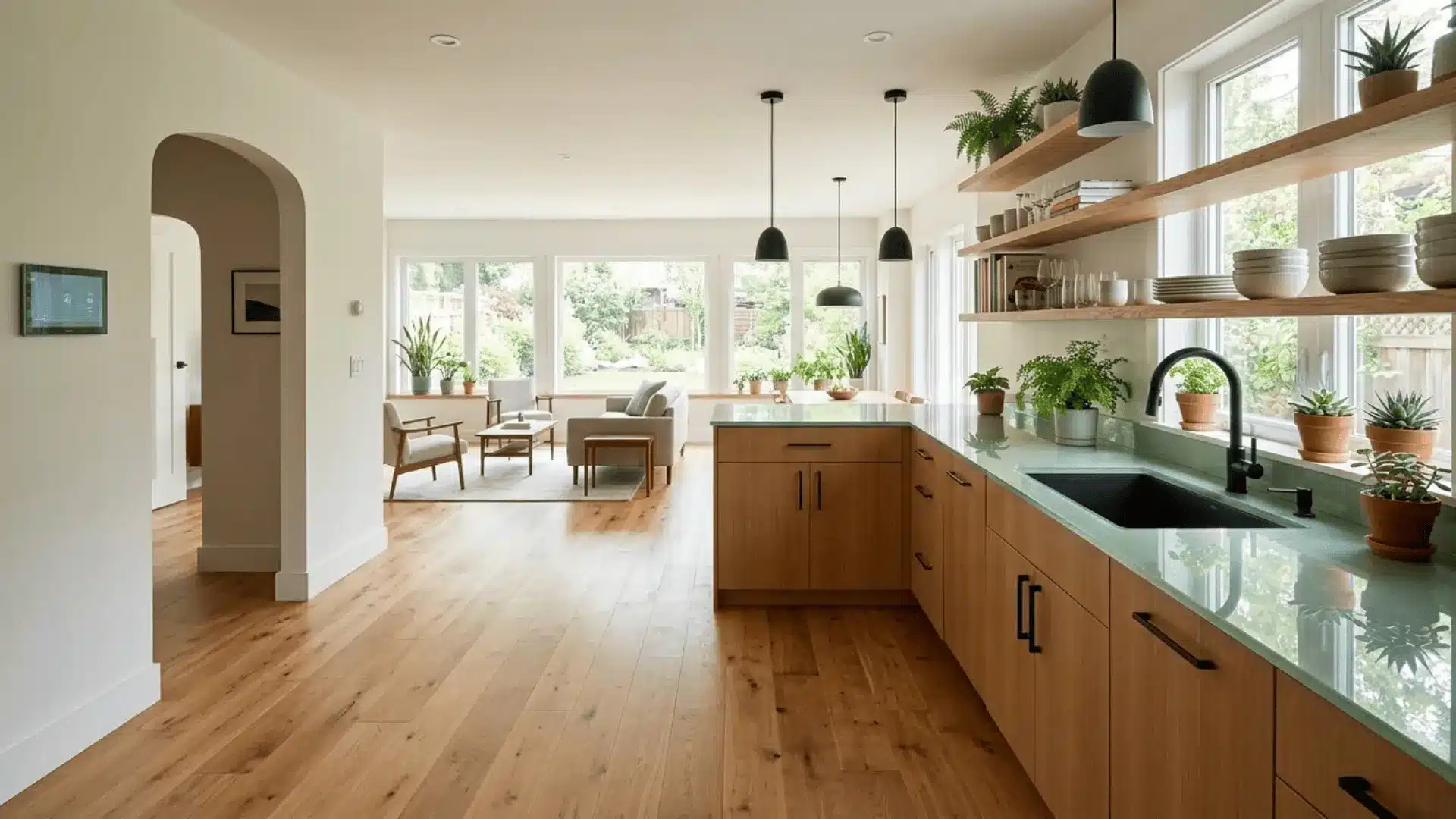
Design preferences shift, but a handful of directions have genuinely changed how people renovate today.
Open-concept layouts remain a top choice for homeowners who want connected, light-filled living spaces.
Energy-efficient upgrades like triple-pane windows, spray foam insulation, and high-efficiency HVAC systems are making their way into more mid-range budgets.
Smart home technology, from automated lighting to integrated security, is now a standard ask even in modest renovations.
And sustainable materials like reclaimed wood, recycled glass countertops, and low-VOC finishes are growing from a niche preference into an everyday expectation.
DIY or Leave it to the Pros? Here is How to Decide
Knowing where to roll up your sleeves and where to step back is one of the smartest calls you can make in a whole-house renovation.
Some tasks are genuinely DIY-friendly; others carry risks that far outweigh the savings.
| Task | DIY-Friendly? | Why It Matters | Risk of Getting It Wrong |
|---|---|---|---|
| Painting walls and ceilings | Yes | Low skill threshold, easy to redo | Minimal |
| Landscaping and garden work | Yes | Flexible timeline, no permits needed | Minimal |
| Cabinet hardware and fixtures | Yes | Simple swaps with basic tools | Low |
| Flooring installation | Sometimes | Depends on the material and the subfloor condition | Medium |
| Tile work | Sometimes | Grout and leveling require precision | Medium |
| Cabinetry installation | Not recommended | Alignment and load-bearing accuracy critical | High |
| Electrical work | No | Code compliance and safety are non-negotiable | Very High |
| Plumbing work | No | Leaks and code violations are costly | Very High |
| Structural or framing changes | No | Directly impacts home integrity | Very High |
A good way to think about it: if a mistake could affect your home’s safety, structure, or resale value, it belongs in professional hands. DIY, where you can learn and redo freely; hire where the margin for error is zero.
Tips That Actually Keep Your Renovation on Track
Most whole house renovation budgets do not blow up all at once; they slip quietly, one unplanned decision at a time. Staying ahead of it is simpler than most people think.
- Track every expense as it happens, not at the end of the month.
- Order materials and fixtures well before they are needed, lead times are longer than they look.
- Check in with your contractor regularly, not just when something feels off.
- Keep a small decisions list ready so minor choices do not stall progress on site.
- Build flexibility into your timeline from the start, delays are normal, panic is optional.
A renovation that stays on budget is rarely an accident. It is the result of small, consistent habits practiced all the way through.
The Closing Note
A home that finally works for you, looks like you, and grows with you is absolutely worth the planning, the patience, and the process.
Whole house renovation projects are big undertakings, but every decision you make thoughtfully brings you closer to a space that feels genuinely right.
Take it one step at a time, trust the people you bring on board, and do not lose sight of why you started. The result is always more rewarding than the process feels in the middle of it.
We would love to know: what room are you most excited to convert first? Drop it in the comments!