I glanced at my kitchen counter this morning, and there they were again: those persistent little specks hovering around a bowl of peaches I’d brought in yesterday.
Fruit flies. They appear whenever anything remotely sweet sits out too long.
Where do they even come from? It’s a question I’ve asked myself countless times while tending both my indoor herb collection and the vegetable patch outside.
These tiny insects are drawn to ripening and fermenting organic matter, seeking out breeding sites in drains, garbage disposals, and overripe produce.
Once you understand what draws them in, dealing with them becomes much less frustrating.
What are “Fruit Flies”?
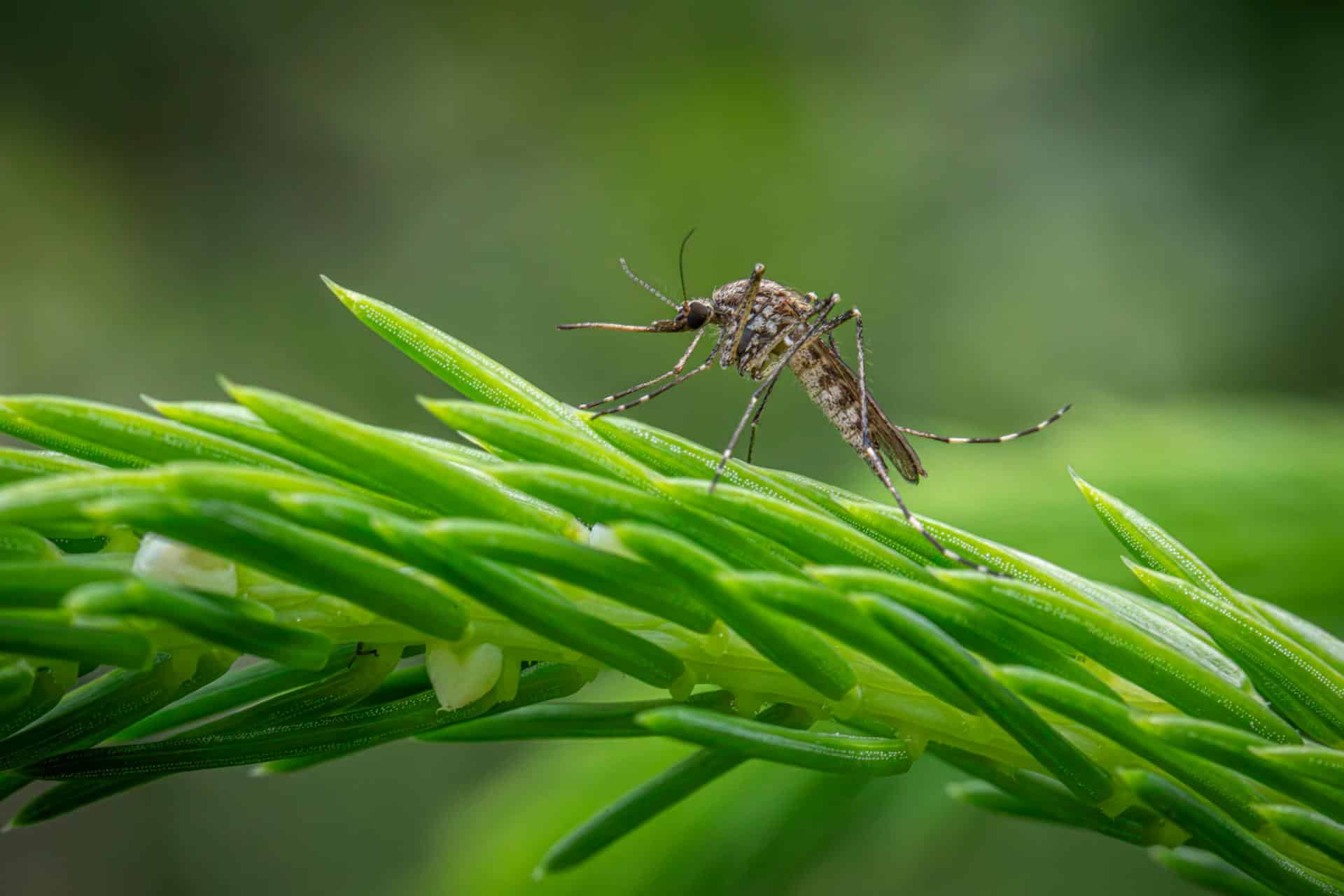
Fruit flies belong to several families, though the ones circling my fruit bowl are usually Drosophila melanogaster, the common vinegar fly that thrives on fermenting produce indoors.
Out in the garden, I deal with a different culprit: Drosophila suzukii, the spotted wing drosophila, which targets fresh, ripening fruit still on the vine.
Various species from the Tephritidae family add to the mix, causing real damage to crops. What makes these insects so troublesome isn’t just their presence but their breeding speed.
A single female lays hundreds of eggs within days, and those eggs hatch rapidly in warm conditions.
Beyond the annoyance, they contaminate food and carry bacteria from decaying matter to fresh surfaces. Their life cycle moves so quickly that a small problem can spiral into a full infestation before you’ve even noticed.
Where Do Fruit Flies Come From?
They don’t appear out of thin air, though it certainly feels that way.
Fruit flies find their way into our homes through open windows and doors, drawn by specific scents we barely notice but they can detect from remarkable distances.
1. Fermenting Fruit and Vegetables Draw Them in
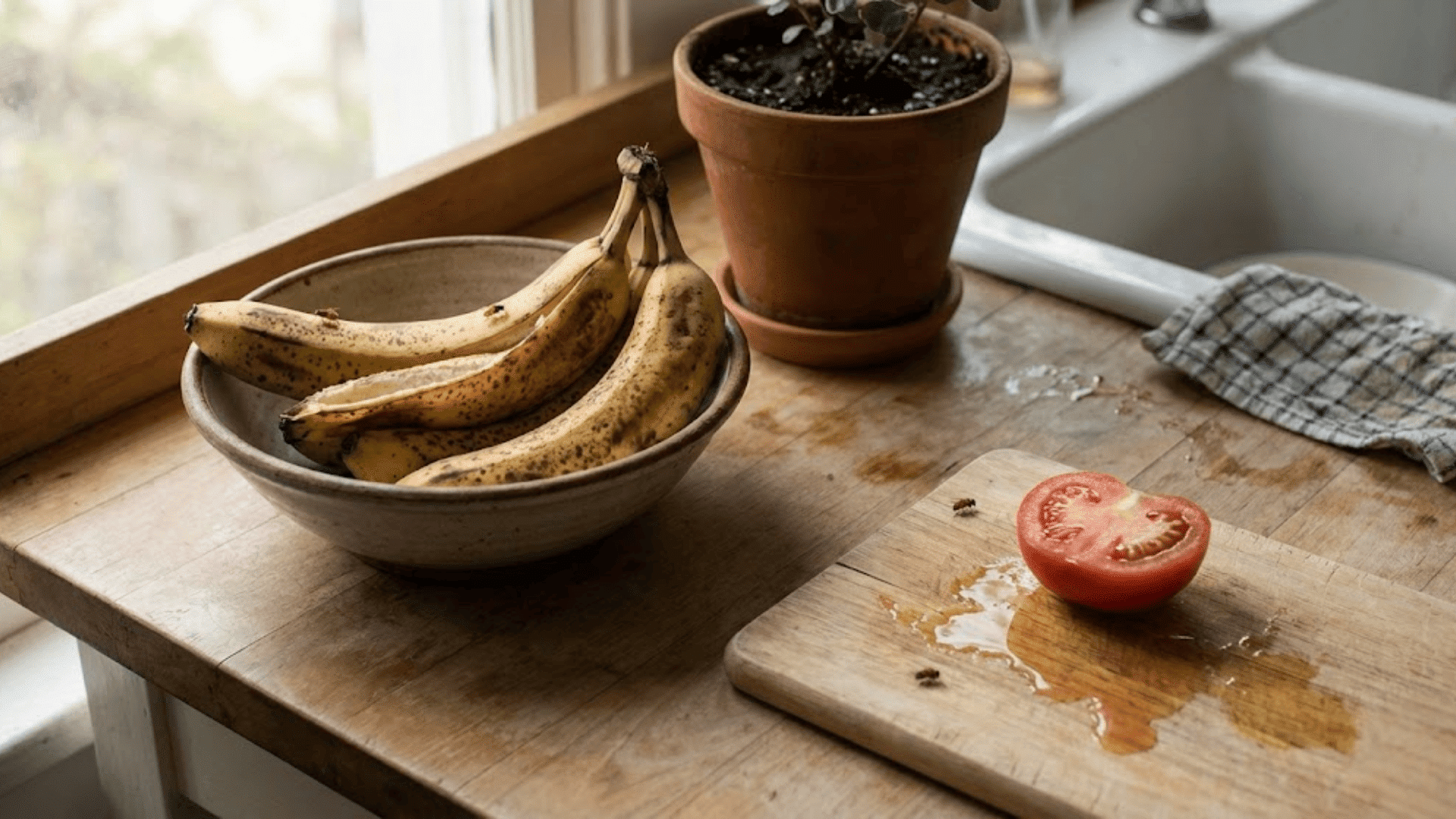
Fruit flies home in on the smell of ripening and fermenting produce. As fruit breaks down, it releases ethanol and other compounds that act like a beacon.
Overripe bananas, tomatoes left on the counter, and even that half-used onion in the fridge can all send out the signal. They’re not picky about variety.
Anything starting to soften and sweeten becomes a target, which is why they show up so consistently around produce bowls and vegetable bins.
2. Eggs are Laid on the Surface, Not Inside
A common misconception is that fruit comes from the store with eggs already inside. That’s not how it works.
Female fruit flies land on the surface of ripe or rotting fruit and lay their eggs there, often in cracks or soft spots. The eggs hatch within a day or two, and tiny larvae burrow into the softened flesh to feed.
By the time you notice flies hovering around your fruit, their offspring are already developing in the produce itself.
3. Hidden Breeding Sites Throughout the Kitchen
Beyond fruit, flies breed in places most of us overlook. Kitchen drains harbor organic residue that ferments just like fruit does.
Trash bins and compost containers provide constant breeding grounds, especially if they’re not emptied regularly. Garbage disposals accumulate decaying matter in hard-to-reach crevices.
Even damp mops, dirty rags, and the soil of overwatered houseplants can host larvae. These spots often sustain populations even after you’ve cleared away all visible fruit.
How Fruit Flies Get into Your Home?
Most arrive as hitchhikers on produce from the grocery store or your own garden. Eggs and larvae cling to the surface of fruit and vegetables, invisible until they hatch days later in your kitchen.
Adults also fly in through open doors and windows, drawn by the scent of anything fermenting inside. I’ve noticed they’re particularly bold near compost bins and outdoor fruit trees.
If you keep compost close to the house or have overripe fruit in the yard, flies breed there first and then make their way indoors through the smallest gaps in screens or weatherstripping.
Once inside, they waste no time finding suitable breeding sites.
How Fast Do the Fruit Flies Reproduce?
Understanding their lifecycle explains why a few flies can become hundreds seemingly overnight.
In warm conditions, fruit flies complete their entire development in about a week, and each female lays hundreds of eggs during her short lifespan.
| Stage | Duration | What Happens |
|---|---|---|
| Egg | 24-30 hours | Female lays up to 500 eggs on fermenting fruit or organic matter |
| Larva | 4-5 days | Tiny maggots feed on decaying material, growing rapidly |
| Pupa | 3-4 days | Larvae form hard cases and transform into adults |
| Adult | 8-10 days | Mature flies emerge ready to breed within 2 days |
In ideal conditions, one generation leads directly into the next. This means that within two weeks, you’re not dealing with the original flies anymore, but their offspring and possibly even a third generation.
The numbers multiply exponentially, which is why quick action matters so much.
How to Find the Source of Your Fruit Fly Infestation?
Tracking down where fruit flies are breeding requires a methodical walk through your kitchen and nearby spaces. Start with the obvious spots and work your way toward the hidden ones most people miss.
- Check All Produce First: Examine fruit bowls, vegetable bins, and anything stored on counters for soft spots, bruising, or visible flies hovering nearby.
- Inspect Drains and Garbage Disposals: Place clear tape or plastic wrap over sink drains overnight; if flies appear stuck to it by morning, you’ve found a breeding site.
- Search Trash and Compost Areas: Look inside bins, under liners, and around the base where residue accumulates and ferments unnoticed.
- Examine Damp Cleaning Supplies: Check mops, sponges, and dish rags left wet in sinks or buckets, as they harbor organic matter that flies love.
- Test Suspected Items With Isolation: Seal questionable produce, potted plants, or recyclables in a clear bag for two days and watch for flies emerging inside.
If flies keep appearing after you’ve eliminated obvious sources, the problem is likely in a drain or another hidden spot with decaying organic buildup. Sometimes it takes removing items one by one to finally pinpoint where they’re breeding.
Immediate Removal: Fast Action Plan for Today
Once you’ve located the source, speed matters; fruit flies breed so quickly that delaying even a day gives them time to lay another round of eggs.
Here’s what to tackle right now to break their cycle.
1. Remove and Inspect All Produce
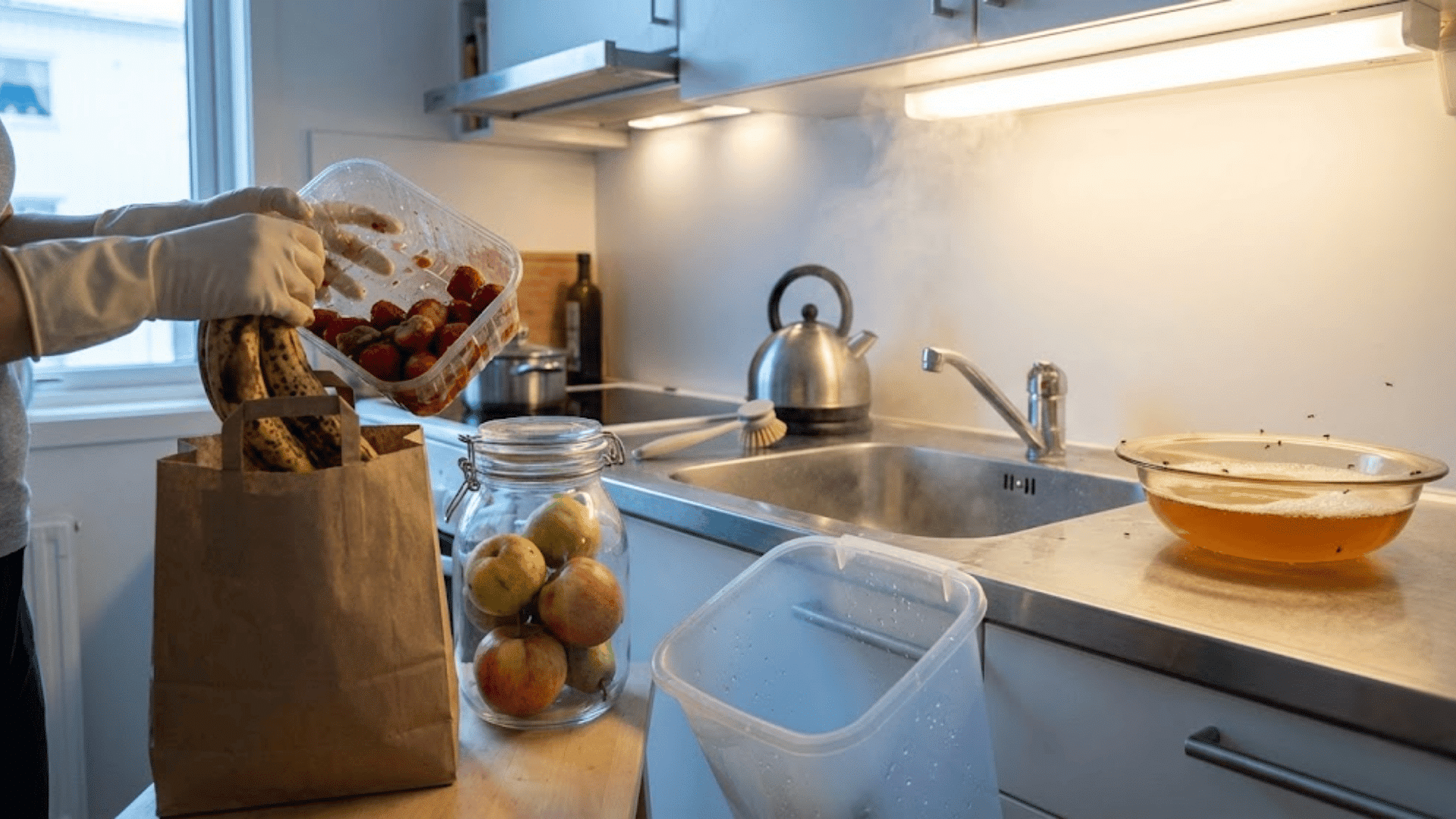
Go through every piece of fruit and vegetables on your counters, in bowls, and inside the fridge. Toss anything overripe, bruised, or soft.
Even if produce looks fine, check for tiny eggs or soft spots where flies may have already laid their clutch. Store what remains in the refrigerator or sealed containers where flies can’t reach.
2. Clean Drains Thoroughly
Scrub your sink drains with a stiff brush to dislodge buildup clinging to the pipes. Pour boiling water down afterward to flush out organic residue.
For stubborn infestations, use an enzyme-based drain cleaner that breaks down the film the flies feed on. Garbage disposals need the same treatment, focusing on the rubber splash guard where debris hides.
3. Empty and Sanitize Trash Bins
Take out all trash and compost immediately, even if bags aren’t full. Rinse bins with hot soapy water, scrubbing the bottom and sides where liquids pool.
Make sure lids fit securely. If your compost sits indoors, consider moving it outside or sealing it in an airtight container until the infestation clears.
4. Set Up Vinegar Traps
Pour apple cider vinegar into a small jar or bowl and add two drops of dish soap to break the surface tension. Flies dive in but can’t escape.
Alternatively, use red wine with soap or a mixture of warm water, sugar, and yeast covered with plastic wrap poked with small holes. Place traps near problem areas.
How to Prevent Fruit Flies From Returning?
Keeping fruit flies away permanently means changing a few habits and tightening up spaces they exploit. Small adjustments now prevent the frustration of dealing with repeated infestations later.
- Store Ripe Fruit Properly: Keep ripe and ripening fruit in the refrigerator or sealed containers; only leave out what you’ll eat within a day or two to avoid attracting flies.
- Seal and Relocate Compost Bins: Use airtight compost containers and position them away from doors and windows; outdoor compost should be at least ten feet from entry points to minimize indoor migration.
- Maintain Drains and Disposals Weekly: Flush drains with boiling water and scrub garbage disposals regularly to prevent organic buildup that becomes a hidden breeding ground.
- Repair Screens and Seal Gaps: Check window screens for tears, replace worn weatherstripping around doors, and seal cracks near pipes or vents; even tiny openings invite flies inside.
- Plant Natural Repellents Nearby: Grow basil, lavender, or mint near kitchen windows and doorways; their strong scents deter fruit flies while adding pleasant greenery to your space.
These practices work together to create an environment that fruit flies find uninviting. Once you’ve established the routine, maintaining it takes little effort compared to fighting another wave of insects in your kitchen.
When It’s Not a Fruit Fly: Identifying Lookalikes
Not every tiny flying insect in your kitchen is a fruit fly. I’ve spent more time than I’d like to admit treating the wrong pest because I assumed they were all the same.
Knowing the difference saves effort and gets rid of them faster.
| Pest | What They Look Like | Where You’ll Find Them | How to Treat Them |
|---|---|---|---|
| Fruit Flies | Tan or brown body, red eyes, hover around fruit | Near produce, trash, fermenting matter | Remove breeding sources, set vinegar traps |
| Drain Flies | Fuzzy moth-like appearance, gray with large wings | Bathrooms, sinks, and near drains | Scrub drains, use enzyme cleaners |
| Fungus Gnats | Dark body, long legs, weak fliers near soil | Around houseplants, especially overwatered ones | Let the soil dry out, and use sticky traps |
| Phorid Flies | Humpbacked shape, erratic flight pattern | Decaying organic matter, sewage issues, and dead animals | Find and remove decomposing material |
I once spent two weeks fighting what I thought were fruit flies in my bathroom, only to realize they were drain flies breeding in the shower drain.
Once I scrubbed the biofilm out with a brush and enzyme cleaner, they disappeared within days.
DIY Traps: Recipes and What Works Best
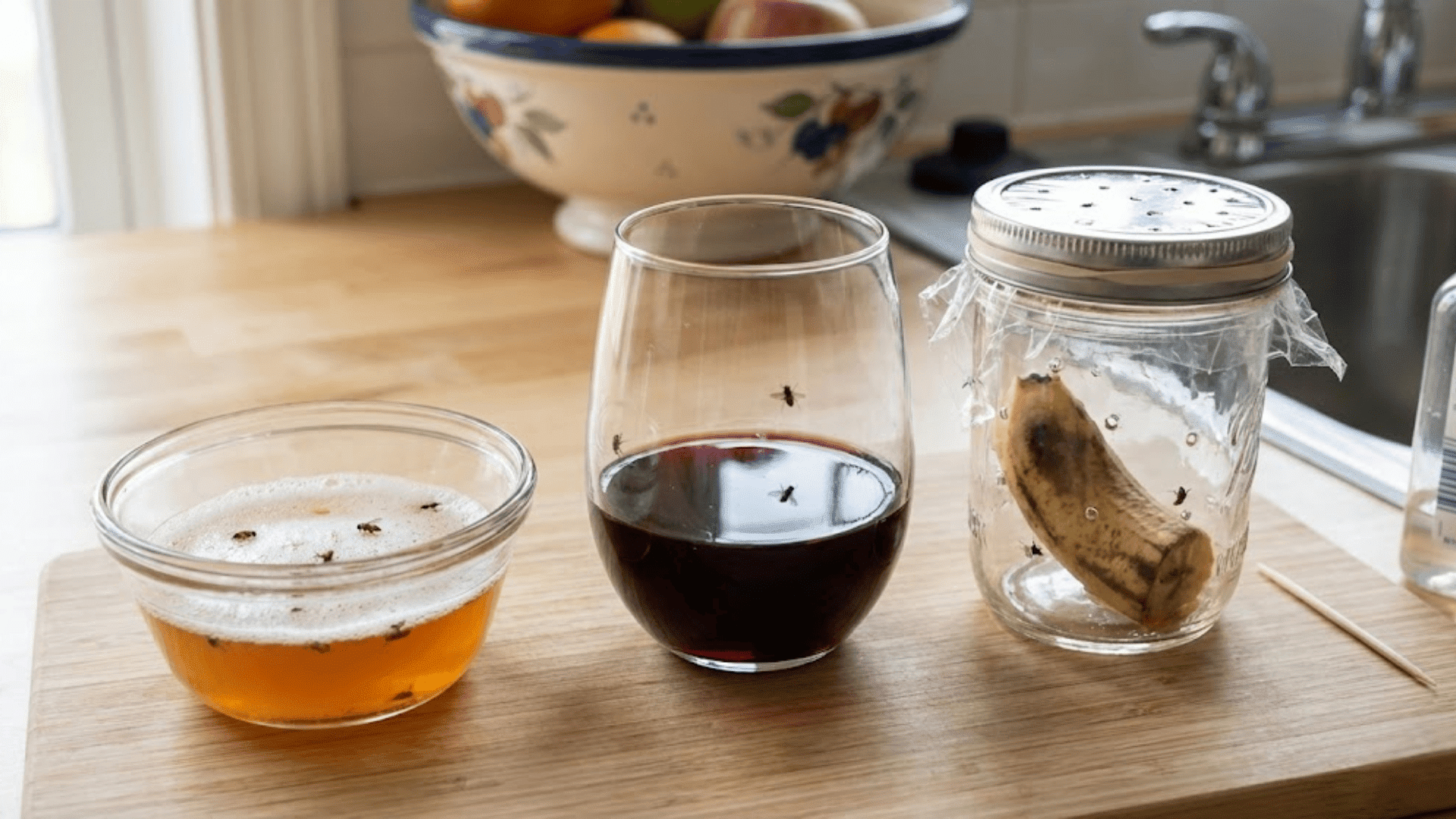
Homemade traps work surprisingly well for catching adult fruit flies once you’ve eliminated their breeding sites. Here are the methods I’ve tested repeatedly in my own kitchen, along with what makes each one effective.
1. Apple Cider Vinegar and Dish Soap Trap
This is the most reliable trap I use. The vinegar’s fermentation smell draws flies in, while the soap breaks the surface tension so they sink and drown.
- Step 1: Pour half an inch of apple cider vinegar into a shallow bowl or jar
- Step 2: Add two to three drops of dish soap and swirl gently without creating bubbles
- Step 3: Place the trap near where flies congregate and replace it every two days
2. Red Wine and Dish Soap Trap
Wine works similarly to vinegar but can be more attractive to certain fruit fly species. Use leftover wine you’d otherwise pour out.
- Step 1: Pour a small amount of red wine into a container, leaving it nearly full
- Step 2: Add one drop of dish soap to break surface tension
- Step 3: Position the trap near problem areas and refresh it when it fills with flies
3. Jar With Funnel or Pierced Lid
This method traps flies inside a container that they can’t escape from. It works best when you want a mess-free option that lasts several days.
- Step 1: Fill a jar with fermenting fruit scraps or a splash of vinegar
- Step 2: Cover with plastic wrap secured by a rubber band, then poke small holes with a toothpick
- Step 3: Flies enter through holes but struggle to find their way back out
When to Call a Professional?
If you’ve spent two weeks cleaning drains, removing breeding sites, and setting traps, but flies keep multiplying, it’s time to bring in a pest control expert.
Persistent infestations often point to hidden breeding areas you haven’t found, like deep pipe buildup or structural issues harboring organic matter.
More urgently, if you’re dealing with fruit flies in a garden or orchard and notice damage to ripening fruit still on the plant, you might be facing Drosophila suzukii or other agricultural pest species.
These require targeted treatment beyond household methods. Professionals have access to commercial-grade solutions and can identify species that need specialized management before crop damage becomes severe.
The Bottom Line
I’ve spent years managing pests in gardens and kitchens, and while fruit flies test your patience, they’re one of the easier problems to solve once you know where fruit flies come from.
There’s something satisfying about finally clearing them out and keeping your kitchen the way it should be: clean, functional, and yours again.
The methods here work, and they don’t require anything complicated or expensive. Just a bit of attention to detail and some consistency.
If you’ve found tricks that work especially well in your space, I’d love to hear about them in the comments below. Sharing what works helps everyone keep their kitchens and gardens thriving.