My neighbor prunes his maples in spring when the weather warms up. My trees always look healthier, and it’s not because I’m a better gardener; I just prune mine in late summer when the sap isn’t flowing.
When to prune maple trees comes down to working with their biology, which means choosing windows outside their active growing season.
Prune during spring or early summer, and you’ll trigger heavy sap bleeding that weakens the tree and invites disease.
Wait until late summer through winter, and your maples recover quickly with minimal stress.
This guide breaks down optimal timing for different maple varieties, helps you recognize when pruning is actually necessary, and walks you through techniques that promote vigorous growth rather than setbacks.
Why Timing Matters for Maple Tree Health
Maples operate on a sap flow calendar that makes them uniquely vulnerable to poorly timed cuts. Unlike many trees that seal wounds quickly regardless of season, maples bleed profusely when pruned during their active growth phase.
This isn’t just messy, it’s metabolically expensive. The tree loses stored energy and nutrients through that flowing sap, weakening its ability to fight off disease and recover from pruning wounds.
During dormancy in late summer through winter, sap movement slows dramatically, allowing maples to compartmentalize cuts efficiently without excessive bleeding. The tree can redirect energy toward healing rather than hemorrhaging resources.
Spring and early summer represent the worst possible windows because sap pressure peaks as the tree transports nutrients to support new growth.
Wounds made during this period stay wet longer, creating perfect conditions for fungal infections and bacterial diseases. Understanding this cycle transforms pruning from guesswork into a strategic practice that works with your maple’s natural rhythms rather than fighting against them.
When to Prune Maple Trees
Choosing the right season for pruning can mean the difference between a thriving maple and one that struggles for months. Here’s how to time your cuts for maximum tree health and minimal stress:
Late Winter: The Optimal Pruning Window (February-March)
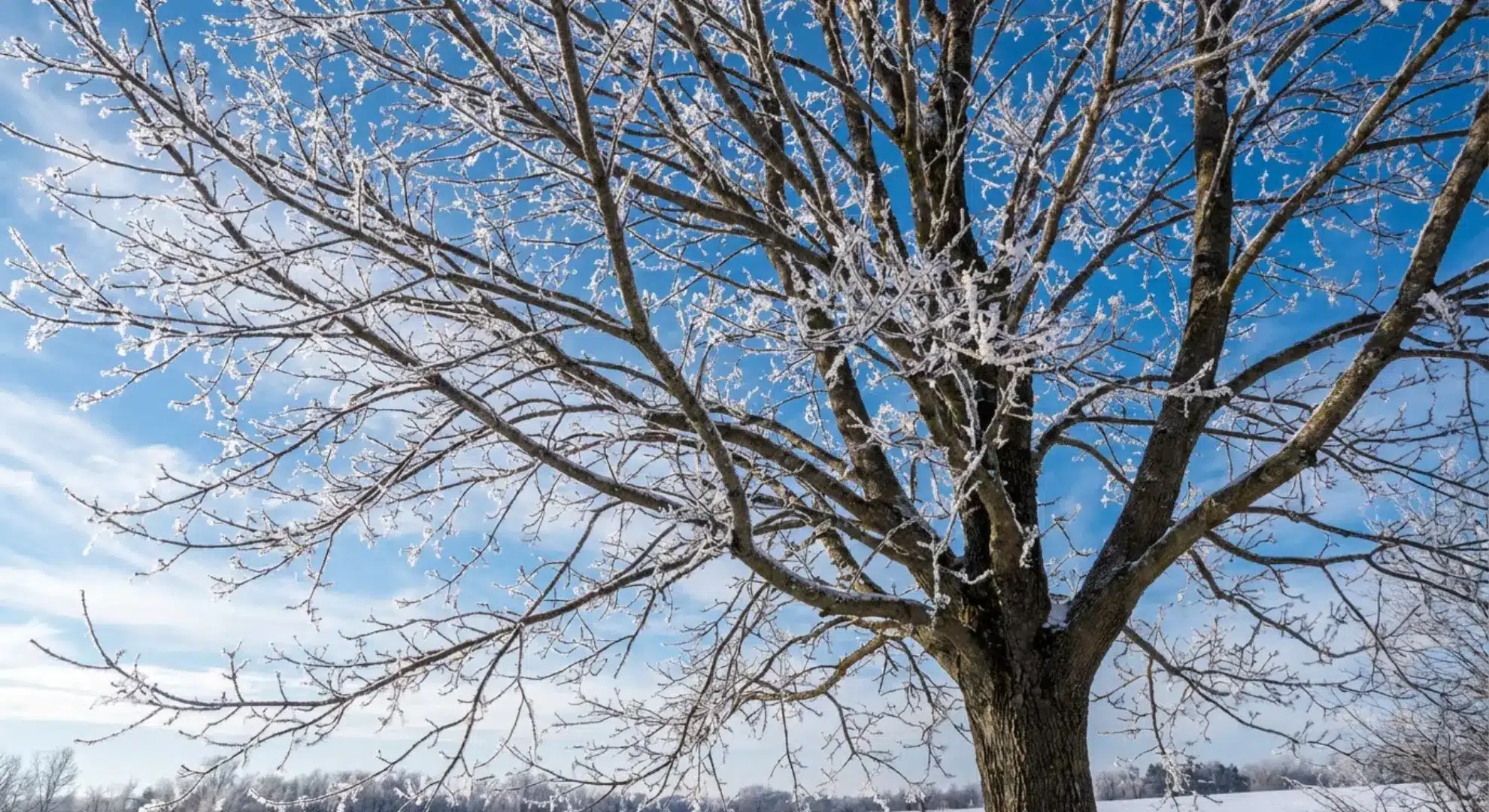
Late winter offers the cleanest, safest pruning opportunity when your maple is fully dormant and sap flow remains minimal. You can see the tree’s structure clearly without foliage blocking your view, making it easier to identify problem branches.
Why dormancy makes this ideal:
- Sap pressure stays low, preventing excessive bleeding from cuts
- The tree’s energy reserves are stored in roots, not actively moving through branches
- Wounds begin compartmentalizing immediately as spring growth starts
- Reduced disease pressure since most pathogens remain inactive in cold temperatures
How to identify when your tree is still dormant:
- Buds remain tight and closed with no swelling or color changes
- No leaf emergence or visible green tissue when you scratch a small branch
- Nighttime temperatures consistently stay below 40°F
Regional considerations: Northern climates can prune through early March, while southern zones should finish by mid-February before warming triggers bud break.
Mid-Summer: Your Second-Best Option (July-August)

If you missed the late winter window, mid-summer pruning works well once the spring growth flush has hardened off. The tree has already completed its major energy expenditure for the year.
Why reduced sap flow helps:
- Trees enter a semi-dormant state during peak summer heat
- Sap pressure drops significantly compared to spring levels
- Wounds dry faster in warm weather, reducing infection risks
- The tree can still heal before winter dormancy begins
Benefits of summer pruning:
- You can see exactly which branches are dead versus simply dormant
- Problem areas become obvious—diseased or damaged wood stands out against healthy foliage
- Immediate visibility of the tree’s shape helps you make better structural decisions
What to watch for during hot weather: Avoid pruning during heat waves above 90°F or drought conditions. Stressed trees struggle to compartmentalize wounds effectively, and excessive pruning during peak heat can trigger additional stress that compounds existing problems.
Times to Avoid Pruning
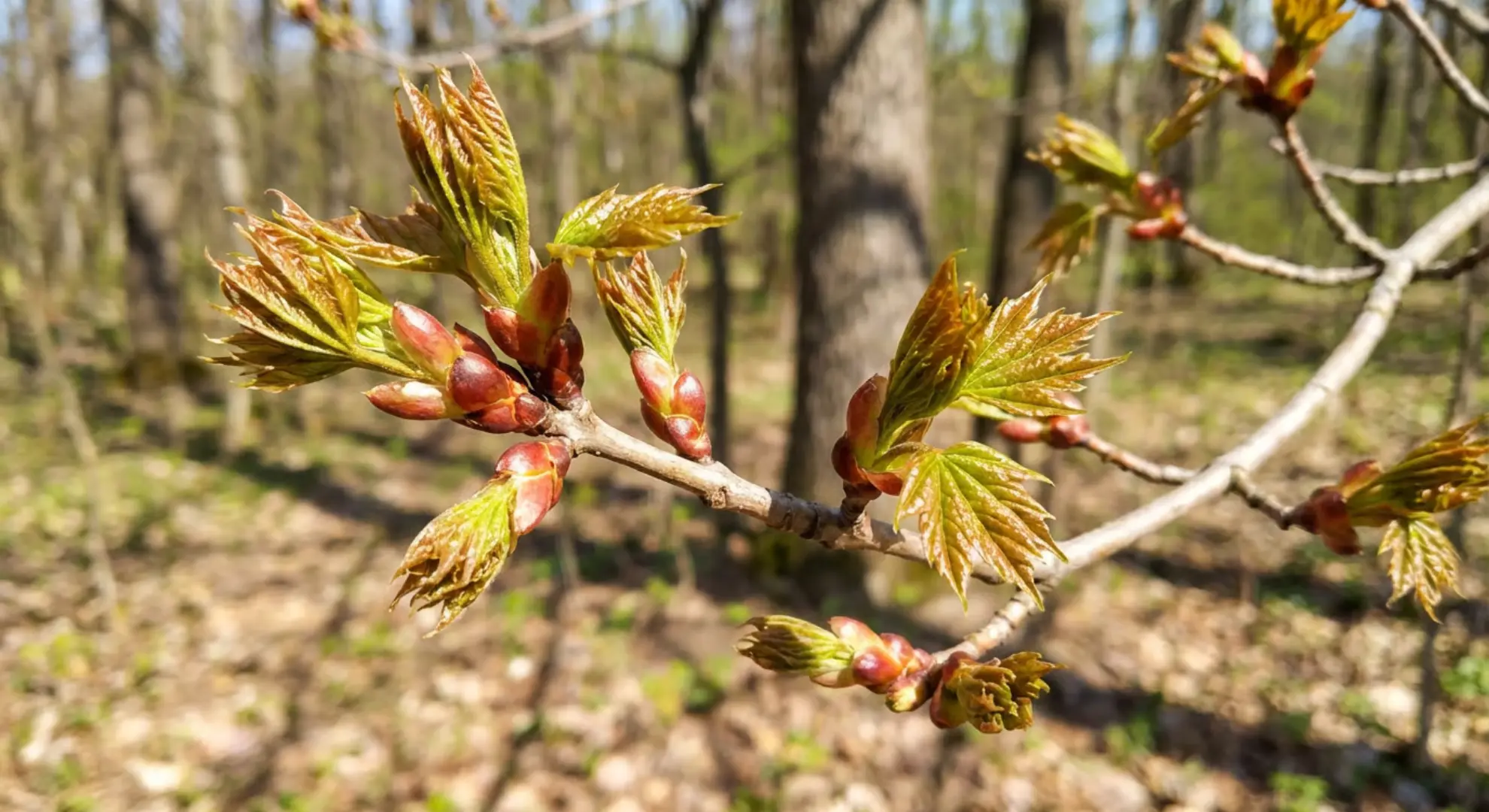
These periods create unnecessary risk for your maple, either through excessive sap loss or increased disease vulnerability.
Early spring dangers (sap bleeding issues):
March through May represents the worst possible pruning window as sap pressure peaks during active growth. Cuts bleed heavily for weeks, depleting the tree’s stored carbohydrates and creating persistently wet wounds that attract insects and pathogens.
The tree essentially hemorrhages the nutrients it needs for leaf development and seasonal growth.
Late fall risks (disease and frost damage):
Pruning in September through November leaves fresh wounds exposed as temperatures fluctuate and rainfall increases. Fungal spores spread readily in cool, damp fall conditions, and new cuts provide perfect entry points.
Additionally, pruning stimulates slight growth responses that leave tissue vulnerable to early frost damage before the tree fully hardens off for winter.
Essential Maple Tree Pruning Techniques
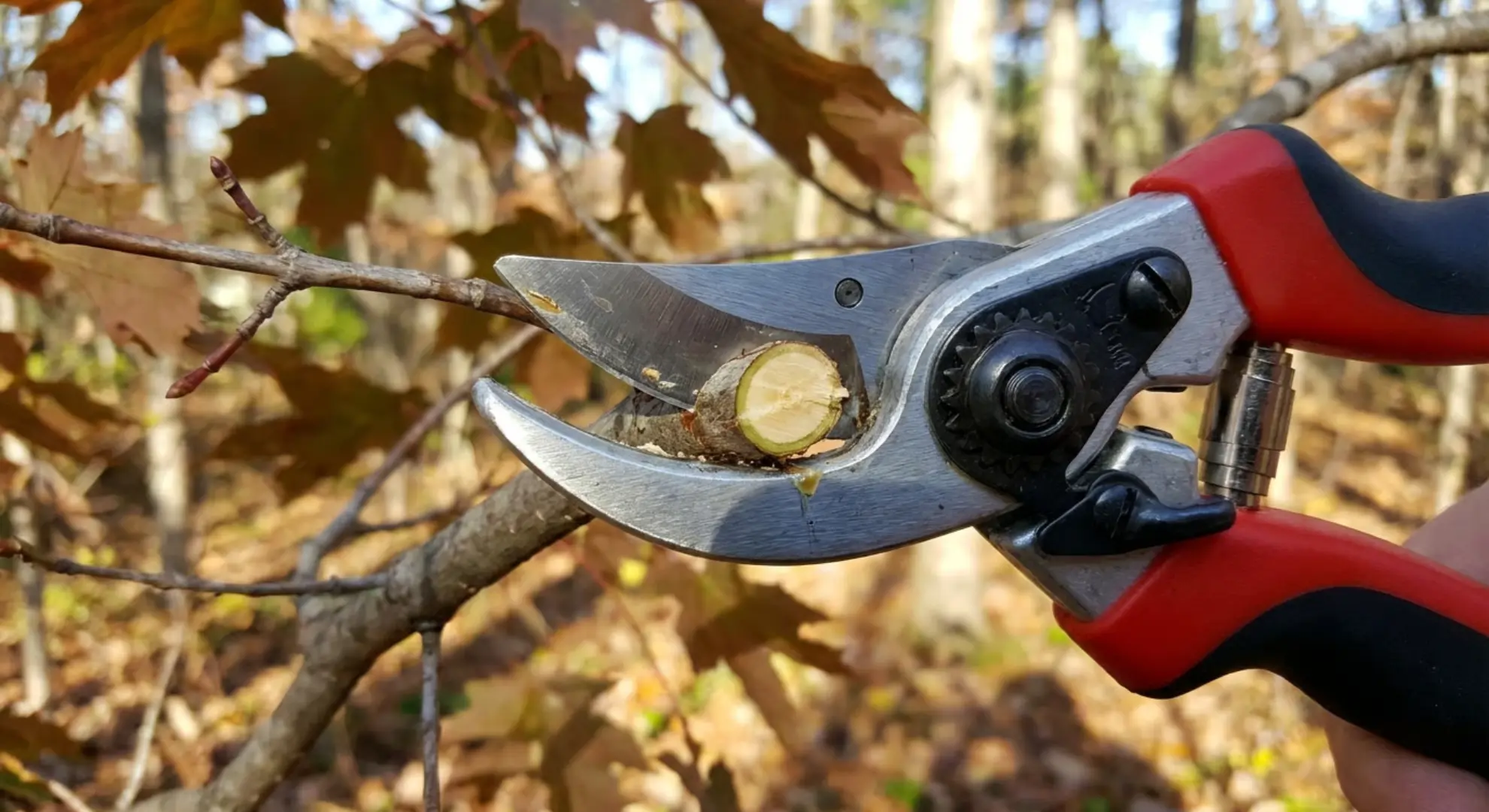
Proper cutting techniques matter as much as timing when it comes to maple health. Using the right approach for each situation minimizes stress and promotes faster healing:
| Pruning Type | When to Use | Technique | Purpose |
|---|---|---|---|
| Thinning cuts | Removing entire branches back to the trunk or parent branch | Cut just outside the branch collar at a slight angle | Improves air circulation and light penetration without changing tree shape |
| Heading cuts | Shortening branches to redirect growth | Cut just above an outward-facing bud at a 45-degree angle | Encourages bushier growth and controls height or spread |
| Crown raising | Removing lower branches | Remove branches gradually over 2-3 years, never more than 25% at once | Creates clearance for walkways, structures, or lawn maintenance |
| Deadwooding | Any time you spot dead, diseased, or damaged wood | Cut back to healthy tissue where wood shows a green cambium layer | Prevents disease spread and eliminates hazardous branches |
| Structural pruning | Young maples are developing their framework | Select one central leader, remove competing leaders, and cross branches | Establishes strong architecture that prevents future problems |
Always use sharp, clean tools and make cuts that allow water to shed away from the wound rather than pooling on the cut surface.
Pruning Different Maple Varieties
Not all maples respond identically to pruning; their growth habits, branch structures, and specific needs vary significantly by variety. Tailoring your approach to each type ensures better results and healthier trees.
Sugar Maples
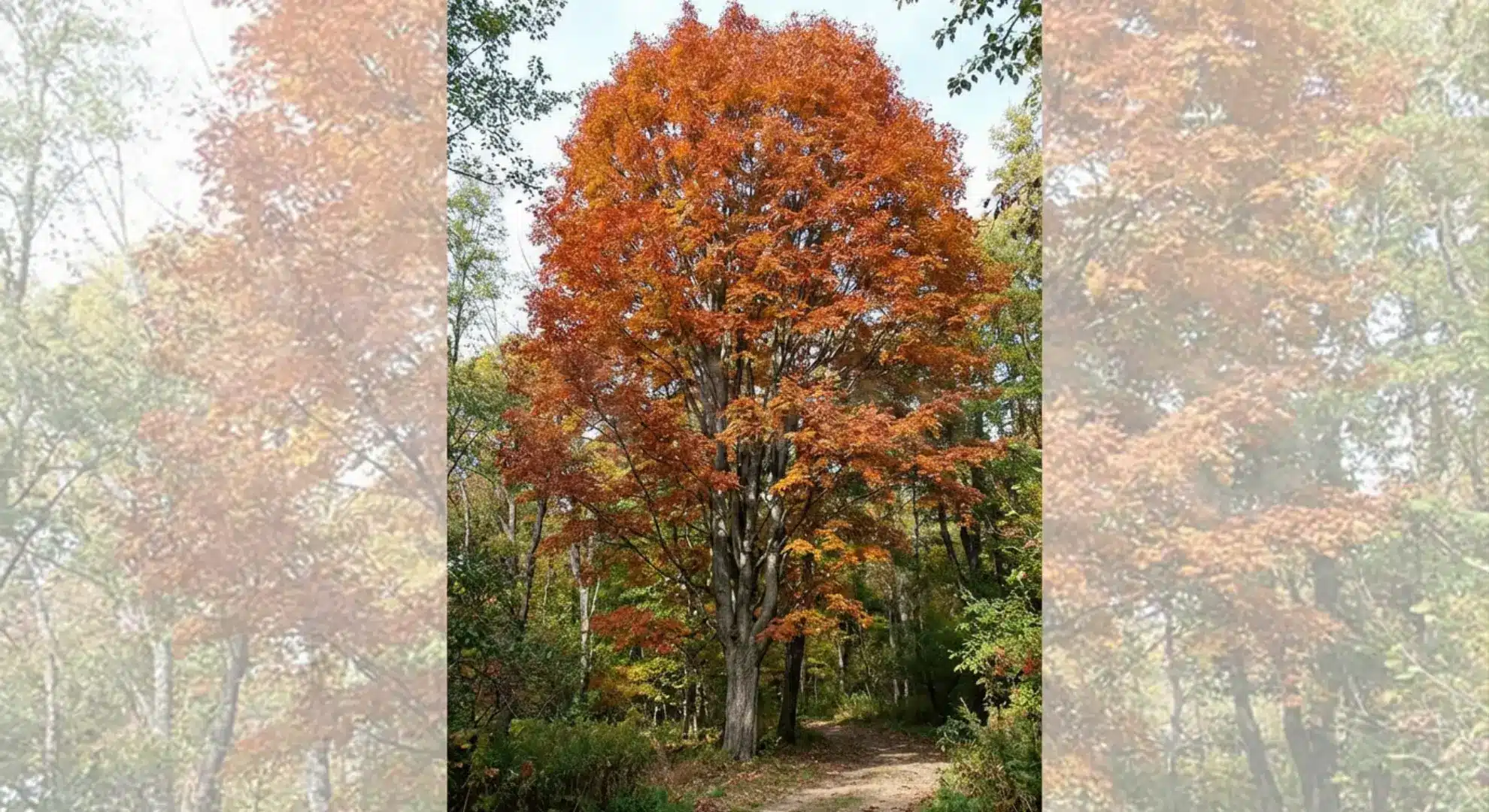
Sugar maples produce heavy sap flow in spring, making winter pruning absolutely critical for this variety. Their strong, upright growth habit requires less frequent intervention than other maples.
Best timing specifics:
- Strict late winter window (February-early March) before any warming trend
- Avoid any cuts from March through June when sap production peaks for the syrup season
- Mid-summer pruning (late July-August) works only for emergency removals
Stick to these windows religiously with sugar maples, they’re less forgiving than other varieties when it comes to off-season pruning.
Sap flow considerations:
- Sugar maples generate the highest sap pressure of any maple variety
- Spring cuts can bleed for 4-6 weeks, potentially losing several gallons of sap per wound
- This extreme bleeding depletes carbohydrate reserves more severely than in other maples
- Even small cuts during active flow can stress the tree significantly
The volume of sap loss in sugar maples isn’t just cosmetic; it directly impacts the tree’s ability to support new growth and fight off disease.
Common pruning goals:
- Remove dead wood and branches showing decay or damage
- Correct co-dominant leaders who create weak branch unions
- Maintain a strong central trunk with well-spaced scaffold branches
- Limit pruning to necessary corrections rather than aesthetic shaping
Sugar maples naturally develop good structure, so your job is mostly removing problems rather than creating shape.
Japanese Maples

These ornamental maples demand gentler handling due to their delicate branching and slower healing response. Their artistic form is their primary value, making every cut a design decision.
Delicate branch structure care:
- Use only hand pruners or small saws, never pole pruners that can tear delicate bark
- Make cuts on smaller branches (under 1 inch diameter) whenever possible
- Remove no more than 15-20% of the canopy in a single session
- Allow wounds to air-dry naturally without sealants that trap moisture
- Avoid cutting during extreme heat or drought when stress levels are already elevated
Japanese maples heal more slowly than other varieties, so restraint matters more than aggressive correction.
Aesthetic pruning approaches:
- Reveal internal branch architecture rather than creating dense outer canopies
- Remove inward-growing branches that disrupt the natural flow
- Thin crowded areas to showcase the tree’s natural layering effect
- Eliminate any growth that disrupts the elegant branching pattern
- Step back frequently during pruning to evaluate the overall visual balance
Think of pruning Japanese maples as sculpture work, you’re revealing the form that’s already there rather than imposing a new one.
Shape maintenance timing:
- Late winter for major structural work on the framework
- Late spring (after leaves emerge) for aesthetic refinement since you can see exactly how the tree will look
- Light summer pruning allows immediate visualization of changes
- Avoid fall pruning which can stimulate growth vulnerable to winter damage
Many Japanese maple enthusiasts prefer late spring pruning specifically because the leaves help them see what they’re creating.
Red Maples
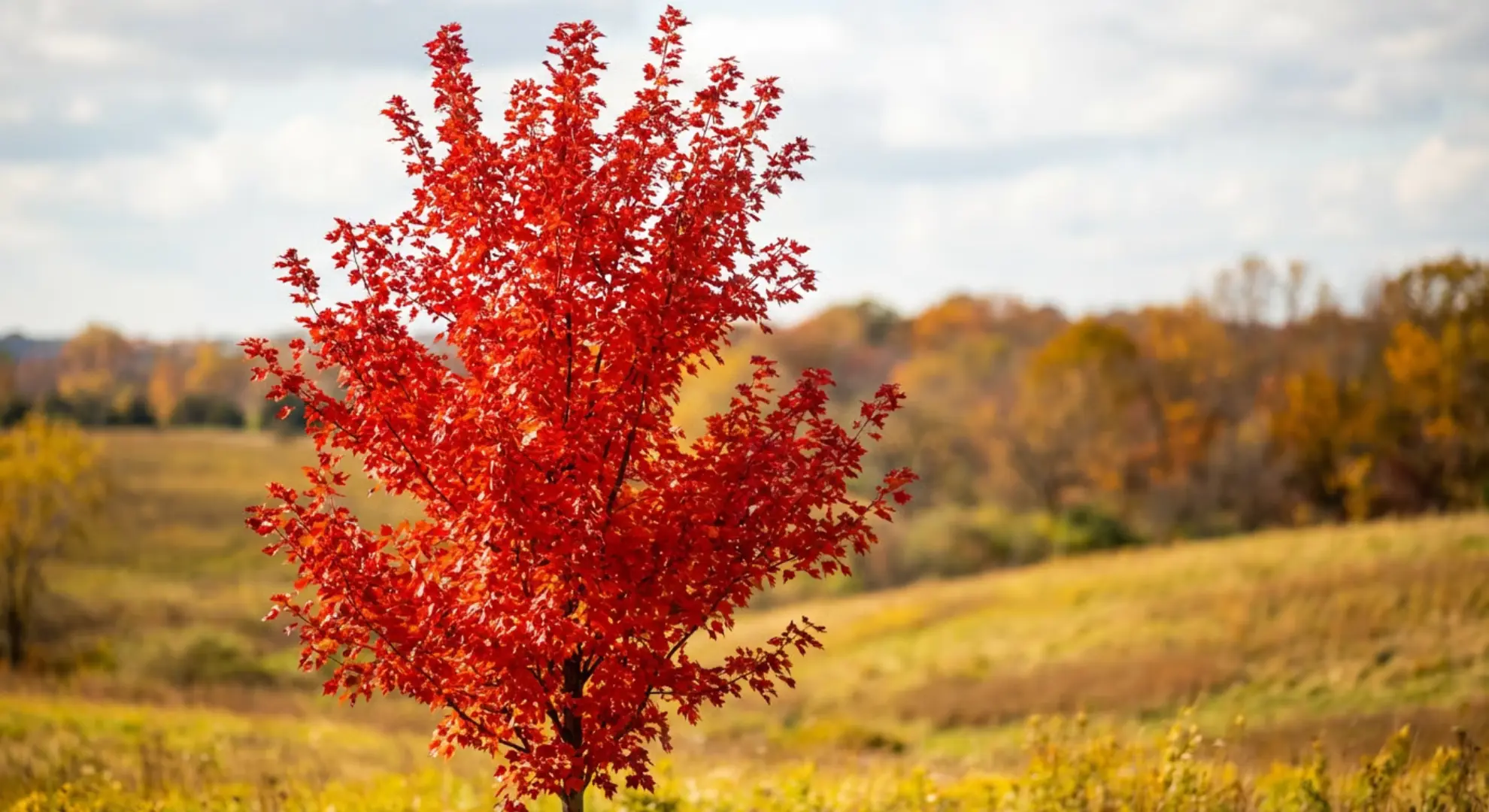
Red maples grow faster than most maple varieties, requiring more frequent attention to prevent structural problems from developing. Their vigorous growth creates both opportunities and challenges.
Fast-growth pruning needs:
- Annual evaluation during first 10 years to guide structural development
- Remove water sprouts and suckers promptly—they appear frequently on red maples
- Thin competing leaders early before they reach 2 inches in diameter
- Address crossing branches quickly since rapid growth causes rubbing damage faster
- Monitor for weak branch attachments that develop as the tree expands
The speed at which red maples grow means small problems become big problems faster than with other varieties.
Structure development focus:
- Red maples naturally want to develop multiple leaders, creating weak branch unions prone to splitting
- Establish one dominant central leader early and maintain it consistently
- Space main scaffold branches vertically along the trunk at 12-18 inch intervals
- Remove branches that emerge too close together or at narrow angles (less than 45 degrees)
- Prioritize long-term strength over short-term fullness
Fighting against a red maple’s natural tendency toward multiple leaders requires persistence, but it prevents major structural failures down the road.
Young vs. Mature Trees
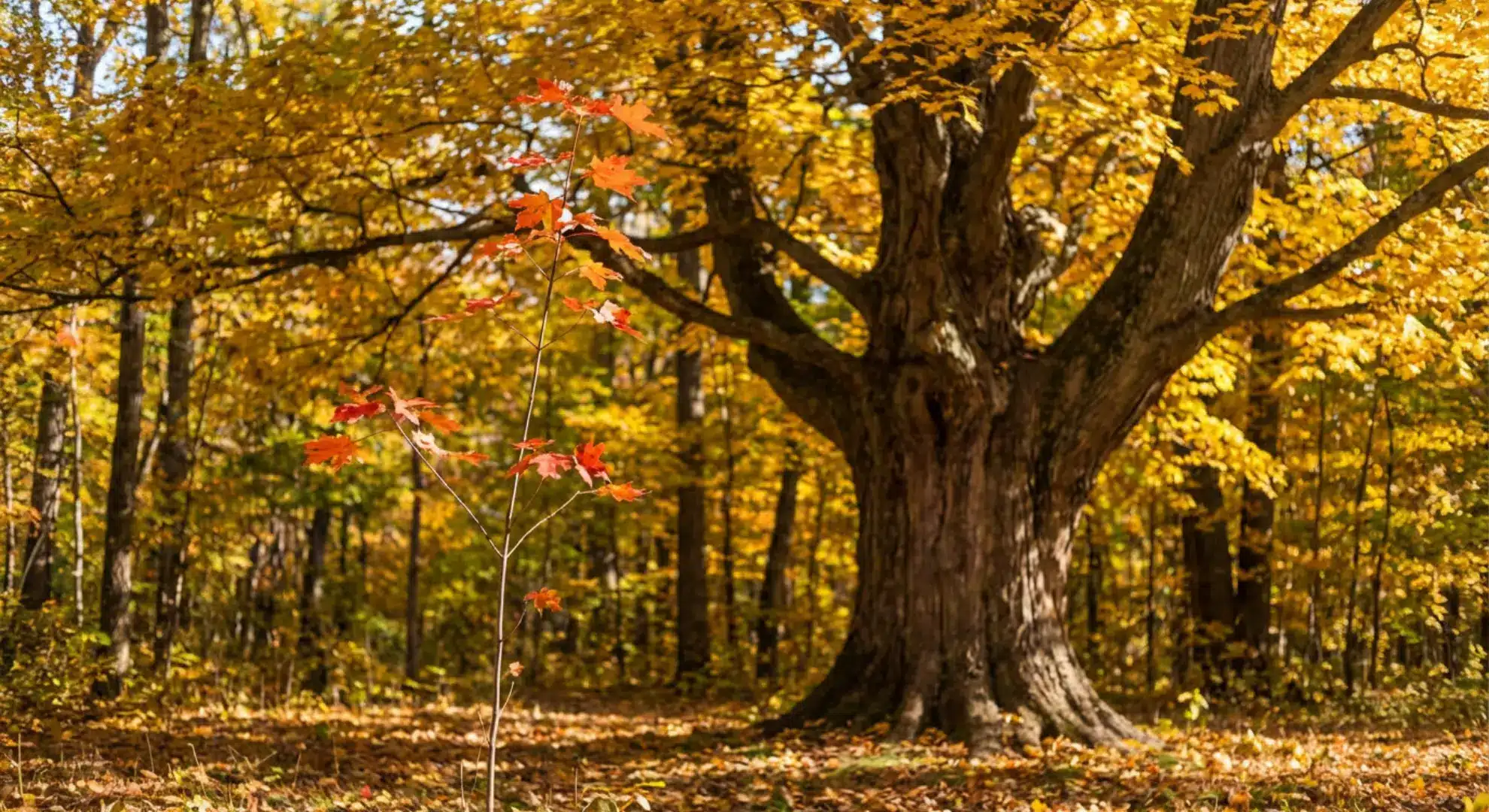
Tree age dramatically changes your pruning priorities and the tree’s capacity to recover from cuts. What works for a sapling can harm an established specimen.
Shaping young maples:
- The first 5-7 years establish the tree’s permanent structure; this is your critical intervention window
- Create a strong central leader by removing competing leaders early
- Develop well-spaced scaffold branches at 12-18 inch vertical intervals
- Remove narrow branch angles (less than 45 degrees) that create weak attachments
- Young trees tolerate more aggressive pruning, up to 25% of the canopy annually
- Focus on prevention rather than correction; problems fixed early stay fixed
Think of pruning young maples as an investment; the work you do now determines the tree’s form for its entire lifespan.
Maintaining established trees:
- Mature maples need minimal pruning once properly structured
- Limit interventions to deadwood removal and hazard mitigation
- Thin overly dense areas for light and air penetration
- Remove no more than 15% of a mature tree’s canopy in any single year
- Large cuts (over 4 inches) on old maples heal slowly and create decay entry points
Once a maple reaches maturity, your role shifts from shaping to maintaining what’s already been established.
Age-specific considerations:
- Young maples recover quickly and compartmentalize wounds efficiently
- Mature trees have thicker bark protection but slower wound closure
- Trees over 40 years old should receive only essential pruning due to reduced growth rates
- Wounds on mature maples may never fully close, increasing structural decay risk
- Younger trees can handle corrective pruning; older trees benefit most from preventive maintenance
The pruning you can get away with on a 5-year-old maple might seriously harm a 50-year-old tree, even of the same variety.
Regional Considerations for Maple Pruning
Your local climate dictates when your maples enter and exit dormancy, shifting the safe pruning windows by several weeks. What works in Minnesota won’t align with Georgia’s growing season.
| Region | Late Winter Pruning Window | Mid-Summer Pruning Window | Key Considerations |
|---|---|---|---|
| Northern (Zones 3-5) | Late February through mid-March | Mid-July through late August | An extended dormancy period provides a wider winter pruning window; watch for late spring frosts after pruning |
| Midwest (Zones 5-6) | Mid-February through early March | Late July through mid-August | Variable spring weather, wait for consistent temperatures below 40°F at night before pruning |
| Northeast (Zones 4-6) | Late February through early March | Late July through early August | Humid summers increase disease risk; prioritize winter pruning over summer cuts |
| Southern (Zones 7-9) | Early to mid-February only | Late June through July | Shorter dormancy period—prune early before warm spells trigger bud swell; summer heat stress limits mid-summer pruning safety |
| Pacific Northwest (Zones 7-9) | Late February through early March | July through early August | Mild winters mean maples never fully dormant; watch individual trees for bud activity rather than calendar dates |
| Mountain West (Zones 4-6) | March through early April | Mid-July through August | High altitude extends dormancy; late spring snowstorms can damage fresh pruning cuts |
Always monitor your specific tree’s bud activity rather than relying solely on calendar dates—microclimates within your yard can shift timing by a week or more.
Common Pruning Mistakes to Avoid
Even well-intentioned pruning can harm your maple if you fall into these common traps. Recognizing these mistakes before you make them saves your tree unnecessary stress and potential long-term damage.
- Pruning during spring sap flow: Cutting between March and May causes excessive bleeding that depletes energy reserves and invites disease, even if the weather seems perfect for outdoor work
- Removing too much at once: Taking off more than 25% of the canopy in a single session shocks the tree and triggers stress responses like excessive water sprout growth
- Making flush cuts against the trunk: Cutting into the branch collar removes the tree’s natural protective barrier, slowing healing and increasing decay risk
- Leaving stubs instead of clean cuts: Stubs can’t compartmentalize properly and become entry points for rot, insects, and disease
- Using dull or dirty tools: Ragged cuts from dull blades heal slowly, and contaminated tools spread disease between cuts and trees
- Topping or heading back main leaders: Severe cuts to main branches destroy the tree’s natural form and create weak, bushy regrowth prone to breaking
- Applying wound sealant or paint: Sealants trap moisture against the wound and actually slow the tree’s natural compartmentalization process
Most of these mistakes stem from treating maples like they’re generic trees—their unique sap flow and healing patterns demand more specific care than other species.
Conclusion
I stopped guessing about pruning timing once I understood that maple sap cycles actually dictate success.
The clarity changed everything: late winter and mid-summer became non-negotiable windows rather than vague suggestions. You now have the specific timing for your variety, the techniques that protect rather than harm, and the regional adjustments that account for your climate.
When to prune maple trees comes down to working alongside their natural biology instead of forcing cuts whenever it’s convenient. Wait for those dormant periods, avoid spring bleeding at all costs, and your trees respond with healthy growth instead of stress.
The patience pays off in a stronger structure and better vigor. Browse other tree care guides on the website for more practical insights that keep your landscape thriving without the guesswork!