Ranunculus bloom in spring, typically from March through May, though their exact timing depends on where you live and when you plant them.
Those layers of ruffled petals in butter yellow, blush pink, and deep burgundy start opening when winter finally loosens its grip.
Your climate zone plays a huge role in when these beauties decide to show up.
Plant them in the fall where winters are mild, and you’ll see blooms by early spring. In colder regions, spring planting means summer flowers instead.
We’ll walk through the bloom windows for different climates and how your care routine influences their schedule.
Getting to Know Your Ranunculus
Ranunculus are those show-stopping spring bloomers with impossibly layered petals that look almost unreal. They grow from corms, which are basically underground storage units packed with energy.
Think of corms like little bulbs with a mission. Once planted, they wake up, send out roots, and start building foliage before channeling all that stored energy into flowers.
The healthier and plumper your corms, the more abundant your blooms will be.
These plants prefer cool growing conditions and actually do their best work when temperatures hover between 40 and 60 degrees.
That’s why timing matters so much for getting those dreamy, Pinterest-worthy flowers.
When Ranunculus Put on Their Show?
Ranunculus typically bloom from March through May, though this window shifts based on your location and planting schedule.
Once they start flowering, you can expect blooms to last anywhere from four to seven weeks if conditions stay cool.
Peak bloom is when multiple stems open at once, creating that lush, overflowing look that makes flower farmers swoon.
Each individual flower can last up to a week in the garden, sometimes longer if temperatures stay mild.
The cooler your spring, the longer you’ll enjoy the show. When heat arrives, and temperatures climb past 70 degrees, ranunculus start winding down their performance.
When Do Ranunculus Bloom by Region?
Your growing zone makes all the difference in bloom timing. Where you live determines when to plant and when those first buds will open.
Here’s how Ranunculus performs across different USDA hardiness zones.
1. Warm Climates (USDA Zones 8–10)
Plant your corms in fall, around October or November, and expect blooms from late January through March. Mild winters allow ranunculus establish strong roots without going dormant.
They grow slowly through the cool months and hit their stride when early spring arrives. This timing gives you the longest bloom season and the most prolific flowers.
2. Mild/Temperate Climates (Zones 6–7)
Late winter or early spring planting works best here, usually February through early April. Your ranunculus will bloom from late April into June.
These zones offer enough winter chill without the harsh freezes that damage corms. Plant as soon as the soil can be worked and temperatures stay consistently above freezing for gorgeous mid-spring color.
3. Cold Climates (Zones 3–5)
Wait until after your last frost date to plant, typically late April or May. Blooms arrive in late June through July.
Ranunculus struggle with extreme cold, so spring planting is your only option. The shorter growing season means fewer blooms, but they’re still worth growing as a special summer treat when most spring bulbs have finished.
How Does Planting Time Affect Blooming?
The date you tuck those corms into the ground sets the entire bloom schedule in motion. Planting decisions ripple through every stage of growth.
- Fall planting gives corms months to develop robust root systems, resulting in earlier and more abundant spring blooms compared to spring-planted corms.
- Spring planting works for cold climates but means a shorter growing window, often producing fewer stems and later summer flowers.
- Planting depth matters less for timing than soil temperature; corms planted in cooler soil (around 50 degrees) establish better than those in warm ground.
- Early planting allows more time for foliage development before flowering, which directly translates to stronger stems and bigger blooms.
Getting your timing right means working with your climate instead of against it. Plant when conditions favor root growth, and your ranunculus will reward you.
Ranunculus Corms and Bloom Timing
Corms are the powerhouse behind every ranunculus bloom. These dried, octopus-like structures store all the nutrients needed for flowering.
Soaking them for a few hours before planting helps them hydrate and wake up faster, which can shave a week or two off your wait time for blooms.
Larger, plumper corms naturally produce more stems and bigger flowers because they have more stored energy. Shriveled or undersized corms might bloom, but expect fewer flowers and weaker stems.
Investing in quality corms from reputable sources makes a noticeable difference in both bloom quantity and timing.
Environmental Factors That Influence Bloom Time
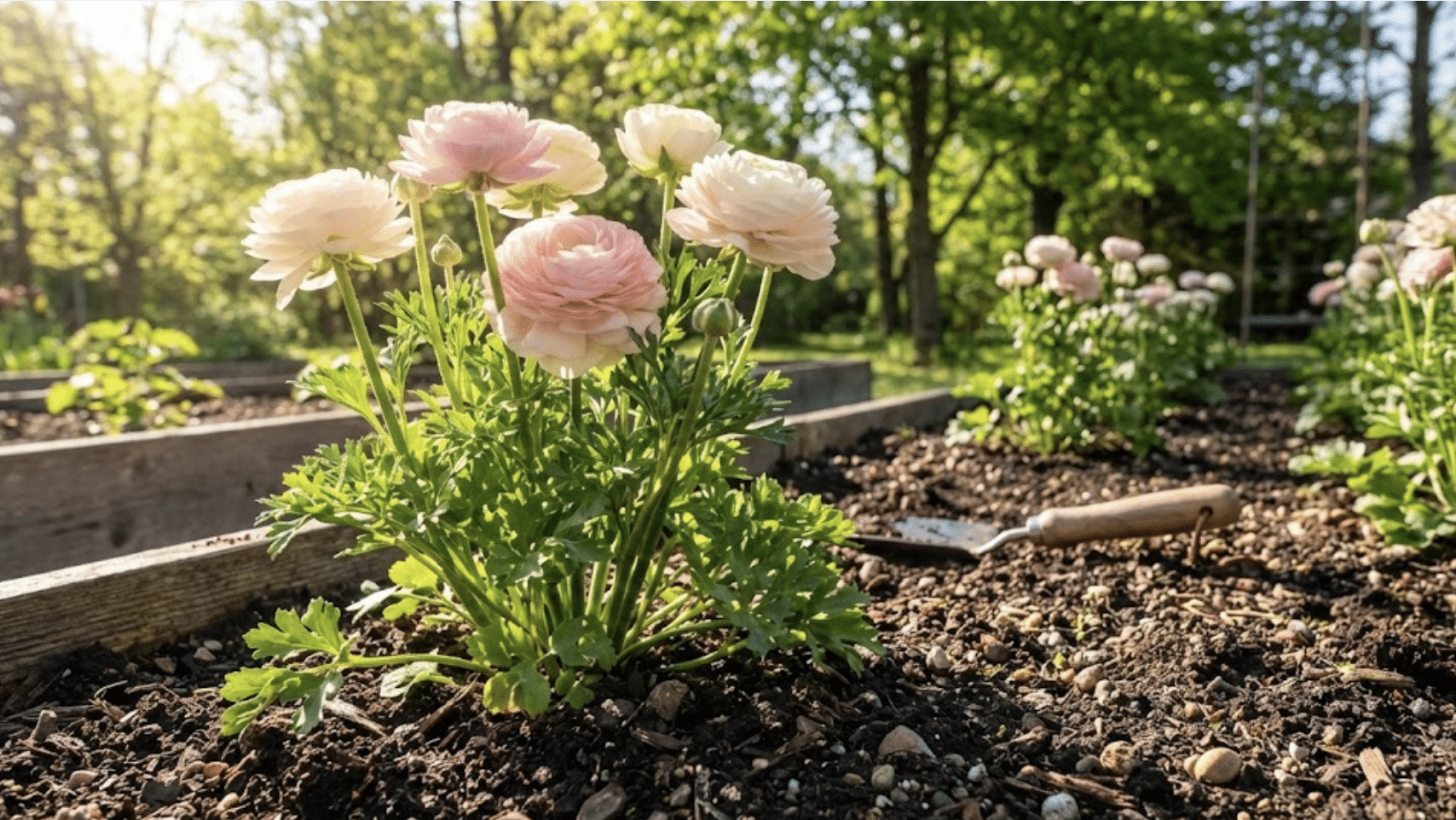
Ranunculus are surprisingly particular about their growing conditions. Get these factors right, and blooms arrive on schedule.
Miss the mark, and you’ll wait longer or see fewer flowers.
1. Temperature
Ranunculus forms buds best when daytime temperatures stay between 50 and 65 degrees. They thrive in cool spring weather and actually sulk when it gets hot.
Once temperatures consistently hit the mid-70s or higher, blooming slows down dramatically and flowers fade faster. Heat stress can cut your bloom window in half, which is why timing your planting for cool weather matters so much.
2. Sunlight
Full sun produces the most blooms and strongest stems, though ranunculus appreciate some afternoon shade in warmer climates. Six hours of direct sunlight is ideal.
Partial shade won’t kill your plants, but expect fewer flowers and slightly delayed blooming. Too much shade leads to leggy growth and sparse flowering as plants stretch toward light instead of putting energy into buds.
3. Soil & Drainage
Well-draining soil is non-negotiable for ranunculus corms. These plants despise soggy conditions, which cause corms to rot before they ever bloom.
Heavy clay or compacted soil holds too much moisture and suffocates developing roots. Poor drainage doesn’t just delay blooms; it often means no blooms at all. Amend your soil with compost or plant in raised beds.
How Long Do Ranunculus Flowers Last?
Each ranunculus bloom lasts about 5 to 7 days in the garden, sometimes up to ten if the weather stays cool.
A single plant will produce multiple stems over several weeks, giving you a total bloom period of 4 to 7 weeks. Cooler temperatures stretch this window, while heat shortens it considerably.
Deadheading spent flowers encourages plants to keep producing new buds instead of setting seed.
Snip off faded blooms regularly, and you’ll notice fresh stems appearing for weeks. This simple habit can extend your overall bloom season and keep your garden looking its absolute best throughout spring.
Growing Ranunculus for Cut Flowers
Ranunculus are a flower farmer’s dream, blooming prolifically from late winter through spring, depending on your zone.
For cutting gardens, harvest when buds show color but haven’t fully opened yet. This marshmallow stage means petals are just starting to unfurl.
Flowers cut at this point last 7 to 12 days in a vase, much longer than fully open blooms.
Early morning harvesting when stems are most hydrated gives the best vase life. The cool temperatures that encourage abundant garden blooms also mean stronger, longer-lasting cut flowers.
Plant extra corms specifically for cutting without guilt.
Common Blooming Problems (and Fixes)
Sometimes, ranunculus don’t perform as expected, leaving you staring at green leaves instead of gorgeous blooms. Most issues trace back to planting conditions or care missteps that are fixable.
Problem 1: Ranunculus Not Blooming at All
Fix: Check your corms. Rotted or damaged corms won’t flower. Poor drainage is usually the culprit, causing corms to die before they establish. Make sure the soil drains well, and the corms are healthy at planting.
Problem 2: Lots of Leaves But No Flowers
Fix: Excess nitrogen promotes leafy growth over buds. Ranunculus needs chill time and cool temperatures to bloom. If planted late or if the weather warms quickly, they’ll produce foliage but not bloom.
Problem 3: Short Bloom Period
Fix: Heat is your enemy here. When temperatures spike above 75 degrees, ranunculus rush through their bloom cycle and fade fast. Plant earlier next season to catch more cool weather, or provide afternoon shade to extend the show.
Problem 4: Bud Drop or Weak Stems
Fix: Inconsistent watering causes bud drop, while weak stems point to insufficient sunlight or overcrowding. Space corms 6 inches apart and ensure they get at least 6 hours of direct sun for strong, productive plants.
Growing Ranunculus in Containers
Container-grown ranunculus bloom on the same schedule as garden-planted ones, but pots give you control over conditions.
Use containers at least 10 to 12 inches deep with drainage holes, as ranunculus need room for roots and hate sitting in water.
The advantage? You can move pots to catch morning sun and afternoon shade, protecting blooms from heat that would shorten their lifespan. Containers also let cold-climate gardeners bring plants indoors during unexpected frosts.
Just remember that pots dry out faster than garden beds, so consistent watering becomes even more critical for steady blooming.
Final Thoughts
Knowing when ranunculus bloom takes the guesswork out of planning your garden. If you’re in a mild zone, fall planting brings early spring flowers.
Cold-climate gardeners can still enjoy summer blooms with spring planting. Timing is everything for those dreamy, layered petals.
Pay attention to your climate, give corms what they need, and those butter-soft flowers will arrive right on schedule.
The wait is always worth it when your garden fills with blooms that look straight out of a painting.
Have questions about getting your ranunculus to bloom their best? Drop a comment below and let’s chat about what’s working in your garden.