Choosing the right shower size is one of those decisions that shapes how your entire bathroom feels, not just how it functions.
A shower that fits your space well makes mornings easier, routines more comfortable, and the room itself looks more intentional.
Most homes follow a set of standard dimensions, but the “right” size really comes down to your layout, your lifestyle, and local building codes.
Stick around, because we’re walking you through every size, style, and planning tip worth knowing.
What is the Standard Shower Size?
When it comes to bathroom planning, having a reliable size to work around makes everything easier. Most residential showers follow a few tried-and-true dimensions that balance comfort, space efficiency, and code compliance.
Here is a quick look at the most common shower sizes you will come across:
| Shower Type | Standard Size | Best For |
|---|---|---|
| Small Shower | 32″ × 32″ | Tight spaces, guest baths |
| Standard Shower | 36″ × 36″ | Most homes, everyday use |
| Tub-Shower Combo | 60″ × 30″ | Family bathrooms |
| Walk-in Shower | 48″ × 36″ or larger | Primary baths, accessibility needs |
The 36×36 inch size remains the most popular because it clears most building code minimums, fits standard layouts without crowding the room, and feels comfortable for daily use without demanding extra square footage.
Minimum Shower Size Requirements
Building codes exist for good reason, and the International Residential Code (IRC) sets the baseline most contractors follow.
According to IRC guidelines, a shower must have a minimum interior space of 30″ × 30″ and cover at least 900 square inches of floor area. Going smaller than this creates real problems beyond just feeling tight:
Going smaller than this creates real problems beyond just feeling tight:
- Comfort: Restricted movement makes daily routines frustrating
- Safety: Limited space increases the risk of slips and falls
- Plumbing clearance: Fixtures need adequate room to function correctly
- Accessibility: Tighter showers can be difficult to navigate for elderly or differently abled users
Standard Walk-in Shower Sizes
Walk-in showers have become a staple in modern bathroom design, and for good reason. They open up the space visually, remove the barrier of a tub, and scale beautifully across bathroom sizes.
1. Small Walk-in Shower
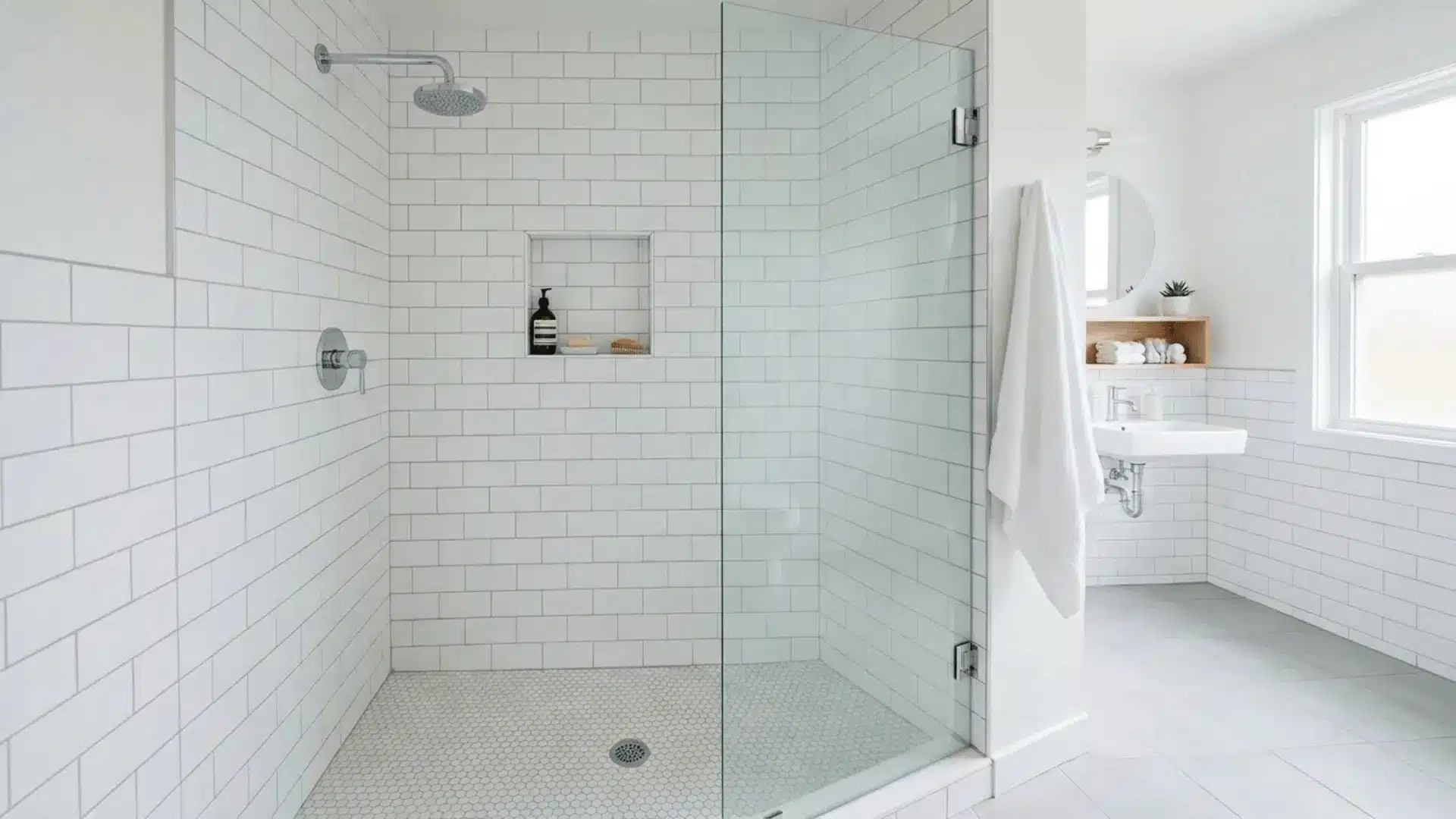
Size: 36″ × 36″
A practical starting point for compact bathrooms, this size technically qualifies as a walk-in while keeping the footprint tight.
It works well in guest baths or secondary bathrooms where space is limited, but comfort is still a priority. Not ideal for larger builds, but a smart solution when every inch counts.
2. Medium Walk-in Shower
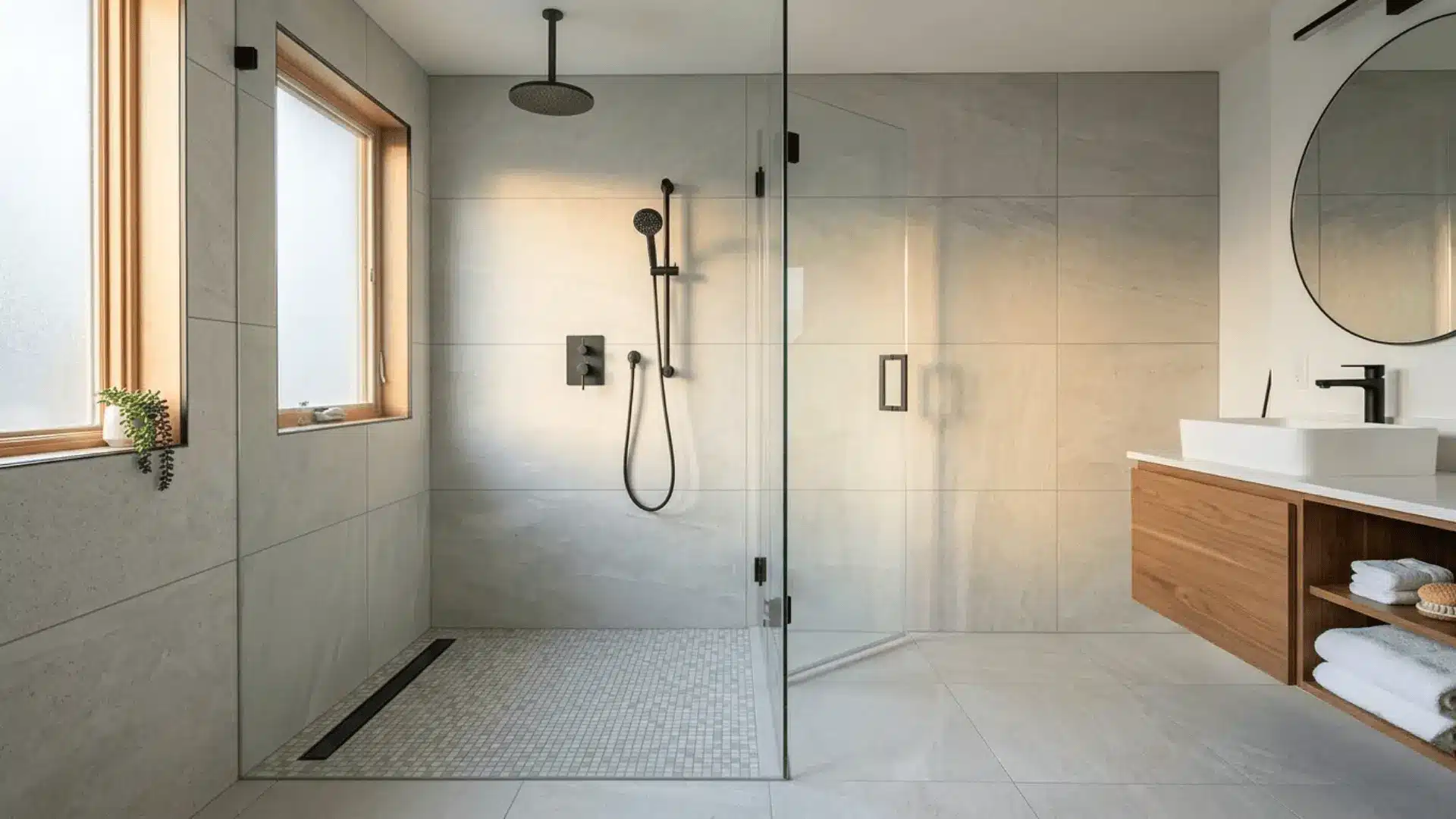
Size: 48″ × 36″
The most popular choice for everyday primary bathrooms, this size strikes a comfortable balance between space and efficiency.
You get enough room to move without feeling confined, and it fits neatly into most standard bathroom layouts without requiring a major floor plan overhaul.
3. Large Walk-in Shower
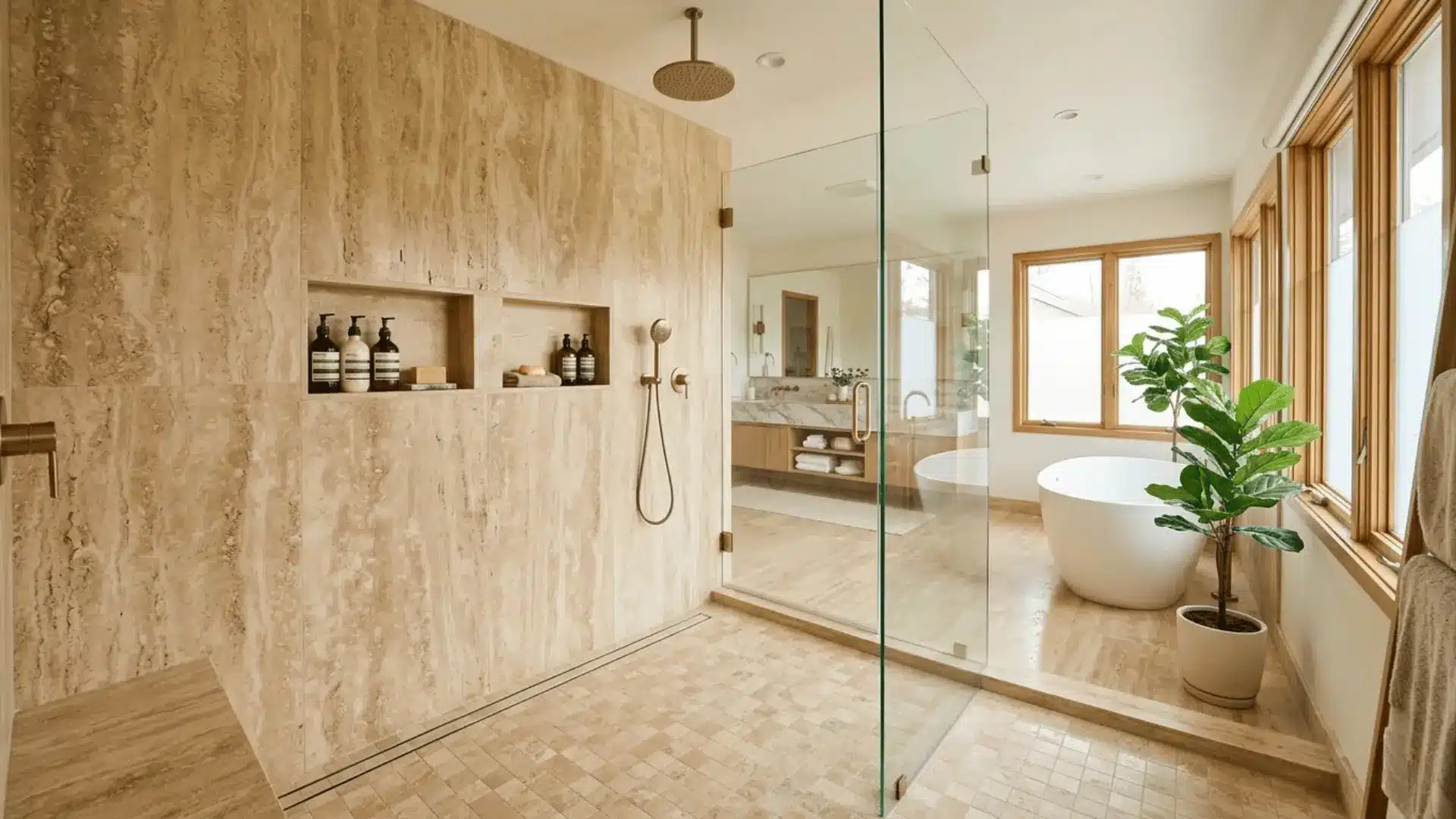
Size: 60″ × 36″ or larger
Designed for those who want a more generous showering experience, this size allows for additional fixtures like a handheld sprayer or niche shelving without things feeling cramped.
It suits wider bathrooms well and is a popular upgrade in primary suite renovations.
4. Luxury Walk-in Shower
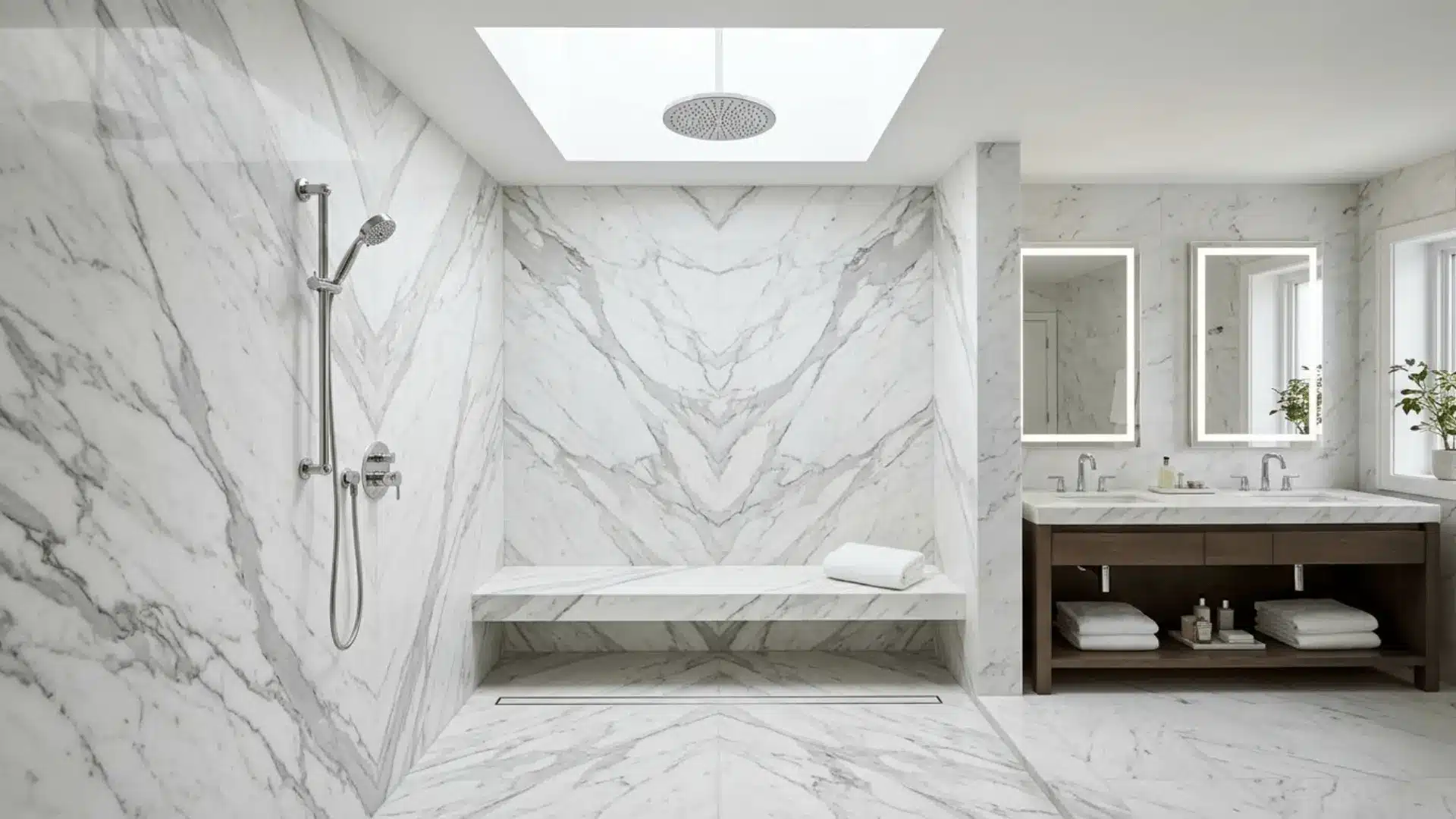
Size: 72″ × 48″ or bigger
This is where function meets indulgence. With enough room for dual showerheads, bench seating, and custom tile work, luxury walk-in showers are designed to feel like a personal retreat.
They offer the highest level of accessibility and design flexibility, making them a top choice for high-end primary bathrooms.
Standard Shower Sizes by Shower Type
Not all showers are built the same, and the right size really depends on the type of shower you are working with.
Here is a breakdown of standard dimensions across the most common shower types:
| Shower Type | Common Sizes | Best For |
|---|---|---|
| Square Shower Stall | 32″×32″, 36″×36″, 42″×42″ | Compact and symmetrical layouts |
| Rectangular Shower | 36″×48″, 36″×60″, 32″×48″ | Narrow bathrooms, more floor space |
| Corner Shower | 36″×36″, 38″×38″, 42″×42″ | Small bathrooms, space-saving design |
| Tub-Shower Combination | 60″×30″ (standard) | Family bathrooms, versatile use |
Each type serves a different layout need, so the best choice comes down to your available floor space, how the room flows, and who will be using the shower daily.
Shower Size Planning for Different Bathroom Layouts
Getting the shower size right starts with understanding your bathroom layout.
The available floor space shapes everything, from the type of shower that fits to how comfortably the rest of the room functions around it.
1. Small Bathroom
A 32″×32″ corner shower with a sliding glass door is your best ally in a tight space. It tucks neatly into a corner, keeps the floor plan open, and the sliding door eliminates the swing clearance problem entirely.
A well-planned small shower can still feel intentional and stylish without making the room feel like an afterthought.
2. Medium Bathroom
Sizes like 36″×48″ or 48″×36″ give you noticeably more breathing room without overwhelming the layout.
This is where you can start thinking about simple upgrades like a built-in niche or a single bench without things feeling overcrowded. Medium bathrooms hit a sweet spot between practicality and comfort that homeowners appreciate.
3. Large Bathroom
With generous square footage, options open up considerably. Walk-in showers, double showers, and curbless designs all become viable here, each bringing a different feel to the space.
Curbless designs in particular add a seamless, spa-like quality while also improving accessibility, making them a popular choice for primary suite upgrades and aging-in-place planning.
Walk-in Shower Layout Considerations
Sizing your walk-in shower is only half the equation. How you plan the entry, door style, and drain placement shapes how functional and polished the final result actually feels.
Door vs. Doorless Design
Both approaches have genuine merit, and the right choice depends on your layout, maintenance preference, and overall aesthetic goals:
| Feature | Door (Frameless/Sliding) | Doorless (Open Walk-in) |
|---|---|---|
| Water containment | Better containment | Requires strategic drain placement |
| Maintenance | Glass cleaning required | Easier to clean overall |
| Visual appeal | Sleek, defined look | Open, spa-like feel |
| Space requirement | Works in tighter spaces | Needs more square footage |
| Accessibility | Sliding doors work well | Best for mobility needs |
| Best for | Compact to medium bathrooms | Large and luxurious bathrooms |
Drain Placement
Drain placement directly affects water flow, tile layout, and the overall look of your shower floor. A center drain is the traditional choice and works well across most shower types, directing water efficiently from all sides.
A linear drain sits along one edge or wall, suits curbless and modern designs beautifully, and allows for single-slope flooring that feels cleaner and more contemporary.
Standard Shower Door Sizes
Shower door sizing quietly influences how the entire bathroom layout comes together.
Here is a quick reference for standard door widths by type:
| Door Type | Typical Width | Best For |
|---|---|---|
| Pivot Door | 24–30 inches | Standard enclosures, defined entry points |
| Sliding Door | 48–60 inches | Tighter spaces, no swing clearance needed |
| Frameless Door | 22–36 inches | Modern aesthetics, open and seamless look |
A pivot door needs swing clearance in front, which eats into smaller bathroom floors. Sliding doors sidestep that issue entirely, and frameless doors require precise wall-to-wall measurements to fit and seal correctly.
Accessibility and ADA Shower Size Guidelines
A well-designed shower works for everyone, and ADA guidelines exist to make sure of that.
Whether designing for current needs or planning ahead, these standards are worth building into any layout from the start.
ADA-Compliant Shower Dimensions
The minimum ADA-compliant shower size is 36″×36″, though a 60″×30″ configuration is required for full wheelchair accessibility.
The larger dimension allows enough room for a wheelchair to maneuver and for a caregiver to assist comfortably.
Designing a forever home or an aging-in-place bathroom means defaulting to the larger size from the start is always the smarter call.
Accessibility Features
Beyond dimensions, the right features make a shower genuinely safe and comfortable for all users.
Key additions to consider:
- Grab Bars: Installed 33″–36″ above the floor for secure support.
- Non-Slip Flooring: A wet COF rating of 0.5 or higher is recommended.
- Built-in Seating: A fold-down or fixed bench reduces fatigue and fall risk.
- Curbless Entry: Eliminates tripping hazards and supports wheelchair access.
- Handheld Showerhead: Allows flexible use for seated or limited-mobility users.
Factors That Affect Shower Size Selection
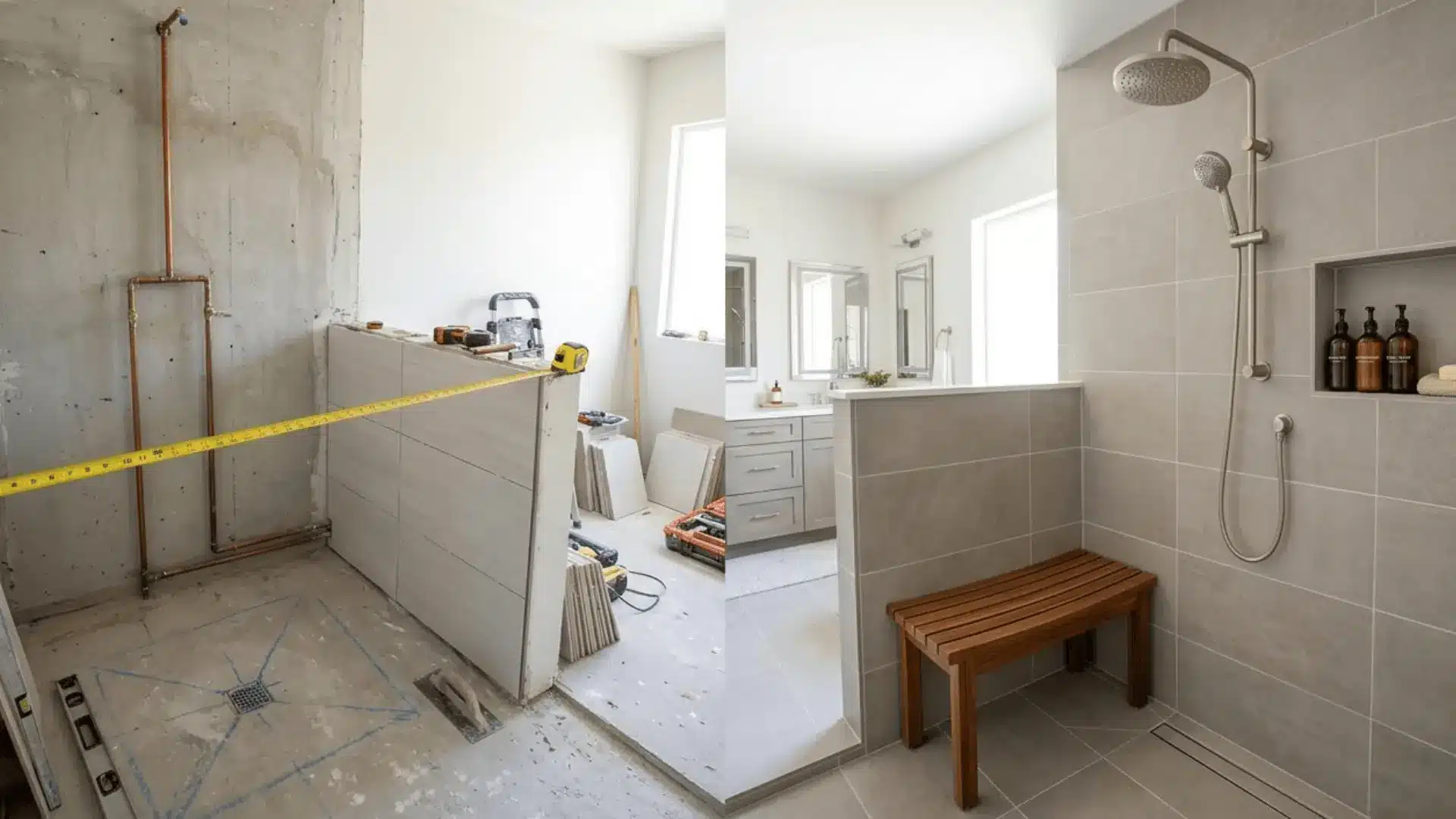
Shower size comes down to more than just available floor space. Several practical factors shape what will actually work best:
- Bathroom Size: Compact bathrooms naturally call for space-saving shower layouts to keep the room functional.
- Plumbing Layout: Existing plumbing placement matters since moving pipes adds significant renovation costs.
- Shower Features: Benches, multiple showerheads, and storage niches all require additional square footage to work comfortably.
- Personal Comfort: Larger showers allow more freedom of movement, which makes daily routines noticeably more comfortable.
- Accessibility Needs: Mobility requirements or aging-in-place planning often push sizing beyond standard minimums.
Thinking through these factors early in the planning process makes it much easier to land on a size that works practically, feels comfortable, and holds up well over time.
Tips for Choosing the Right Shower Size
A few mindful decisions during the planning stage can make all the difference in how the finished shower looks and functions:
- Measure Carefully: Account for finished wall surfaces, not just the rough frame dimensions.
- Plan for Accessibility: Building in extra space now avoids costly modifications down the line.
- Mind the Clearance: Fixtures, doors, and walking space all need breathing room to function well.
- Balance Comfort with Space: A shower that fits the room proportionally always feels better than one that was squeezed in.
Getting the size right from the start means fewer compromises later and a bathroom that genuinely works for the long haul.
The Bottom Line
Nailing the standard shower size for a bathroom comes down to knowing the space, understanding the options, and planning with both comfort and function in mind.
From compact corner showers to spacious walk-in designs, every choice covered in this guide brings a different set of benefits to the table.
Take the measurements, weigh the layout, and let the space guide the decision.
Got questions about planning a shower that actually works for the bathroom? Drop them in the comments below, the more specific, the better!