Wall-mounted shelves are a way to make the most of your space. If you have been staring at walls or tripping over floor-standing furniture that takes up a lot of room, wall-mounted shelves might be the best thing you can do for your home. They are useful, look great, and can last for a long time if you choose the right materials.
This guide will tell you everything you need to know about wall-mounted shelves. We will talk about how to pick the right type, how much weight they can hold, how to put them up correctly and how to make them look great in every room of your house. We will also talk about something that’s very important to us: making sure the things we buy do not hurt the earth. The wall-mounted shelves you buy today should not end up in a landfill in a year.
What Are Wall Mounted Shelves?
Wall-mounted shelves are shelving units that attach directly to your wall rather than resting on the floor. They create surface area for books, plants, kitchen essentials, art or anything in between without taking up any square footage.
Unlike freestanding bookcases or storage units, wall mounted shelves feel open and airy. The wall becomes part of the design. Done well they make a room look bigger, not more crowded.
There are two main types: floating shelves, where the hardware is hidden inside the shelf itself creating a clean, hovering look, and bracket-mounted shelves, where visible steel or iron brackets support the shelf from below. Both are wall mounted. The difference is aesthetic and structural — more on that below.
Why Wall-Mounted Shelves Are Worth It: The Real Benefits
- They free up your floor – Moving storage off the floor and onto the wall is one of the ways to make a room feel more spacious and livable.
- They’re more versatile than you think – Most people imagine shelves for books. Wall-mounted shelves work beautifully in almost any room.
- They’re a design statement – A chosen shelf isn’t just storage. It shows you care about what’s on your walls as much as what’s in your rooms.
- Good ones are genuinely sustainable – When wall mounted shelves are made from hardwood and real steel they don’t warp, sag or fall apart after a few years.
- They add value to your home – Built-in or semipermanent wall shelving increases perceived home value.
Types of Wall Mounted Shelves: Which One Is Right for You?
Floating Shelves
Floating Shelves hide their mounting hardware inside a bracket or sleeve that installs into the wall then the shelf slides over it. The result is a shelf that appears to “float” with no support.
Bracket-Mounted Shelves
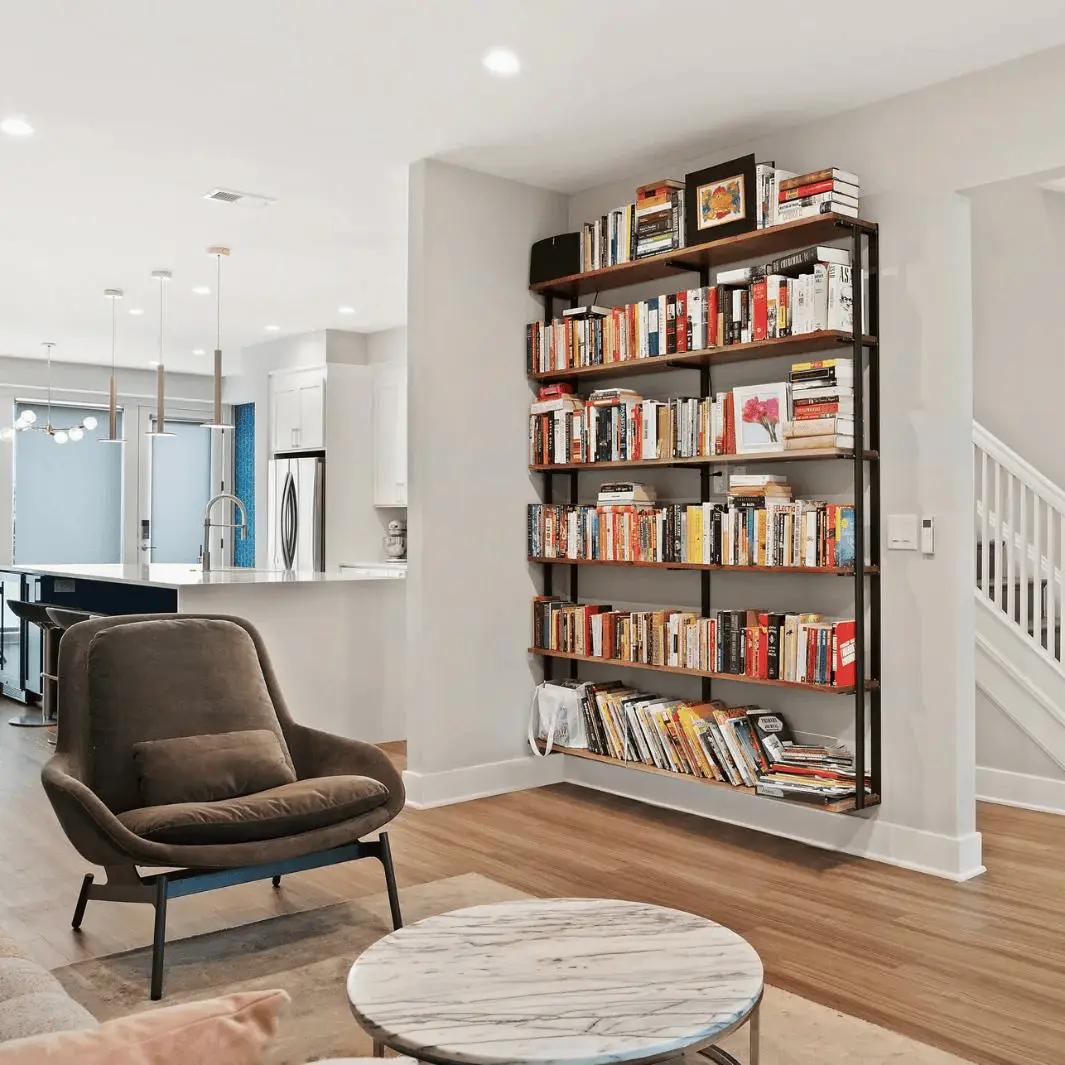
Bracket-mounted shelves use visible hardware — usually steel or iron brackets — to support solid wood or board shelves. The brackets mount to the wall, the shelf sits on top (or attaches to) the bracket.
Shelving Units (Multi-Shelf Systems)
Rather than individual shelves, multi-shelf wall mounted systems combine multiple shelves and brackets into a single cohesive unit.
Wall Mounted Desks with Shelving
A floating desk combined with wall-mounted shelves above or beside it creates a space-efficient home office footprint that takes up almost no floor space at all.
Materials: Why Solid Wood and Steel Last Longer (And Matter More)
This is where most buying guides stop at “wood looks nice.” Let’s go deeper.
Solid Hardwood vs. Engineered Wood
Engineered wood and particleboard absorb moisture, swell, and sag. They don’t hold screws well, which matters enormously in wall mounted applications.
Solid hardwood is different. Real wood such as black walnut, ash, white oak, and reclaimed pine, is dense, dimensionally stable, and strong across its entire cross-section, not just on a surface veneer. At reputable providers like Vault Furniture, every wall mounted shelf is made from solid hardwood.
American Steel vs. Cheap Metal Hardware
Most mass-market shelf brackets are made from thin stamped steel, pot metal, or poorly welded components. They look fine in photos and fail in real life.
Always choose brackets fabricated from solid American steel channel. The result is hardware that is structurally superior and genuinely good looking.
Weight Capacity: What Can Your Wall Mounted Shelves Actually Hold?
Weight capacity is one of the most misunderstood topics in shelving. Here’s what you actually need to know. Several factors affect weight capacity:
- The bracket itself – Cheap stamped-steel brackets start bending under 30–50 lbs total. Solid welded steel brackets are rated for far more.
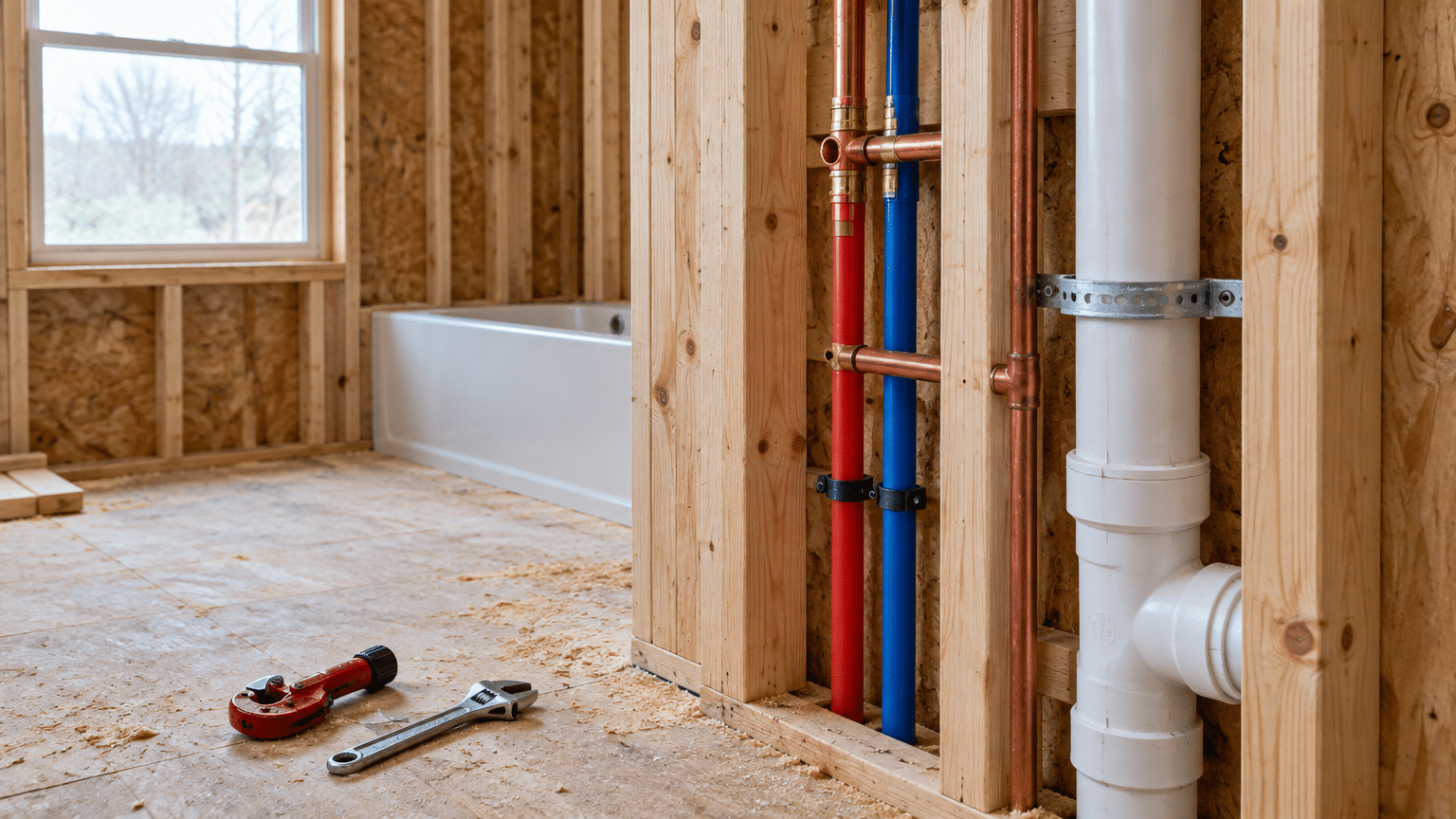
- The mounting method – Mounting into wall studs (the wooden framing inside your drywall, typically 16 inches apart) is always the strongest option.
- The shelf material – Solid hardwood is significantly stronger than MDF or particleboard at equivalent thicknesses.
- Additional brackets – Adding brackets reduces the span between support points and increases overall capacity.
How to Install Wall Mounted Shelves: A Practical Guide
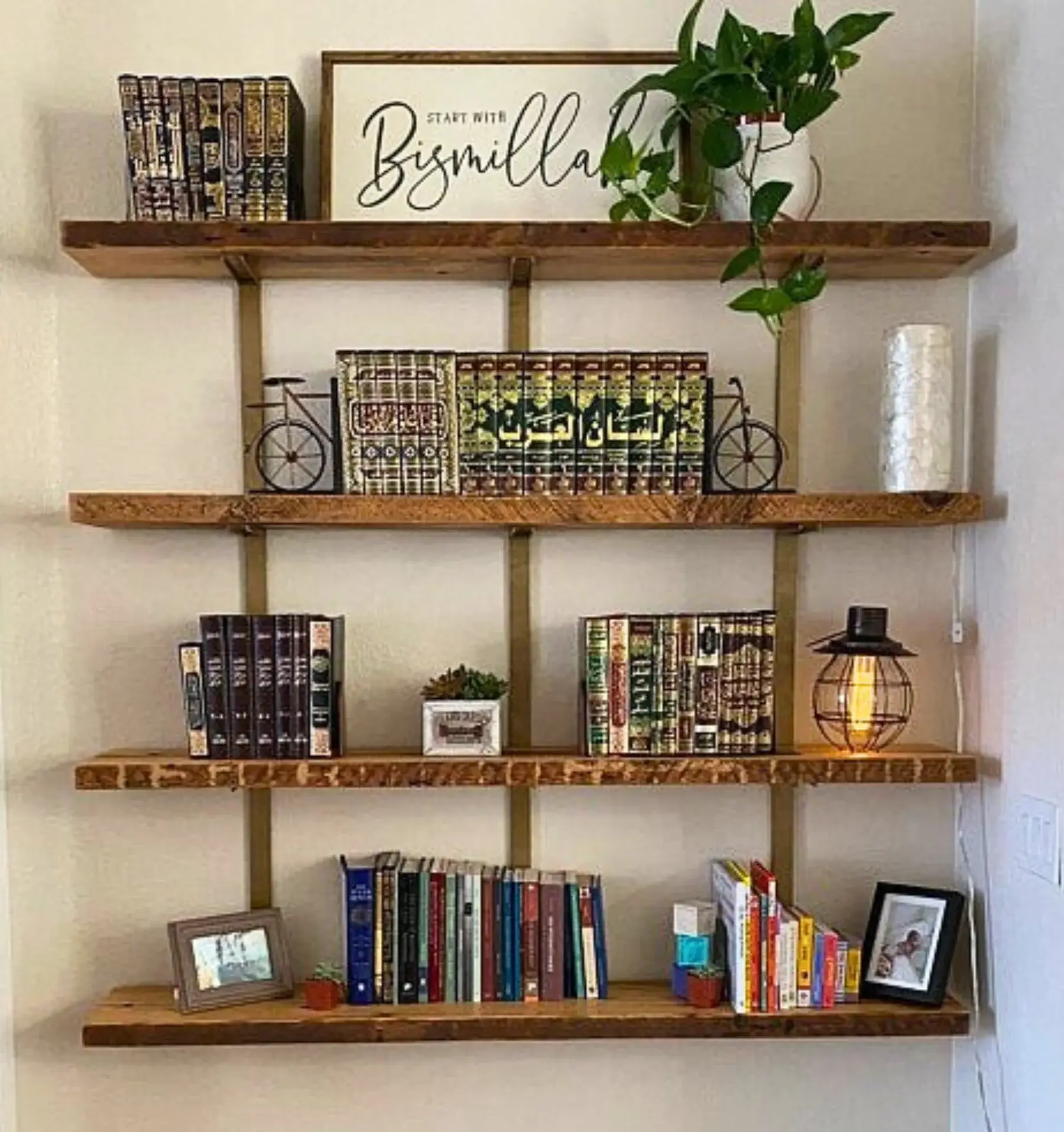
Installing wall-mounted shelves correctly is the most important thing you can do to ensure they’re safe and stay that way. Here’s how to do it right.
Step 1: Find Your Studs
Use a stud finder to locate the wooden framing inside your walls. Mark stud locations lightly with a pencil. In most American homes, studs are 16 inches apart. Whenever possible, mount your brackets into studs.
Step 2: Plan Your Layout
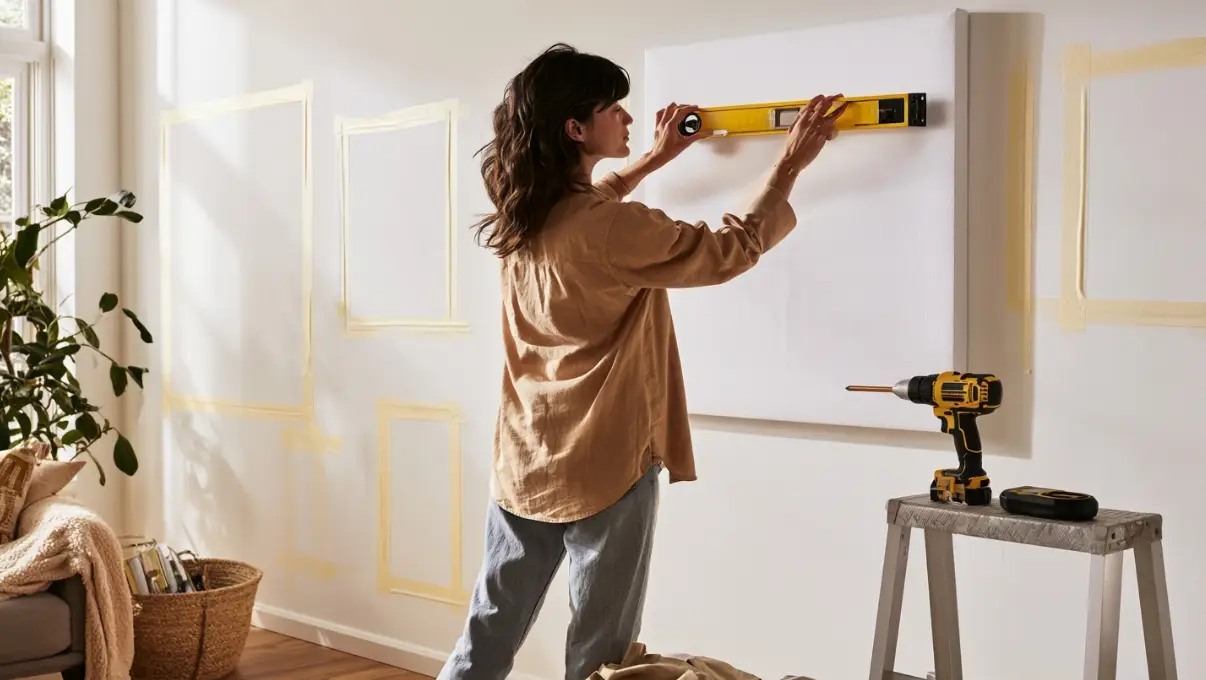
Decide where you want each shelf and mark the wall accordingly. Use a level — this is non-negotiable. Even slightly unlevel shelves will drive you crazy forever, and items will drift to one side.
Step 3: Mark Bracket Positions
Hold each bracket against the wall at the marked position and mark the mounting holes with a pencil. Double-check your level again before drilling.
Step 4: Drill and Mount
- If mounting into studs: drill pilot holes and drive lag screws or long wood screws (at least 2.5 inches into the stud) through the bracket mounting holes. Do not use drywall screws — they’re too brittle for load-bearing applications.
- If mounting into drywall only: drill holes sized for your toggle anchors, install the anchors per manufacturer instructions, then attach the brackets. Use anchors rated for at least 100 lbs each.
Step 5: Install Shelves
Our shelves are not pre-drilled, which means you can position brackets exactly where you want them — no limitations from pre-set hole patterns. Place the shelf on the mounted brackets and secure as needed.
Step 6: Level Check
Place a level on the installed shelf. If it’s not level, now is the time to adjust — before you load it up with books.
Styling Ideas: Wall Mounted Shelves in Every Room
Living Room
Books + objects (ceramics, candles, small plants, framed prints) Go with odd numbers — threes and fives are easier to read than twos. Allow for some negative space; a shelf overflowing reads as clutter, while an artful selection with room to spare has the appearance of curation.
Kitchen
Group your items by use (baking ingredients with baking, cooking oils close together) Large matching vessel — whether you use canisters, mason jars, or ceramic crocks, they should all be similar in appearance. Items you use regularly should remain more easily accessible while the less frequently used items do not.
Home Office
Do not place anything on the desk if it is what you do not use every day. Save upper shelves for books, reference materials and a few treasured objects that add personality to your space.
Bedroom
Keep bedroom shelves intentional and calm. Avoid overloading — this isn’t a storage closet. A few well-chosen objects, a plant, and some books make for a restful, considered look.
Entryway
Keep it functional. A tiny tray to keep your keys, a hook for bags and anything else that needs taking out with you when you’re in a hurry. One or two plants soften what can easily become purely functional.
Buying Guide: How to Choose the Right Wall Mounted Shelves
Here’s what to think through before you buy.
- Start with your use case – Heavy storage demands solid materials and heavy-duty brackets. Display-only applications can be more flexible.
- Measure twice – Shelves that are too deep crowd a room; shelves that are too shallow don’t hold what you need.
- Think about the finish – The finish of the mounted shelf not only improves the aesthetic but can also improve functionality of the whole setting.
- Match the wood to the room. Darker woods (walnut) make a statement and add richness. Lighter woods (ash, knotty alder) keep things open and relaxed.
Wrapping It Up
Wall-mounted shelves are one of the ways to add both storage and style to your home. Whether you’re organizing books, displaying décor or making use of a small space the right wall mounted shelves can make a noticeable difference, in both functionality and appearance.
When you are choosing shelves you should think about getting shelves made from quality materials, shelves that can hold a lot of weight and shelves that look nice in your space. If you take the time to pick shelves that’re really strong and put them up correctly your shelves will stay safe and be useful for a long time.
Before you decide on what kind of shelves you want you should talk to an expert mounted shelving designer to make sure your wall mounted shelves are just right.