Introduction
Temporary cooling needs have grown sharply across homes, offices, and industrial sites, and with that growth has come a surge in demand for flexible cooling solutions. Many businesses and homeowners fall into the same trap: they purchase expensive cooling equipment for a problem that only lasts a few weeks or months. The result is wasted capital, unused machines sitting in storage, and ongoing maintenance costs for equipment that rarely gets used again.
In many cases, choosing a portable AC rental makes more financial and operational sense than buying cooling equipment outright. Renting eliminates the upfront investment, reduces the burden of maintenance and storage, and gives you access to the right-sized equipment when you need it. In this guide, you’ll learn what air conditioner rentals involve, how renting compares to buying, and ten real-world situations where a rental unit can provide a practical cooling solution.
Understanding Air Conditioner Rentals
What Does It Mean to Rent an Air Conditioner?
Renting an air conditioner means bringing in temporary cooling equipment for a defined period rather than purchasing a permanent system. Rental terms can range from a single day to several months, and the equipment can be scaled up or down depending on the size of the space and the intensity of the heat load. Rentals are used across residential, commercial, and industrial settings, from a homeowner cooling a single room during an AC repair to a factory managing heat from heavy machinery.
Types of Cooling Equipment Available
Rental providers typically offer a range of equipment types to match different needs:
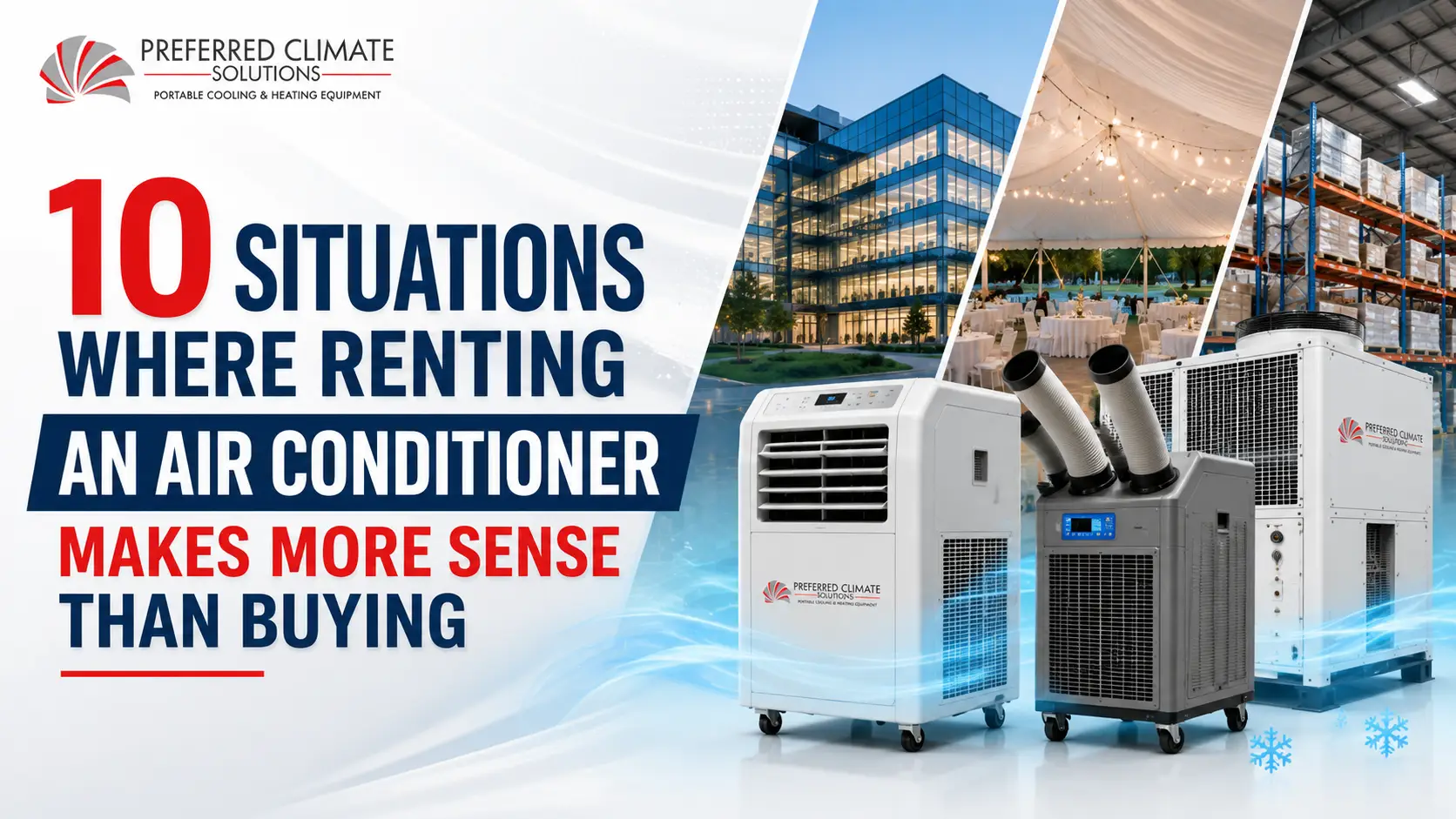
- Portable air conditioners – compact, mobile units ideal for offices, homes, and small commercial spaces
- Spot coolers – powerful units designed to cool a specific area or piece of equipment rather than an entire room
- Evaporative coolers – energy-efficient options suited for dry climates and open or semi-enclosed spaces
- Temporary HVAC systems – larger, ducted systems for whole-building cooling needs
- Air-cooled vs. water-cooled units – chosen based on available infrastructure, water access, and heat load
Buying vs. Renting an Air Conditioner: Which Is Better?
Choosing between buying and renting comes down to a handful of practical factors.
Upfront Costs: Buying requires a large capital outlay, while renting spreads the cost over the rental period with a much lower initial investment.
Maintenance Responsibilities: Owned units require the buyer to handle servicing, repairs, and filter changes. Rental units usually come with maintenance included.
Equipment Storage: Purchased AC units need to be stored somewhere when not in use. Rentals are simply returned once the job is done.
Installation Requirements: Rental providers often handle setup and installation, while owned systems may require separate contractors.
Repair Risks: If a purchased unit breaks down, the owner bears the repair cost and downtime. Rental companies typically provide replacement units quickly.
Flexibility and Scalability: Rentals can be scaled up or down based on changing needs, something a purchased system can’t easily do.
| Feature | Renting | Buying |
|---|---|---|
| Initial Cost | Low | High |
| Maintenance | Included | Owner Responsible |
| Emergency Availability | Yes | No |
| Storage | Not Needed | Required |
| Scalability | Easy | Limited |
| Best For | Temporary Needs | Permanent Use |
10 Situations Where Renting an Air Conditioner Makes More Sense Than Buying
1. Emergency AC System Failure
When a building’s primary cooling system breaks down unexpectedly, waiting weeks for repairs or a replacement purchase isn’t an option. Same-day emergency AC rental keeps operations running and prevents costly downtime while the permanent fix is arranged.
2. Construction Sites and Renovation Projects
Construction crews often work in unfinished spaces with no functioning climate control. Renting keeps workers safe and comfortable in the heat while also protecting sensitive equipment and materials from temperature damage.
3. Outdoor Events and Festivals
Weddings, corporate events, sporting events, and concerts frequently take place in tents or temporary structures that have no built-in cooling. Portable AC rental and spot cooler rental units are commonly brought in to keep guests comfortable without any permanent installation.
4. Industrial Equipment Producing Excess Heat
Manufacturing plants, warehouses, and production facilities often generate significant heat from machinery. Renting supplemental cooling equipment helps manage that heat without committing to a permanent, oversized HVAC system.
5. Server Rooms and Data Centers
Overheating in a server room can mean costly downtime or data loss. Rental cooling units provide a fast, supplemental option to maintain uptime, especially during scheduled maintenance or unexpected HVAC issues.
6. Commercial Buildings During HVAC Repairs
Office buildings, retail stores, hotels, schools, and hospitals can’t simply shut down while their HVAC systems are repaired. A spot cooler rental is often the ideal temporary solution, delivering targeted cooling to critical areas until the main system is back online.
7. Seasonal Cooling Requirements
Many businesses only need extra cooling during the summer months or peak workload periods. Renting avoids the cost of owning equipment that would otherwise sit idle for most of the year.
8. Temporary Office Spaces or Modular Buildings
Portable offices, mobile classrooms, temporary healthcare facilities, and pop-up stores all need reliable climate control, often for a limited timeframe. Rental units are built for exactly this kind of short-term, movable setup.
9. Disaster Recovery and Restoration Projects
Flood damage, fire restoration, and mold remediation projects often require powerful, fast-response cooling and drying equipment. Rentals allow restoration crews to bring in the right equipment immediately, which is also useful when working through insurance claims on tight timelines.
10. Testing Before Purchasing Permanent Equipment
Before committing to a permanent system, many businesses rent an air conditioner first to evaluate cooling capacity, determine the correct BTU requirements, and compare different systems in real conditions. This reduces the risk of an expensive buying mistake down the line.
Why Portable AC Rental Is a Smart Choice
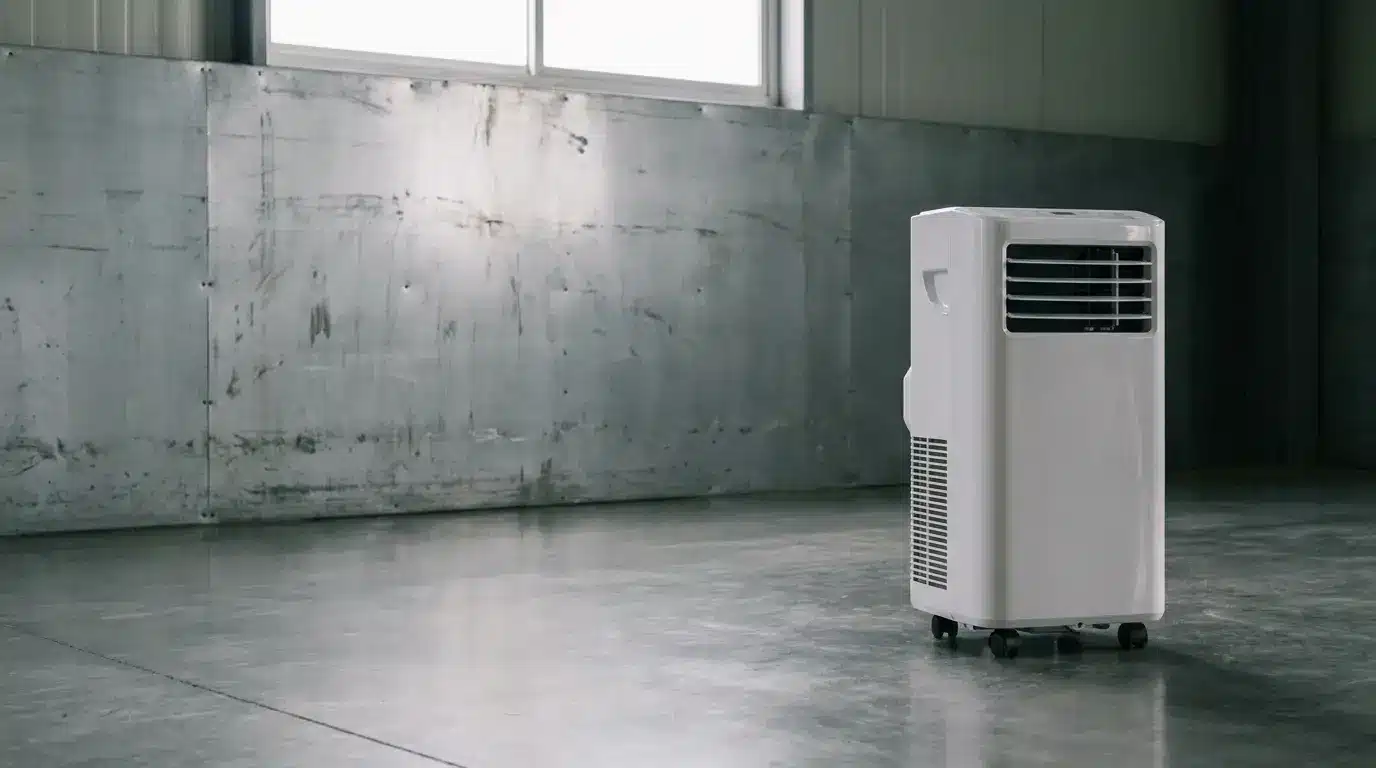
Portable AC rental options continue to grow in popularity because they combine speed with flexibility. Providers typically offer fast delivery and installation, so cooling can be up and running within hours rather than days. Rental terms are flexible, allowing customers to rent for a single day or several months. Because maintenance is handled by the rental provider, there are no unexpected repair costs. Many rental fleets also include professional equipment support and energy-efficient cooling options, giving businesses access to modern technology without the long-term commitment of ownership.
When Is Spot Cooler Rental the Better Option?
Spot cooler rental shines in situations where cooling an entire space isn’t necessary or practical. This includes cooling individual workstations, protecting sensitive equipment from overheating, supporting manufacturing facilities with localized hot spots, providing temporary server room cooling, and acting as emergency HVAC backup when the main system goes down. Because spot coolers target specific areas rather than an entire building, they’re often more efficient and cost-effective for these focused use cases.
How to Choose the Right Rental Air Conditioner
Selecting the right unit comes down to a few key considerations:
- Calculate Cooling Capacity (BTUs) based on room size and heat load
- Indoor vs. Outdoor Applications, since not all units are designed for outdoor use
- Electrical Requirements, including voltage and available power sources
- Airflow Considerations to ensure even cooling throughout the space
- Drainage and Ventilation Needs, particularly for portable and evaporative units
- Rental Duration, since some providers offer better rates for longer-term rentals
Industries That Frequently Rent Air Conditioners
A wide range of industries rely on temporary cooling solutions, including construction, manufacturing, healthcare, education, data centers, hospitality, event management, government facilities, retail, warehousing, oil and gas, and commercial real estate. Each of these industries faces unique cooling challenges, from protecting sensitive equipment to keeping people comfortable in temporary or high-heat environments.
Why Businesses Prefer Renting Instead of Buying
Businesses increasingly choose to rent air conditioner equipment because it offers lower capital investment, more predictable operating costs, and immediate availability when a cooling need arises. Renting also provides access to the latest equipment technology without the burden of ownership, reduces the maintenance workload on internal teams, and allows cooling capacity to scale up or down as needs change all without a long-term ownership commitment.
Common Mistakes to Avoid When Renting an Air Conditioner
Even with the benefits of renting, a few common mistakes can undermine the results:
- Choosing the wrong BTU capacity for the space
- Ignoring power requirements before delivery
- Overlooking ventilation needs, especially indoors
- Waiting until peak summer demand to book equipment
- Renting from providers without emergency support
- Not planning ahead for equipment placement and access
Conclusion
From emergency breakdowns and construction sites to outdoor events and disaster recovery projects, there are countless situations where it makes more sense to rent air conditioner equipment than to buy it outright. Renting offers lower upfront costs, included maintenance, immediate availability, and the flexibility to scale cooling capacity to match the exact needs of the moment advantages that ownership simply can’t match for temporary or unpredictable cooling demands.
When you need fast, flexible, and cost-effective cooling, Preferred Climate Solutions is best Air Conditioner Rental provider for homeowners and businesses alike, offering reliable portable AC rental and spot cooler rental options backed by responsive service and well-maintained equipment. Reach out today to request a quote and get the right cooling solution in place, exactly when you need it.
Frequently Asked Questions
Is it cheaper to rent air conditioner units than buying one?
For short-term or seasonal needs, renting is typically far more cost-effective than buying, since it avoids upfront purchase costs, maintenance, and storage expenses.
How long can I rent a portable AC?
Rental periods are flexible and can range from a single day to several months, depending on the provider and your specific needs.
What size portable AC rental do I need?
The right size depends on the square footage of the space and its heat load, which is typically measured in BTUs.
Is spot cooler rental suitable for warehouses?
Yes, spot cooler rental is commonly used in warehouses to target specific hot zones or protect heat-sensitive equipment and inventory.
Can I rent an air conditioner for a single day?
Many providers offer short-term rentals, including single-day options, for events or emergency situations.
Do rental companies provide installation?
Most rental providers include delivery and installation as part of the service, minimizing setup time.
Can portable AC rental cool large commercial spaces?
Yes, with the right unit size and, if needed, multiple units working together, portable AC rental can effectively cool larger commercial spaces.
What industries benefit most from temporary cooling?
Construction, manufacturing, healthcare, event management, and data centers are among the industries that benefit most from temporary cooling solutions.