Every raised deck leaves a patch of ground underneath it. That patch rarely gets any attention or planning. By planning ahead, you can turn it into a spot you actually use.
Under deck ideas include cozy hangouts, smart storage, and quiet corners. You just need to fix water and clutter first. Once those are handled, almost any idea becomes doable.
Your budget, deck height, and weather will guide your choice. I’ll show you ways to make that space finally earn its keep. What fits your yard best?
What Makes the Space Under a Deck Worth Using
Most decks create a dry, shaded pocket underneath that never gets used for anything more than hiding lawn tools. That gap can be as valuable as the deck itself once you close off the sides and deal with rainwater.
The two problems are usually the same: water dripping through the boards, and clutter that looks like overflow storage. Solve those two problems first, and almost any idea on this list becomes realistic.
Your climate, deck height, and budget point you toward the right fit faster than any trend list can. A deck five feet off the ground opens up patio and lounge options a two-foot crawl space can’t support.
Note: Simple upgrades may cost a few hundred dollars, while waterproofing or full enclosures can cost several thousand. Size, materials, and labor affect the final cost.
Under Deck Ideas for Your Backyard
Twenty-four ideas cover a lot of ground, so they’re grouped by what each one solves. Pick the group that matches your biggest problem first, then mix in a few extras from the rest.
1. Outdoor Patio Space
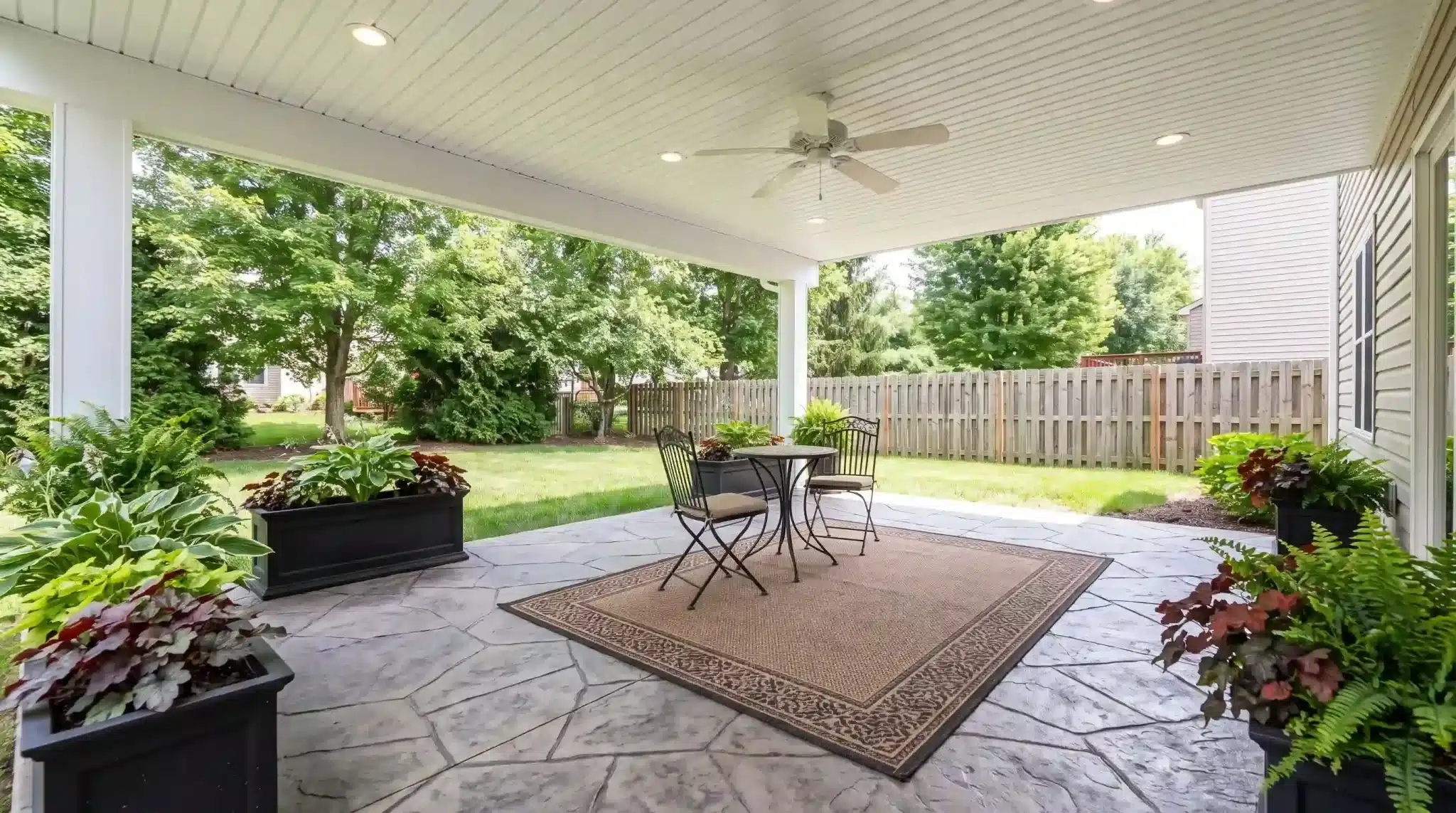
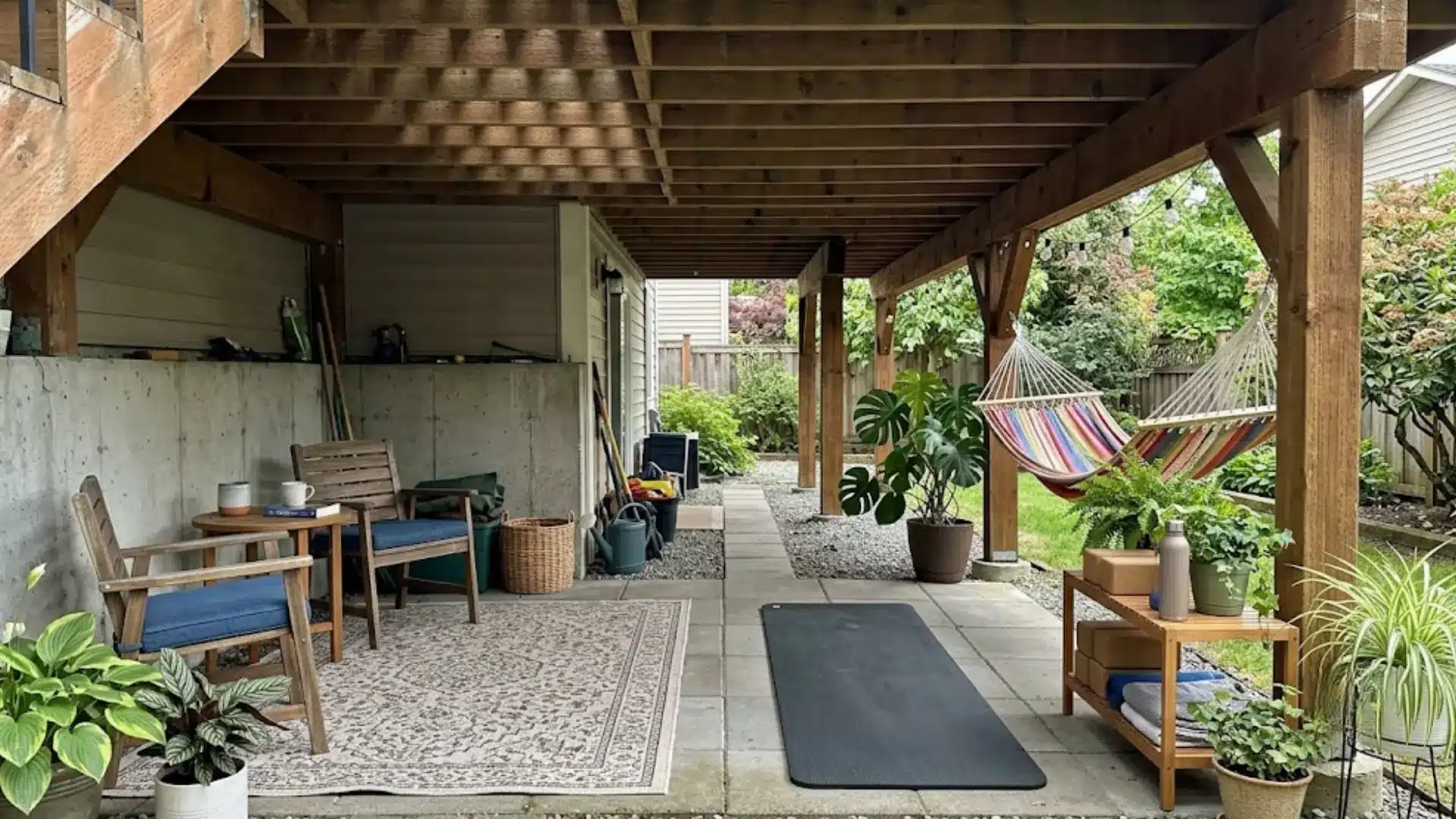
A patio under your deck, especially one finished off with budget-friendly deck covers for extra shade, gives you a dry spot for a table and chairs at no extra cost.
Pavers or stamped concrete work best once a drainage system is handling water from above. This idea suits decks at least four feet off the ground, since headroom matters most here.
Add a rug and a few planters, and the patio starts to feel like a real room.
2. Dedicated Storage Room
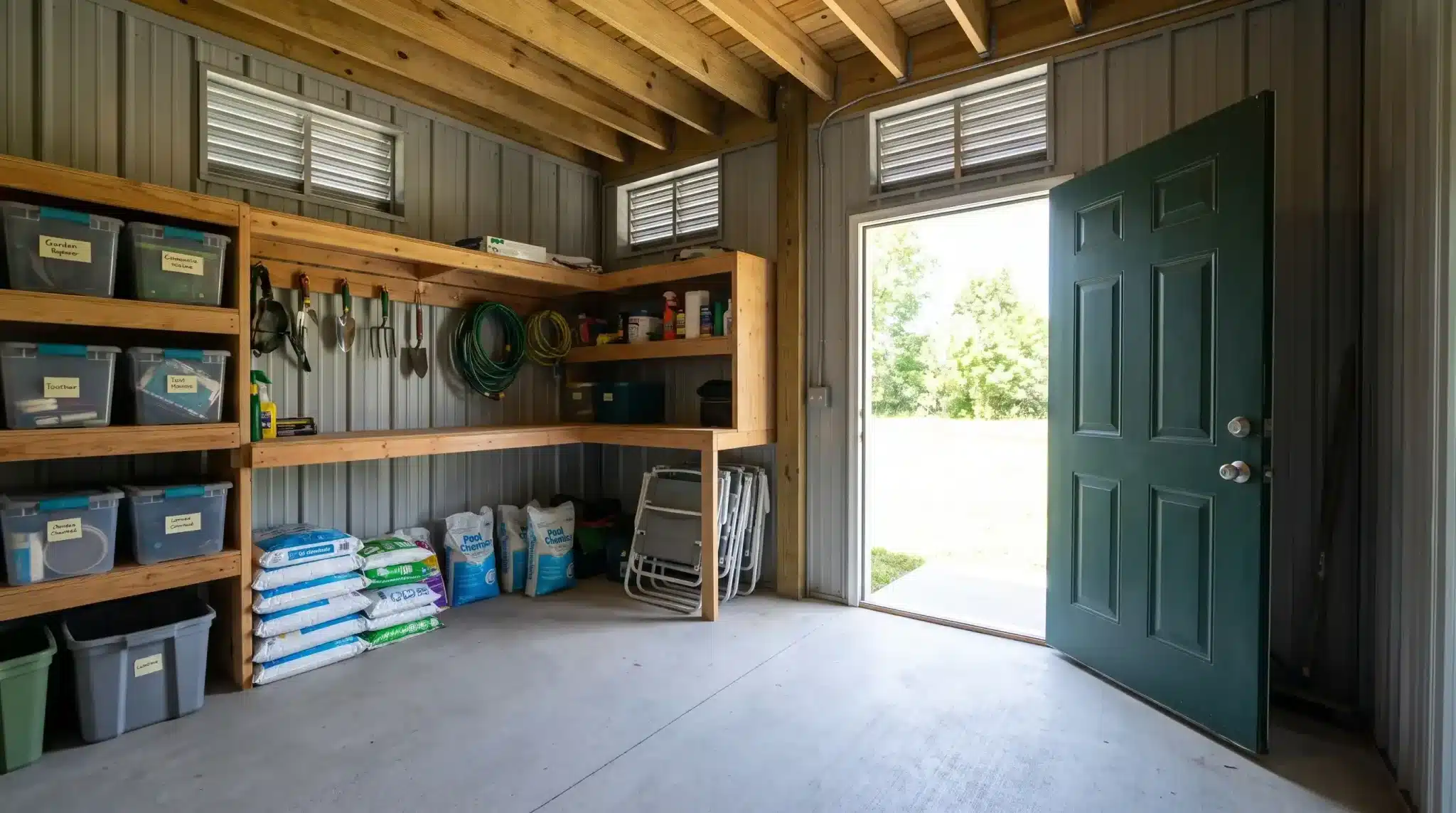
Framed walls and a single door turn the space into a proper storage room instead of a pile of bins. Pool floats, garden tools, and folding furniture all fit once shelving lines the walls.
Vents near the roofline keep trapped moisture from warping anything stored inside. This idea works on almost any deck height, since standing room isn’t required for shelving to be useful.
3. Outdoor Dining Area
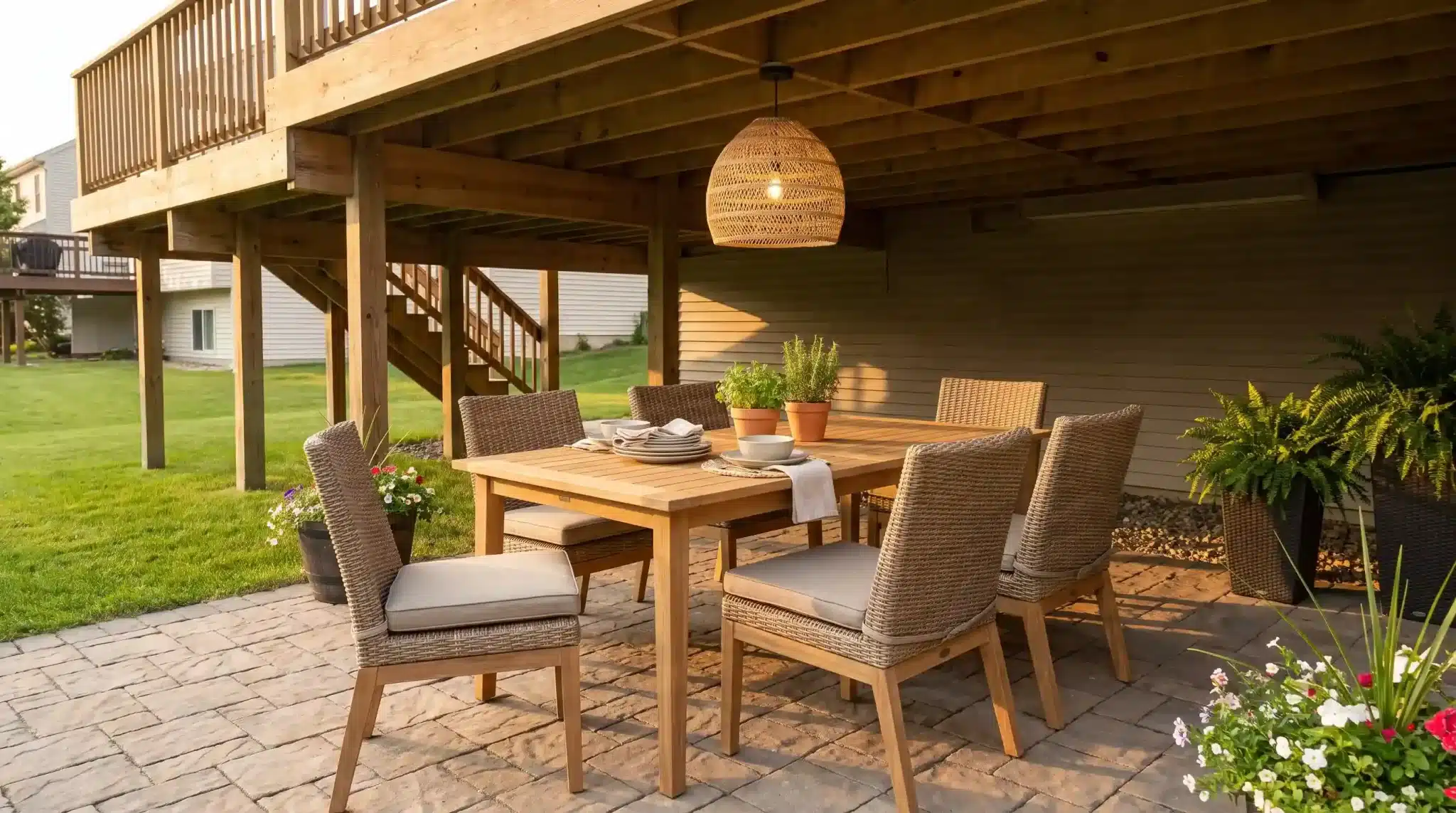
A weather-resistant dining table and chairs turn the space into a shaded setting for family meals and outdoor entertaining. Choose furniture sized to leave enough room for comfortable movement.
I placed my dining set on pavers to keep it level and away from wet soil. Add outdoor-rated lighting to make the area usable after sunset.
4. Privacy Wall or Screen
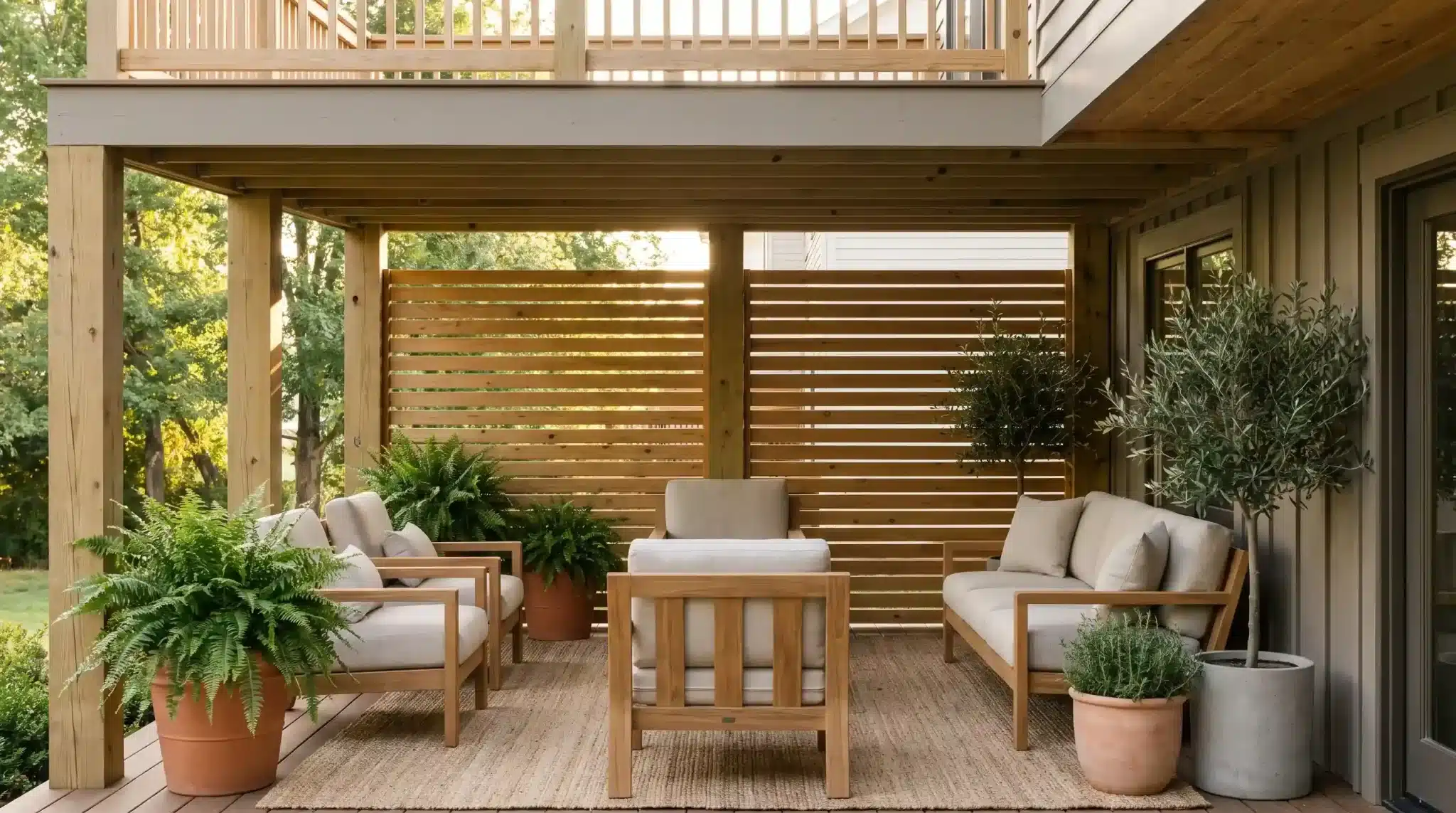
A privacy wall blocks sightlines from the yard, so the space feels like its own room. Horizontal wood panels or a slim fence section both do the job without closing off airflow.
This idea pairs well with a patio or lounge setup, since privacy is what makes people want to sit there. Paint the wall to match your house trim for a finished look.
5. Decorative Accent Wall
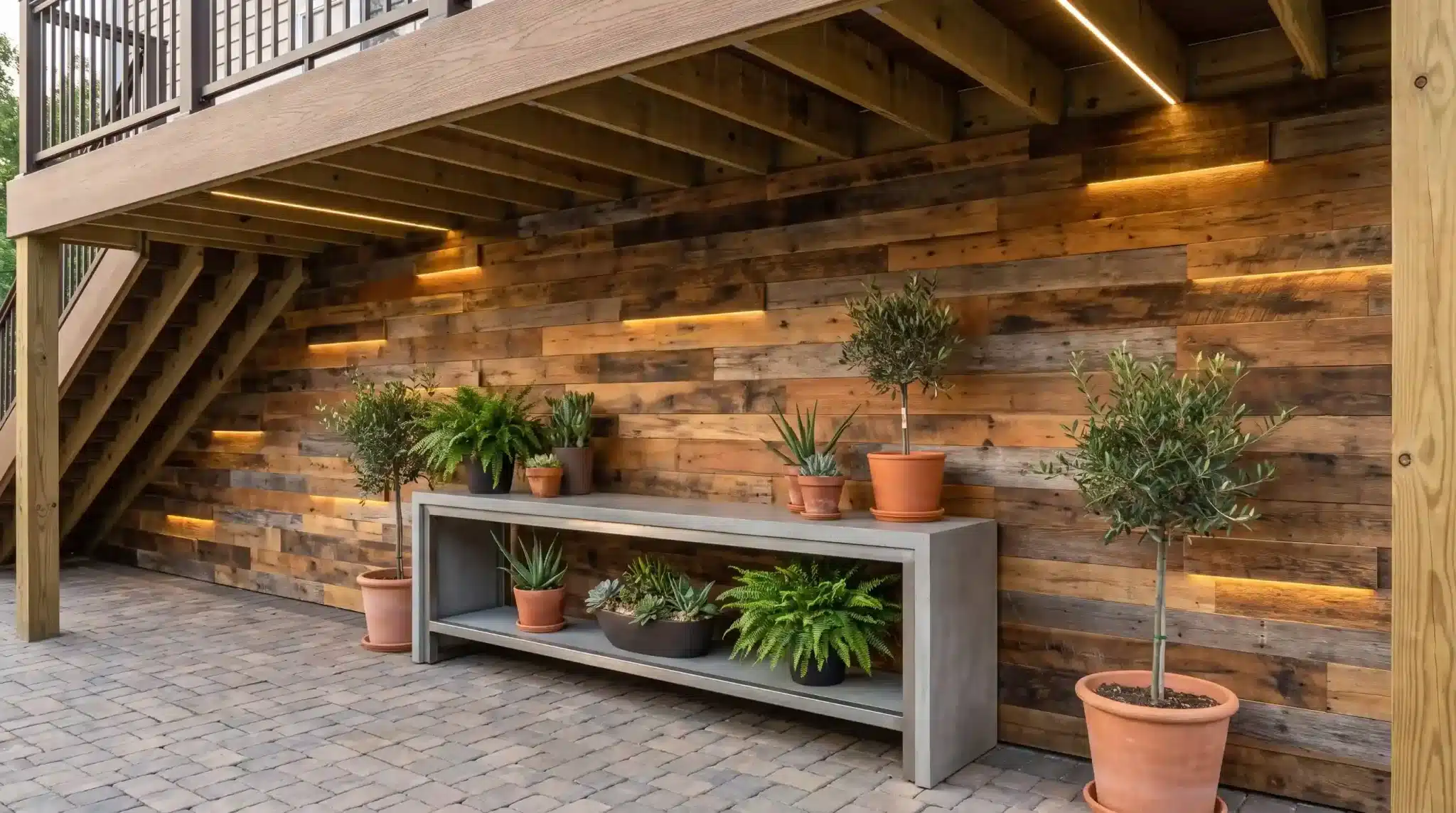
An accent wall gives the space personality instead of leaving bare framing on display. Reclaimed wood, painted brick-look panels, or a mural all work well in a shaded, sheltered spot.
This idea costs very little compared to furniture or drainage systems, since it’s mostly labor and paint. Pair it with string lights to make the wall the focal point at night.
6. Hammock Relaxation Zone
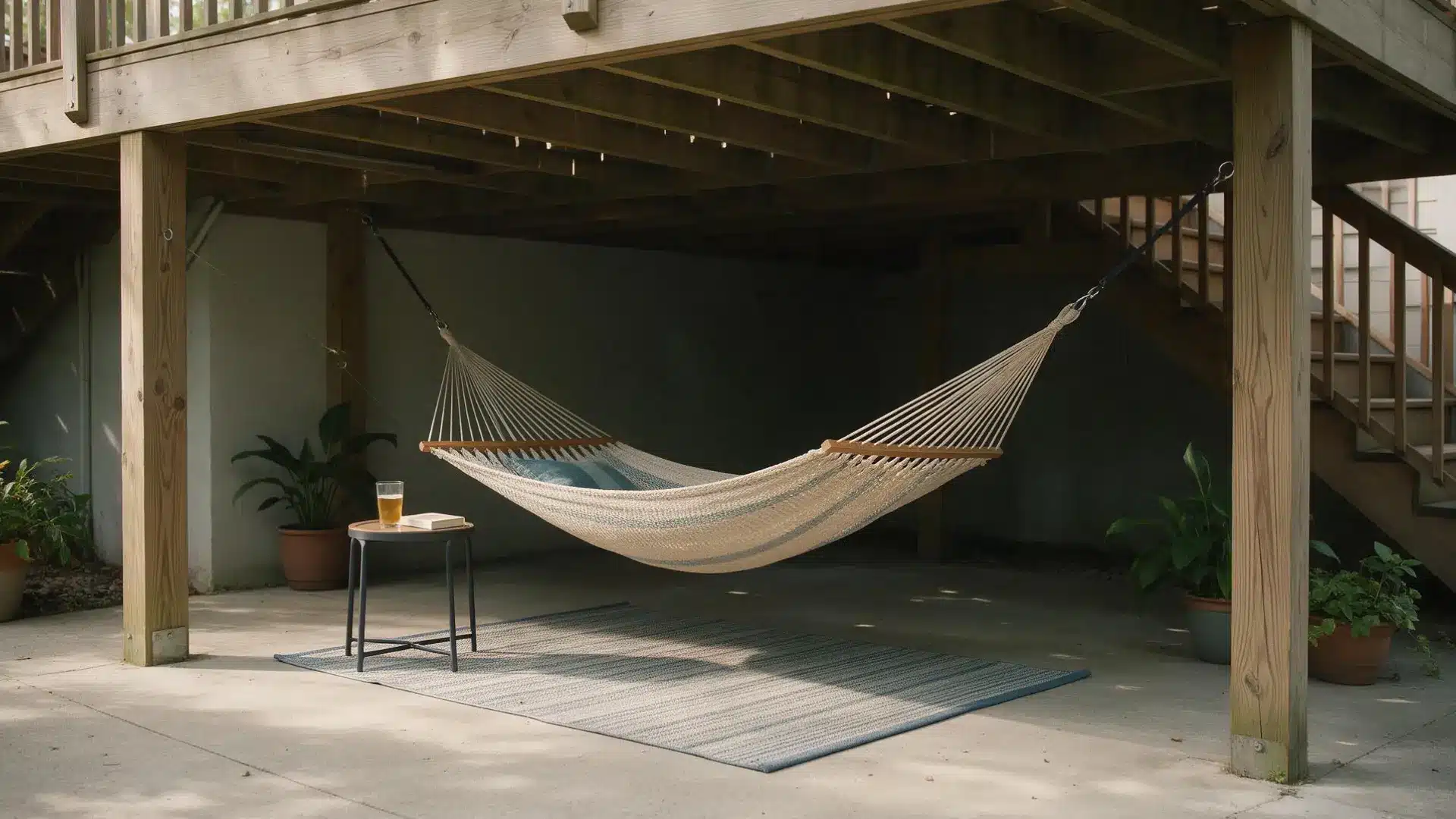
A hammock creates a comfortable place to rest without filling the area with chairs or tables. Secure it between structural posts only after confirming they can safely support the added weight.
Choose a weather-resistant hammock that can handle outdoor moisture and humidity. Leave enough clearance around it for safe movement and add a small outdoor rug to define the space.
7. Outdoor Kitchen or Grilling Station
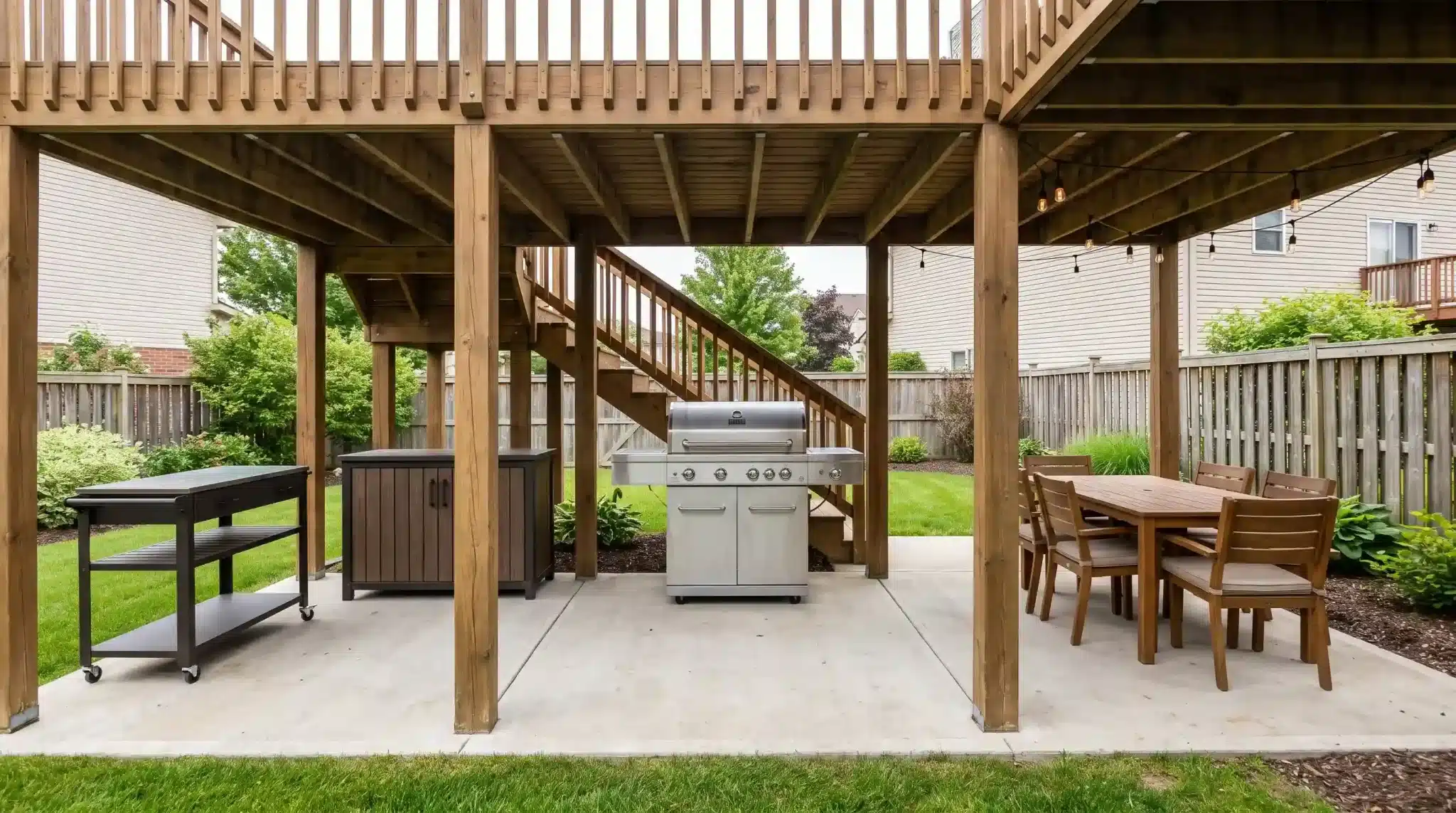
A freestanding grill, preparation cart, and weather-resistant cabinet create a convenient place for outdoor cooking. This setup keeps food preparation and dining activities together without requiring a fully built-in kitchen.
Maintain safe clearance from deck posts, walls, and overhead framing. Never operate charcoal or gas grills in a fully enclosed area and check local fire-safety requirements before installation.
8. Landscaped Ground Cover
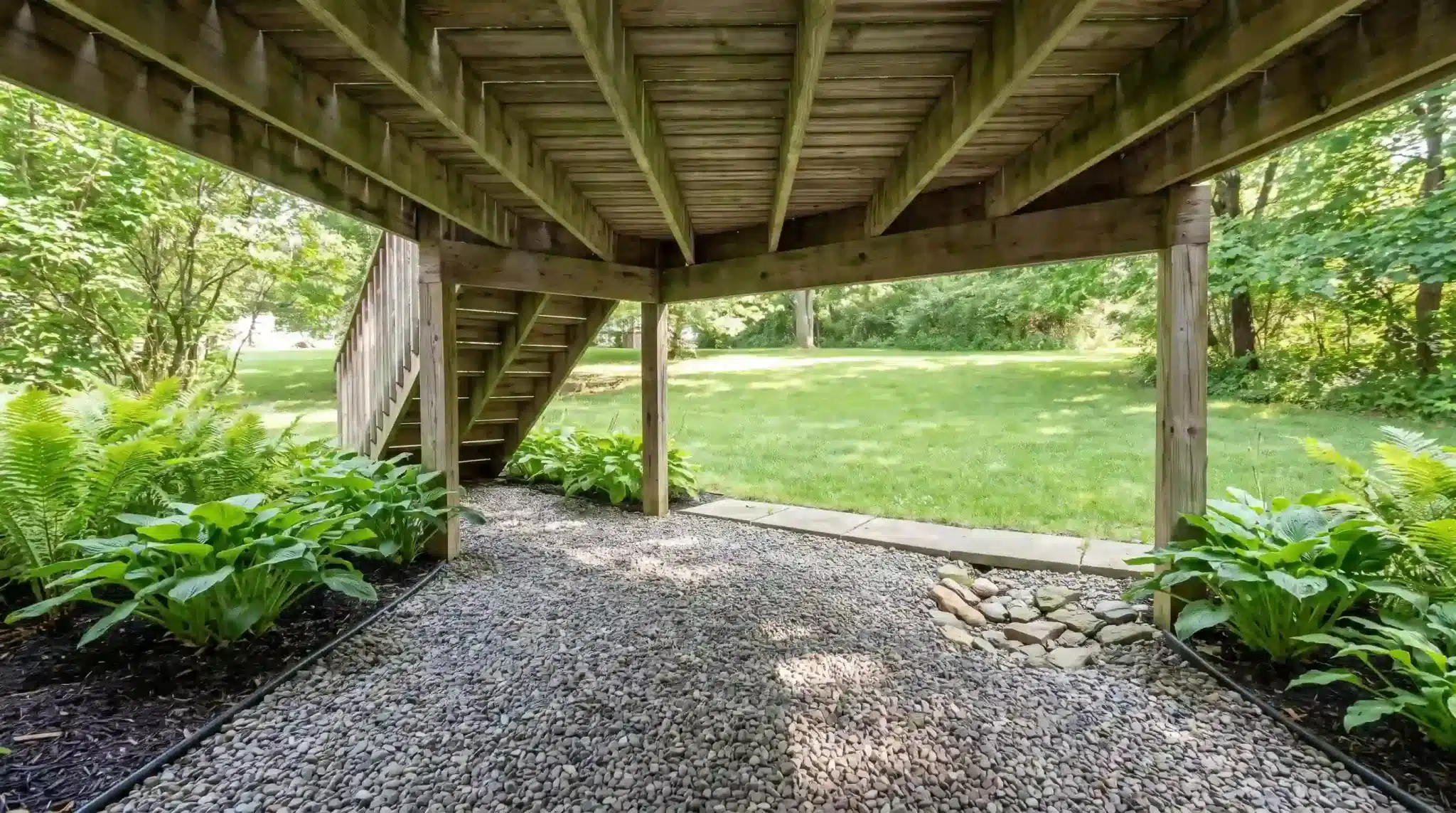
Gravel, mulch, or shade-loving plants replace bare dirt with something that actually drains. Hostas and ferns handle low light better than most flowering plants, which makes them a safer pick here.
This idea suits decks that stay open on the sides, since plants still need some airflow and rain. Keep a mowing strip clear if a lawn borders the space.
9. Metal or Composite Skirting Panels
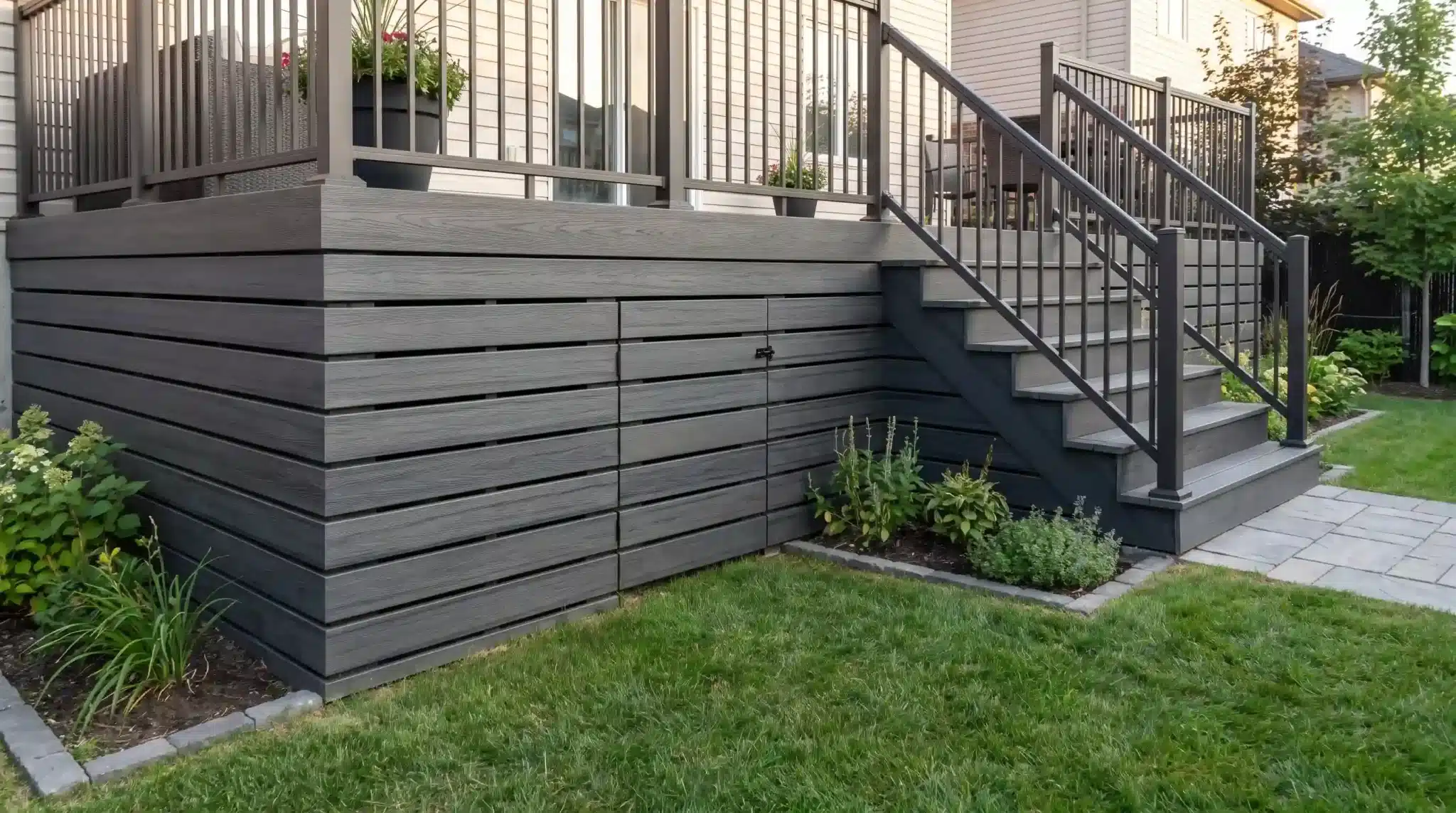
Skirting panels close off the open sides of a deck without the maintenance that traditional lattice needs. Metal and composite versions resist rot and don’t need repainting every few years.
This idea works purely on the outside look of the space, not what happens underneath it. Pair it with a small access door so storage or utilities stay reachable.
10. Screened Enclosure
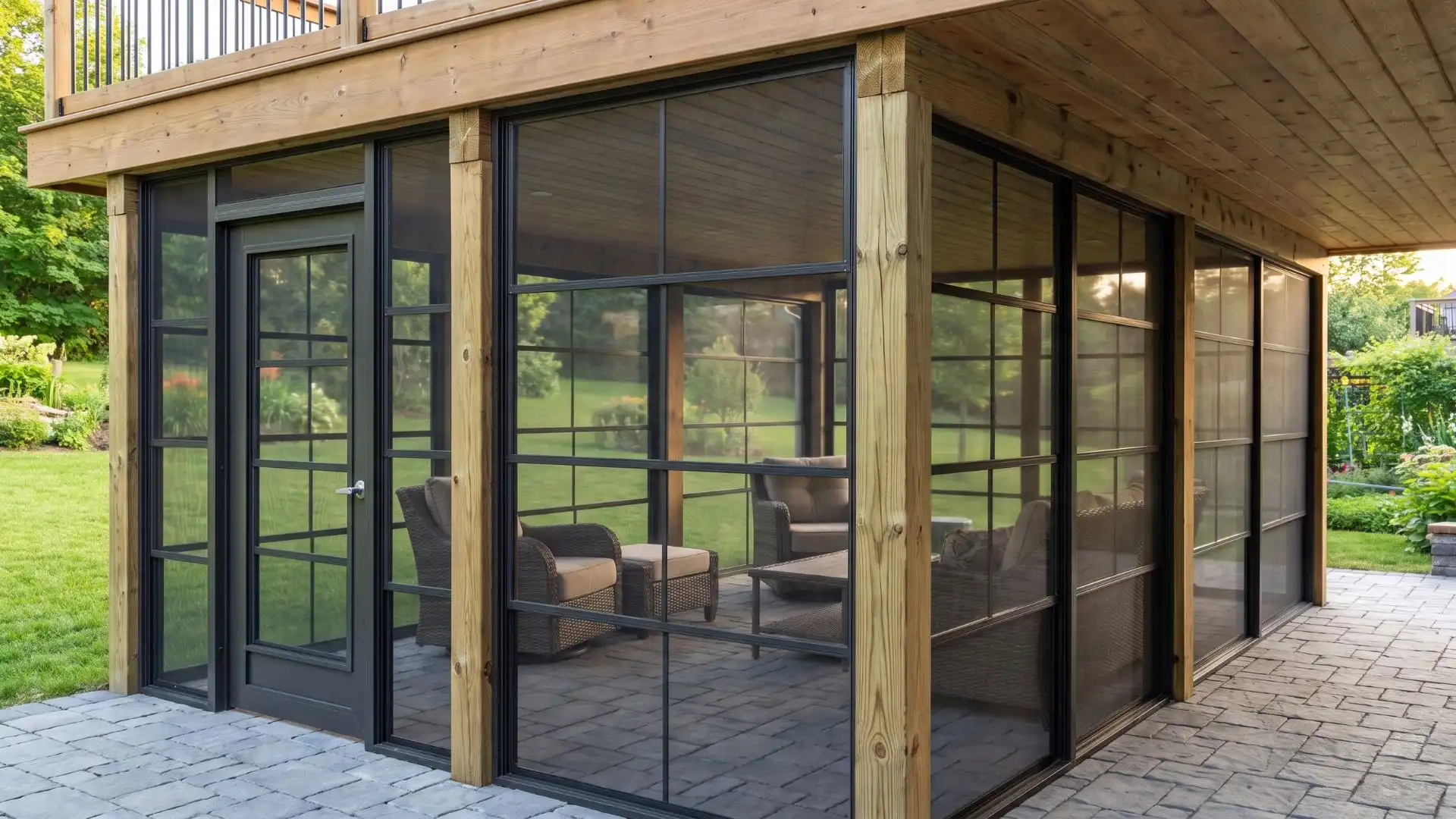
Aluminum screen panels between the deck posts keep bugs out during evening hours. A screen door sized to match the stairs makes the space feel like a real room, not an afterthought.
I only tried this enclosing under deck idea once I already had a dry ceiling system in place above it. Add a ceiling fan, since screened spaces don’t catch a natural breeze on their own.
11. Kids’ Sandbox Zone
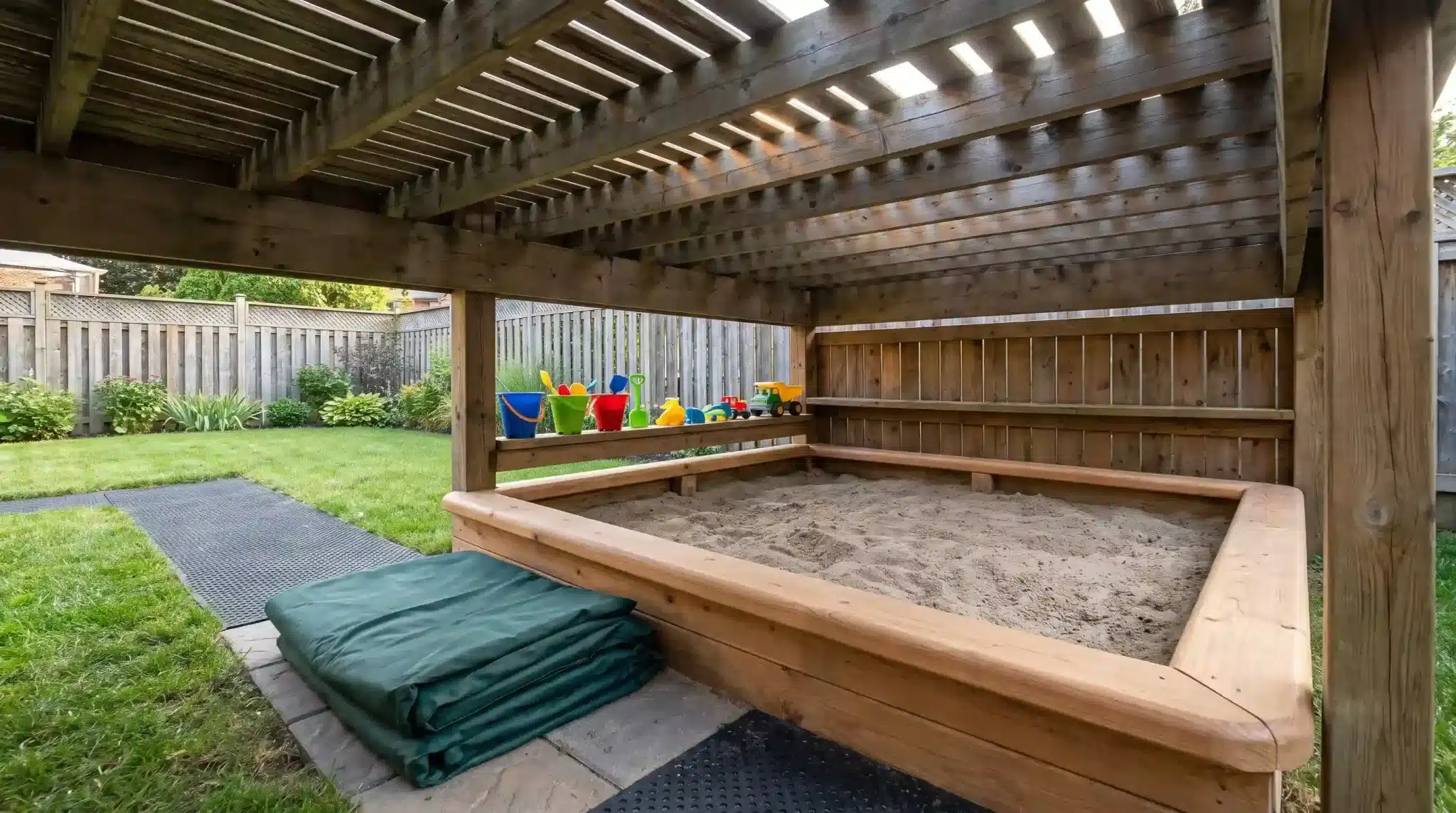
A built-in sandbox turns unused ground into a shaded play spot kids actually want to use. Edging boards keep sand contained instead of spreading into the rest of the yard.
This idea works best on grade-level decks, where kids can move freely in and out. A removable cover keeps rain and pets out of the sand between uses.
12. Shaded Dog Run
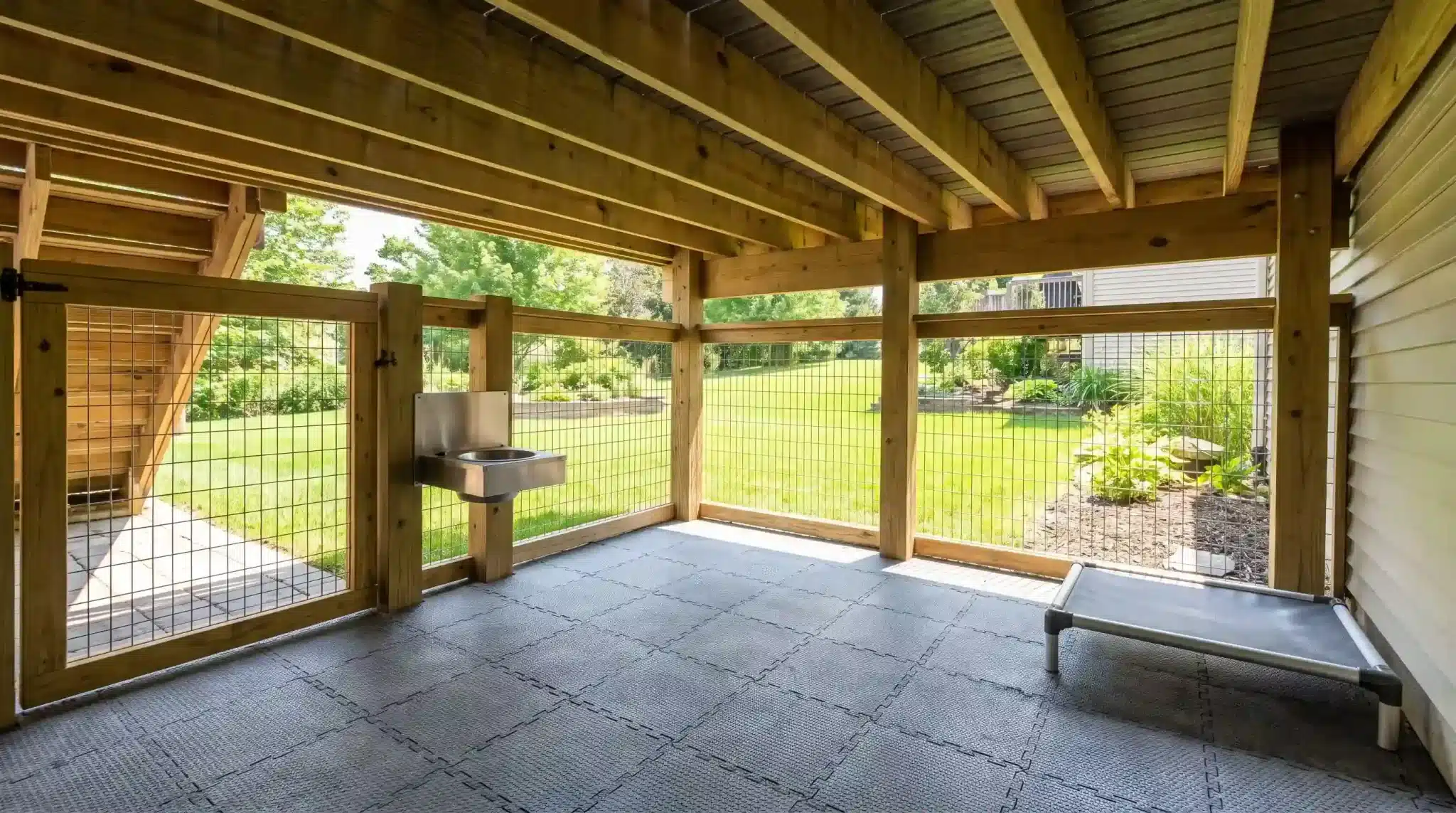
A washable floor and a low fence section give a dog a shaded spot to rest during hot afternoons. Rubber pavers or sealed concrete hold up better than dirt, which turns to mud fast.
This idea suits any deck with side access for a gate. Add a water bowl station so the run works as its own small routine, not just a fenced corner.
13. Reading Nook
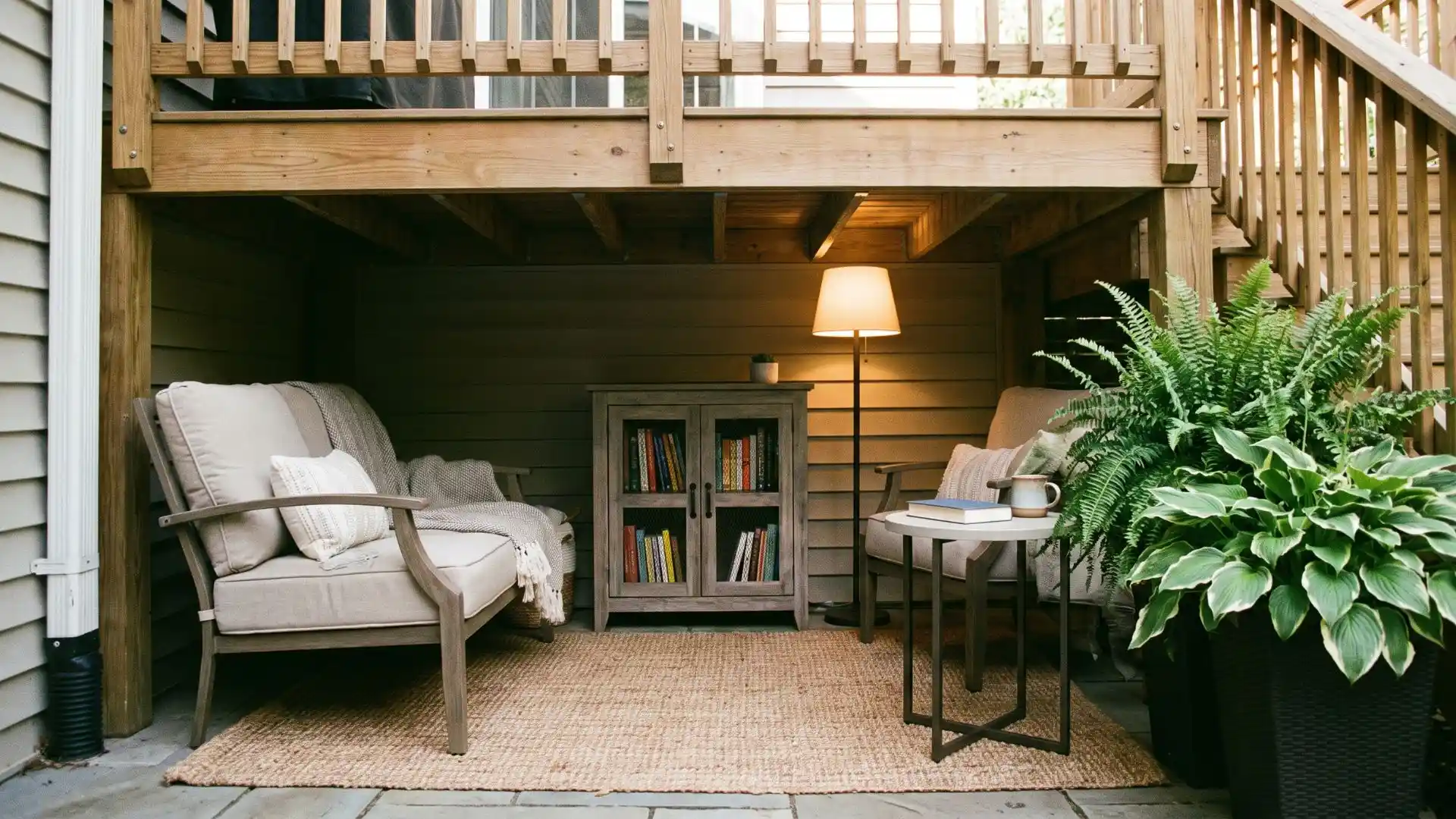
A single armchair, a small lamp, and a bookshelf turn a quiet corner into a reading nook. This idea needs almost no floor space, which makes it a fit for narrow or low decks.
Weatherproof cushions matter more here than furniture size, since comfort is the entire point. Keep the nook away from the yard’s main sightline for a quieter feel.
14. Mini Bar Cart Station
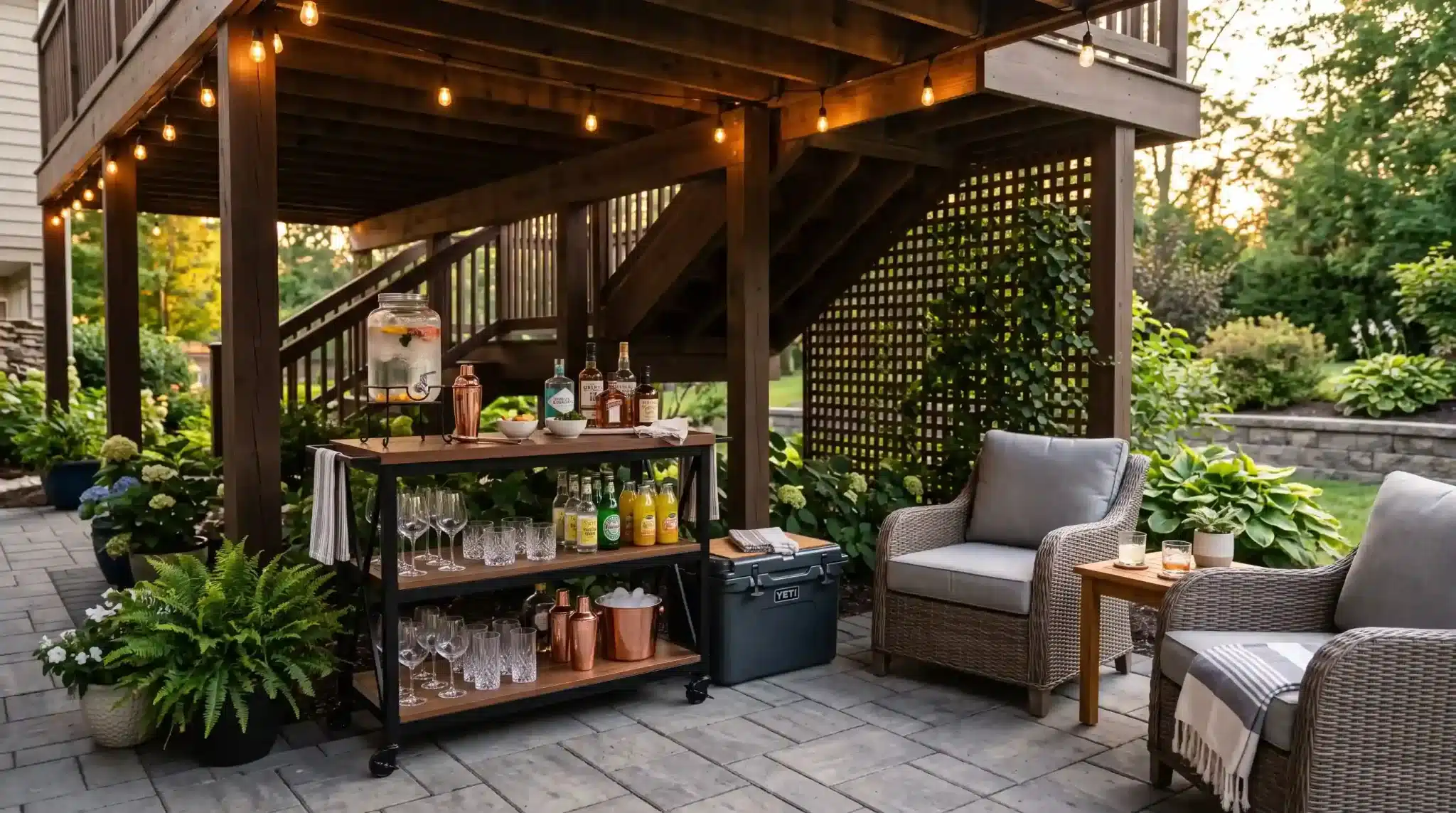
A rolling bar cart holds glasses, a small cooler, and mixers without taking up permanent space. This idea suits evening entertaining far more than daytime use, since shade alone won’t cool drinks.
Wheels matter here, since the cart should tuck away when not in use. Pair it with the cozy sitting area idea for a complete small gathering spot.
15. String Light Canopy
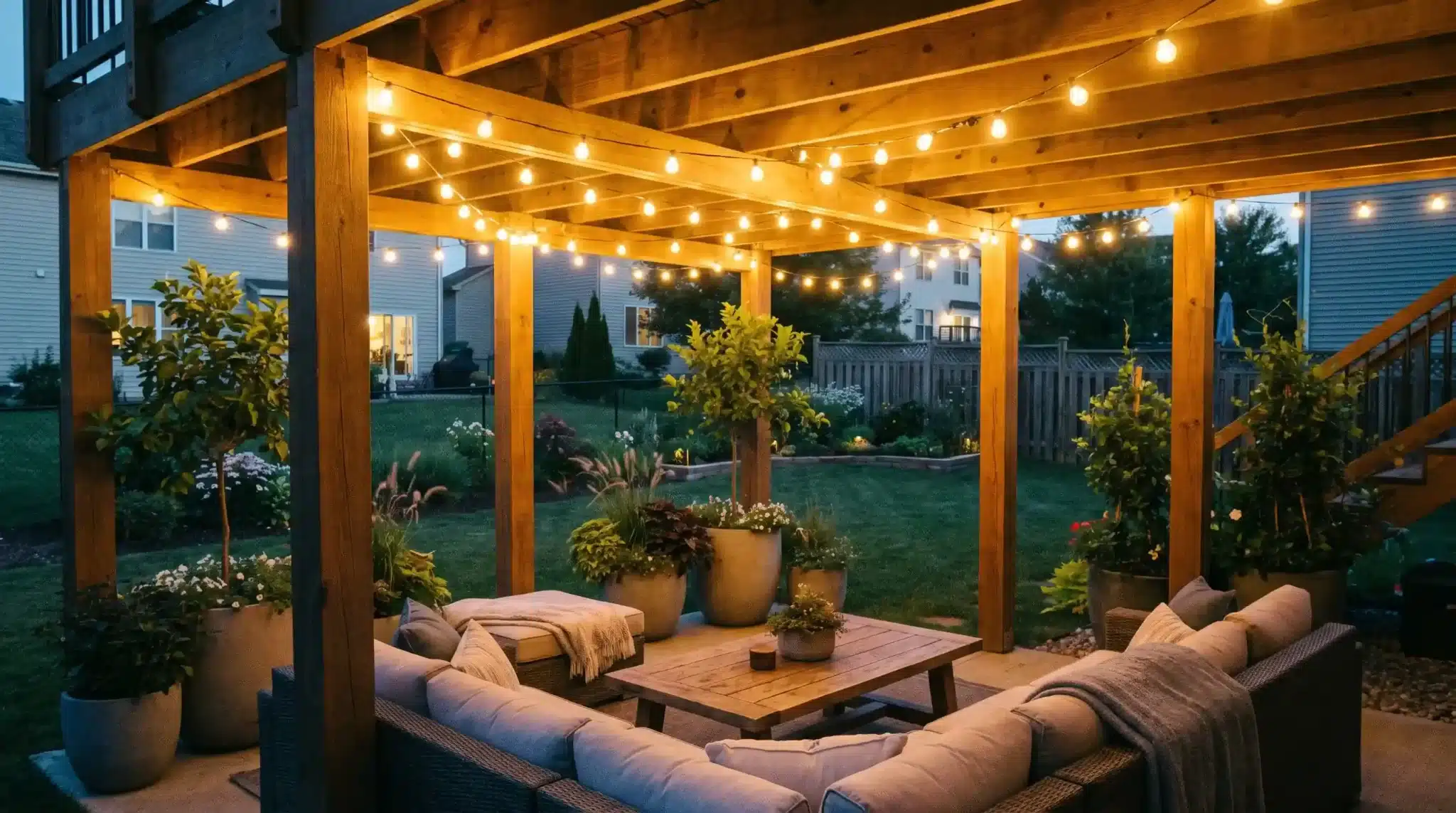
String lights strung between deck posts turn a plain ceiling into a warm, lit space after dark. This idea costs very little and installs in an afternoon, with no tools beyond a ladder and hooks.
I went with warm white bulbs over colored ones, since they read as cozy rather than festive. Run the lights on a timer so they turn on before dusk.
16. Outdoor Game Area
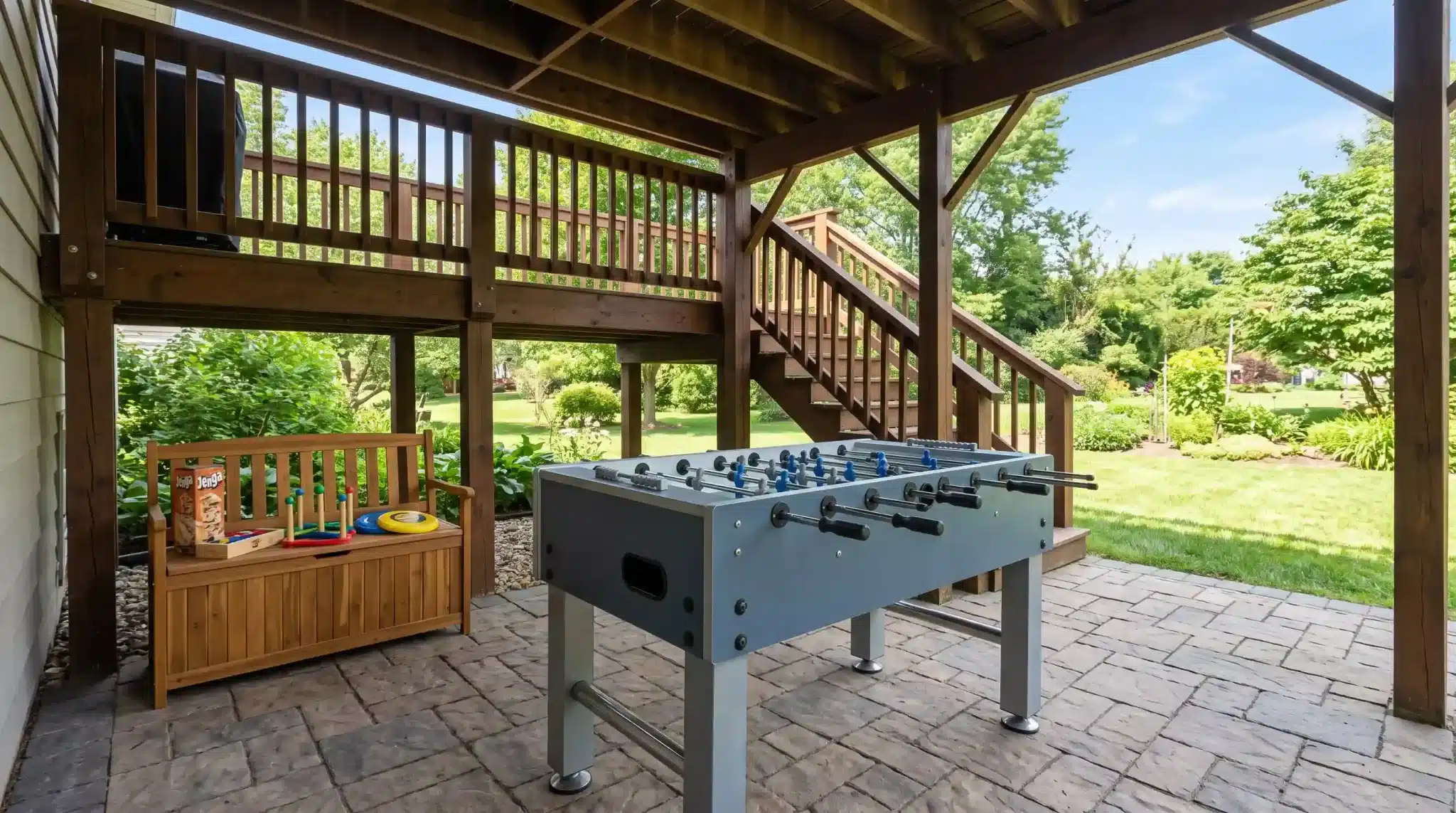
An outdoor game area gives the space a fun purpose without requiring permanent construction. Add a weather-resistant foosball table, ping-pong table, or compact game table based on the available room.
Choose equipment designed for outdoor use and leave clear space around each side for movement. Store smaller games in sealed containers to protect them from moisture, dust, and insects.
17. Hot Tub Retreat
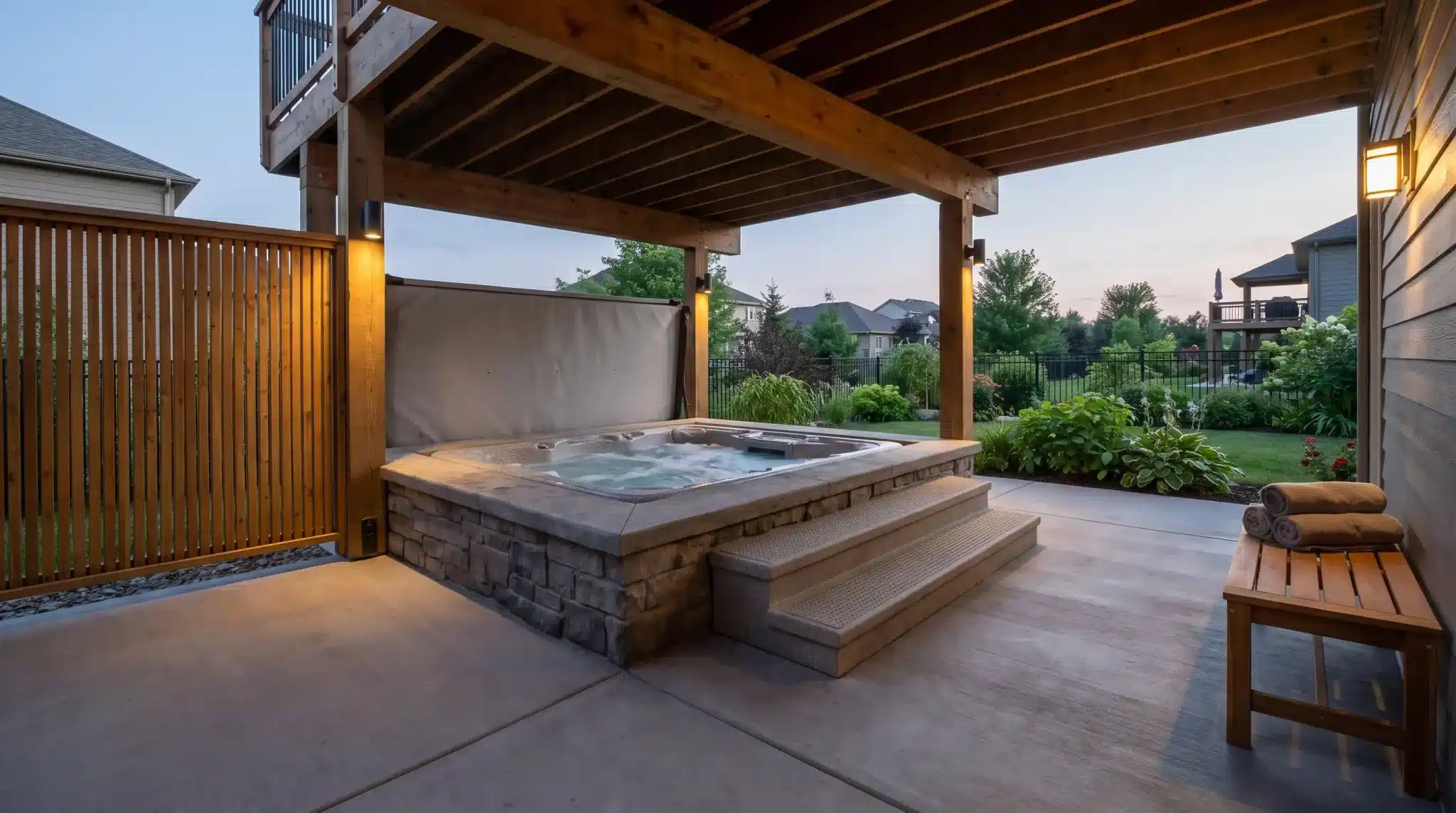
A hot tub beneath a tall deck creates a private place to relax throughout the year. Install it on a level concrete base designed to support its filled weight.
Confirm there is enough overhead clearance, airflow, drainage, and access for maintenance. Electrical connections should be installed by a qualified professional, while privacy panels can screen the area without completely trapping steam.
18. Vertical Bike Storage Rack
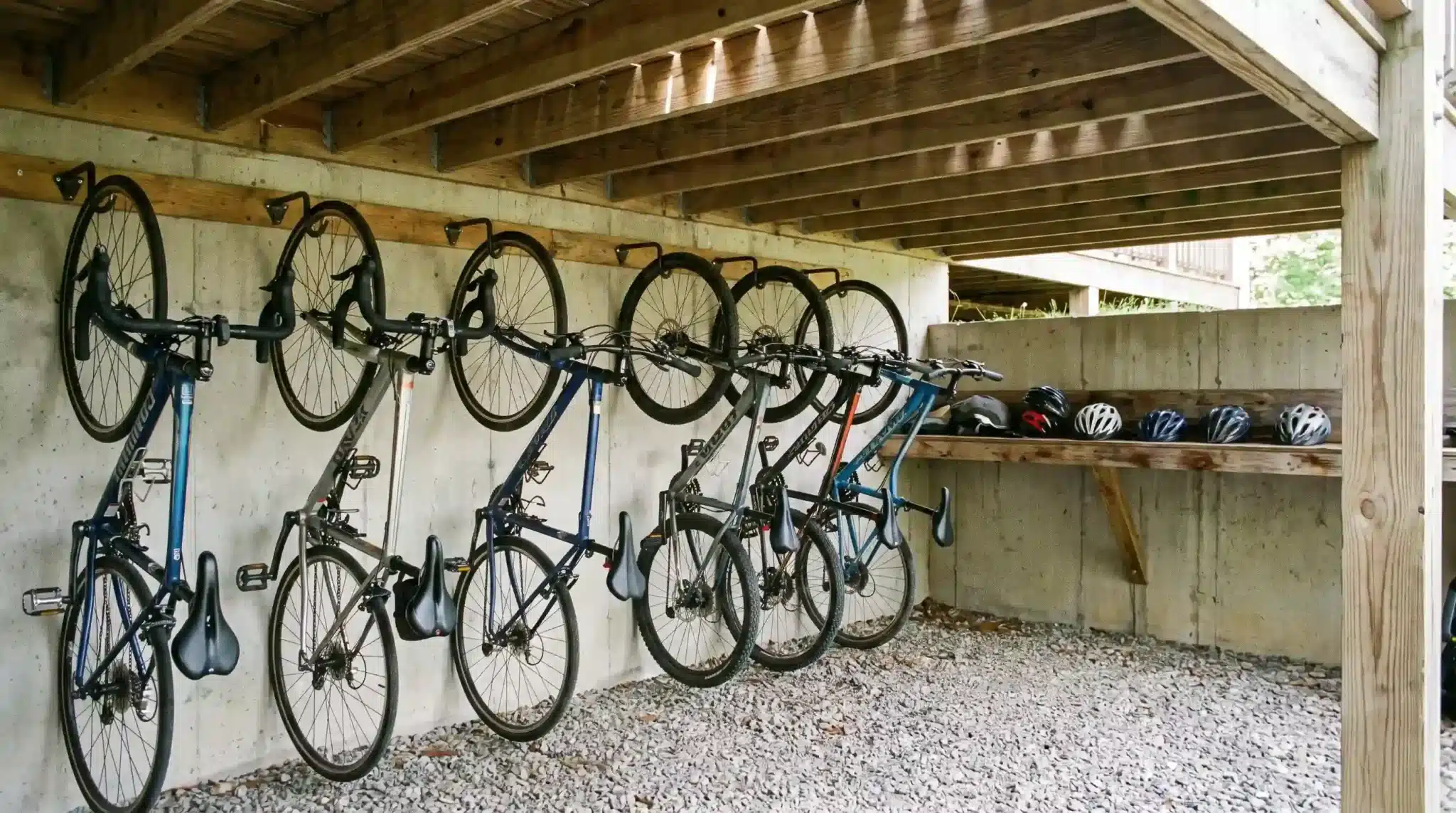
A wall-mounted rack holds bikes upright, freeing floor space that ground storage usually wastes. This idea suits narrow or low decks where crawling around bikes on the ground isn’t practical.
Spacing hooks a foot apart keeps handlebars from tangling between bikes. This works well paired with the storage room idea, since both solve the same clutter problem differently.
19. Climbing Vine Trellis
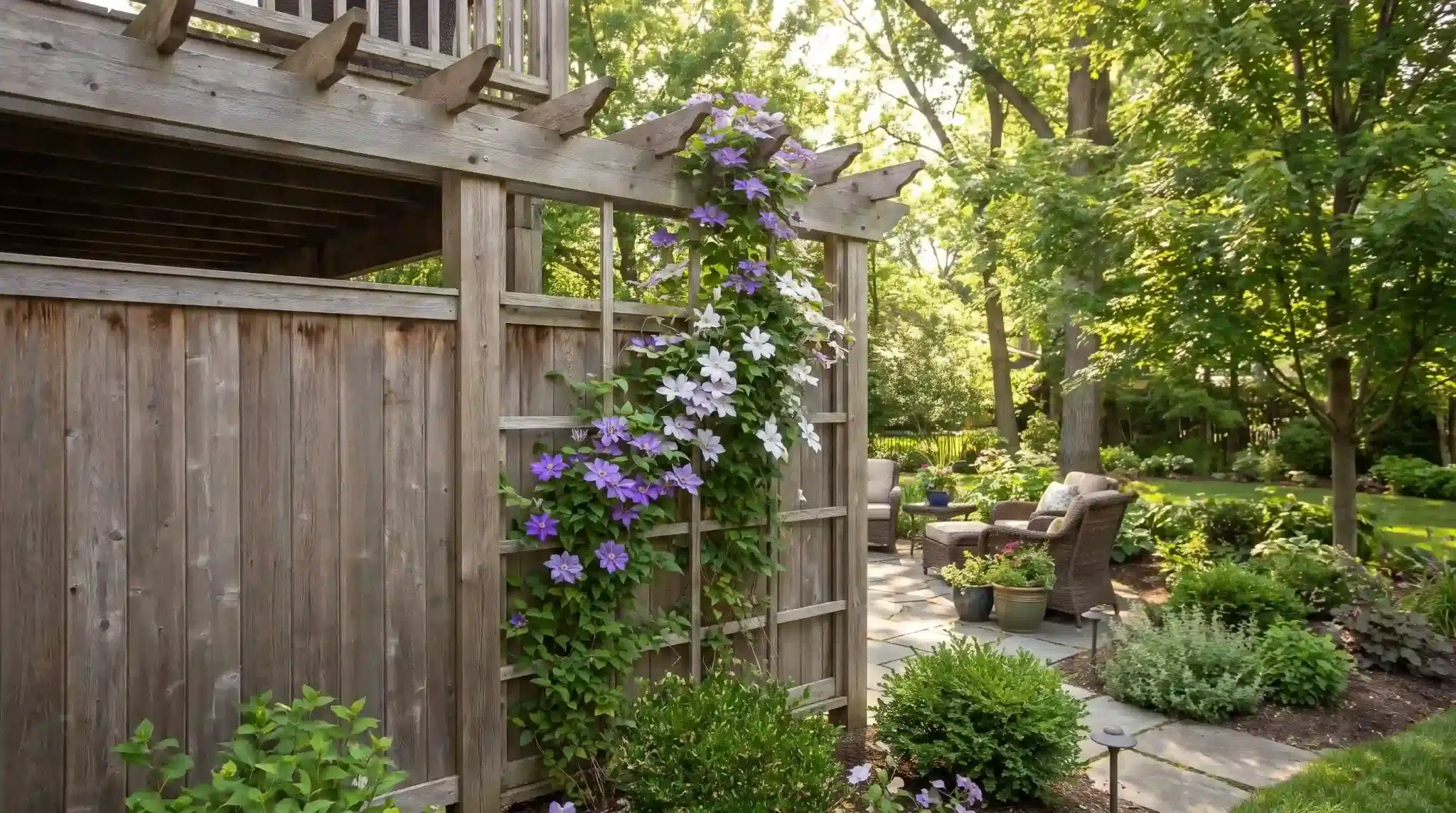
A trellis mounted against a deck post gives climbing vines a structure to grow on. This idea takes a season or two to fill in, so it rewards patience over instant results.
Jasmine or clematis both handle partial shade better than most flowering vines. Use this idea alongside the privacy wall for a softer, greener version of the same goal.
20. Shade Plant Potting Station
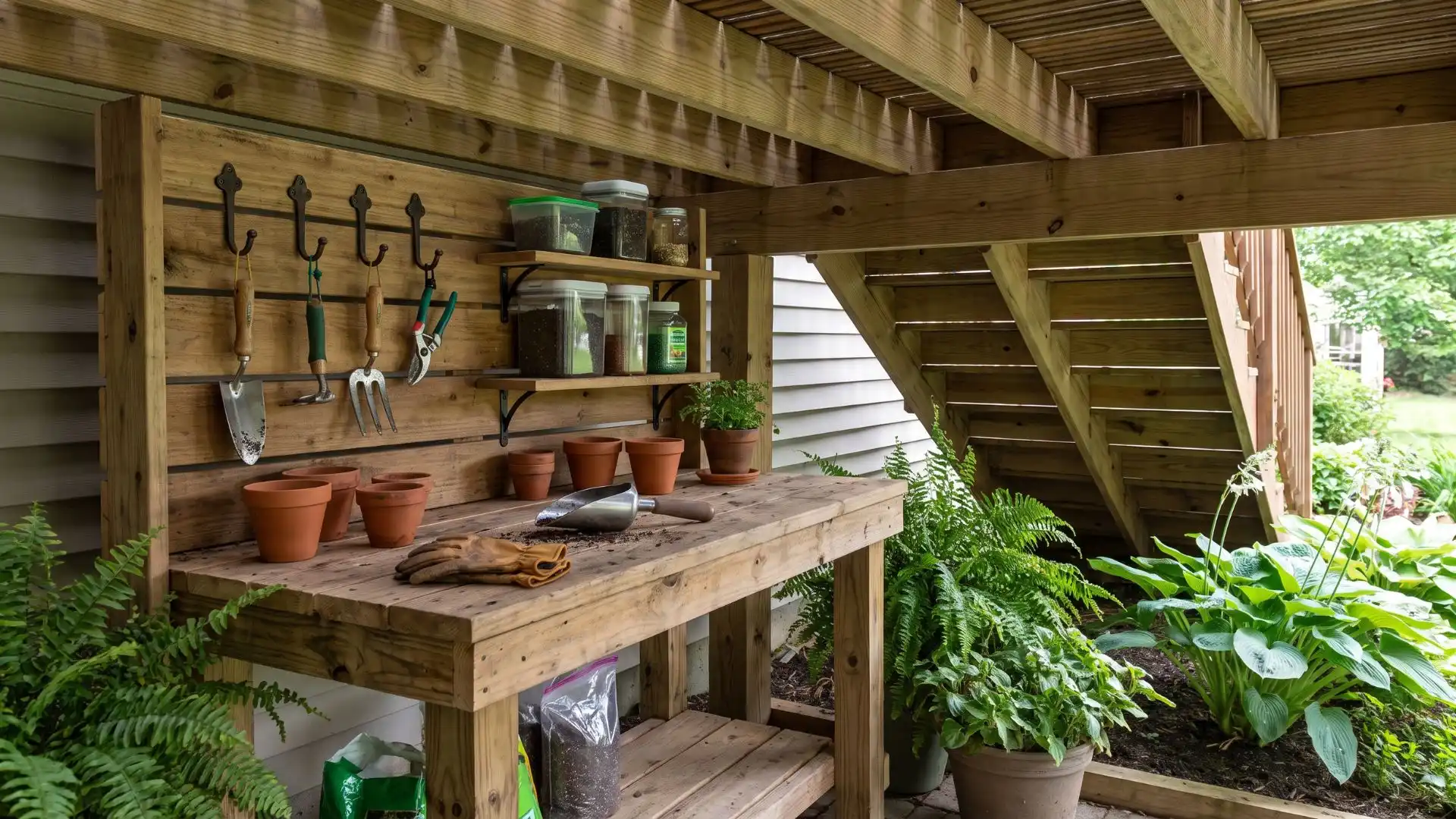
A potting bench with shelves creates an organized workspace for repotting plants, starting cuttings, and preparing containers. The deck provides welcome shade while you handle routine gardening projects.
Store soil, hand tools, pots, and plant supplies in sealed containers to protect them from moisture and pests. Add hooks above the bench to keep frequently used tools within easy reach.
21. Outdoor Movie Area
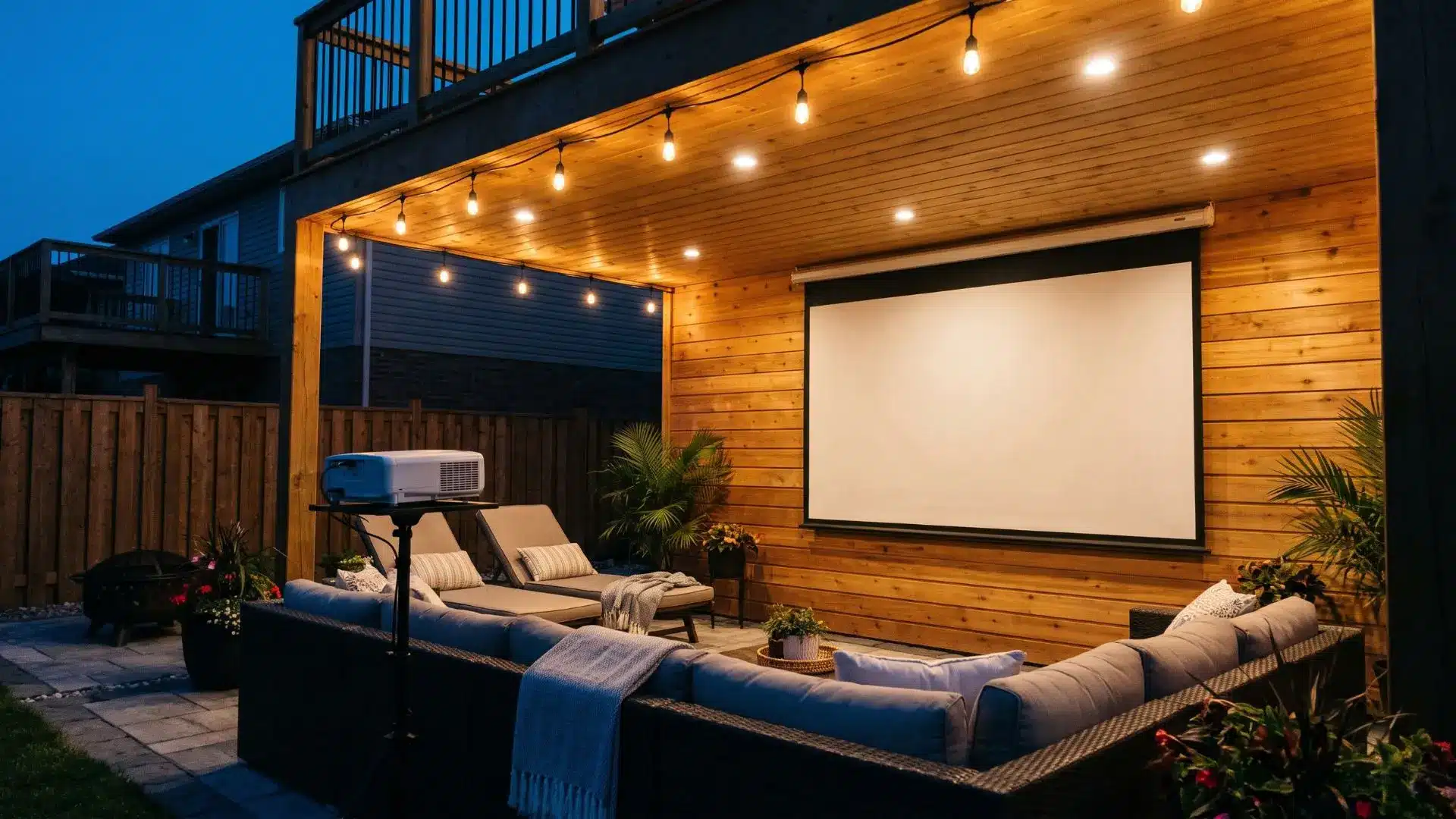
A retractable projector screen or outdoor-rated television can turn the under-deck space into a sheltered entertainment area.
Arrange weather-resistant seating in front and add dimmable lighting for comfortable evening viewing. Install a waterproof ceiling and outdoor-rated electrical connections to protect the equipment from moisture.
Position the screen away from bright yard lights, which can reduce visibility and weaken picture quality.
22. Home Yoga Corner
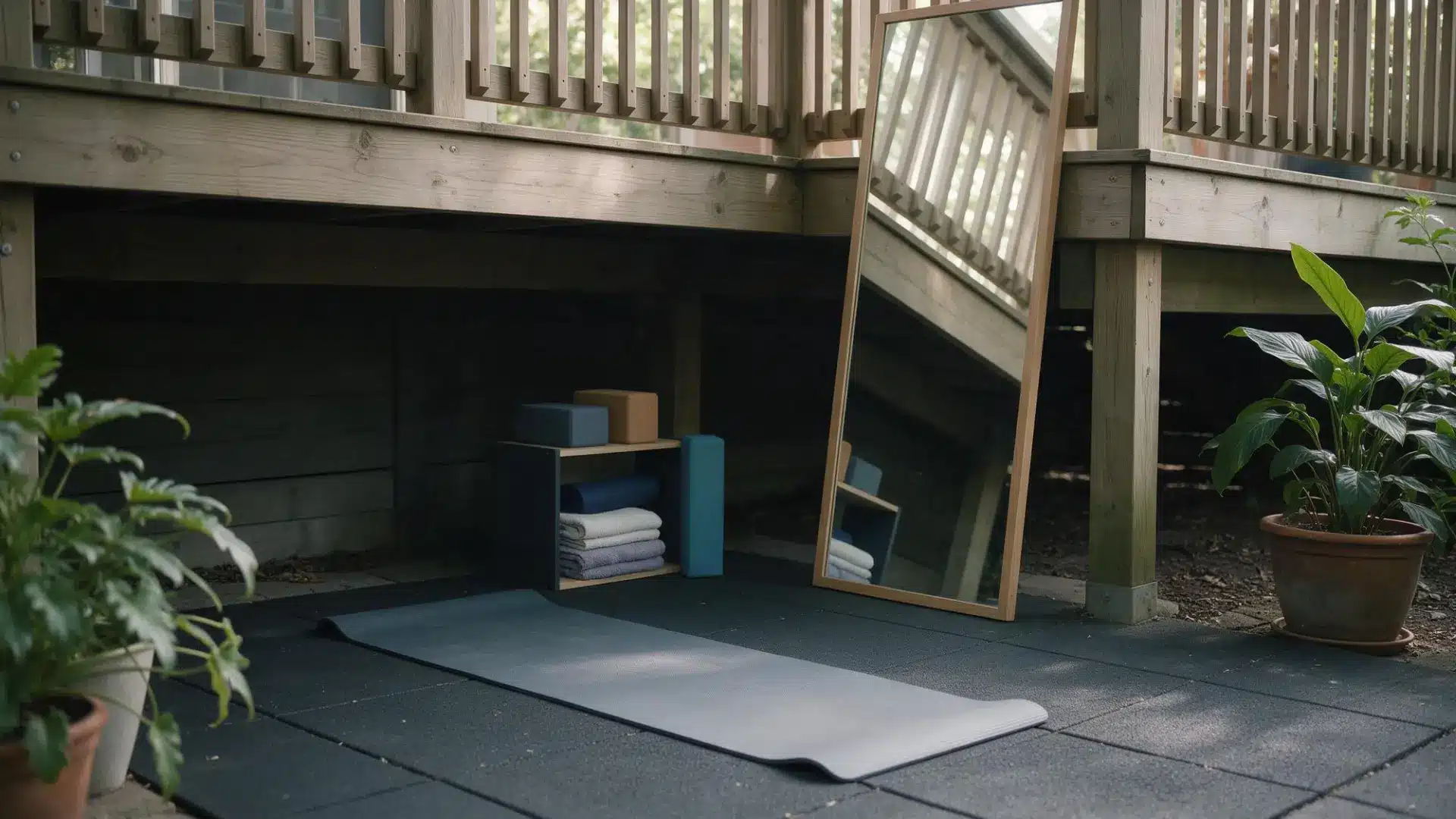
A foam mat, a small shelf for props, and a mirror turn this space into a private yoga corner. This idea works well precisely because the shade keeps the area cooler than a sunny patch of yard.
I laid rubber flooring over the existing ground since it protects joints so much better than bare concrete or pavers. Keep the corner separate from storage or seating so it stays a calm, single-purpose spot.
23. Hobby Workshop Nook
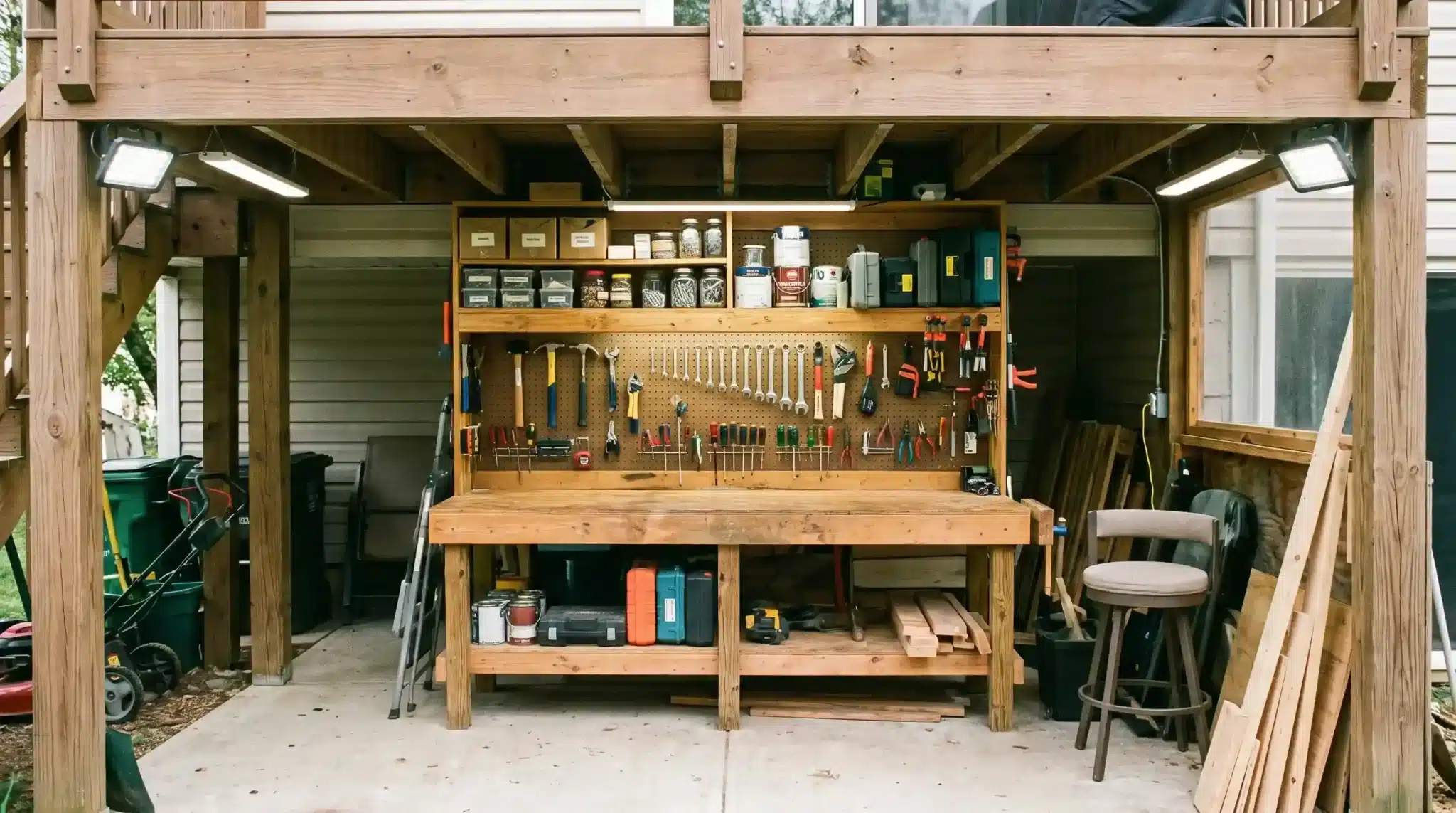
A workbench and pegboard turn the space into a spot for woodworking, potting, or small repairs. This idea suits homeowners who need a workspace that isn’t inside the house or garage.
Task lighting matters more here than anywhere else on this list, since detailed work needs even light. A shelf for tools keeps the bench clear for actual projects.
How to Keep the Area Under Your Deck Dry?
Rain can pass through deck boards and collect below. These methods help control overhead drips and ground moisture.
- Install ceiling panels: Fit waterproof panels beneath the deck joists to catch rain passing through the boards. Connect them to gutters that carry the collected water away.
- Add a joist membrane: Place a waterproof membrane between or above the joists to intercept rainwater. Make sure it slopes toward a gutter instead of holding water.
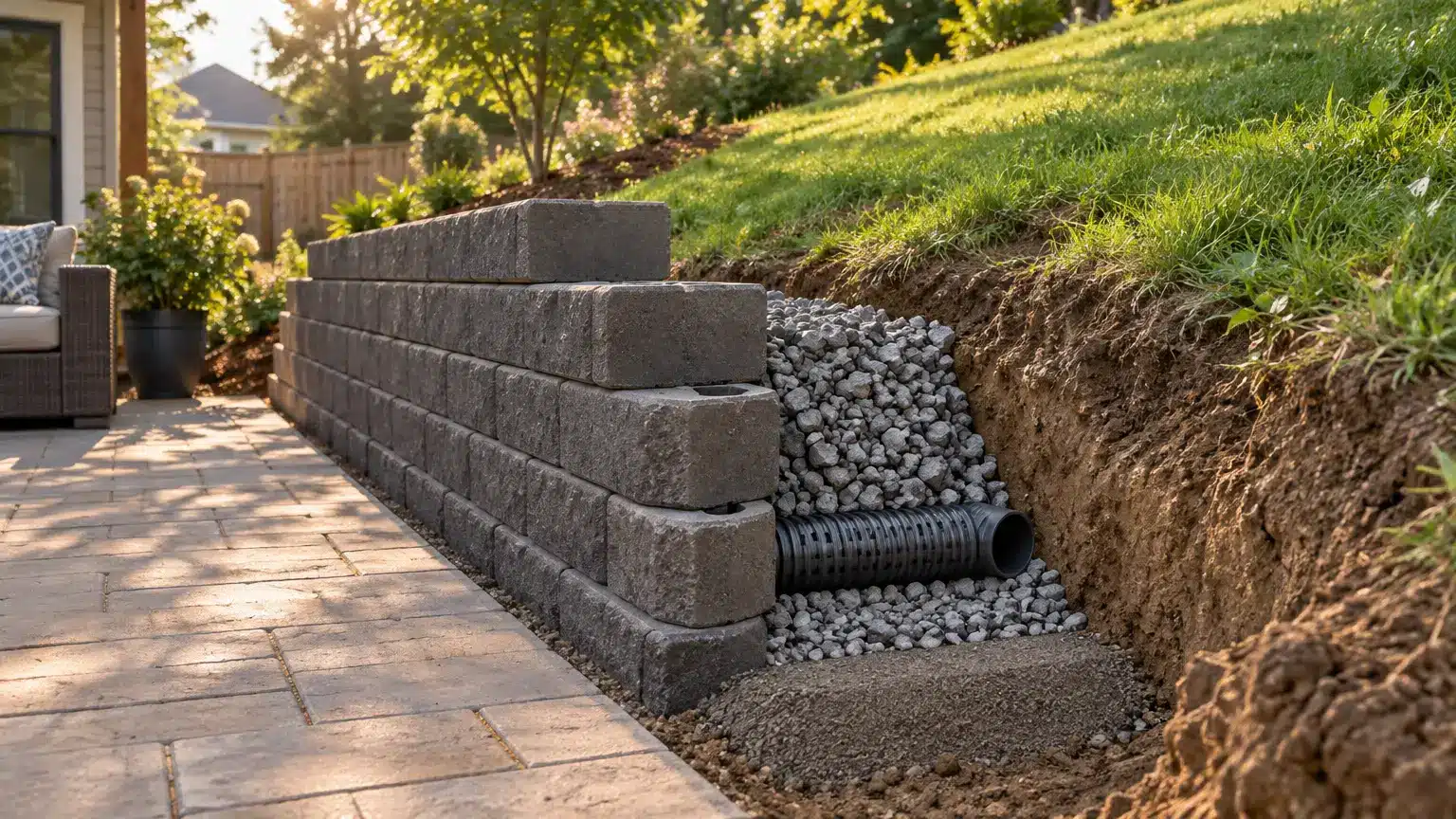
- Improve ground drainage: Cover the soil with landscape fabric and a thick layer of gravel. This combination reduces mud and allows surface water to drain more easily.
- Slope the flooring: Install concrete or pavers with a slight slope away from the house. Proper grading prevents puddles from forming beneath the deck after rain.
- Maintain gutters: Remove leaves and debris from gutters and downspouts several times each year. Clear drainage channels prevent overflow from soaking the finished area below.
Combining overhead waterproofing with good ground drainage offers the strongest protection for a usable under-deck space.
Frequently Asked Questions (FAQs)
What can I Put Under My Deck Besides Lattice?
Vertical wood slats, outdoor curtains, a trellis with climbing vines, or solid privacy panels all work well besides lattice. Each option still allows airflow while blocking direct sightlines into the space below.
How Much Does it Cost to Enclose Under a Deck?
Basic storage upgrades start around $200. A full enclosure with a ceiling drainage system runs $5,000 to $12,000, depending on size and materials.
Do I Need a Permit to Enclose Under a Deck?
Most cities require a permit for enclosed rooms, wiring, or structural changes under a deck. This applies even if the deck itself is already approved. Check local rules before framing any walls.
Final Words
Any of these ideas can turn that empty space into a spot you’ll use daily. A patio, a reading nook, or a storage room can fill it well. Fixing water flow and closing off clutter makes any project last longer.
Pick the option that matches your deck height and yard style. Small touches like lights or plants can make it feel finished. Under deck ideas turn wasted space into something you’ll actually use.
Start small and build from there. Your backyard deserves more than a forgotten shadow underneath it. I’d love to hear your pick. Drop a comment below and let me know what you’ll try first.