Sustainability used to mean something narrow in landscaping circles: native plants, drip irrigation, maybe a rain barrel tucked behind the garage. Sustainable artificial turf has entered that conversation in a way few people predicted a decade ago, and the case for it rests on more than just saved water.
Gas mower emissions, pesticide runoff, and the sheer volume of resources poured into keeping a lawn alive all figure into a fuller picture of what a truly low-impact yard looks like.
Rethinking What a Green Yard Actually Costs
A lawn that looks healthy is not automatically a lawn that treats the environment well. Keeping natural grass green through a hot summer often means running sprinklers daily, applying fertilizer on a schedule, and spraying for weeds or grubs whenever they show up.
Each of those steps carries an environmental cost that rarely gets mentioned when people picture a “green” yard.
Fertilizer runoff is a well-documented problem. Nitrogen and phosphorus from lawn treatments wash into storm drains after rain, eventually reaching rivers and lakes where they feed algae blooms that choke out fish and native aquatic plants.
The EPA has flagged residential lawn care as a measurable contributor to nutrient pollution in watersheds near suburban development, according to its guidance on nonpoint source pollution (EPA).
Swapping a chemically dependent lawn for turf removes that runoff source at the household level entirely.
Water Use Without the Guesswork
Outdoor irrigation eats up a huge share of residential water consumption, particularly during summer months when lawns need the most help staying alive.
Estimates from water utilities put outdoor use at roughly thirty percent of total household water consumption nationally, with that figure climbing much higher in arid climates where lawns fight against natural conditions all season long.
A synthetic lawn sidesteps this cycle completely. There is no irrigation zone dedicated to the lawn, no sprinkler timer to adjust as temperatures rise, and no risk of overwatering that wastes water without actually helping the grass.
For homeowners in regions facing recurring drought restrictions, this alone can be the deciding influence, since it removes a major point of vulnerability from their landscape rather than just reducing it.
The Manufacturing Side of the Equation
Sustainability claims around turf deserve a fair look at the full picture, not just the water savings on the surface.
Producing synthetic grass involves petroleum-based materials, and that manufacturing process carries its own carbon footprint before a single roll reaches a residential yard.
Newer product lines have started addressing this directly, incorporating recycled content into backing materials and using bio-based infill options instead of the crumb rubber that raised environmental concerns in earlier turf generations.
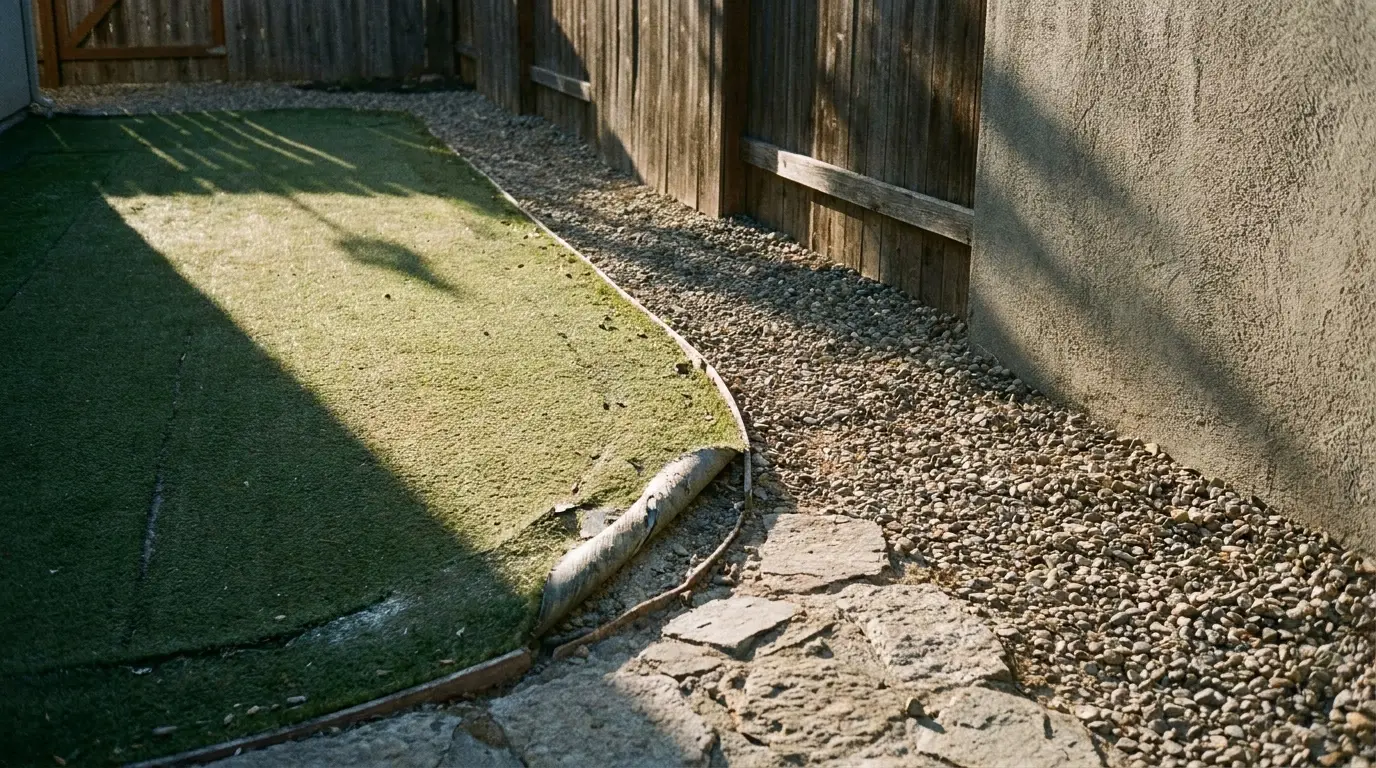
End-of-life disposal is where the industry still has real work to do. Older turf products were not built with recycling in mind, and a worn-out lawn often ended up in a landfill after ten or fifteen years of use.
That has started to change.
Several manufacturers now operate take-back programs that separate turf components for recycling into new products, a shift that groups like the Synthetic Turf Council have pushed as part of broader industry sustainability standards.
Homeowners weighing the environmental tradeoffs should ask installers directly about end-of-life plans before committing to a specific product line.
Cutting Out Gas-Powered Equipment
Lawn mowers, trimmers, and leaf blowers running on gasoline produce a surprising amount of pollution relative to their size.
A single gas mower running for an hour can generate emissions comparable to driving a car a considerable distance, largely because small engines lack the emissions controls found in modern vehicles.
Multiply that across millions of residential lawns mowed weekly through spring and summer, and the cumulative impact becomes hard to ignore.
Removing the need for regular mowing eliminates that source of pollution at the household level.
It also cuts down on noise pollution, a benefit that gets overlooked in most sustainability discussions but matters plenty to anyone who has tried to enjoy a quiet Saturday morning near a neighbor running a leaf blower.
Fewer gas-powered tools running through a neighborhood adds up to real air quality benefits over a full season.
Where Turf Falls Short on Sustainability
Honest evaluation means acknowledging the downsides too. Synthetic turf does not support pollinators, and a yard covered entirely in artificial grass offers nothing for bees, butterflies, or the birds that rely on insect populations tied to living plants.
Ecologists have raised concerns about large-scale turf conversion reducing urban biodiversity, particularly in neighborhoods where natural lawns previously served as small but meaningful habitat patches.
Heat retention is another real tradeoff. Synthetic turf can run noticeably hotter than natural grass on sunny afternoons, sometimes by a distinct margin, which matters both for comfort and for its contribution to the broader urban heat island effect in dense residential areas.
Manufacturers have responded with cooling infill technologies designed to lower surface temperature, though these products usually cost more and have not fully closed the gap with living grass.
Finding a Balanced Approach
The most sustainable outcome for many properties is not an all-or-nothing choice between turf and traditional lawn.
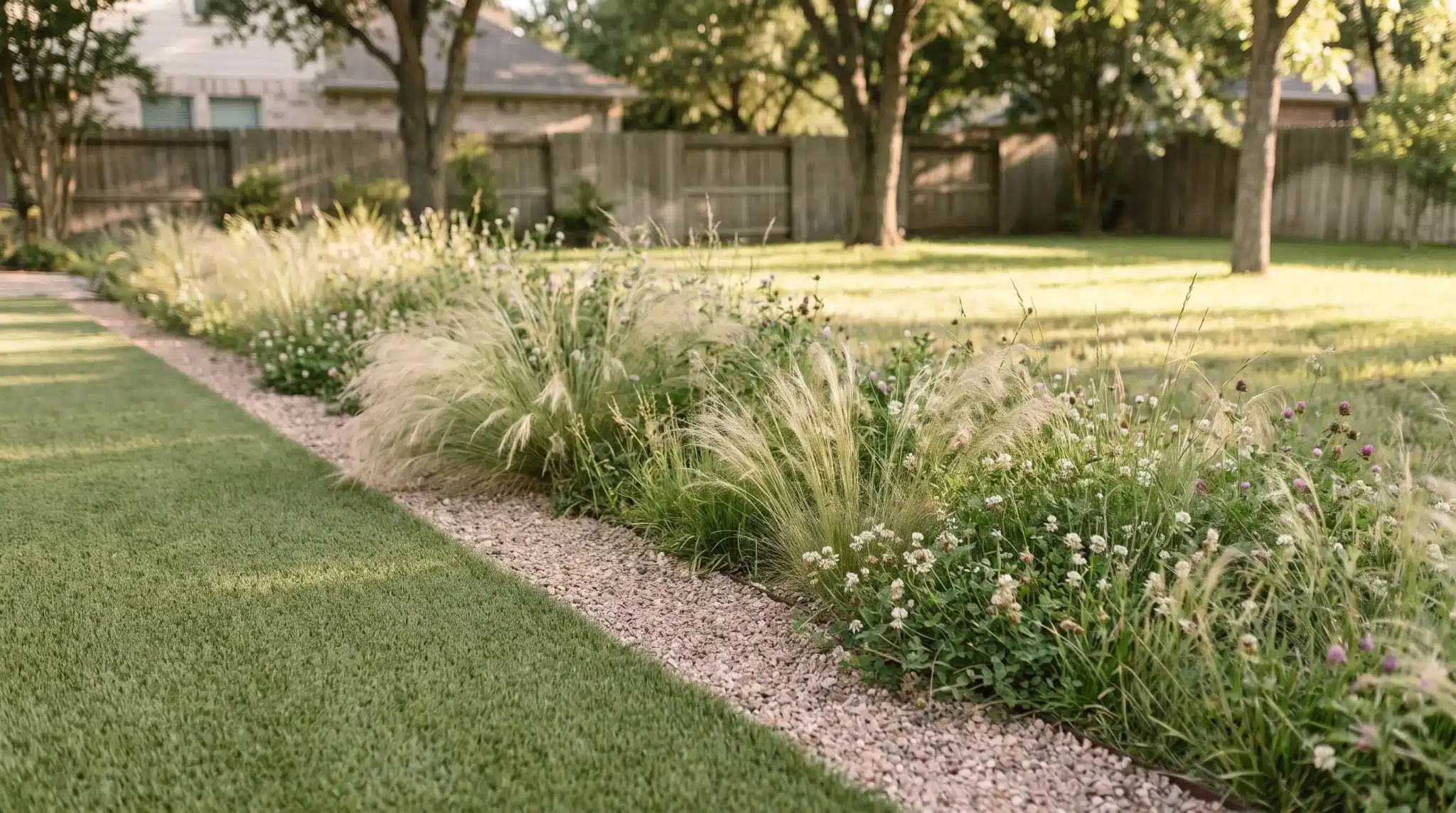
Pairing synthetic turf in high-traffic or difficult-to-maintain zones with native plant beds, pollinator gardens, and drought-tolerant landscaping elsewhere gives a yard the water savings and reduced chemical use that turf offers while preserving habitat value in other parts of the property.
This type of strategy reflects where landscape design is heading among homeowners who care about environmental impact but still want a low-maintenance yard.
Smart placement matters as much as the material choice itself.
Turf works well in side yards, dog runs, and areas that see heavy foot traffic where grass struggles to survive anyway, while natural planting can be concentrated in spaces where biodiversity and seasonal interest matter more than uniform green coverage.
What Homeowners Should Ask Before Installing
Anyone weighing this decision for their own residential landscaping project should look past the marketing language and ask specific questions. What is the infill made from, and does it include recycled or bio-based content?
Does the manufacturer offer a recycling or take-back program once the product reaches the end of its lifespan? How does the backing material hold up over fifteen or twenty years of sun exposure without breaking down into microplastics?
These questions separate genuinely lower-impact products from ones riding on the general sustainability trend without much substance behind the claim.
A well-chosen turf product, installed with drainage and longevity in mind, can meaningfully reduce a household’s water use and chemical dependence.
The environmental case holds up best when it is paired with realistic expectations about what turf cannot do, rather than treated as a complete replacement for every living thing in a yard.
A Reasonable Middle Ground
Sustainability in residential landscaping rarely comes down to a single material choice. It comes down to matching the right surface to the right part of a property, then accounting honestly for what gets gained and what gets given up.
Synthetic turf brings real water and chemical reductions to the table, and for households ready to balance that against its manufacturing footprint and limited habitat value, it earns a legitimate place in a broader sustainable landscape plan.