
You bought the acreage partly for the dog. Now the moving boxes are stacked in the garage, the dog is whining at the back door, and there are several acres out there you haven’t walked yet.
Keep the leash on for one more week. A suburban yard has a fence and a few shrubs. An acreage has a pond, a machine shed, a neighbor’s cattle and whatever lives in the tree line. Walk through these seven checks first.
Check #1 – Boundaries and Fencing
Your property line is the first thing to check, because your dog doesn’t know where it is. Walk the whole perimeter with the survey or plat map in hand, and look at the fence the way a dog would.
Field fence built for cattle stops a cow and not much else. Look for these on your land:
- Gaps under the bottom wire, especially at creek crossings
- Gates that sag or don’t latch
- Low spots where a dog could jump
- Loose barbed wire at nose height
If fencing the whole property is out of reach, fence a smaller dog yard near the house and treat the rest as on-leash or supervised ground. Add a collar tag with your phone number and make sure the microchip record shows the new address.
Check #2 – Pond Access
A pond is the biggest draw on the property for most dogs, so decide when yours is allowed in before the first swim. Walk the bank and find the places where a dog can get in and out easily. Steep or undercut banks are hard to climb, and a tired dog needs a gentle slope or a ramp.
Then look at the water. The CDC warns that animals can get sick and die within hours after swallowing toxins made by harmful algae, and its advice is to keep pets away from water that looks or smells bad. You can’t tell a harmful bloom from a harmless one by eye.
So make the pond off-limits whenever the water is discolored, scummy or smelly. If your dog gets in anyway, rinse it with clean water straight away so it doesn’t lick anything off its coat, and call your vet if it seems unwell. A simple fence or a long line near the bank is enough to enforce the rule in summer.
Check #3 – Pond Water Quality
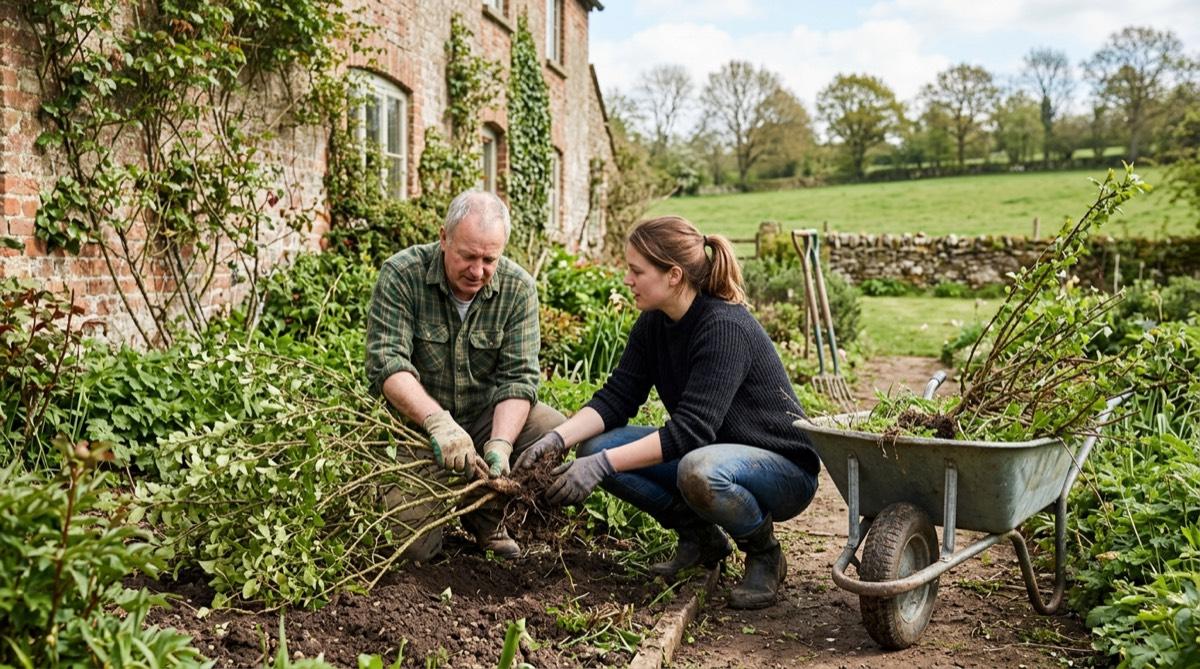
Pond water quality is something you manage all year, and on a pond of a quarter acre or more that means managing what feeds the algae. Algae grows fastest in warm, shallow, still water with plenty of nutrients in it. Those nutrients wash in from the land around the pond: lawn fertilizer, grass clippings and dog waste left near the bank.
Start with the cheap fixes. Pick up after your dog anywhere that drains toward the pond, stop fertilizing close to the edge, and leave an unmown strip of plants along the bank to catch runoff.
If the water is already green, work out which kind of growth you have before you treat it. Floating mats and pea-soup water call for different fixes, and the Everblue Pond rundown of how to get rid of algae in a pond by type matches each kind of algae to a treatment. Whatever you use, read the product label for how long animals should stay out of the water afterward.
Rake out dead algae once a treatment has worked, so it doesn’t sink and feed the next round. On a larger pond, an aerator that keeps the water moving through the warm months does more for the long term than any single treatment.
Check #4 – Plants and Pasture
Plants are worth a slow walk with your phone camera, because acreage has more of them than you chose. Previous owners planted ornamentals, birds planted the rest, and some of both are toxic to dogs.
Photograph anything you can’t name and ask your county extension office or your vet to identify it. Pay closest attention to these:
- Ornamentals near the house, such as sago palm, oleander and azaleas
- Wild mushrooms, which come up after rain
- Compost heaps and piles of moldy feed or hay
- Grass awns and burrs that lodge in ears and paws
You don’t have to clear the property. Remove what’s near the house and the dog yard, fence off the compost, and check your dog’s coat and feet after it runs through tall grass.
Check #5 – Sheds, Chemicals and Machinery
Sheds and barns hold most of the things on an acreage that can hurt a dog quickly. Go through every outbuilding before your dog does, including the ones the last owner left full.
Stored Chemicals
Stored chemicals need to be shut away, up high or behind a door that latches. Antifreeze is the one to find first: it tastes sweet to dogs and a small amount is dangerous. Wipe up drips under vehicles and store the jug closed.
Rodent bait is the other. Rodent poison sold to consumers comes in ready-to-use bait stations, and the EPA says the bait must be secured within the station that comes in the package. Throw out any loose bait or open trays you find in the barn. Do the same for old, unlabeled containers, through your county’s hazardous waste drop-off.
Machinery and Vehicles
Machinery is a risk because operators can’t see or hear a dog near a running mower or tractor. Put your dog inside before any engine starts and make that a house rule for everyone, including visitors and contractors.
Check where equipment is parked too. Keep blades and attachments lowered to the ground, and keep the dog out of the workshop where there are metal shavings, fuel cans and extension cords.
Check #6 – Wildlife and Livestock
Wildlife is the check that depends most on where you live, so get local advice. Ask your vet which animals cause the most trouble in your county, whether that’s venomous snakes, coyotes, porcupines or skunks, and what to do in the first minutes after an encounter.
Keep your dog’s rabies vaccination current, and ask about tick and heartworm prevention suited to your area. Around the house, remove what attracts wild animals: pet food left outside, open trash and brush piles close to the dog yard.
Livestock matter as much as wildlife. A dog that chases a neighbor’s cattle or sheep can be hurt, and in many states the owner of the livestock has legal rights against the dog. Introduce yourself to the neighbors and tell them what your dog looks like.
|
Check #7 – A Vet Plan for Emergencies
A vet plan matters more in the country because help is farther away. Find the nearest clinic that takes emergencies after hours, drive the route once, and save the number in every family member’s phone. Keep a basic first-aid kit and a spare leash in the truck.
Then decide how you’d pay for an emergency. A dedicated savings account, an insurance policy or both will do it. What matters is choosing before the dog needs treatment.
If you go the insurance route, get quotes from several companies. While you compare options for the best pet insurance for a roaming dog, with Spot Pet Insurance in the running, check that each plan lets you use the rural clinic you already trust; Spot’s plans let you visit any licensed vet in the U.S. or Canada. Read each sample policy before you buy, looking at waiting periods, exclusions and how pre-existing conditions are handled.
Whichever way you pay, keep your dog’s vaccination records and your vet’s details in one folder, so a clinic that has never seen your dog can get its history quickly.
Start With One Lap of the Fence Line
You don’t need to finish all seven checks this weekend. Clip on the leash tomorrow morning, walk the boundary with your dog, and write down every gap and hazard you pass. That list tells you which check to do next.
Frequently Asked Questions
Is it safe for my dog to swim in a farm pond?
It can be, as long as the water looks and smells clean and your dog can climb out easily. Keep your dog out whenever the water is discolored, scummy or smelly, because you can’t tell a harmful algae bloom from a harmless one by eye.
What should I lock away in the shed before my dog explores?
Lock away antifreeze, rodent bait and any old or unlabeled chemical containers. Antifreeze tastes sweet to dogs, and loose rodent bait should be thrown out, so go through every outbuilding before your dog does.
Do I need to fence the whole acreage for my dog?
No, a smaller fenced dog yard near the house works if you can’t fence the whole property. Treat the rest of the land as on-leash or supervised ground until you’ve checked the boundary and your dog’s recall.