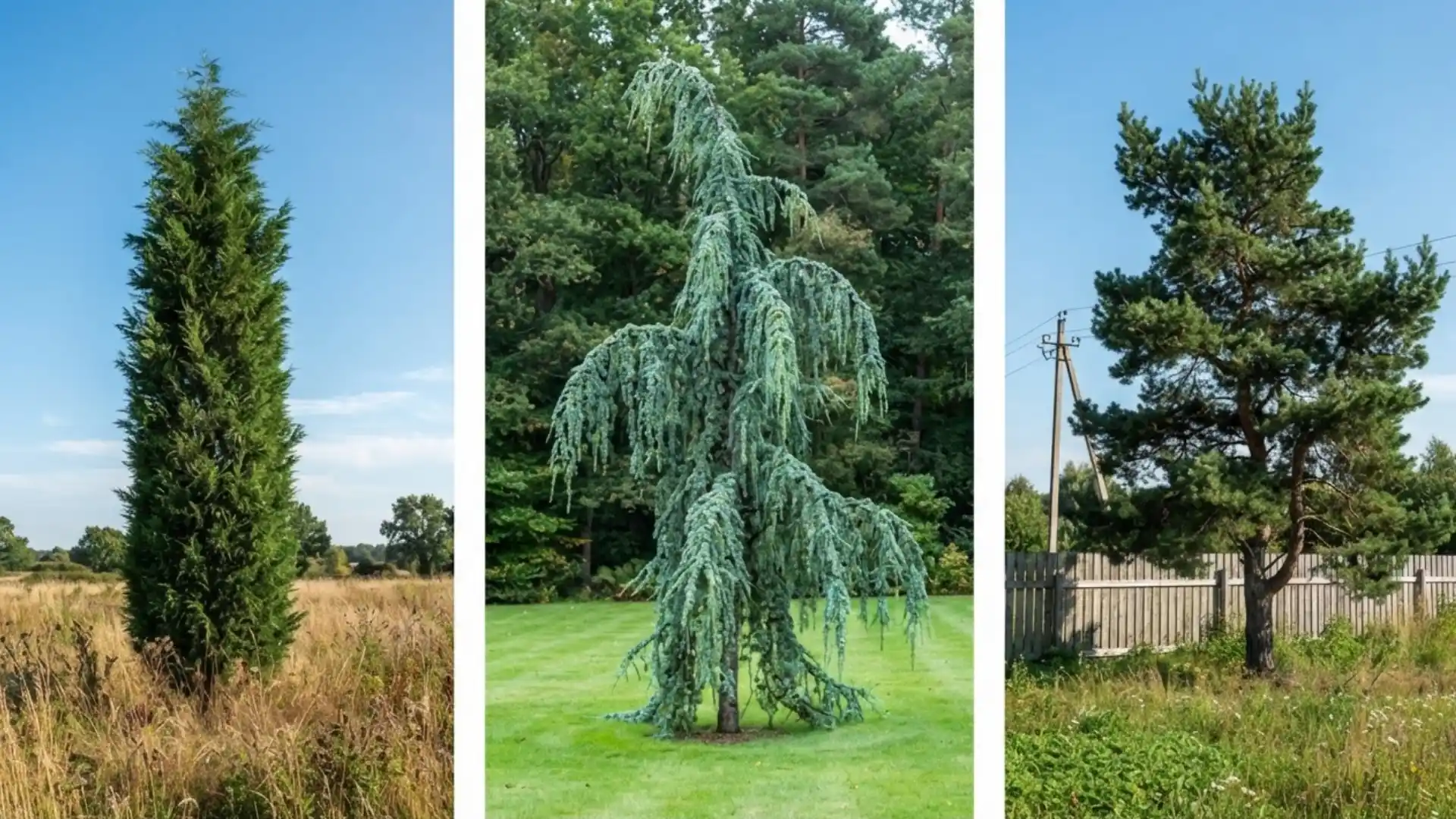
Spruce trees are easy to spot and even easier to love.
Their evergreen needles hold onto color through every season, and those clean, conical shapes give a landscape structure even when everything else has gone quiet for winter.
I love how much range exists within the genus Picea alone, from smoky blue tones to deep forest green to silver that almost glows at dusk.
This roundup covers true species along with cultivars gardeners have shaped over generations, because knowing your spruce means knowing how tall it will grow, which climate it can handle, and where it will actually thrive.
Photos, growth habits, and hardiness details are all laid out so you can match the right spruce to your own space with confidence.
How to Identify a Spruce Tree?
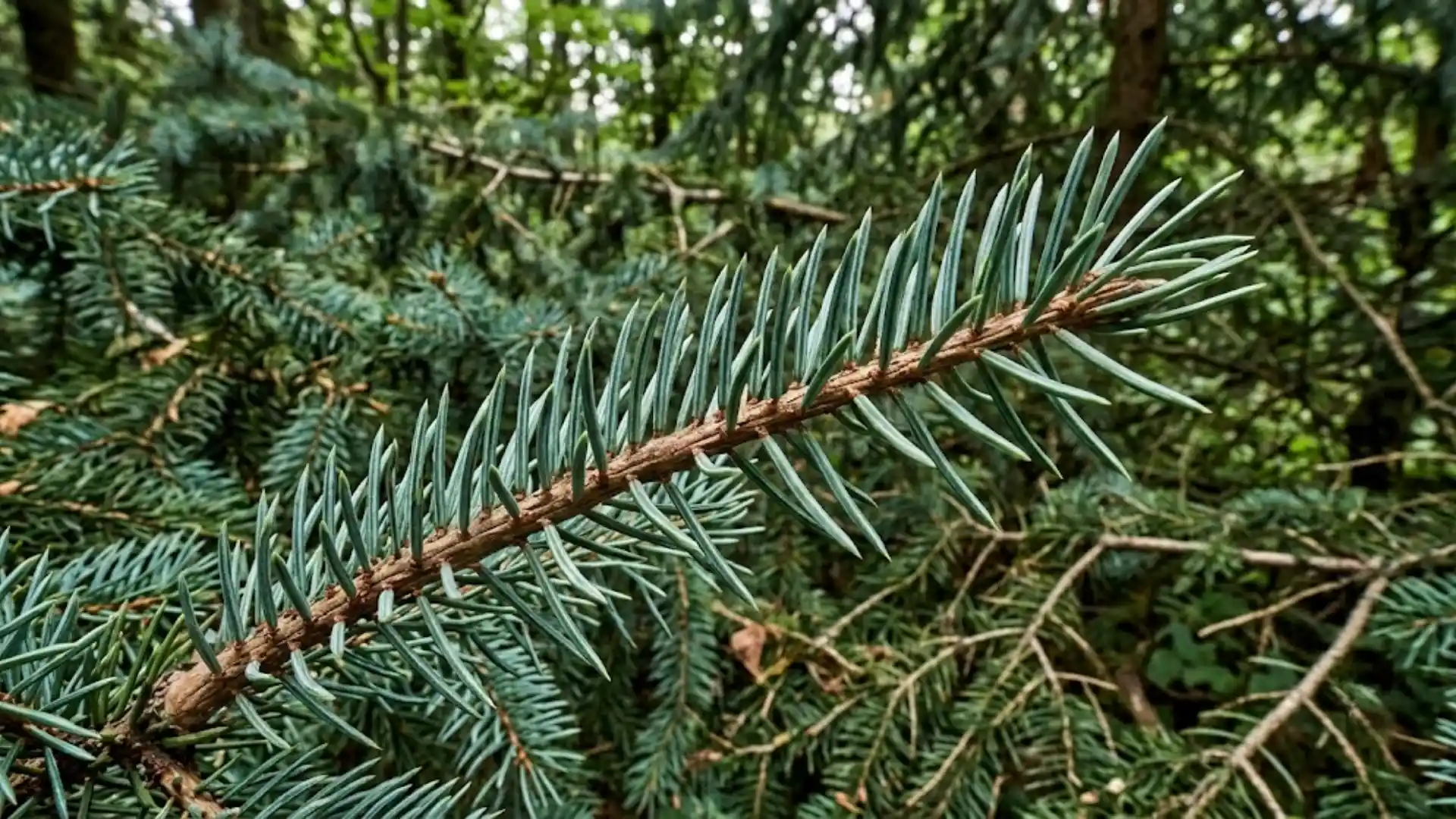
Spruce needles attach individually to the branch, not in bundles, and feel stiff with a slightly four-sided shape you can roll between your fingers.
Color and tip sharpness vary by species, and blue spruce stands out for its notably sharp, stiff needles. Look closer, and you will spot small woody pegs where each needle meets the twig, a detail fir trees do not share.
Cones tend to hang downward rather than stand upright, and their size, texture, and color shift from one species to the next.
Overall shape ranges from tall and pyramidal to narrow spires, weeping forms, and rounded dwarf varieties.
After years of walking nurseries and comparing specimens firsthand, these are the details that consistently separate spruce from other conifers.
| Feature | Spruce | Pine | Fir |
|---|---|---|---|
| Needle Attachment | Individual needles on woody pegs | Usually in bundles | Individual needles attached directly |
| Cones | Usually pendant | Often larger and heavier | Usually upright |
| Needle Feel | Often stiff and sharp | Varies | Usually softer |
| Overall Form | Often conical | Variable | Usually symmetrical |
Types of Spruce Trees
From towering coastal giants to compact garden cultivars, spruce trees offer far more variety than most people expect.
Here is a closer look at the popular types worth knowing, built from firsthand nursery walkthroughs and years of comparing specimens side by side.
21. Black Spruce
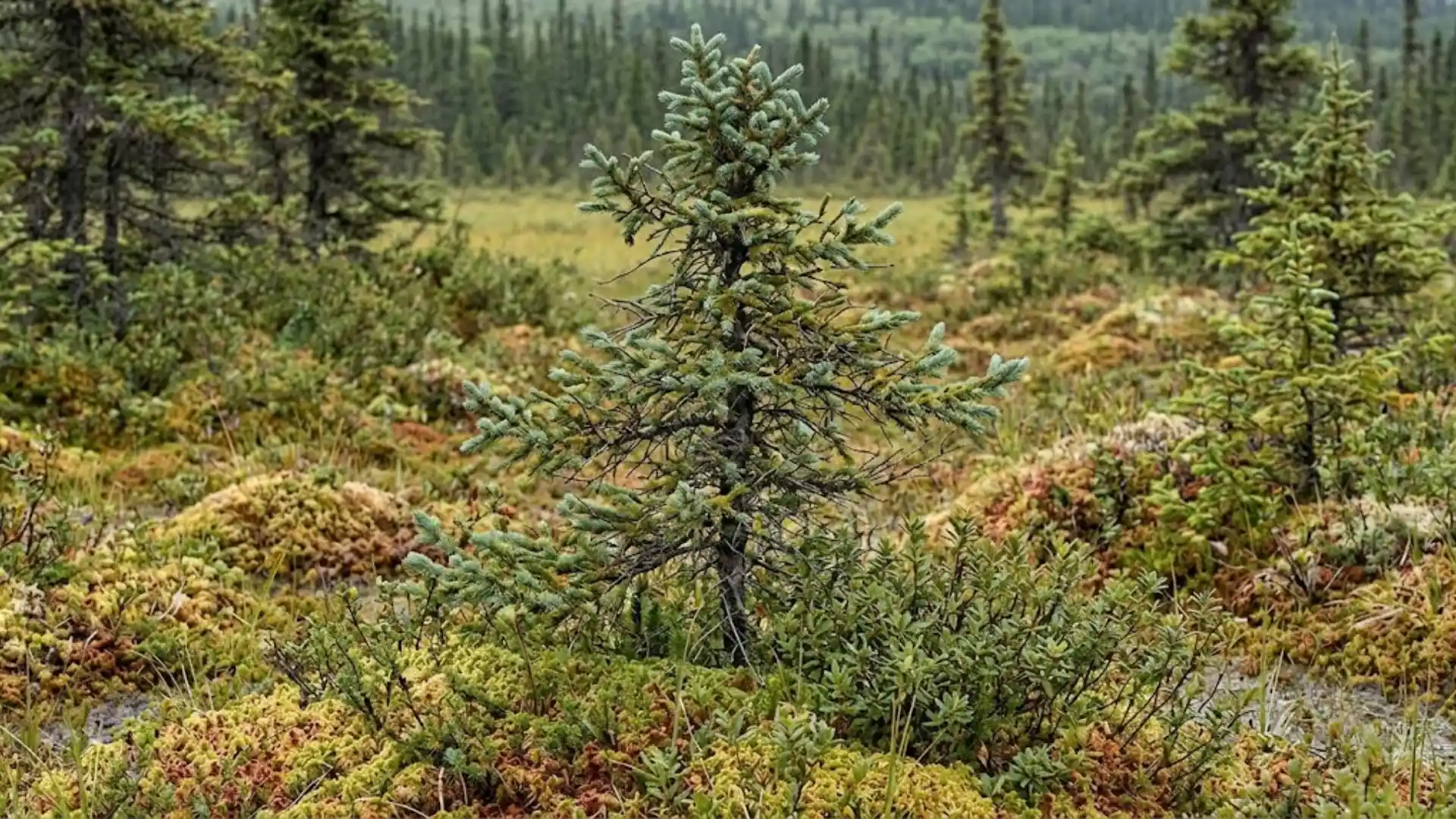
- Botanical name: Picea mariana
- Type: Species
- Mature height and spread: 30-40 ft tall, 10-15 ft spread
- USDA hardiness zones: 2-6
- Native range: Northern North America
- Needle color and texture: Blue-green, short and stiff
Black spruce thrives in the cold, boggy landscapes of the boreal forest, and its narrow, irregular crown reflects that harsh upbringing.
Small cones and short needles set it apart from more ornamental relatives.
In my experience walking wetland edges, this tree rarely suits a manicured lawn. It fits naturalistic, woodland, or cold-climate plantings where soil stays consistently moist, not typical suburban conditions.
20. Brewer Spruce
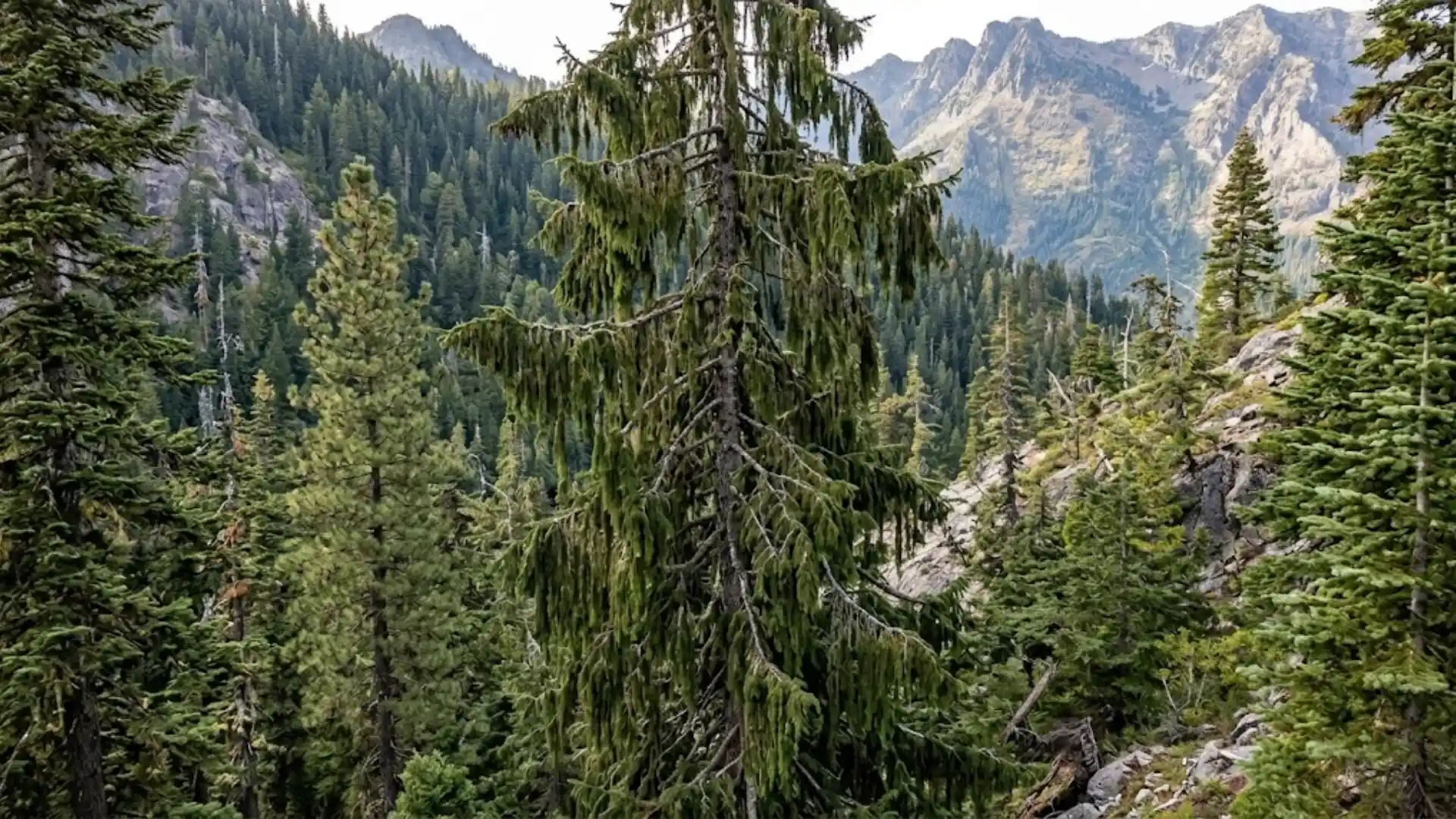
- Botanical name: Picea breweriana
- Type: Species
- Mature height and spread: 30-50 ft tall, 20-25 ft spread
- USDA hardiness zones: 5-7
- Native range: Western North America (Klamath-Siskiyou region)
- Needle color and texture: Dark green, soft to the touch
Brewer spruce is instantly recognizable thanks to its long, pendulous branchlets that drape downward like curtains, a trait no other spruce quite matches.
Its native range is narrow and specific, tied to specialized mountain conditions.
Growing one outside those conditions takes patience and the right microclimate. It works best as a specimen tree where space and climate genuinely allow it to shine.
19. Engelmann Spruce
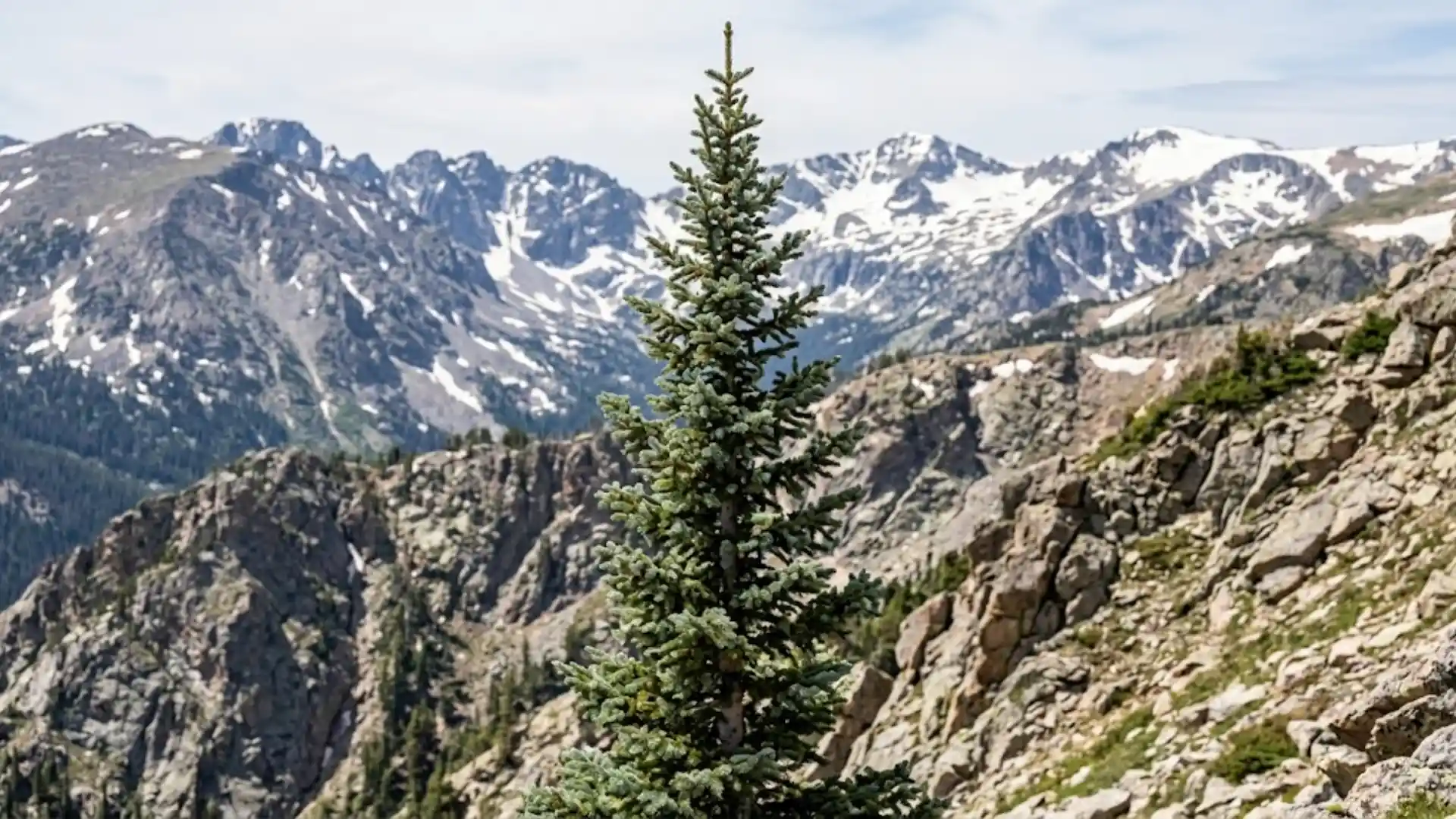
- Botanical name: Picea engelmannii
- Type: Species
- Mature height and spread: 80-100 ft tall, 20-25 ft spread
- USDA hardiness zones: 2-6
- Native range: Rocky Mountains
- Needle color and texture: Blue-green, four-sided and flexible
Engelmann spruce grows narrow and spire-like, built to shed heavy mountain snow rather than spread wide.
Its blue-green needles are softer to the touch than Colorado blue spruce, a detail that helps with identification in the field. Native to high-elevation Rocky Mountain terrain, it struggles in warm, humid climates.
Cool, mountainous, or high-elevation landscapes suit it far better than typical lowland yards.
18. Red Spruce
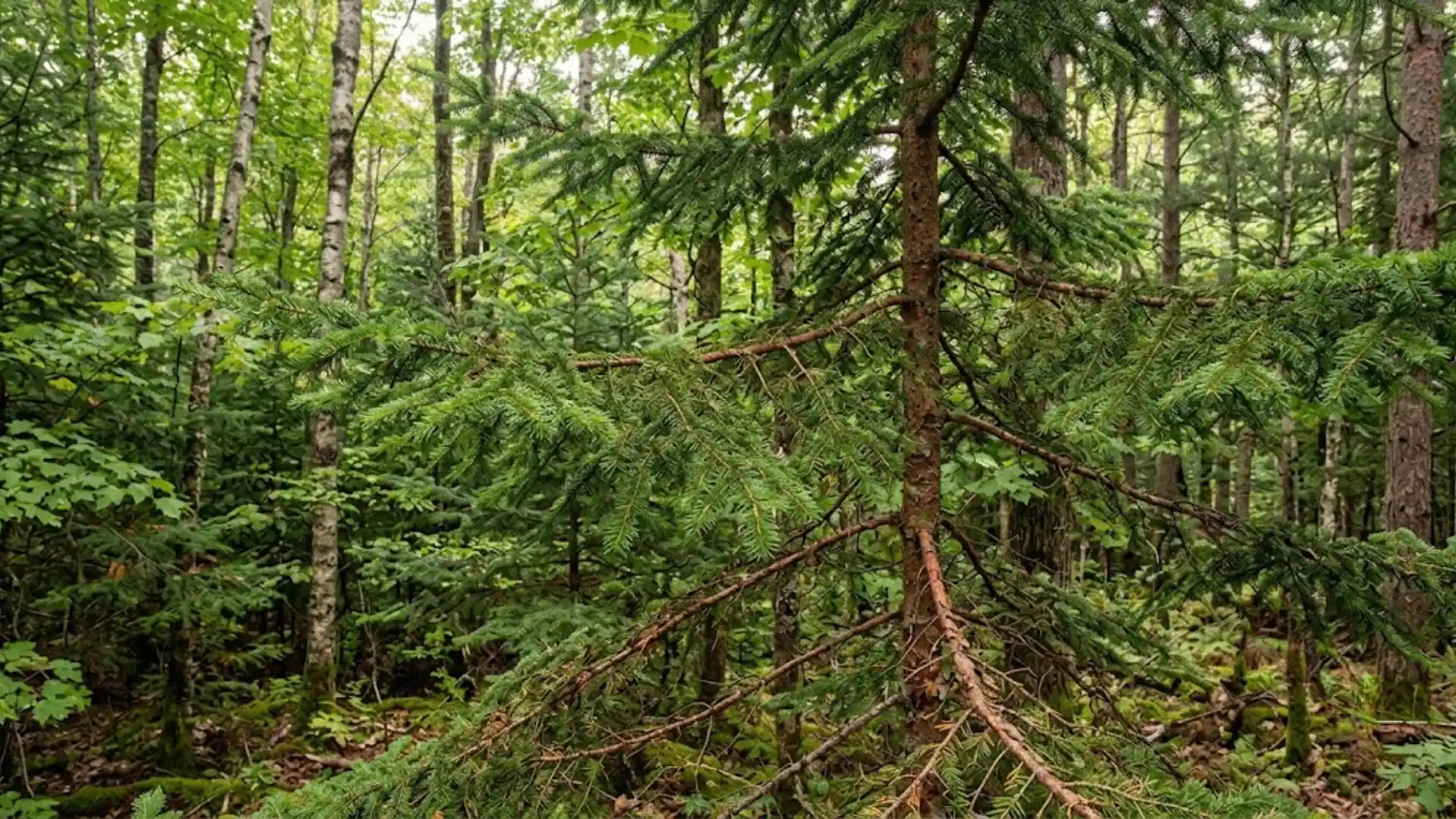
- Botanical name: Picea rubens
- Type: Species
- Mature height and spread: 60-80 ft tall, 20-25 ft spread
- USDA hardiness zones: 3-6
- Native range: Eastern North America (Appalachians, Northeast)
- Needle color and texture: Dark yellow-green, glossy
Red spruce gets its name from the reddish-brown bark and twigs that stand out against darker green needles.
It’s often mistaken for Norway spruce, but its slenderness and native Appalachian range set it apart. This tree is built for larger eastern properties rather than tight residential lots.
Native plantings and reforestation projects are where it earns its keep most naturally.
17. Sitka Spruce
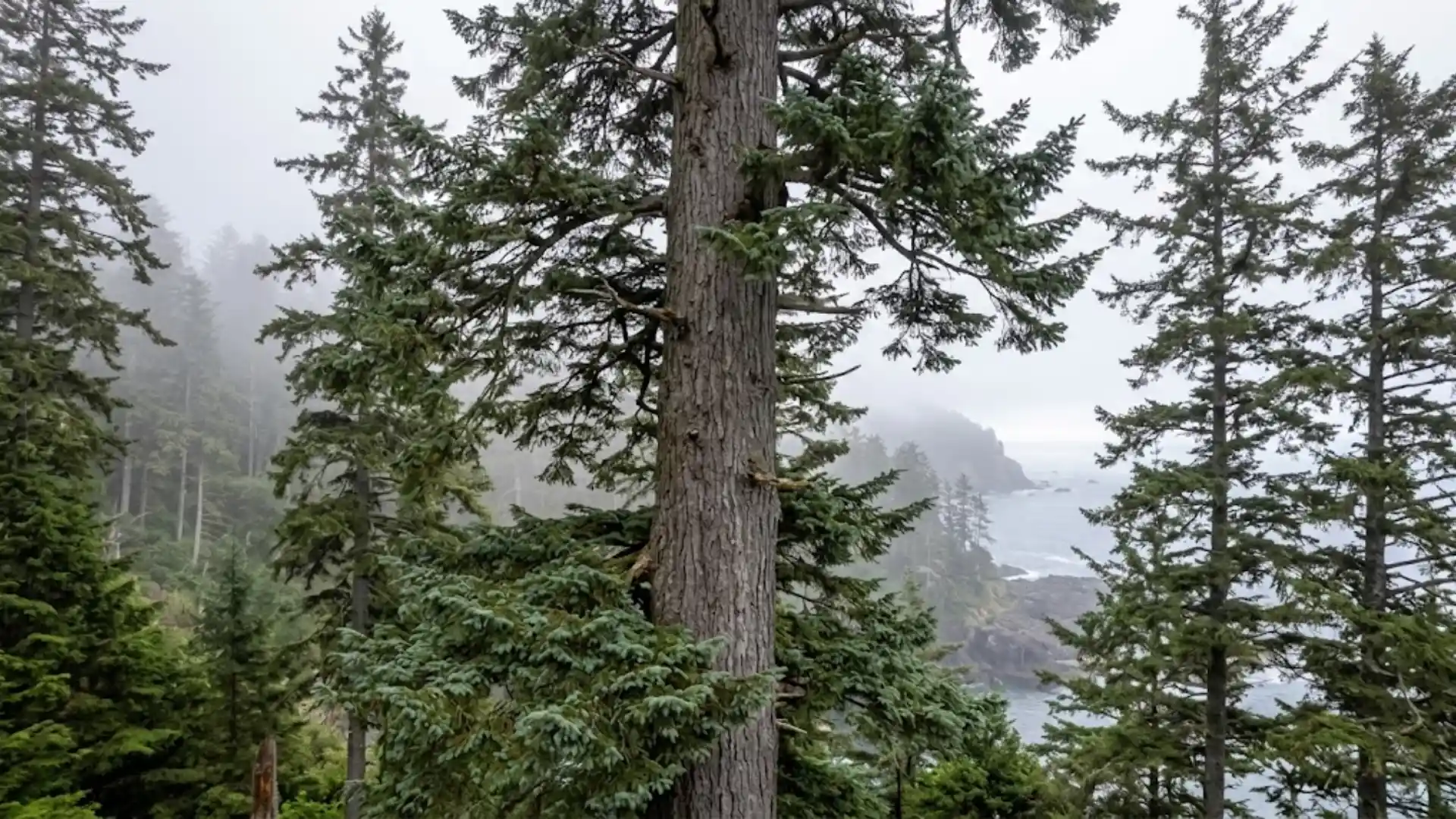
- Botanical name: Picea sitchensis
- Type: Species
- Mature height and spread: 160-225 ft tall, 20-30 ft spread
- USDA hardiness zones: 6-8
- Native range: Pacific coastal North America
- Needle color and texture: Blue-green, flattened and angular
Sitka spruce ranks among the largest conifers in the world, and its scale alone makes it unforgettable along foggy Pacific coastlines.
Flattened, angular needles distinguish it up close, while its sheer height sets it apart from a distance.
Not for small yards, this tree demands room to grow. It belongs in expansive natural landscapes or coastal regions, not ordinary residential plots.
16. White Spruce
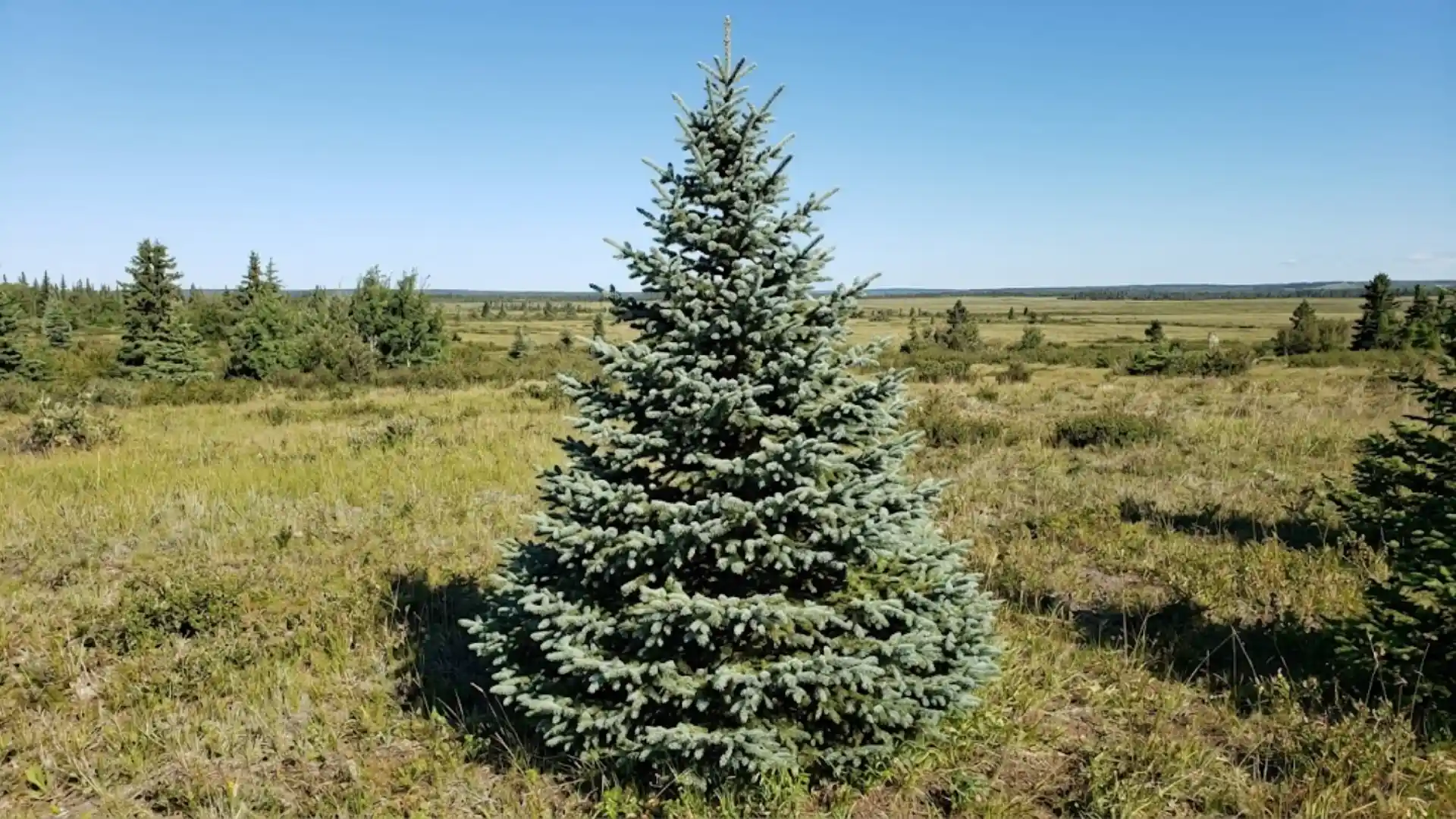
- Botanical name: Picea glauca
- Type: Species
- Mature height and spread: 40-60 ft tall, 10-20 ft spread
- USDA hardiness zones: 2-6
- Native range: Northern North America
- Needle color and texture: Blue-green to green, glaucous
White spruce forms a dense, conical silhouette that reads as classically “spruce-shaped” from any angle.
Its needles carry a soft glaucous coating, but they are generally less intensely blue than Colorado blue spruce, a useful distinction when telling the two apart. This adaptable species handles wind and cold well.
Screens, windbreaks, and larger specimen plantings all suit its sturdy, forgiving nature.
15. Black Hills Spruce
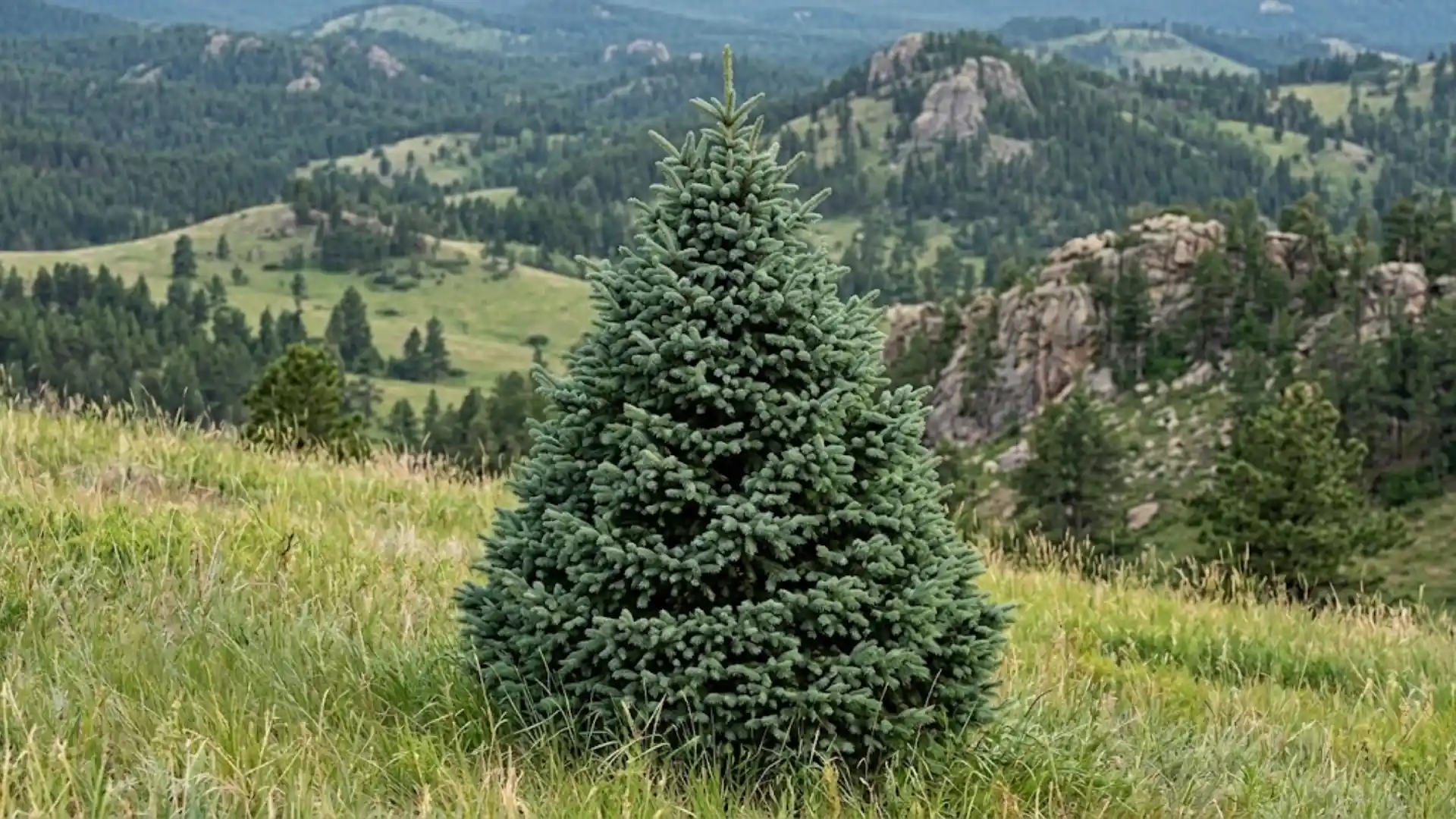
- Botanical name: Picea glauca var. densata
- Type: Species variety
- Mature height and spread: 20-40 ft tall, 15-20 ft spread
- USDA hardiness zones: 3-7
- Native range: Black Hills region, South Dakota/Wyoming
- Needle color and texture: Blue-green, dense and short
Rather than a separate species, Black Hills spruce is a naturally occurring regional form of white spruce, prized for its especially dense branching.
Its compact, tightly conical shape develops without much pruning, which explains why it’s a favorite for Christmas-tree-style plantings. Cold winters suit it well.
Specimen planting and privacy screening both work nicely in colder regions where it grows most reliably.
14. Dwarf Alberta Spruce
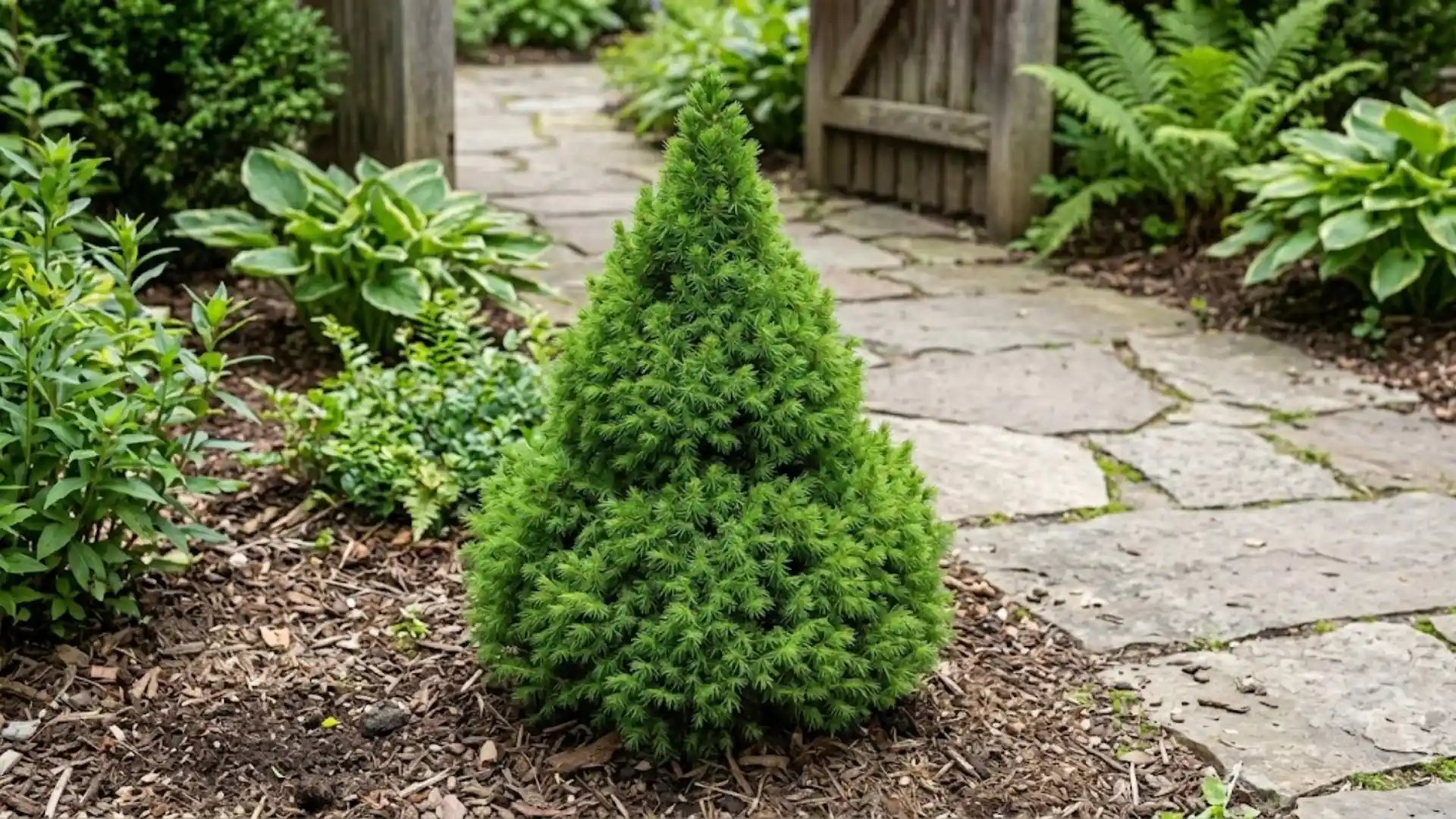
- Botanical name: Picea ‘Conica’
- Type: Cultivar
- Mature height and spread: 6-10 ft tall, 3-5 ft spread
- USDA hardiness zones: 3-8
- Native range: Cultivated origin (naturally occurring dwarf sport of white spruce)
- Needle color and texture: Bright green, fine and soft
This cultivar, not a wild species, originated as a naturally occurring dwarf mutation of white spruce, and its miniature conical form has made it a landscaping staple ever since.
Growth is famously slow, keeping it tidy for years in containers or entryways.
Watch for spider mites, especially in hot, humid conditions with poor airflow, since this is its most common vulnerability.
13. Colorado Blue Spruce
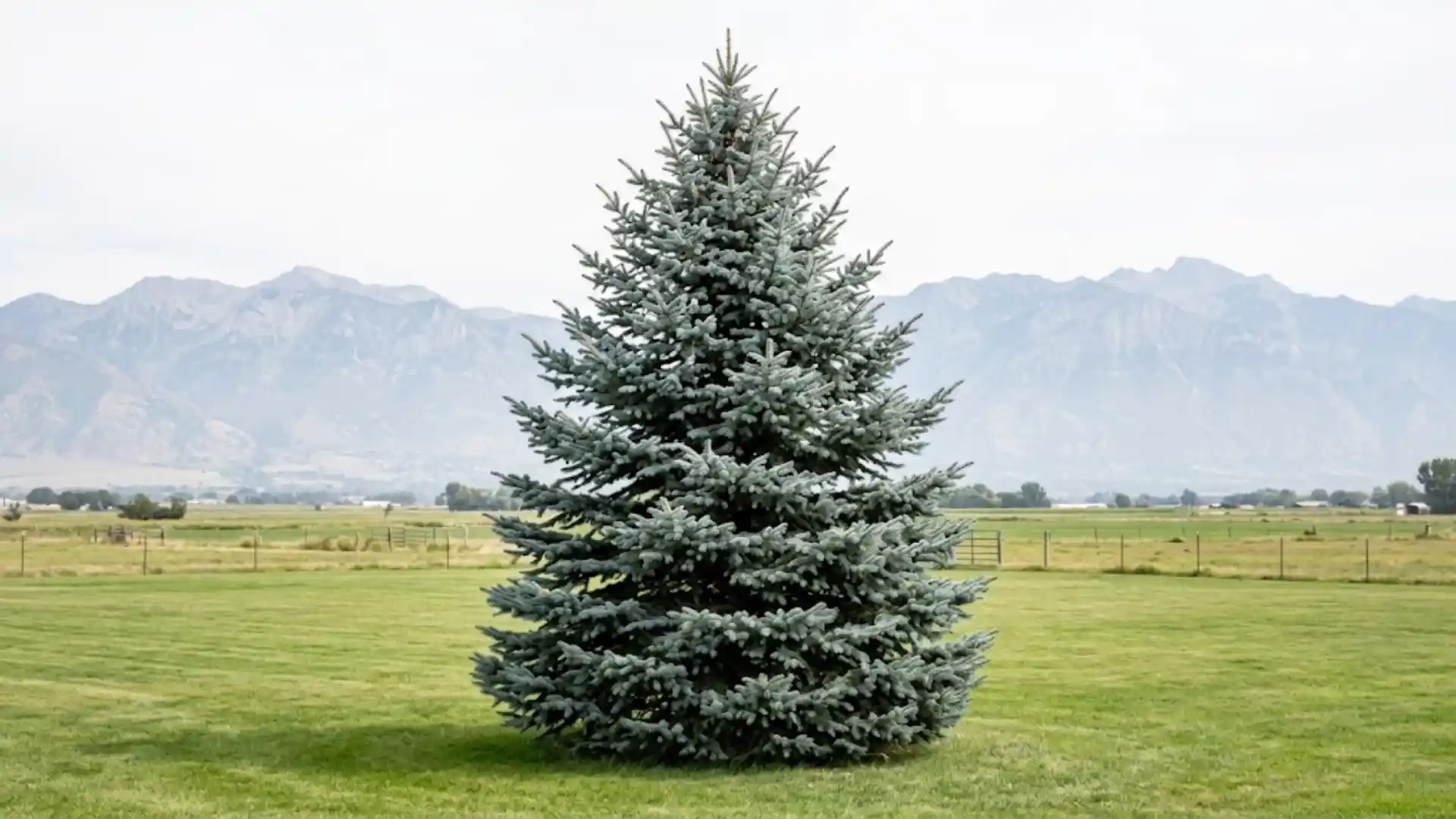
- Botanical name: Picea pungens
- Type: Species
- Mature height and spread: 50-75 ft tall, 10-20 ft spread
- USDA hardiness zones: 2-7
- Native range: Rocky Mountains
- Needle color and texture: Blue-green to silvery-blue, stiff and sharp
Colorado blue spruce is arguably the most recognizable spruce in American landscapes, thanks to its striking silvery-blue, rigid needles that are noticeably prickly to the touch.
Horizontal branching gives it a formal, pyramidal structure. It handles cold well but can struggle in heat and humidity.
Specimen plantings, windbreaks, and formal accents all showcase its color best in cooler climates.
12. ‘Fat Albert’ Blue Spruce
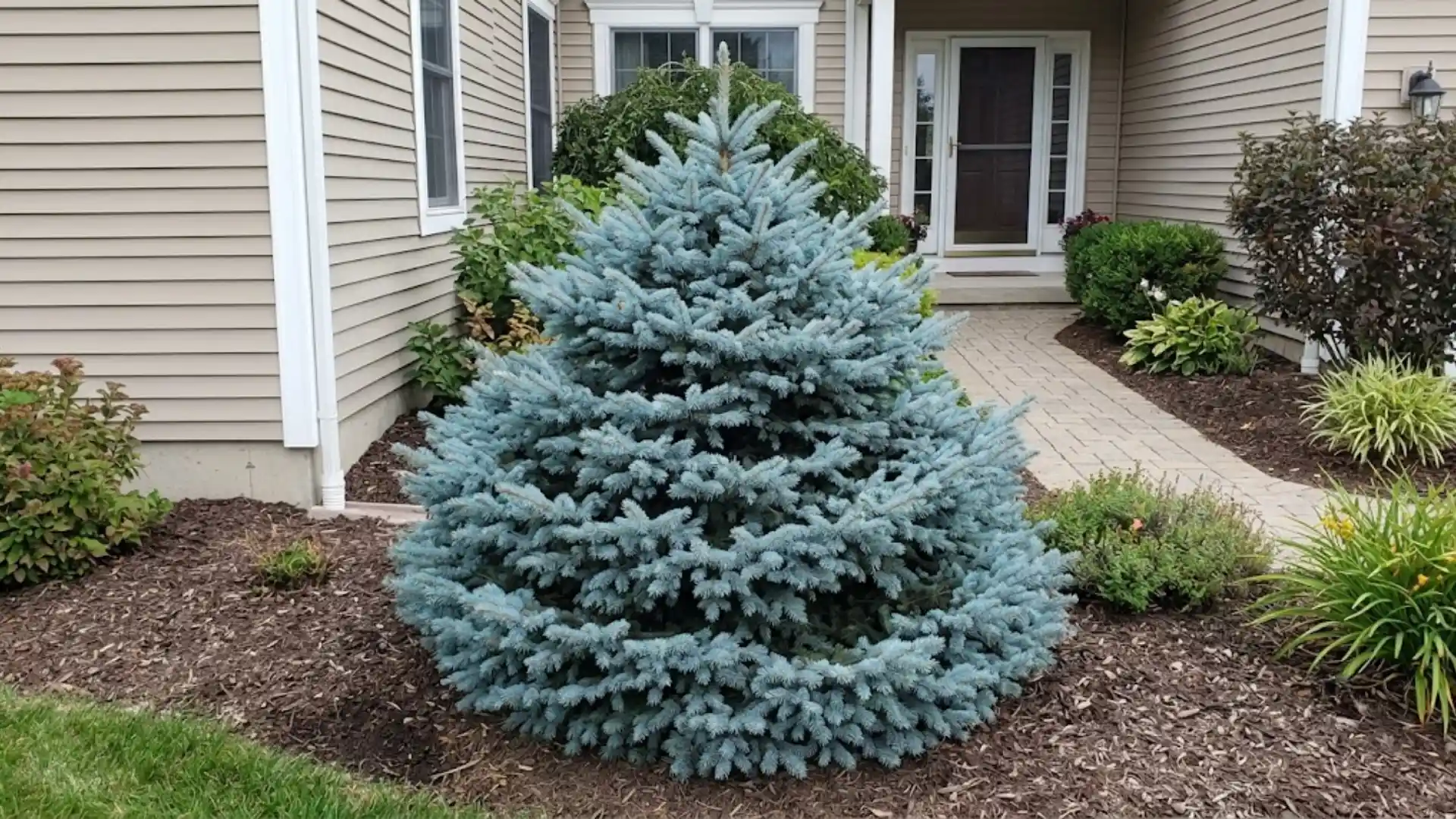
- Botanical name: Picea pungens ‘Fat Albert’
- Type: Cultivar
- Mature height and spread: 10-15 ft tall, 10-12 ft spread
- USDA hardiness zones: 2-7
- Native range: Cultivated selection (derived from Colorado blue spruce)
- Needle color and texture: Vivid blue, dense and stiff
Unlike the towering species-level Colorado blue spruce, ‘Fat Albert’ stays compact and broad, making it a far more practical fit for average residential lots.
Its dense branching and vivid blue color come through even at a smaller scale.
This is a reliable pick for gardeners who want that classic blue spruce look without the eventual size commitment.
11. Norway Spruce
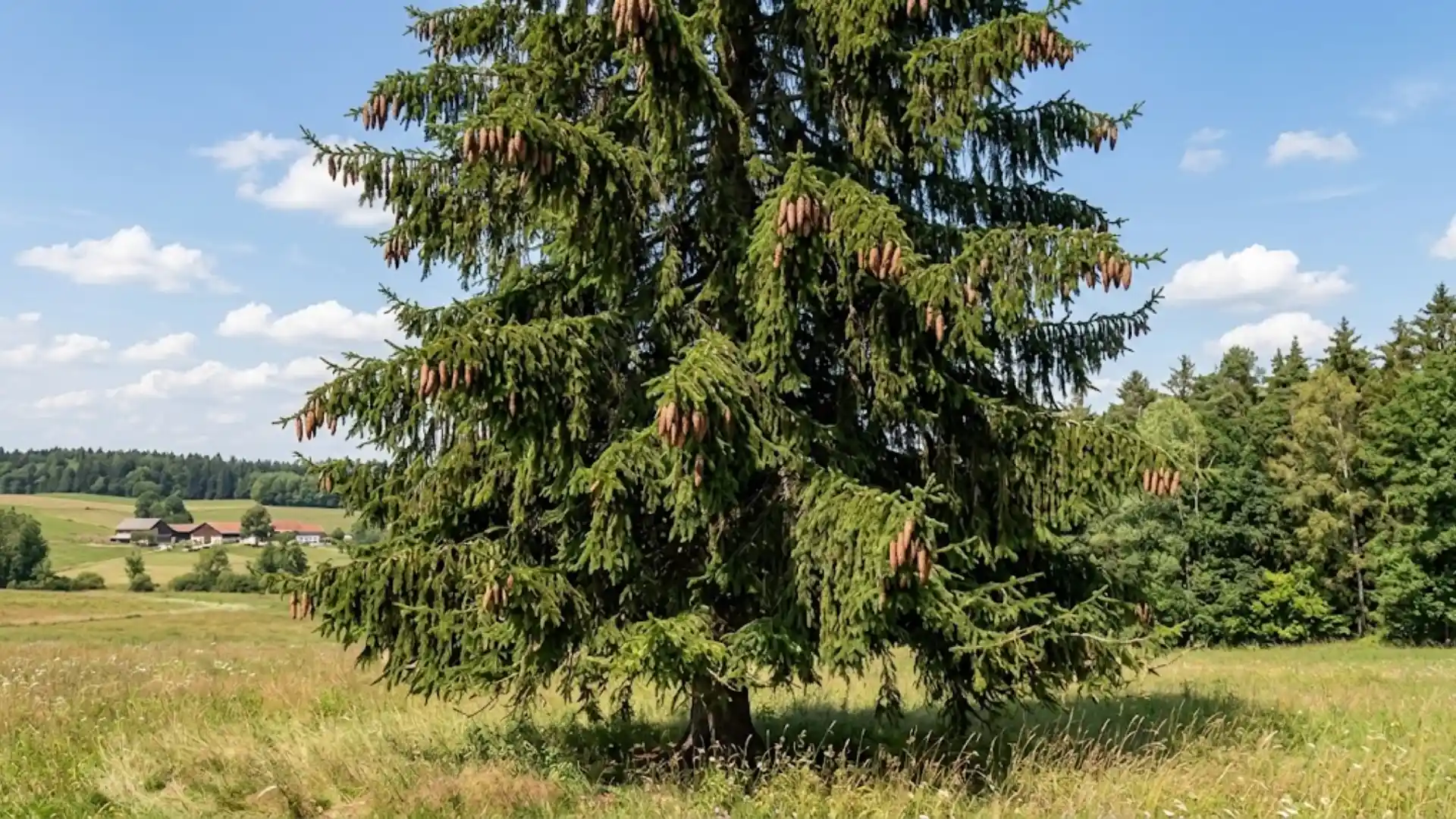
- Botanical name: Picea abies
- Type: Species
- Mature height and spread: 40-60 ft tall, 25-30 ft spread
- USDA hardiness zones: 2-7
- Native range: Europe
- Needle color and texture: Dark green, glossy and short
Norway spruce grows fast and large, with drooping branch tips and some of the longest hanging cones in the genus.
It is widely planted for Christmas trees, windbreaks, and screening thanks to that vigorous growth.
Check your local conditions before planting, since its size and spreading habit are not ideal for every yard, and some regions flag it for naturalization concerns.
10. Bird’s Nest Spruce
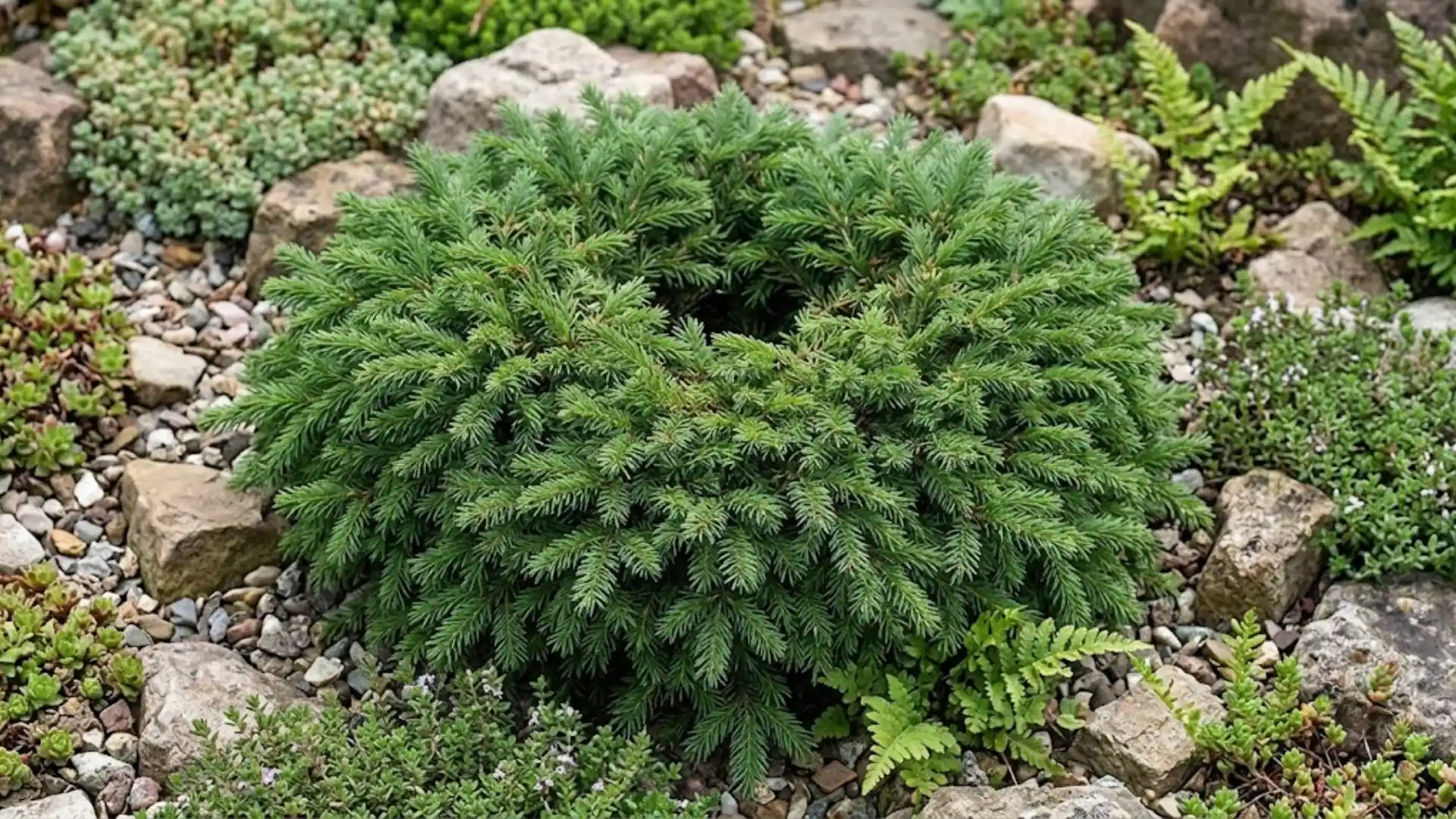
- Botanical name: Picea abies’ Nidiformis’
- Type: Cultivar
- Mature height and spread: 3-5 ft tall, 4-6 ft spread
- USDA hardiness zones: 2-7
- Native range: Cultivated dwarf form of Norway spruce
- Needle color and texture: Dark green, short and dense
As a dwarf cultivar of Norway spruce, this variety trades height for a low, rounded shape with a distinctive central depression that resembles a nest.
It fills the gap when a full-size Norway spruce would overwhelm a smaller space.
Slow growth keeps maintenance minimal. Rock gardens, foundation beds, and borders all benefit from its tidy, low-profile form.
9. Serbian Spruce
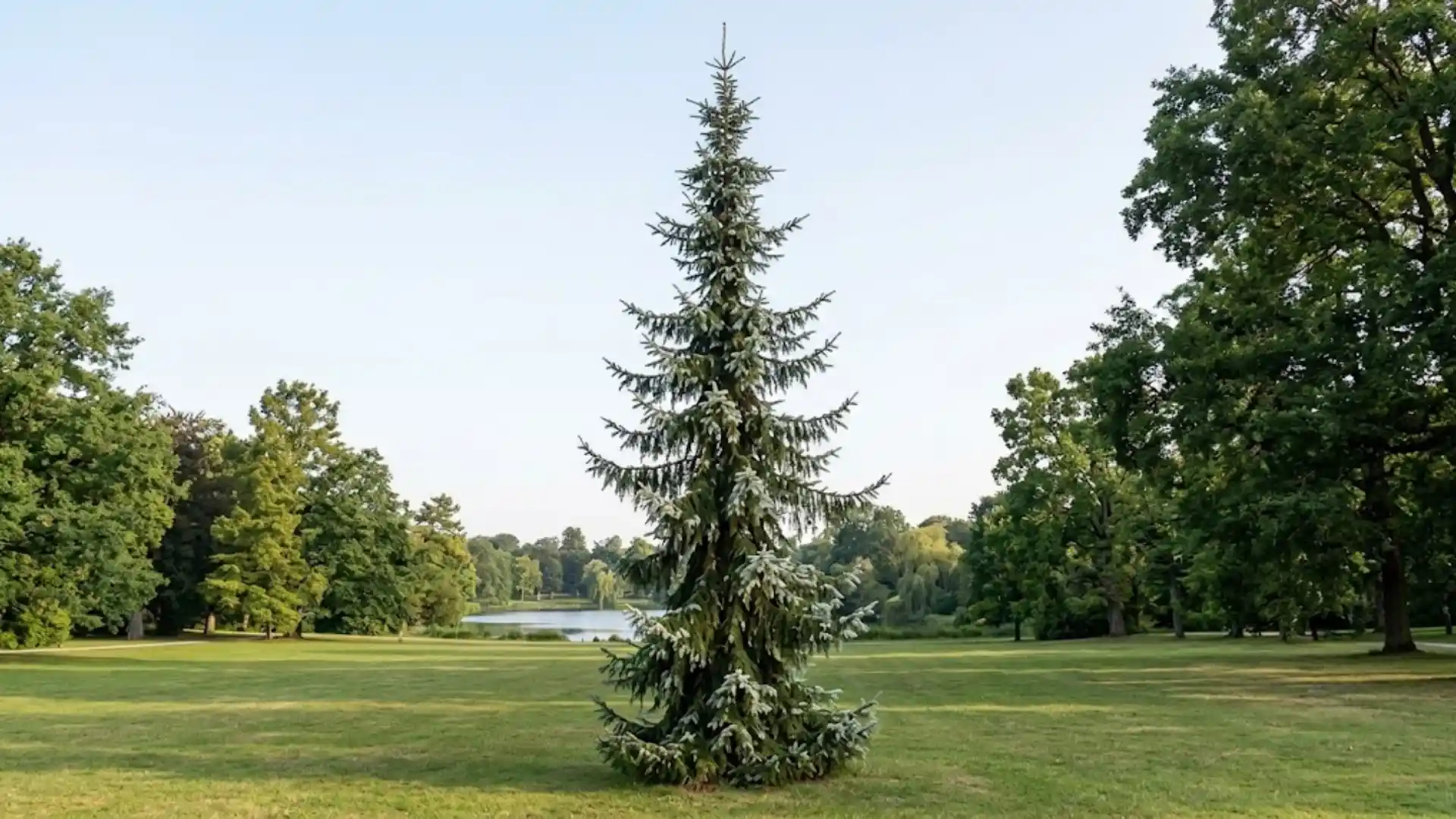
- Botanical name: Picea omorika
- Type: Species
- Mature height and spread: 50-60 ft tall, 15-20 ft spread
- USDA hardiness zones: 4-7
- Native range: Balkans (Serbia, Bosnia)
- Needle color and texture: Dark green above, silvery-white beneath
Serbian spruce carries an elegant, narrow silhouette that fits where wider spruces simply won’t.
Its two-toned foliage, dark green on top with silvery undersides, catches light in a way few other spruces can match.
Pendant branches add movement to the form. This narrow footprint makes it ideal for tight spaces, screens, and lawn accents in modest-sized landscapes.
8. Dwarf Serbian Spruce
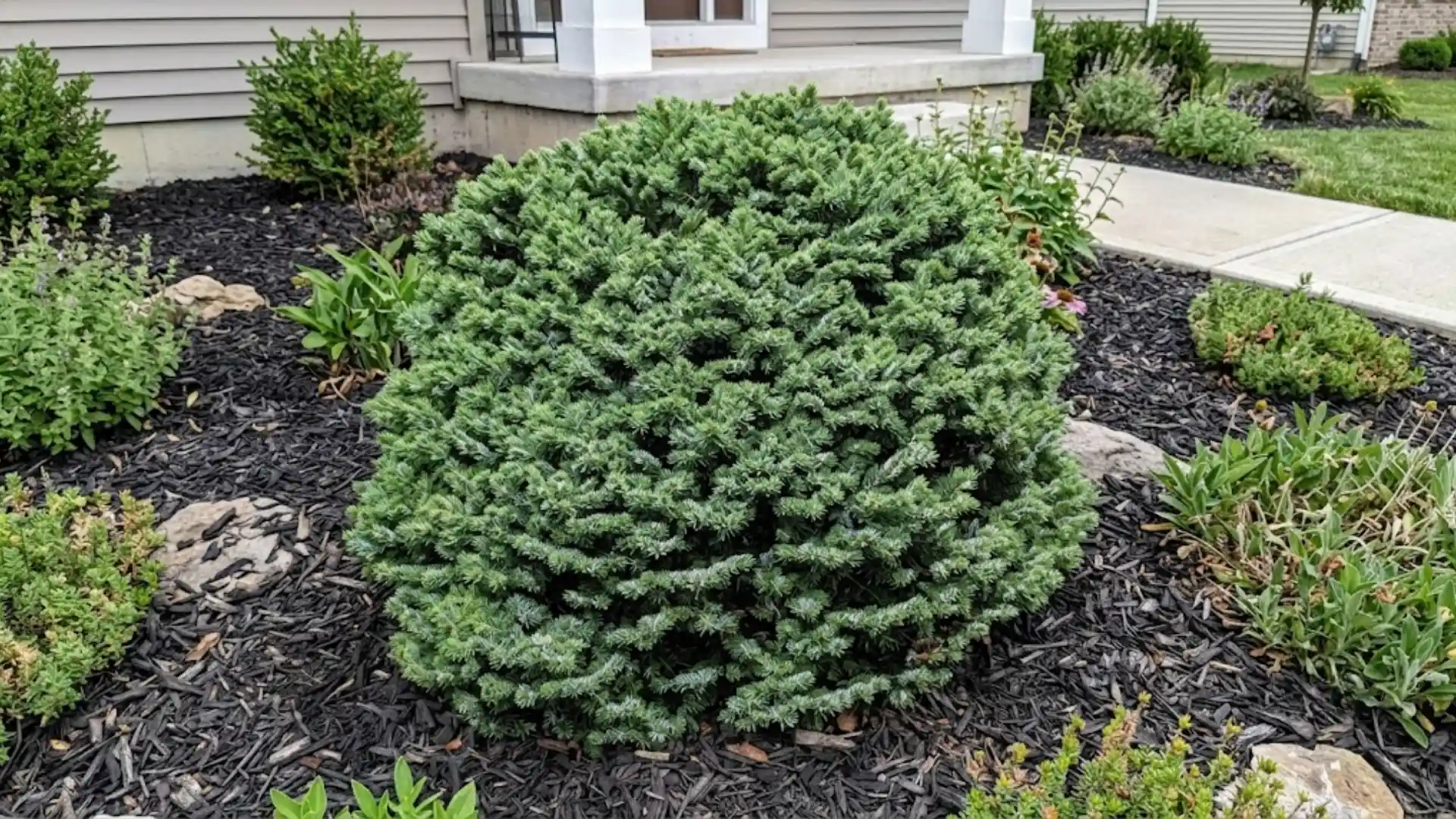
- Botanical name: Picea omorika ‘Nana’
- Type: Cultivar
- Mature height and spread: 6-10 ft tall, 4-6 ft spread
- USDA hardiness zones: 4-7
- Native range: Cultivated compact form of Serbian spruce
- Needle color and texture: Dark green above, pale beneath
This compact cultivar keeps the signature two-toned needles of Serbian spruce while staying rounded and manageable in its early years, eventually filling out into a denser cone shape.
Its silvery undersides remain the clearest identification cue.
Smaller gardens and foundation beds gain texture and color contrast from this variety without demanding much space.
7. Caucasian Spruce
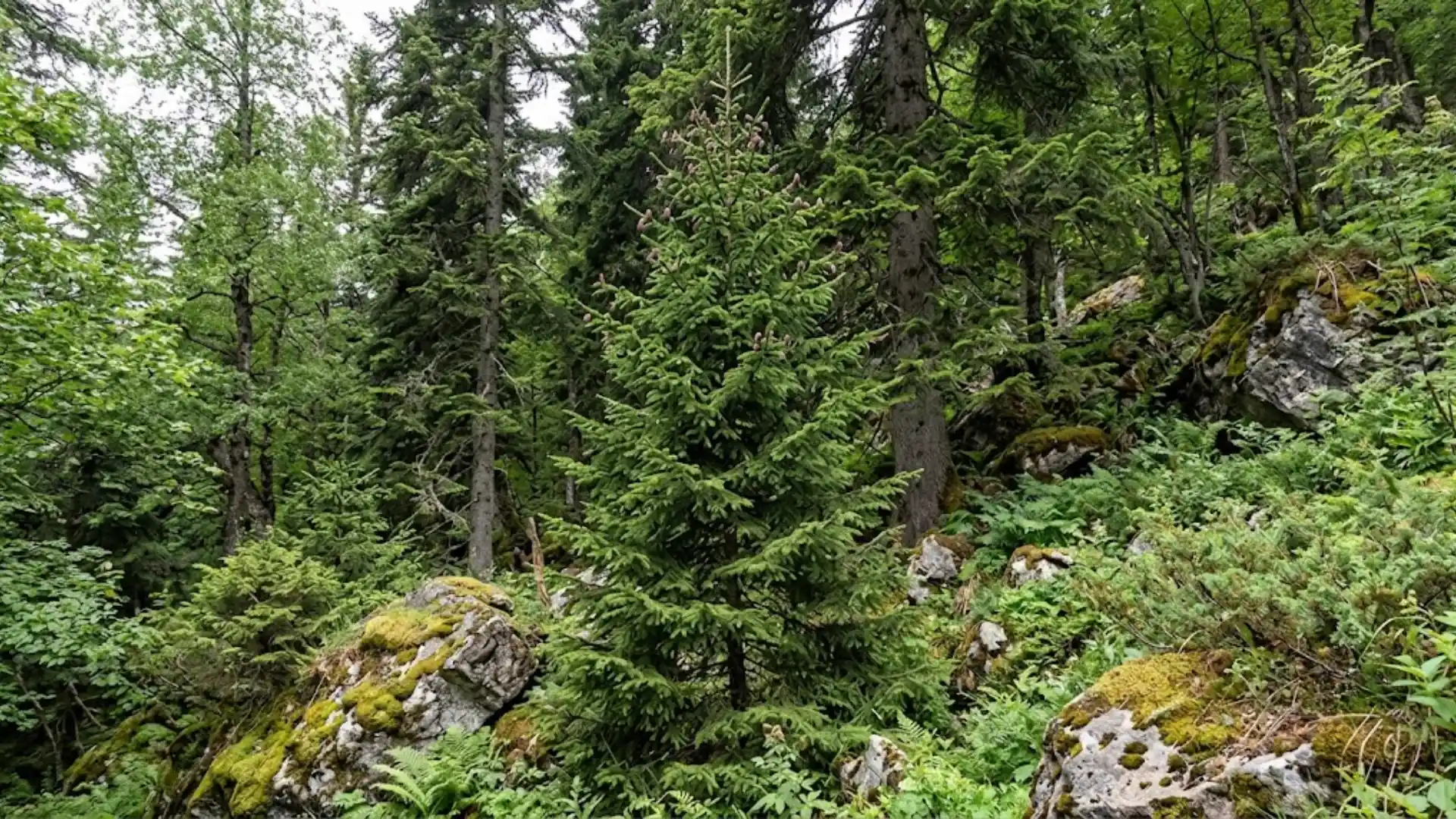
- Botanical name: Picea orientalis
- Type: Species
- Mature height and spread: 50-70 ft tall, 20-25 ft spread
- USDA hardiness zones: 4-7
- Native range: Caucasus region, northeastern Turkey
- Needle color and texture: Dark green, glossy and very short
Caucasian spruce stands out for needles so short and blunt-tipped they almost look feathered against the branch, giving the whole tree a refined, dense texture.
Growth is notably slow compared to other spruces, which appeals to gardeners after a more controlled form.
Formal gardens and cool-climate landscapes both suit its understated, tidy appearance well.
6. Korean Spruce
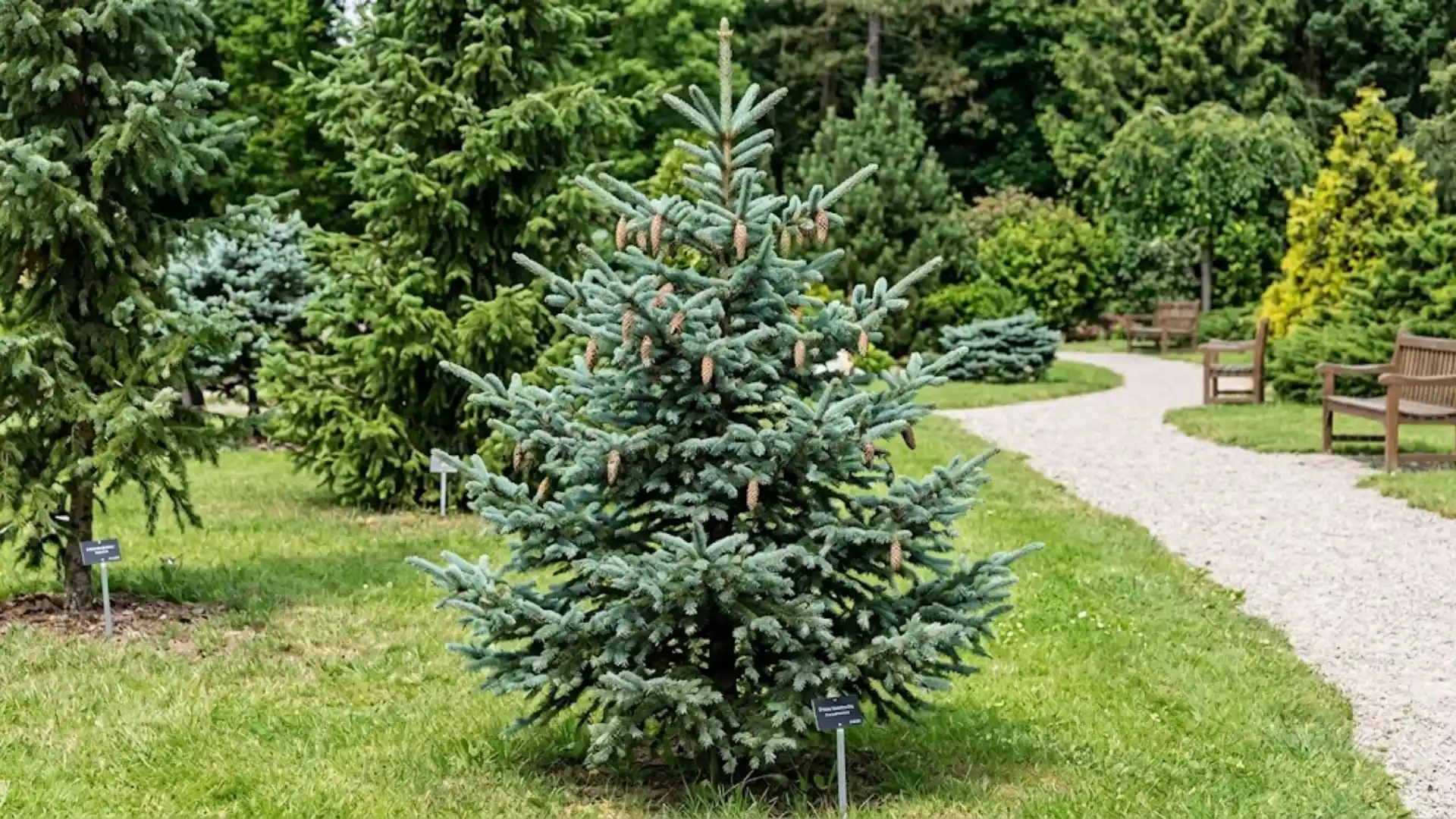
- Botanical name: Picea koraiensis
- Type: Species
- Mature height and spread: 30-50 ft tall, 15-20 ft spread
- USDA hardiness zones: 3-7
- Native range: Northeastern Asia (Korea, Manchuria, Siberia)
- Needle color and texture: Blue-green, moderately stiff
Korean spruce does not get nearly the attention of its Colorado cousin, but its blue-green foliage and attractive cones make it a worthwhile ornamental choice for gardeners after something less common.
Its compact-to-medium size fits a range of cool-climate gardens without overwhelming them.
Specimen planting is where this underused species tends to perform best.
5. Meyer Spruce
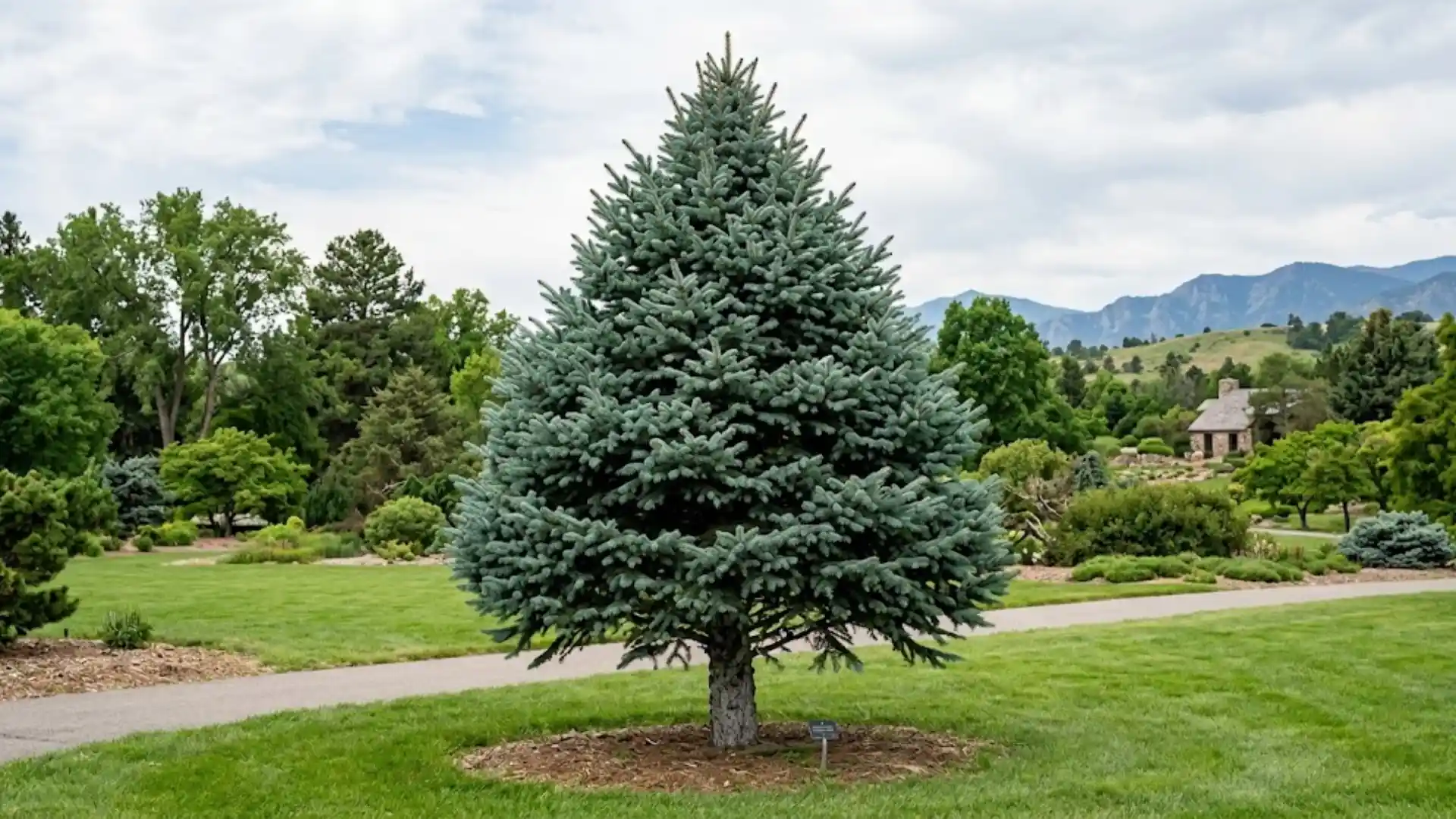
- Botanical name: Picea meyeri
- Type: Species
- Mature height and spread: 30-50 ft tall, 15-20 ft spread
- USDA hardiness zones: 4-7
- Native range: Northern China
- Needle color and texture: Blue-green, thick and blunt-tipped
Meyer spruce closely resembles Colorado blue spruce at a glance. However, its needles are thicker and less sharply pointed, making it a gentler option for hands-on gardens with kids or pets.
Its dense pyramidal form and blue-green color deliver a similar visual payoff.
Consider it when you want that blue spruce look with a slightly different growth profile.
4. Schrenk Spruce
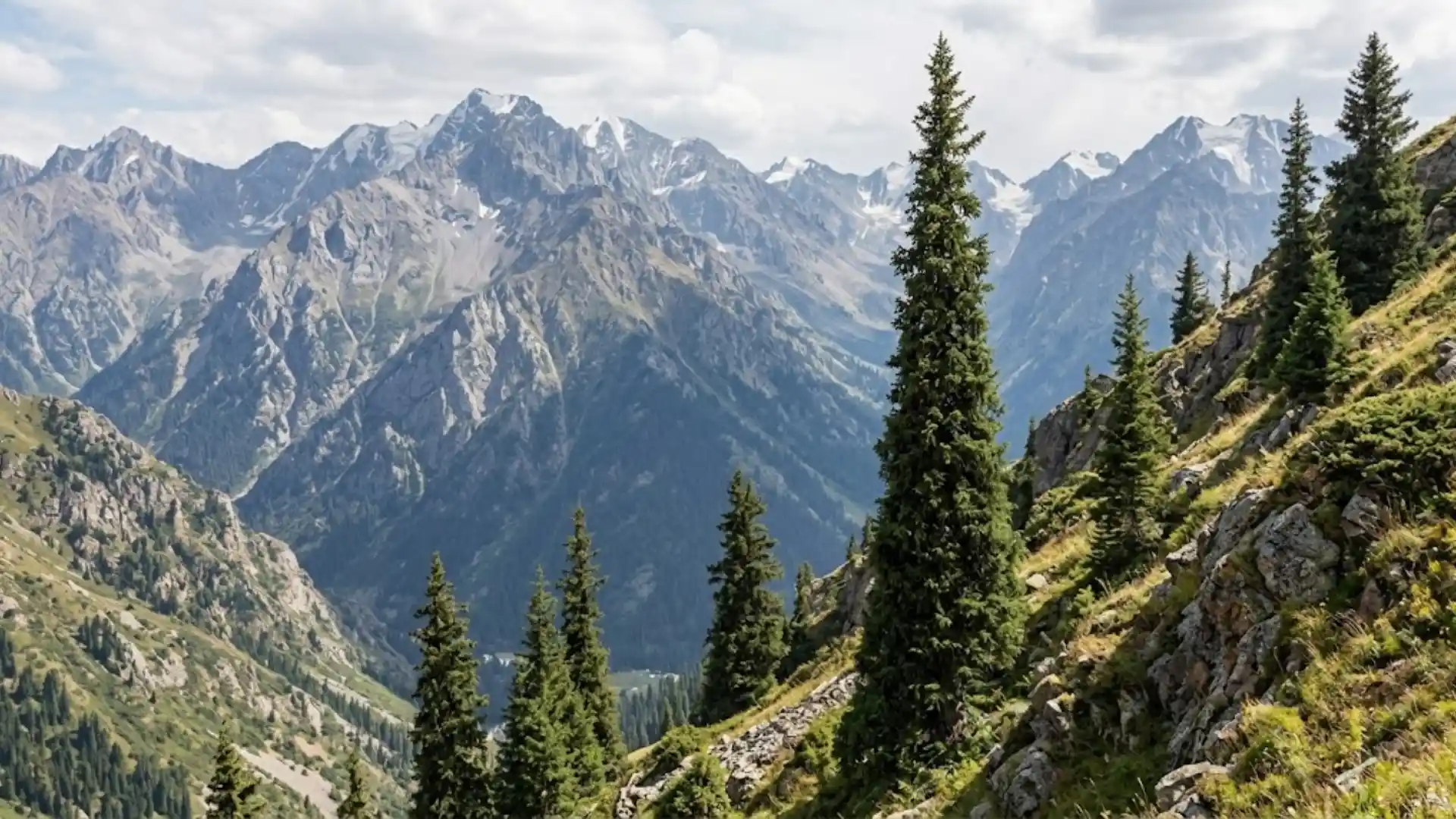
- Botanical name: Picea schrenkiana
- Type: Species
- Mature height and spread: 100-130 ft tall, 20-25 ft spread
- USDA hardiness zones: 4-7
- Native range: Central Asia (Tian Shan mountains)
- Needle color and texture: Dark green, slender and pointed
Schrenk spruce grows tall and narrowly pyramidal, shaped by the mountainous Central Asian terrain it calls home.
Its adaptation to high elevations makes it a poor match for typical residential conditions at lower altitudes.
This one leans toward collectors and specialty growers rather than everyday landscaping, best reserved for specimen or research-focused plantings.
3. Tiger-Tail Spruce
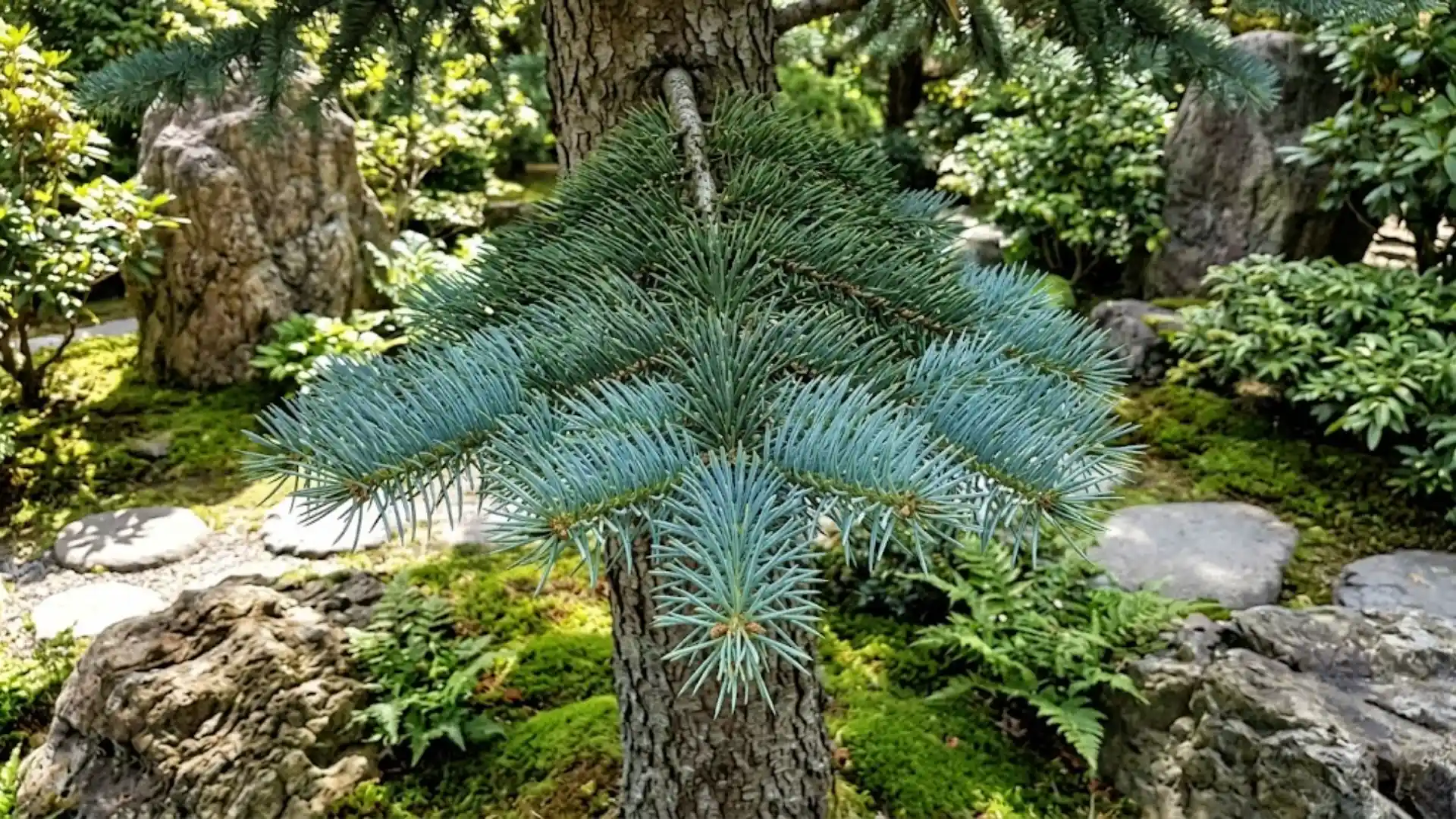
- Botanical name: Picea torano
- Type: Species
- Mature height and spread: 60-90 ft tall, 20-25 ft spread
- USDA hardiness zones: 5-7
- Native range: Japan
- Needle color and texture: Dark green, glossy and extremely stiff
Tiger-tail spruce earns its name from foliage that radiates outward like a bottlebrush, formed by exceptionally stiff, sharply pointed needles.
Handle with care, since those needles are genuinely sharp to the touch.
Its bold texture makes a strong specimen tree, and it pairs especially well with Japanese-inspired garden design where structure and form matter most.
2. Lutz Spruce
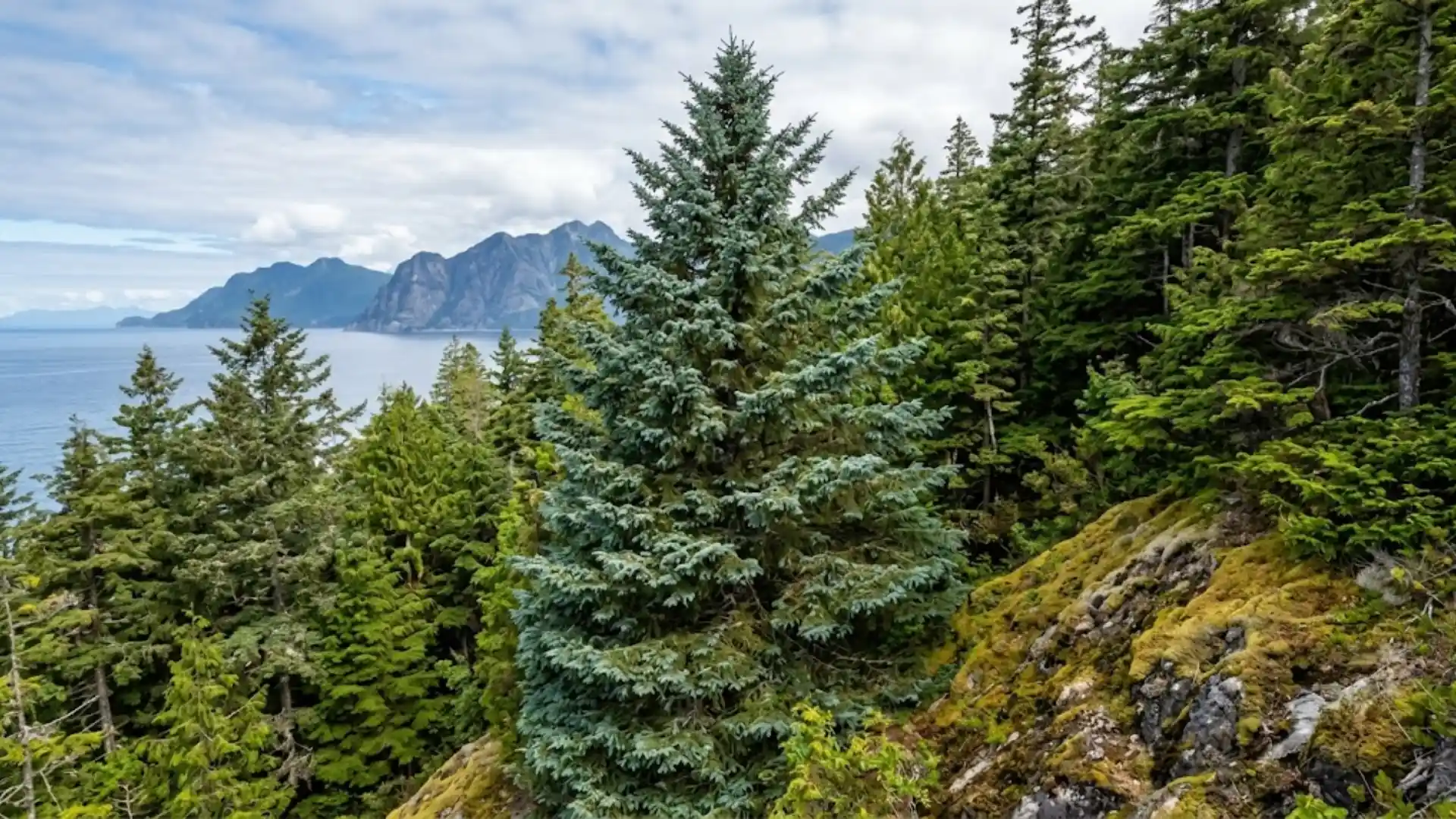
- Botanical name: Picea × lutzii
- Type: Natural hybrid
- Mature height and spread: 80-100 ft tall, 20-25 ft spread
- USDA hardiness zones: 3-7
- Native range: Coastal Alaska and British Columbia
- Needle color and texture: Blue-green, intermediate texture
Lutz spruce occurs naturally where Sitka spruce and white spruce overlap, and it shows characteristics of both parents rather than a fixed identity of its own.
That variability makes it genuinely interesting from an identification standpoint, since no two specimens look quite identical.
Larger landscapes and specialty plantings suit this hybrid’s substantial, unpredictable growth best.
1. White Spruce ‘Pendula’
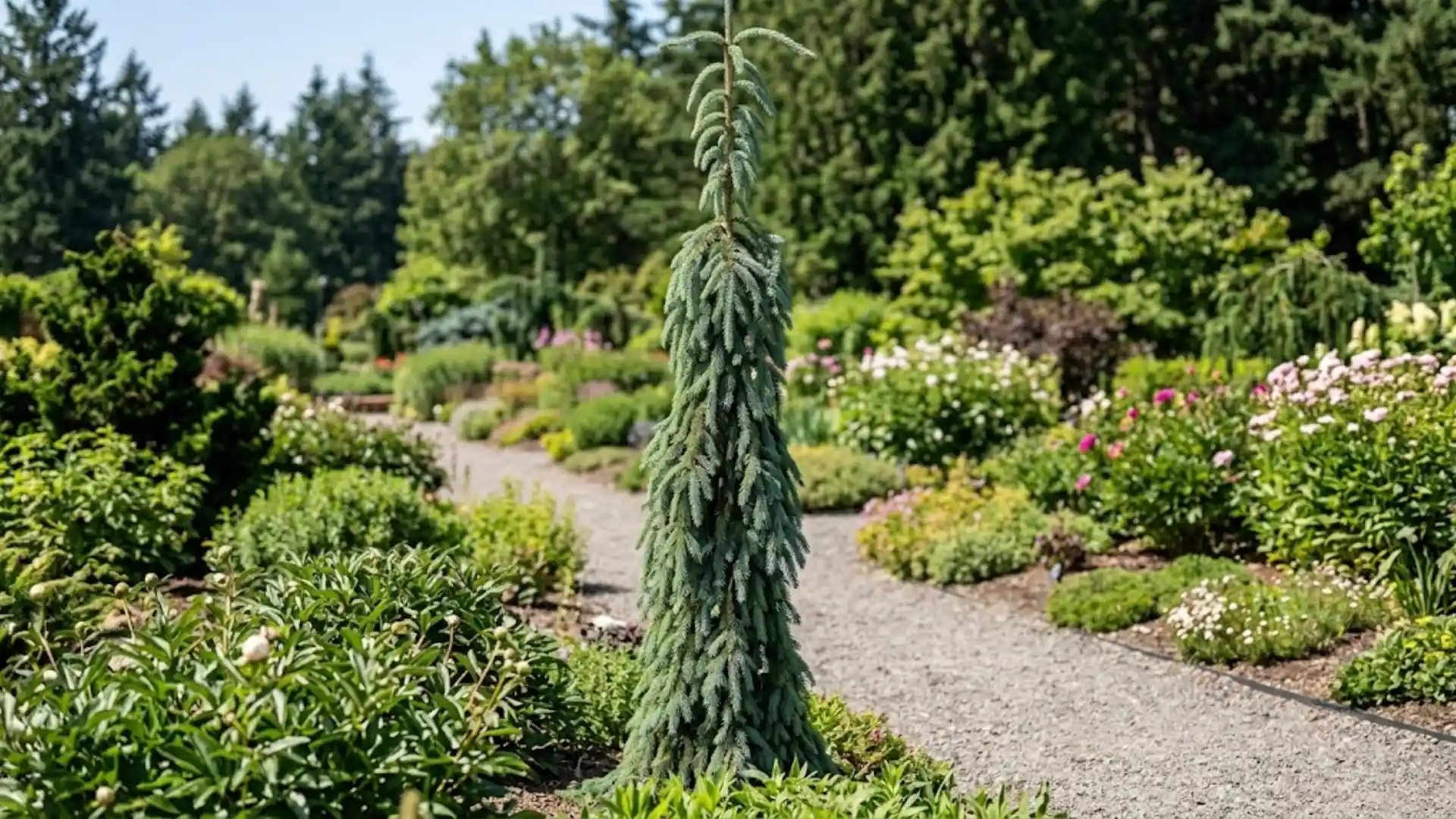
- Botanical name: Picea glauca ‘Pendula’
- Type: Cultivar
- Mature height and spread: 20-30 ft tall, 4-6 ft spread
- USDA hardiness zones: 2-6
- Native range: Cultivated ornamental form of white spruce
- Needle color and texture: Blue-green, fine and slightly curved
This ornamental form of white spruce grows narrow and upright with a distinctly weeping, pendulous branch structure that reads almost sculptural.
Its vertical habit makes it a smart choice where width is limited, and its silhouette often gets compared to Serbian spruce or weeping Norway spruce.
Its slim, dramatic form suits vertical accents and tight garden spaces.
How to Choose the Right Spruce Tree?
Picking the right spruce comes down to matching the tree’s needs with your yard’s real conditions, not just falling for a pretty shape at the nursery.
- Match Your USDA Zone: Confirm the spruce suits your hardiness zone, since a zone rating narrows the odds but never guarantees success on its own.
- Plan for Mature Size: Check the tree’s full-grown height and width, keeping overhead wires, structures, driveways, and property lines in mind, not just its container size today.
- Factor in Summer Heat and Humidity: Cool-climate species like Colorado blue spruce can handle cold winters yet still struggle through hot, humid summers.
- Prioritize Sun and Drainage: Most landscape spruces need full sun and well-drained soil, since standing water around roots invites rot and disease.
- Choose Species or Cultivar Intentionally: Species keep natural form and size, while cultivars like Dwarf Alberta Spruce or ‘Fat Albert’ offer compact, dwarf, or uniquely shaped alternatives.
Getting these basics right from the start saves years of frustration and makes sure your spruce actually thrives where you plant it.
Are Spruce Trees Easy to Grow?
Spruce trees are fairly low maintenance once established. They need full sun, well-drained soil, and steady watering during the first year or two while roots settle in.
Mulch helps retain moisture, but keep it a few inches clear of the trunk to avoid rot. Pruning should stay minimal, and dense cultivars do best with good airflow around them.
In my experience, most issues trace back to poor drainage or crowding, not the tree itself.
Susceptibility to pests and disease varies by species and cultivar, with Colorado blue spruce and Dwarf Alberta spruce carrying some of the more well-documented vulnerabilities.
Common problems include:
- Spider mites
- Aphids and spruce gall aphids
- Scale
- Bagworms
- Budworms
- Needle cast and rust diseases
- Cankers
- Stress from unsuitable heat, humidity, drought, or poor drainage
For minor outbreaks of aphids or mites elsewhere in the yard, a few natural remedies for common pests are worth trying before reaching for anything stronger.
Wrapping It Up
Spruce trees don’t ask for much once they are settled in. Get the zone, space, and sun figured out early, and the rest tends to fall into place on its own.
The real fun is in the details, comparing needle color, shape, and size until one just feels right for your yard.
So which type of spruce tree caught your eye? Tell me in the comments, I’d love to know what you are planting.
Frequently Asked Questions (FAQs)
How Many Types of Spruce Trees Are There?
The genus Picea includes roughly three dozen species worldwide, though exact counts shift depending on taxonomic treatment. Beyond that, countless cultivars and a few natural hybrids expand the variety even further.
What is the Fastest-Growing Spruce Tree?
Growth rate depends heavily on species, climate, soil quality, water availability, and the tree’s age, so there is no single universal answer. Norway spruce is often cited as one of the quicker growers under favorable conditions.
Can Spruce Trees Grow in Shade?
Most spruces prefer full sun and perform best with plenty of direct light. Some species tolerate partial shade, but expect thinner, less dense growth compared to a sun-grown tree.
Can Spruce Trees Grow in Hot Climates?
Many popular spruces are adapted to cool climates and struggle once summers turn hot and humid. Colorado blue spruce is a good example, since its cold hardiness does not translate to reliable performance in warmer regions.
Are All Spruce Trees Evergreen?
Yes, every spruce species is an evergreen conifer that holds onto its needles year-round. Under normal, healthy conditions, they don’t shed foliage seasonally the way deciduous trees do.