A single peony root, planted the wrong way up, sat dormant in the garden for two full years before finally blooming.
That stubborn plant taught me more about peonies than any book ever could. Not every variety behaves the same way, though.
Some die back to bare ground each winter, while others keep woody stems standing through frost.
A few blend both parents into something entirely new. Choosing the right one now comes down to climate, soil, and the colors wanted blooming side by side.
Understanding these types has made every planting decision far easier this season.
What is a Peony?
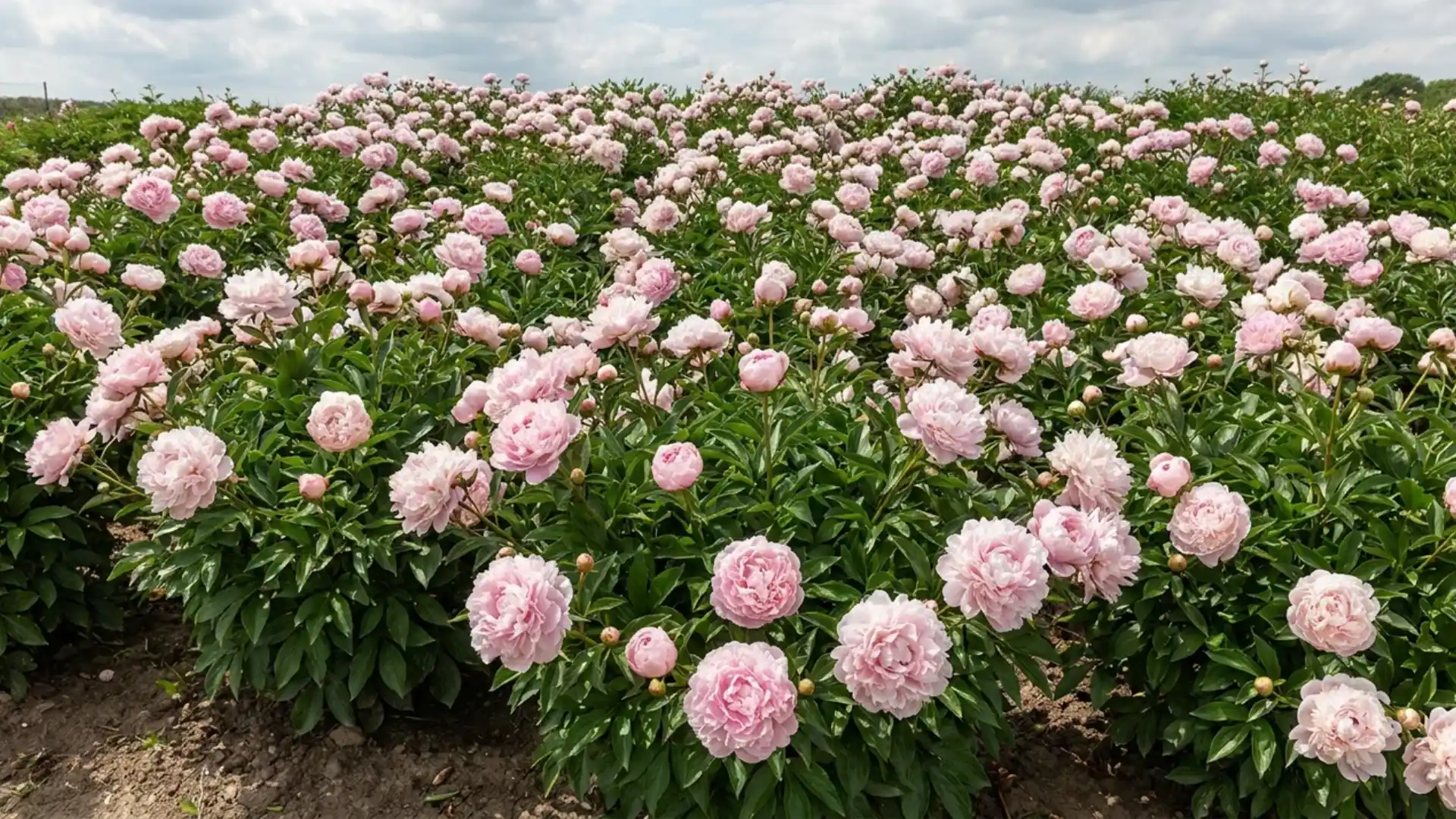
A peony is a flowering perennial prized for its large, ruffled blooms and rich fragrance.
Depending on the variety, plants either die back to bare ground each winter or hold onto woody stems that stand through frost.
Some varieties combine both traits into a single sturdy hybrid. That range is what makes this flower so rewarding to grow.
The sections below break down every major type, classic garden varieties, woody shrubs, and modern intersectional hybrids, along with the flower forms that shape how each bloom looks up close.
It also covers the many colors peonies bloom in, when each type flowers, and how to choose the right one for any garden.
Gardeners drawn to the flower’s long history often look into peony flower symbolism as well, since the bloom carries meaning across cultures and celebrations.
Different Colors of Peonies
Peonies bloom in a wider range of colors than most gardeners expect, and the shade often depends on the type. A peony’s type usually reveals its color range before the first bud ever opens.
Here is how color breaks down by type:
| Color | Common In | Example Varieties |
|---|---|---|
| White | Lactiflora, woody | Festiva Maxima |
| Blush/Pink | Lactiflora | Sarah Bernhardt |
| Deep Pink/Magenta | Herbaceous hybrids | Karl Rosenfield |
| Red | Herbaceous hybrids | Red Charm |
| Coral | Herbaceous hybrids | Coral Charm |
| Yellow | Tree, Itoh | Bartzella |
| Lavender/Purple undertones | Rare Itoh cultivars | Morning Lilac |
| Green-tinged | Rare hybrids | Green Halo |
Herbaceous Peony Types and Varieties
Herbaceous peonies die back to the ground each winter and return each spring from the same hardy root system.
Here are 12 popular varieties within this type:
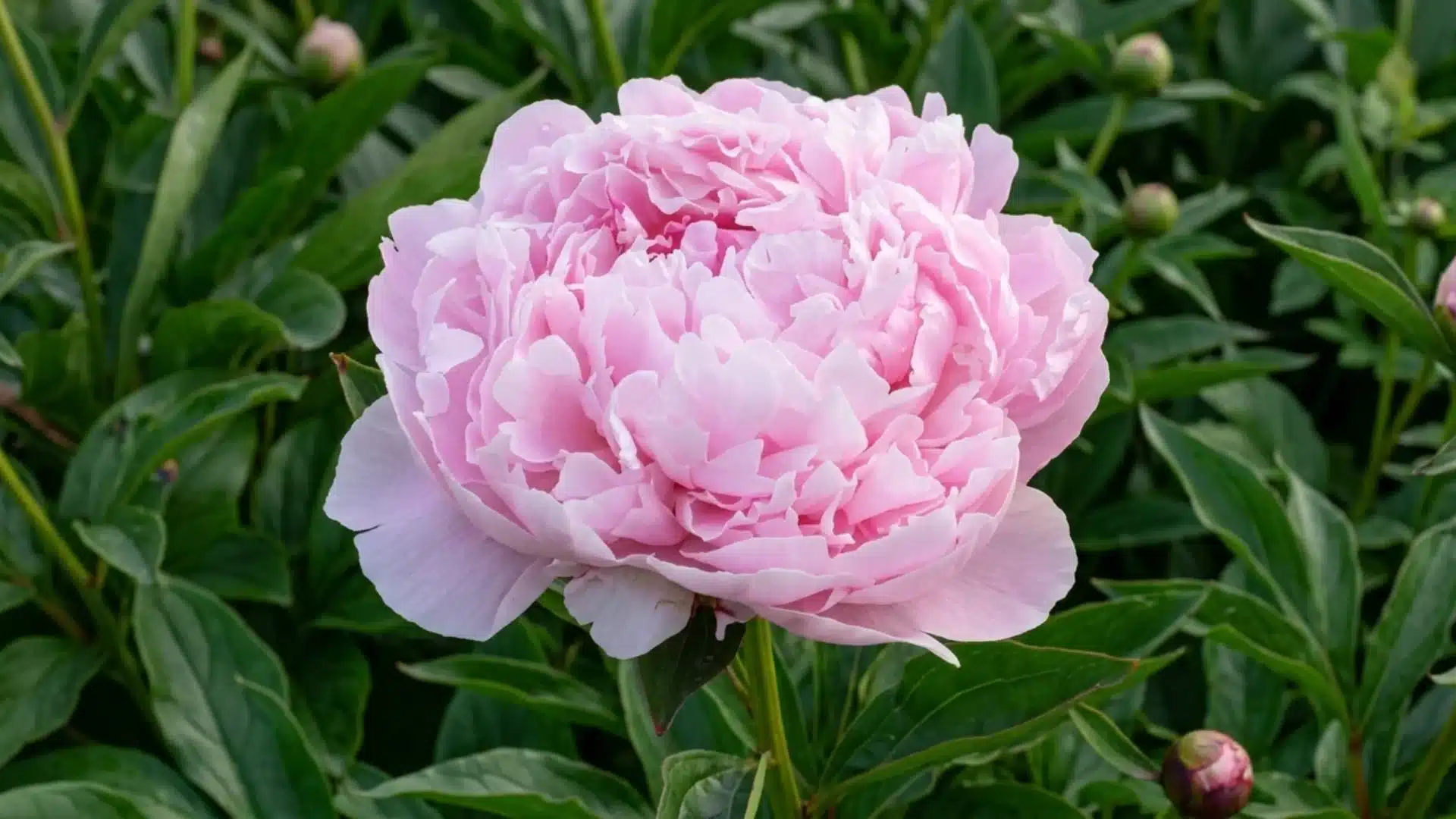
1. Sarah Bernhardt
- Botanical name: Paeonia lactiflora
- Plant type: Herbaceous perennial
- Sun requirements: Full sun to partial shade
- Hardiness zones: 3-8
This Lactiflora variety produces large, fully double blooms in a soft blush pink shade that opens wide over several days.
The ruffled petals carry a light, sweet fragrance throughout bloom season. Stems grow sturdy but often need staking once flowers reach their full mature size in the garden.
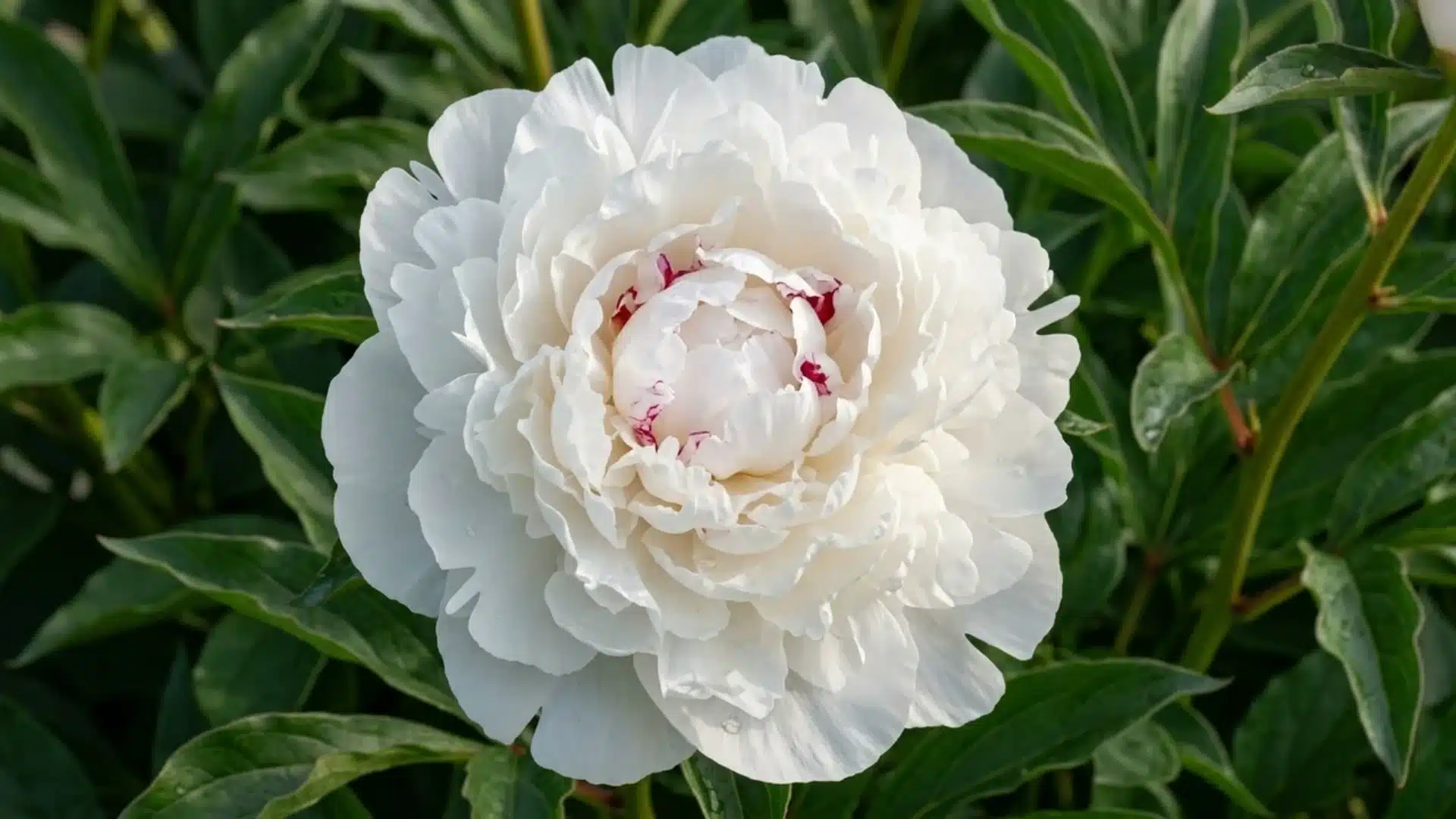
2. Festiva Maxima
- Botanical name: Paeonia lactiflora
- Plant type: Herbaceous perennial
- Sun requirements: Full sun to partial shade
- Hardiness zones: 3-8
This classic white lactiflora peony is marked by faint red flecks appearing near its center as the bloom matures.
Blooms open fully double and grow quite large on tall, sturdy stems each season. This variety flowers early and pairs well with nearby red companion plants.
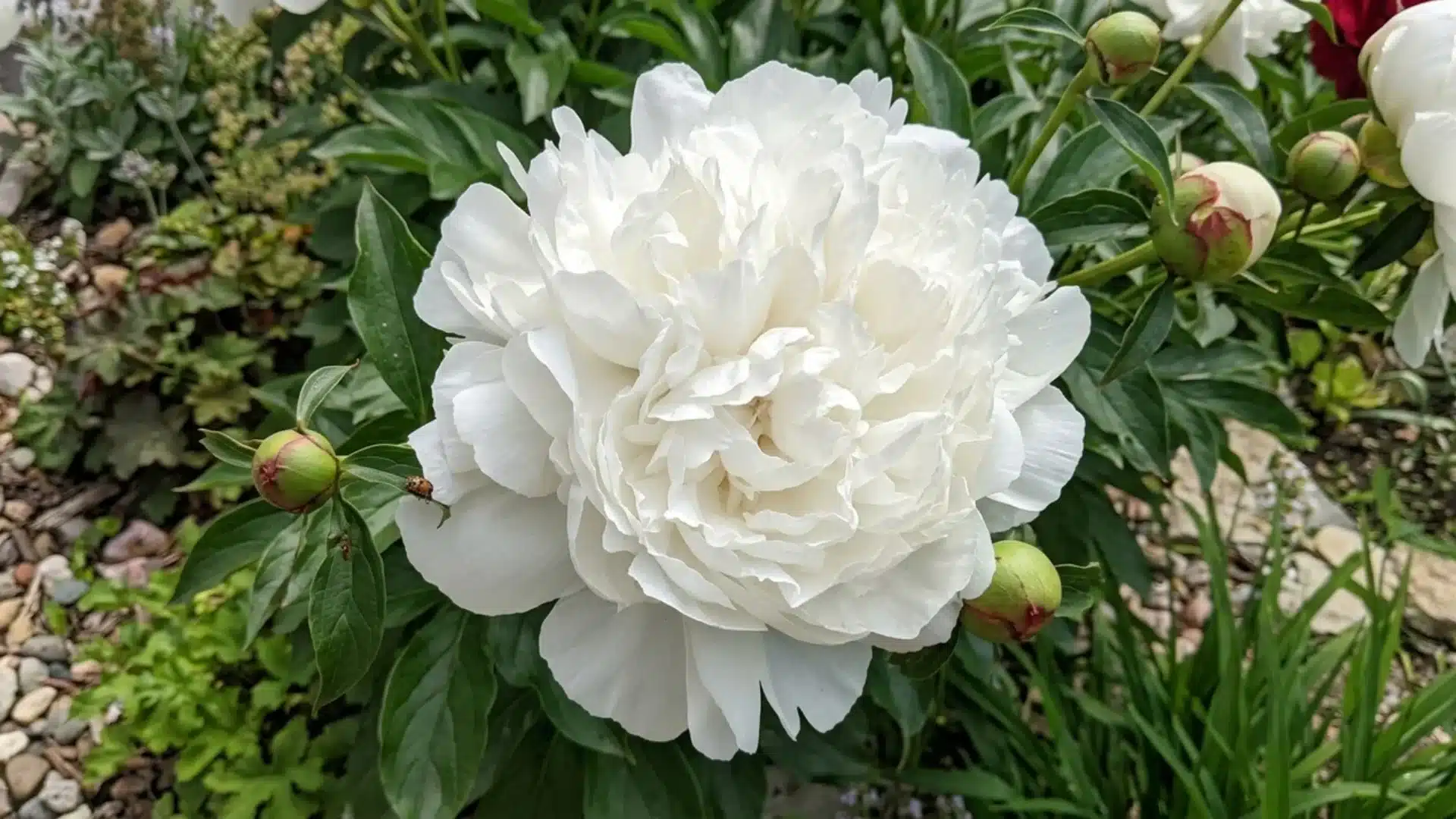
3. Duchesse de Nemours
- Botanical name: Paeonia lactiflora
- Plant type: Herbaceous perennial
- Sun requirements: Full sun to partial shade
- Hardiness zones: 3-8
This herbaceous lactiflora variety is known for pure white, fully double blooms carrying a lemony fragrance, and has remained a garden favorite for well over a century.
Petals form a tight, rounded shape before opening wide. Sturdy stems make it especially reliable for cutting gardens.
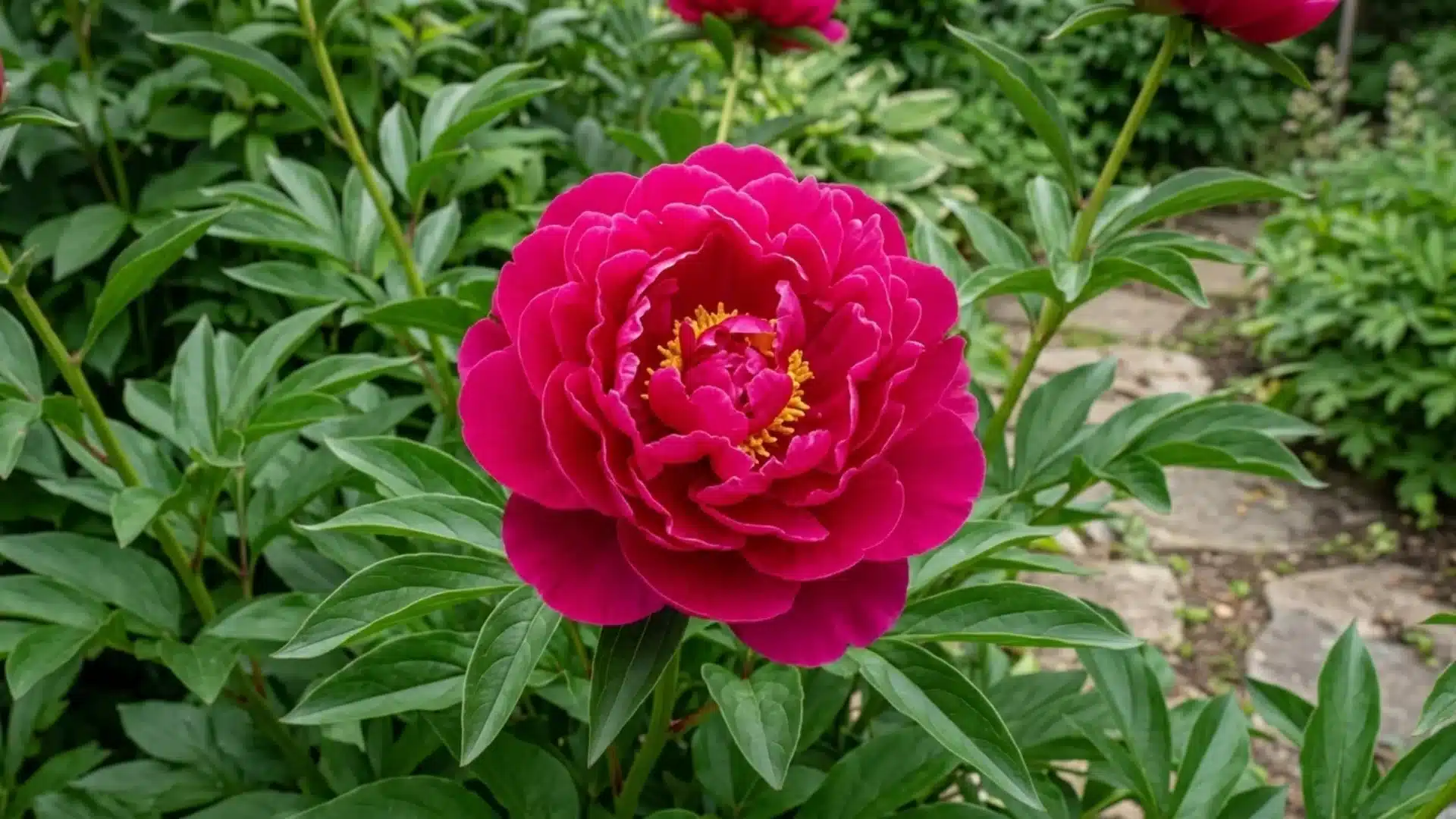
4. Karl Rosenfield
- Botanical name: Paeonia lactiflora
- Plant type: Herbaceous perennial
- Sun requirements: Full sun to partial shade
- Hardiness zones: 3-8
This lactiflora variety produces bright crimson red, fully double flowers on strong, upright stems that often do not require staking.
Blooms open large and hold their vivid color well through the heat of early summer. Gardeners often plant it alongside Sarah Bernhardt for classic contrast.
5. Kansas
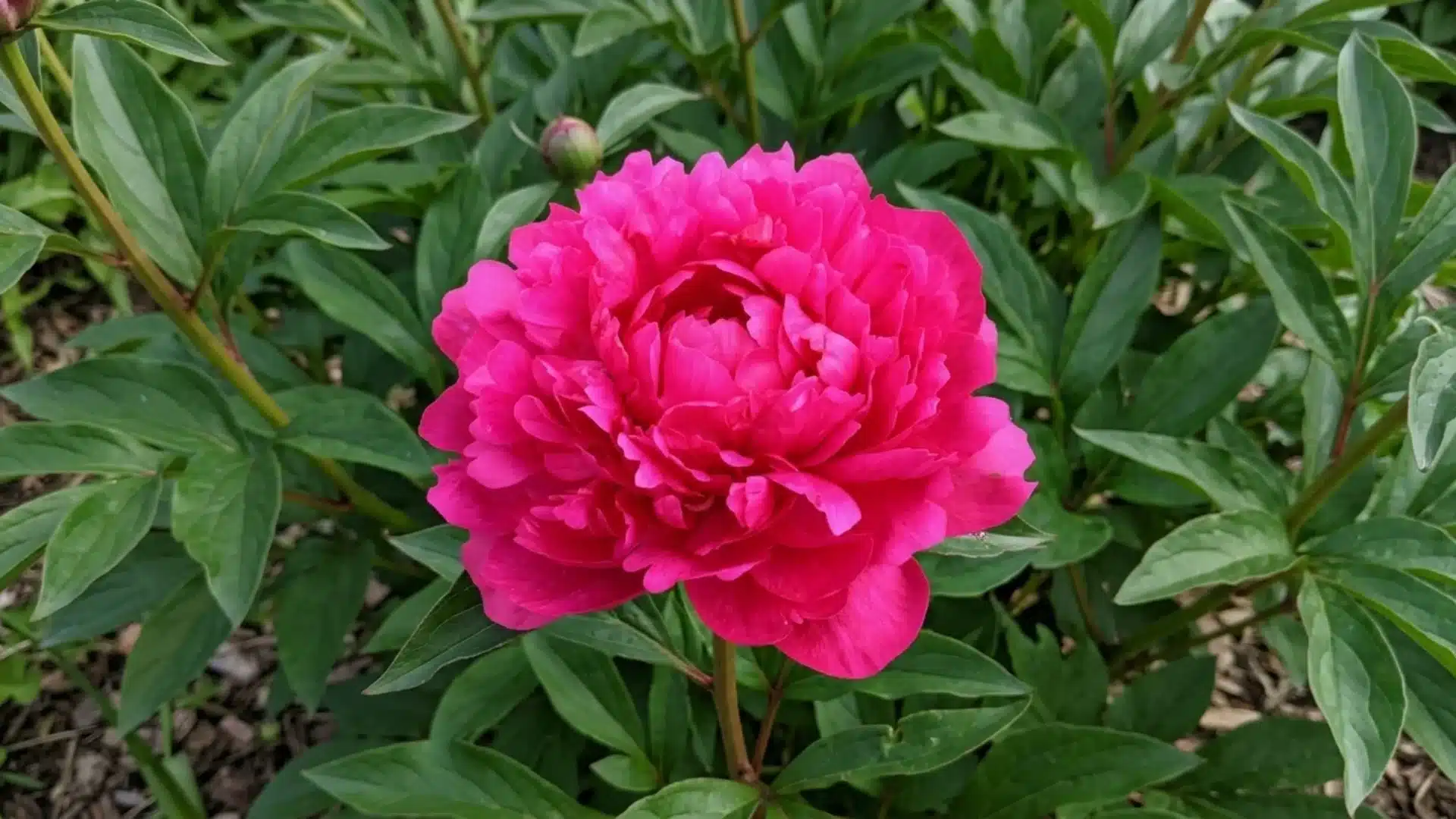
- Botanical name: Paeonia lactiflora
- Plant type: Herbaceous perennial
- Sun requirements: Full sun to partial shade
- Hardiness zones: 3-8
This dark watermelon-red lactiflora peony is known for reliable, heavy blooms each season and has earned a Gold Medal from the American Peony Society.
This variety tolerates heat better than many others in its group. Sturdy stems usually support blooms without staking, making it low-maintenance.
6. Red Charm
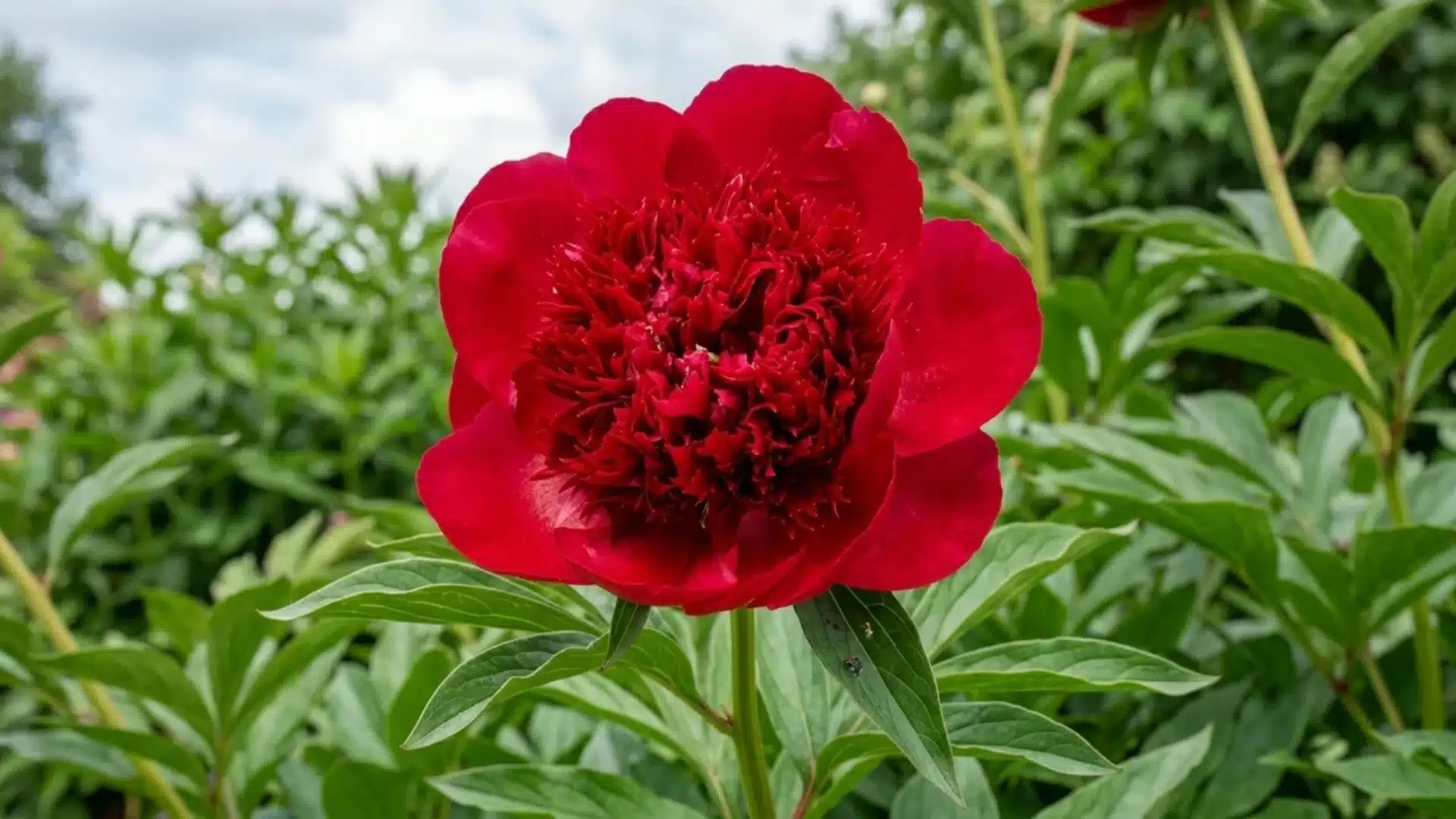
- Botanical name: Paeonia lactiflora x Paeonia officinalis
- Plant type: Herbaceous hybrid perennial
- Sun requirements: Full sun to partial shade
- Hardiness zones: 3-8
This herbaceous hybrid, a cross of lactiflora and officinalis, produces deep red, fully double blooms with a single outer layer of larger petals surrounding a ruffled center.
Flowers tolerate heat well and hold their rich color longer than many other red cultivars in this group.
7. Coral Charm
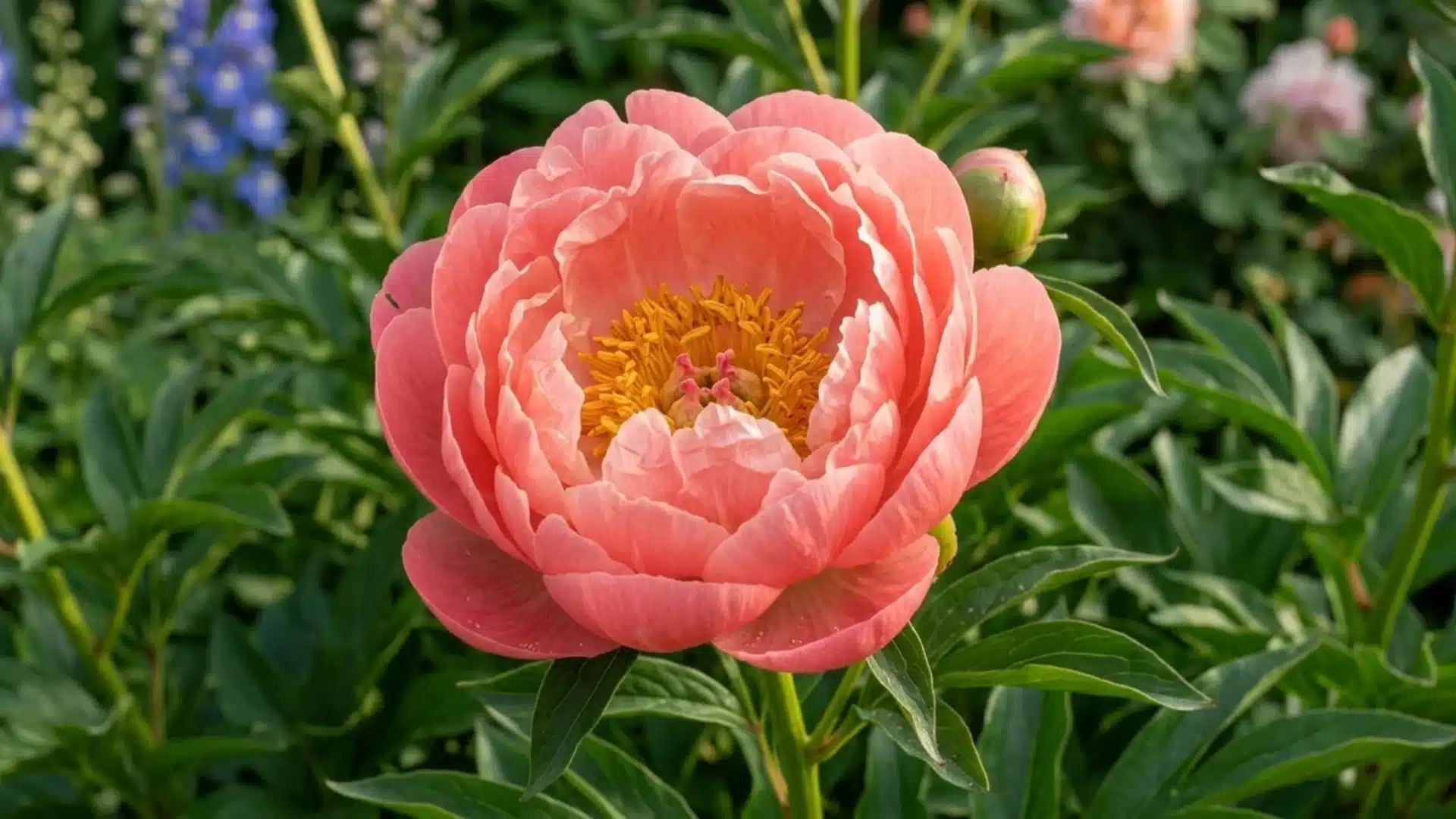
- Botanical name: Paeonia lactiflora
- Plant type: Herbaceous hybrid perennial
- Sun requirements: Full sun to partial shade
- Hardiness zones: 3-8
This semi-double hybrid opens from deep coral buds into bowl-shaped blooms of glowing coral peach, gradually fading toward pale ivory as the flowers mature over several days.
The center often reveals a bright cluster of stamens. This early bloomer brings a warm, unusual color to the garden.
8. Shirley Temple
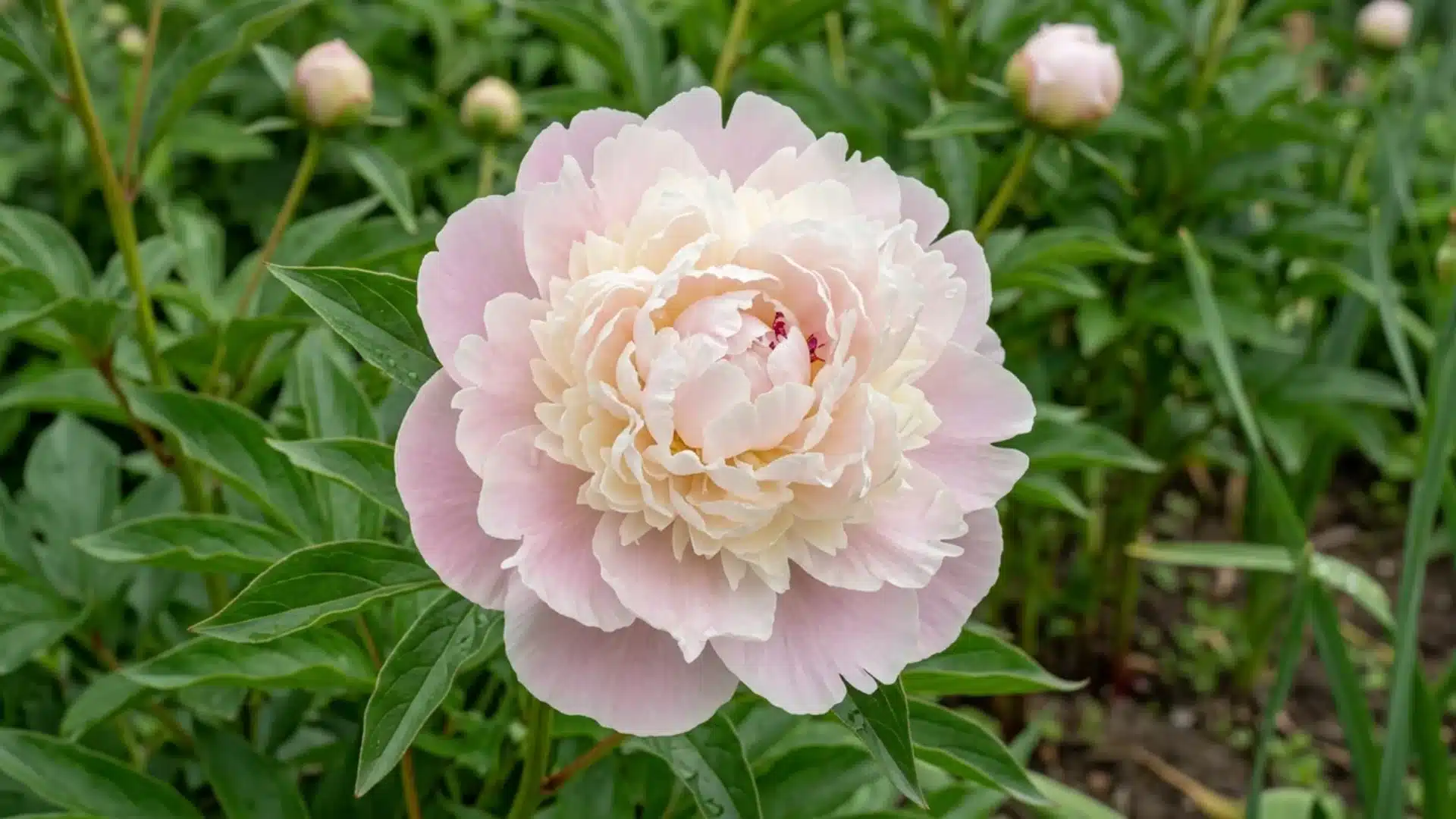
- Botanical name: Paeonia lactiflora
- Plant type: Herbaceous perennial
- Sun requirements: Full sun to partial shade
- Hardiness zones: 3-8
This lactiflora variety produces huge, fully double blooms that open a soft blush pink and gradually fade to white as they mature.
The fragrant flowers carry a sweet-and-spicy scent on sturdy stems, making this variety a favorite for both borders and cut arrangements.
9. Buckeye Belle
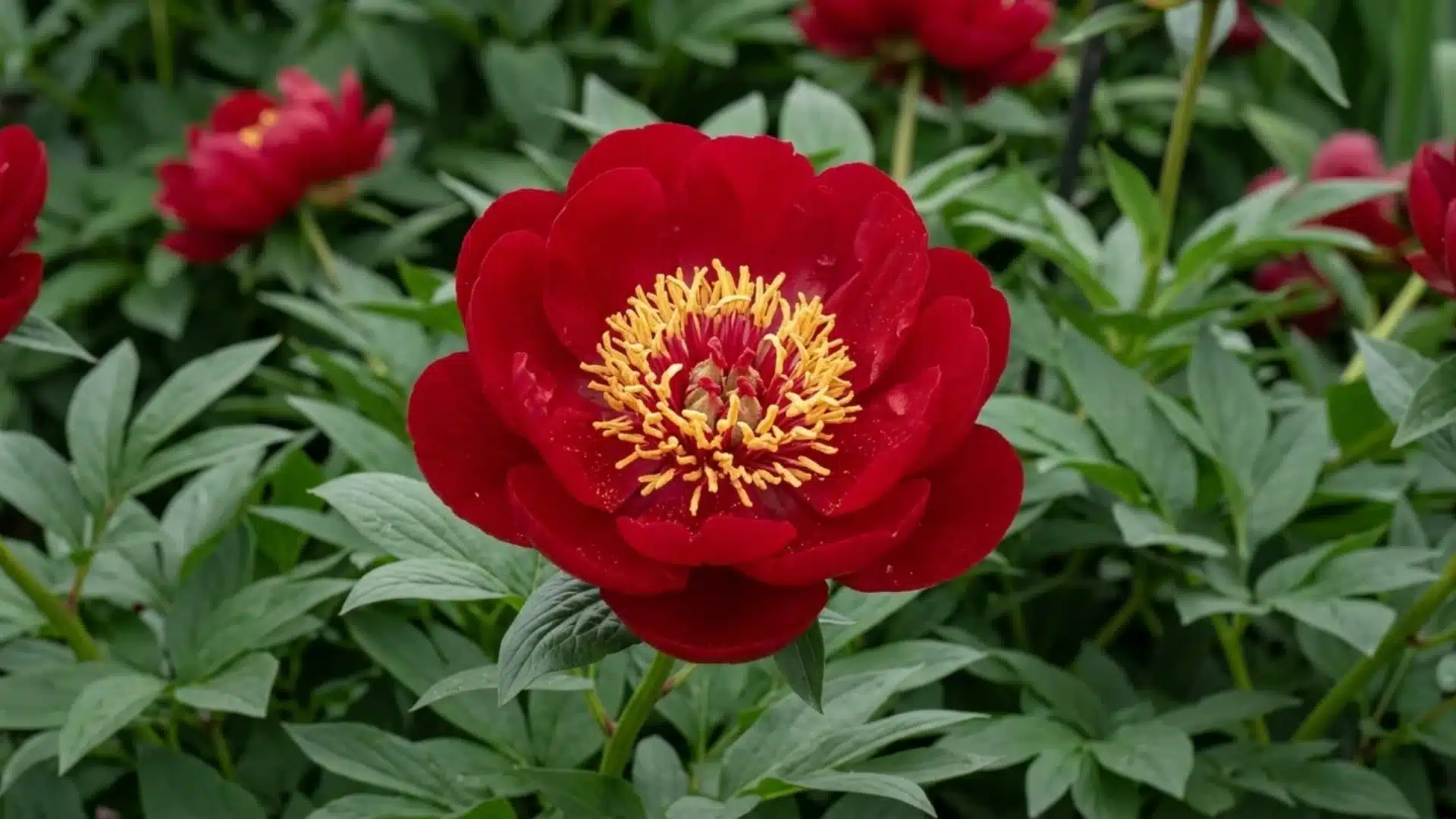
- Botanical name: Paeonia officinalis x Paeonia lactiflora
- Plant type: Herbaceous hybrid perennial
- Sun requirements: Full sun
- Hardiness zones: 3-8
This hybrid, a cross of officinalis and lactiflora, features deep wine red, semi-double petals surrounding narrow center petals interspersed with golden staminodes.
This compact, short variety grows on sturdy stems and rarely needs staking, making it a practical, low-maintenance option for smaller garden beds.
10. Old Faithful
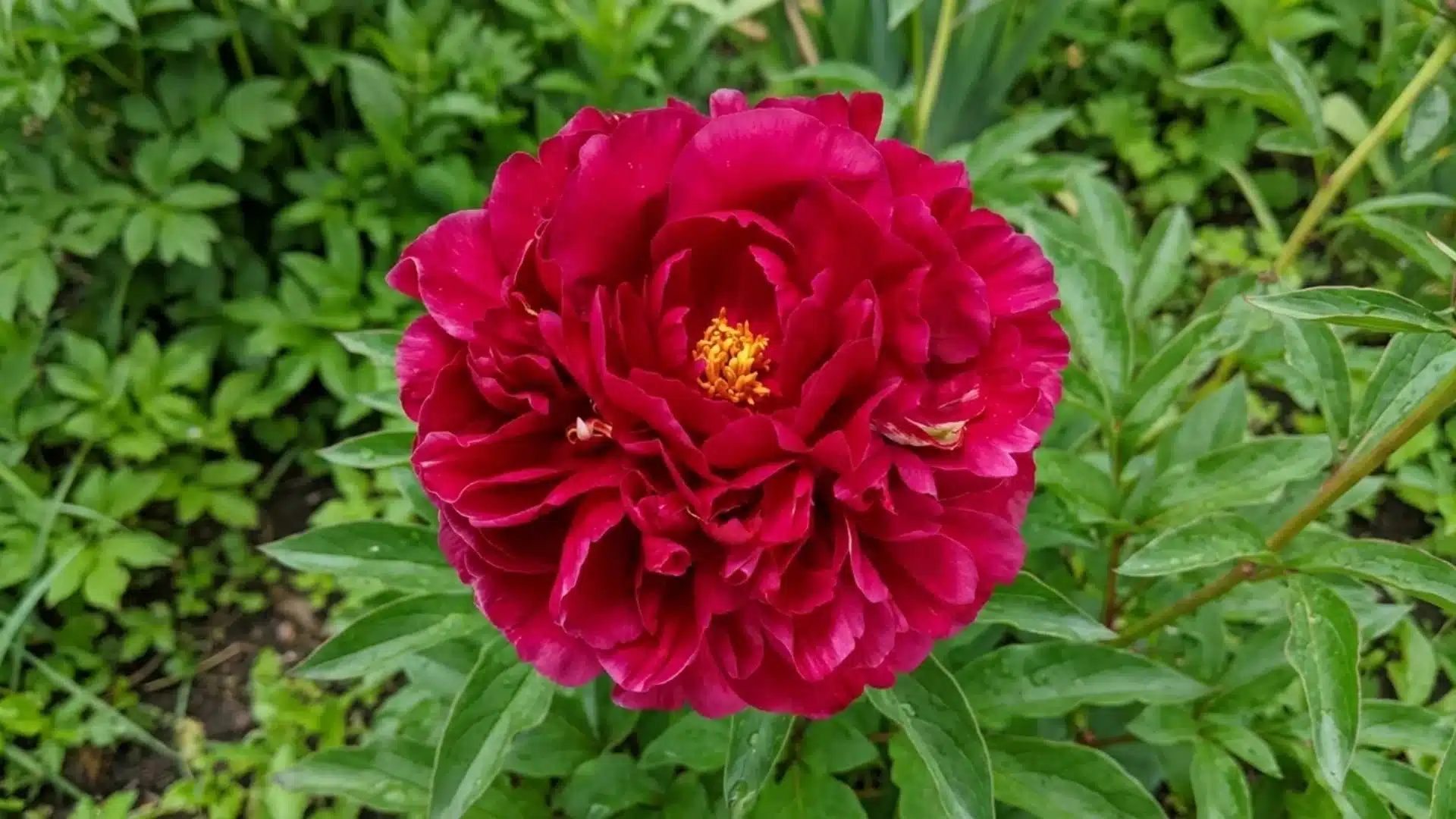
- Botanical name: Paeonia lactiflora
- Plant type: Herbaceous hybrid perennial
- Sun requirements: Full sun to partial shade
- Hardiness zones: 3-8
This herbaceous hybrid produces extraordinarily large, fully double blooms of deep velvet red with heavy petal substance and a spicy fragrance.
Strong, sturdy stems support the heavy blossoms without staking. It earned the APS Gold Medal in 1997 and an Award of Landscape Merit in 2009.
11. Paula Fay
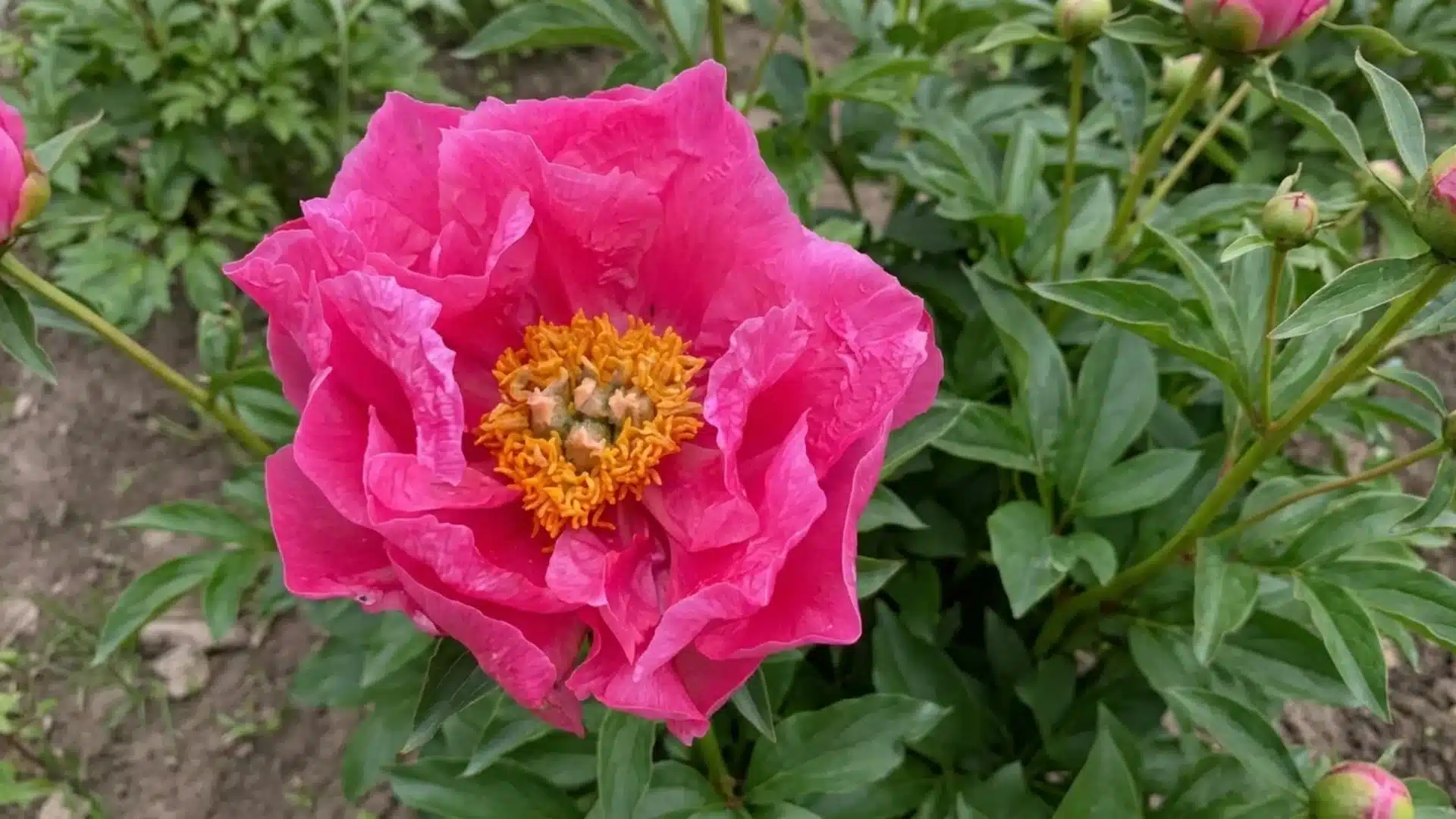
- Botanical name: Paeonia lactiflora
- Plant type: Herbaceous hybrid perennial
- Sun requirements: Full sun to partial shade
- Hardiness zones: 3-8
This herbaceous hybrid produces semi-double, shocking pink blooms with a central boss of bright gold stamens, arranged in five rows of petals for extra fullness.
Vigorous stems rarely need staking, and the plant earned the American Peony Society Gold Medal in 1988.
12. Scarlett O’Hara
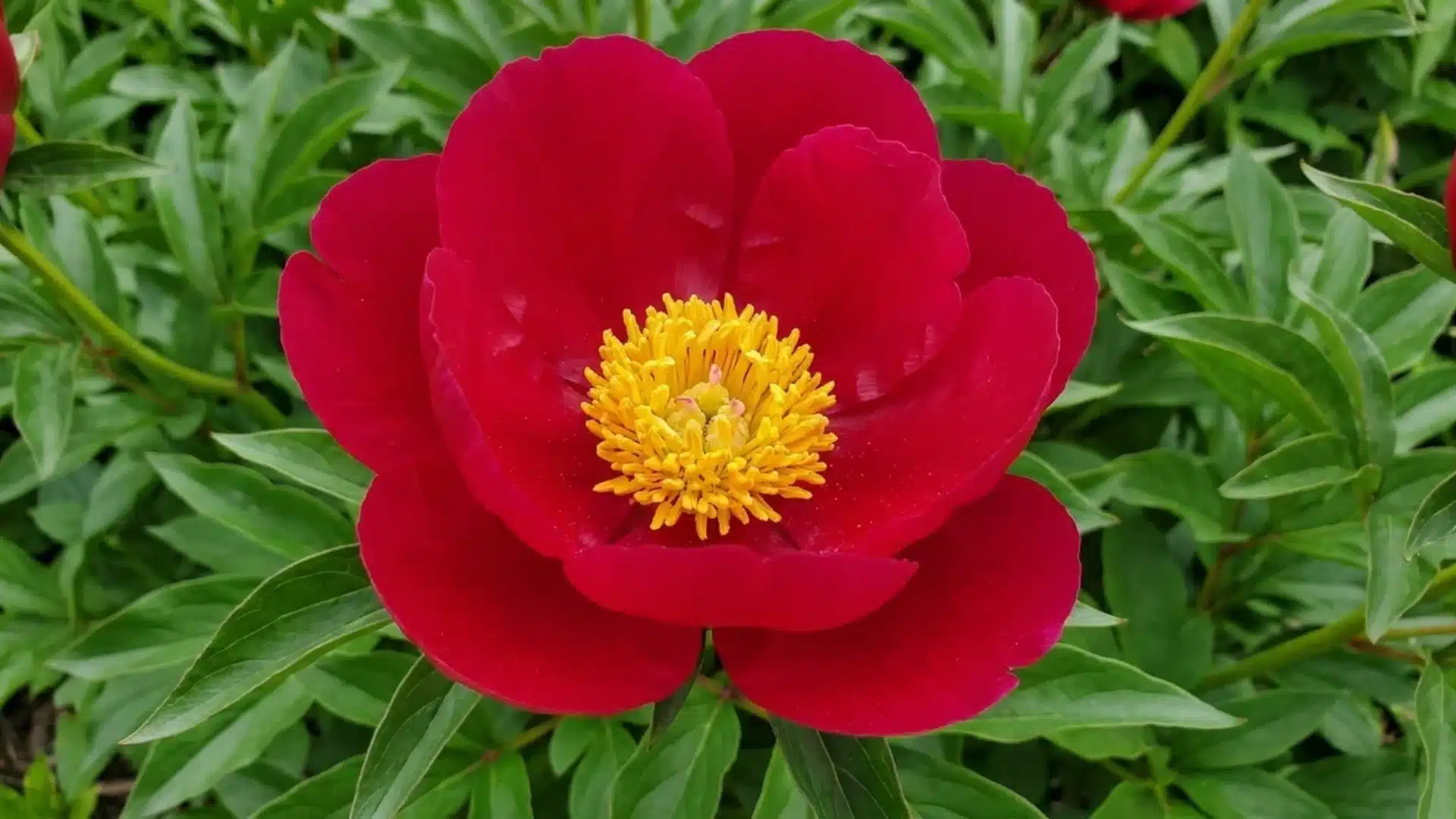
- Botanical name: Paeonia officinalis x Paeonia lactiflora
- Plant type: Herbaceous hybrid perennial
- Sun requirements: Full sun to partial shade
- Hardiness zones: 3-8
This vigorous hybrid produces large, single, fiery scarlet-red blossoms with rounded petals surrounding a center packed with golden-yellow anthers.
Sturdy stems create striking contrast against rich green foliage. This variety received the American Peony Society’s Award of Landscape Merit in 2009.
Tree (Woody) Peony Types and Varieties
Woody or tree peonies keep their stems standing through winter rather than dying back like herbaceous types.
Here are 12 popular varieties within this type:
13. Shima Daijin
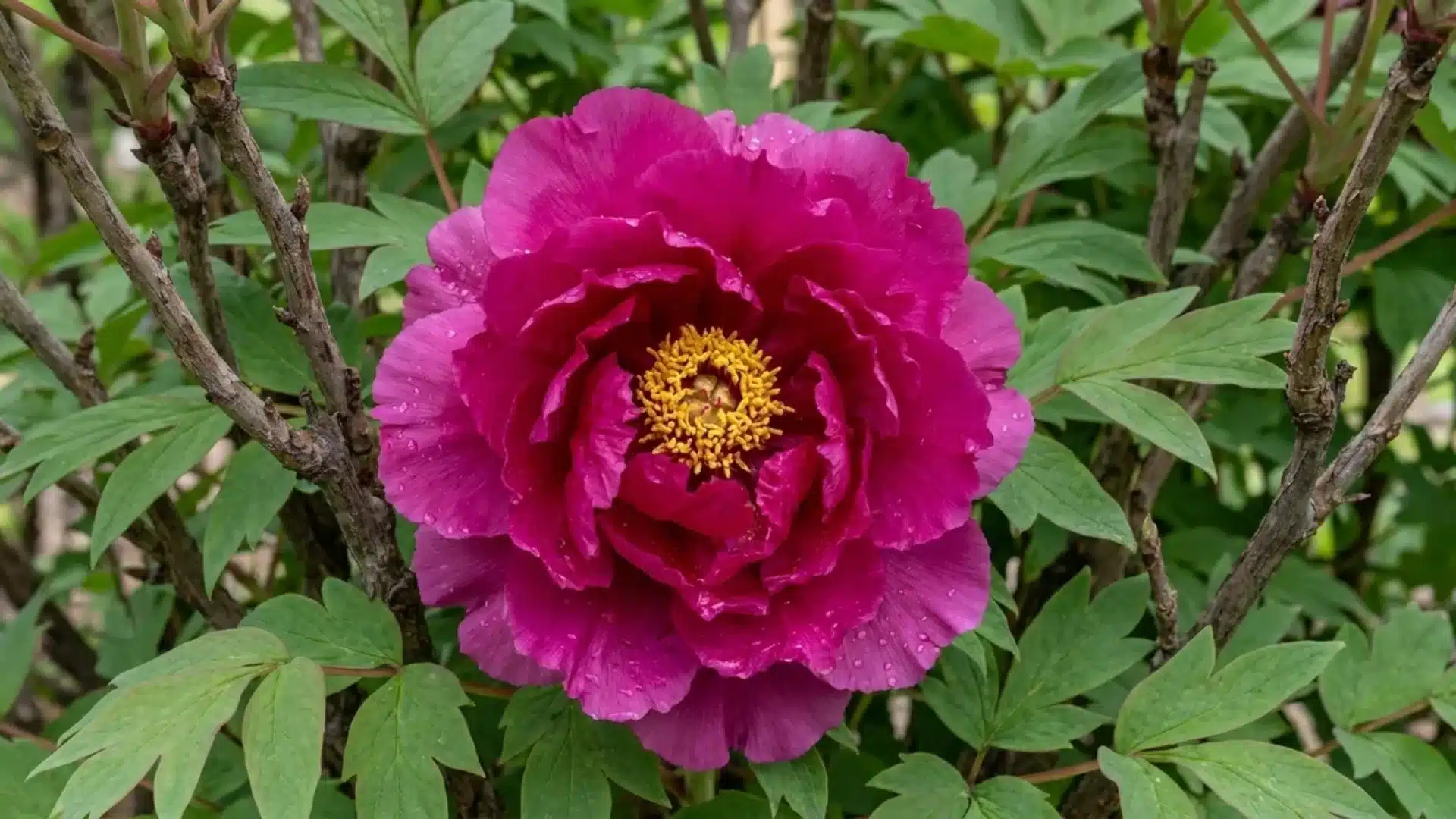
- Botanical name: Paeonia suffruticosa
- Plant type: Woody shrub (tree peony)
- Sun requirements: Full sun to partial shade
- Hardiness zones: 4-8
This rare Japanese Suffruticosa tree peony produces very large, fragrant, semi-double blooms in rich magenta purple that seem to glow in late spring light.
The woody shrub keeps its structure through winter and prefers a sheltered spot away from harsh wind and frost.
14. Renkaku
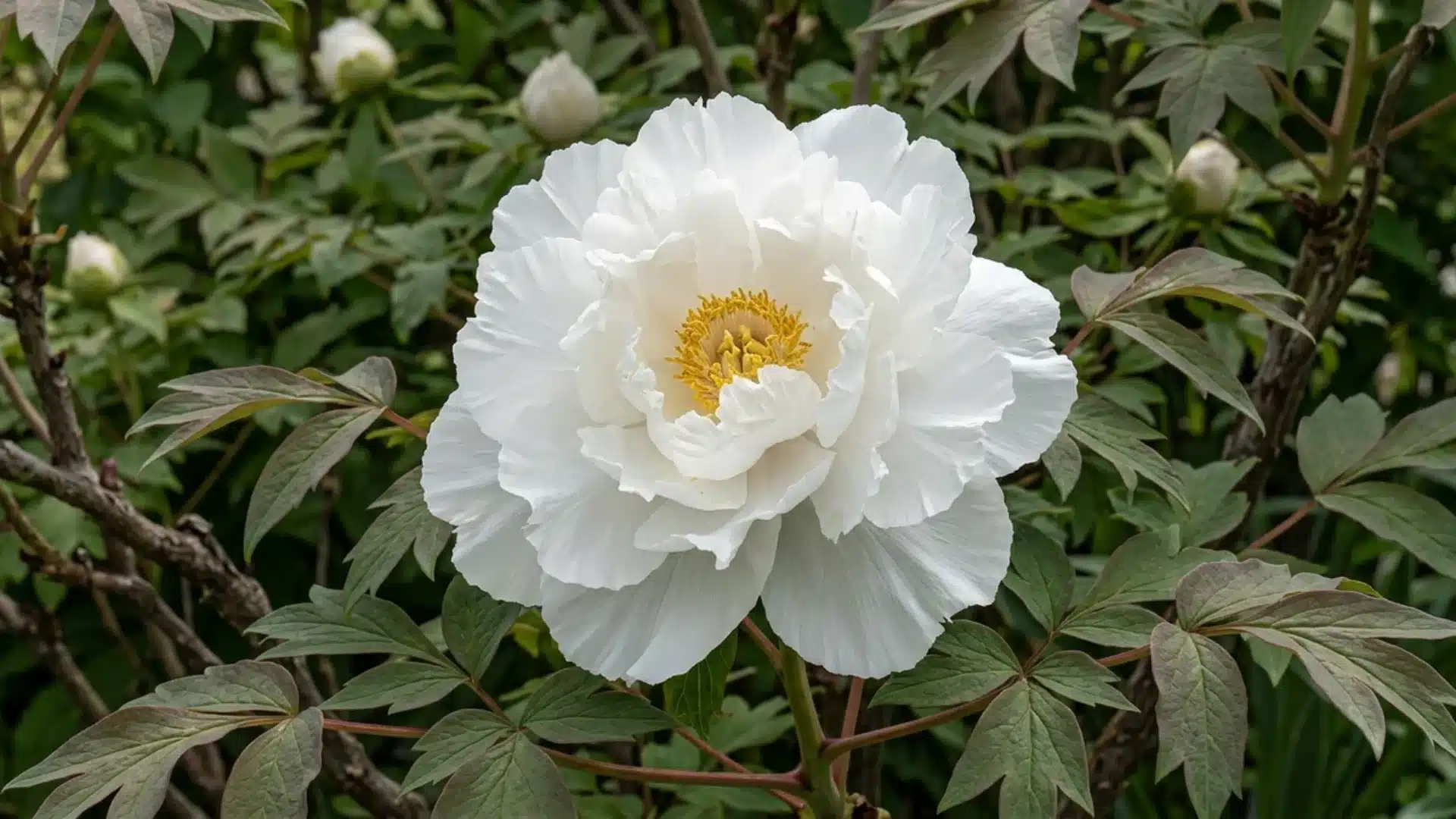
- Botanical name: Paeonia suffruticosa
- Plant type: Woody shrub (tree peony)
- Sun requirements: Full sun to partial shade
- Hardiness zones: 4-9
Its name translates to “Flight of Cranes.” This Suffruticosa variety produces large, semi-double, pure white flowers with finely fringed petals and a buttery yellow center.
It grows faster than most tree peonies and blooms earlier in its life cycle.
15. Kinkaku
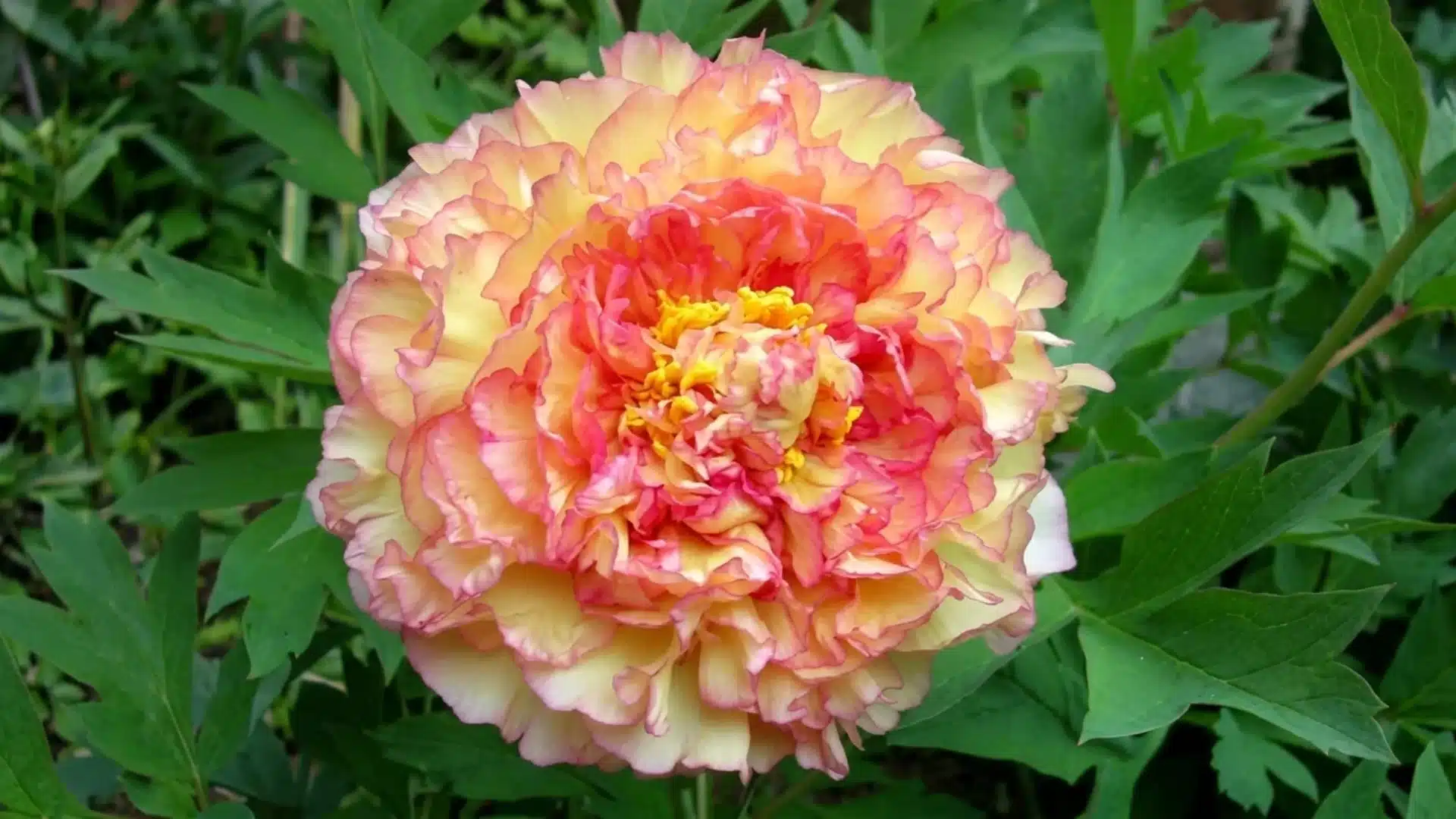
- Botanical name: Paeonia suffruticosa
- Plant type: Woody shrub (tree peony)
- Sun requirements: Full sun to partial shade
- Hardiness zones: 4-8
This Suffruticosa tree peony variety produces golden yellow-toned blooms on a shrub-like woody structure that stands through winter dormancy.
Like other tree peonies, it grows slowly and needs several seasons to establish before reaching its full flowering potential.
16. Hanakisoi
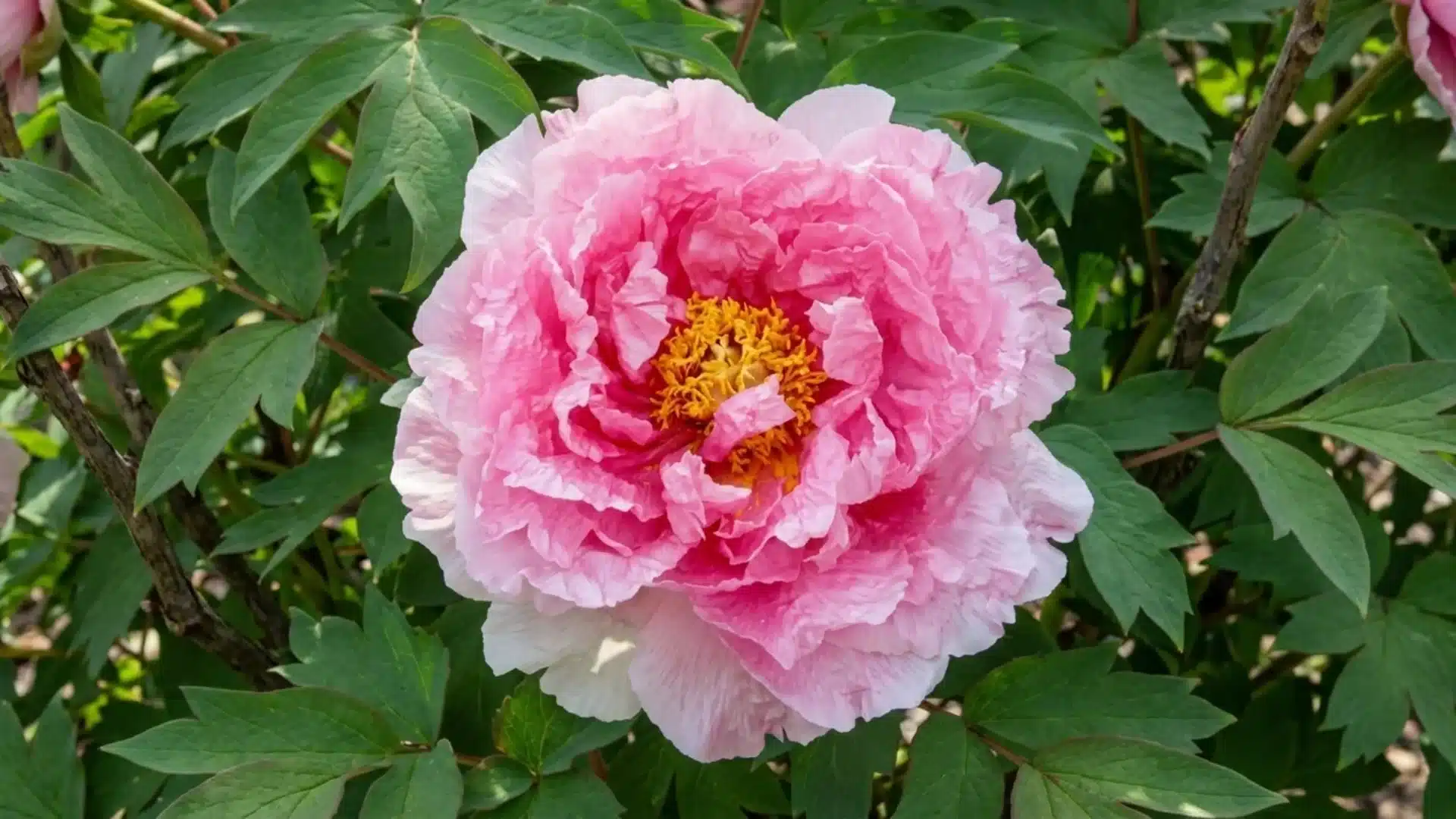
- Botanical name: Paeonia suffruticosa
- Plant type: Woody shrub (tree peony)
- Sun requirements: Full sun to partial shade
- Hardiness zones: 4-8
This traditional Japanese Suffruticosa cultivar produces layered, richly petaled blush pink blooms with a silken texture on a woody shrub.
The plant holds its stems through winter rather than dying back, gaining size gradually over several growing seasons.
17. Rock’s Variety
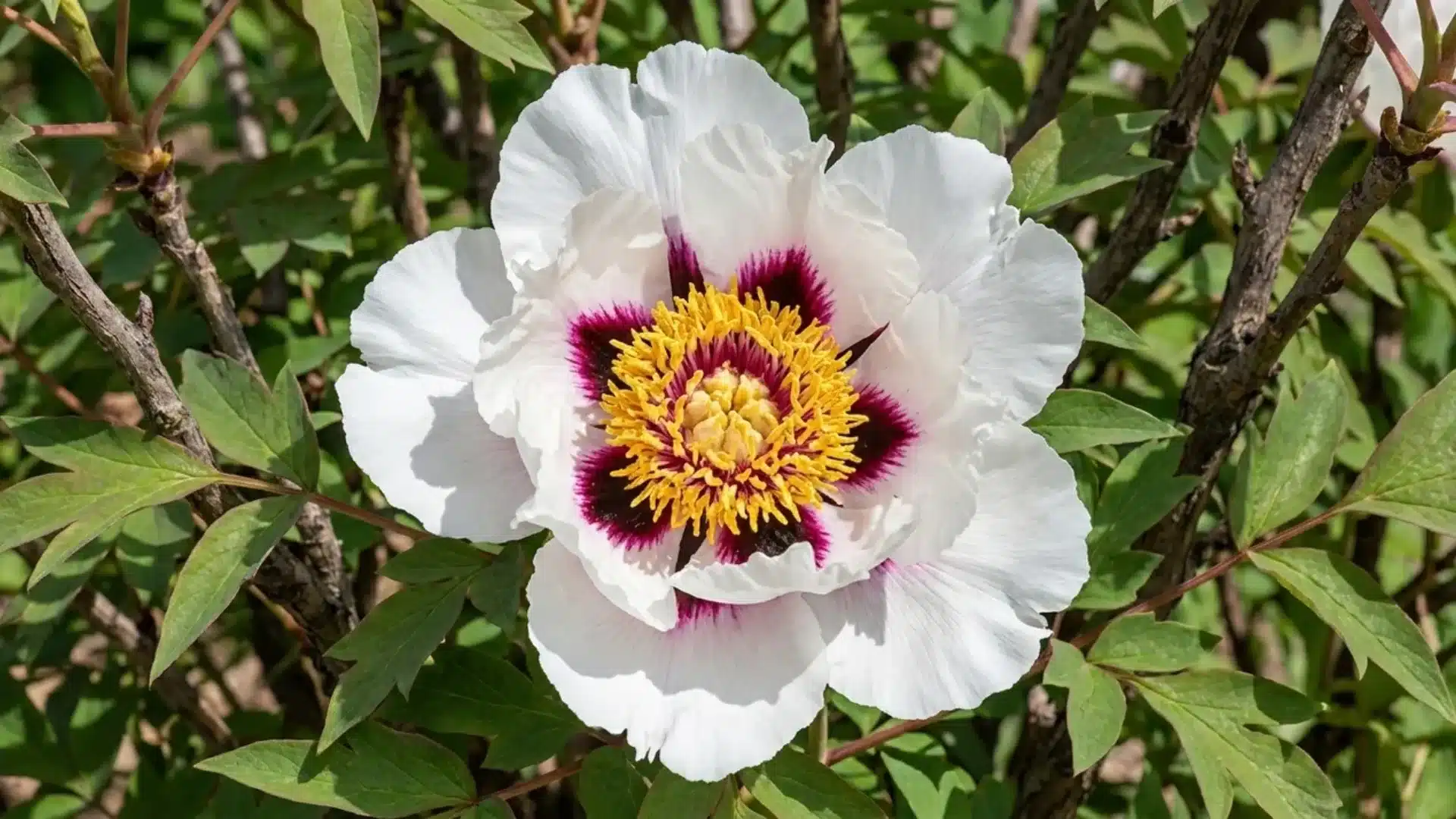
- Botanical name: Paeonia rockii
- Plant type: Woody shrub (tree peony)
- Sun requirements: Full sun to partial shade
- Hardiness zones: 4-8
This tree peony grew from seed collected in China by plant explorer Joseph Rock. It produces fluffy, fragrant white to shell-pink flowers with a bold maroon blotch at the base of each petal.
It shares its origin story and appearance with ‘Joseph Rock,’ often sold under either name.
18. Bai Yuan Hong Xia
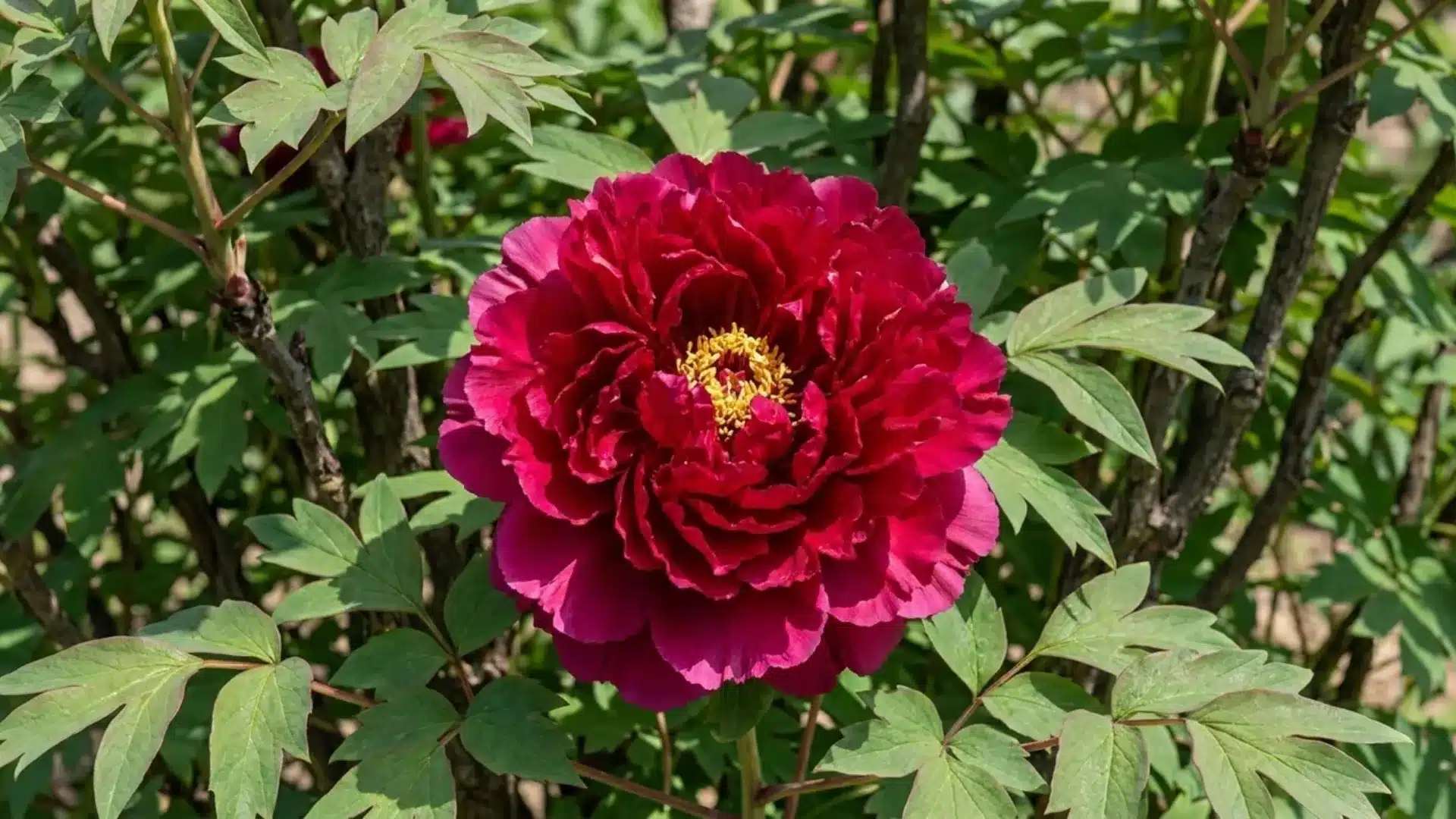
- Botanical name: Paeonia rockii
- Plant type: Woody shrub (tree peony)
- Sun requirements: Full sun to partial shade
- Hardiness zones: 4-8
This Rockii-type tree peony produces large, deep magenta-red, crown-shaped double blooms with darker red at the base, ruffled inner petals, and larger, flat outer petals.
The velvety flowers stand out against dark, finely cut foliage in late spring.
19. Alice Harding
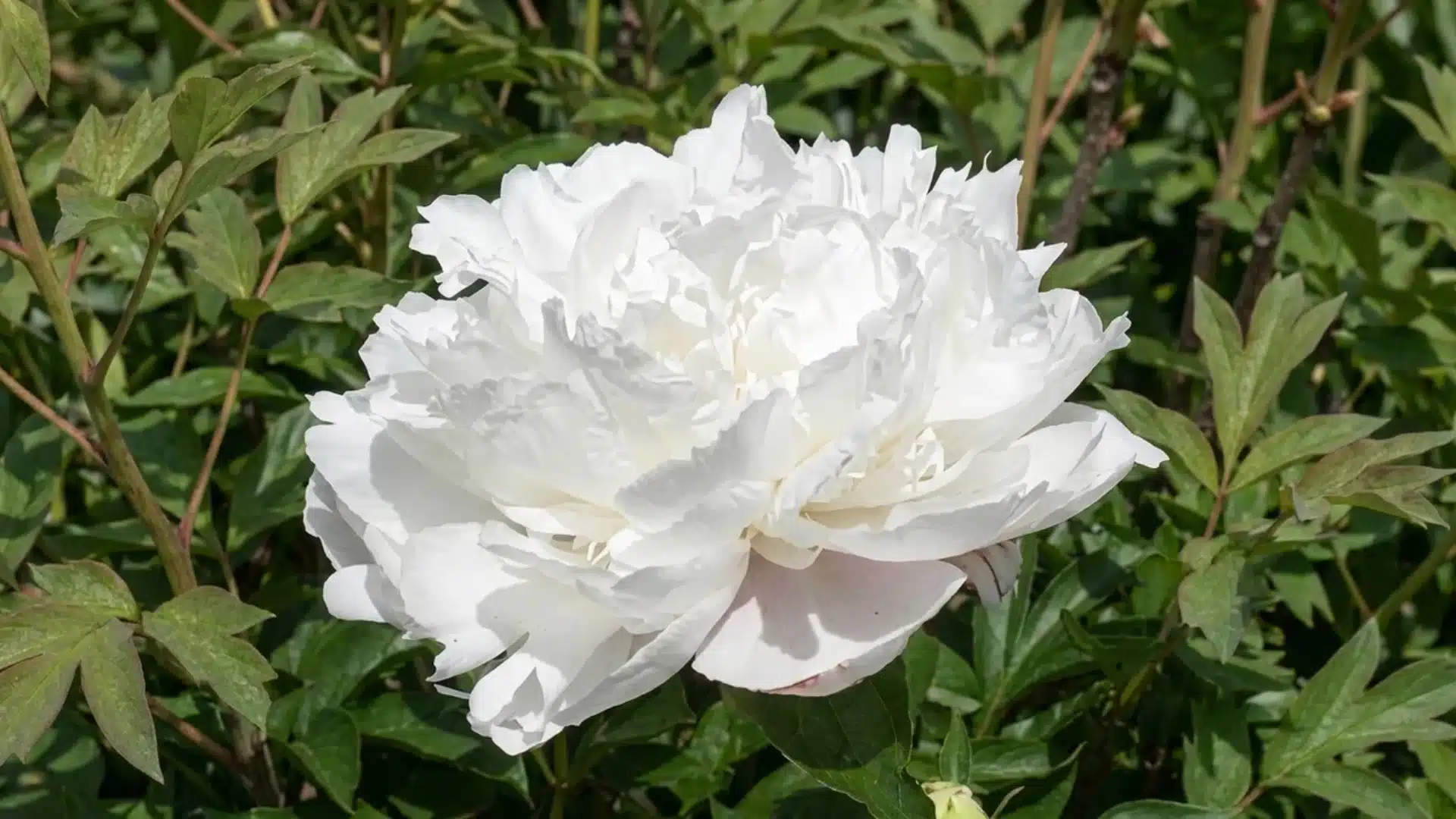
- Botanical name: Paeonia x lemoinei
- Plant type: Woody shrub (Lutea hybrid tree peony)
- Sun requirements: Full sun to partial shade
- Hardiness zones: 4-8
Bred from P. delavayi crossed with a Japanese cultivar, this Lutea hybrid tree peony produces semi-double, golden yellow blooms, a color rarely found in traditional Suffruticosa varieties.
Introduced in 1935, it remains a landmark cultivar in yellow tree peony breeding.
20. Chromatella
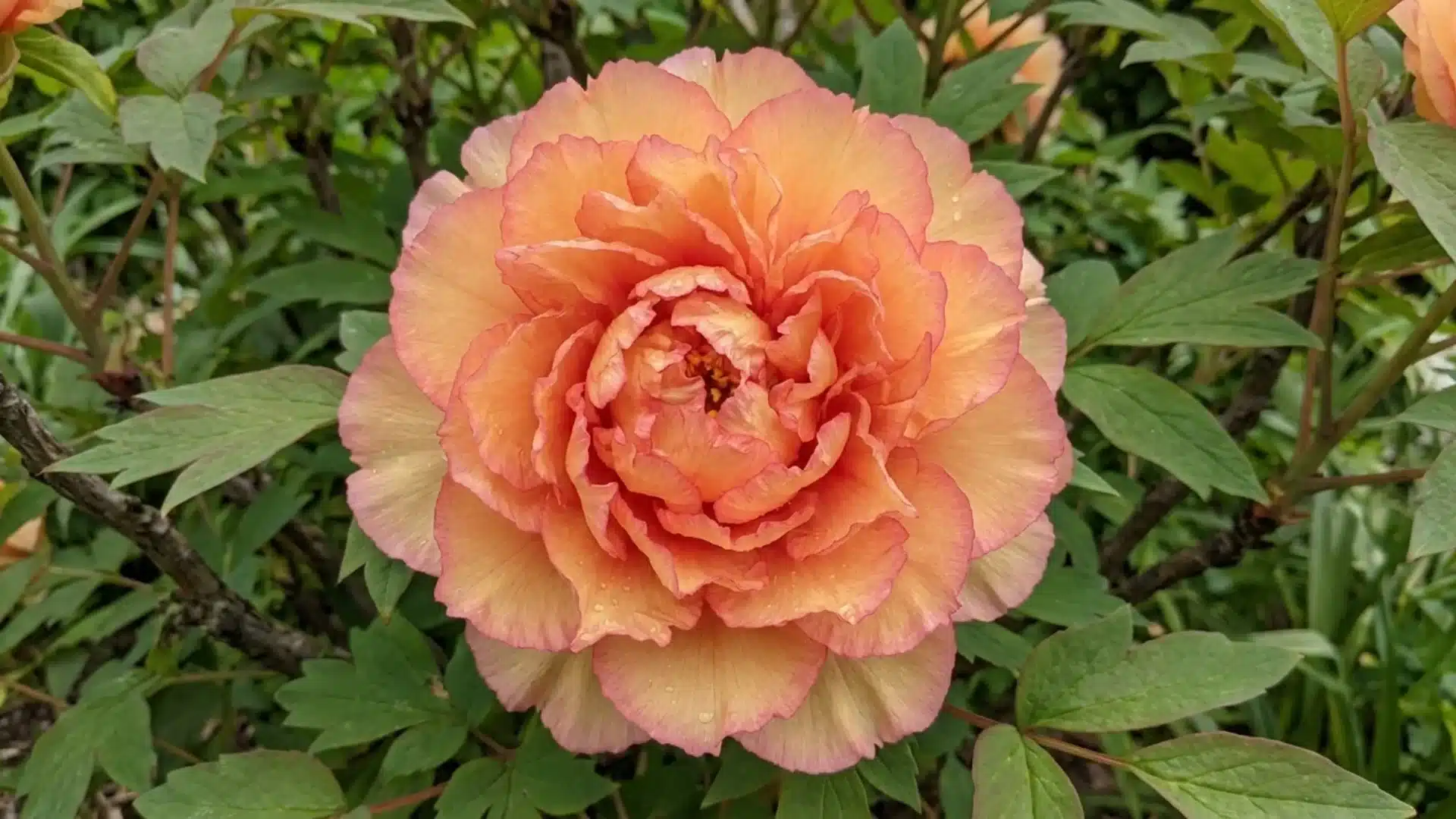
- Botanical name: Paeonia x lemoinei
- Plant type: Woody shrub (Lutea hybrid tree peony)
- Sun requirements: Full sun to partial shade
- Hardiness zones: 3-8
Introduced in 1928, this Lutea hybrid was among the first double-flowered yellow tree peonies ever bred, crossing P. delavayi with a Chinese Suffruticosa cultivar.
Its pale yellow, fragrant blooms set it apart from the whites and pinks typical of traditional tree peonies.
21. High Noon
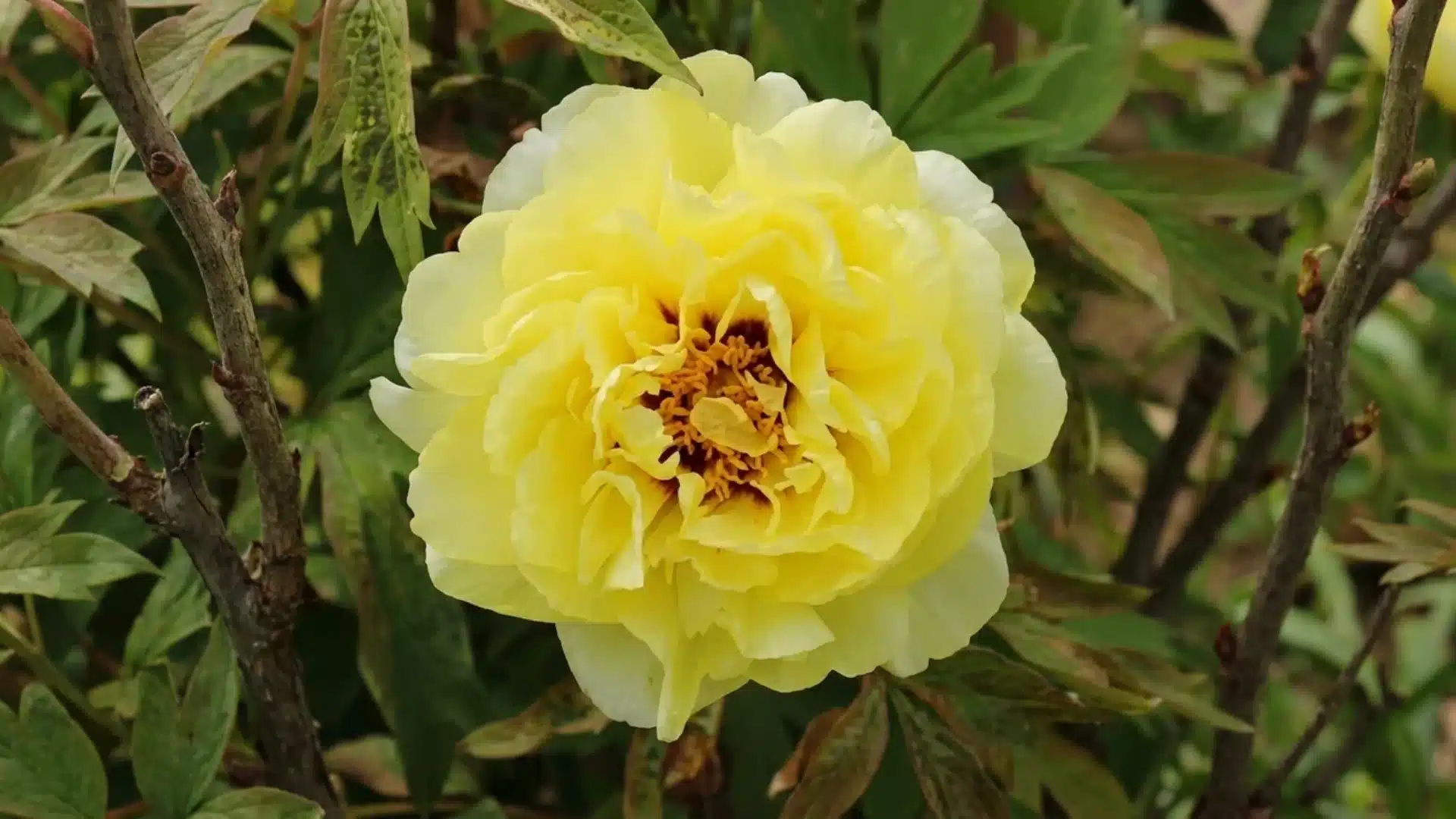
- Botanical name: Paeonia x lemoinei
- Plant type: Woody shrub (Lutea hybrid tree peony)
- Sun requirements: Full sun to partial shade
- Hardiness zones: 4-8
This semi-double, lemon yellow Lutea hybrid has earned the Royal Horticultural Society’s Award of Garden Merit for its garden performance.
It grows best in full sun but tolerates partial shade and needs protection from cold, drying winds to thrive.
22. Leda
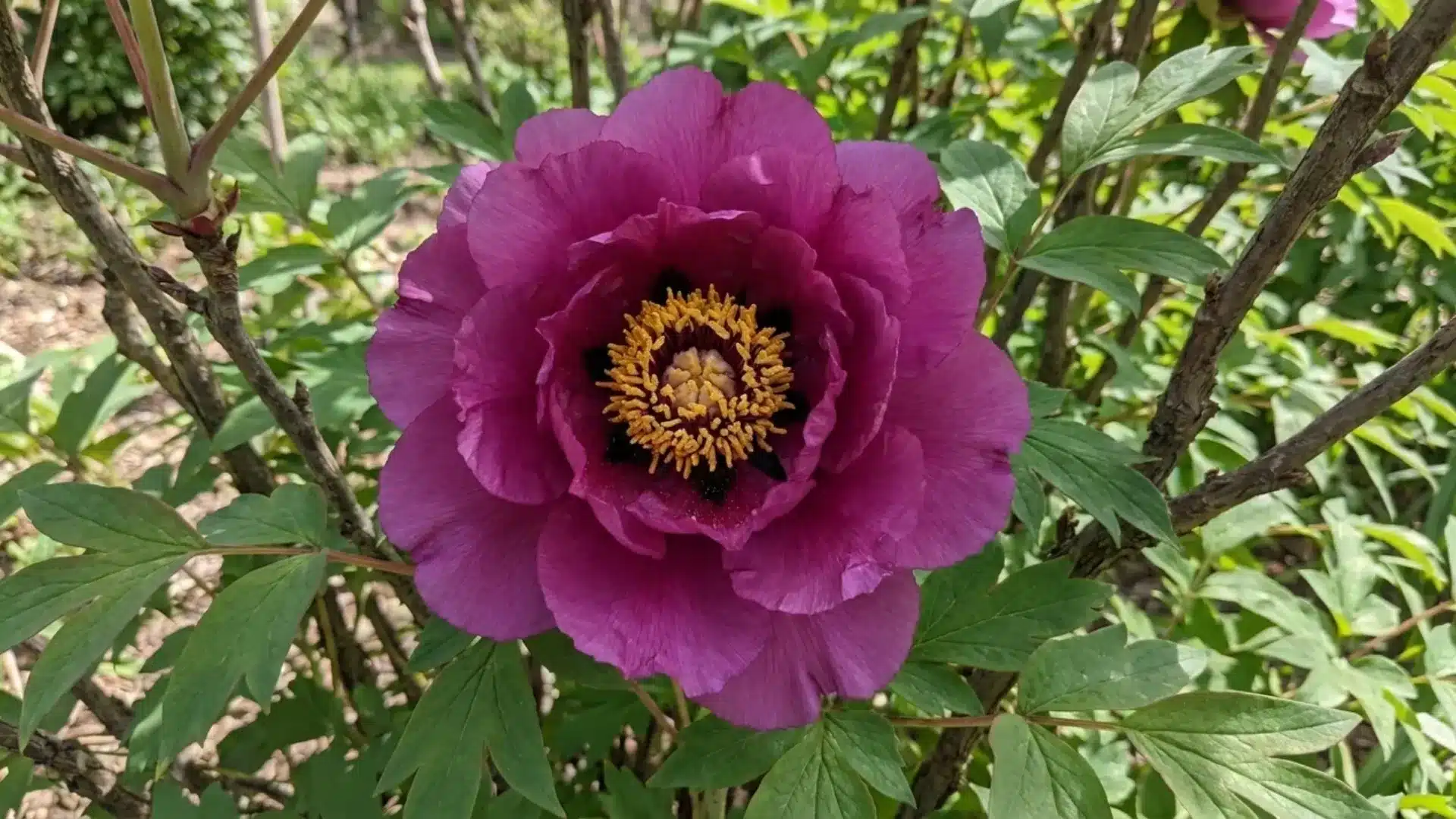
- Botanical name: Paeonia x lemoinei
- Plant type: Woody shrub (Lutea hybrid tree peony)
- Sun requirements: Full sun to partial shade
- Hardiness zones: 5-8
This Lutea hybrid tree peony produces large, semi-double blooms in soft mauve pink, with each petal marked by deep reddish-purple flares near the base.
The woody shrub grows slowly but rewards patience with a striking, richly toned display each mid to late spring.
23. Black Pirate
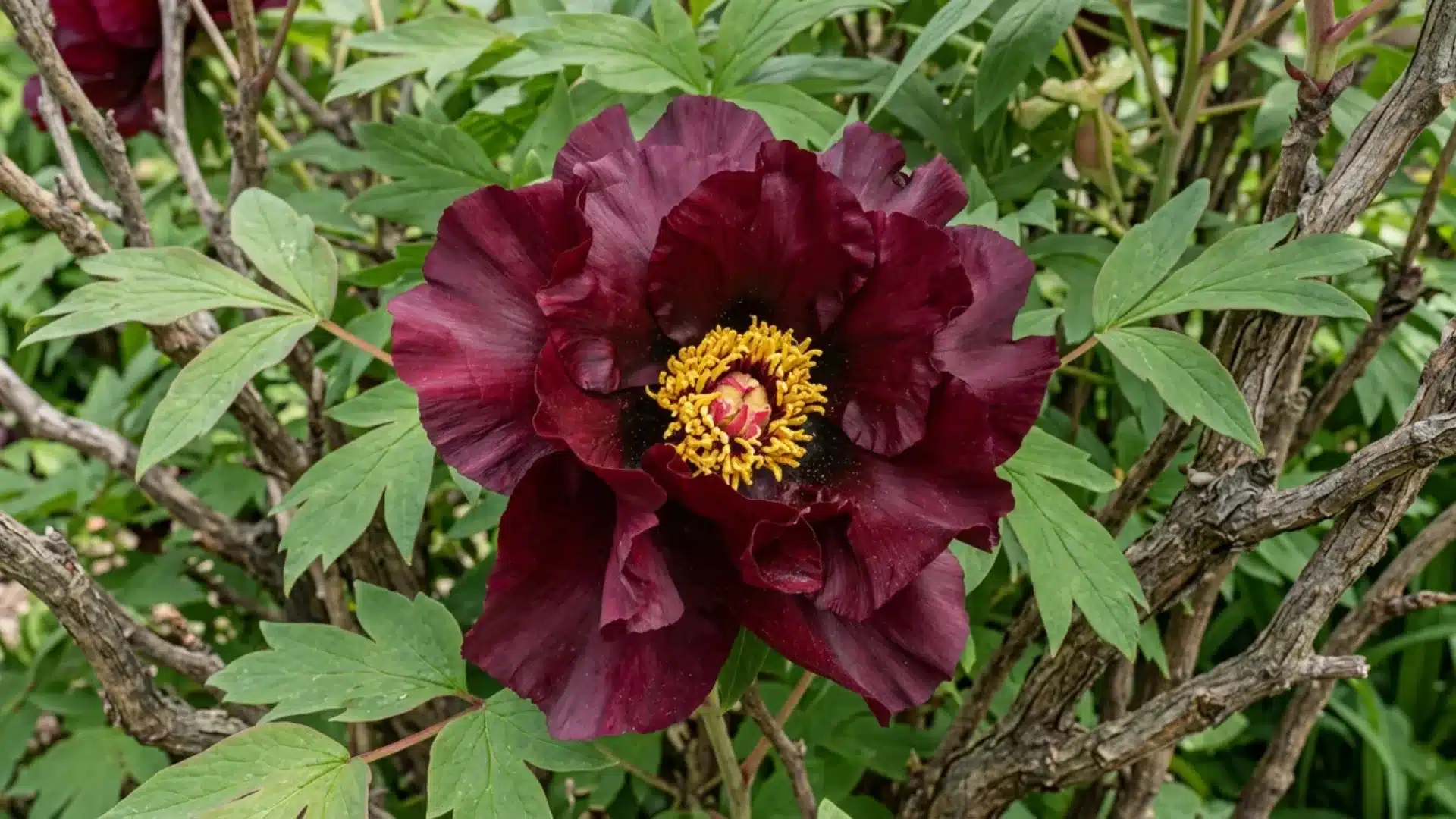
- Botanical name: Paeonia x lemoinei
- Plant type: Woody shrub (Lutea hybrid tree peony)
- Sun requirements: Full sun to partial shade
- Hardiness zones: 4-8
This Lutea hybrid tree peony produces unusually dark, deep red blooms that can appear almost black under certain garden light, a striking departure from the yellows typical of its group.
Stems hold their structure through winter like other Lutea hybrids.
Intersectional (Itoh) Peony Types and Varieties
Intersectional or Itoh peonies are hybrids between herbaceous and tree peonies, blending traits from both parent types. Here are 12 popular varieties within this type:
24. Bartzella
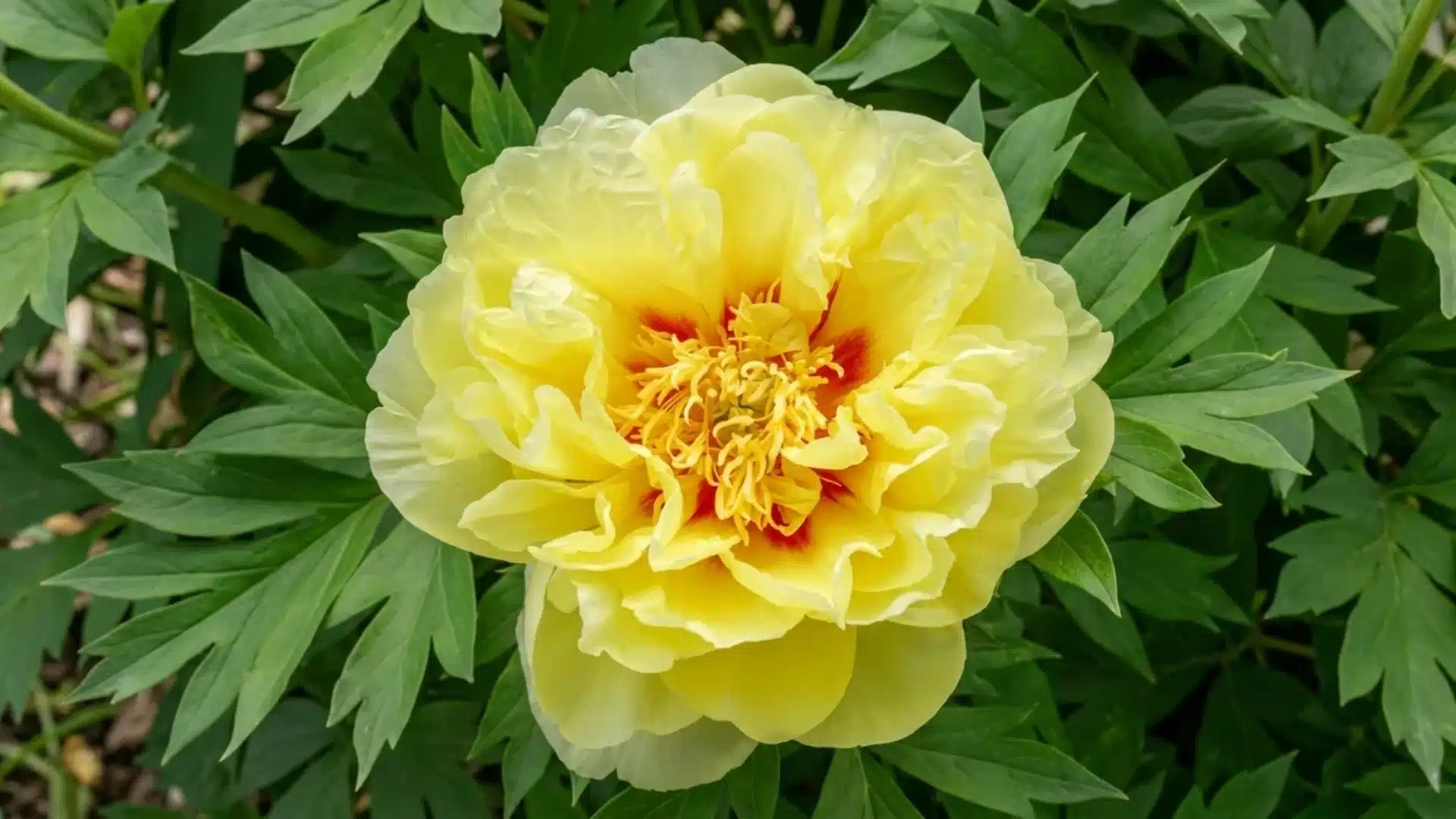
- Botanical name: Paeonia (Itoh Group)
- Plant type: Intersectional hybrid perennial
- Sun requirements: Full sun to partial shade
- Hardiness zones: 4-9
This award-winning Itoh hybrid produces very large, luminous golden yellow, semi- to fully double blooms delicately flushed scarlet at the heart.
Strong, erect stems never need staking, and a mature bush can produce over sixty fragrant, lemon-scented blooms across several weeks each season.
25. Border Charm
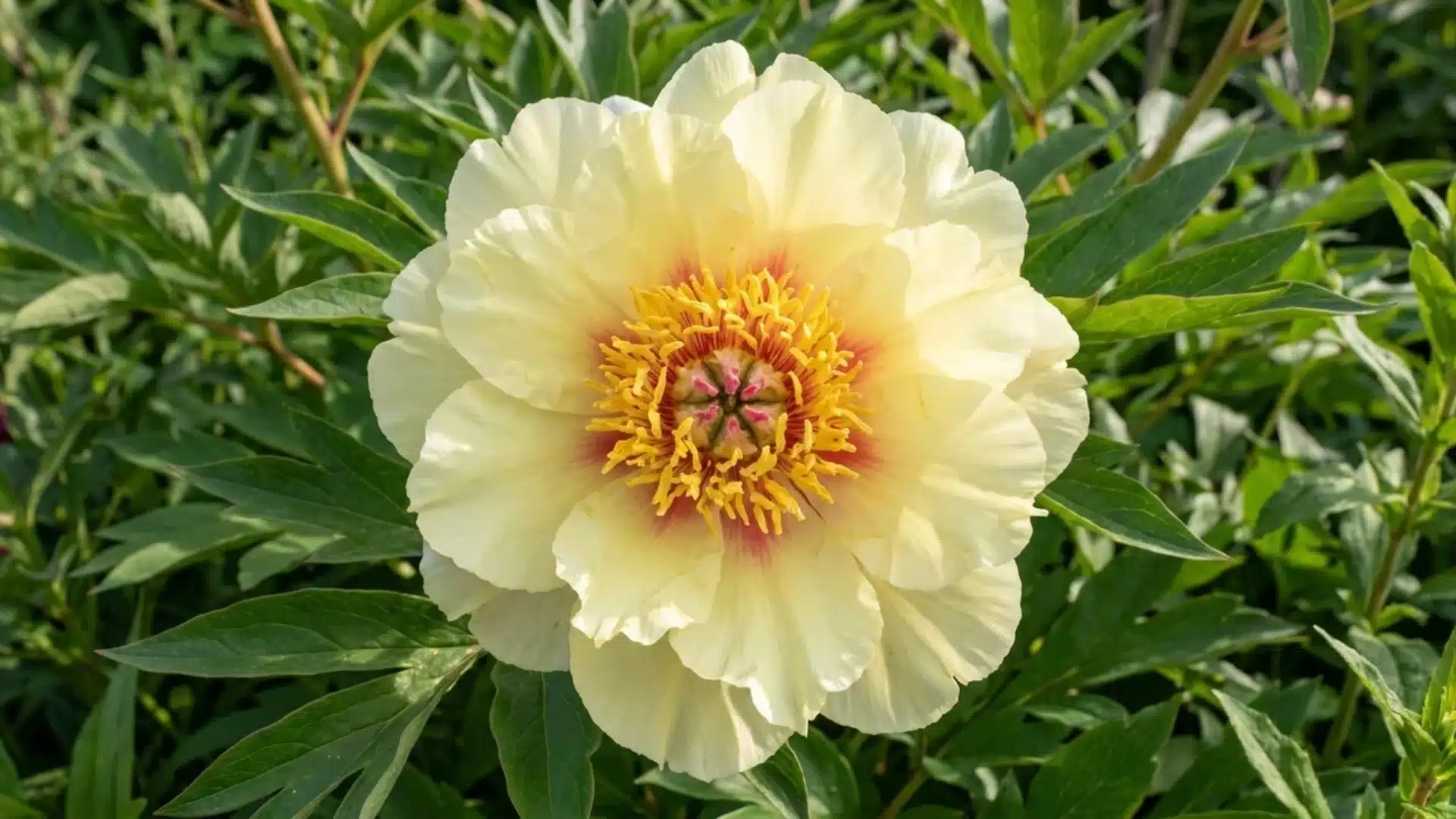
- Botanical name: Paeonia (Itoh Group)
- Plant type: Intersectional hybrid perennial
- Sun requirements: Full sun
- Hardiness zones: 5-8
This Itoh hybrid produces bright yellow, single blooms made more striking by red-orange flares at the base of each petal.
Because one parent is a tree peony, the plant has disease-resistant green foliage on short woody stems and blooms profusely through May and June.
26. Cora Louise
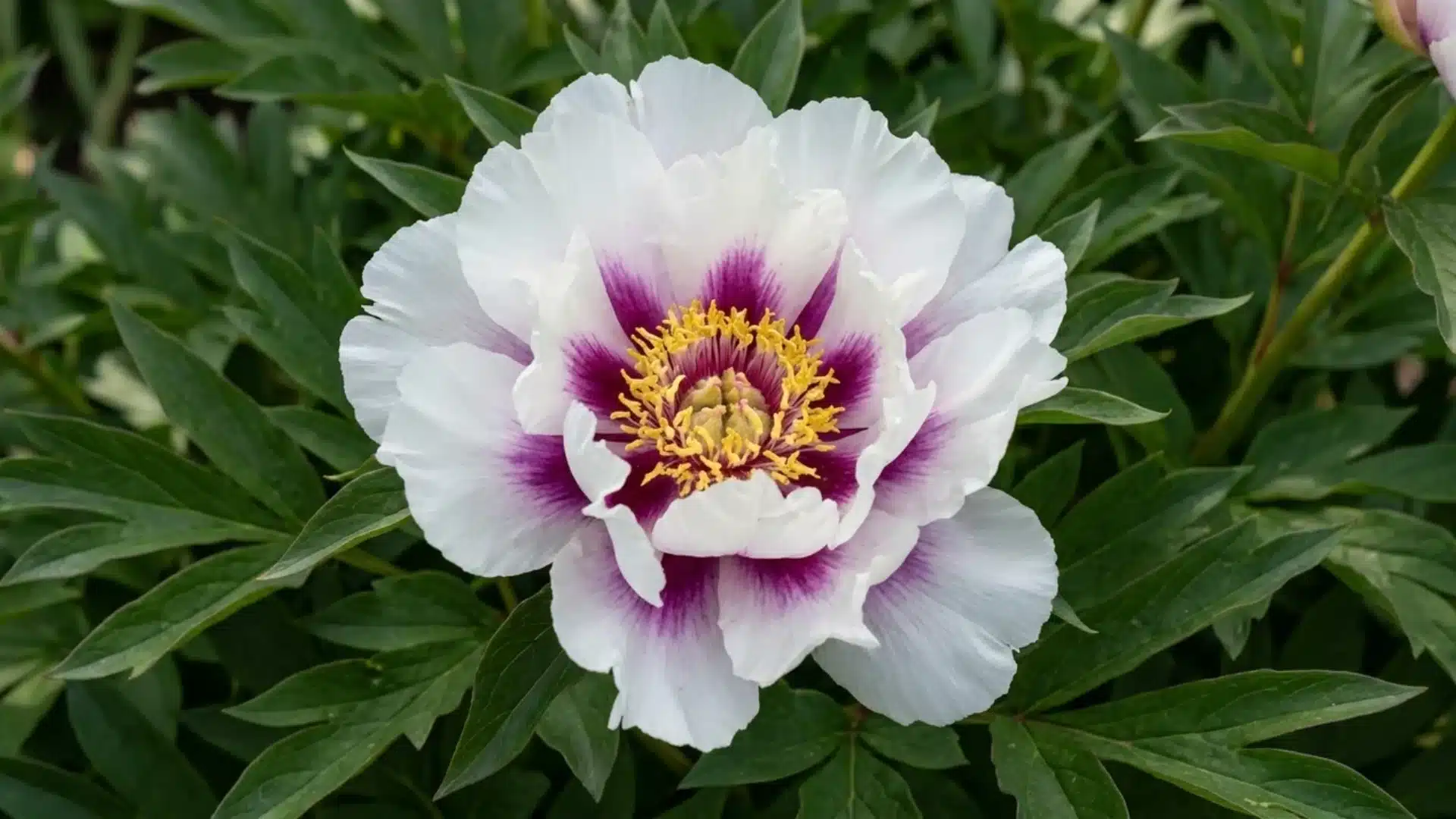
- Botanical name: Paeonia (Itoh Group)
- Plant type: Intersectional hybrid perennial
- Sun requirements: Full sun to partial shade
- Hardiness zones: 4-8
This Itoh variety features very large, pure white, semi-double flowers that open to reveal flushed lavender-to-purple petals surrounding golden stamens.
Strong, erect stems need no staking, and a mature bush can produce up to fifty fragrant blooms across several weeks.
27. Julia Rose
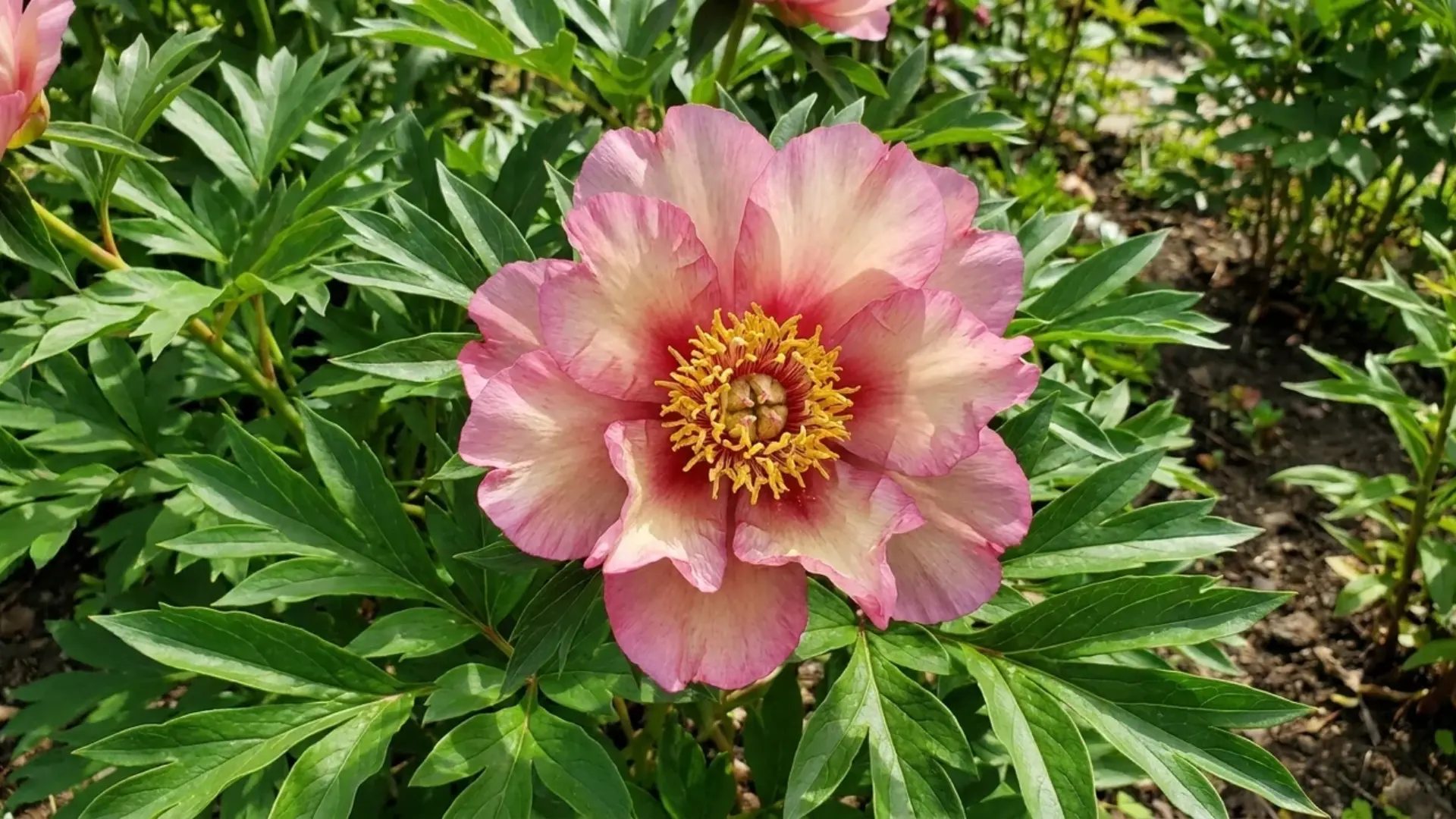
- Botanical name: Paeonia (Itoh Group)
- Plant type: Intersectional hybrid perennial
- Sun requirements: Full sun to partial shade
- Hardiness zones: 4-8
This remarkable Itoh hybrid produces single to semi-double blossoms that change color dramatically over time.
They open cherry red in bud, shift to orange and apricot with purple-flushed edges, then fade later to soft yellow as the bloom matures.
28. First Arrival
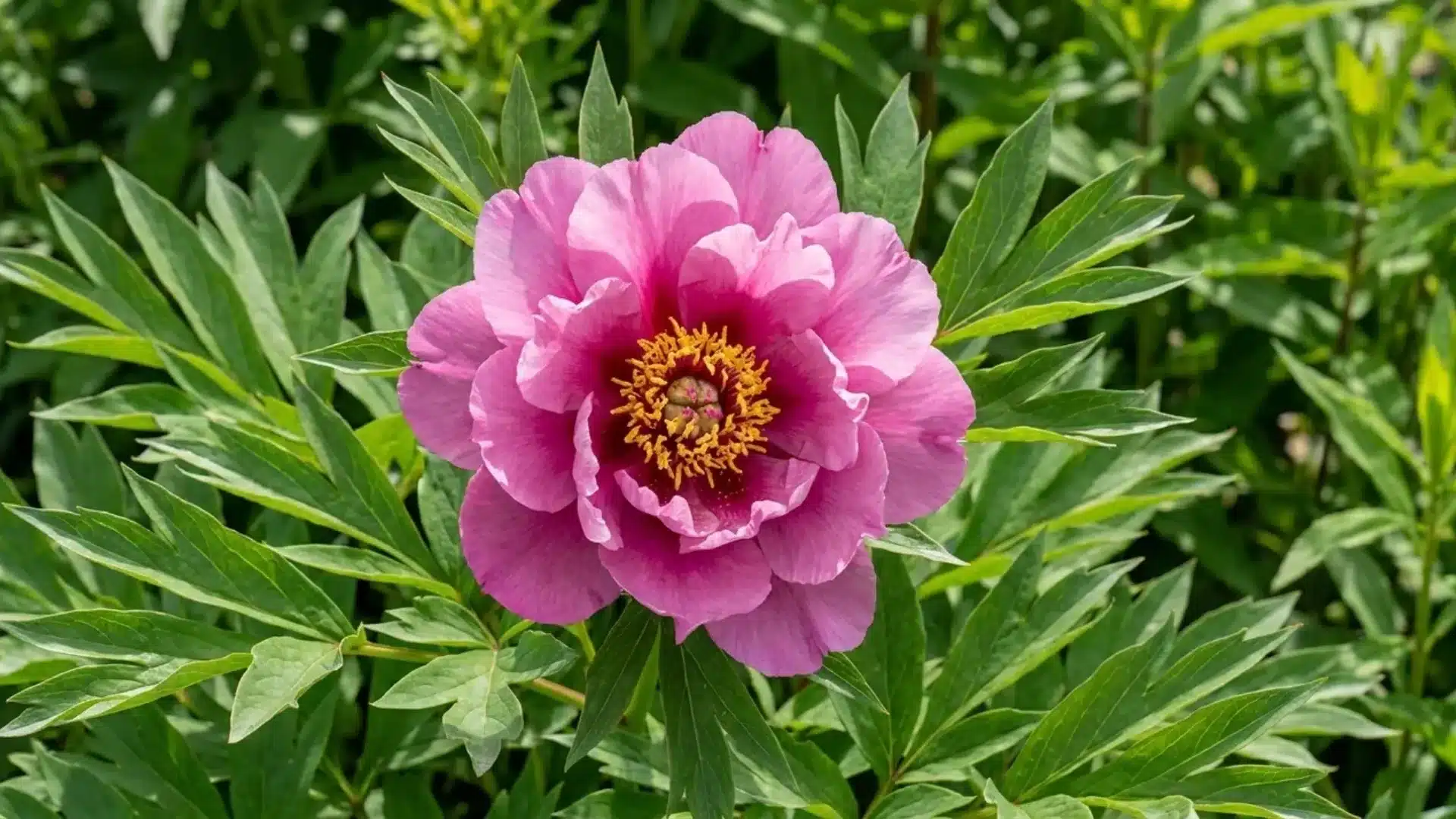
- Botanical name: Paeonia (Itoh Group)
- Plant type: Intersectional hybrid perennial
- Sun requirements: Full sun to partial shade
- Hardiness zones: 4-9
Some gardeners regard this as one of the earliest Itoh varieties to bloom. It produces large, lavender pink, semi-double blossoms with reddish purple flares at the base of each petal.
The color gradually softens to a lighter pink as the flowers age.
29. Yellow Crown
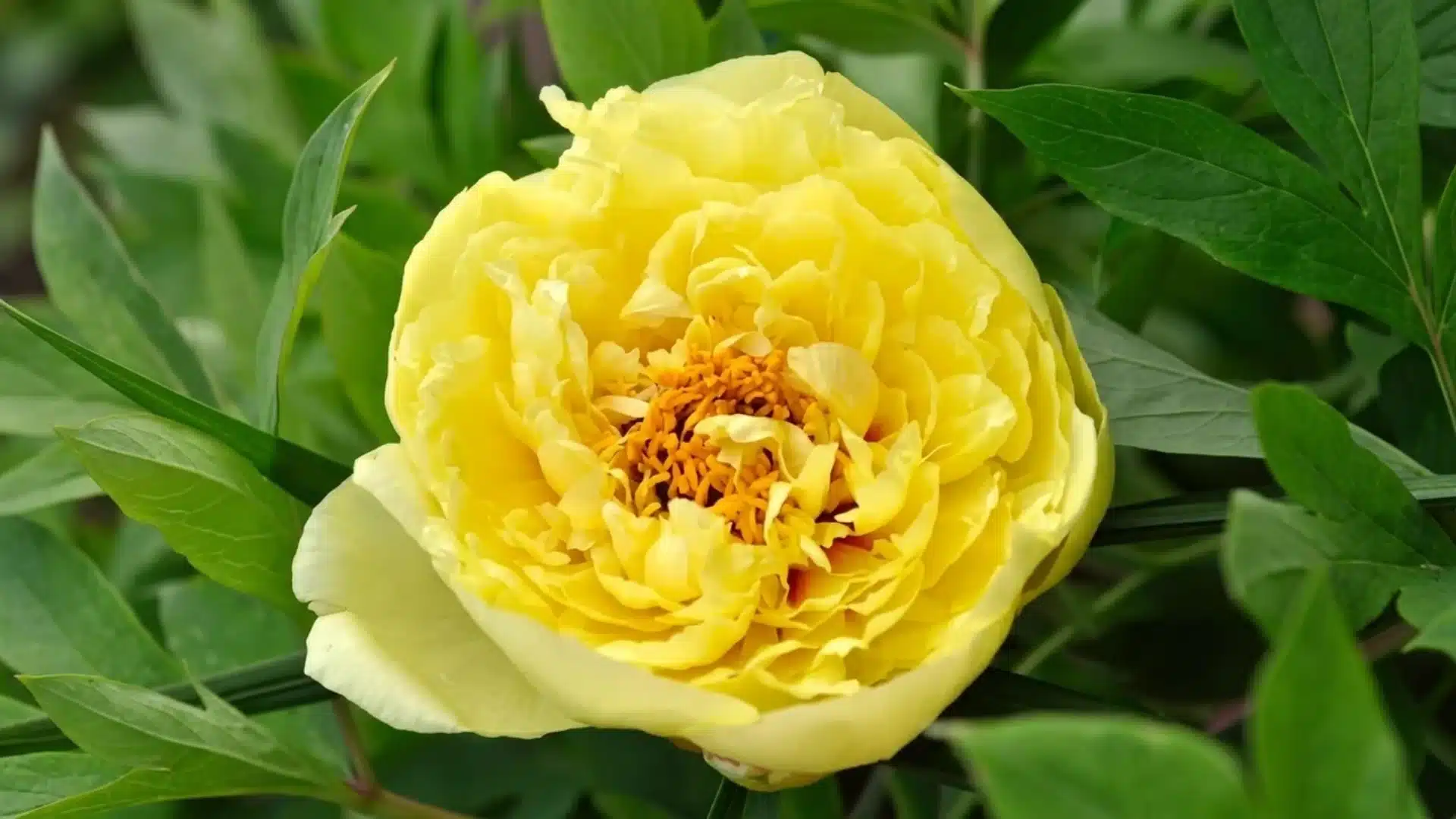
- Botanical name: Paeonia (Itoh Group)
- Plant type: Intersectional hybrid perennial
- Sun requirements: Full sun to partial shade
- Hardiness zones: 4-9
This Itoh hybrid pushes the boundaries of peony hardiness, since some Itoh varieties can bloom successfully in warmer zones where herbaceous types typically struggle.
Its semi-double yellow blooms benefit from higher elevation or added afternoon shade in the hottest parts of its range.
30. Morning Lilac
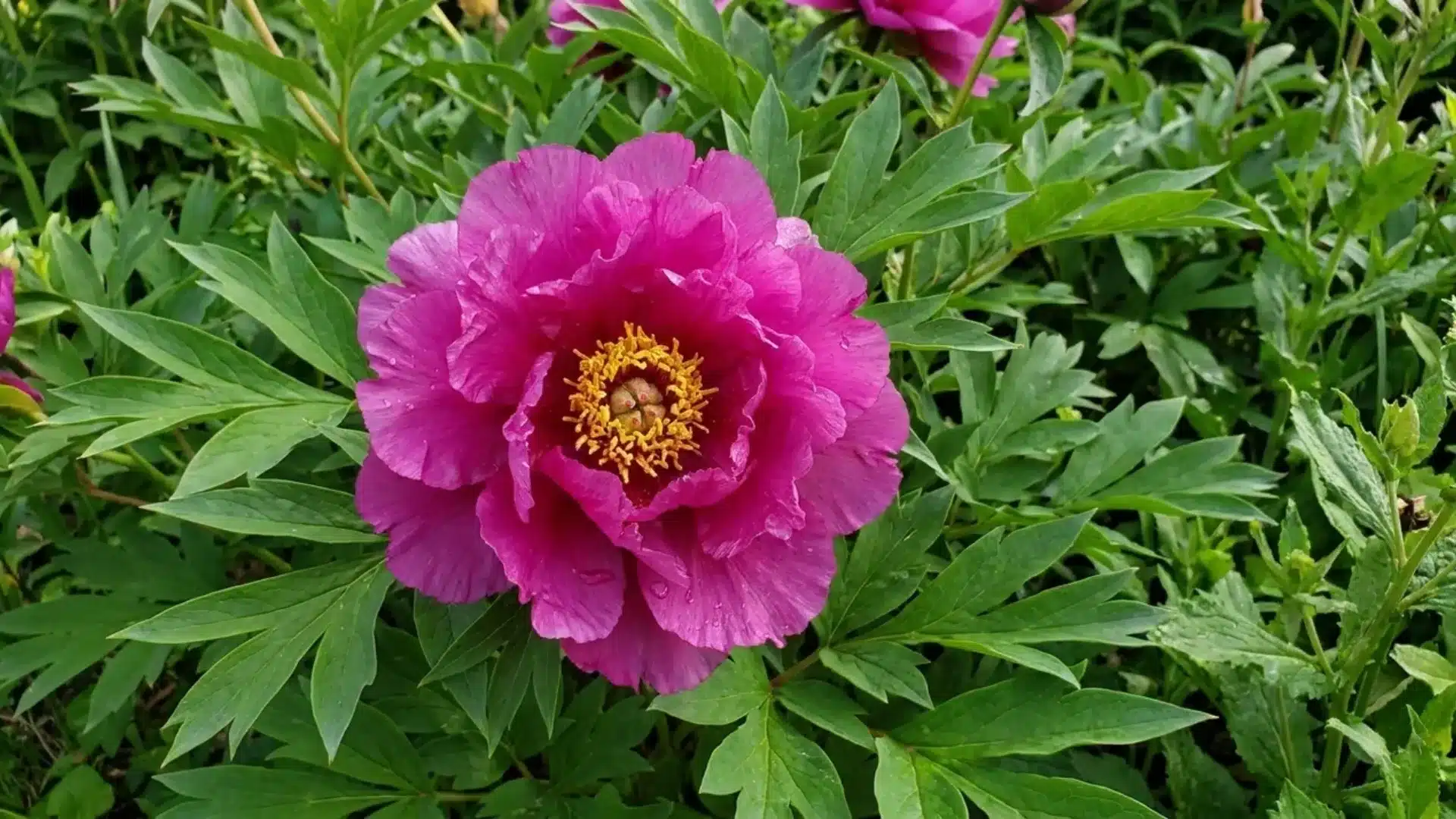
- Botanical name: Paeonia (Itoh Group)
- Plant type: Intersectional hybrid perennial
- Sun requirements: Full sun to partial shade
- Hardiness zones: 4-8
This highly floriferous Itoh variety produces bright fuchsia purple, semi-double blooms with a touch of deeper purple and gold stamens filling each center.
Even out of bloom, the compact plant stays decorative, with foliage turning bright orange and red each fall.
31. Hillary
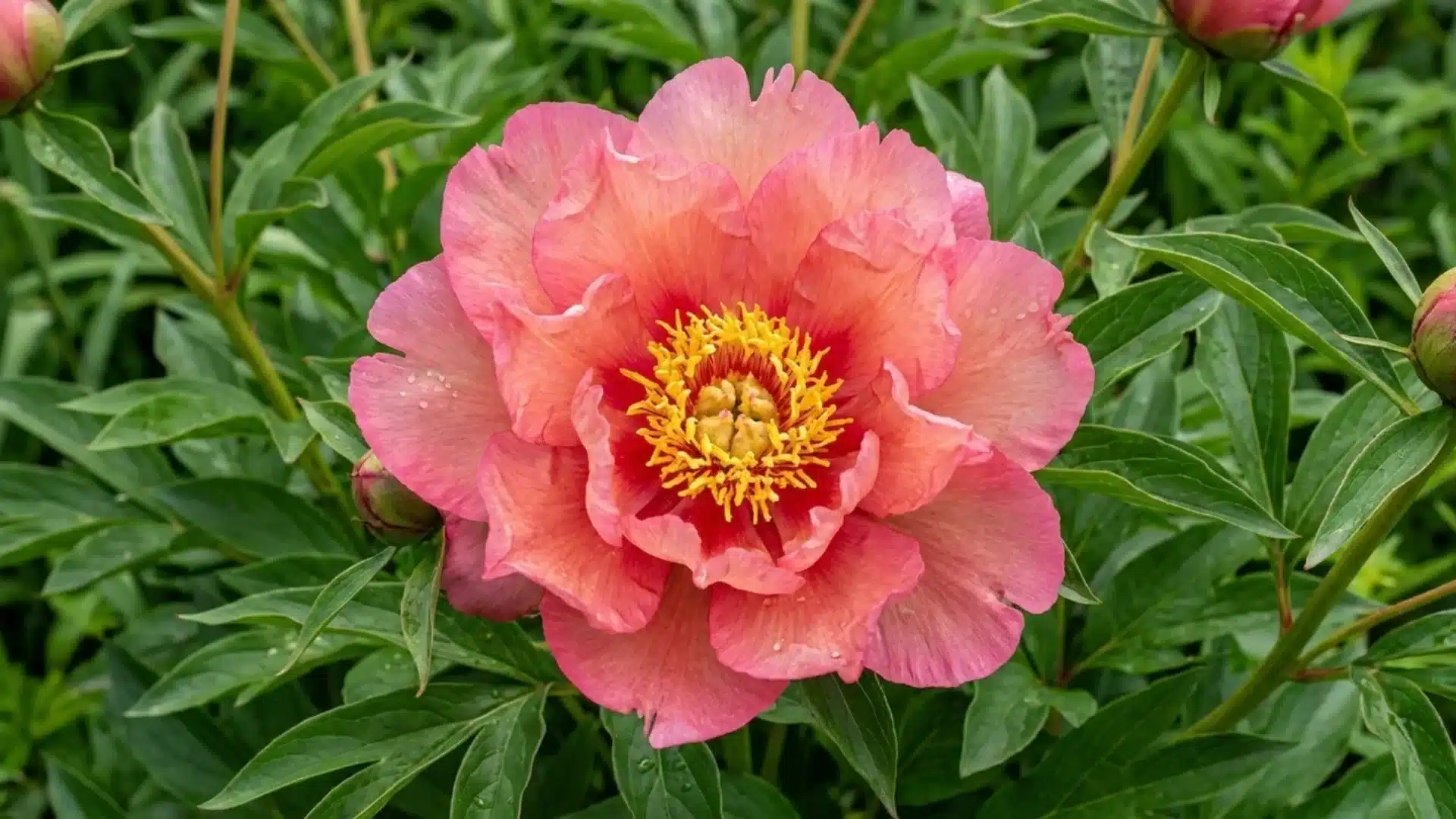
- Botanical name: Paeonia (Itoh Group)
- Plant type: Intersectional hybrid perennial
- Sun requirements: Full sun to partial shade
- Hardiness zones: 4-8
This Itoh hybrid produces large, semi-double rosette blooms in shades of raspberry and apricot.
The color transitions gracefully to cream as the flowers mature, giving each plant several distinct looks across its blooming period each season.
32. Old Rose Dandy
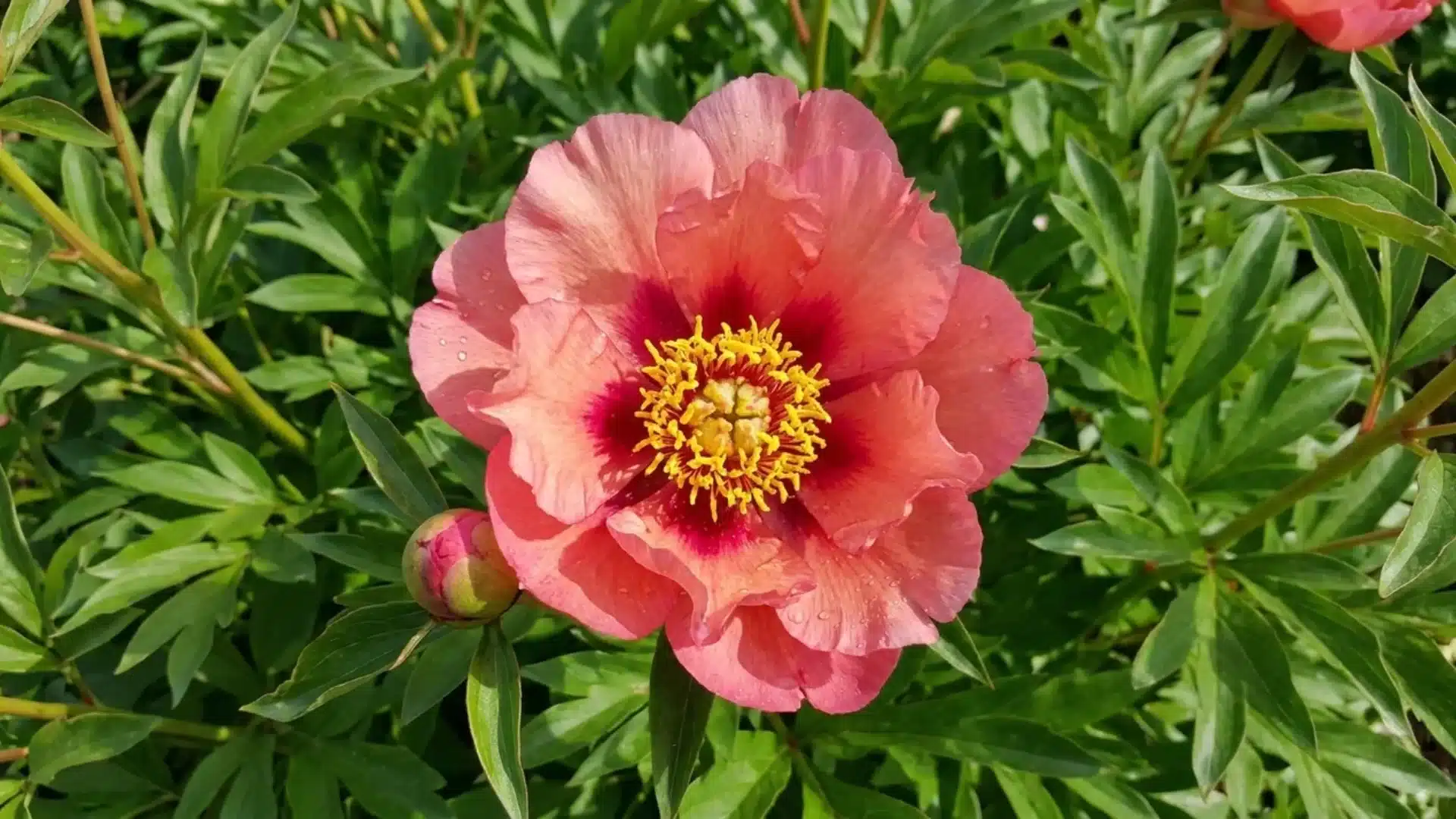
- Botanical name: Paeonia (Itoh Group)
- Plant type: Intersectional hybrid perennial
- Sun requirements: Full sun to partial shade
- Hardiness zones: 3-8
This Itoh hybrid produces large single blooms ranging from rose-pink to copper, accented with brick-red flares and yellow stamens.
Since it crosses tree and herbaceous peonies, its woody stems stay short but vigorous, wrapped in handsome, disease-resistant foliage.
33. Lemon Dream
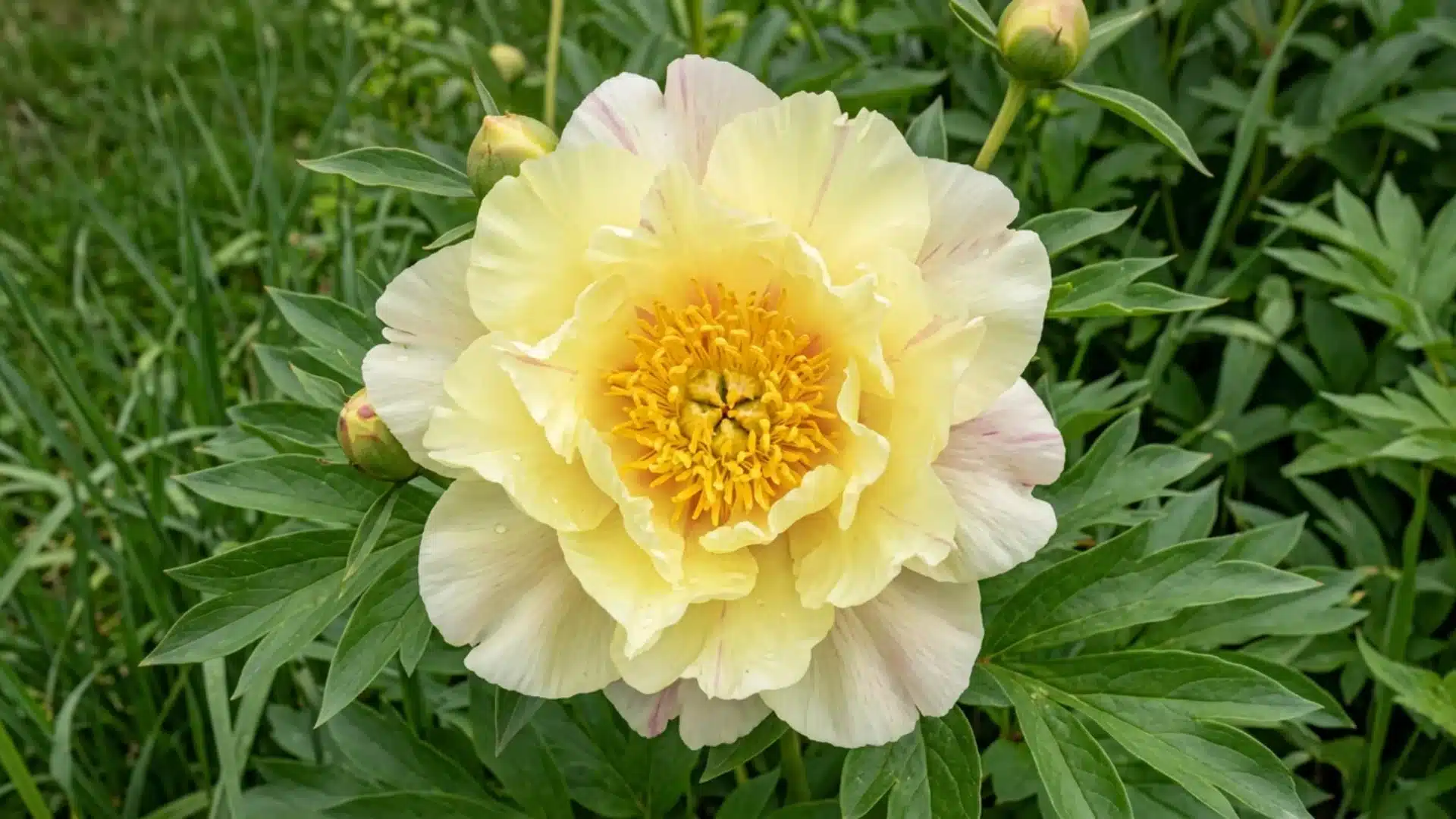
- Botanical name: Paeonia (Itoh Group)
- Plant type: Intersectional hybrid perennial
- Sun requirements: Full sun to partial shade
- Hardiness zones: 4-9
This Itoh hybrid produces semi-double, lemon-yellow blooms that are often streaked or flushed with lavender-pink, and no two flowers open quite the same.
Bred by R.F. Anderson and first bloomed in 1987, it holds its flowers upright on sturdy, self-supporting stems.
34. Canary Brilliants
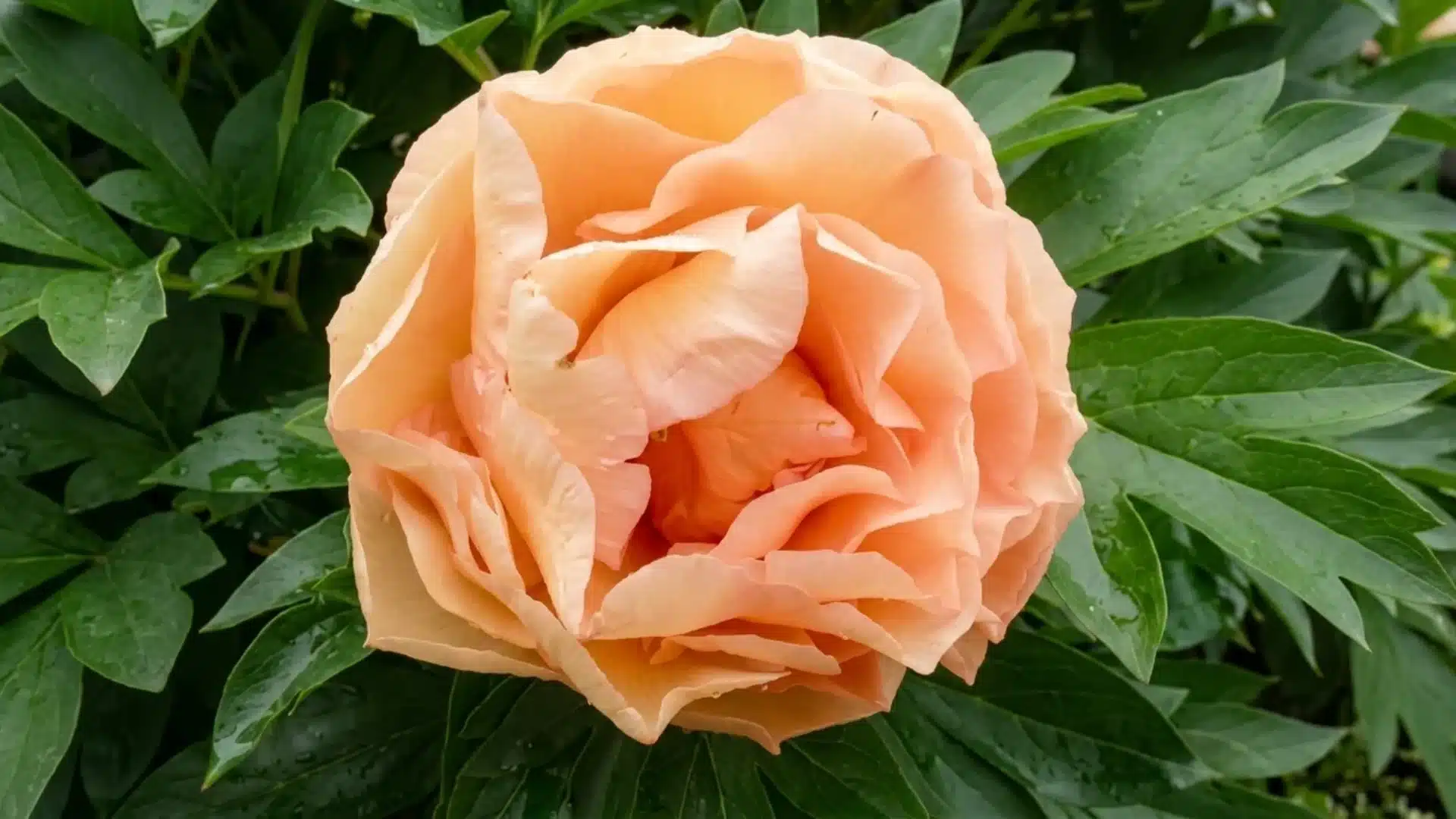
- Botanical name: Paeonia (Itoh Group)
- Plant type: Intersectional hybrid perennial
- Sun requirements: Full sun to partial shade
- Hardiness zones: 4-9
This award-winning Itoh hybrid produces large, semi-double to double blooms in creamy yellow with apricot hues at the center.
Some blooms deepen in color as they open while others stay soft yellow, and strong stems hold them upright even through adverse weather.
35. Love Affair
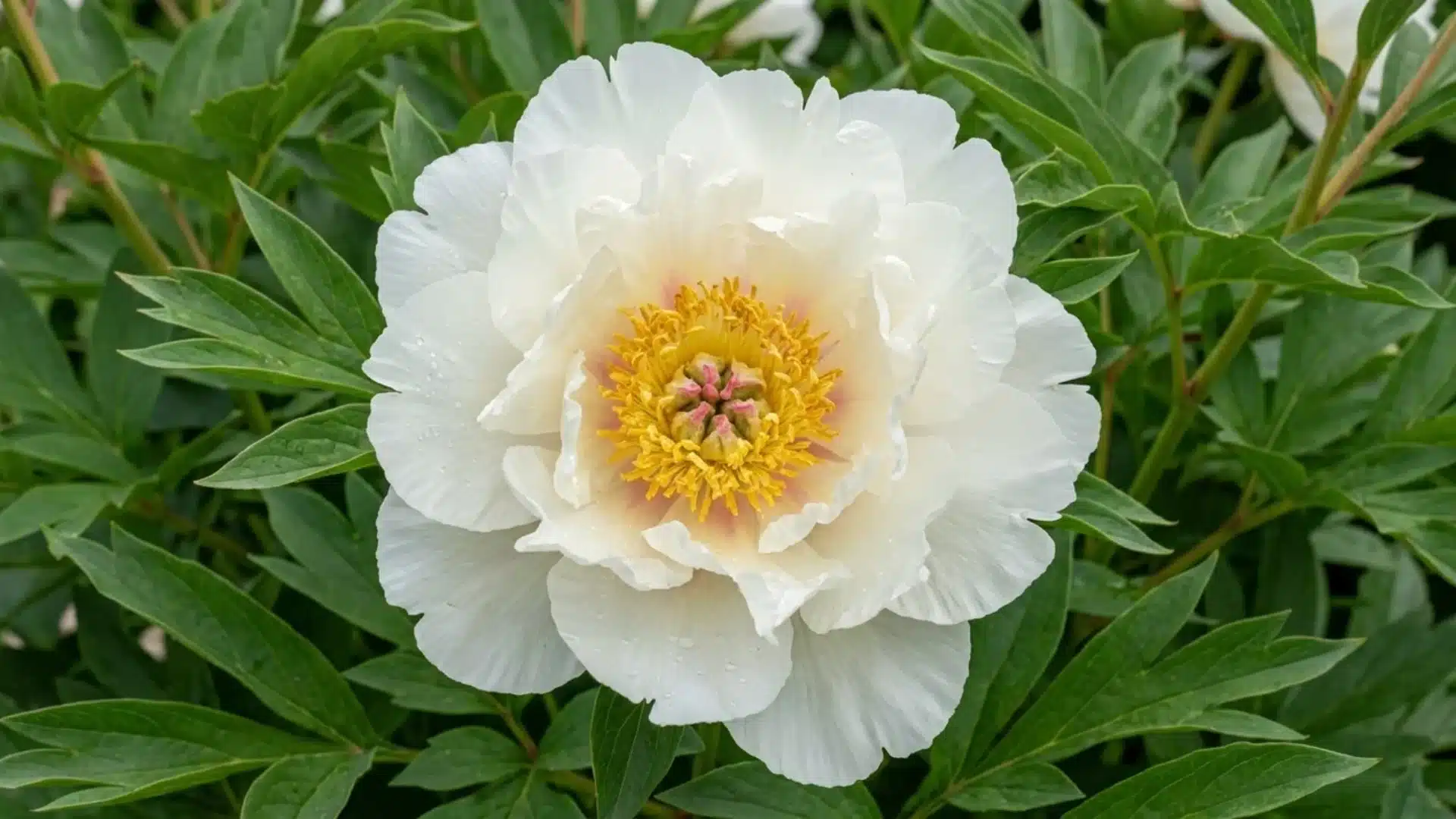
- Botanical name: Paeonia (Itoh Group)
- Plant type: Intersectional hybrid perennial
- Sun requirements: Full sun to partial shade
- Hardiness zones: 4-8
This Itoh hybrid produces pristine white, semi-double blooms arranged symmetrically around a golden center, with mildly fragrant flowers appearing one per stem.
It emerged as a rare white-flowering mutation of the yellow Itoh variety ‘Prairie Sunshine,’ differing only in petal color and symmetry.
Peony Flower Forms: How Blooms Are Classified
Type and color are not the only ways peonies get sorted. Growers also classify blooms by flower form, which describes how the petals and stamens are arranged inside each flower.
A single peony and a fully double peony can belong to the same herbaceous, tree, or Itoh type and still look completely different up close.
| Flower Form | Petal Arrangement | Example Variety |
|---|---|---|
| Single | One or two rows of broad petals around fully visible stamens | Krinkled White |
| Japanese | One row of guard petals, but the stamens enlarge into colorful petal-like staminodes instead of forming true petals | Nippon Beauty |
| Anemone | One row of guard petals surrounding a puffy center of narrow petaloids | Bowl of Beauty |
| Semi-double | Several loose rows of petals mixed in with visible stamens | Coral Charm |
|
Double |
Many dense rows of petals that hide most or all of the stamens | Sarah Bernhardt |
Herbaceous, tree, and Itoh peonies can each appear in any of these forms, so flower form and growth type work as two separate labels rather than one.
A plant tag might list both, such as a herbaceous double or a tree single, on the same root.
When Do Different Types of Peonies Bloom?
Peony bloom time depends heavily on which type is planted, with tree peonies opening first each spring.
- Tree peonies bloom earliest, typically opening one to two weeks before herbaceous varieties begin their season.
- Herbaceous peonies follow next, with early-, mid-, and late-season cultivars extending color through late spring into early summer.
- Itoh peonies bloom last among the three, often starting after most herbaceous varieties have finished and continuing for several weeks longer than either parent type.
Planting a mix of all three types can stretch total bloom time in a single garden to roughly two months, giving the longest possible flowering window each year.
Gardeners mapping out a planting calendar can check regional peony bloom windows for a closer look at how local frost dates shift these timelines.
How to Choose the Right Type of Peony for Your Garden
Picking the right peony type comes down to a few practical factors rather than looks alone:
- Climate: Herbaceous peonies need a cold winter to bloom well, while Itoh hybrids tolerate warmer zones more easily.
- Space: Tree peonies grow into large woody shrubs that need room to spread over many years.
- Staking needs: Double-blooming herbaceous varieties often require support that single-flowered types rarely need.
- Bloom length: Itoh peonies flower longer than most herbaceous cultivars, extending color further into the season.
- Maintenance: Sturdy Itoh and single-flowered varieties generally need less upkeep than heavy, old-fashioned double blooms.
Anyone leaning toward single or semi-double forms for arrangements can look at what it takes to start a cut flower garden before committing to a bed layout.
Matching these factors to a garden’s conditions makes the difference between a peony that struggles and one that thrives for decades.
Frequently Asked Questions (FAQs)
When is the Best Time to Plant Peonies?
Fall is the ideal planting time, giving roots several months to establish before winter dormancy sets in.
Are Peonies Deer Resistant?
Most peony varieties, across all three types, are naturally resistant to deer and rabbits, making them dependable in wildlife-heavy gardens.
How Long Do Peonies Live?
Peonies are famously long-lived, with many plants thriving for fifty years or more once established.
Is It Normal to See Ants on Peony Buds?
Yes, ants are drawn to the sugary nectar on buds before they open, and they cause no harm to the plant.
The Final Verdict
That peony bed out back still surprises me with something new each spring, whether it is a tree peony opening early or an Itoh hybrid stretching the season into summer.
After years of trial and error, I have learned that choosing the right type from the start makes all the difference between a plant that struggles and one that thrives for decades.
Herbaceous, tree, and Itoh peonies each bring something different to a garden, and there’s no wrong answer, only the one that fits your space best.
Which type is already growing in your garden? Tell me in the comments below.