Some spaces just feel like home the moment you walk in, and a traditional kitchen has that effect every single time.
It is the kind of design that never chases trends because it never needs to.
With beautifully detailed cabinetry, warm, inviting tones, and finishes that feel collected over time, traditional kitchens carry a sense of soul that modern styles often spend years trying to recreate.
Stick around, because we are getting into everything from layouts and color palettes to the little styling details that bring it all together.
What Defines a Traditional Kitchen Style?
A traditional kitchen is really about the details that make a space feel intentional and lived-in.
Think ornate cabinetry with raised panel doors, crown molding that draws the eye upward, and a layout built on symmetry and quiet balance.
Natural materials like solid wood and stone do a lot of the heavy lifting here, grounded in warm, neutral tones that feel cozy without trying too hard.
Where modern kitchens lean into sleek minimalism, traditional kitchens lean into character, layering textures and classic finishes that genuinely get better with time.
Classic Cabinetry & Storage Ideas
Good cabinetry is the backbone of any traditional kitchen, and the right choices can completely convert how a space looks and feels. These ideas bring together beauty and practicality in the most classic way possible.
1. Raised-Panel Wood Cabinets
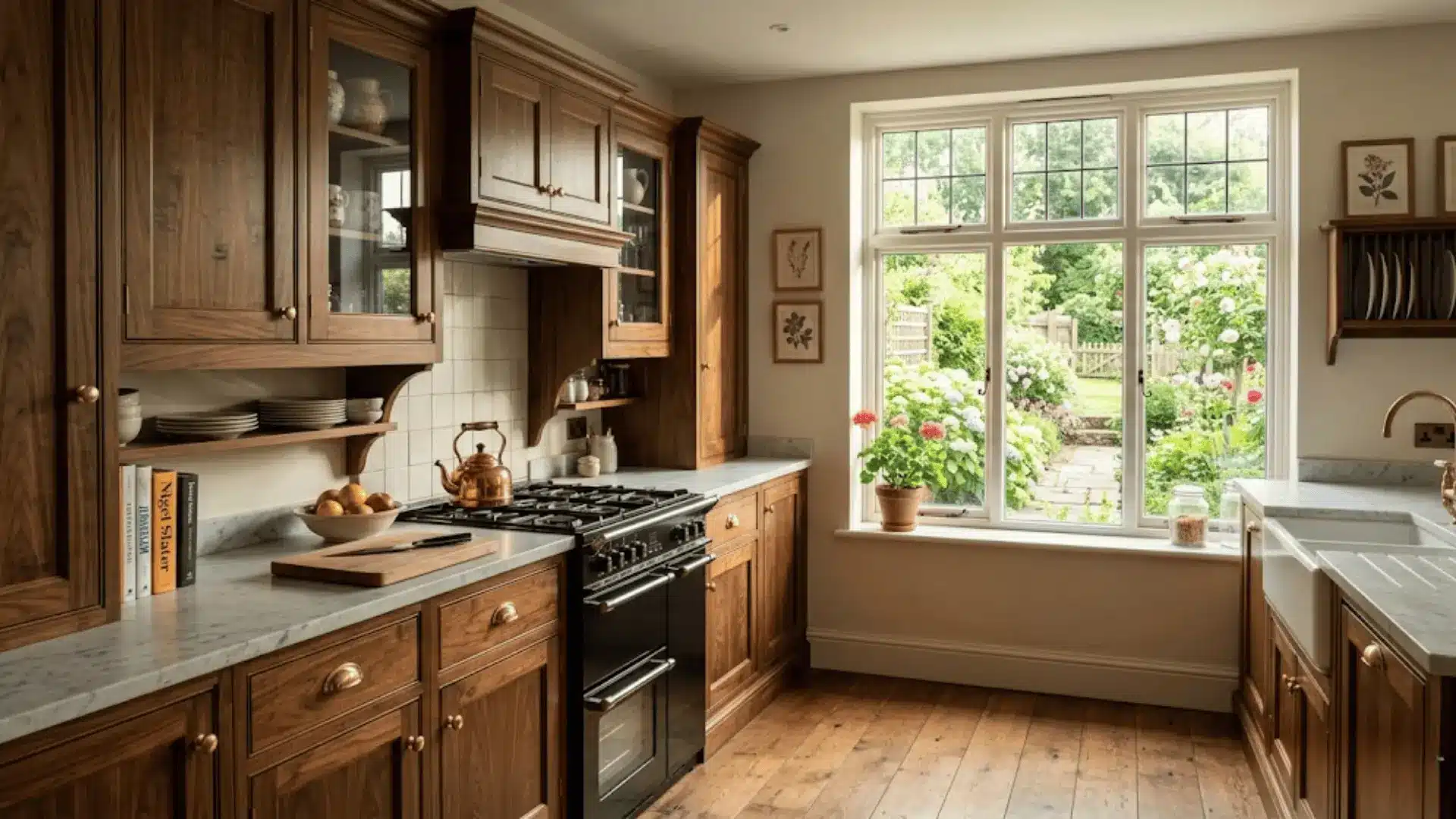
If there is one detail that instantly reads as traditional, it is raised-panel wood cabinets. The dimensional face adds depth and craftsmanship that flat-front doors simply cannot replicate.
Choose rich stains like walnut or cherry for a warmer feel, or go painted for something that feels a little more refined. Either way, this is the kind of cabinetry that anchors the entire kitchen.
2. Glass-Front Upper Cabinets
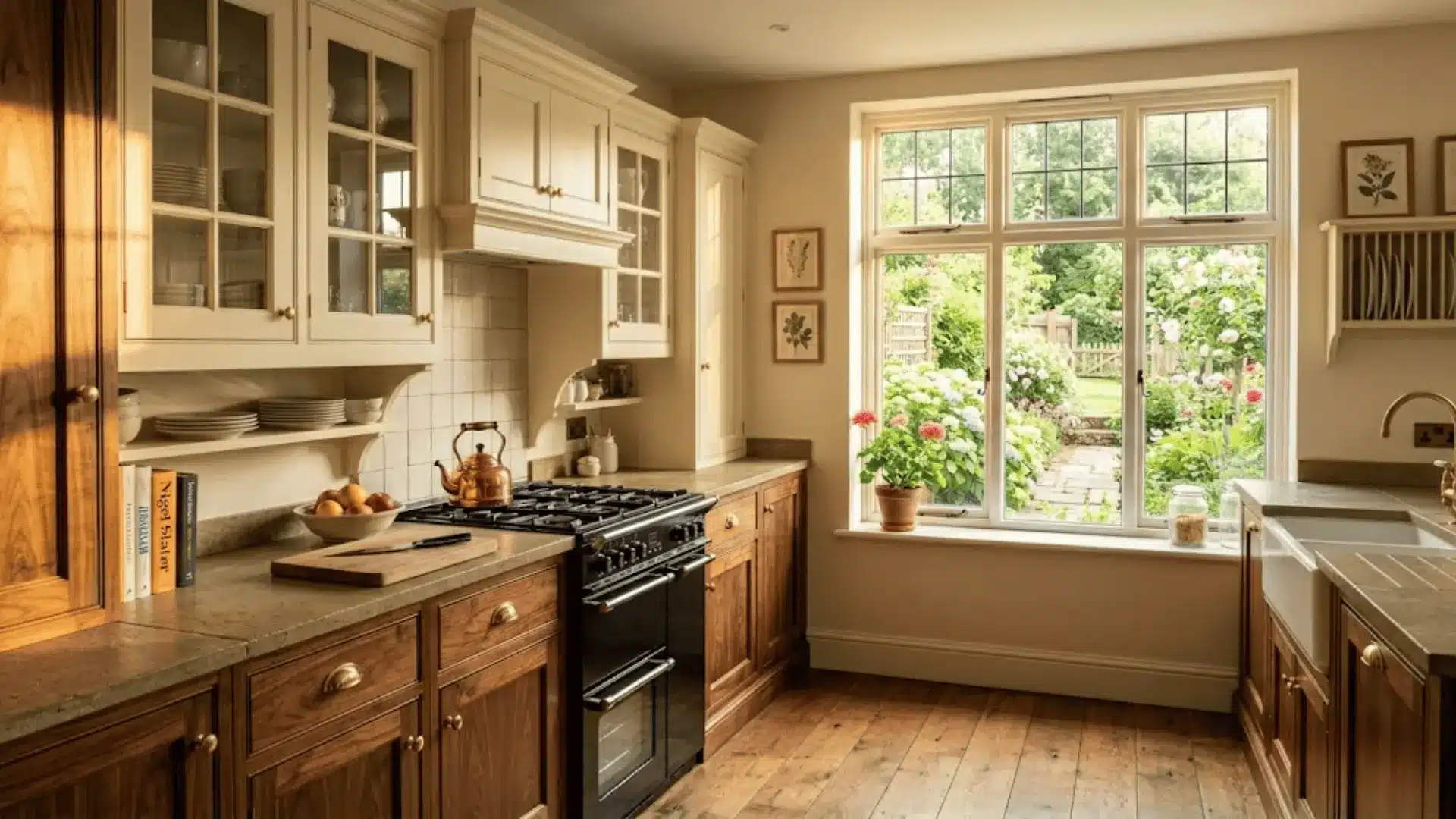
Glass-front cabinets are where function quietly becomes décor. They open up the upper half of the kitchen visually, keeping the space from feeling too heavy, while giving you the perfect excuse to display your prettiest dishware.
Opt for clear glass for a traditional look or go with seeded or frosted glass for a softer, more curated feel.
3. Built-in Cabinetry with Crown Molding
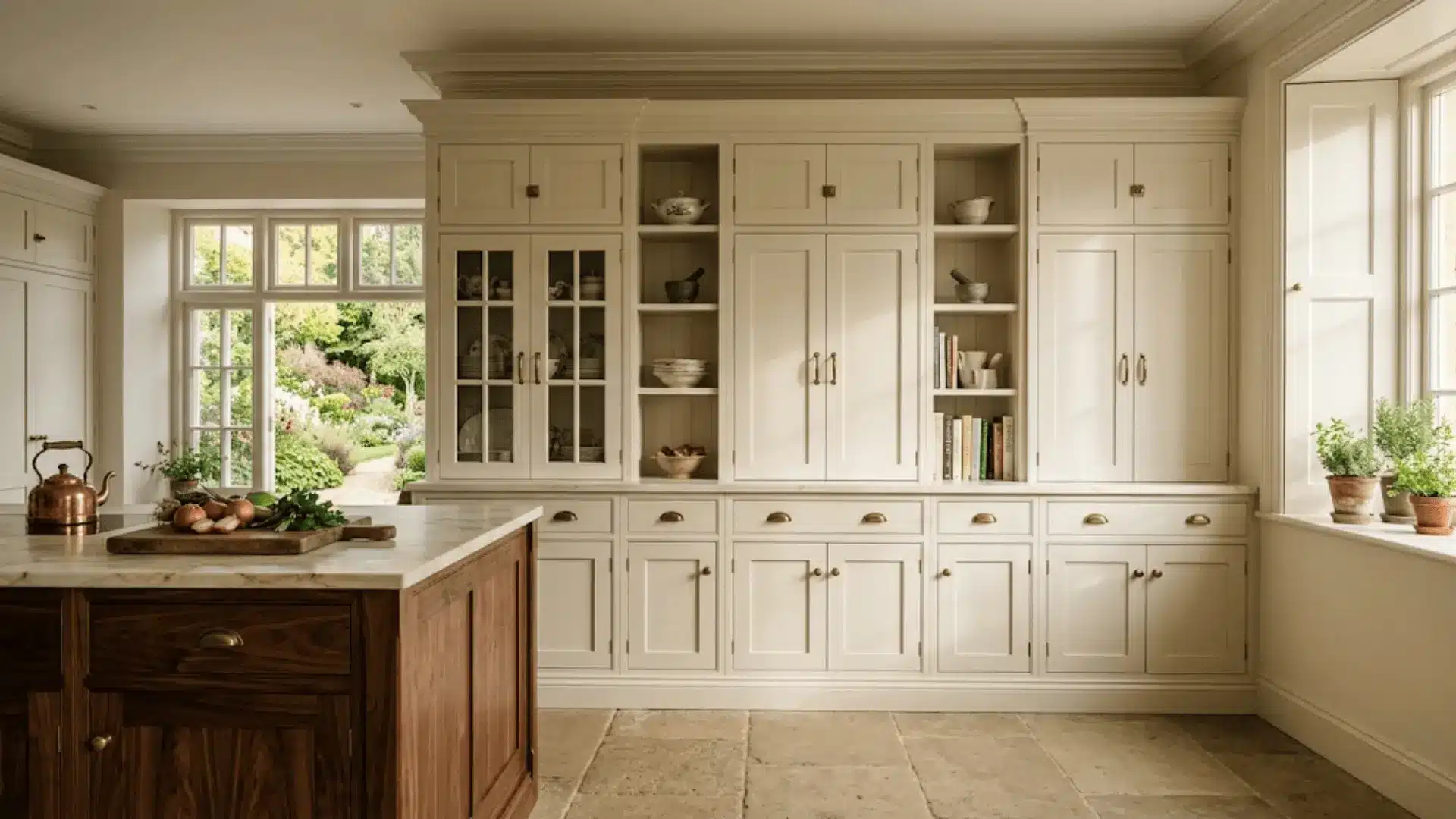
Built-ins with crown molding are what make a kitchen feel like it was designed with real intention. The molding draws the eye upward, making ceilings feel taller and the cabinetry feel more considered.
This is the kind of detail that ties the whole room together and gives it that pulled-from-a-design-magazine quality.
4. Floor-to-Ceiling Cabinets
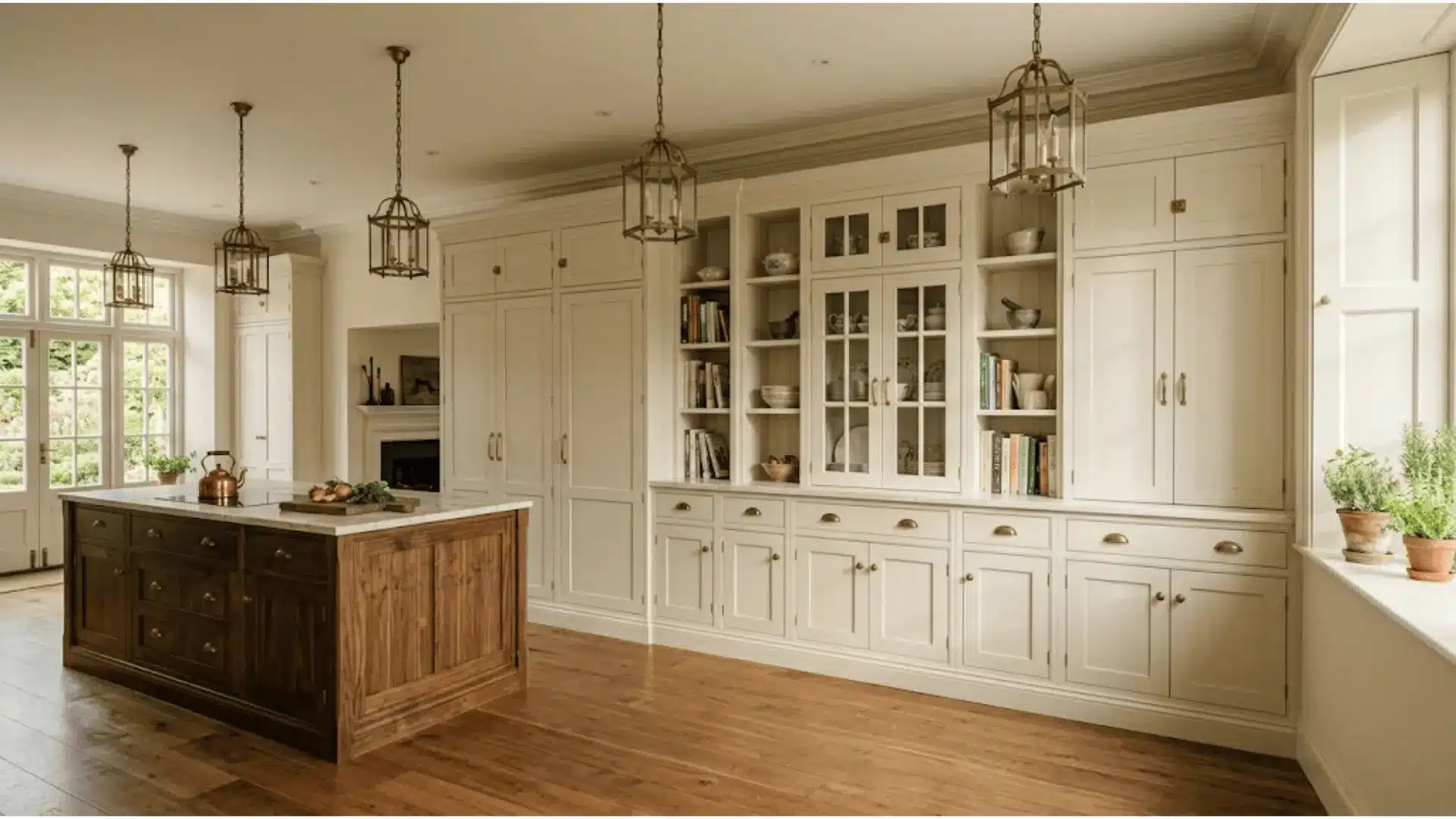
Floor-to-ceiling cabinetry makes every inch of the kitchen work harder while also making a strong visual statement.
It creates a sense of grandeur that shorter cabinets just cannot achieve. These are especially useful in larger kitchens where blank wall space can feel a little lost.
5. Decorative Cabinet Hardware
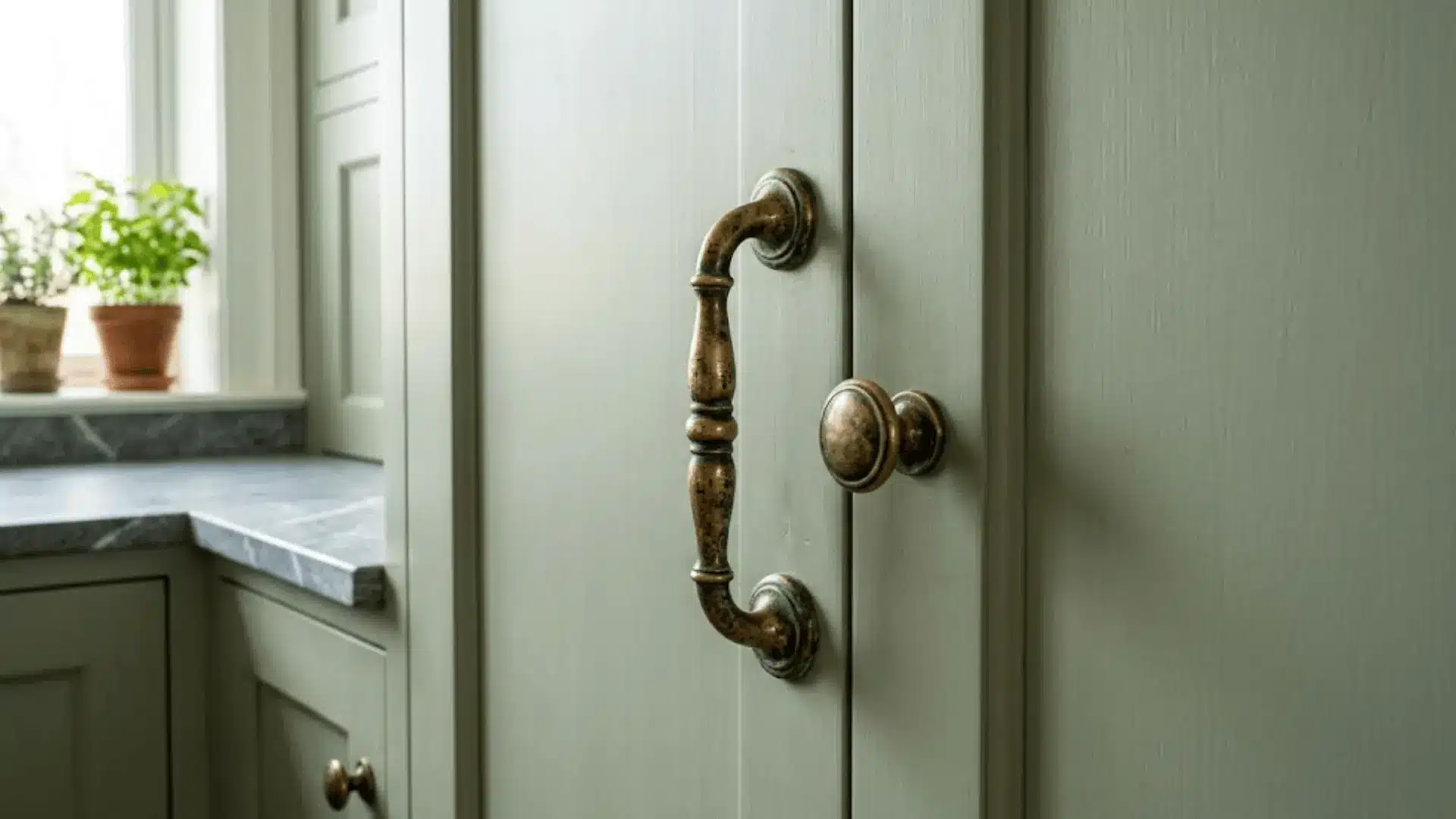
Do not underestimate how much cabinet hardware can do for a kitchen. Brass, bronze, and antique nickel finishes add instant character and warmth, especially against painted cabinetry.
It is one of the most affordable ways to shift the entire mood of a traditional kitchen without touching a single cabinet door.
Countertops & Backsplash Ideas
The surfaces in a traditional kitchen do a lot of the storytelling. From the countertop material to the backsplash pattern, these choices set the tone for everything else in the room.
6. Marble Countertops for Luxury
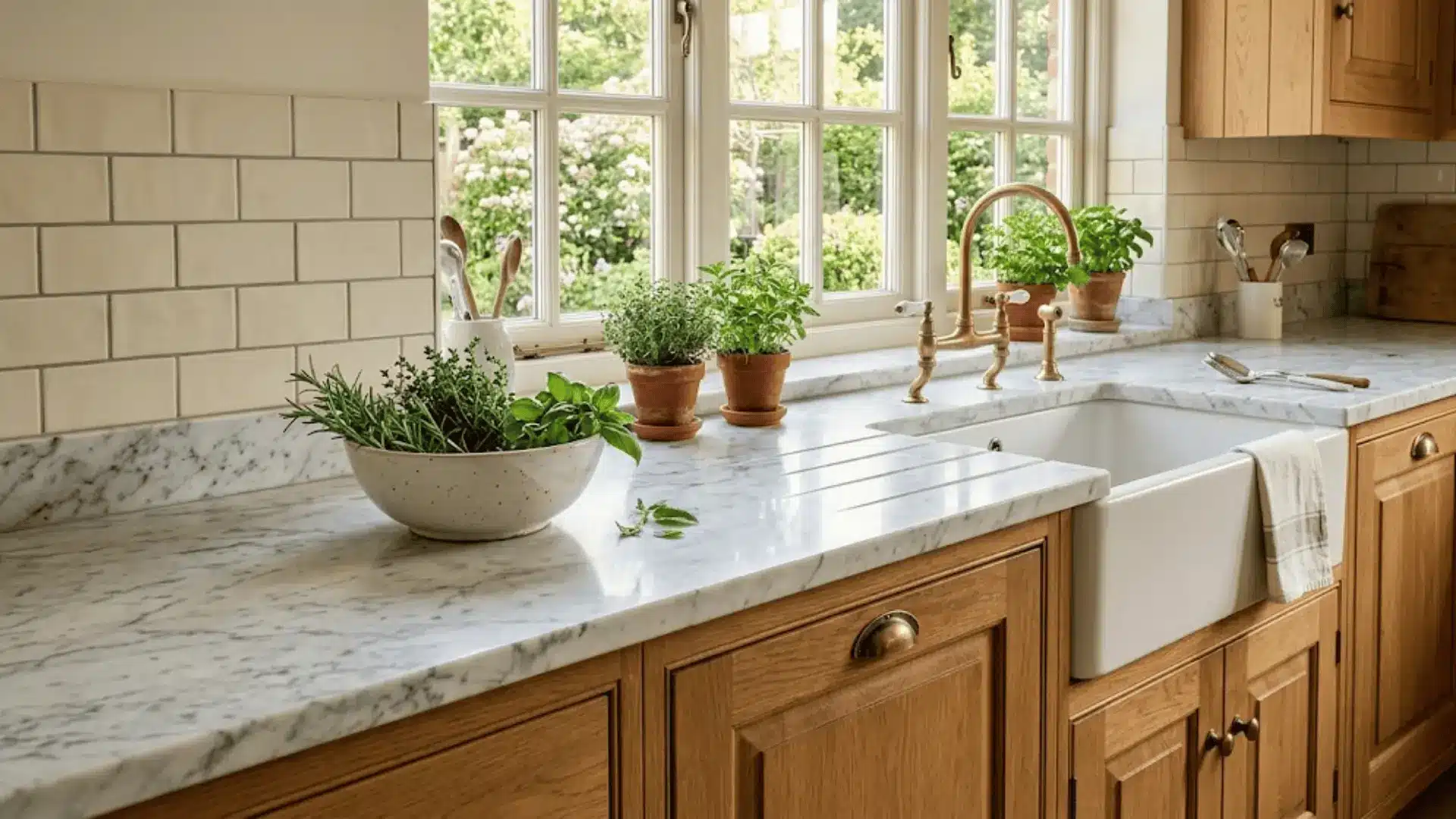
Marble countertops have been a staple of classic kitchen design for good reason. The natural veining brings a kind of quiet drama that no manufactured surface can quite replicate.
White Carrara is the most beloved choice, but warmer marbles like Calacatta Gold add a richness that pairs beautifully with wood-toned cabinetry.
7. Granite Countertops
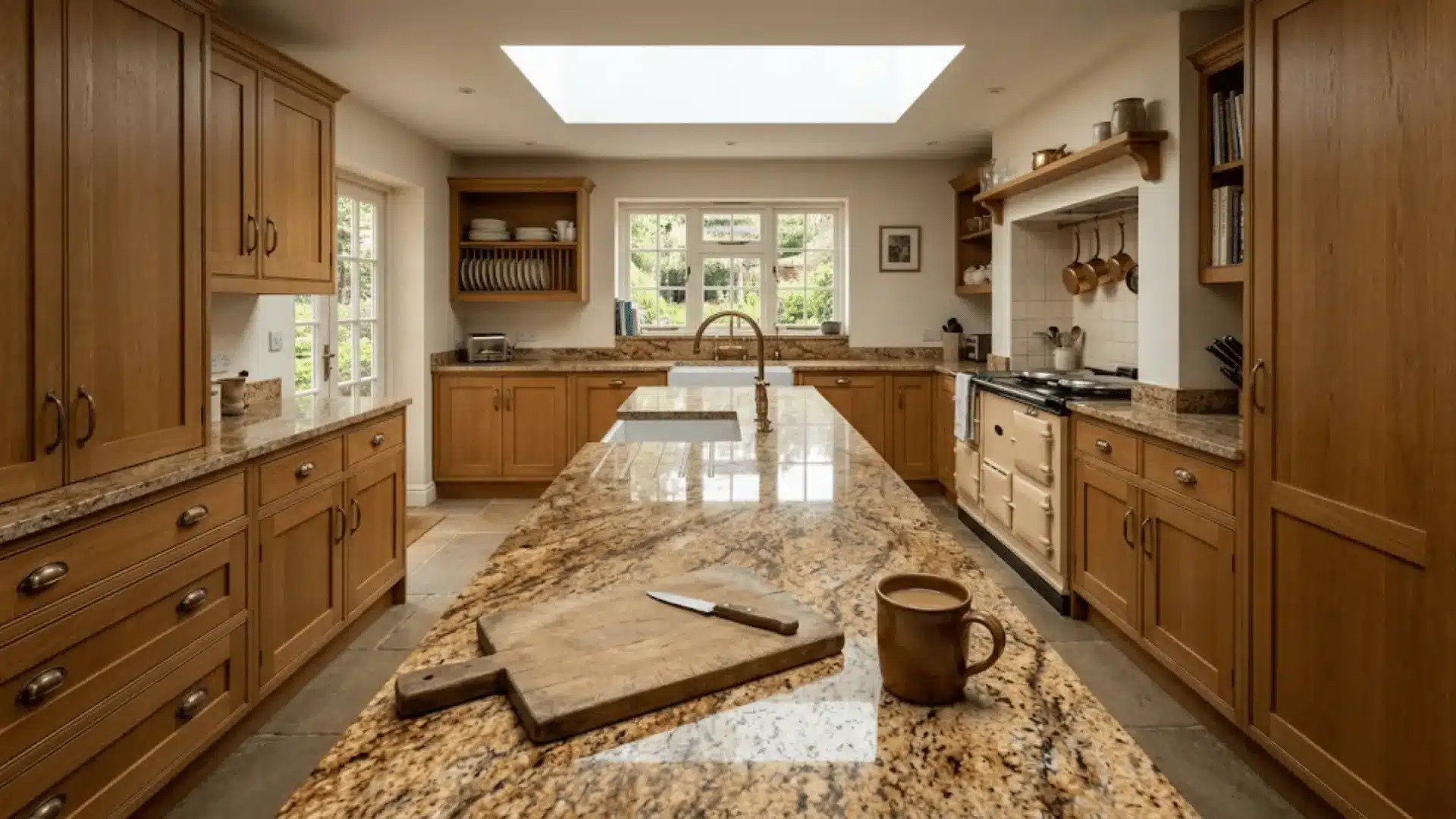
For those who want something a little more durable day-to-day, granite countertops deliver both toughness and texture.
The natural variation in the stone gives traditional kitchens that layered, collected quality. It ages gracefully, which is very much in the spirit of traditional design.
8. Subway Tile Backsplash
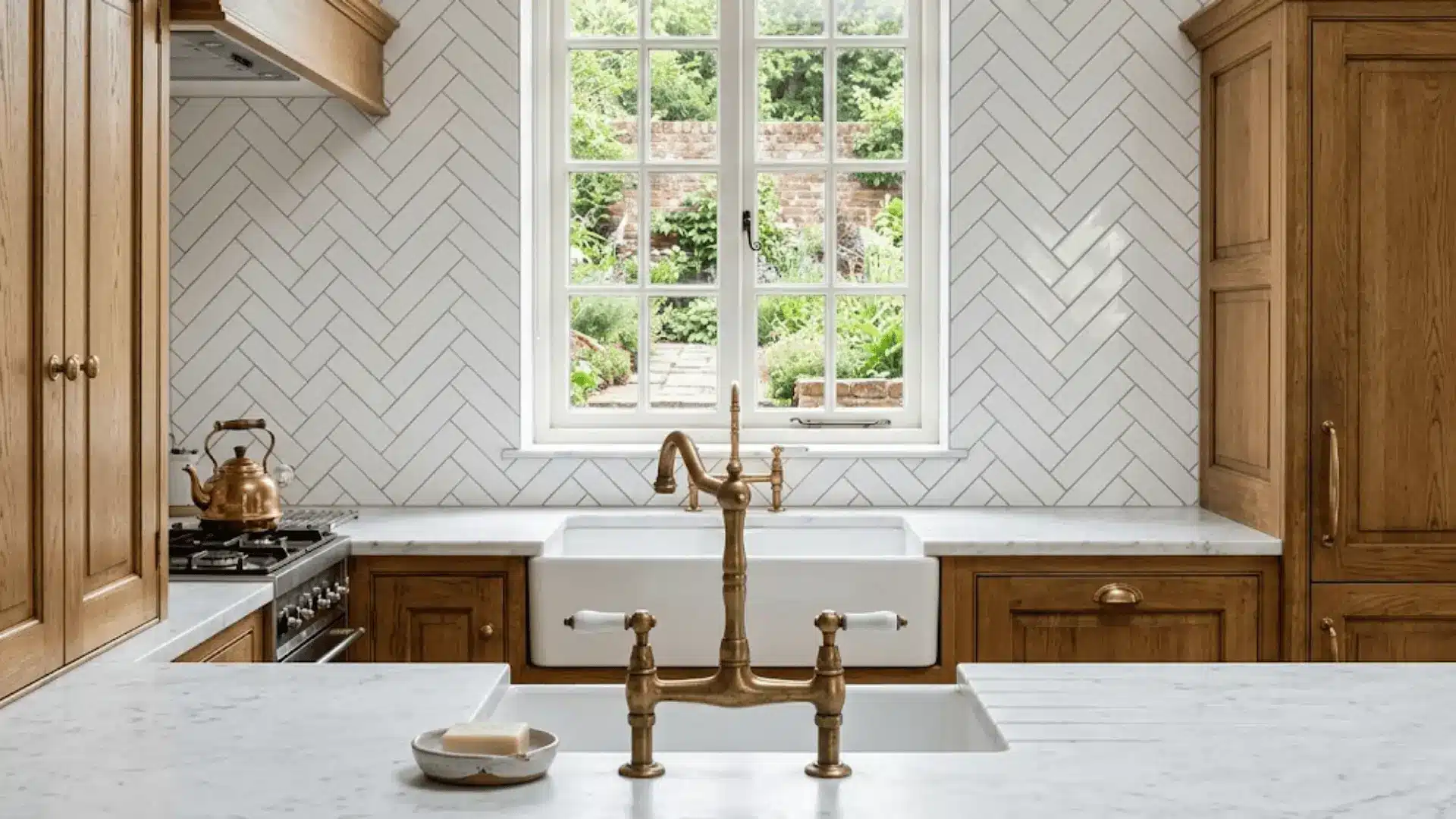
Subway tile is one of those design choices that has been around for over a century and still feels completely right in a traditional kitchen.
Clean, simple, and endlessly versatile, it works across color palettes and cabinet styles without missing a beat. Try a brick-lay or herringbone pattern for added visual interest.
9. Mosaic Tile Accents
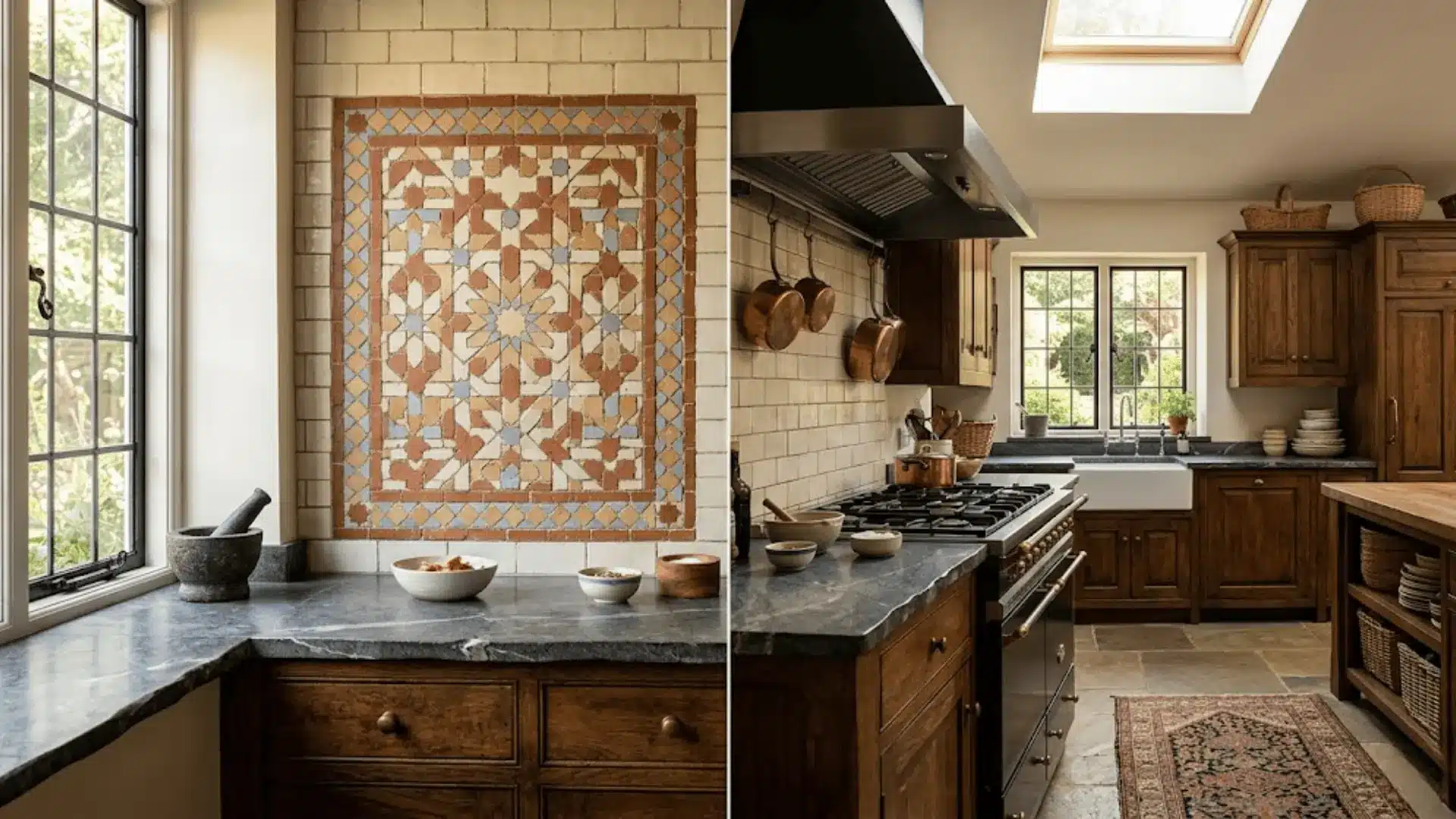
Mosaic tile is a lovely way to bring a little artistry into the kitchen without going overboard.
Use it as a focal point behind the range or as a border detail along the backsplash. The pattern and texture it adds feel very Old World, which is right at home in a traditional setting.
10. Full-Height Backsplash
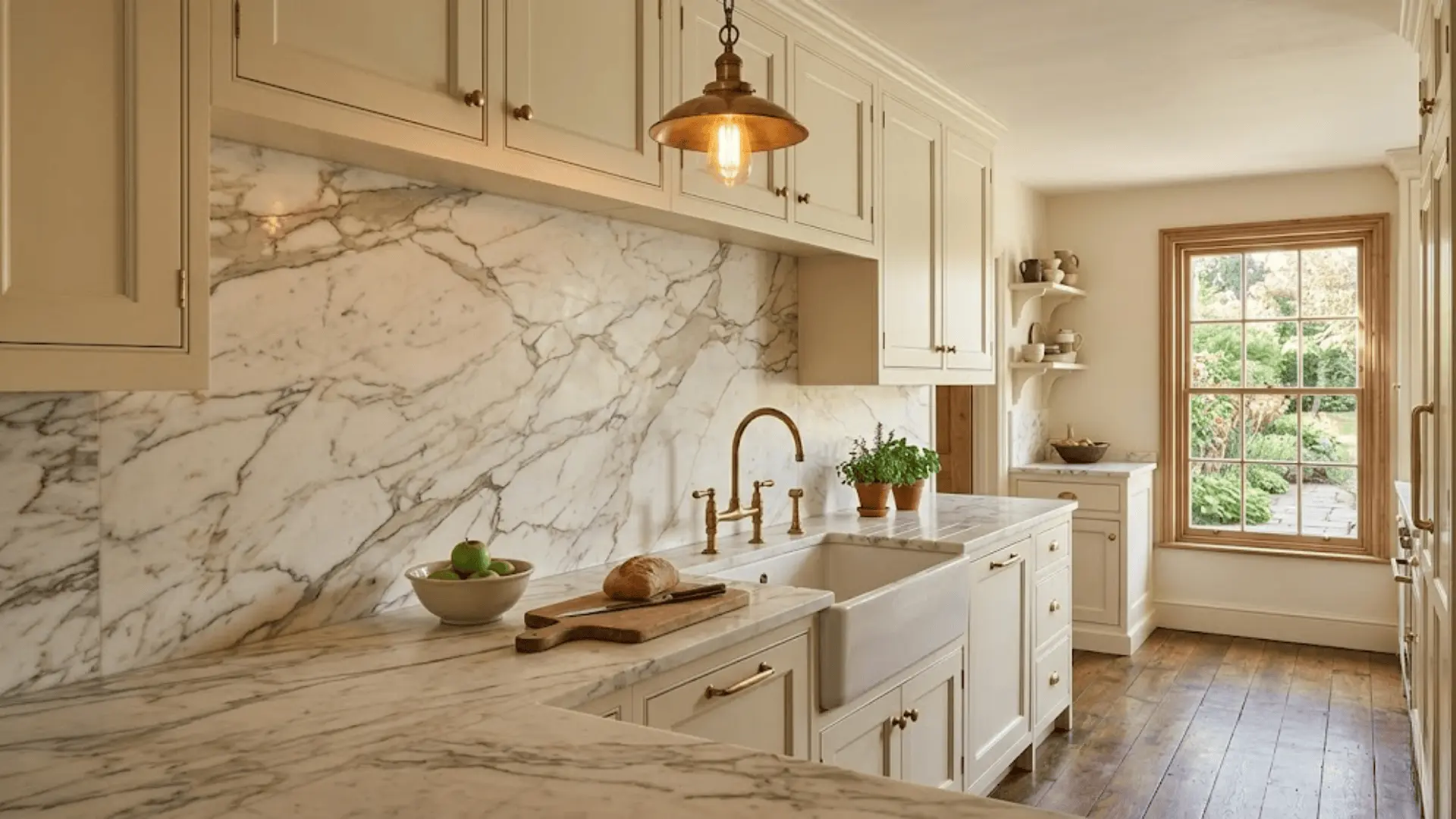
A full-height backsplash running from the countertop all the way up to the upper cabinets creates a really cohesive, finished look.
It is particularly impactful when paired with marble or a classic tile, making the kitchen feel considered from floor to ceiling.
Color Schemes for Traditional Kitchens
Color in a traditional kitchen is less about bold statements and more about building a palette that feels warm, layered, and genuinely inviting. These combinations capture that perfectly.
11. White and Cream Kitchens
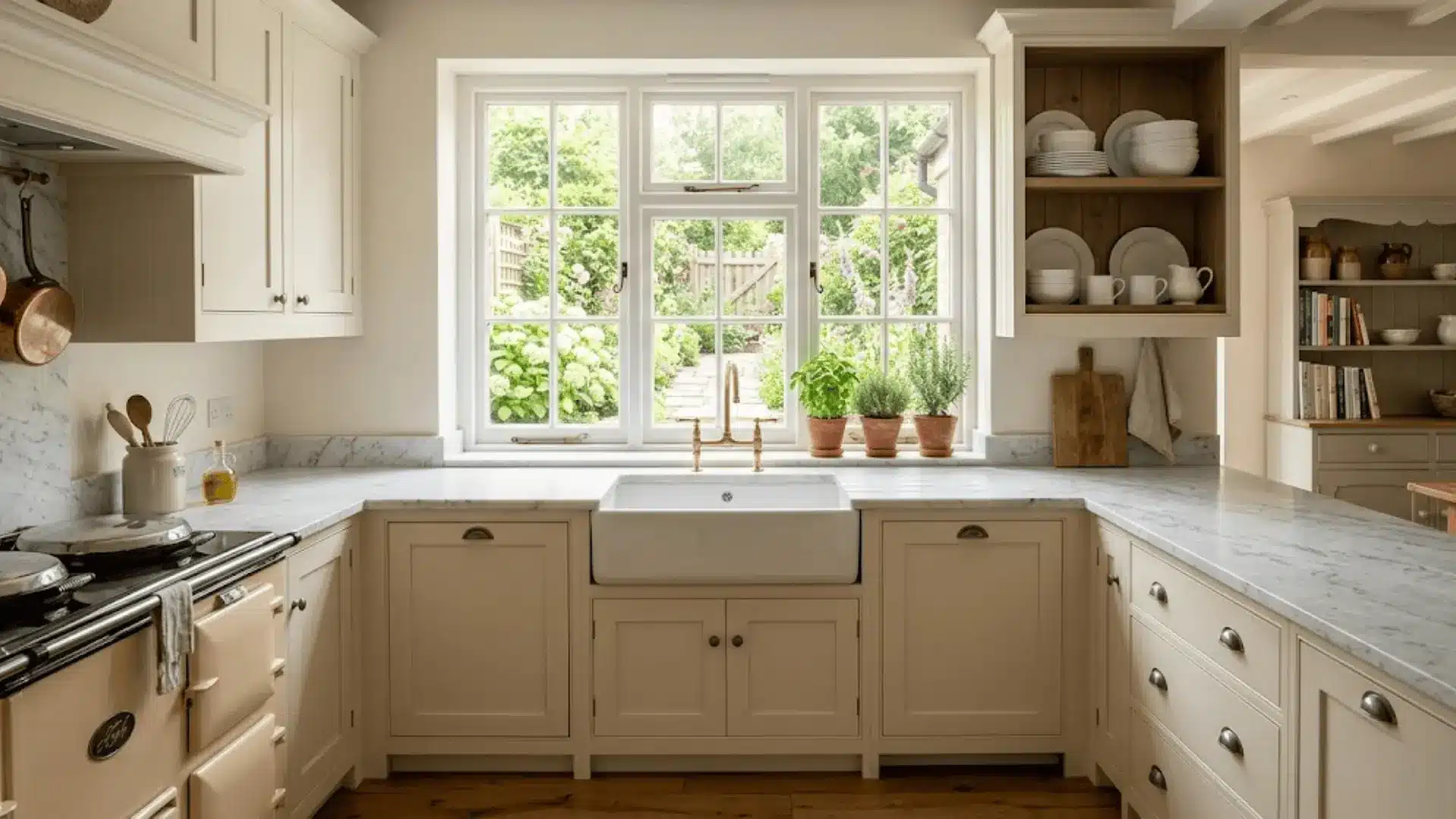
A white or cream kitchen is the ultimate traditional foundation. It feels bright without being cold, and it lets the cabinetry details, hardware, and natural materials do the talking.
Layer in warm wood accents and soft textiles to keep it from feeling too stark.
12. Warm Wood Tones
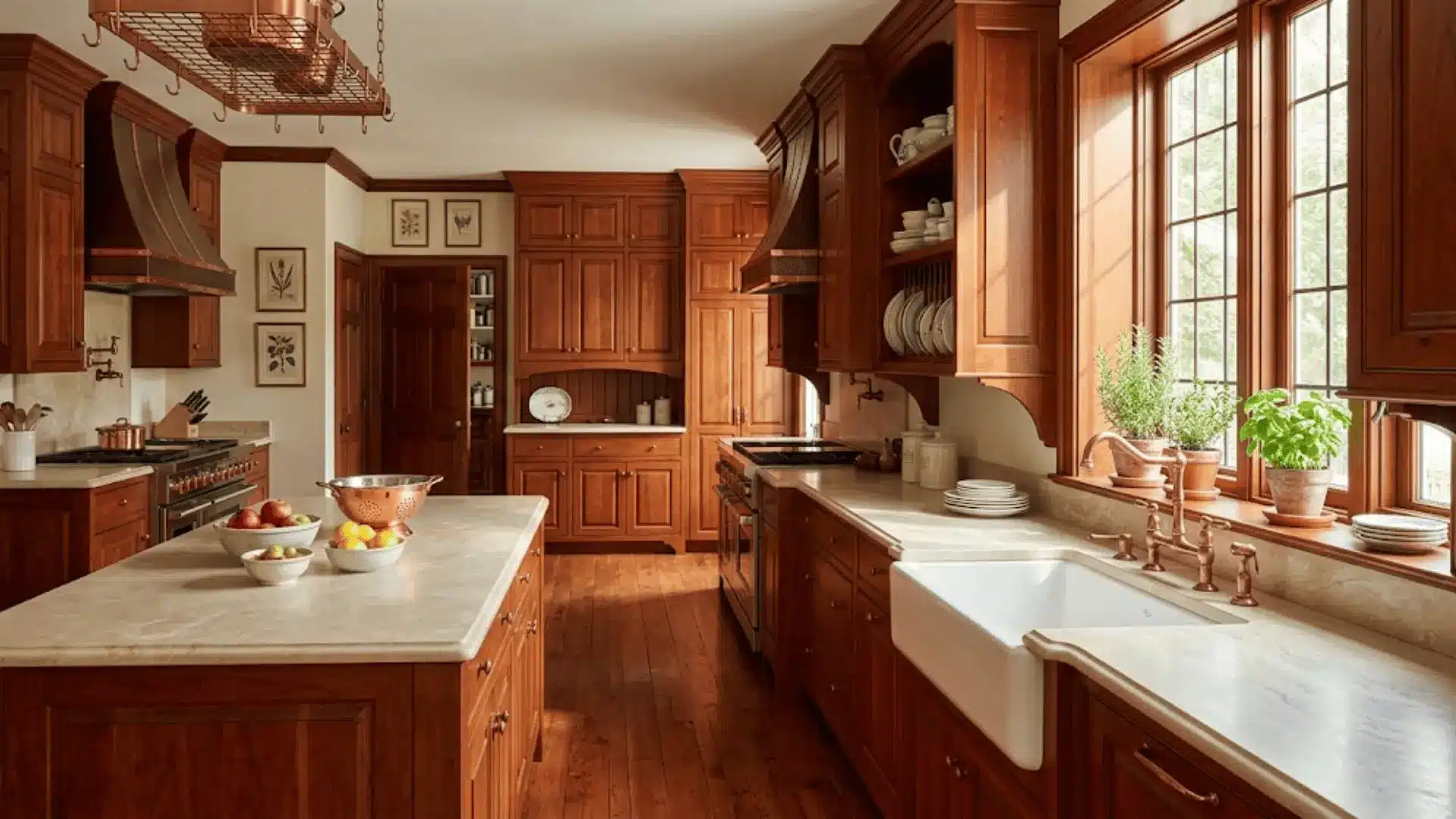
Oak, cherry, and walnut finishes bring a richness to traditional kitchens that painted cabinetry just cannot replicate.
These tones age beautifully over time and pair naturally with stone countertops and warm metal fixtures. A wood-toned kitchen feels rooted and real in a way that is deeply comforting.
13. Soft Neutral Palettes
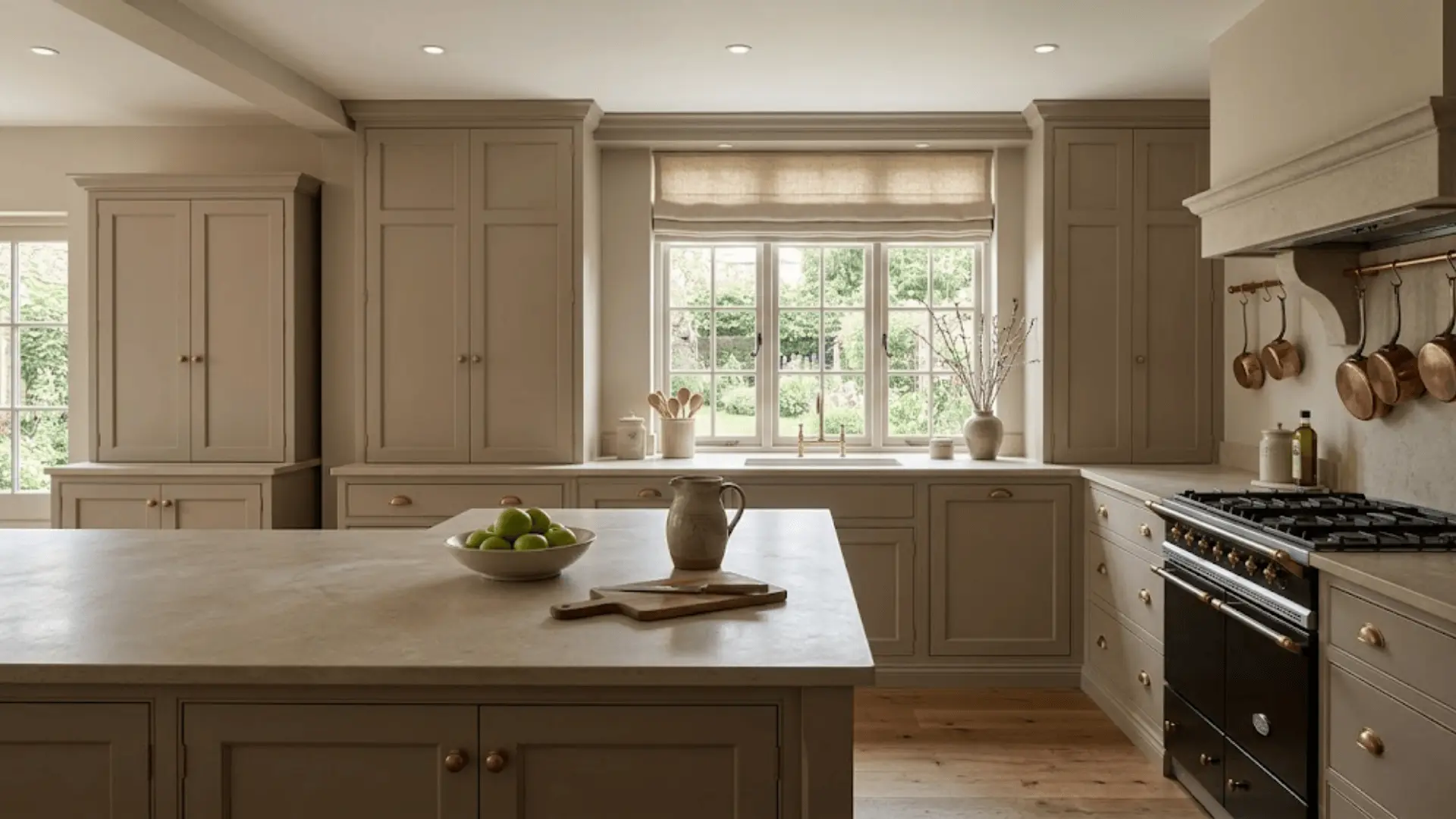
Beige, taupe, and soft gray create a really calm, collected atmosphere in a traditional kitchen. They work as a backdrop that lets architectural details shine without competing for attention.
These palettes photograph beautifully and live even better.
14. Two-Tone Traditional Kitchens
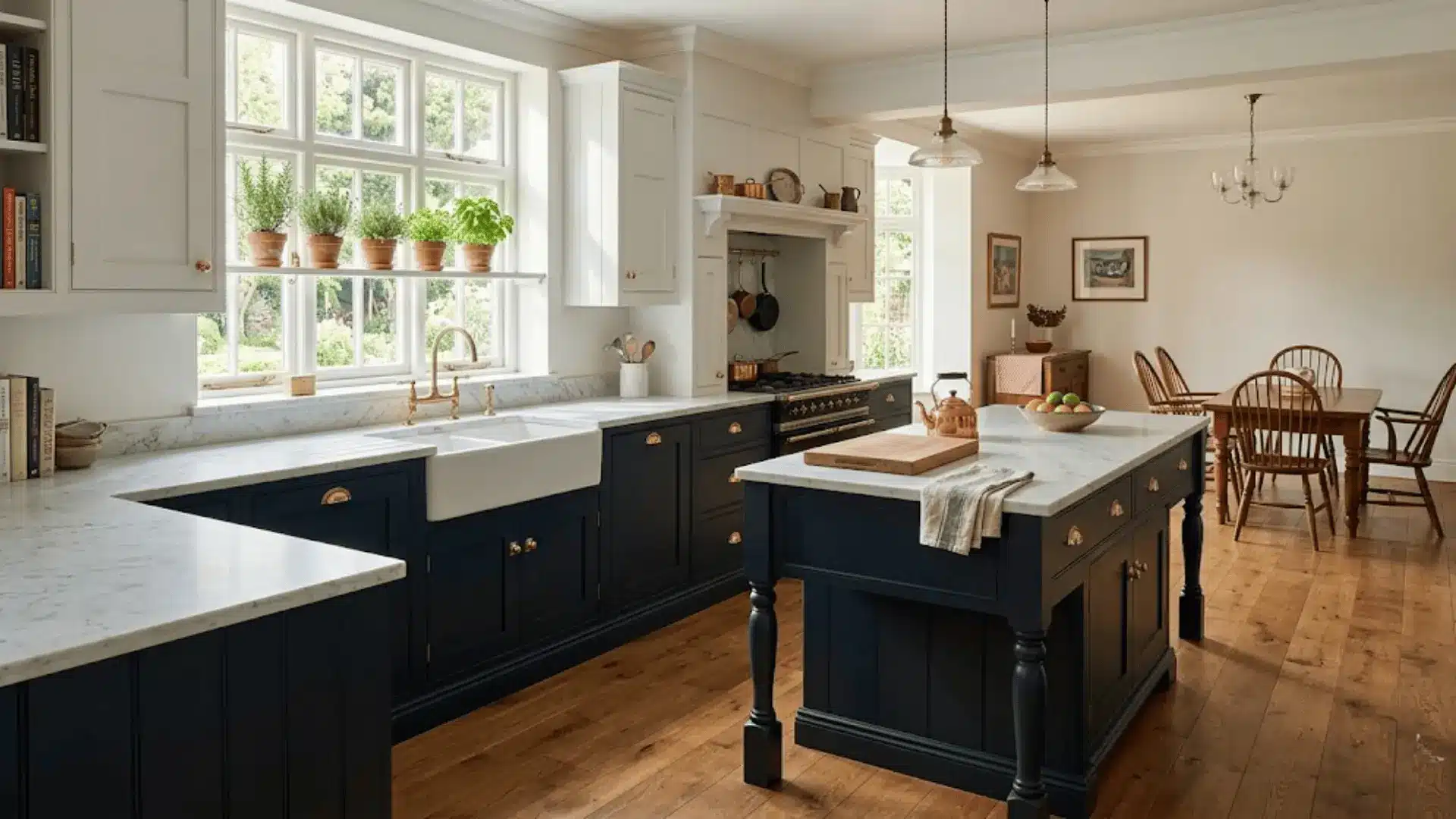
Pairing light upper cabinets with darker lower cabinets is a classic move that adds contrast and visual structure.
White or cream uppers with a deep navy, forest green, or charcoal base feel grounded and intentional. It is a more dynamic take on traditional design that still respects all the classic rules.
15. Muted Accent Colors
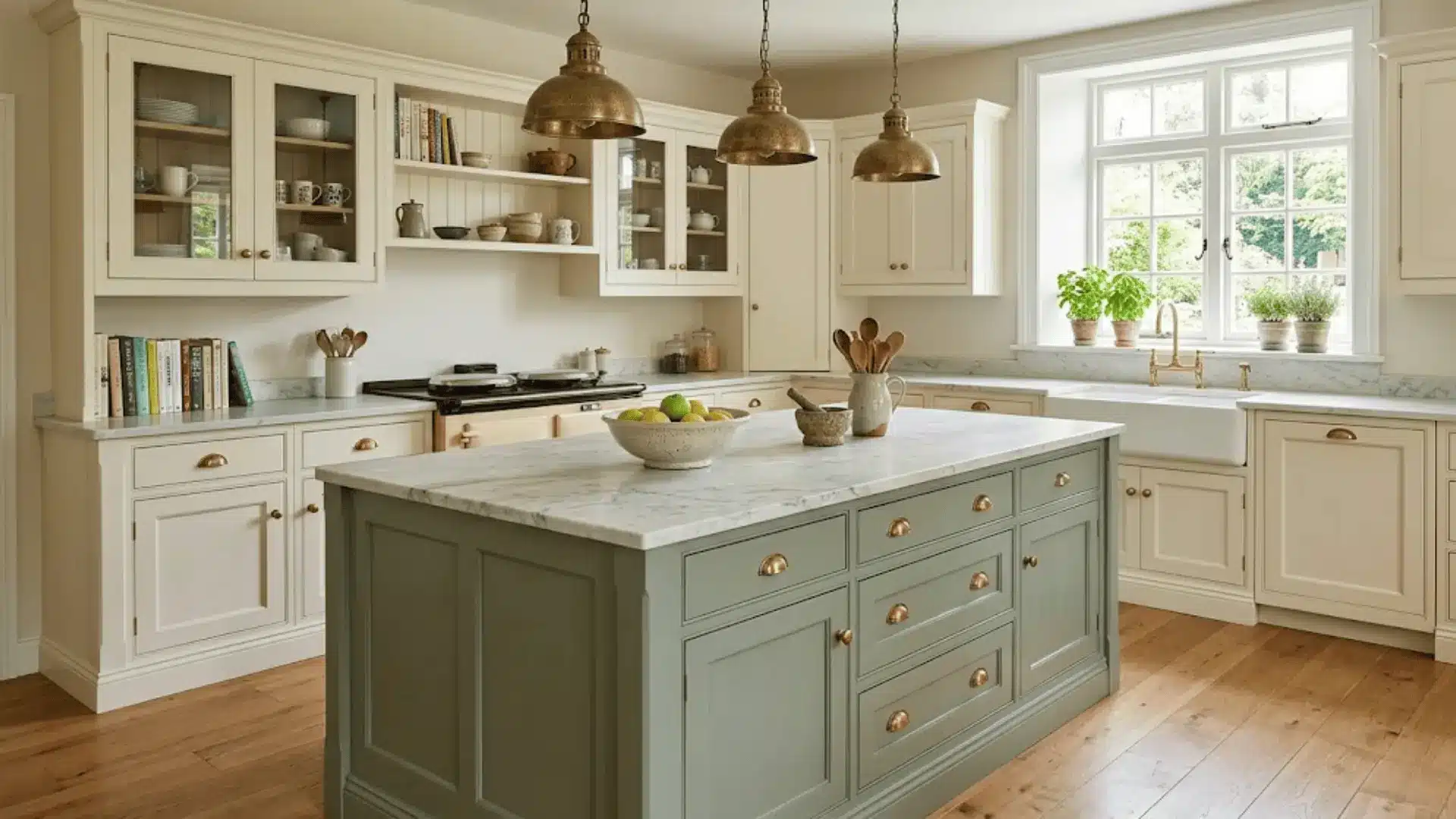
Sage green, soft navy, and dusty blue are wonderful accent choices for a traditional kitchen.
Whether used on a kitchen island, a bank of lower cabinets, or even just in textiles and accessories, these muted tones bring color into the space without disrupting the overall calm.
Layout & Functionality Ideas
A traditional kitchen is as much about how it works as how it looks. The right layout makes daily life easier while keeping the overall design feeling balanced and intentional.
16. U-Shaped Kitchen Layout
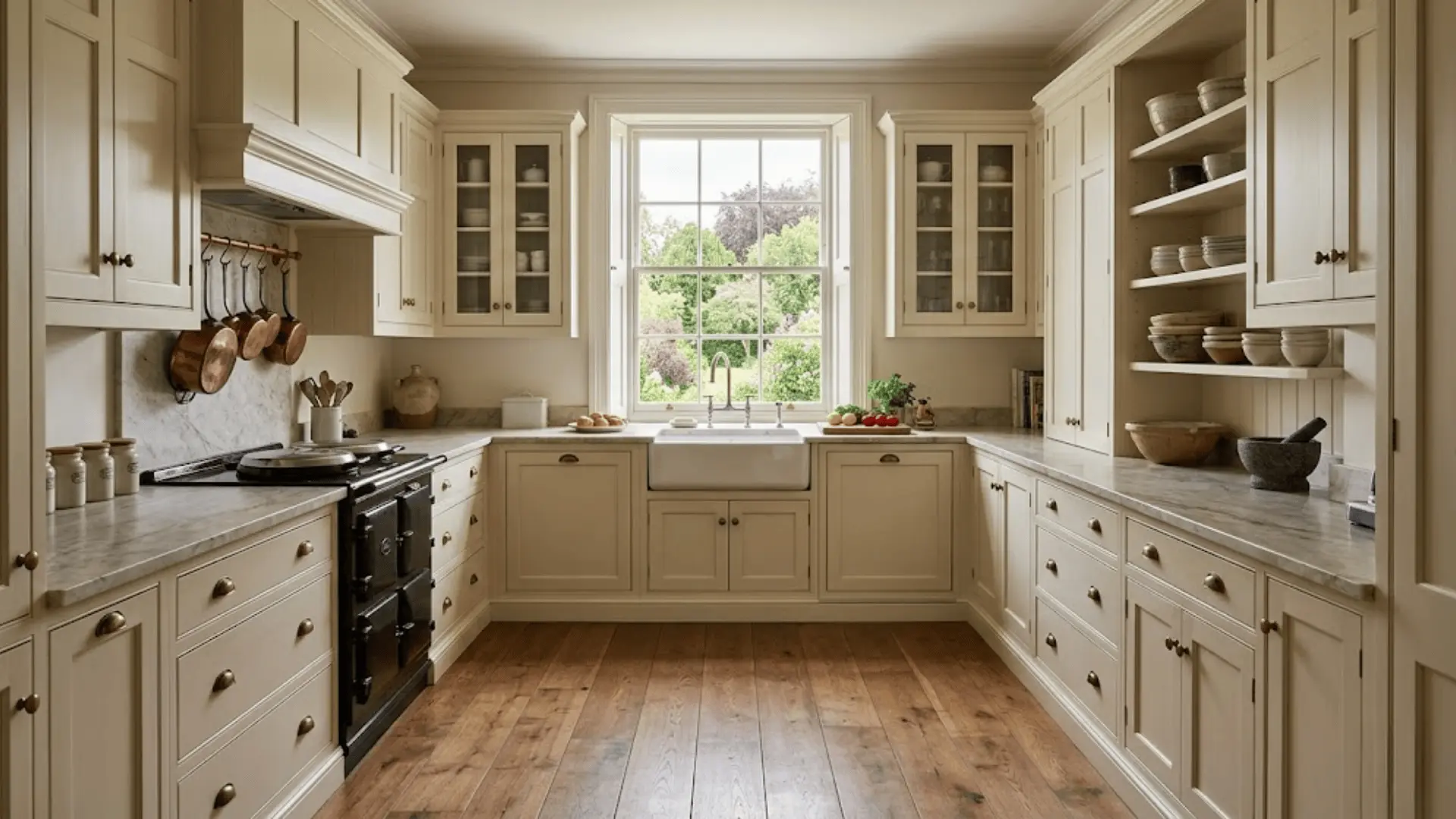
The U-shaped layout is a tried-and-true favorite for traditional kitchens because it maximizes counter space and keeps everything within easy reach.
It naturally creates a sense of enclosure that feels cozy in larger kitchens and works really well with symmetrical cabinetry runs.
17. L-Shaped with Island
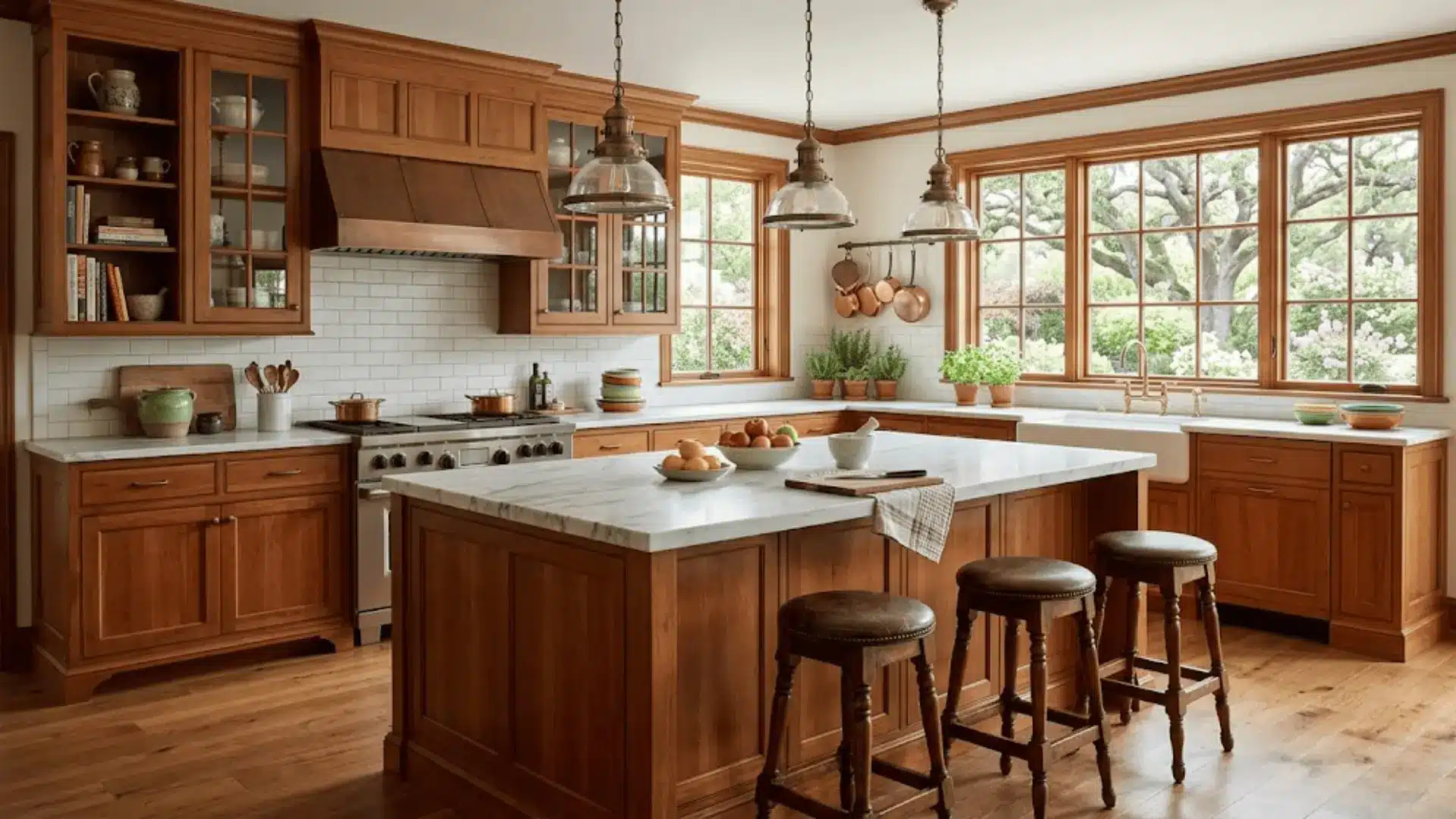
An L-shaped layout paired with a central island gives the kitchen a flexible, open feel while still maintaining the classic proportions that traditional design calls for.
The island becomes the natural gathering point, adding prep space, seating, and storage all at once.
18. Symmetrical Kitchen Design
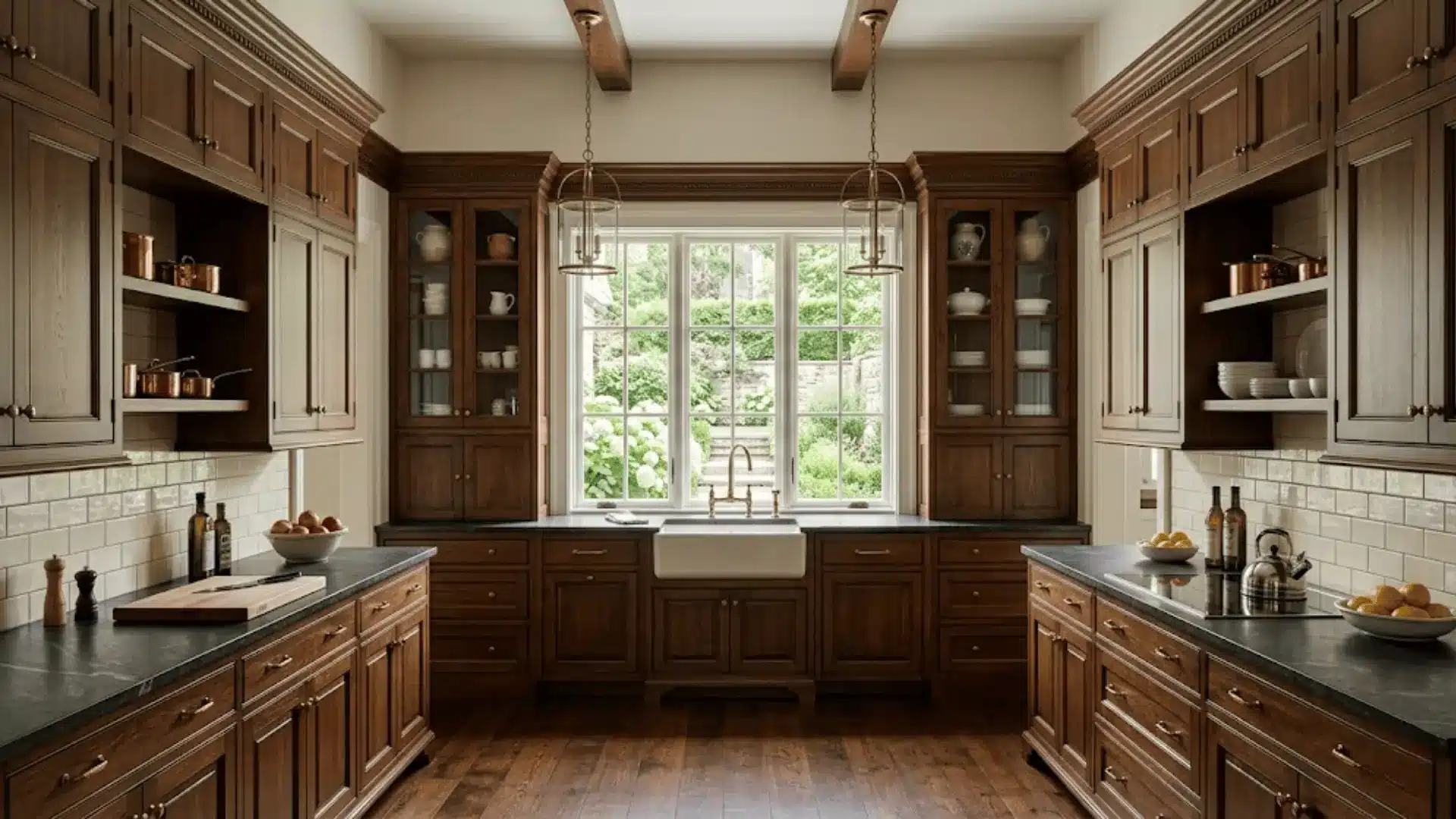
Symmetry is one of the most defining principles of traditional design, and a balanced kitchen layout puts that front and center.
Matching cabinet runs, centered windows above the sink, and evenly placed fixtures all contribute to that sense of order and calm that makes traditional kitchens feel so composed.
19. Large Central Island
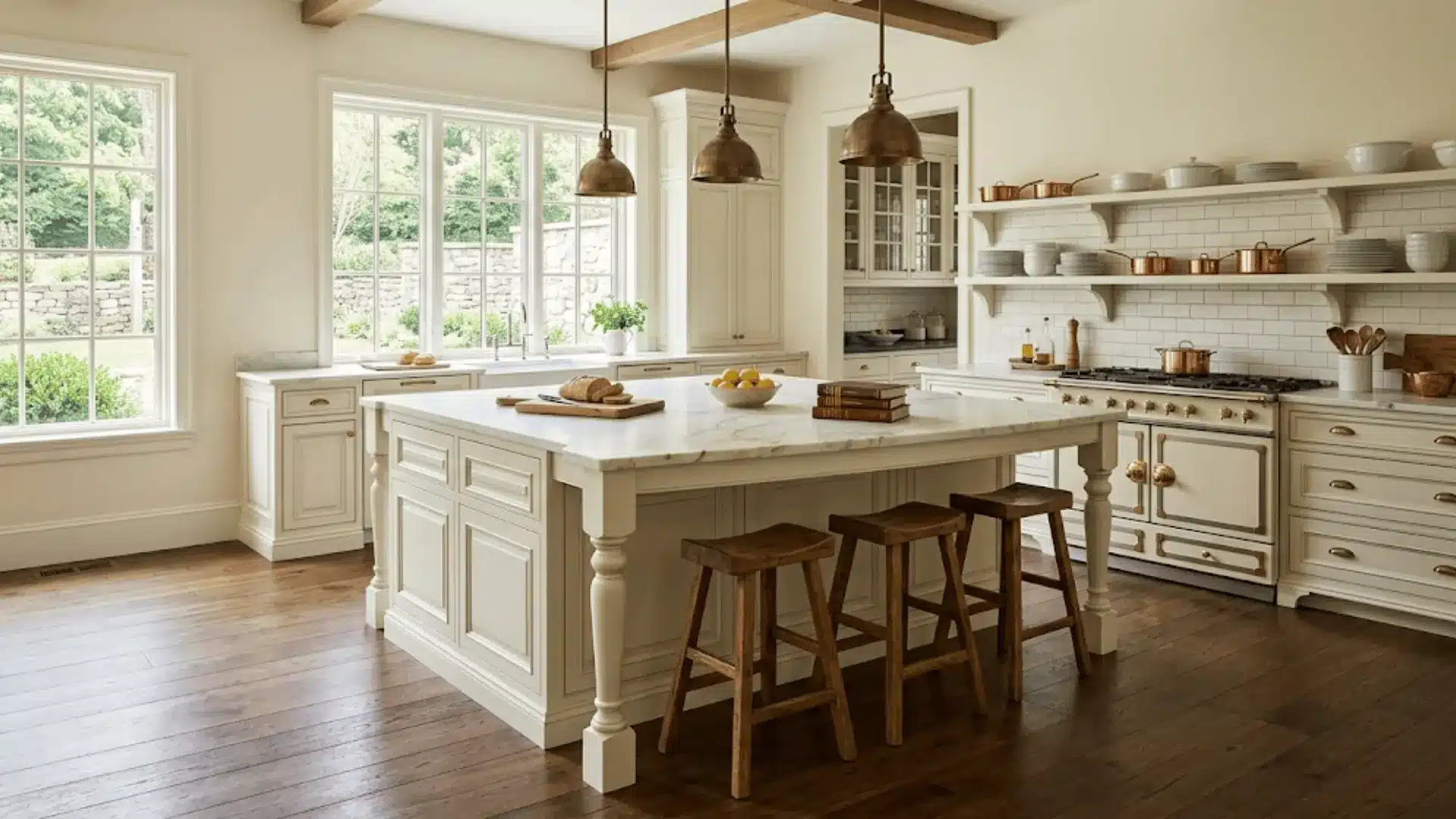
A large kitchen island is one of the hardest-working features in a traditional kitchen.
It brings together prep space, casual seating, and storage in one central piece, and when designed with turned legs or detailed paneling, it reads as a beautiful furniture-like focal point as well.
20. Butler’s Pantry
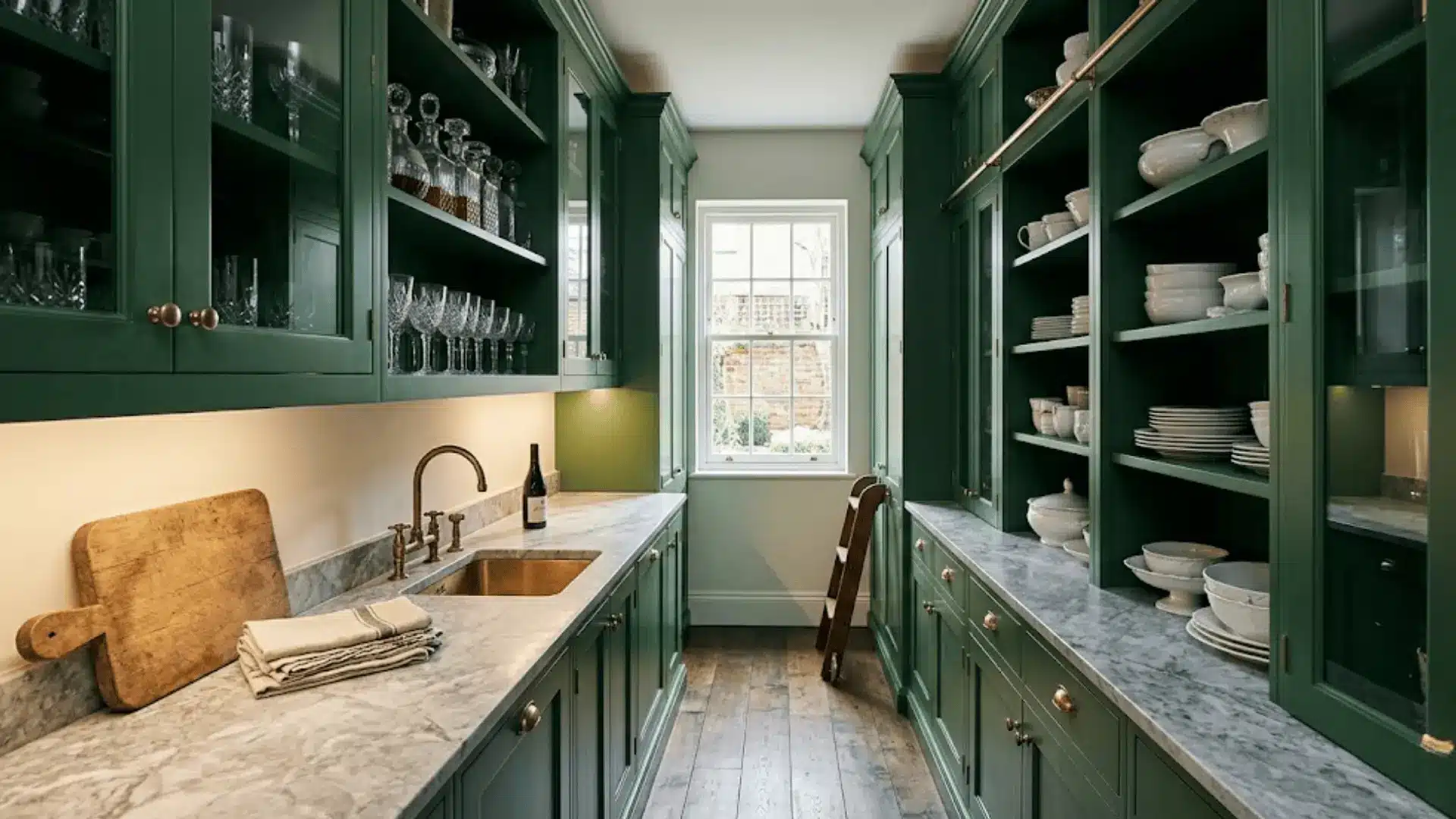
A butler’s pantry tucked between the kitchen and dining room is one of those features that feels both practical and a little luxurious.
It is the perfect spot for extra storage, a coffee station, or additional prep space, and it keeps the main kitchen looking tidy and uncluttered.
Fixtures & Finishing Touches
The fixtures and finishing details are where a traditional kitchen really starts to develop its personality. These are the touches that make the space feel complete.
21. Farmhouse or Apron Sink
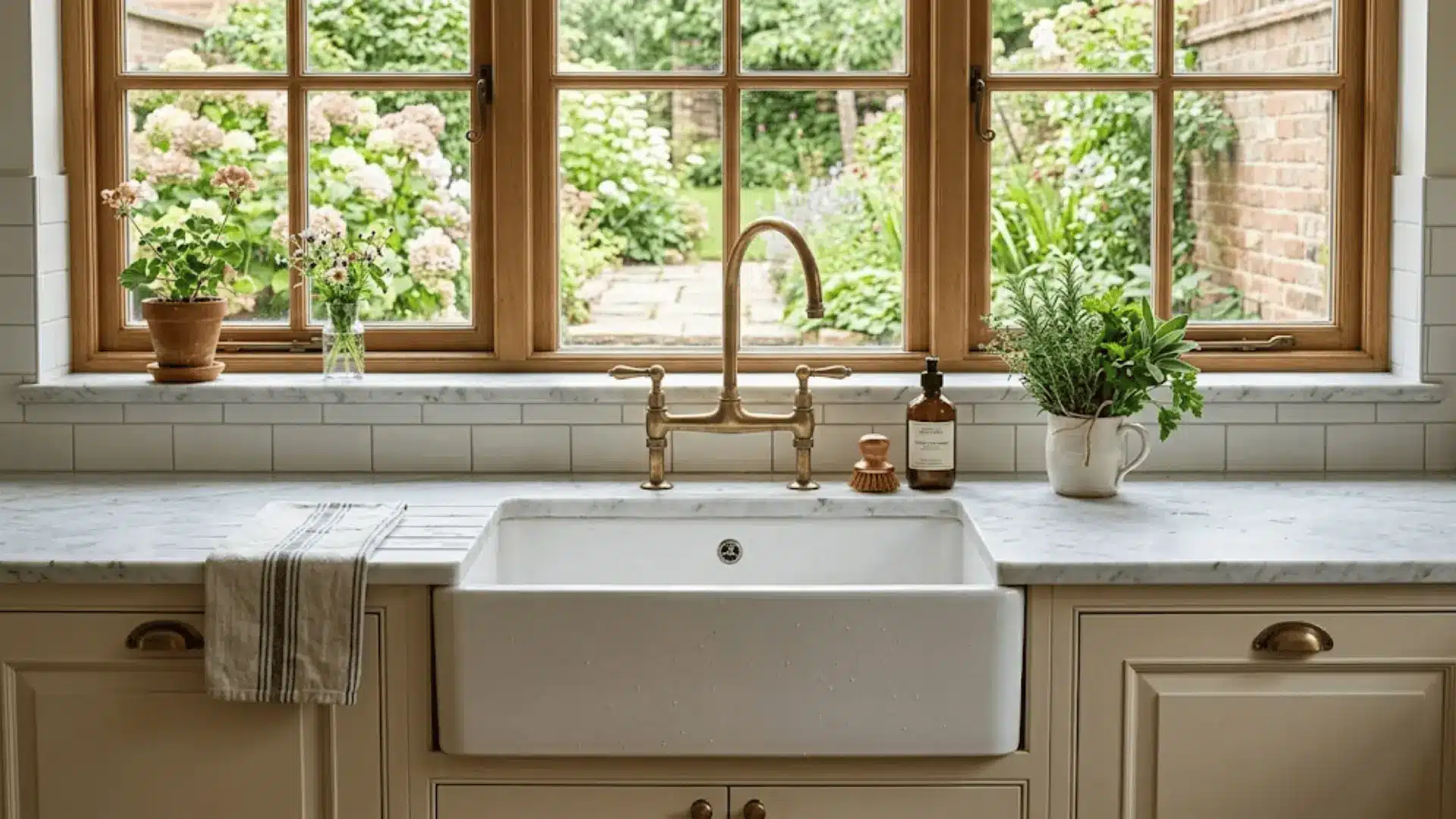
A farmhouse apron sink is one of the most recognizable and beloved fixtures in traditional kitchen design. Its deep basin is genuinely practical, and its presence adds a warm, character-filled quality to the kitchen.
White fireclay is the most classic choice, though hammered copper or stone options bring a beautiful artisan quality.
22. Classic Pendant Lighting
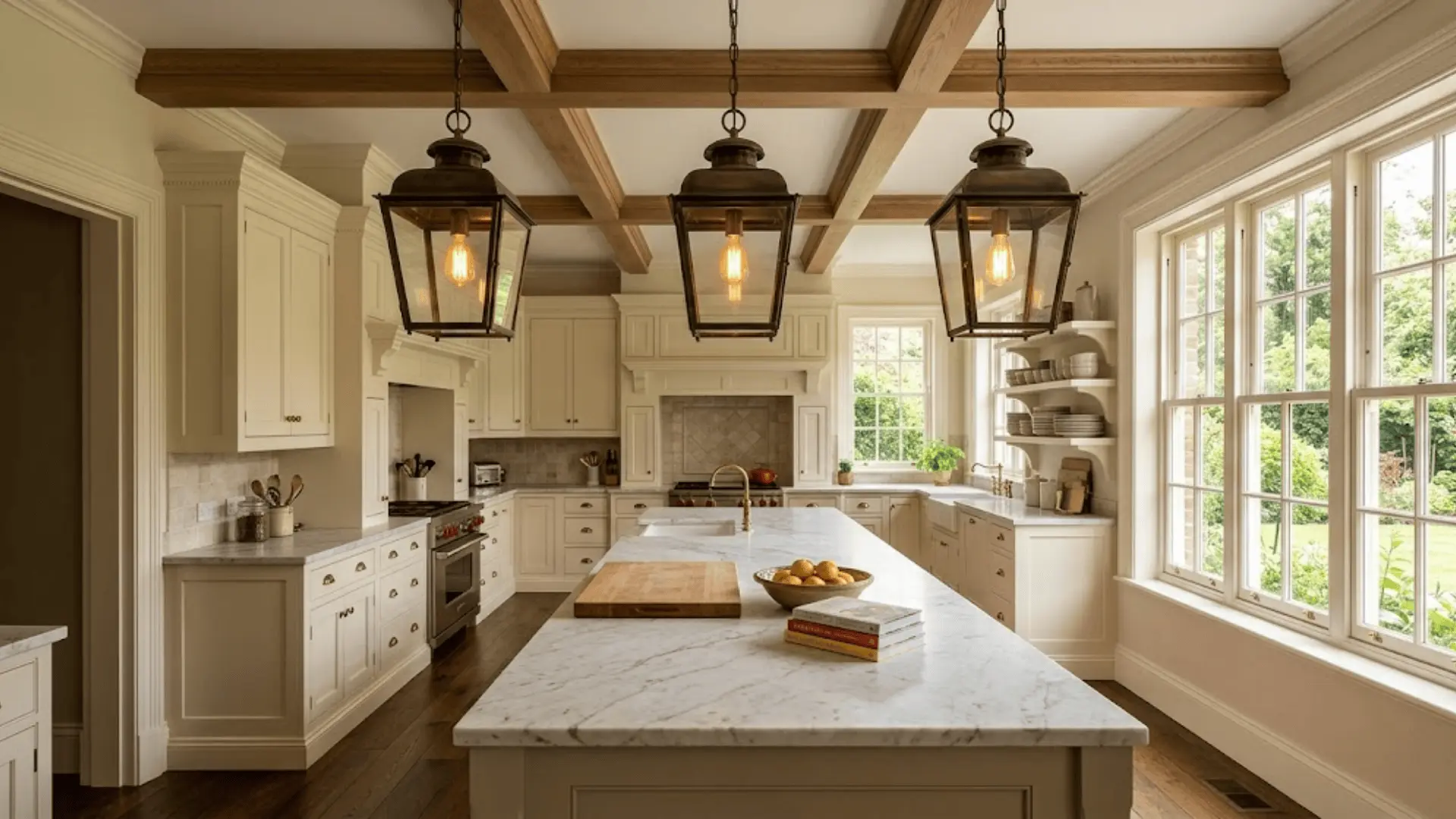
Pendant lights over an island or sink area bring warmth and definition to the kitchen.
In a traditional space, look for pendants with metal lantern frames, fabric shades, or aged brass finishes that feel in keeping with the overall design story. The right pendants can make a kitchen feel cozy even in the middle of the day.
23. Chandeliers for Classiness
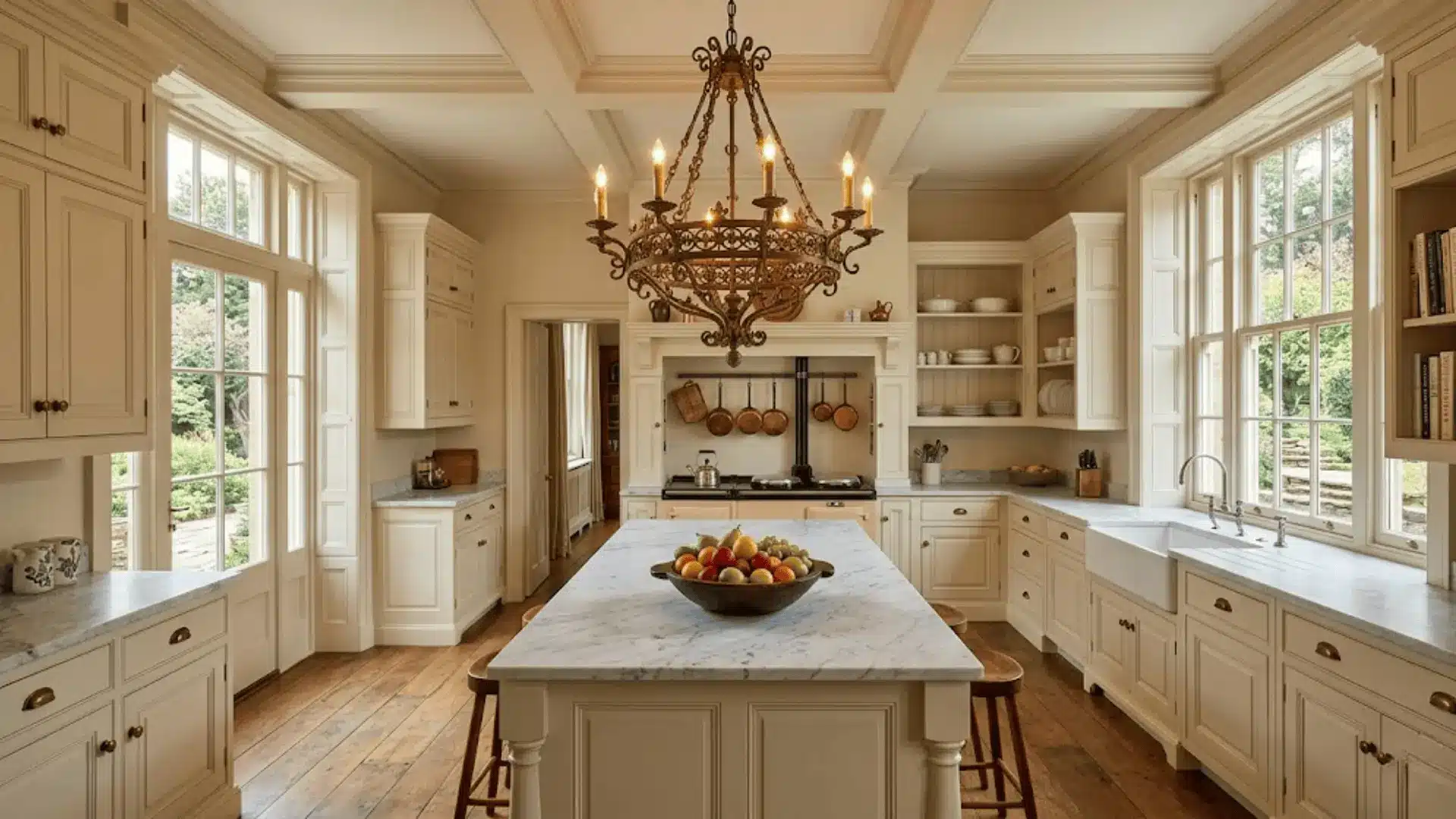
A chandelier in the kitchen might sound unexpected, but in a traditional space it feels completely right.
Whether positioned over a large island or in an eat-in kitchen area, a chandelier adds a sense of occasion and warmth that overhead recessed lighting simply cannot.
24. Under-Cabinet Lighting
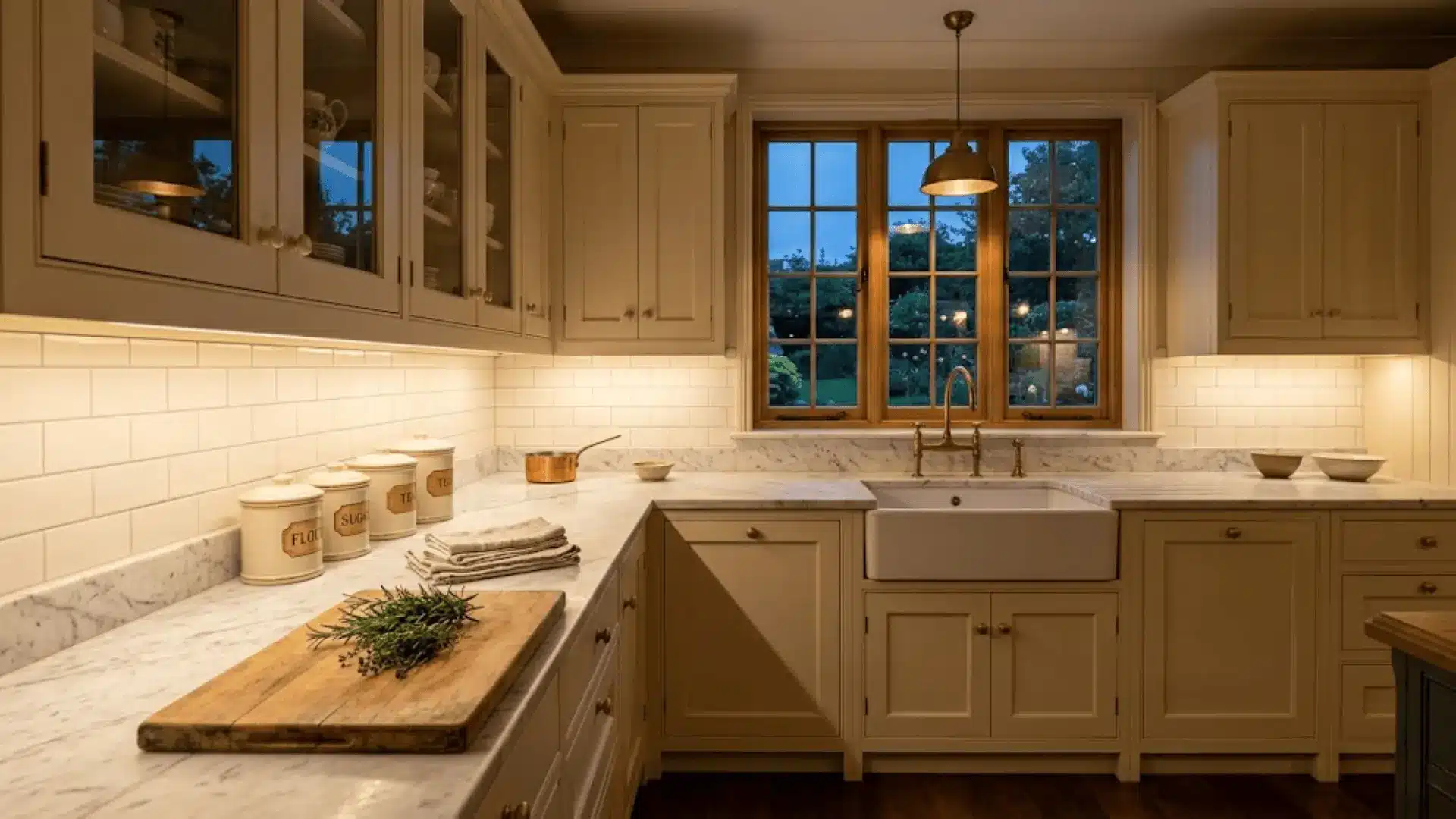
Under-cabinet lighting is one of those additions that improves both the look and the function of a traditional kitchen.
It brightens up the countertop workspace and adds a soft, layered glow that makes the kitchen feel warm and welcoming after dark.
25. Decorative Range Hood
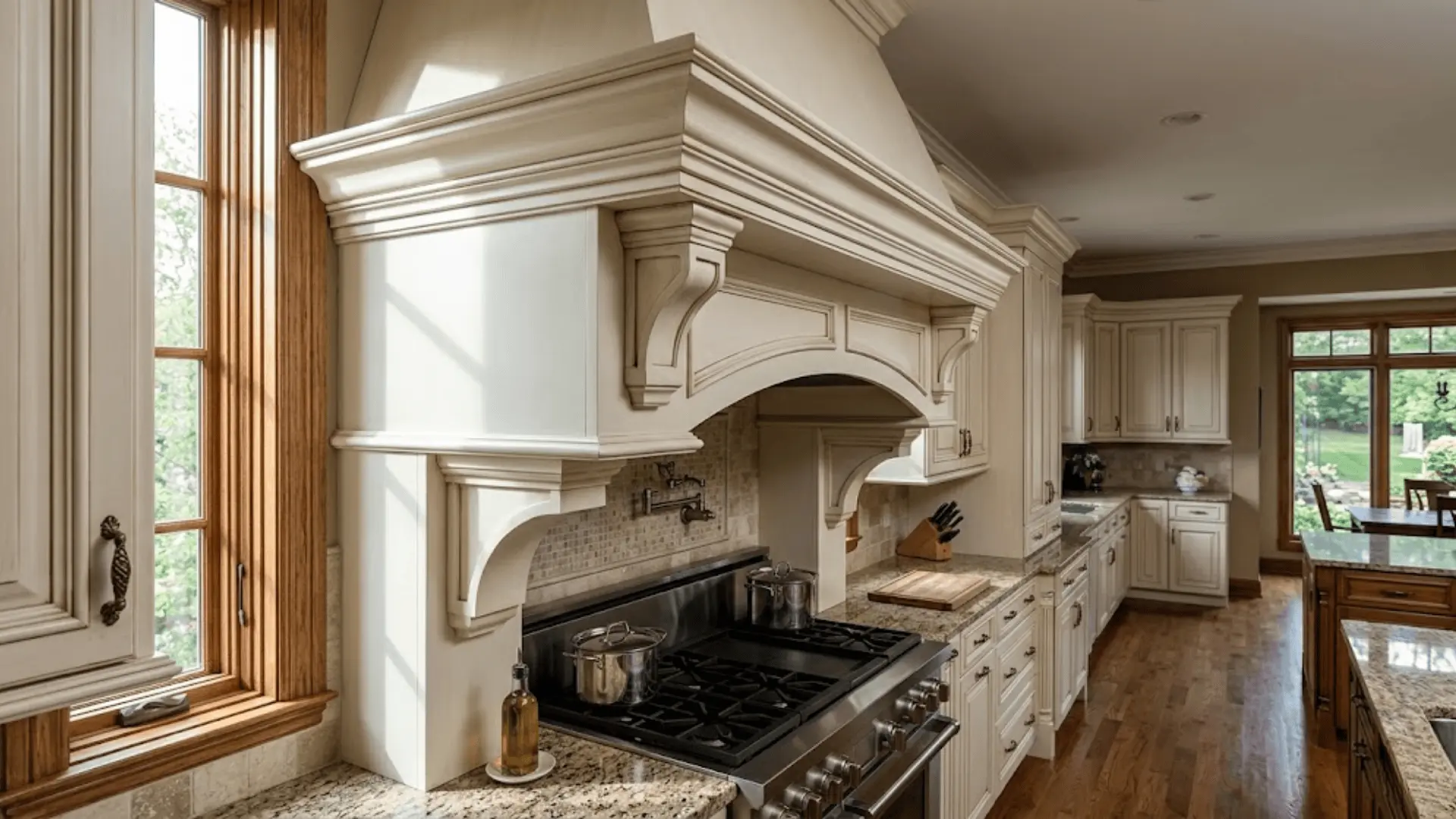
A statement range hood is often the visual centerpiece of a traditional kitchen.
Whether paneled to match the cabinetry, crafted from hammered metal, or built with decorative corbels and molding, it draws the eye in and gives the kitchen a strong, architectural focal point.
Architectural & Decorative Details
The architectural details are what give a traditional kitchen its sense of history and character. These are the design choices that make a space feel genuinely considered.
26. Exposed Wooden Beams
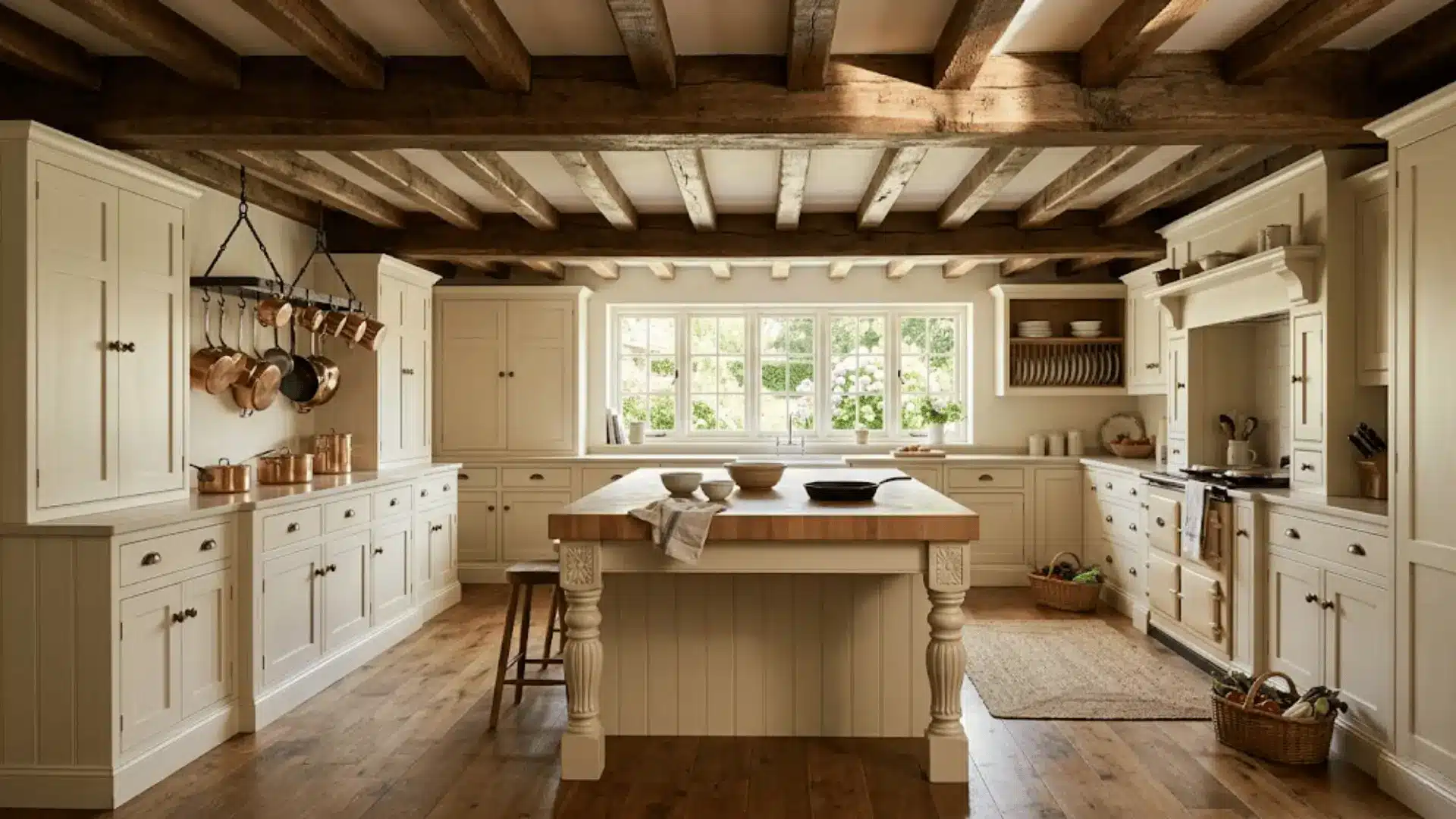
Exposed ceiling beams bring a warmth and structural beauty that is hard to replicate any other way.
They add visual depth overhead and give the kitchen a sense of age and rootedness, especially beautiful in cream or white kitchens where the contrast really sings.
27. Wainscoting or Paneling
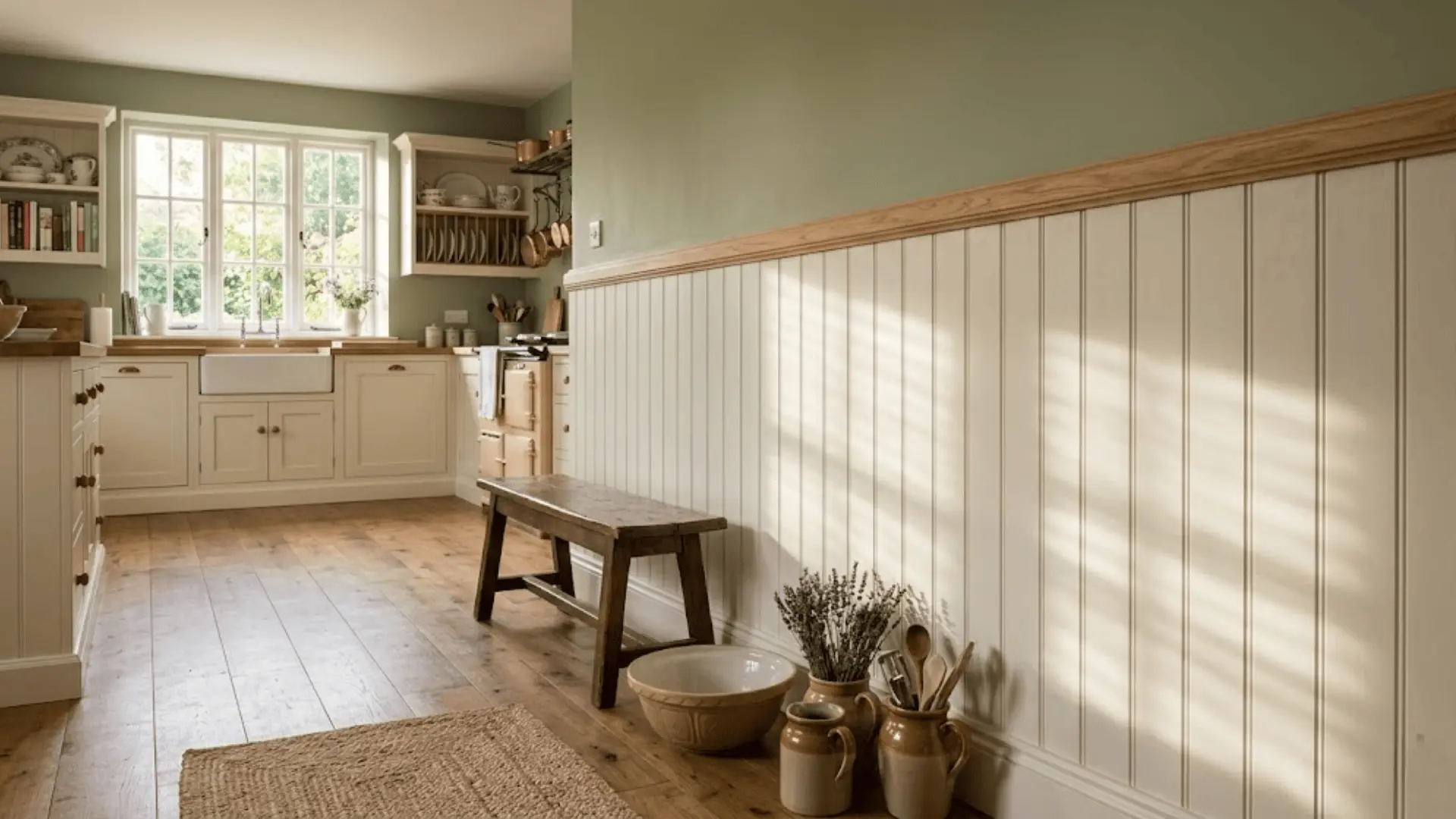
Wainscoting along the lower walls or paneling applied to kitchen islands and peninsulas is a classic architectural detail that adds richness and texture.
It is a relatively simple addition that has a big impact on how finished and considered the overall space feels.
28. Arched Doorways
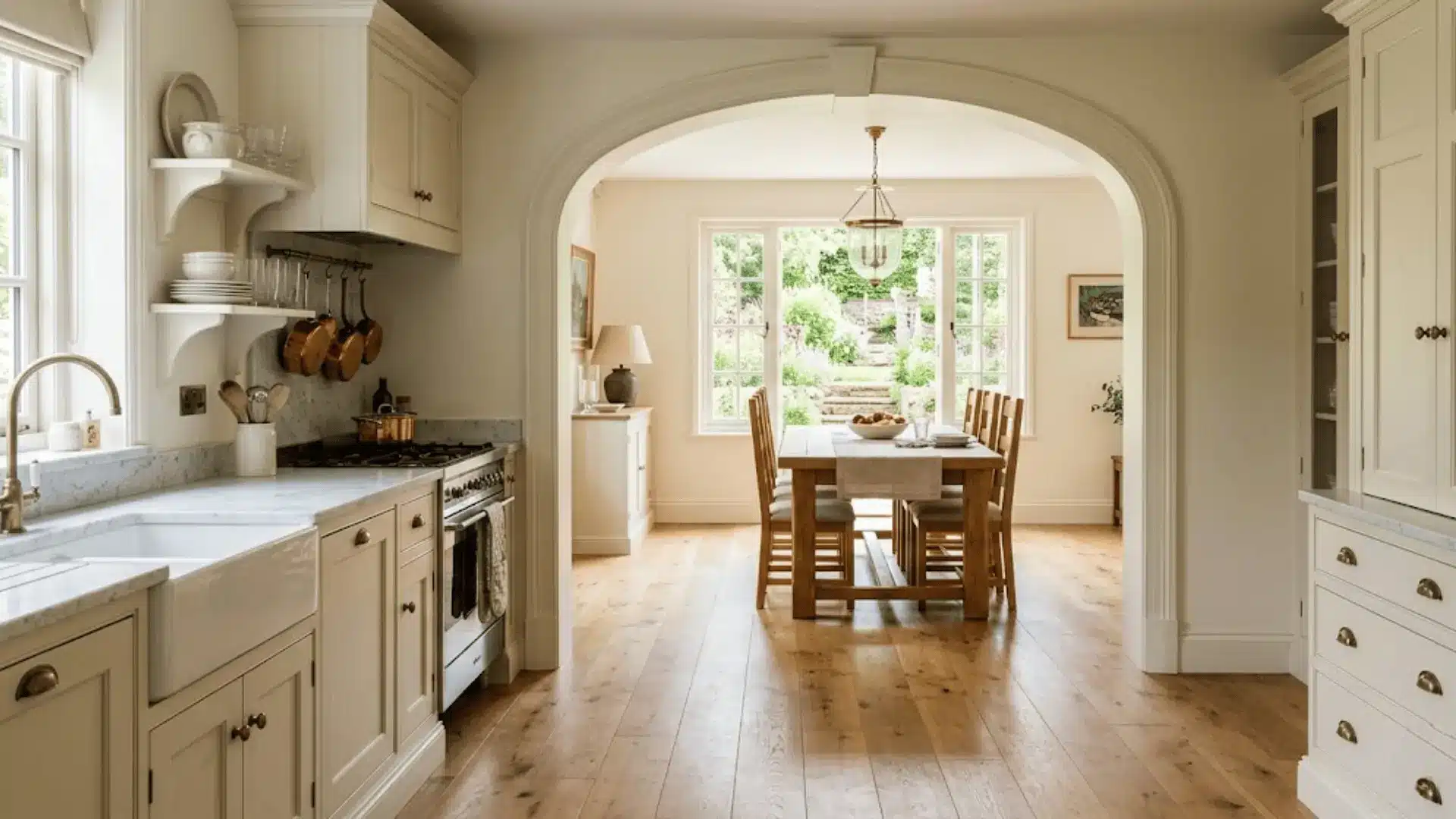
Arched doorways or cabinet details soften the lines of a kitchen and give it a more relaxed, Old World quality.
Whether used as a passthrough to another room or as a decorative detail on an open shelving unit, arches bring a lot of character to a traditional space.
29. Coffered Ceilings
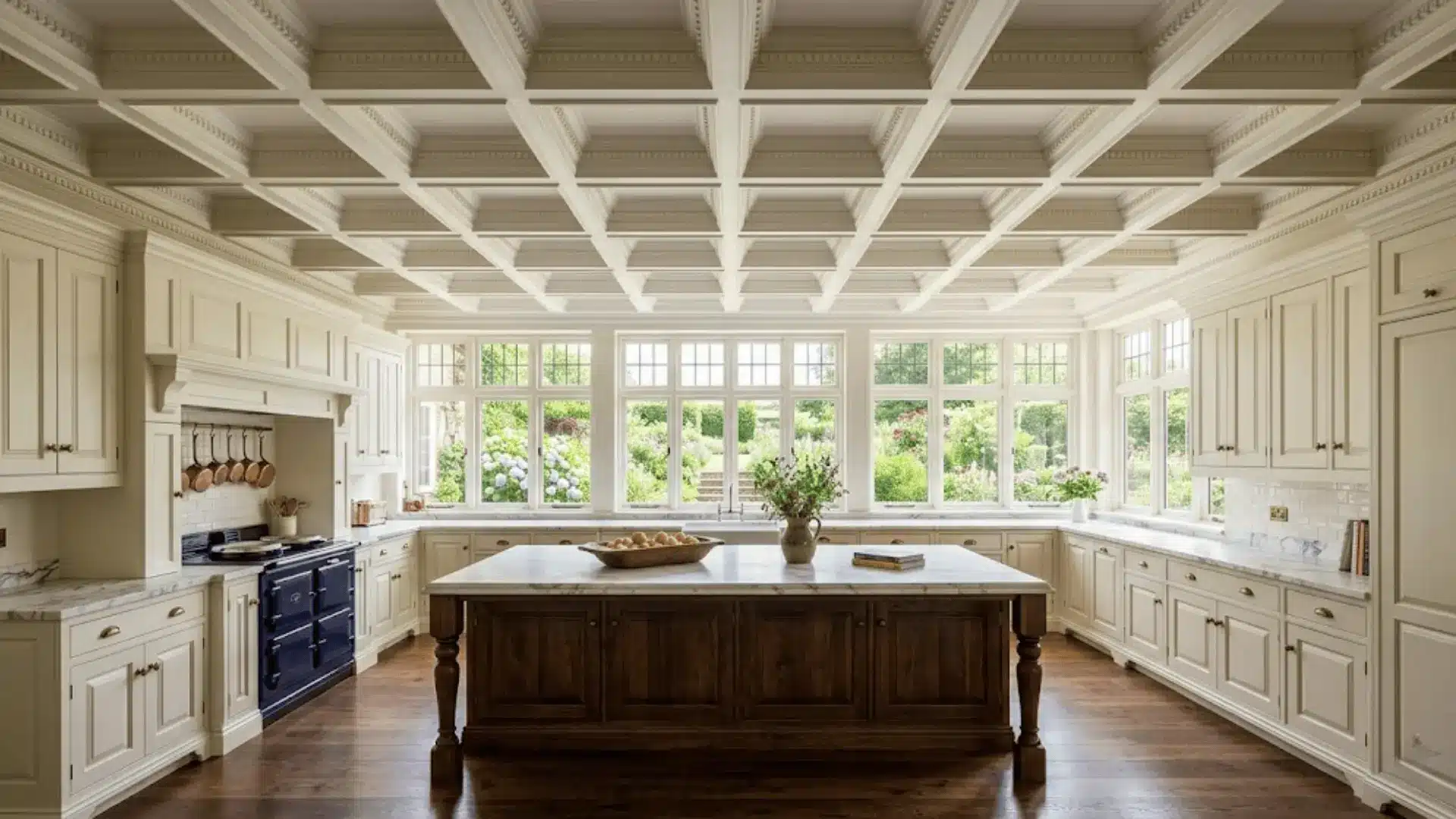
A coffered ceiling adds a level of architectural interest overhead that makes the kitchen feel truly special.
The grid of recessed panels gives the room a sense of depth and formality that is very much at home in a traditional design.
30. Decorative Corbels
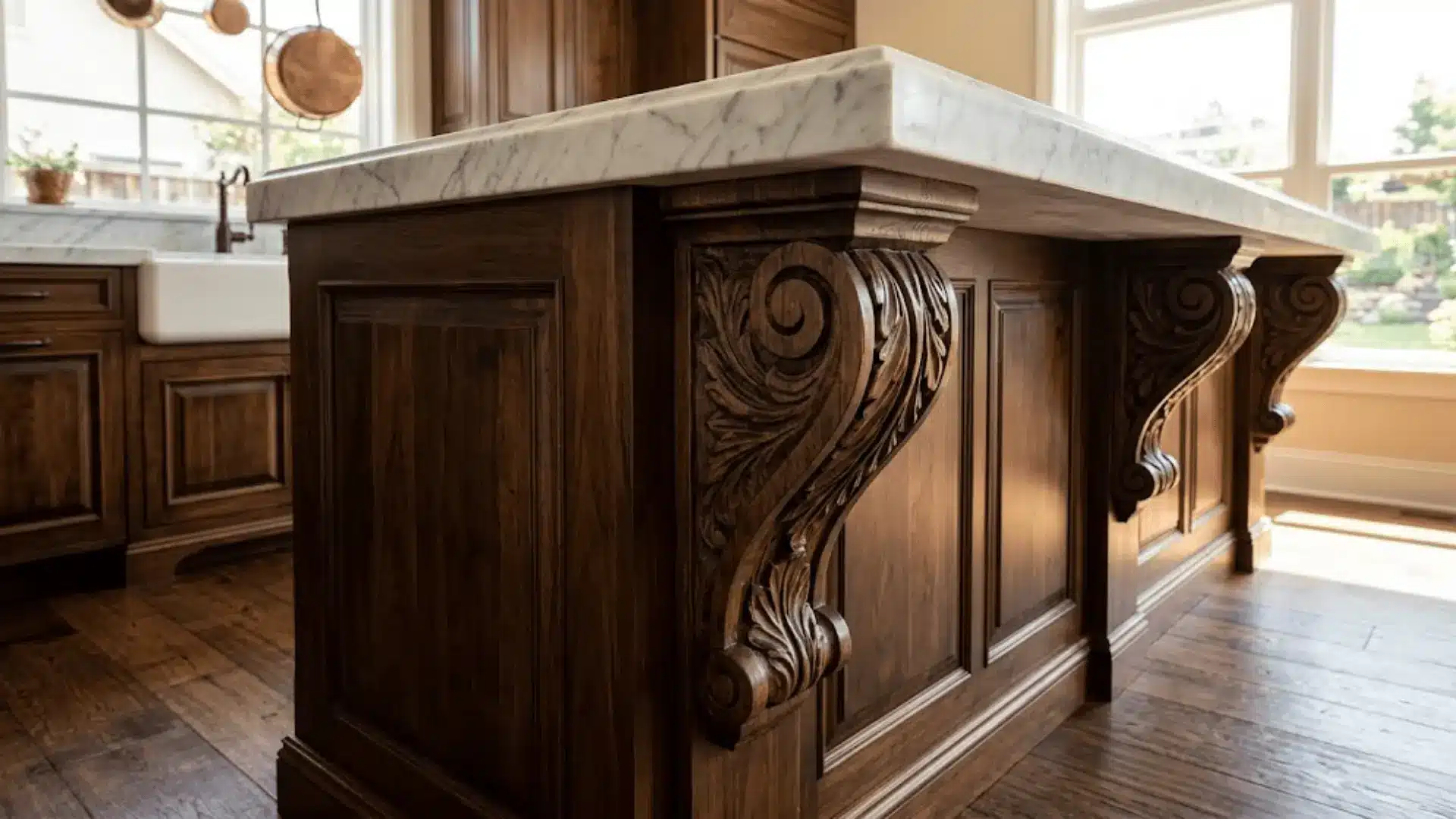
Corbels used to support countertop overhangs, open shelves, or range hoods are one of those small details that quietly add a lot of character.
Whether carved from wood or cast in a classic design, they bring an ornamental quality that feels very traditional and very considered.
Flooring & Material Choices
Flooring in a traditional kitchen needs to be as beautiful as it is hard-wearing. The right material choice will tie the whole design together from the ground up.
31. Hardwood Flooring
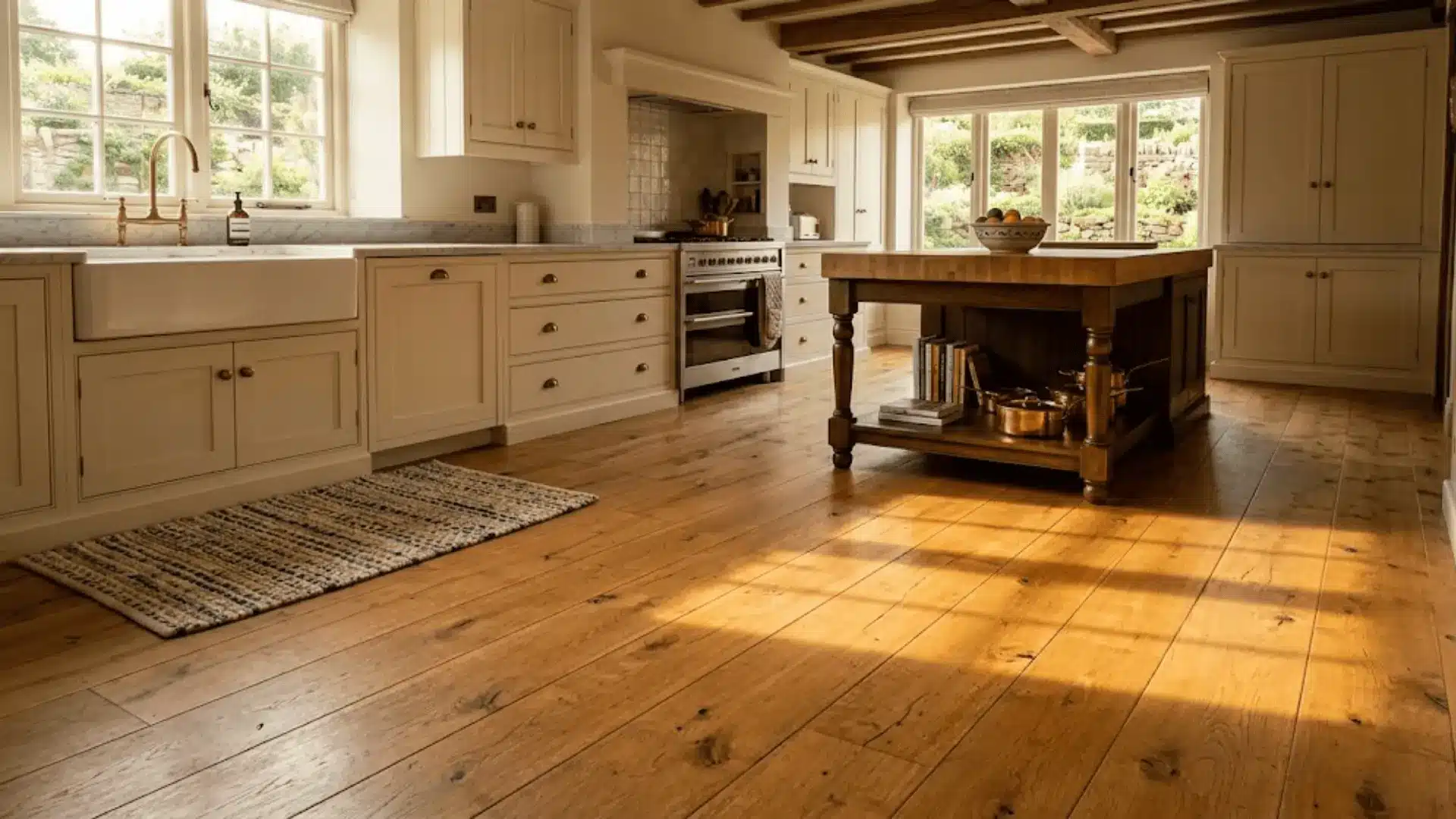
Hardwood floors are a natural fit for traditional kitchens. Wide plank oak or walnut flooring brings warmth and continuity to the space, and the natural wear that develops over time only adds to the character.
They age gracefully, which is very much part of the traditional design philosophy.
32. Stone or Tile Flooring
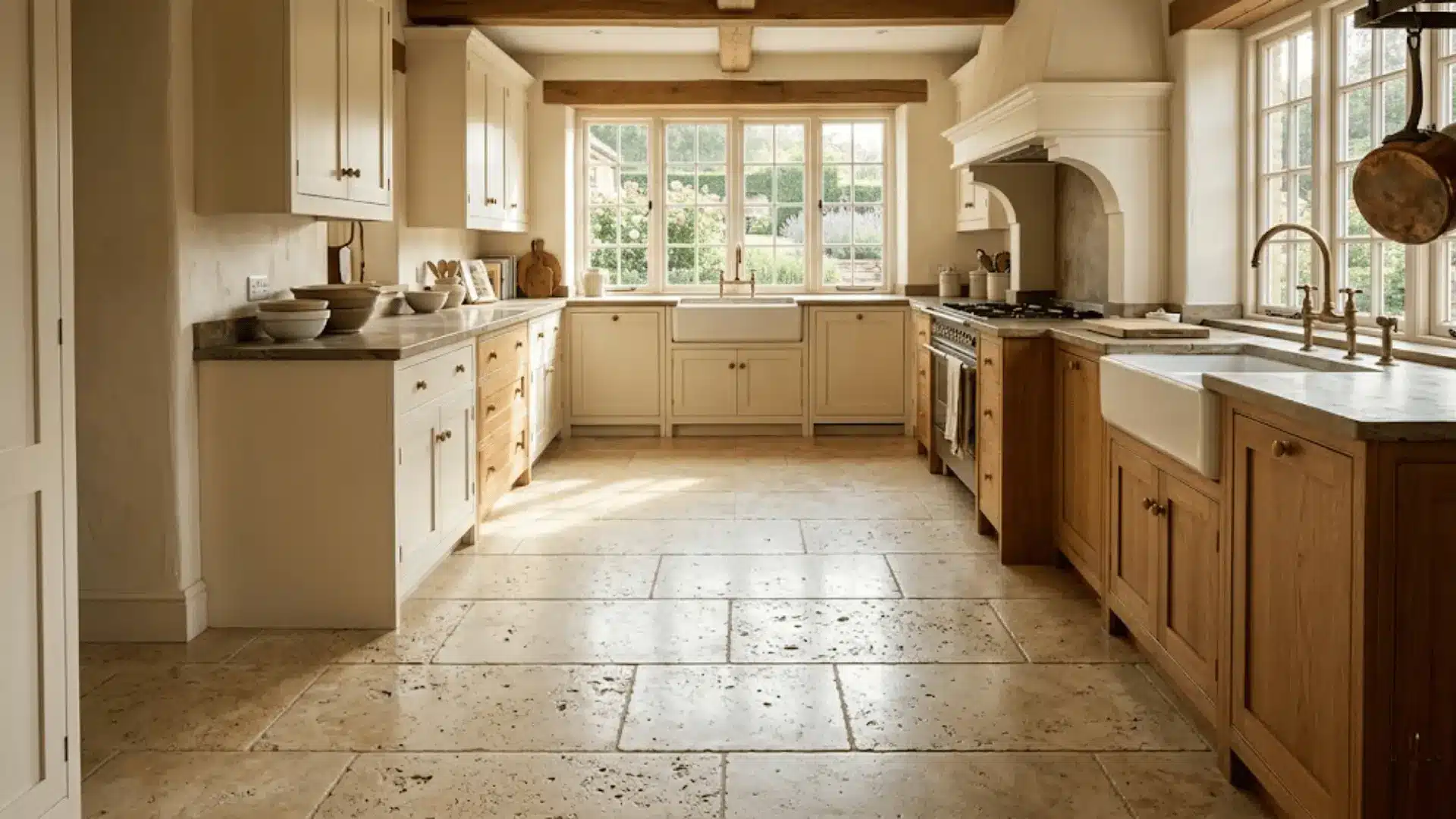
Natural stone flooring, whether travertine, slate, or limestone, brings a timeless, durable quality to a traditional kitchen.
The texture and natural variation in the material add depth underfoot and pair beautifully with wood cabinetry and warm metal fixtures.
33. Patterned Tile Floors
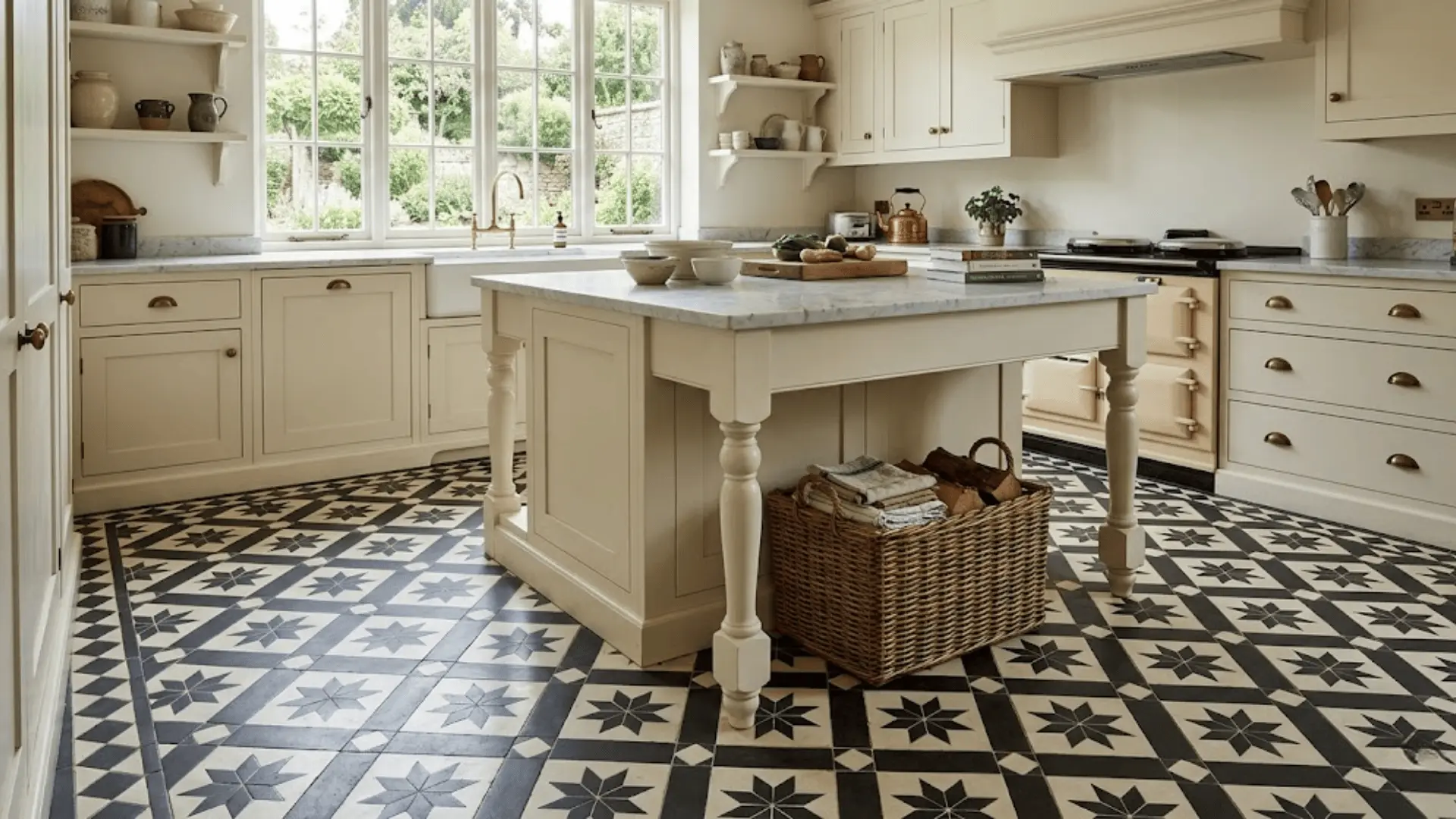
Patterned tile is a wonderful way to bring personality into a traditional kitchen through the floor.
Encaustic cement tiles with classic geometric patterns or black and white checkerboard floors are both deeply rooted in traditional design history and feel incredibly current at the same time.
Styling & Decor Ideas
The styling details are the final layer that makes a traditional kitchen feel genuinely lived-in and personal. These are the touches that bring the whole space to life.
34. Open Shelving with Classic Dishware
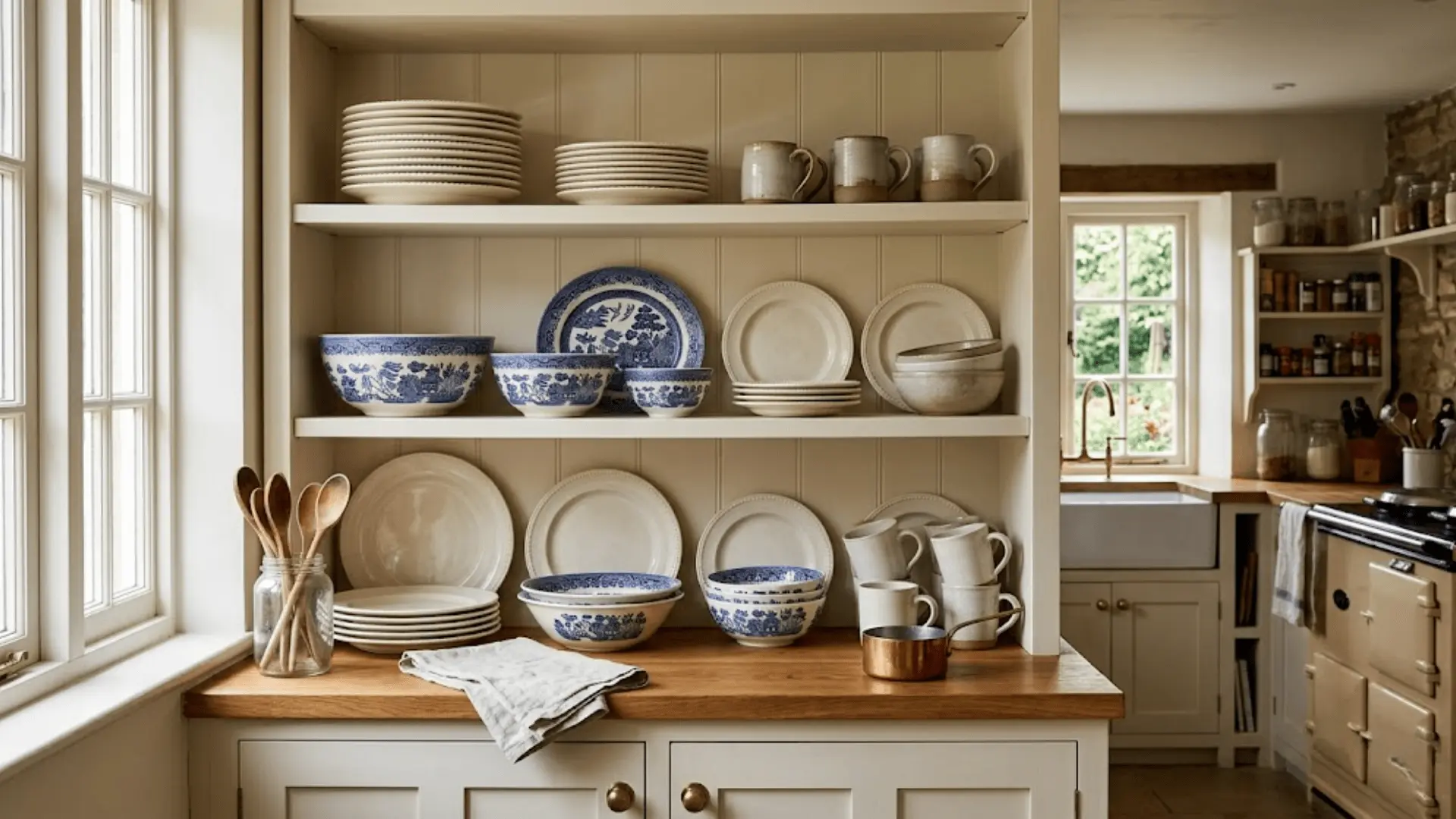
Open shelving styled with classic dishware is one of the most beautiful ways to bring personality into a traditional kitchen.
Stack transferware, ironstone, or simple white ceramics for a look that feels curated but relaxed. It turns everyday objects into part of the décor.
35. Vintage-Inspired Decor
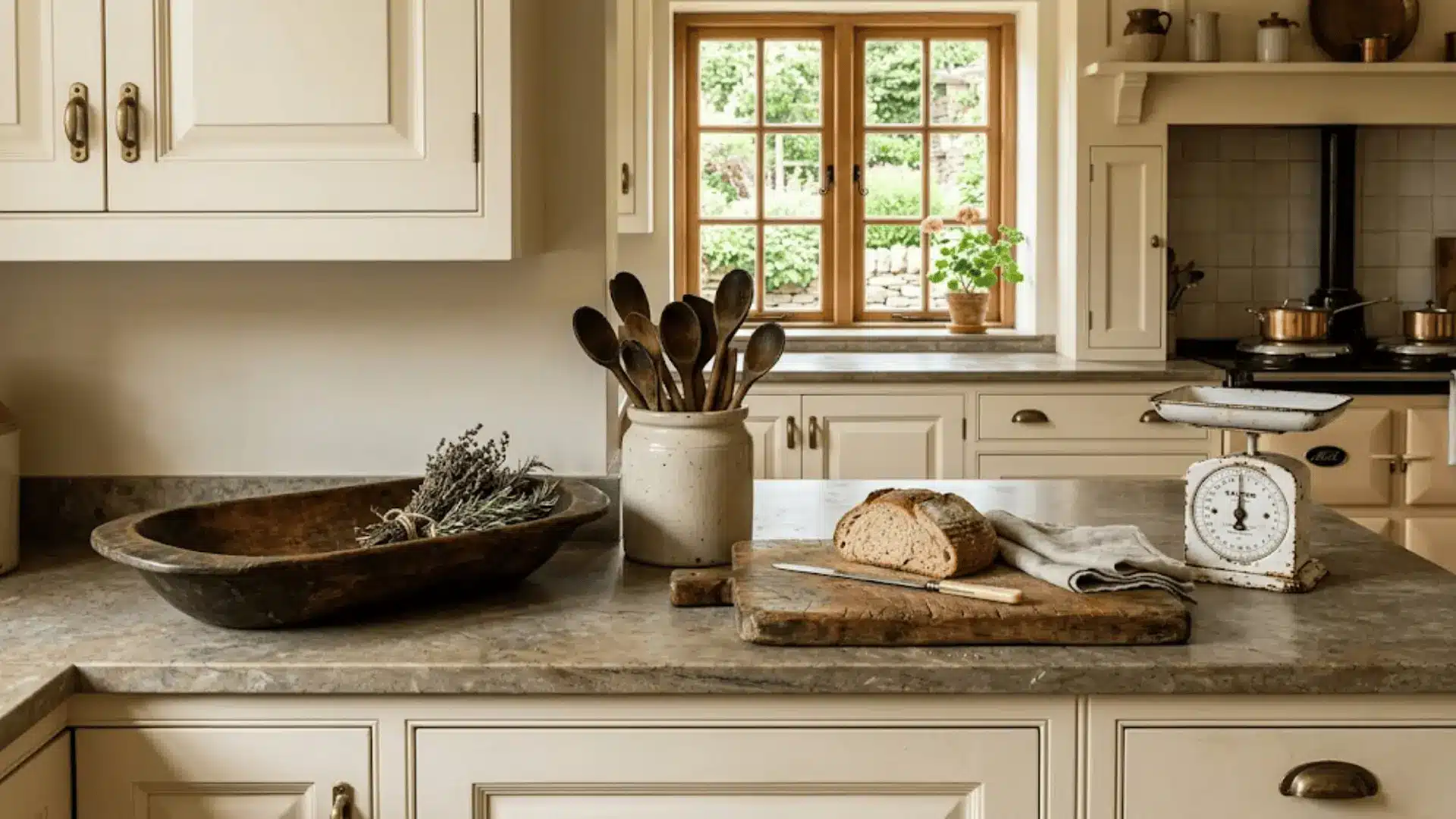
Incorporating vintage or antique pieces into a traditional kitchen gives it a sense of history that no new purchase can quite replicate.
Think old cutting boards, ceramic crocks, vintage scales, or a well-worn wooden bowl on the counter. These details add charm and tell a story.
36. Dapper Window Treatments
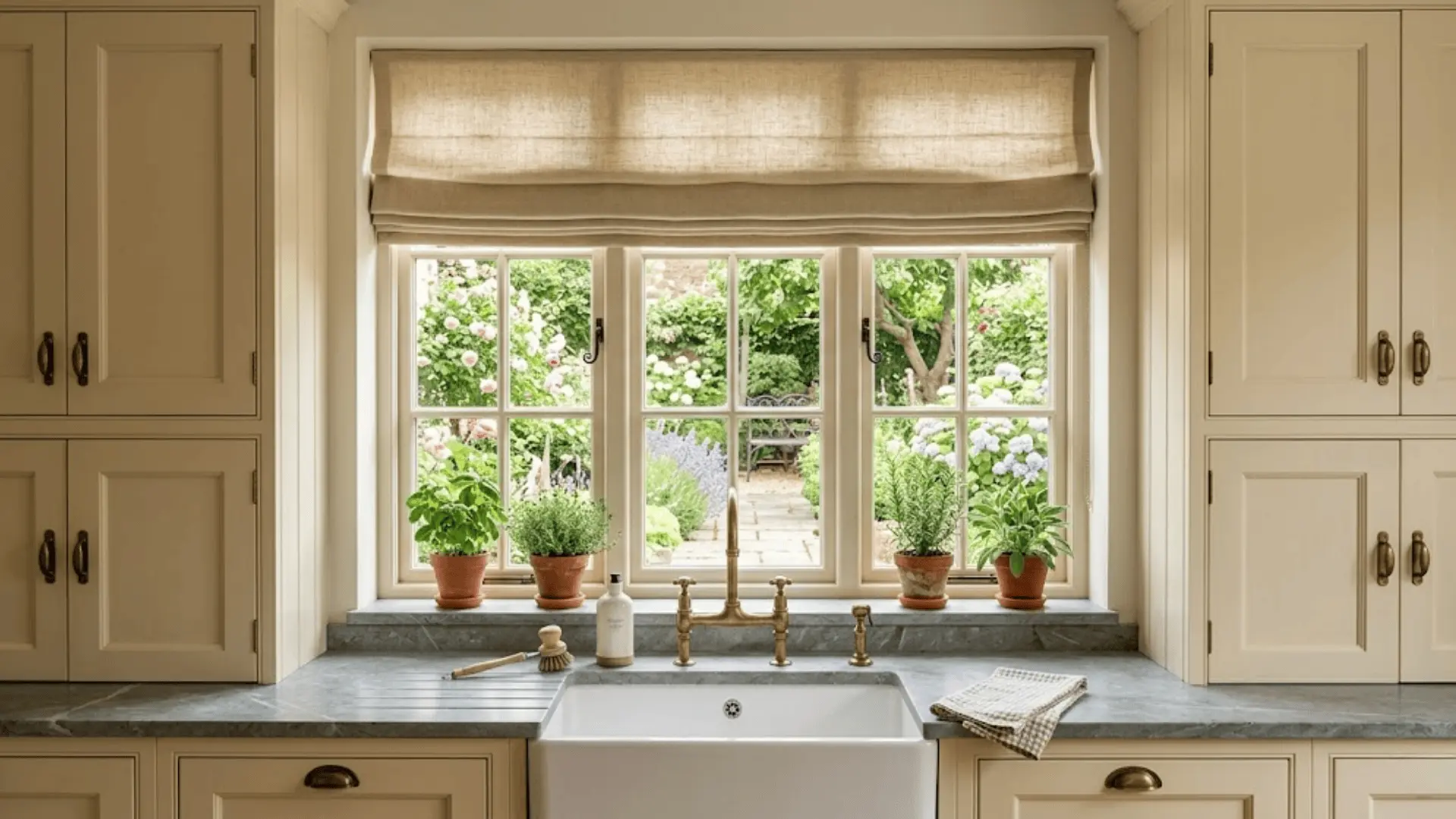
Soft curtains or Roman shades in the kitchen bring warmth and softness to what can sometimes feel like a hard-surfaced room.
Choose linen, cotton, or a classic print for something that feels appropriate to the traditional aesthetic without being overly fussy.
37. Fresh Flowers and Natural Elements
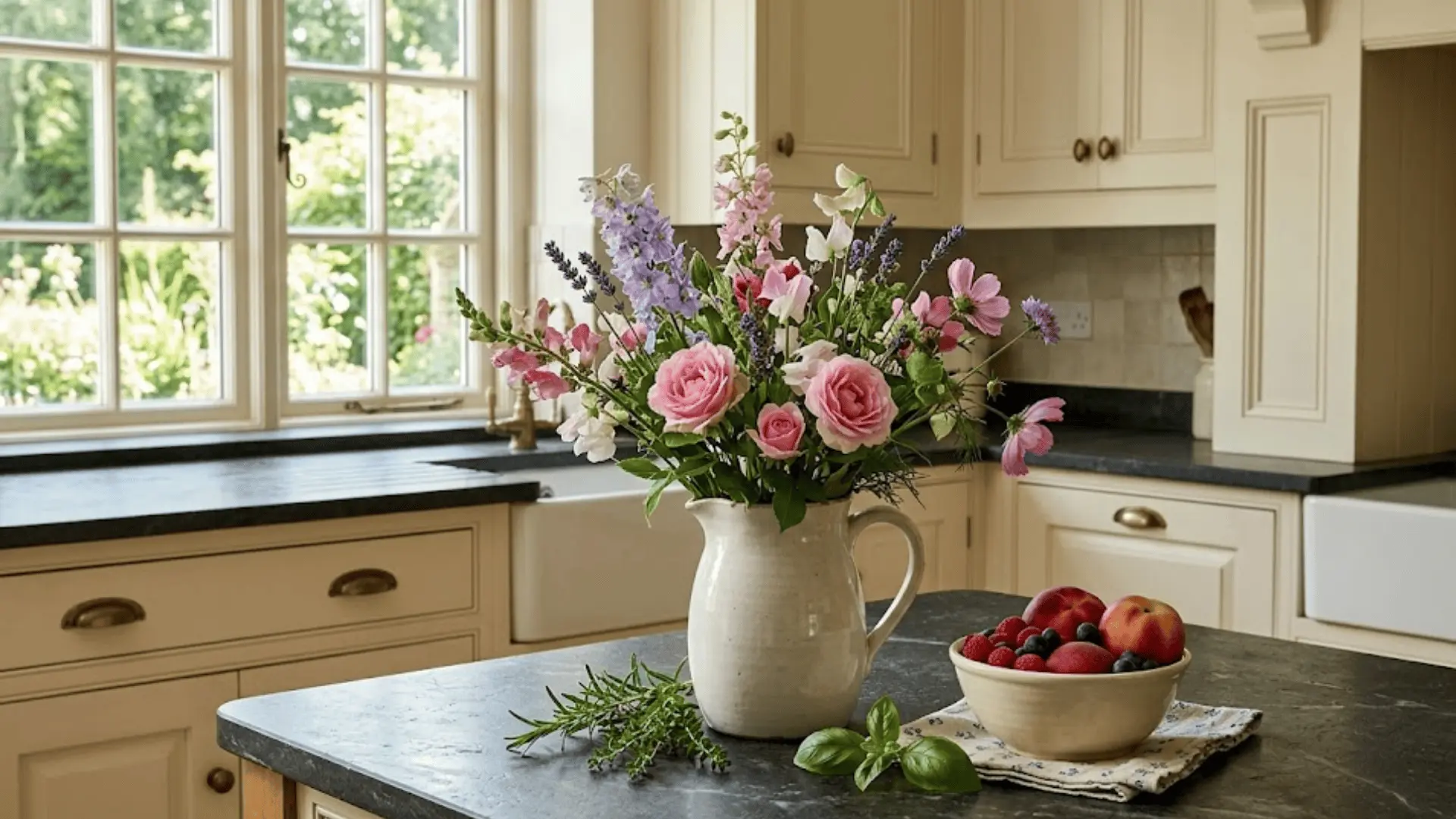
Nothing finishes a traditional kitchen quite like fresh flowers and natural elements.
A simple bunch of garden flowers in a ceramic pitcher, a bowl of seasonal fruit, or a few herb pots on the windowsill bring life and color into the space in the most effortless, beautiful way.
Best Materials for a Traditional Kitchen
Every material you choose in a traditional kitchen adds to the overall story the space is telling.
Wood, stone, and metal each bring something different to a traditional kitchen, and together they create a palette that feels warm, grounded, and full of character.
| Material | Type | Best Used For | Key Quality |
|---|---|---|---|
| Oak | Wood | Cabinets, flooring | Warm grain, ages beautifully |
| Walnut | Wood | Cabinets, shelving | Rich, deep tones |
| Cherry Wood | Wood | Cabinets, islands | Deepens warmly over time |
| Marble | Stone | Countertops, backsplash | Natural veining, classic appeal |
| Granite | Stone | Countertops | Durable, earthy texture |
| Limestone | Stone | Flooring, backsplash | Soft matte, Old World feel |
| Travertine | Stone | Flooring, backsplash | Natural variation, aged character |
| Slate | Stone | Flooring | Rustic depth, hard-wearing |
| Brass | Metal | Hardware, fixtures | Warm patina over time |
| Bronze | Metal | Hardware, range hoods | Dark, aged, rich tone |
| Antique Nickel | Metal | Faucets, pulls | Soft, warm finish |
| Copper | Metal | Sinks, range hoods | Artisan quality, living patina |
Common Mistakes to Avoid
Even the most well-planned traditional kitchen can miss the mark with a few missteps. Keep these in mind before you finalize any design decisions.
- Over-layering ornate details makes the space feel busy rather than beautiful; know when to stop.
- Poor lighting balance flattens the warmth that traditional kitchens are known for; always layer your light sources.
- Mixing too many styles, even subtly, disrupts the cohesion that makes traditional design feel so intentional.
- Going too dark with the overall palette can weigh the kitchen down and work against its natural warmth.
- Skipping quality materials to cut costs often shows, and in a traditional kitchen, materials are everything.
A traditional kitchen thrives on restraint just as much as it does on detail. Getting the balance right is what takes a design from good to one you will genuinely never want to leave.
Final Thoughts
A well-designed traditional kitchen is one of those rare spaces that genuinely improve with time.
The materials settle, the wood deepens, and the whole room starts to feel like it has always been there.
Just beginning to plan your traditional kitchen or refining an existing one, the details you choose today are the ones you will love for years to come.
We would love to know which idea resonated with you the most, so drop a comment below and let us know what your dream traditional kitchen looks like!