

Ever watched a dandelion shift from sunny yellow flower to wispy wishmaker?
That fleeting metamorphosis you glimpse in your garden is actually one of nature’s most remarkable survival stories.
These humble plants have mastered an intricate dance through seasons, weaving together flower, seed, and root in a cycle that’s drawn botanists and daydreamers to study them for generations.
Understanding how dandelions move through their life stages reveals why they thrive everywhere from sidewalk cracks to mountain meadows.
We’ll walk through each phase together, showing you the adaptations that make dandelions such resilient, thriving little warriors of the plant world.
What is a Dandelion?
Dandelions belong to the genus Taraxacum, with the common dandelion known scientifically as Taraxacum officinale.
These perennial plants feature deeply toothed leaves that form a rosette at ground level, bright yellow composite flowers, and a long taproot that can reach deep into the soil.
You’ll spot them thriving in lawns, fields, roadsides, and any patch of disturbed ground. Their success comes down to incredible adaptability.
Dandelions tolerate poor soil, drought, foot traffic, and mowing better than most plants.
That deep taproot pulls up nutrients and water from below, while their low-growing leaves avoid damage. This resilience explains why they’ve colonized nearly every temperate region on Earth.
Overview of the Dandelion Life Cycle
Dandelions undergo a predictable, efficient cycle through various stages to ensure survival across seasons. While individual flowers bloom and fade within weeks, the plant itself can persist for years, behaving as a hardy perennial.
Here’s how each stage unfolds:
| Life Stage | Duration | Key Features |
|---|---|---|
| Seed Germination | 5-10 days | Seeds land and sprout in moist soil, sending down the first root |
| Seedling Growth | 2-4 weeks | Leaves emerge in a rosette pattern; the taproot begins developing |
| Vegetative Stage | Several months | The plant focuses on leaf growth and root establishment |
| Flowering | 1-2 weeks per flower | Bright yellow blooms open, typically in spring and fall |
| Seed Head Formation | 1-2 weeks | Flower transforms into the iconic white puffball |
| Seed Dispersal | Days to weeks | Wind carries seeds to new locations; the cycle begins again |
| Dormancy (Winter) | 3-5 months | Leaves die back, but the root survives underground to regrow |
Typical Lifespan: A single dandelion plant can live 2-10 years, depending on conditions, regrowing from its perennial taproot each spring.
Stage 1: Dandelion Seeds and Their Spread
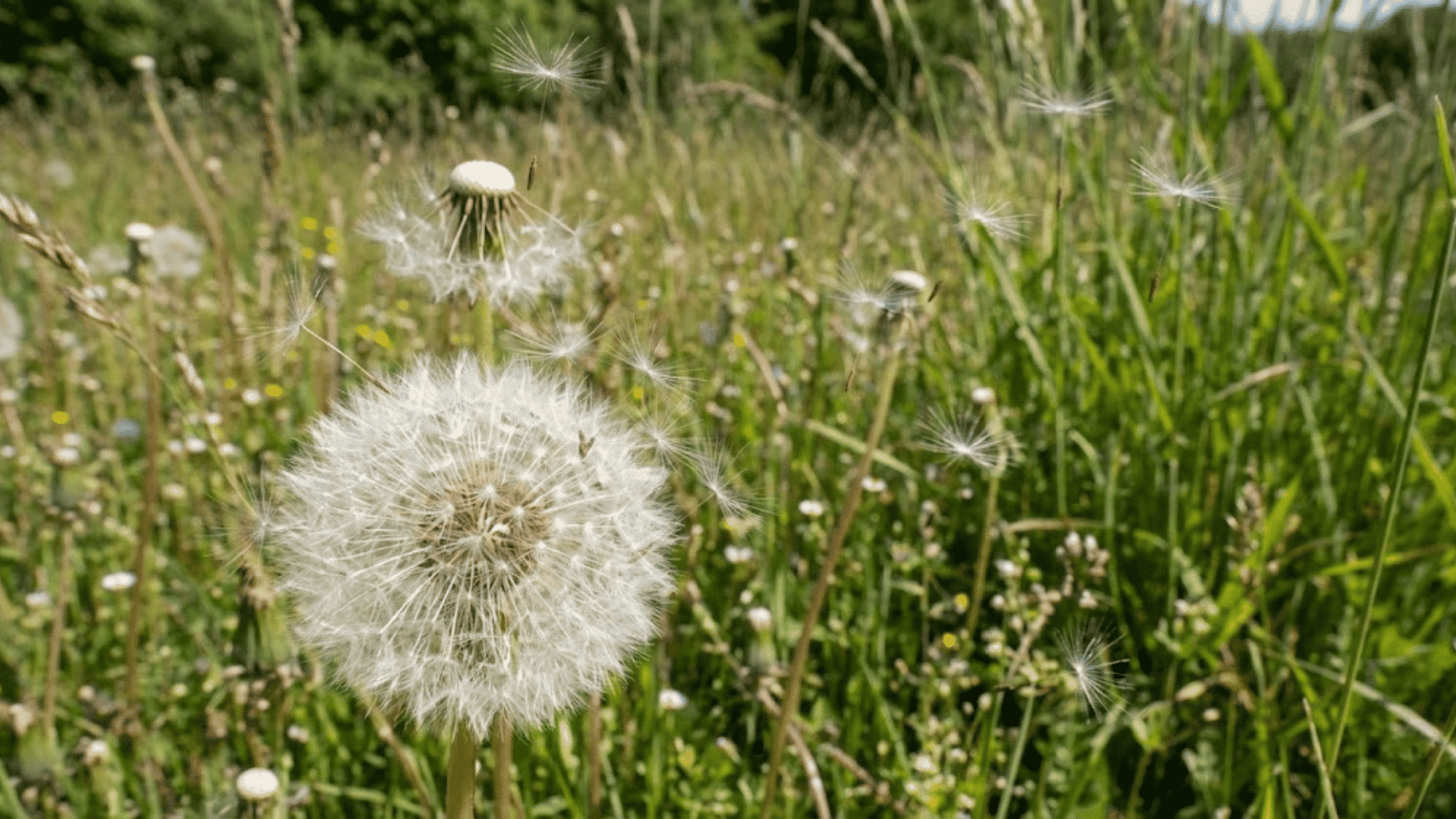
The dandelion’s reproductive strategy starts with one of nature’s most recognizable sights: that sphere of feathery seeds waiting for a breeze.
This stage sets everything in motion, turning a single flower into hundreds of potential new plants.
From Flower to Seed Head
After a dandelion flower’s brief moment in the sun, it undergoes a remarkable shift that prepares it for reproduction.
What happens next is a carefully timed process that turns bright yellow blooms into those iconic white globes we love to blow on.
- Pollination Triggers the Shift: Once the yellow flower is pollinated (often by insects or through self-pollination), the petals wilt, and the flower head closes for several days.
- Seeds Develop Inside: Each tiny floret in the composite flower produces a single seed called an achene, complete with its own genetic package.
- The Pappus Forms: As seeds mature, each develops a crown of fine, hair-like bristles called a pappus that acts like a parachute.
- The Sphere Emerges: The flower head reopens as a perfect globe of seeds, each attached to its pappus and ready to catch the wind.
This process takes about 2 weeks, with seed heads appearing most abundantly in late spring and early autumn.
Wind-Powered Travel
Dandelion seeds are built for distance. That feathery pappus catches even the gentlest breeze, allowing seeds to drift on air currents like tiny paragliders.
Most seeds land within a few meters of the parent plant, but strong winds can carry them over a kilometer away.
Some seeds travel even farther when caught in updrafts or storms. This wind dispersal strategy explains why dandelions pop up in the most unexpected places, from rooftop gardens to remote mountain slopes.
Stage 2: Germination
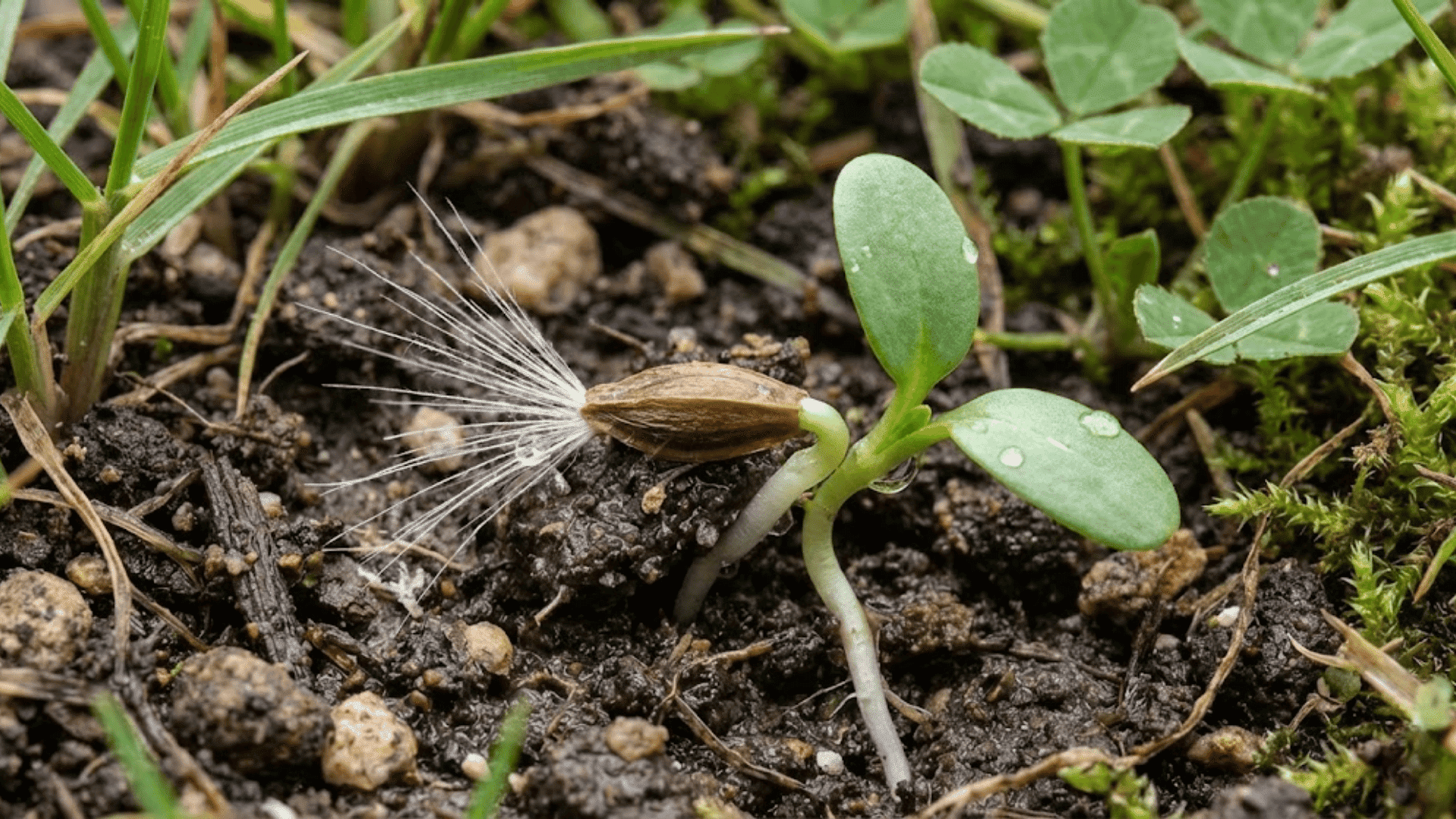
Once a dandelion seed finds its landing spot, the real work begins. Germination marks the moment when that tiny seed awakens and starts building the foundation for a new plant.
Conditions Needed for Germination
Dandelion seeds are famously opportunistic, but they still need the right conditions to sprout. When these factors align, germination happens quickly and reliably.
| Factor | Optimal Conditions | Why It Matters |
|---|---|---|
| Soil Temperature | 10-25°C (50-77°F) | Seeds germinate best in moderate warmth; too cold and they stay dormant |
| Moisture | Consistently moist soil | Water activates enzymes that break seed dormancy and support initial growth |
| Light Exposure | Partial to full sun | Dandelion seeds need light to germinate; they won’t sprout if buried too deep |
| Soil Depth | Surface to 6 mm (¼ inch) deep | Seeds planted deeper than this often fail because they can’t reach sunlight |
| Soil Type | Well-draining, loose soil | Allows the emerging root to penetrate easily and prevents waterlogging |
What Germination Looks Like
Within 5 to 10 days of landing in suitable soil, a dandelion seed sends out its first root, called the radicle, which anchors downward.
A tiny shoot emerges next, pushing toward the light and unfurling the first pair of cotyledon leaves.
These initial leaves look different from the toothed dandelion leaves you recognize, appearing smooth and oval-shaped.
During this vulnerable stage, the seedling focuses all its energy on establishing that crucial taproot while the shoot works to reach sunlight.
Stage 3: Seedling and Early Growth
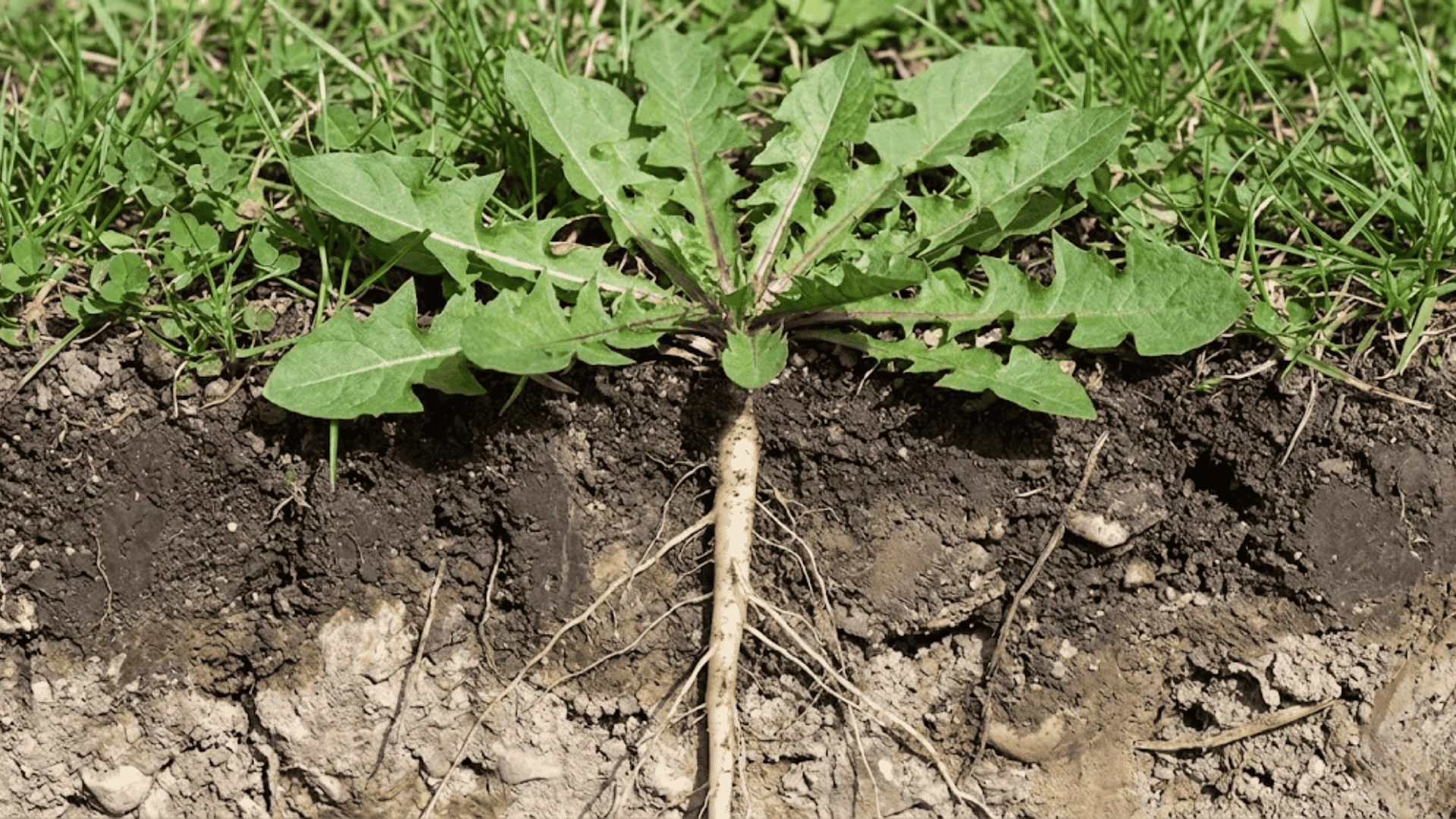
After germination, the young dandelion shifts its focus to building strength and structure. This stage is all about establishing a solid foundation that will support the plant for years to come.
Leaf Development
The dandelion’s leaves are instantly recognizable, and they grow in a pattern that’s both beautiful and strategic. This rosette formation is key to the plant’s survival tactics.
- Basal Rosette Forms Low to the Ground: Leaves spread outward in a circular pattern, hugging the soil surface to avoid damage from mowing or grazing.
- Toothed Edges Emerge: The characteristic jagged, tooth-like lobes develop along each leaf, giving dandelions their name (from the French “dent-de-lion” or lion’s tooth).
- Leaves Grow Progressively Larger: New leaves continuously emerge from the center, with outer leaves reaching 5 to 25 cm in length as the plant matures.
- Flat Growth Habit Wins Space: The horizontal rosette shades out competing plants and captures maximum sunlight for photosynthesis.
Root Development
While leaves grab attention above ground, the real action happens below. The taproot is what makes dandelions nearly impossible to eliminate once established.
- Taproot Drives Deep Quickly: Within weeks, the primary root can reach 15 to 30 cm down, and mature plants develop taproots extending 30 cm or deeper.
- Thick, Fleshy Structure Stores Carbohydrates: The root acts like a pantry, stockpiling energy reserves that fuel spring regrowth and flowering.
- Nutrient Mining from Deep Soil: That long taproot accesses water and minerals beyond the reach of shallow-rooted competitors.
- Regeneration Powerhouse: Even small root fragments left in soil can sprout new plants, making dandelions remarkably resilient to removal attempts.
Stage 4: Vegetative Growth
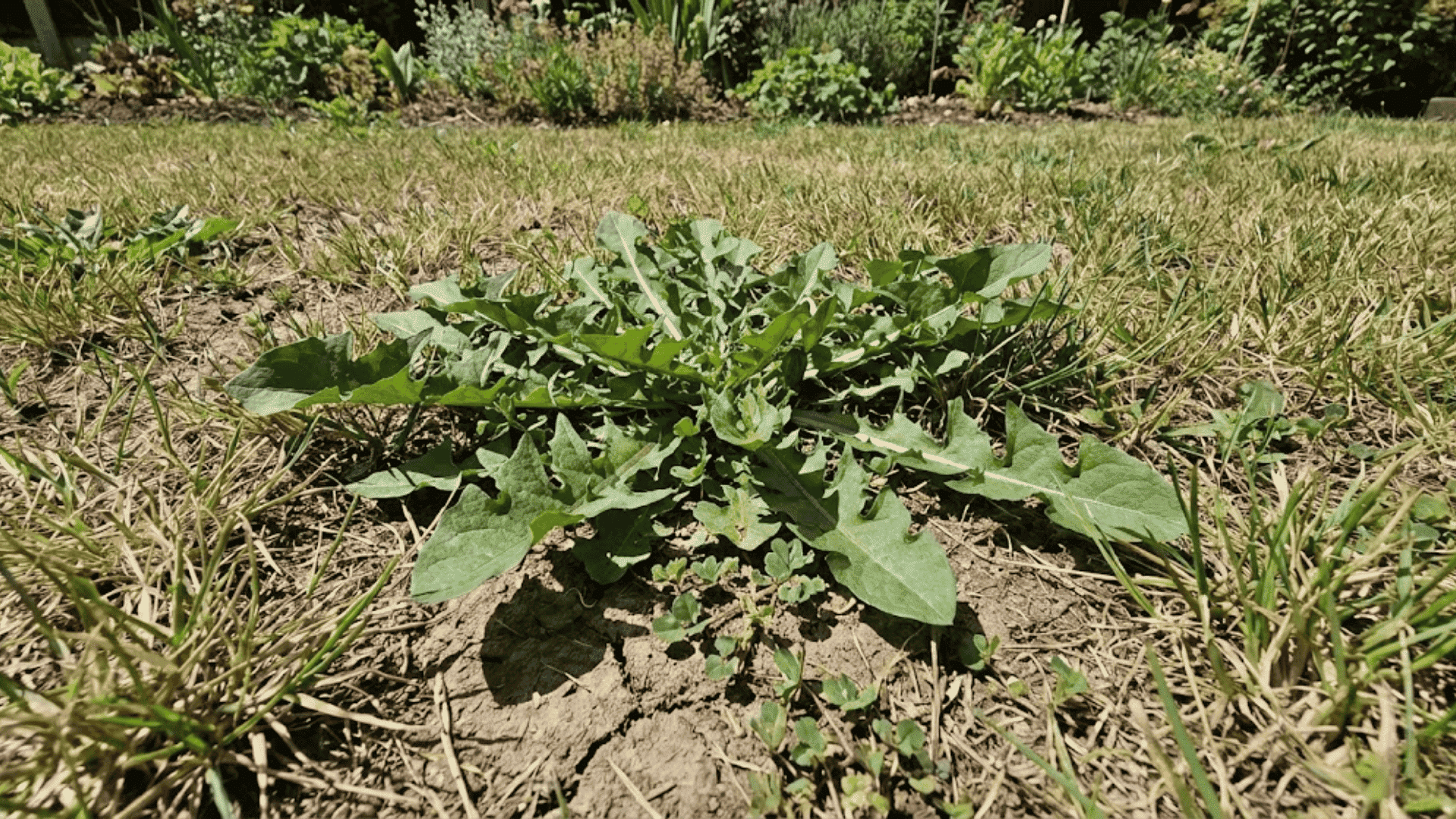
During this stage, the dandelion becomes a photosynthesis machine.
Those broad, flat leaves soak up sunlight and convert it into sugars, which travel down to the taproot for storage as carbohydrates. This energy stockpile fuels future flowering and helps the plant survive winter dormancy.
Dandelions outcompete lawn grasses through sheer strategy: their low rosette shades out grass seedlings, while the deep taproot accesses water and nutrients that shallow grass roots can’t reach.
Even during drought, when grass goes brown, dandelions stay green by pulling moisture from deep soil layers.
The taproot also allows the plant to regrow repeatedly, even after the leaves are mowed or damaged.
Stage 5: Flowering
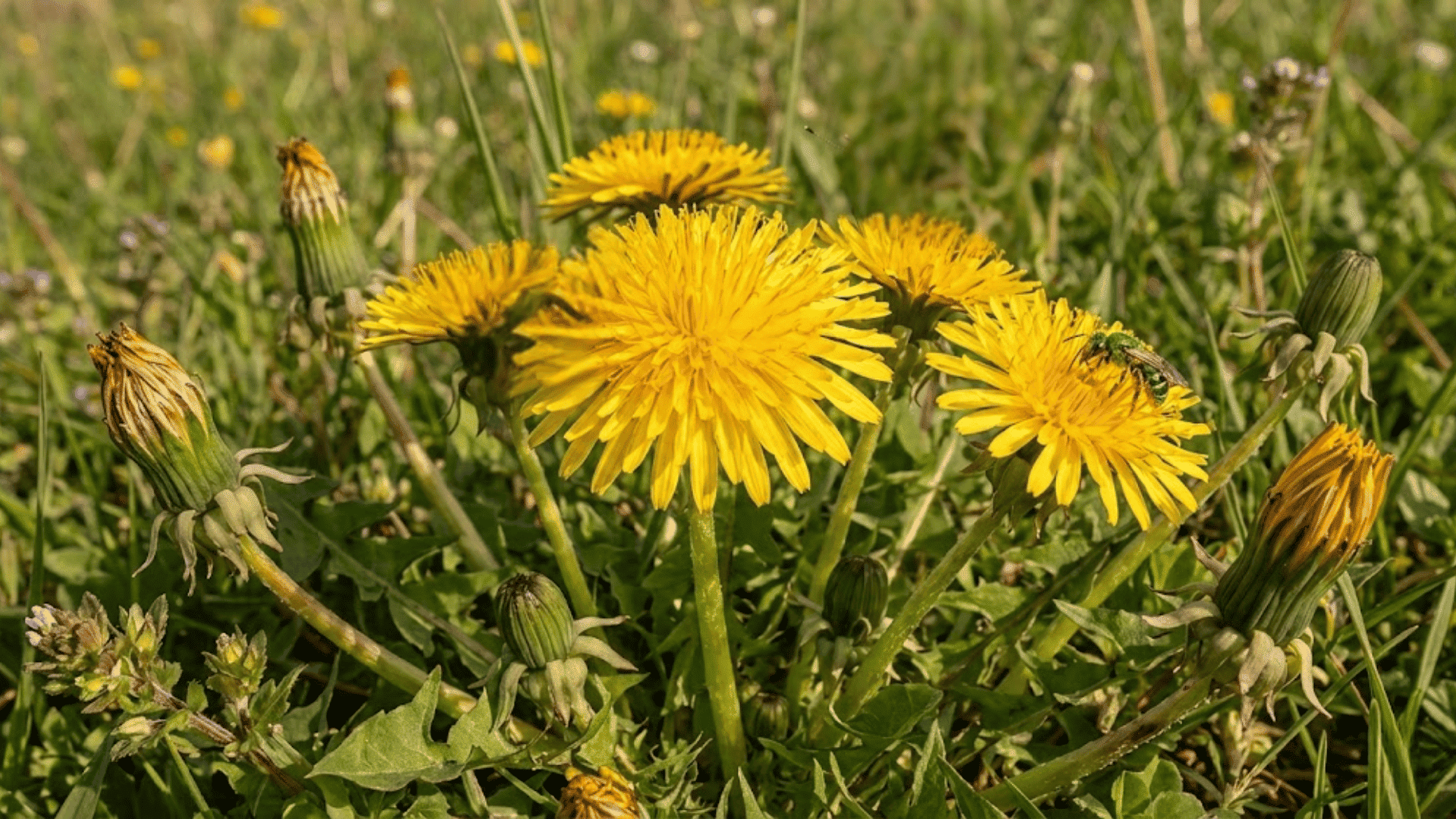
The flowering stage is when dandelions truly show off. Those cheerful yellow blooms aren’t just pretty; they’re highly efficient reproductive structures designed to produce maximum seeds with minimal fuss.
When Dandelions Flower
Dandelions don’t follow a strict calendar, but they do respond to specific cues that tell them it’s time to bloom.
Understanding these patterns helps explain why your lawn might suddenly turn yellow overnight.
- Primary Bloom Occurs in Spring: Most dandelions flower heavily from April through May when the soil warms and daylight hours increase.
- Secondary Fall Flowering Happens: A smaller wave of blooms appears in September and October as temperatures cool again.
- Temperature Triggers Blooming: Soil temperatures above 10°C combined with longer daylight signal the plant to produce flowers.
- Year-Round Flowering Possible: In mild climates or during warm spells, dandelions may bloom sporadically throughout the growing season.
Flower Structure
What looks like a single yellow flower is actually a composite head containing 150 to 200 tiny individual flowers called florets, all packed together on a flat receptacle.
Each floret has its own reproductive parts and can produce a seed independently. This design is incredibly efficient for pollination.
Bees, butterflies, and other insects visit for nectar and pollen, transferring genetic material between plants.
However, dandelions have a backup plan: they’re capable of apomixis, producing seeds without fertilization, which means a single isolated plant can still reproduce successfully.
Stage 6: Seed Head Formation
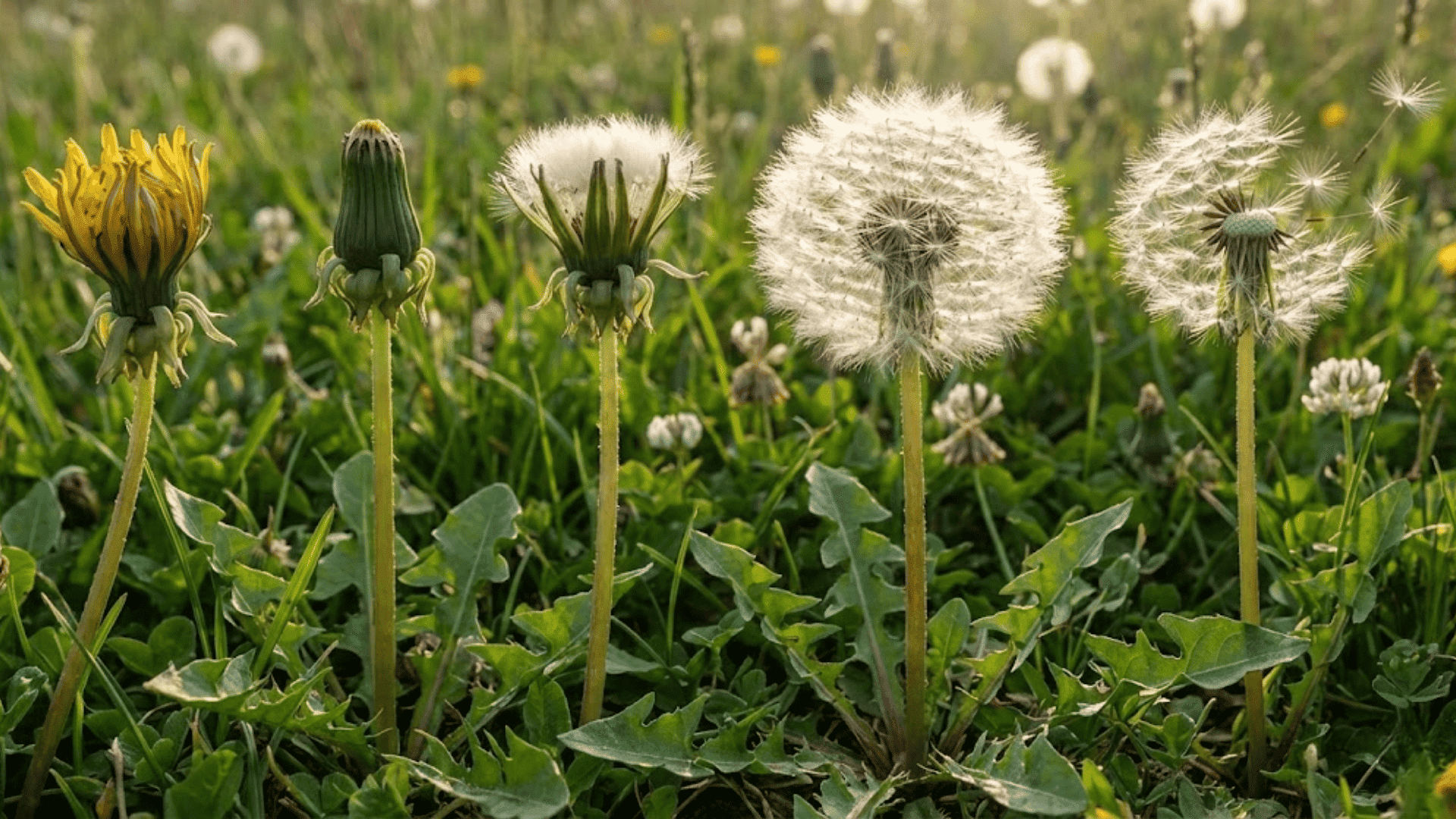
After the flower’s job is done, the plant enters one of its most visually striking phases. This is when that sunny yellow bloom becomes the silvery sphere that defines dandelions in our minds.
From Flower to Puffball
The shift from bright bloom to seed head happens quietly but efficiently. Once pollination wraps up, the dandelion redirects all its energy toward creating viable seeds ready for dispersal.
- Step 1: Within a day or two after pollination, the yellow petals wilt, and the entire flower head folds inward, protecting the developing seeds inside.
- Step 2: For 7 to 10 days, the closed flower head acts as a protective chamber where seeds develop their pappus structures.
- Step 3: During maturation, the flower stalk often elongates further, positioning the future seed head higher for better wind dispersal.
- Step 4: Once seeds are fully mature, the head reopens as a perfect white puffball, with each seed’s feathery pappus arranged in a precise globe.
Seed Viability
A single dandelion plant is a seed factory. Each flower head produces 150 to 200 seeds, and since one plant can send up multiple flower stalks throughout the season, a healthy dandelion might generate over 2,000 seeds annually.
These seeds don’t need immediate germination to succeed.
Dandelion seeds can remain viable in soil for months to years, with some studies showing germination potential lasting up to 5 years under the right conditions.
This seed bank strategy means even dormant soil can suddenly sprout dandelions when conditions improve.
Stage 7: Dormancy and Regrowth
When cold weather arrives or drought sets in, dandelions retreat underground but don’t disappear. The leaves die back completely, but that deep taproot stays alive below the frost line, protected and waiting.
All those carbohydrates stored during vegetative growth now serve their purpose, sustaining the root through months of dormancy.
Come spring, as soil temperatures climb above 10°C, the root sends up fresh leaves from its crown. This perennial regrowth pattern means the same plant returns year after year, often bigger and stronger than before.
Some dandelions can persist for a decade, regrowing each season reliably from that resilient underground base.
How Long Does the Dandelion Life Cycle Takes?
The dandelion life cycle moves surprisingly fast, though timing varies based on where the plant grows and what conditions it faces.
Typical Timeline:
- Germination to Seedling: 5 to 10 days after landing
- Seedling to Vegetative Maturity: 8 to 15 weeks of active growth
- First Flowering: As early as 10 to 12 weeks from germination in ideal conditions
- Seed Production: 2 to 3 weeks from flower to dispersal-ready seed head
Climate plays a major role.
In warm regions with mild winters, dandelions may flower year-round and complete multiple cycles annually.
Colder climates slow everything down, with plants taking longer to mature and flowering limited to spring and fall windows.
Why the Dandelion Life Cycle Matters?
Understanding how dandelions grow and reproduce gives us insight into both their ecological value and their persistence in places we might not want them. This knowledge shapes how we interact with these resilient plants.
Ecological Role of Dandelions
Dandelions punch above their weight when it comes to supporting local ecosystems. Their timing and structure make them invaluable to wildlife during critical periods.
- Early Spring Nectar Source: Dandelions often bloom before many other flowers, providing crucial food for bees, butterflies, and other pollinators emerging from hibernation when options are scarce.
- Accessible Pollen for Diverse Insects: The flat, open flower heads welcome pollinators of all sizes, from tiny native bees to honeybees and hoverflies.
- Deep Taproots Break up Compacted Soil: As roots penetrate downward, they create channels that improve soil aeration, drainage, and allow other plant roots to follow.
- Nutrient Cycling from Depth: Those deep roots pull minerals from subsoil layers and return them to the surface through leaf decomposition, enriching topsoil naturally.
Lawn and Garden Implications
For gardeners and lawn enthusiasts, the dandelion life cycle explains why these plants seem impossible to defeat. Each stage presents a different challenge for control efforts.
- Taproots Regenerate from Fragments: Pulling dandelions rarely works because any root piece left behind can sprout a new plant, turning one dandelion into several.
- Thousands of Seeds Per Plant: A single overlooked dandelion can populate an entire yard within a season, with wind carrying seeds to every corner.
- Perennial Persistence Outlasts Annuals: While you might eliminate annual weeds in one season, dandelions return year after year from established roots.
- Timing Matters for Control: Understanding when dandelions flower and set seed helps you target removal before they reproduce, ideally catching them in early spring before the first blooms appear.
Dandelion Life Cycle vs. Other Common Weeds
Dandelions share lawn space with plenty of other uninvited guests, but their life cycle and growth strategy set them apart.
Comparing them to other common weeds reveals why each requires different management approaches.
| Feature | Dandelion | Crabgrass | Clover |
|---|---|---|---|
| Life Cycle | Perennial | Annual | Perennial |
| Root System | Deep taproot (30+ cm) | Shallow, fibrous | Shallow with nodules |
| Seeds per Plant | 2,000+ per season | 150,000+ per plant | Moderate production |
| Dispersal Method | Wind (pappus) | Gravity and contact | Seeds and stem rooting |
| Growth Pattern | Basal rosette | Spreading mat | Creeping stems |
| Active Season | Spring through fall | Late spring to frost | Spring through fall |
| Main Persistence Factor | Regenerating taproot | Massive seed banks | Vegetative spread |
| Control Challenge | Must remove the full root | Prevent seed formation | Spreads horizontally fast |
The key difference: Dandelions depend on their deep taproot for survival, crabgrass overwhelms through sheer seed numbers, and clover spreads by creeping along the ground and rooting as it goes.
The Closing Note
The dandelion life cycle is a masterclass in plant survival, weaving together deep roots, wind-borne seeds, and perennial resilience into one unstoppable package.
Your perspective on these plants might vary, but their biological brilliance is undeniable. Every stage serves a clear purpose, creating a system that’s nearly impossible to disrupt.
Understanding dandelions’ phases reveals why they thrive in almost every environment and empowers you to work with them. These yellow lawn dwellers have earned their place in the landscape through sheer adaptability.
What’s your relationship with dandelions? Share your thoughts below.




2 Responses
Thank you for your very informative post. Did you know that the Dandelion represents the 3 Constellations: Sun, Moon & Stars. I was delighted to find out the true nature of this herb some years ago. Like so many things it has been misrepresented.
I think you have answered my question already, but I want to get a clarification about immature seedheads:
From a lawn-weed removal perspective, are all flower buds, from the smallest little “ball” emerging from the crown of the plant, to the largest, stemmed yet unopened, bud capable of yielding seeds that can germinate?
In the case of the plants being treated with a herbicide like 2-4-D or Glysophate; yes, the plant will die from the root, but are all the flower buds full of potential seeds?