We all know that plants give oxygen, which is a vital element for human life on Earth. This is why trees and greenery are so important. Did you know that greenery has a significant role in mental health and mood, also?
The reason hospitals, wellness clinics, and spas have a lot of plants is not for decoration, but rather it is essential for maintaining the ‘Zen’ factor.
One thing that many people don’t understand is that indoor plants have a deep impact on our mental health. Some people feel that plants are used as decoration, but they are more than that.
We will discuss how indoor plants can be good for sleep, and how they, in turn, contribute to excellent health.
Sleep is one of the few things that we all need to maintain a healthy lifestyle, and if sleep is disrupted for several days or if a person does not get enough sleep, health suffers greatly.
Poor lighting, stress, poor air quality, and an overstimulating environment can disrupt sleep, and if you place indoor plants, you can make the environment lighter and much more beneficial for sleep.
Many people focus on routines, lighting, and screen time to improve their sleep, but one factor is frequently overlooked: the physical environment of the bedroom itself. Indoor plants, often chosen for decoration, can quietly influence sleep quality in meaningful ways.
How Does the Sleep Environment Affect Rest?
Sleep is impacted by a lot of things, and many times, we don’t even notice all of them on a daily basis. This means that there are numerous factors that work together to ensure that your sleep is healthy.
Air quality, humidity, temperature, and sensory input are all important and can help you rest. Even when these factors are not consciously noticed, the body responds to them. A well-balanced environment encourages the nervous system to slow down.
It signals safety and comfort, which are necessary for deep sleep. Indoor plants contribute to this balance in ways that extend beyond visual appeal.
The Role of Air Quality in Sleep Health
A clean room, fresh air and calm lighting can impact sleep in a way that you will feel the difference as soon as you wake up.
Clean air means that your body will get optimum oxygen while resting. When we sleep, our bodies go through a lot of repair work from the day.
If the air is clean and the oxygen supply is good, you get the maximum benefit from repairs, and when you wake up, you feel better. Poor indoor air quality can lead to discomfort, congestion, and restless nights, which means you will wake up tired or exhausted.
Indoor plants naturally interact with the air through processes like photosynthesis and transpiration. During the day, the plants take in the carbon dioxide from the room, and at night, your room will feel fresher, and of course, with the surge of oxygen, you will feel good.
While they are not a replacement for proper ventilation, they can contribute to a fresher indoor atmosphere. Some plants help reduce airborne particles and improve humidity levels. This can make breathing easier, especially in dry environments or air-conditioned spaces.
When breathing becomes more comfortable, the body relaxes more easily. This supports longer, uninterrupted sleep cycles.
How Plants Impact Sleep?
I would need you to imagine a scenario where you step into a room with green plants decorated near the window or in the corner. If the room is well-ventilated, then the plants will add to the room’s air quality even more.
If you step in this room and then rest, you will feel calmer and more content as the plant absorbs all airborne toxins and adds more oxygen to the air. As we breathe, our bodies inhale oxygen, and the plants ensure there is plenty of it.
Moreover, the good air quality allows the body organs to work better as the blood absorbs optimum levels of oxygen. Apart from this, the visual impact of green plants is soothing and can add to the mood positively.
Air that is too dry can irritate the throat, skin, and nasal passages. Air that is too humid can feel heavy and uncomfortable.
Maintaining balance is key and plants can ensure this balance. Indoor plants release moisture into the air through a natural process. This gentle increase in humidity can improve comfort, especially in climates or seasons where indoor air becomes excessively dry. Balanced humidity supports better breathing and reduces physical irritation, both of which contribute to deeper rest.
Psychological Effects of Greenery on the Mind
The impact of indoor plants is not only physical. It is also psychological. We all like calm ambiance, and more than the look, the impact of light colors, fresh greens, and the mossy aroma also contributes to it.
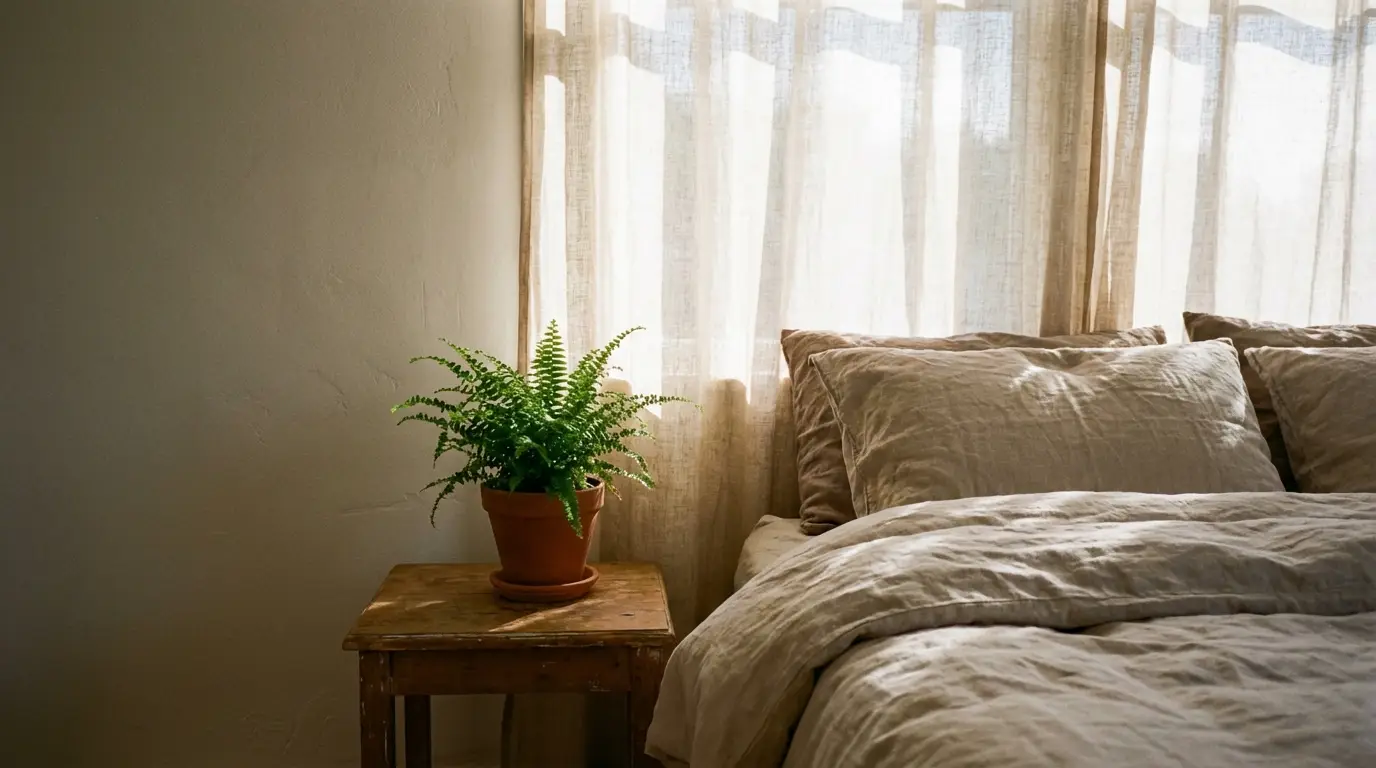
Exposure to greenery has been shown to reduce stress and promote relaxation. Even small visual elements, such as a plant on a bedside table, can create a sense of calm. This calming effect is excellent for sleep. Plants introduce softness into a room.
Their shapes, colors, and natural presence contrast with the rigid lines and artificial materials found in many indoor spaces. This subtle shift can influence mood and reduce mental tension.
Oxygen Levels and Nighttime Breathing
All the sleep issues, such as snoring and even apnea, are somehow related to the respiratory system.
If you have a room that is oxygenated properly, and if there are lesser environmental disturbances, such as impure air or smoke or dust, you will feel a difference in your moods the next morning. The overall presence of plants contributes to a fresher feeling in the space. What matters more is the feeling of freshness.
A room that feels alive and well-maintained encourages relaxation. This psychological comfort plays a role in how easily the body settles into sleep. Breathing comfortably throughout the night reduces disturbances and promotes deeper rest.
Final Thoughts on Indoor Plants and Sleep Health
The connection between indoor plants and better sleep and health in general is proven over centuries. We all like a green environment where, if we take a deep breath, it makes us feel calm and happy.
Keeping indoor plants in rooms can have the same effect. You will get a better environment because your room will have fewer toxins and more oxygen. You must have heard of oxygen spas and bars where people go to relax.
By placing a few plants in your room, you can make a spa-like environment at home also. We have discussed how indoor plants help sleep and you can benefit by placing a few plants indoors.