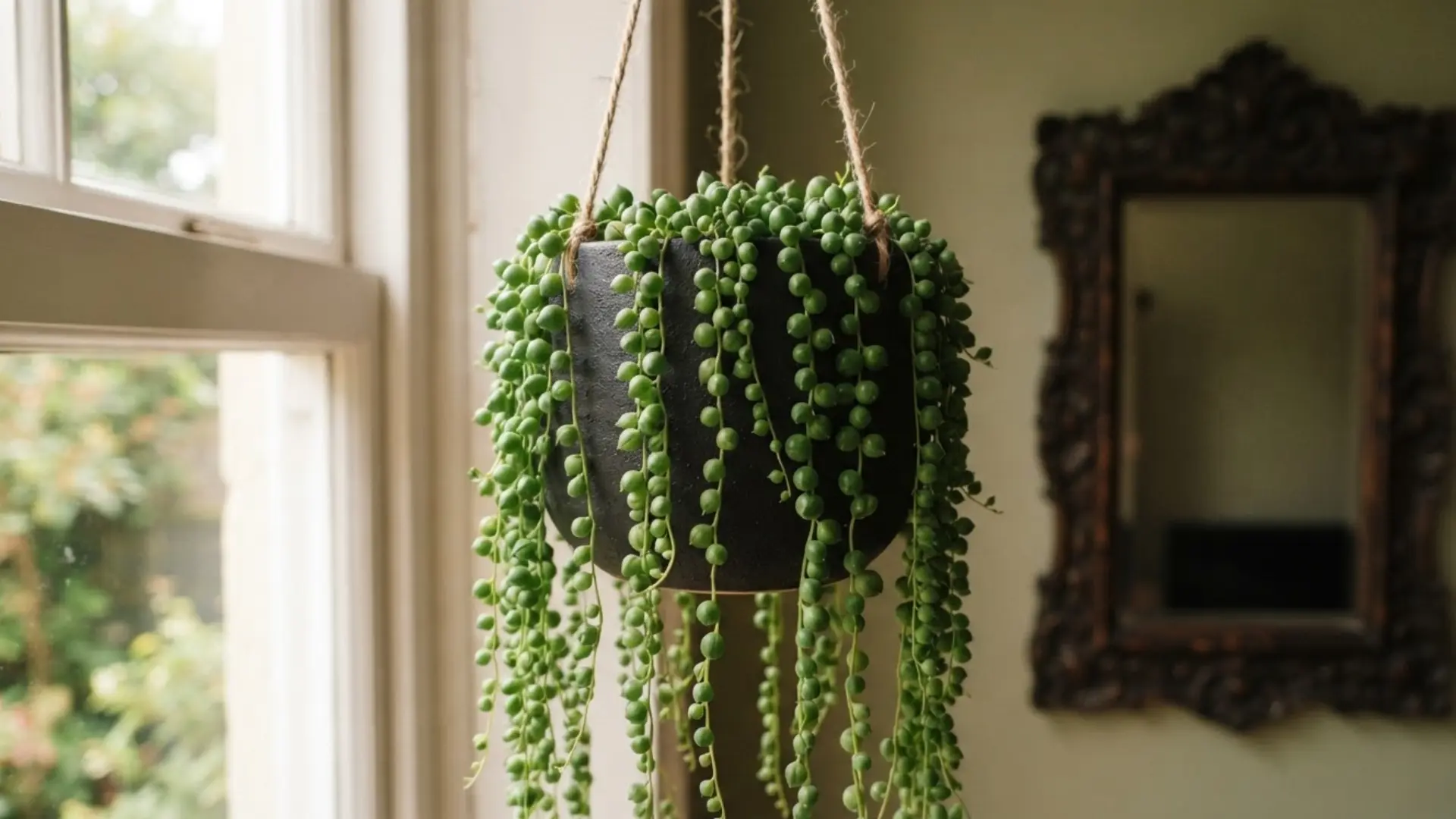
The tiny green beads may look easygoing, but they can be surprisingly picky about light, water, and soil.
That is what makes string of pearls care feel like a big task to take on.
You may water it with good intentions, move it closer to a window, or try a new pot, only to wonder if you are helping or making things worse.
Well, to be honest, plants usually do give you clear clues once you know what to look for. Wrinkled leaves, bare stems, soft growth, and slow trailing all tell a story.
With a little attention and a simple routine, you can stop guessing and start understanding what your plant actually needs to stay healthy, full, and beautifully trailing in your home.
String of Pearls Plant Profile
Before getting into care steps, it helps to know exactly what plant you are growing. String of pearls is sold under a few different names, and the botanical details below explain why it behaves the way it does.
|
Trait |
Detail |
|
Common names |
String of pearls, string of beads, string of peas |
|
Scientific name |
Curio rowleyanus (formerly classified as Senecio rowleyanus) |
|
Family |
Asteraceae (the daisy family) |
|
Native range |
Dry, rocky areas of South Africa’s Eastern and Western Cape |
|
Hardiness |
USDA zones 9b through 11b outdoors; grown as a houseplant elsewhere |
|
Toxicity |
Low-severity toxicity to humans and pets if ingested |
What Does a Healthy String of Pearls Look Like?
A healthy String of Pearls has firm, rounded leaves, steady new growth, and trailing stems that look full rather than thin or bare.
- Plump, Round Pearls: Healthy pearls should look firm, full, and rounded rather than flat, wrinkled, soft, or mushy.
- Fresh Green Color: The leaves usually have a healthy green shade without large brown, yellow, black, or transparent patches.
- Closely Spaced Growth: New pearls should grow fairly close together along the stems. Large gaps can be a sign of insufficient light.
- Healthy Trailing Stems: The stems should feel firm and flexible, with active growth at the tips instead of turning black, soft, or dry.
- Full Growth at the Crown: The top of the pot should have living stems and new growth. A bald or thinning crown may indicate poor light or past stress.
How Do You Care for String of Pearls Indoors?

String of pearls looks delicate, but it’s tougher than it appears. The real secret to keeping it happy indoors comes down to seven habits: give it the right light and water it based on how it actually looks.
1. Give It Bright Light From Above
String of pearls wants bright, indirect light, and lots of it. Place it near an east- or south-facing window where it can soak up gentle morning sun without getting scorched at midday.
Light from above matters too, since the plant naturally grows pearls toward the light source.
If it’s only lit from one side, expect lopsided, sparse growth. Too little light leads to stretched, leggy stems with pearls spaced far apart.
2. Water According to the Plant, Not a Calendar
Forget rigid watering schedules; this succulent tells you exactly what it needs.
Plump, round pearls mean it’s well hydrated. Once they start looking slightly flat or wrinkled, it’s time to water again.
Soak the soil thoroughly until water drains from the bottom, then let it dry out completely before watering again. This usually means every 1-2 weeks in summer and far less often in winter.
3. Use Fast-Draining Succulent Soil
Regular potting soil holds too much moisture and will suffocate this plant’s shallow roots.
Instead, use a cactus or succulent mix, and boost drainage further by blending in perlite or coarse sand at a ratio of about two parts mix to one part perlite.
This combination lets excess water flow straight through instead of pooling around the roots, which is exactly what a drought-adapted plant like this one needs to stay healthy.
4. Choose a Shallow Pot With Drainage
Because string of pearls has a small, shallow root system, it does not need a deep container. A wide, shallow pot works better than a tall one, and it should always have a drainage hole.
Terracotta is a smart material choice since it wicks away extra moisture naturally.
Skip anything oversized, too, since a pot that’s too big holds excess soil and water, raising the risk of root rot.
5. Maintain Suitable Temperature and Humidity
This succulent thrives in typical indoor conditions, so there’s little extra work here.
Keep it between 65 and 85°F in spring and summer, and let it cool to around 50-55°F in winter to encourage healthy dormancy.
Average household humidity is perfectly fine, and misting isn’t necessary. In fact, misting can actually invite rot, so it’s best left alone.
6. Fertilize Lightly During Active Growth
String of pearls doesn’t need heavy feeding to thrive. During spring and summer, its active growing months, feed it once a month with a balanced liquid succulent fertilizer diluted to half strength.
Skip fertilizing entirely in fall and winter, when the plant naturally slows down and rests.
Overfeeding won’t speed up growth; it just risks burning the roots and stressing the plant.
7. Prune Damaged or Sparse Growth
A little trimming keeps this trailing succulent looking full and healthy. Snip off any dead, shriveled, or overly leggy strands using clean scissors, cutting just above a leaf node.
Spring and summer are the best times to prune, since the plant is actively growing and will recover quickly.
Save the healthy cuttings, too; they’re perfect for propagating new plants or filling in bald patches.
How Should String of Pearls Care Change by Season?
String of Pearls care changes slightly through the year because light, temperature, and growth speed are not always the same.
The main goal is to adjust watering, feeding, and placement without changing the plant’s basic needs for bright light and well-draining soil.
|
Season |
How to Adjust Care |
|---|---|
|
Spring |
Growth becomes more active, so check the soil more often and resume light feeding. Spring is also a good time for repotting and propagation. |
|
Summer |
The soil may dry faster in warm conditions. Water when needed and protect the plant from harsh afternoon sun or excessive window heat. |
|
Fall |
Growth usually begins to slow. Reduce fertilizer and allow the soil to stay dry a little longer between waterings. |
|
Winter |
Water less often because the plant uses moisture more slowly. Keep it in bright light and away from cold windows, drafts, and heaters. |
How Do You Repot String of Pearls?
Repotting String of Pearls is best done carefully because its stems and round leaves can break easily.
Repot only when the plant has outgrown its container, the soil has broken down, or drainage problems are affecting the roots.
- Prepare the New Pot: Choose a shallow container with drainage holes that is only slightly larger than the current pot.
- Remove the Plant Carefully: Support the trailing stems and gently slide the root ball out without pulling or crushing the pearls.
- Check the Roots: Trim away any black, soft, or rotting roots with clean scissors while keeping healthy, firm roots intact.
- Add Fresh Soil: Place the plant in fresh cactus or succulent mix and keep the crown at the same depth as before.
- Let It Settle: Return the plant to bright indirect light and avoid heavy watering or fertilizing immediately after repotting.
How to Propagate String of Pearls?

Propagating string of pearls is almost too easy, which is part of its charm. This plant roots readily from cuttings, so you can multiply one healthy strand into several new plants with barely any special equipment.
There are three reliable methods I usually opt for while propagating.
Method 1: Stem Cuttings in Soil
This is the most straightforward method and the one most growers reach for first.
Snip a 3- to 4-inch strand, then let the cut end callus over for a day or two before planting.
Lay it across moist succulent soil so several segments touch the surface, mist lightly, and keep it in bright, indirect light. Roots typically form within a few weeks.
Method 2: Stem Cuttings in Water
Place a cutting in a small jar with just the bottom inch or two submerged, and set it somewhere with bright, indirect light.
Roots usually appear within a couple of weeks. Once they’re an inch or so long, move the cutting to succulent soil promptly, since string of pearls doesn’t love sitting in water long-term.
Method 3: Pin-and-Lay (for Fuller Pots)
No need to cut anything for this one. Simply take a healthy strand still attached to the mother plant, lay it across bare or sparse soil in the same pot, and secure it with a small garden pin or bent paperclip.
Over time, it roots right where it touches the soil. This method is perfect for filling in bald spots and creating a lush, full-looking plant naturally.
How Do You Make String of Pearls Fuller?
A fuller String of Pearls starts with healthy growth at the top of the pot, not just long trailing stems.
If the crown looks thin or bare, improving light and encouraging more stems to root can help the plant look denser over time.
- Place the plant where the top of the pot receives plenty of bright, indirect light.
- Coil a few healthy trailing stems over the soil so the nodes can touch the surface and form roots.
- Add rooted cuttings back into empty areas of the same pot to fill gaps.
- Trim very long or sparse stems to encourage a more balanced shape.
- Rotate the pot regularly so all sides receive similar light.
- Avoid moving the plant into an oversized pot, as extra wet soil can increase the risk of root problems.
New growth takes time, so focus on steady care rather than quick fixes.
Once the crown receives enough light and more stems begin rooting, the plant should gradually look thicker and more evenly filled.
Why is My String of Pearls Dying?
A String of Pearls usually starts declining because of problems with watering, light, drainage, or temperature.
Symptoms can look similar, so check the soil, roots, stems, and pearls before changing your care routine.
- Too Much Water: Soft, mushy, or translucent pearls often point to overwatering, especially when the soil stays wet for too long.
- Too Little Water: Wrinkled or flattened pearls with very dry soil may mean the plant has gone too long without moisture.
- Poor Light: Long gaps between pearls, thin stems, and sparse growth can develop when the plant does not receive enough bright light.
- Root or Stem Rot: Black, soft, or foul-smelling roots and stems can indicate rot caused by excess moisture and poor drainage.
- Temperature Stress: Cold drafts, hot vents, sudden temperature changes, or intense sun can damage the pearls and cause rapid decline.
Conclusion
At the end of the day, a string of pearls requires just a sunny spot, a little restraint with the watering can, and soil that lets it breathe.
Once you find that rhythm, this quirky succulent practically takes care of itself, trailing longer and fuller with each passing season.
Share your String of Pearls care tips, wins, or struggles in the comments below and help other plant lovers keep theirs thriving.
Frequently Asked Questions
Does Variegated String of Pearls Need Different Care?
Variegated String of Pearls needs similar care, but it usually benefits from brighter indirect light to maintain its coloring and prevent weak, stretched growth.
Is String of Pearls Toxic to Cats and Dogs?
Yes, String of Pearls is considered toxic to cats and dogs if eaten. Keep trailing stems and fallen pearls where pets cannot reach them.
How Long Does String of Pearls Live?
String of Pearls can live for several years with proper care. Older plants may gradually thin, so propagating healthy cuttings helps maintain a fuller, younger plant.