A stone fireplace can turn a plain room into a place people want to sit in. I’ve walked into homes where the fireplace was the first thing I noticed.
Picking the right stone style shapes how your whole room feels day to day. Some options feel bold and heavy, while others stay soft and simple. The color, shape, and pattern you pick all shift the final look.
Your fireplace can match a cozy home or a sharp, modern one just as easily. It also depends on how much upkeep you want later.
I’ve rounded up stone fireplace ideas to help you find the right fit. Keep reading to find the one that best fits your space.
Why Stone Never Goes Out Of Style
Stone brings texture that a flat wall can never match. It adds shadows, ridges, and small imperfections that catch the light.
This depth makes stone a natural focal point, whether it sits behind a living room seating area, anchors a bedroom wall, or wraps an outdoor patio space.
A well-designed entryway pulls guests in the same way the moment they walk through the door, and the same principle holds true for a fireplace wall.
The final look depends on several choices working together. Stone type and color set the base tone, while scale controls how bold or subtle the wall feels.
Grout lines shape the pattern, and the mantel style adds a finishing touch. Even fireplace height changes how the whole feature reads in a room.
Stone Fireplace Ideas For Every Style Of Home
Choosing natural stone for a fireplacedepends on the room’s style, maintenance needs, and budget. Here are stone fireplace styles to suit different homes and spaces.
1. Stacked Stone

Stacked stone is the design that most people imagine when they hear the words modern fireplace.
Flat pieces are mounted in a tight pattern with minimal grout between them, creating the illusion of a single pane of glass.
I’ve seen this style work in kitchens and condos alike, making the space feel bigger than it is. It can make any room feel more spacious, as the long horizontal lines draw the eye out and away.
2. Floor-To-Ceiling

A floor-to-ceiling stone fireplace creates a focal point on a wall.
The stone stretches from the floor to the ceiling, creating a vertical feature that draws the eye up and makes the space feel higher.
This can be an excellent choice for a fireplace in a living room with a vaulted or high ceiling, as it would create an appropriate visual area to complement the taller room.
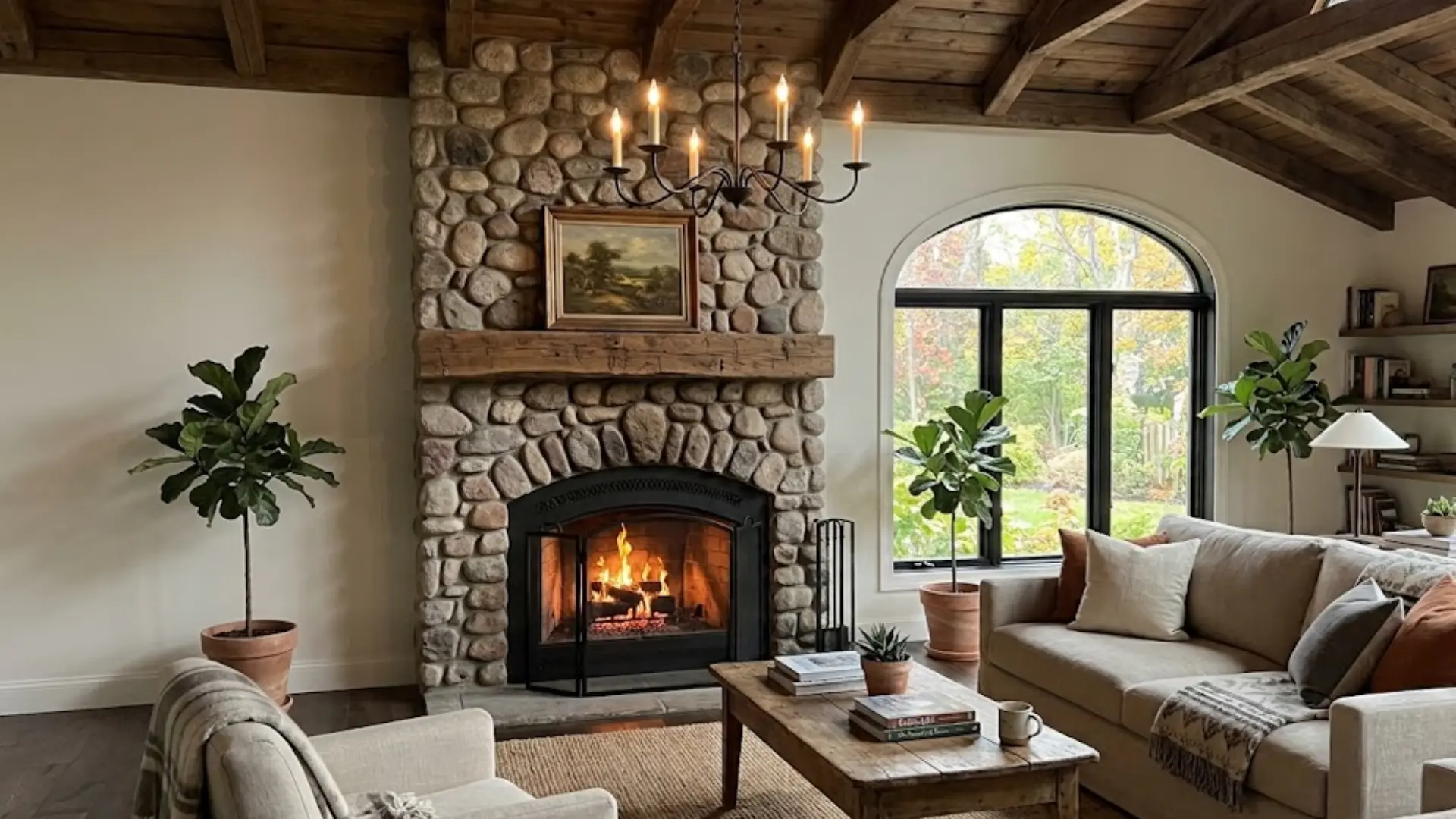
3. Rustic Fieldstone

Refers to a rough, uneven stone found scattered throughout a New England pasture, giving the land a natural, artisan feel that modern stone is not capable of duplicating.
Fieldstones differ in size and shape and are arranged into a masonry structure with mortar set in place to bind the construction pieces together.
The end product resembles a masonry structure that has been standing for hundreds of years.
4. Limestone

Limestoneis characterized by mellow shades of cream, beige, and pale gray, as opposed to the cool colors of granite and slate.
The stone has a natural, uniform texture that makes it appear less harsh.
It can be finished to a honed, less shiny look that appears more modern or a highly polished surface that makes it look more formal.
5. Slate Tile

Slate tile is the best choice for those who want the look of stone but don’t want the heft of real stone or granite,
It’s more resistant to high heat than most other stones, only scratching after years of use, unlike fieldstone or granite.
It’s available in deep charcoals, grays, greens, and purples in fine, tight grains that go well in modernist decor.
6. River Rock Mosaic

A river rock mosaic fireplace brings the feeling of a mountain stream into the home. I always find this texture calming, almost like running my hand over stones in a creek bed.
Smooth little stones in tan, gray, and brown sit close together, and their roundness creates a pebbly texture that a flat rock could never imitate. This style works best with a coastal, spa, or Zen-inspired home.
7. Granite Slab

A granite slab is the boldest option on the list that will make your firebox look stunning.
This single slab extends around the firebox, making it impossible to see grout lines.
This stone is highly durable and can resist high temperatures and scratches with periodic sealing.
As this big slab is fairly heavy, you will need a structural engineer and a factory that will cut the stone to your specifications.
8. Whitewashed Stone

Whitewashed stone is a great option if you want to enjoy the beauty of natural stone, but prefer something lighter in color.
This option uses a thin layer of white paint to mask the color and texture of the stone beneath, though some of the natural color and pattern may peek through.
It’s a good choice for coastal cottages or airy farmhouses
9. Corner Stone

A corner fireplace addresses the issue of limited length on which to center a large, standard opening in many home plans.
By angling the firebox into the corner, you open up the two adjacent walls to the placement of a window, a television, or a bookcase.
The stone is wrapped around the firebox opening, using miters so that the pattern of the veneer doesn’t repeat itself in an unsightly manner.
10. Ashlar Stone

Ashlar stone uses squared, cut blocks set in neat rows with tight, even joints between each piece. The look is clean and structured, which suits traditional and transitional homes that still want a stone accent.
I like recommending this style to clients who want texture without anything too rustic or rough. It works well around fireplaces, entryways, or exterior walls where a more formal finish is the goal.
11. Travertine Stone

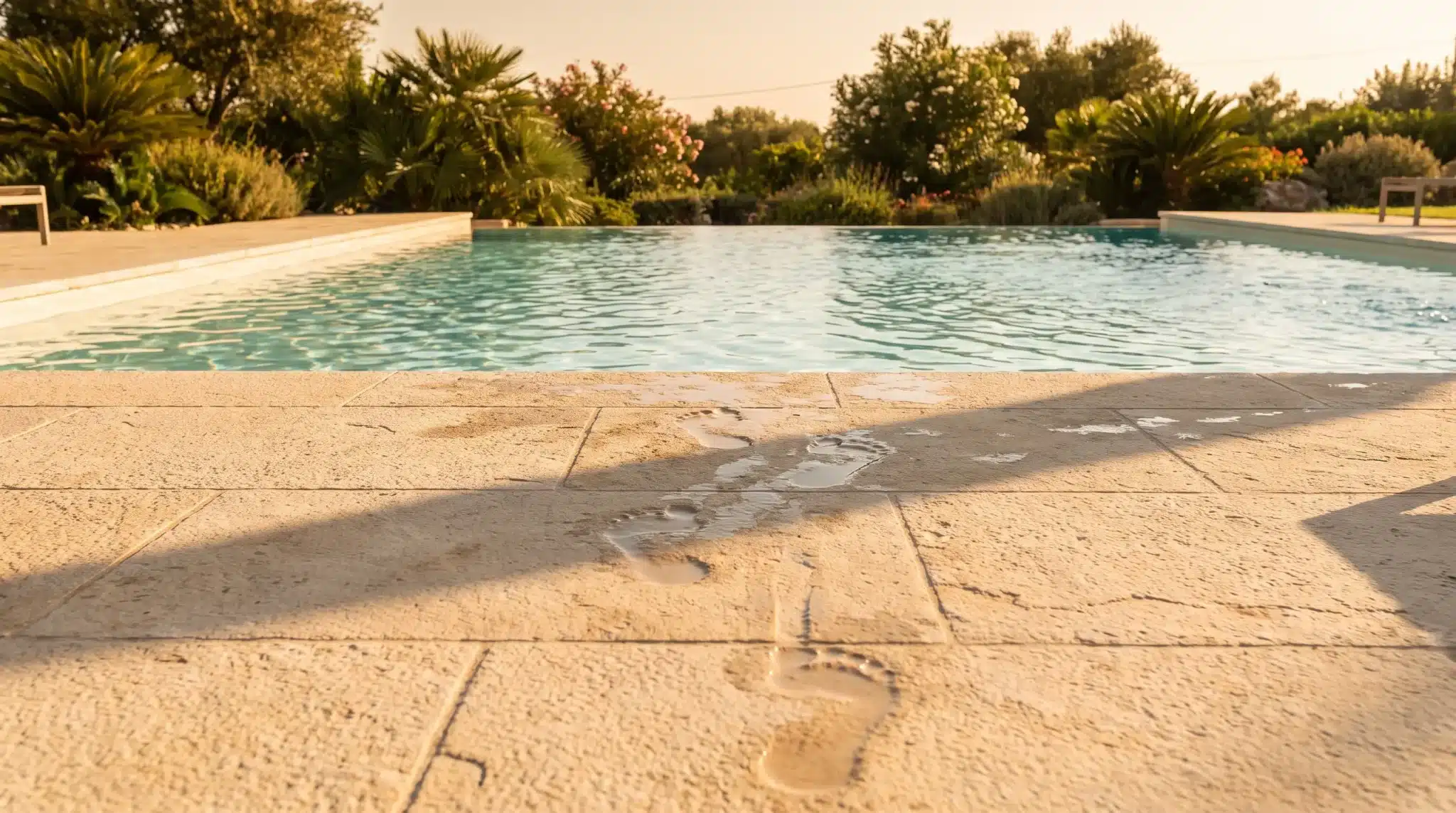
Travertine carries a soft, warm tone along with natural pitted holes and veining running through each block. It can be finished smooth or filled in, giving the surface a more polished, refined appearance overall.
This stone pairs naturally with Mediterranean, Tuscan, or old-world interiors that lean warm and textured. It brings an aged, earthy character that newer or more uniform stone types simply can’t match.
12. Herringbone Stone

Herringbone stone is a bold choice compared to the more restrained look of tiles cut flat or stacked one on top of the other.
With rectangular stones, the pattern is created by angling them so they alternate direction from row to row, creating a zigzag effect up the wall rather than straight up and down.
The effect is best using stones of uniform thickness and works well in rooms
13. Floating Stone Hearth

A floating stone hearth skips the traditional raised, boxy base and instead appears to hover above the floor, held up by a hidden steel bracket.
This works only with lightweight stone veneer, since a full-depth slab would be too heavy.
The floating look pairs naturally with a linear gas insert and a slate or stacked wall, since both lean minimalist and sleek.
14. Built-In Stone Niches

Built-in stone niches turn a plain fireplace wall into functional storage.
Recessed shelves are framed directly into the stone on either side of the firebox, giving you a spot for books or firewood without extra furniture.
Because the niches are part of the wall, plan them before installation, since cutting into finished stone later is far harder than leaving the gap early.
15. Two-Tone Stone Patchwork

A two-tone stone patchwork mixes two different stone colors or types across the same fireplace wall, instead of one uniform look.
Some designs alternate bands of light and dark stone, while others scatter tones randomly for a quilted effect.
This lets you use a budget stone as the base while adding a pricier stone as an accent, lowering material costs overall.
How to Choose a Stone Fireplace Look You Will Still Love
I always tell people to slow down and compare a few options before picking a stone. You’ll thank yourself later for taking the extra time now. Here are a few pointers to keep in mind:
- Start with the room style, and match the stone to the architecture rather than trends.
- Check the undertones, and compare gray, beige, and brown shades with your existing floors.
- Consider stone scale, since large stone can overwhelm a small wall.
- Choose the mantel early, since its thickness and finish shape the whole design.
- View samples in your own room, since stone can look different under warm and cool light.
A little extra time spent comparing options pays off once the work is done. You’ll end up with a fireplace that still feels right years down the road.
Frequently Asked Questions (FAQs)
What’s the most durable stone for a fireplace?
Granite tends to top the list. It resists high heat and scratches well, and it only needs periodic sealing to stay in good shape over the years.
Does a stone fireplace need a lot of upkeep?
Not usually. Most natural stone needs an occasional sealant application, especially in humid climates, but day-to-day care is just dusting or a damp wipe.
Can stone veneer go over an existing brick fireplace?
In many cases, yes, as long as the brick surface is structurally sound and properly prepped. A local mason or contractor can confirm whether your specific setup will hold the veneer.
Final Thoughts
I’ve shared plenty of stone fireplace ideas, but the final pick is up to you. A rustic fieldstone wall feels warm and lived-in, while a granite slab feels sleek and bold.
Stone and wood together give you texture and comfort in one clean package. Outdoor stone fireplaces stretch your living space onto the patio for cooler nights.
Small details like grout lines, stone scale, and mantel choice change the whole mood of a room. You don’t need to copy a magazine photo to get a great result.
Pick what fits your home and your budget, then build from there. A good stone choice makes your fireplace stand out for years. Tell me your favorite style in the comments below.