Convert your front yard into a welcoming retreat without spending every weekend on maintenance.
Smart landscaping choices mean you get to enjoy a beautiful, inviting entrance year-round while actually having time to relax on your porch with that book you’ve been meaning to read.
Research shows that well-designed curb appeal can boost your home’s value while cutting down on upkeep time.
We’re sharing simple ideas that work with your schedule, from foolproof plant combinations to weekend-worthy projects that make a lasting impact.
Think lush greenery, charming pathways, and seasonal color that practically takes care of itself.
How to Choose the Right Front-of-House Flower Bed?
Start by observing your sunlight patterns throughout the day. Morning sun with afternoon shade? That opens up different possibilities than full blazing exposure.
Check your soil by grabbing a handful after rain. If it clumps like clay or runs through your fingers like sand, you’ll want to amend it before planting.
Your home’s architecture should guide your design choices. Cottage-style homes love billowing perennials and mixed textures, while modern builds shine with clean-lined grasses and sculptural plants.
Colonial facades pair beautifully with symmetrical beds and classic boxwoods.
Before you buy anything, note where your hose reaches easily and research mature plant sizes. Nobody wants to prune constantly or watch plants swallow their walkway.
Design Rules That Make Any Flower Bed Look Polished
Great flower beds aren’t about cramming in every pretty plant you see at the nursery. They follow a few simple principles that create cohesion and make maintenance so much easier.
These foundational rules will guide every planting decision you make.
- Layer by height with taller plants in back, mid-sized perennials in the middle, and low growers spilling over the edge to create natural depth and ensure everything gets noticed.
- Repeat key plants in groups of three or five to create rhythm along your bed instead of the chaotic “one of everything” approach that reads as cluttered.
- Define edges with metal or stone to keep grass from creeping in and mulch from migrating onto walkways, then add a generous three-inch mulch layer to suppress weeds.
- Anchor with hardscape elements like decorative rocks, a birdbath, or architectural containers that provide year-round structure even when plants die back.
- Choose your maintenance level by deciding between evergreen shrubs with seasonal pops of color or rotating annuals that demand deadheading and replanting but deliver maximum impact.
These aren’t strict rules you’ll break if you plant something “wrong.” Think of them as helpful guardrails that keep your bed looking intentional and polished with minimal fussing.
The List: 35 Simple Flower Bed Ideas
From cottage charm to modern minimalism, these ideas work with different light conditions, maintenance levels, and architectural styles.
Pick what speaks to your home’s personality and your realistic gardening time.
1. Cottage-Style Perennial Border
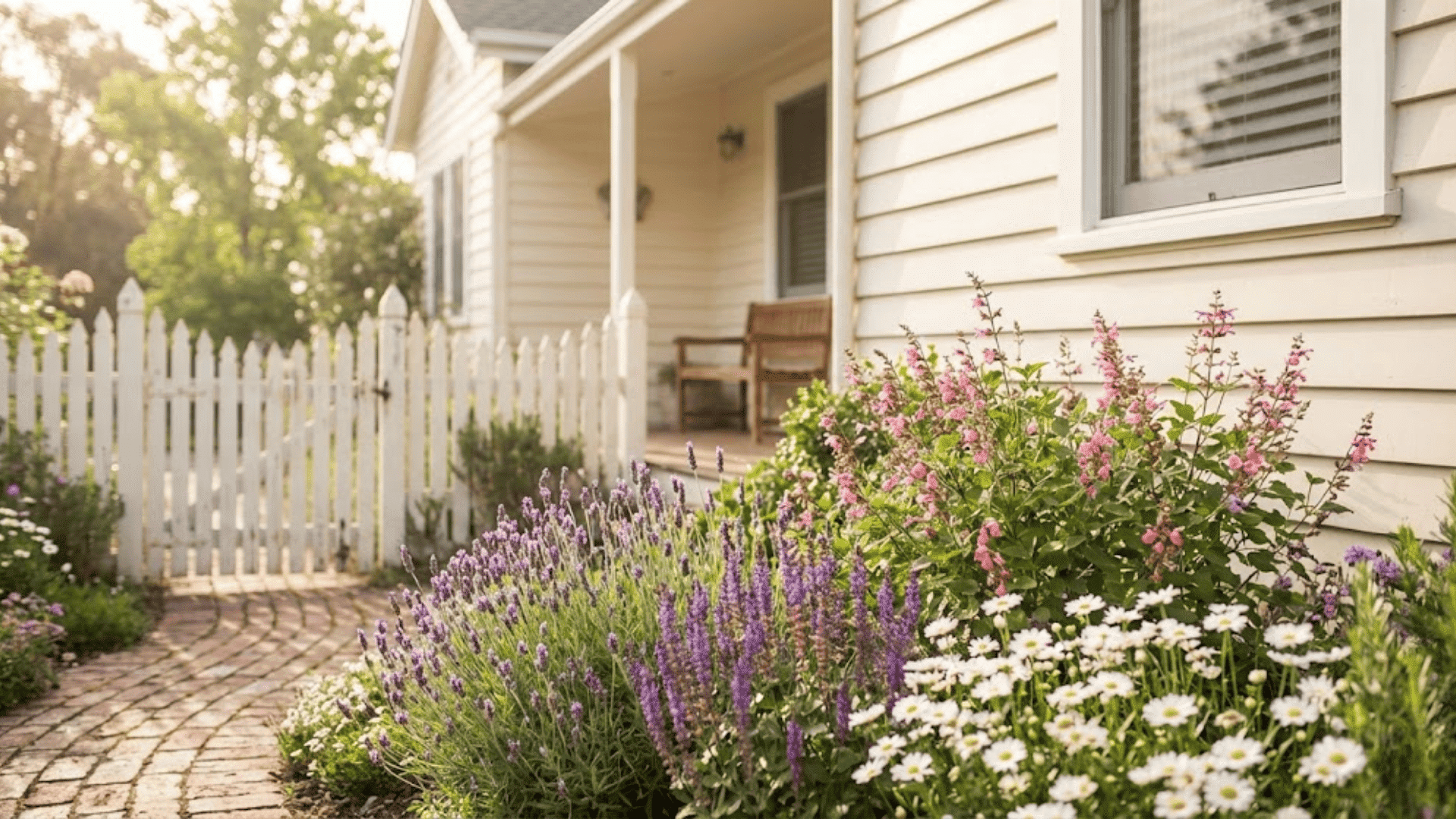
Plant Recommendations: Lavender, Salvia, English daisies
USDA Hardiness Zone: 5–9
Picture billowing blooms that soften hard edges and fill your entry with fragrance. This romantic style layers purple and pink hues with silvery foliage for that coherent overgrown look.
Plant in full sun with well-draining soil, and you’ll enjoy repeat blooms with just occasional deadheading. These perennials return stronger each year, making this a low-maintenance choice that only gets prettier with time.
2. Low-Maintenance Native Pollinator Bed
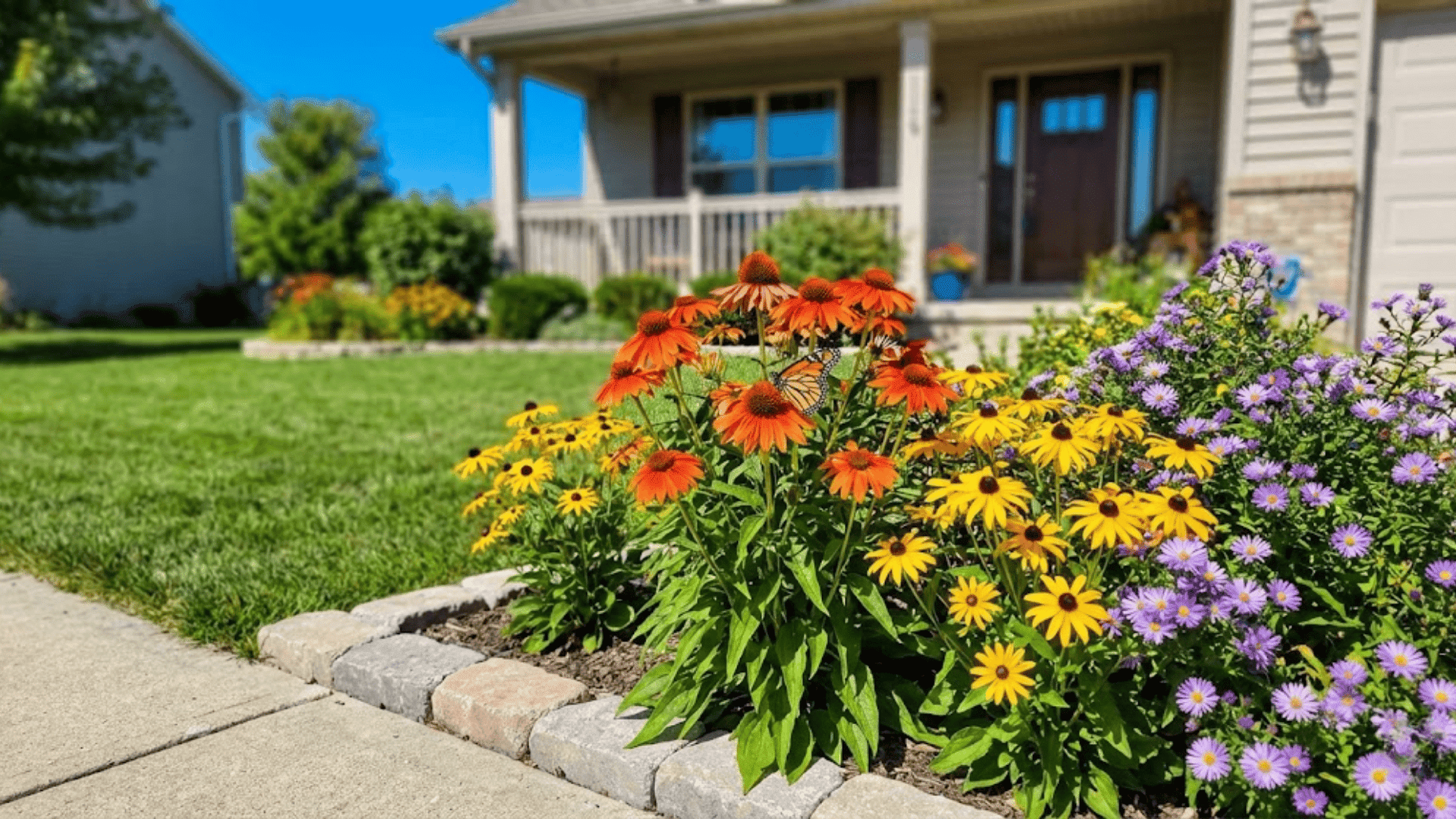
Plant Recommendations: Coneflower, Black-eyed Susan, Aster
USDA Hardiness Zone: 3–9
Native plants thrive without fussing because they’re already adapted to your climate and soil. These sturdy perennials attract butterflies and bees while requiring minimal watering once established.
Full sun brings out the most blooms, and these tough plants handle summer heat beautifully. Deadhead spent flowers if you want to keep things tidy, or leave seed heads for winter interest and bird food.
3. Monochrome White Bed for a Clean Look
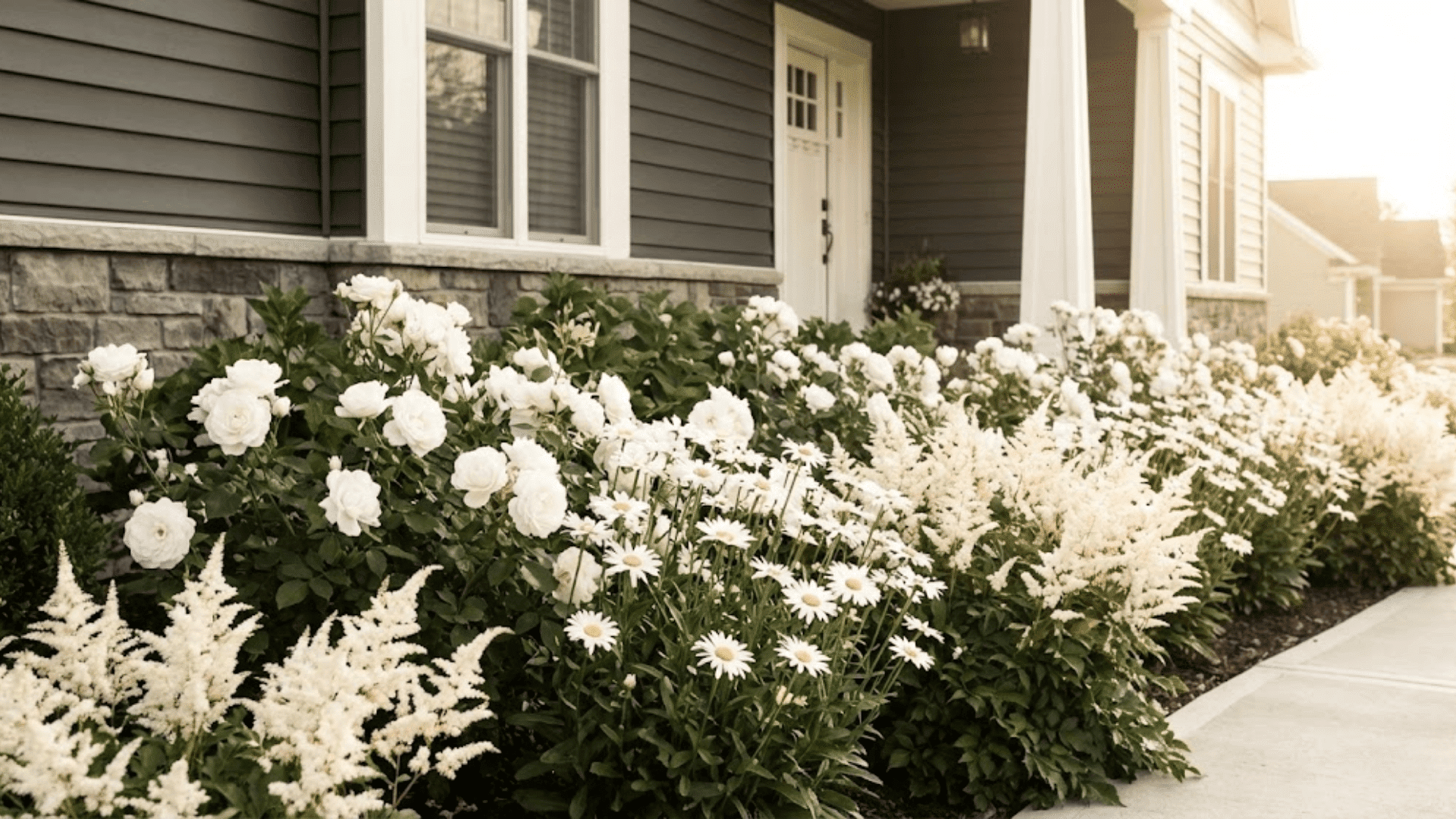
Plant Recommendations: White roses, Shasta daisies, Astilbe
USDA Hardiness Zone: 4–9
An all-white palette creates sophisticated curb appeal that glows at dusk and complements any home color. Mix textures from fluffy astilbe plumes to crisp daisy petals for visual interest without color chaos.
This scheme works in partial shade to full sun, depending on your plant selection. Regular deadheading keeps roses performing, while daisies and astilbe are wonderfully low-maintenance once established.
4. Rock & Succulent Edge Bed
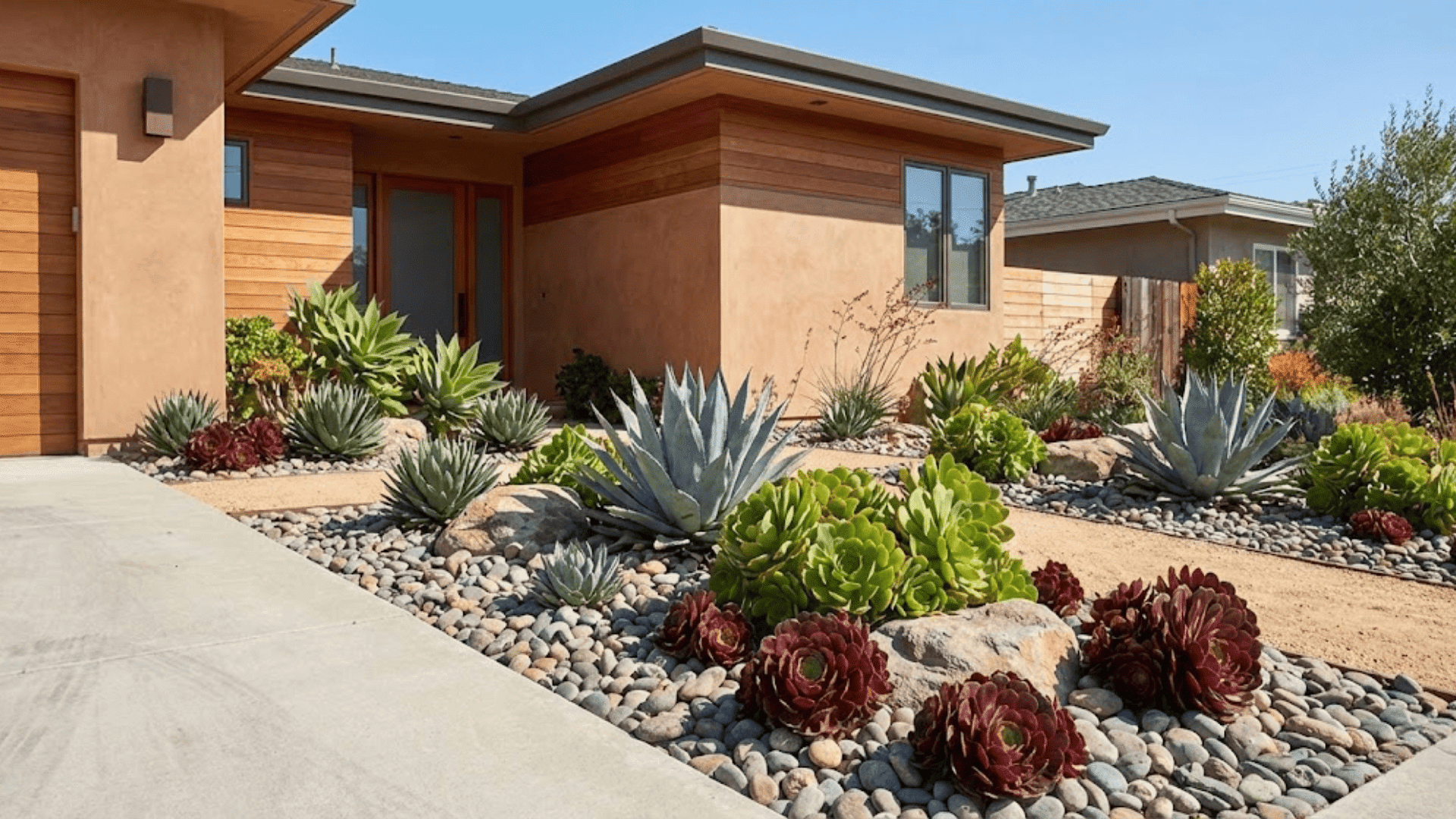
Plant Recommendations: Sedum, Sempervivum, Agave
USDA Hardiness Zone: 4–11 (varies by variety)
Succulents nestled among decorative rocks create modern, water-wise curb appeal perfect for dry climates. These architectural plants need excellent drainage and full sun, but practically zero maintenance beyond that.
Gravel mulch completes the desert-chic appeal while preventing rot. This bed thrives on neglect, making it ideal for busy homeowners or vacation properties that sit empty for weeks.
5. Hydrangea Foundation Bed
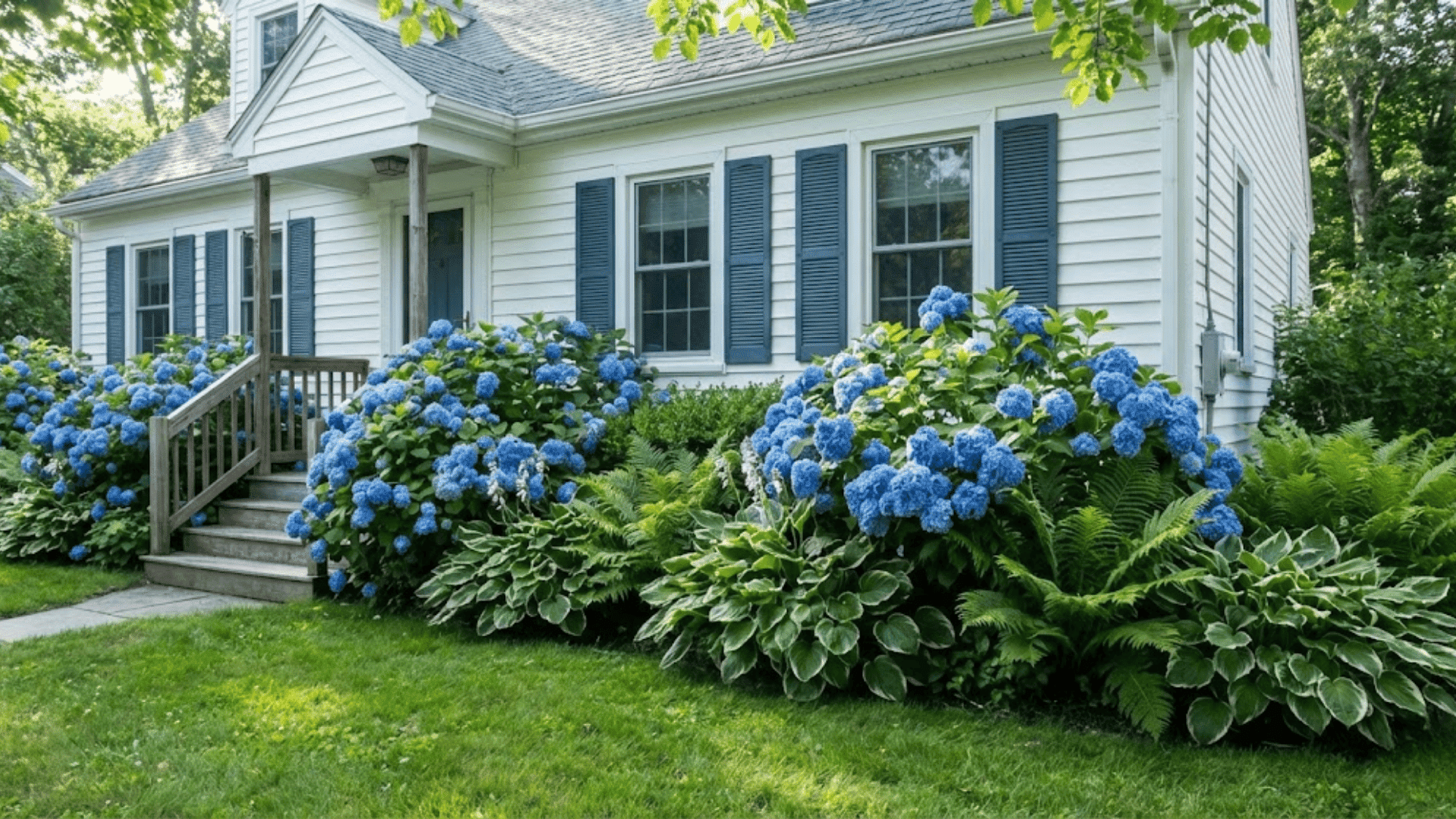
Plant Recommendations: Hydrangeas, Hostas, Ferns
USDA Hardiness Zone: 3–9
Big, showy hydrangea blooms create maximum impact with minimal effort when paired with shade-loving companions. This combination thrives in partial shade with consistent moisture, perfect for north-facing foundations.
The layered textures from broad hosta leaves and delicate fern fronds create depth even when hydrangeas aren’t blooming. Mulch well to retain moisture, and these plants return reliably year after year with just spring cleanup.
6. Year-Round Evergreen + Seasonal Bloom Mix
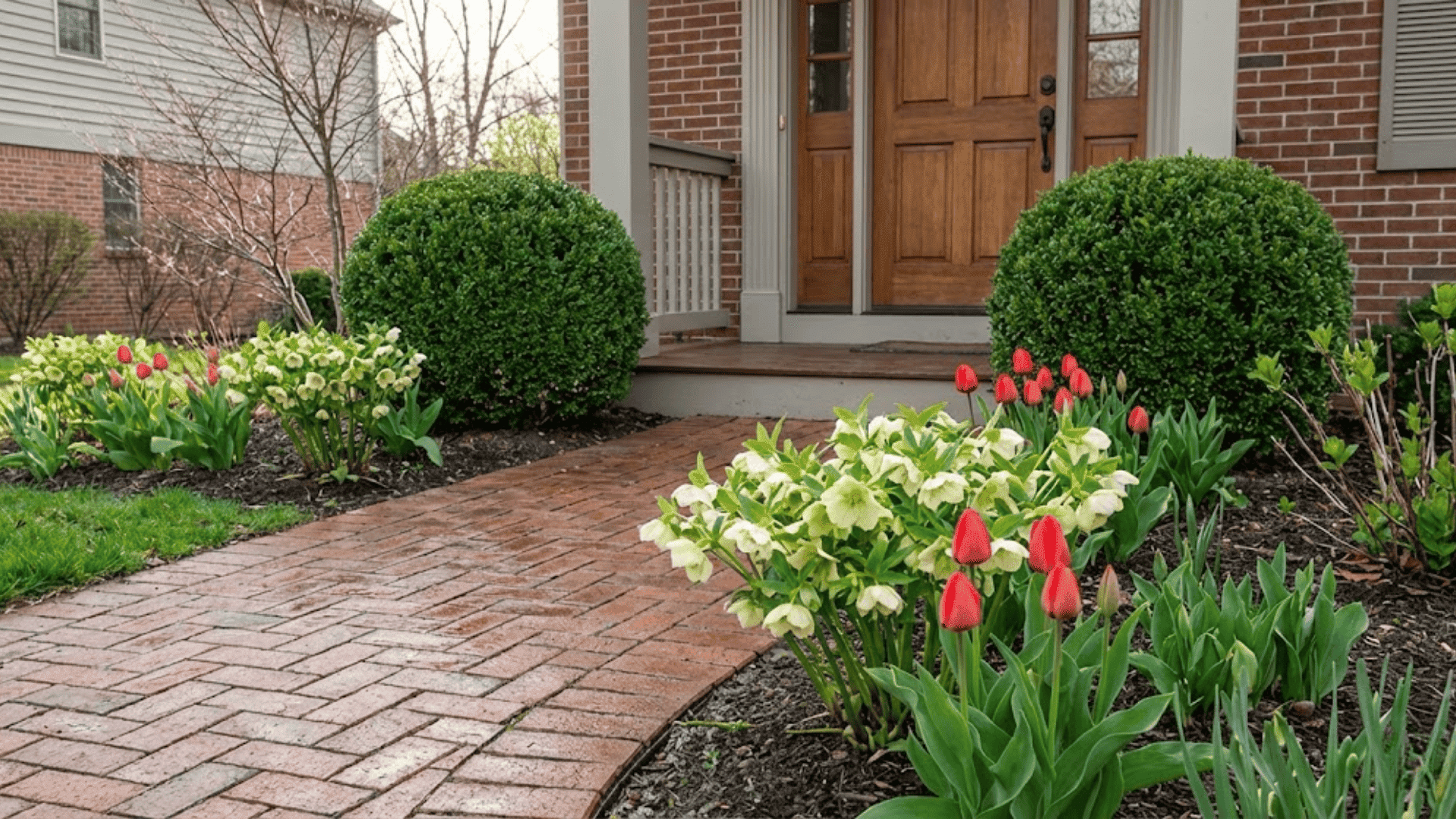
Plant Recommendations: Boxwood, Hellebores, Tulips
USDA Hardiness Zone: 5–9
Evergreen structure provides bones that look good even in winter, while seasonal bloomers add pops of color throughout the year. Hellebores bloom surprisingly early, sometimes pushing through snow, followed by spring tulips.
This smart layering means your bed never looks bare or neglected. Plant tulip bulbs in fall for spring magic, and enjoy boxwood’s tidy presence with just annual shaping.
7. Window-Box Layered Plants
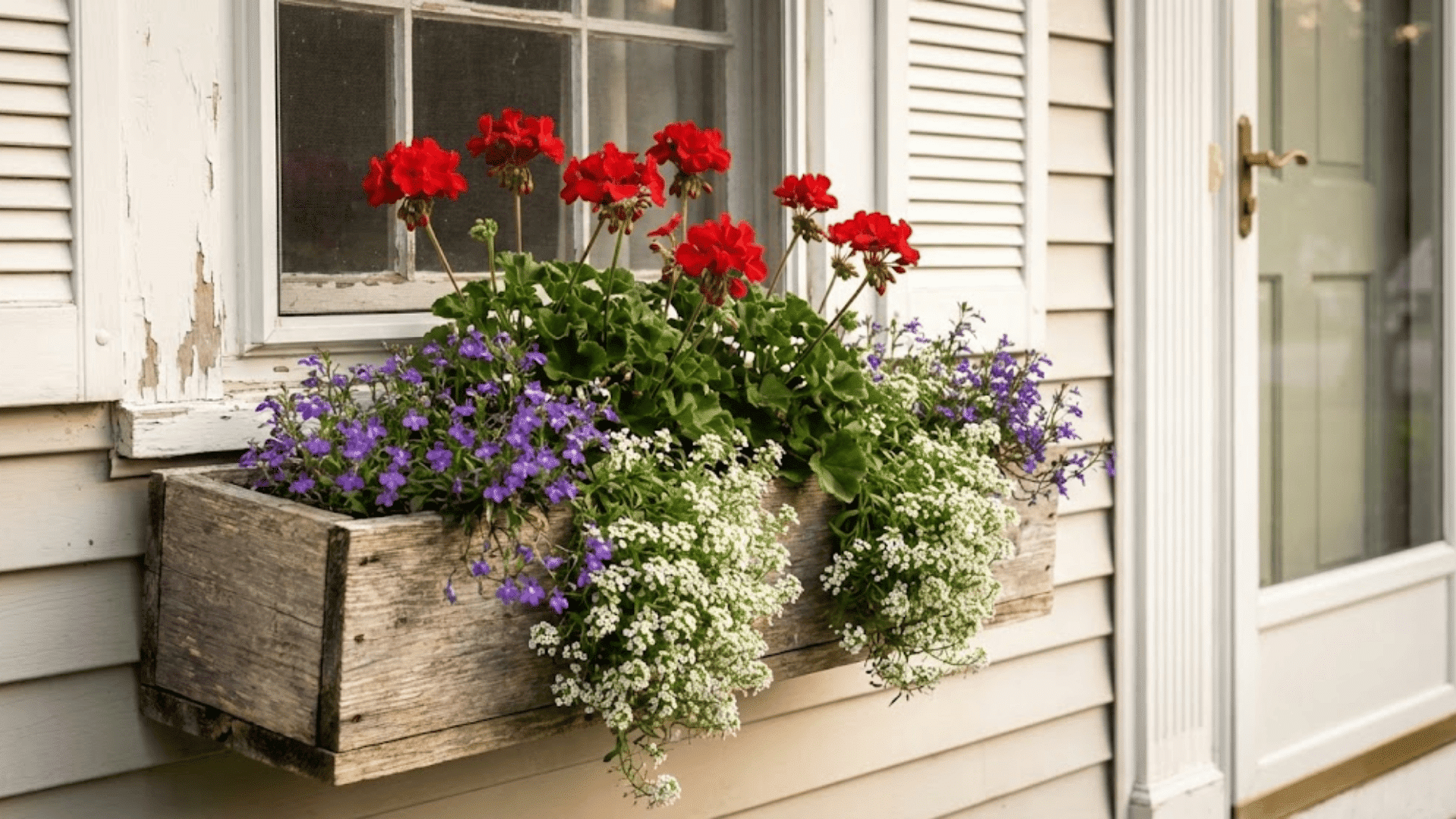
Plant Recommendations: Compact geraniums, Trailing lobelia, Sweet alyssum
USDA Hardiness Zone: Annual plantings (all zones)
Window boxes deliver concentrated charm right at eye level without requiring yard space. Layer upright geraniums in back with cascading lobelia spilling over the edge for that Pinterest-perfect look.
These sun-loving annuals bloom prolifically with regular deadheading and weekly feeding. Change them out seasonally for fresh color, or stick with classic red geraniums for timeless cottage appeal.
8. Raised Wooden Bed at Entry
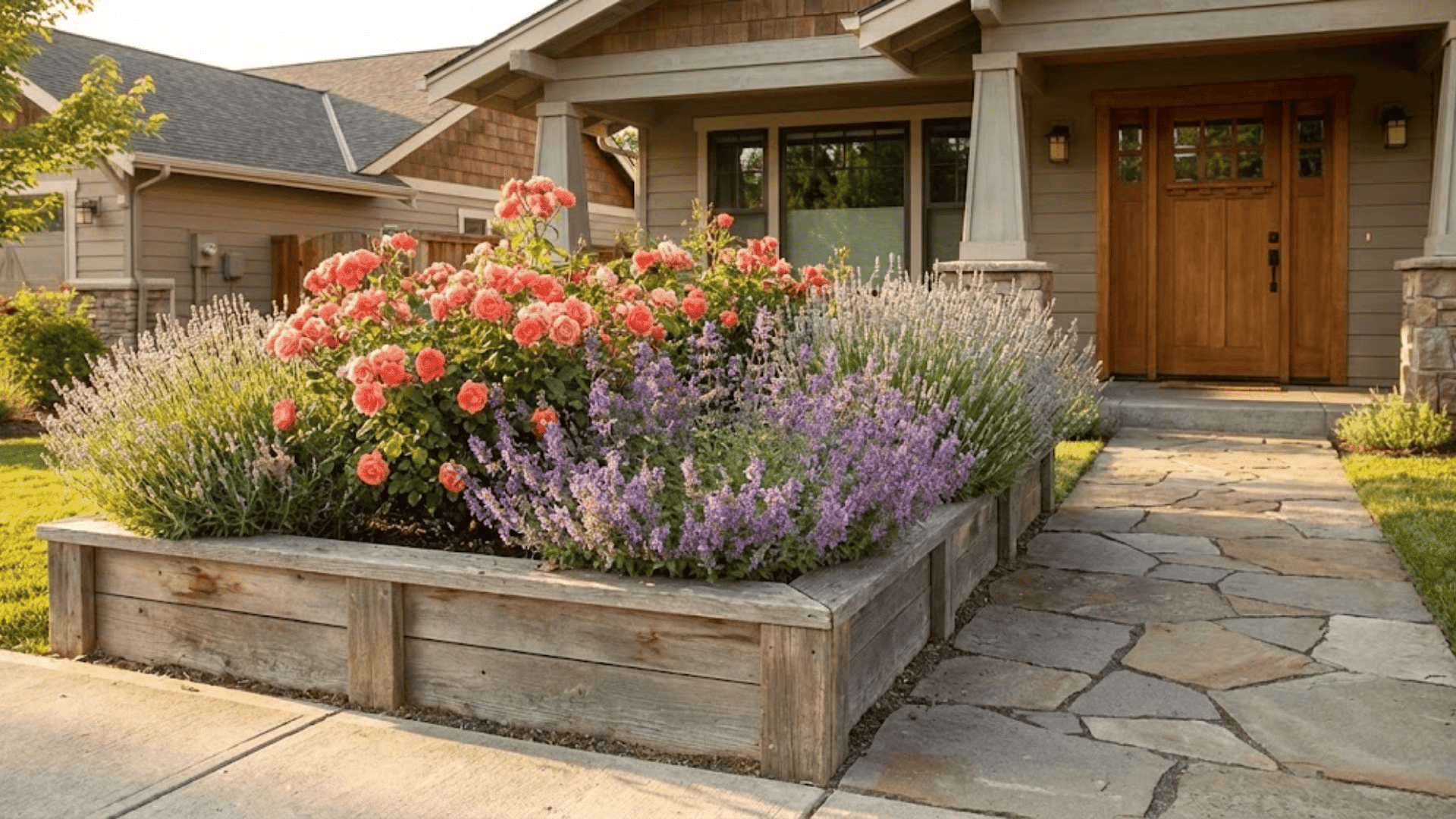
Plant Recommendations: Roses, Catmint, Lavender
USDA Hardiness Zone: 5–9
A raised bed creates instant architecture while improving drainage for plants that hate wet feet. This elevated design makes maintenance easier on your back and defines your entry with intentional structure.
Full sun and good air circulation keep roses healthy, while catmint and lavender fill in beautifully between blooms. The woody frame ages gracefully and can be stained to match your home’s trim.
9. Repeating Pot Clusters Leading to Front Door
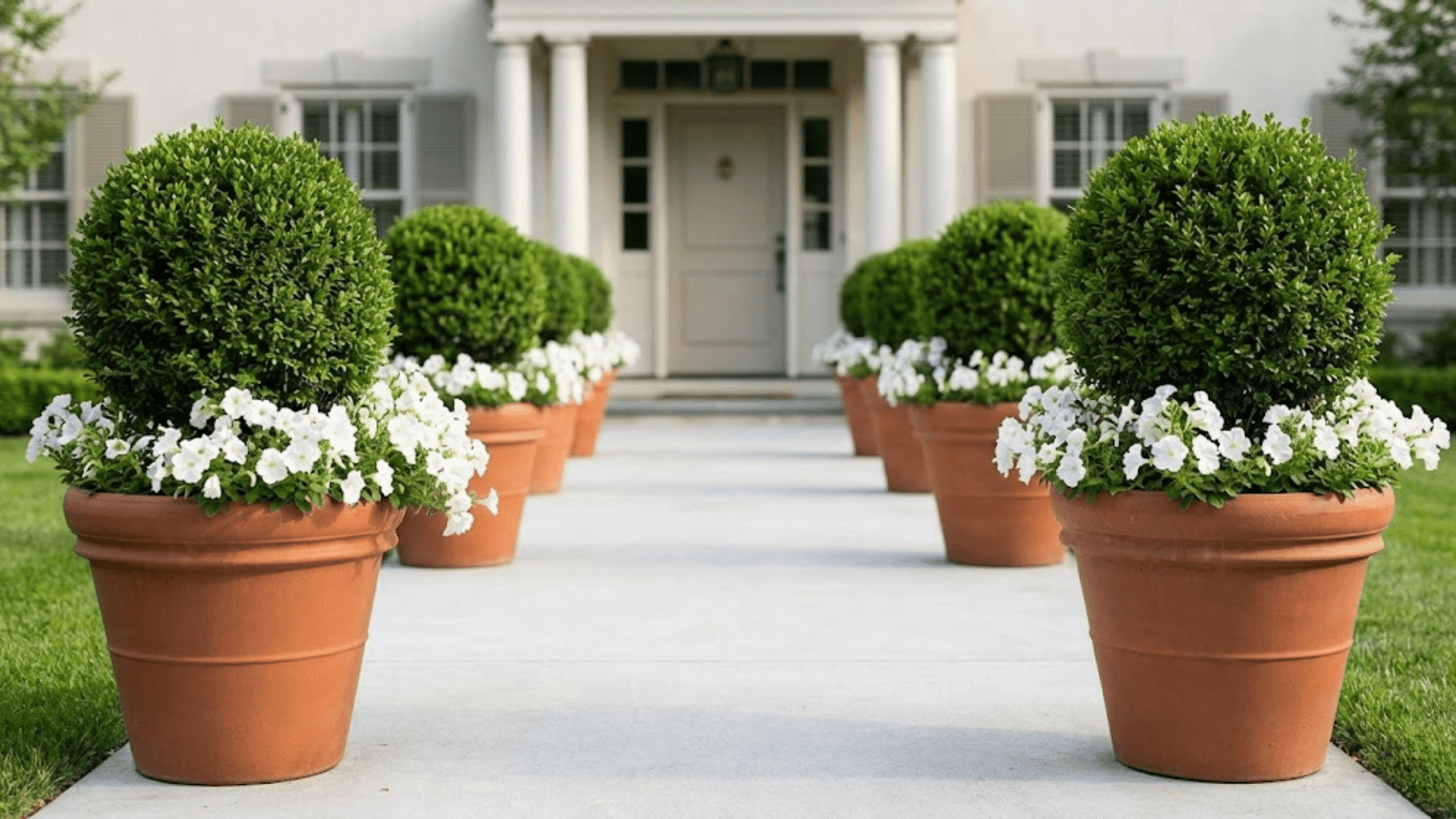
Plant Recommendations: Boxwood topiaries, Seasonal annuals, Ornamental grasses
USDA Hardiness Zone: Varies by selection
Matching containers create a rhythm that guides visitors toward your entrance with polished symmetry. This flexible approach lets you swap out seasonal color without replanting entire beds.
Group pots in odd numbers for visual interest, mixing heights and textures. Water container plantings more frequently than in-ground beds, but enjoy the freedom to rearrange your design whenever inspiration strikes.
10. Narrow Strip Along Walkway with Low Perennials
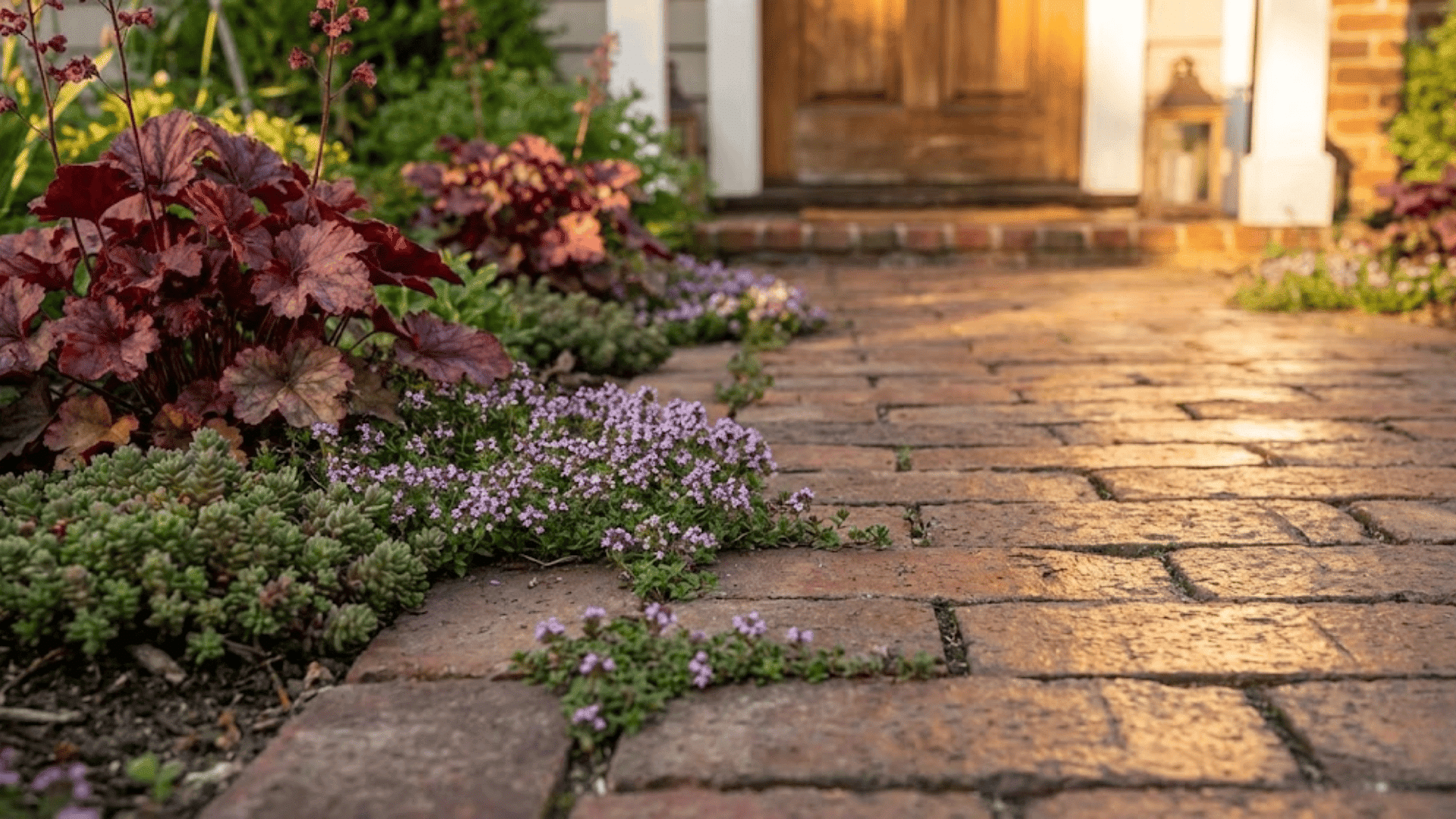
Plant Recommendations: Coral bells, Creeping thyme, Sedum
USDA Hardiness Zone: 4–9
A slender planting strip softens hard walkway edges without encroaching on the path. These low growers stay compact and won’t trip visitors or block sightlines.
Creeping thyme releases fragrance when brushed, adding sensory appeal to every approach. This zone typically gets reflected heat from pavement, so choose tough plants that handle those conditions gracefully.
11. Pollinator-Friendly Wildflower Patch
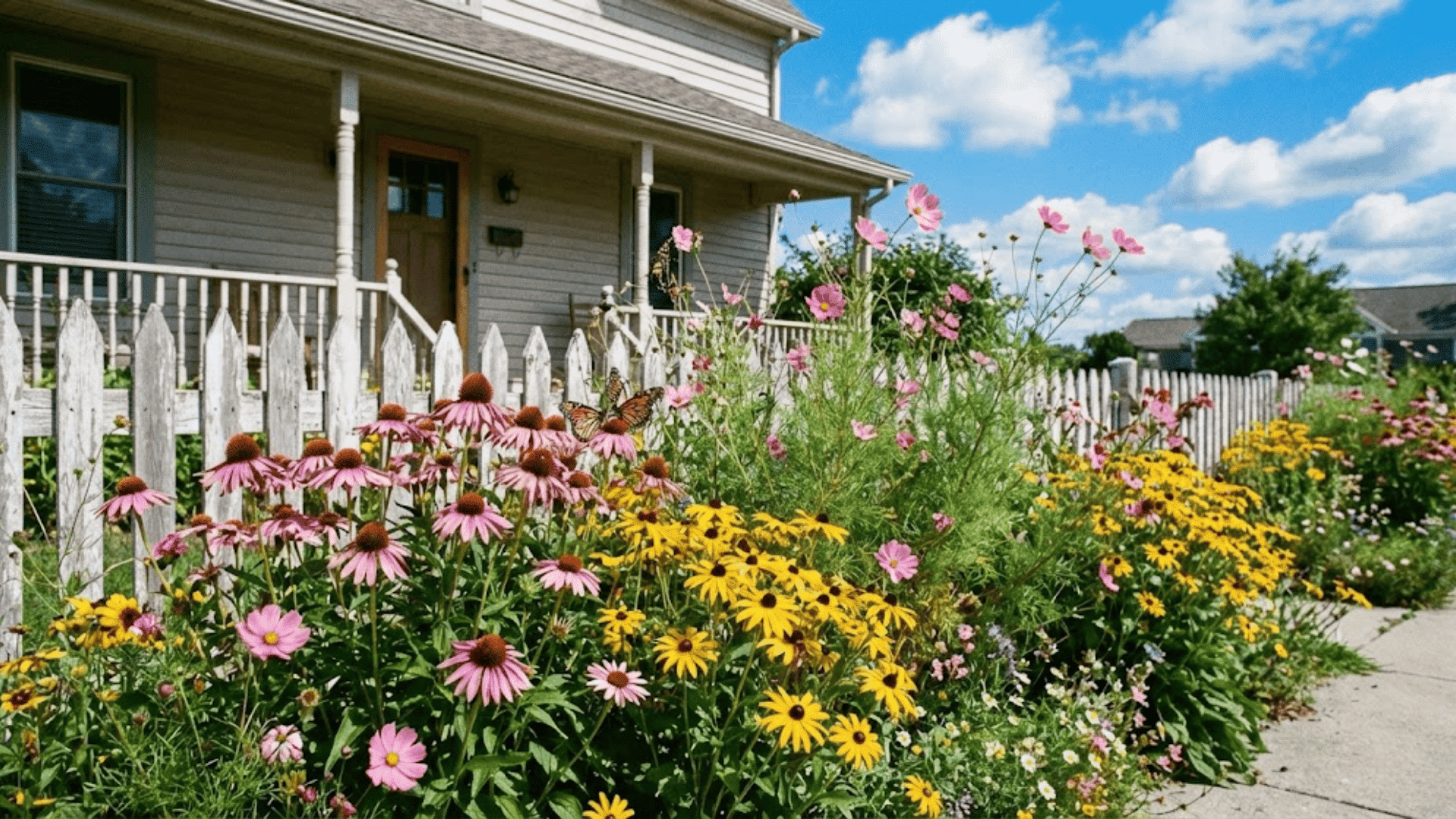
Plant Recommendations: Native wildflower mix, Zinnia, Bee balm
USDA Hardiness Zone: Varies by regional mix
A dedicated wildflower area supports local ecosystems while delivering effortless cottage charm. Scatter seeds in spring for summer blooms that self-sow and naturalize over time.
This intentionally casual look works best in informal settings where a meadow vibe feels appropriate. Full sun and occasional watering during establishment are all these tough bloomers need to thrive.
12. Mini Cottage Potager (Herbs + Edible Flowers)
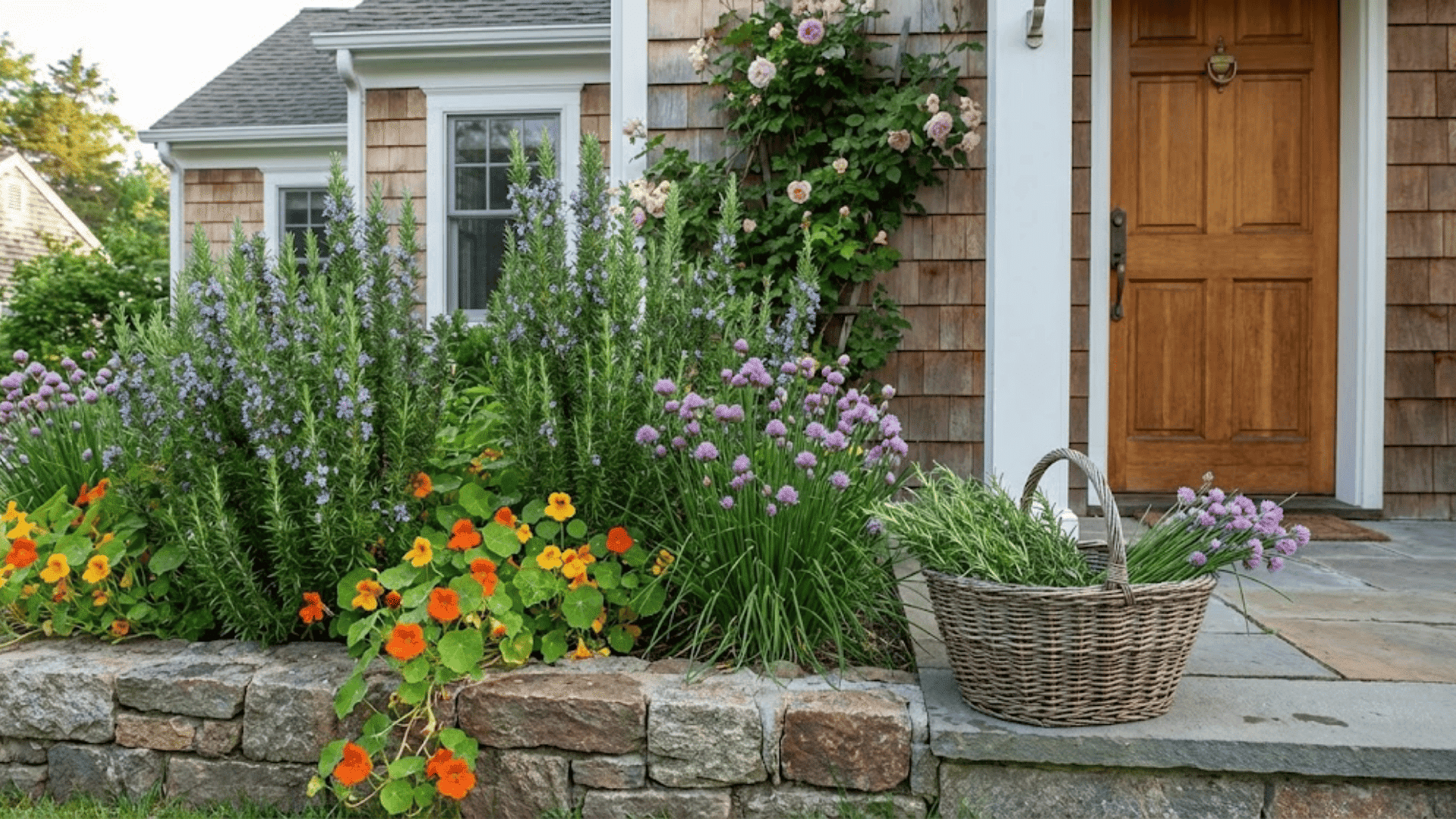
Plant Recommendations: Rosemary, Nasturtium, Chives
USDA Hardiness Zone: Annual herbs (all zones)
Blend beauty and function by tucking edible plants into your front bed for convenient kitchen harvesting. Nasturtiums trail colorfully while repelling pests, and flowering chives attract beneficials.
This approach works beautifully in full sun near your front door for easy snipping. Regular harvesting actually encourages bushier growth, making maintenance and meal prep one satisfying task.
13. Noir / Dark-Leaf Contrast Bed
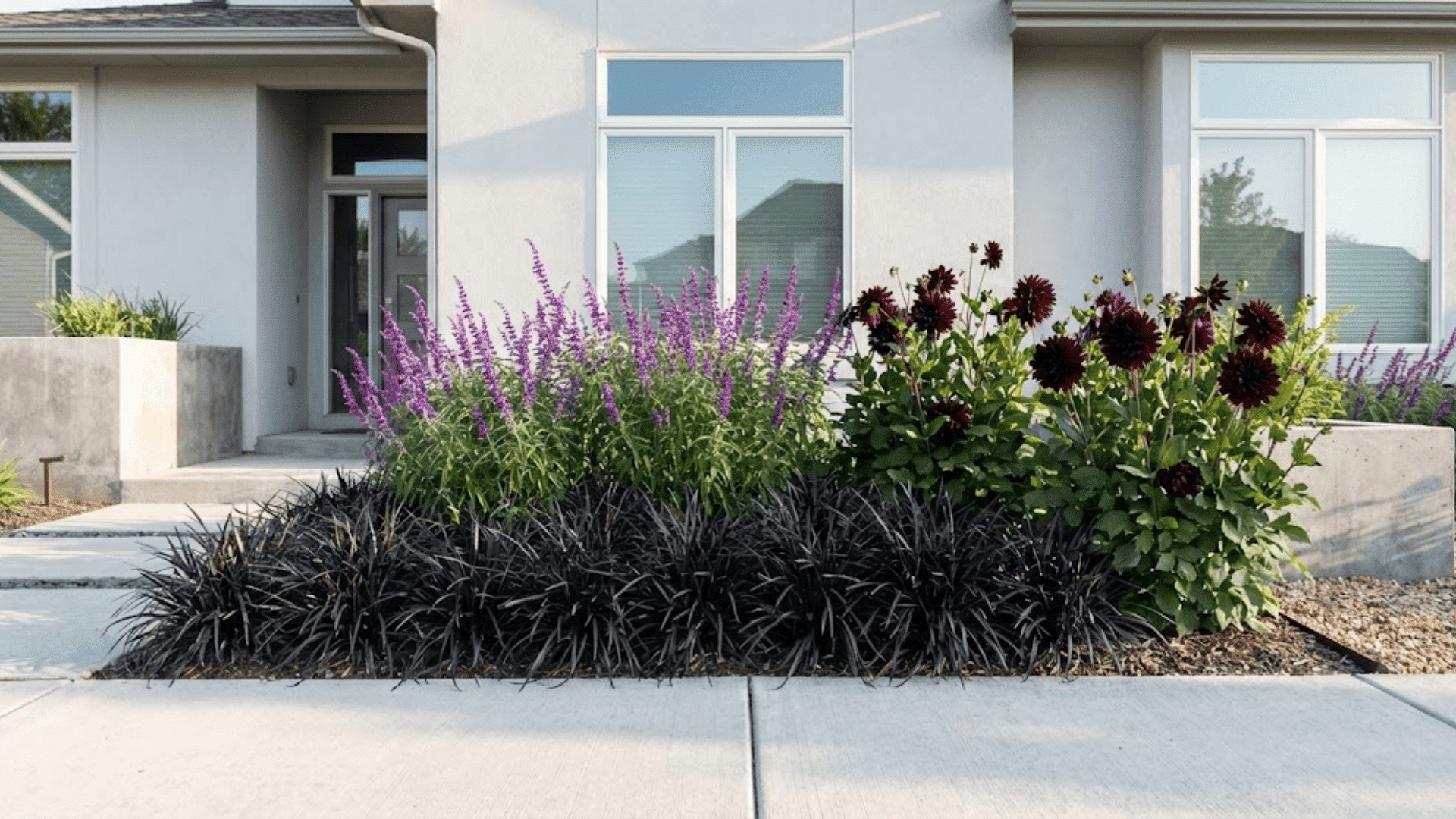
Plant Recommendations: Black mondo grass, Purple salvia, Dark-leaf dahlias
USDA Hardiness Zone: 6–10
Deep purple and near-black foliage creates dramatic modern curb appeal that makes neighboring homes look ordinary. This moody palette provides stunning contrast against light-colored siding or painted brick.
Full to partial sun brings out the darkest leaf colors, and these statement plants need only basic care. The unexpected color story feels sophisticated and intentional without being overly formal.
14. Classic Rose Bed with Seasonal Companions
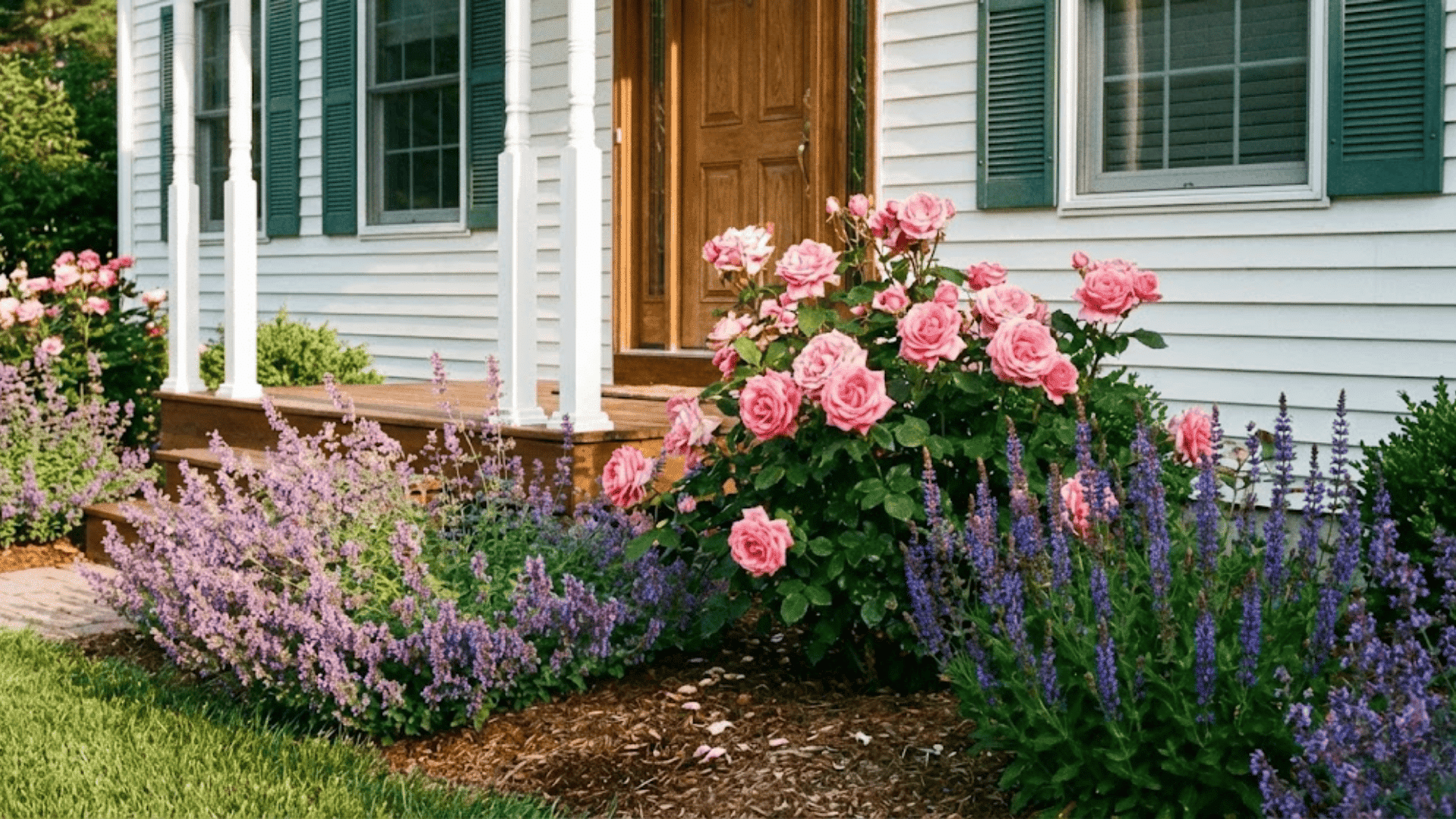
Plant Recommendations: Hybrid tea roses, Catmint, Salvia
USDA Hardiness Zone: 5–9
Roses steal the show while companion plants fill gaps and extend the season of interest. Catmint’s purple haze softens rose stems and reportedly deters aphids naturally.
Plant in full sun with excellent air circulation to prevent common rose diseases. Deadhead roses regularly for continuous blooms, while companions maintain their presence with minimal fussing.
15. Native Prairie Mix for Low Water Needs
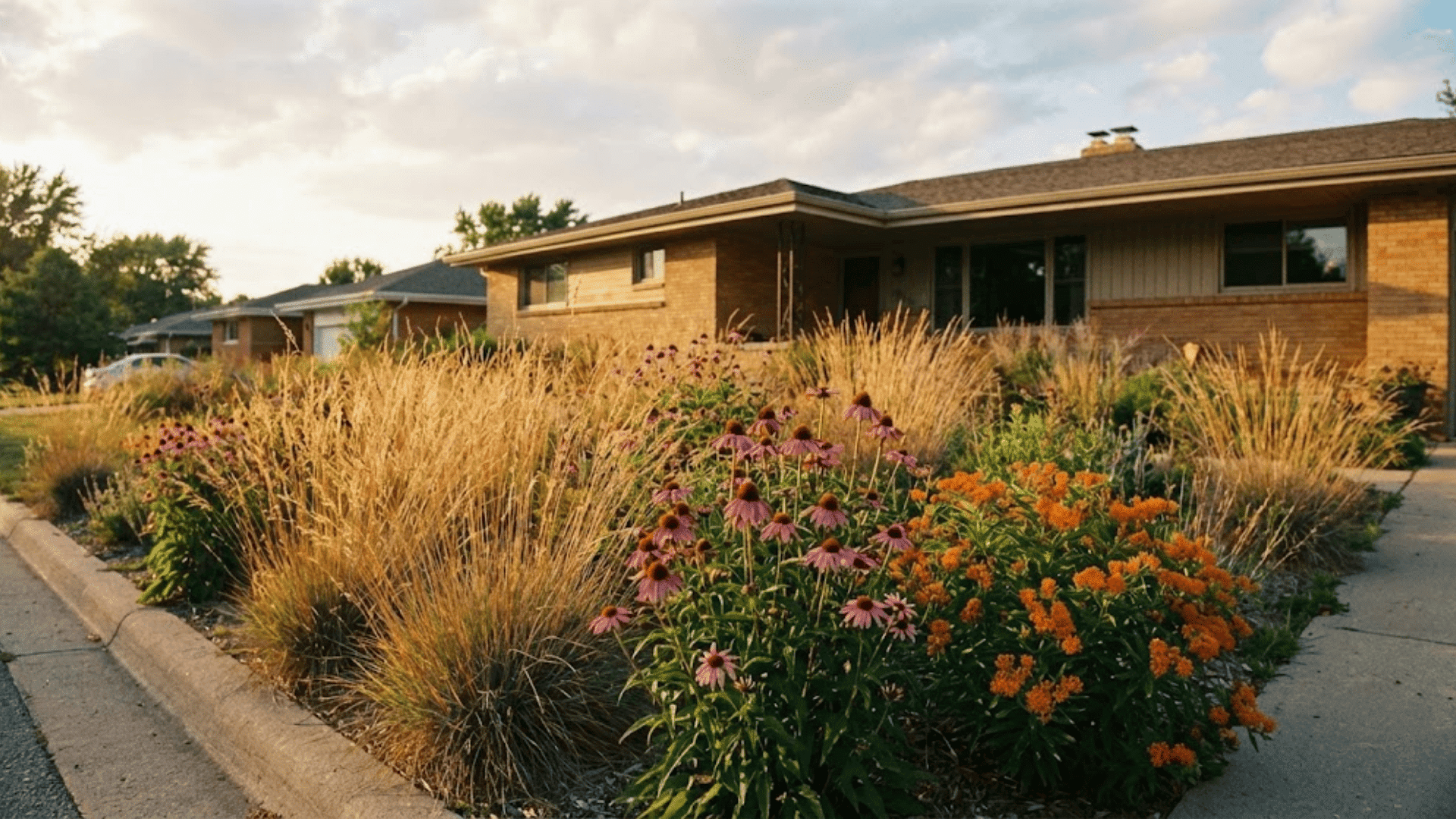
Plant Recommendations: Little bluestem, Purple coneflower, Butterfly weed
USDA Hardiness Zone: 3–9
Prairie plantings capture the beauty of open grasslands while requiring almost no supplemental watering after establishment. These deep-rooted natives handle drought and temperature swings beautifully.
The naturalistic look works wonderfully for ranch-style homes or properties with rural surroundings. Cut back once in late winter, and these resilient plants return stronger each season.
16. Formal Symmetrical Beds with Boxwood Anchors
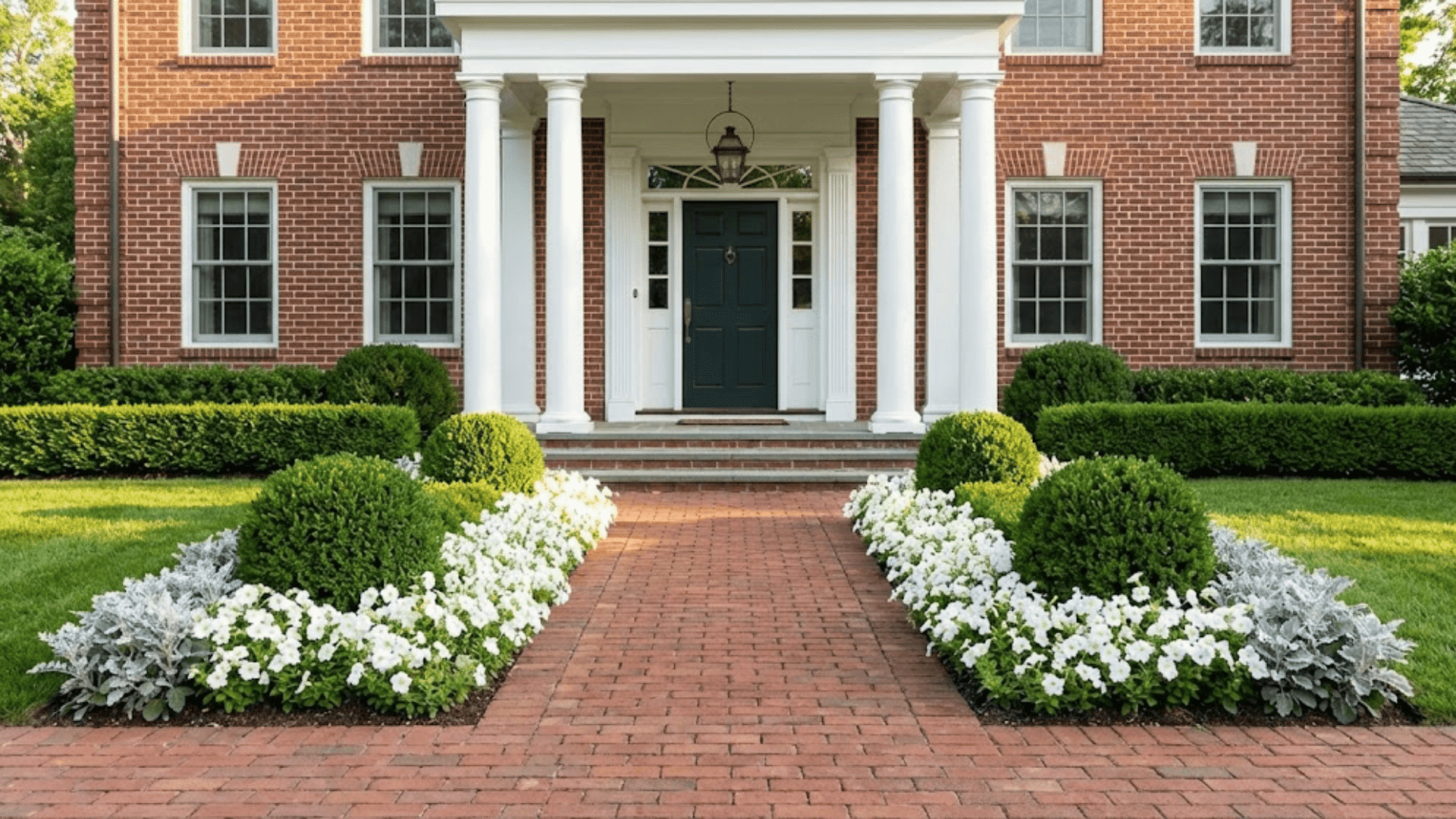
Plant Recommendations: Boxwood, White petunias, Dusty miller
USDA Hardiness Zone: 6–9
Mirror-image plantings flanking your entrance create lasting appeal suited to colonial and traditional architecture. Evergreen boxwood provides year-round structure while seasonal annuals add refined color.
This look requires more maintenance with regular shaping and deadheading for perfection. Full to partial sun works well, and the balanced composition never goes out of style.
17. Japanese-Inspired Planting
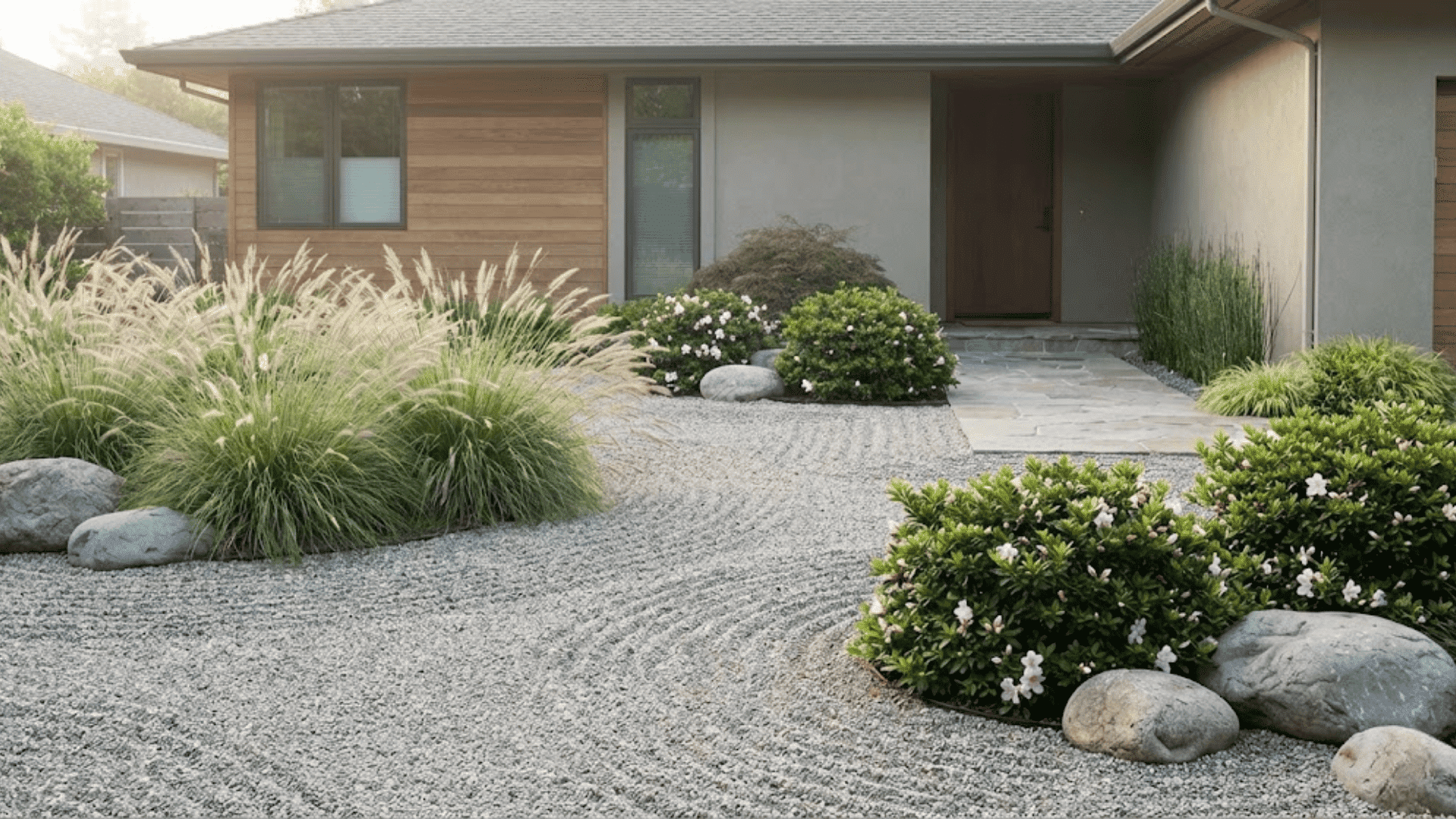
Plant Recommendations: Ornamental grasses, Azaleas, Stone accents
USDA Hardiness Zone: 5–9
Welcome minimalist design with carefully placed plants that create tranquil, contemplative curb appeal. Flowing grasses contrast with the azalea’s compact form, while rocks provide grounding structure.
Partial shade suits azaleas perfectly, and these low-maintenance choices need only annual cleanup. This aesthetic prizes negative space and intentional placement over abundant blooms.
18. Cottage Arch or Trellis with Climbing Roses or Clematis
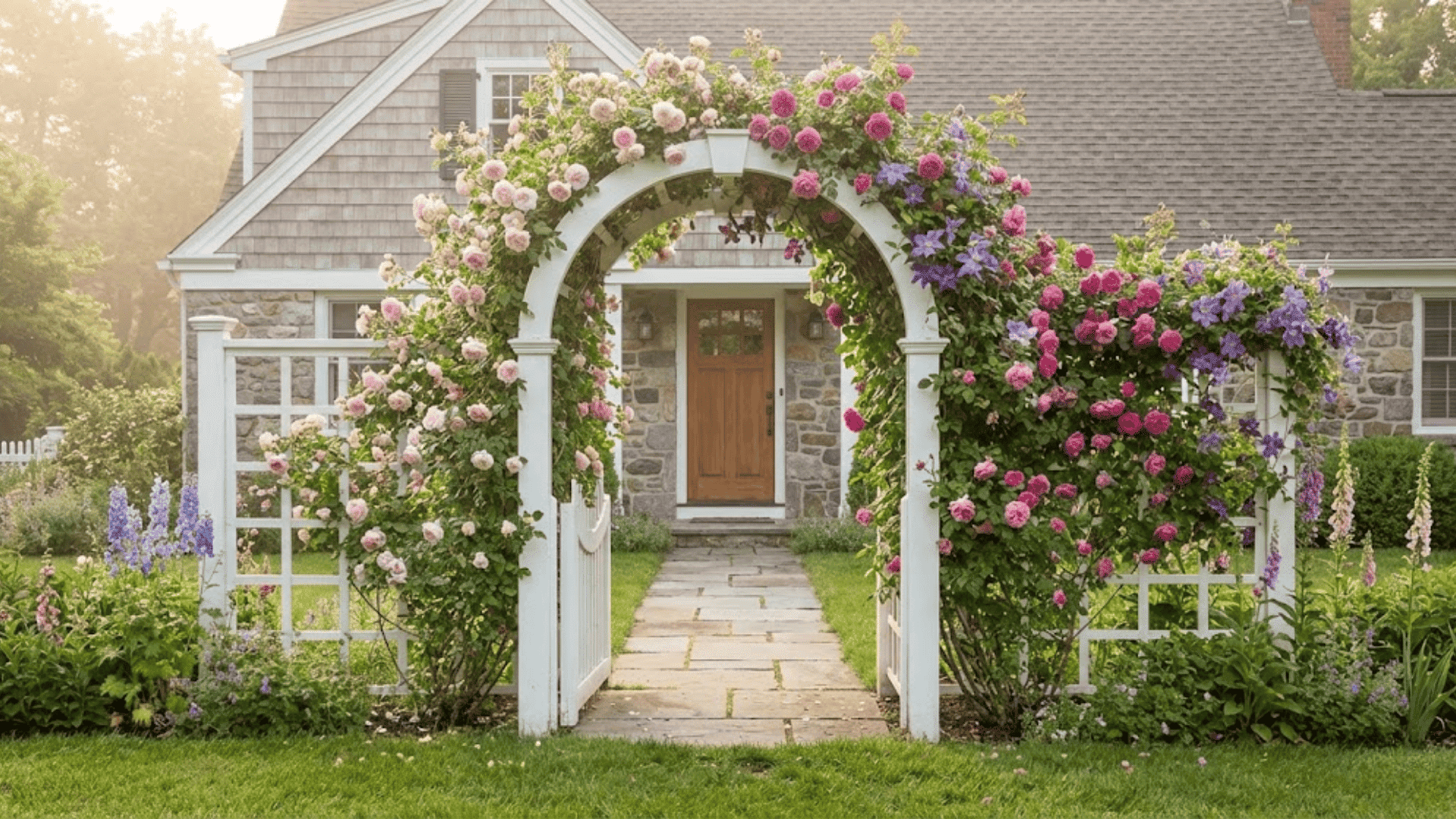
Plant Recommendations: Climbing roses, Clematis, Honeysuckle
USDA Hardiness Zone: 4–9
Vertical elements add romance and architectural interest that draws the eye upward. Climbing roses deliver heavy fragrance and repeat blooms when paired with clematis for extended color.
Full sun encourages the most prolific flowering on these vigorous climbers. Train new growth horizontally along supports for more blooms, and enjoy the fairy-tale entrance these create.
19. Seasonal Bulb-Swaps Bed
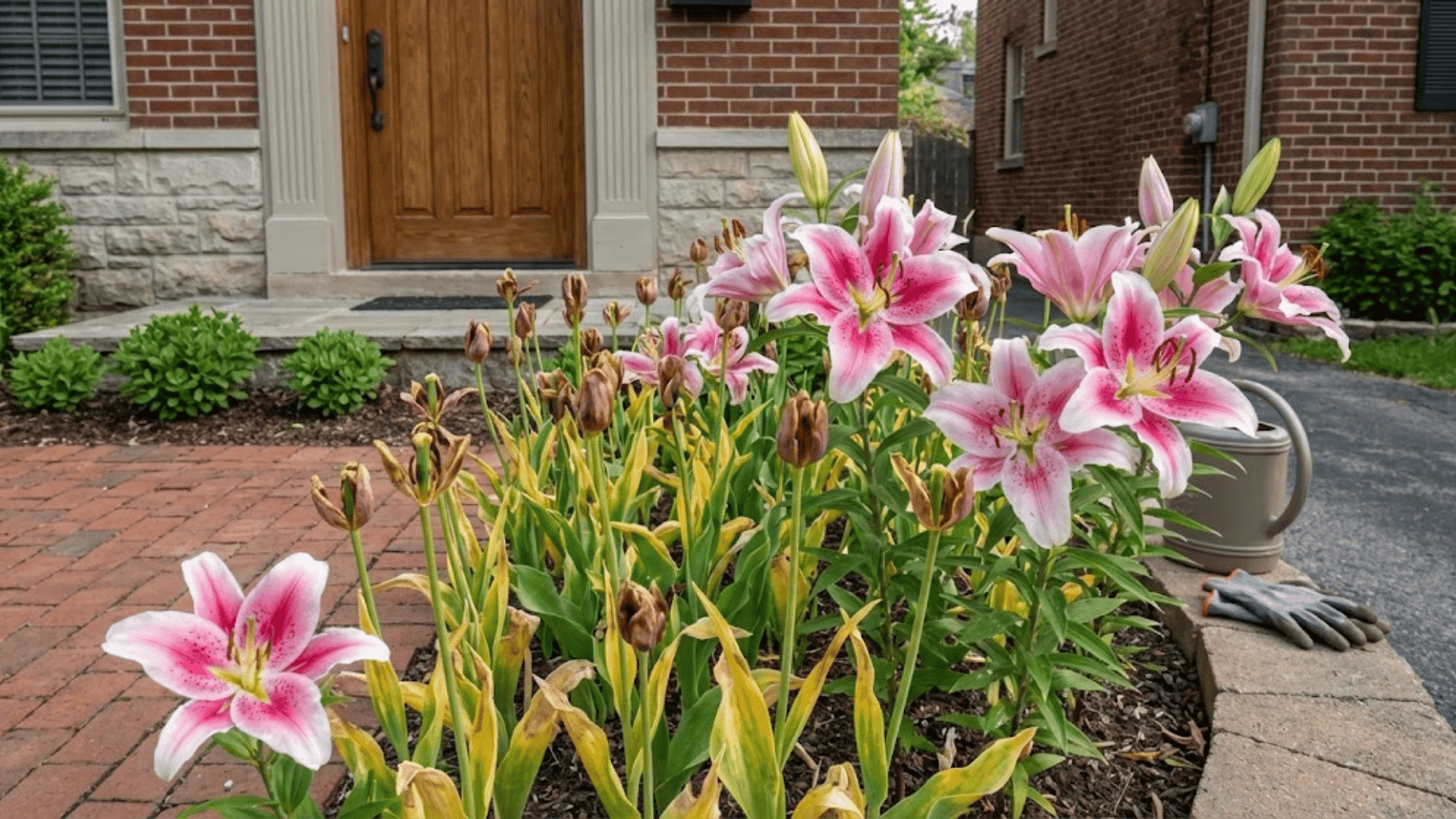
Plant Recommendations: Spring tulips, Summer lilies, Autumn mums
USDA Hardiness Zone: 3–9
Rotate plantings throughout the year for a constantly refreshed curb appeal that never looks tired. Spring bulbs give way to summer perennials, followed by autumn color for year-round interest.
This approach requires more hands-on involvement but delivers maximum visual impact. Plan your succession carefully so something is always emerging as another fades.
20. Drought-Tolerant Mediterranean Bed
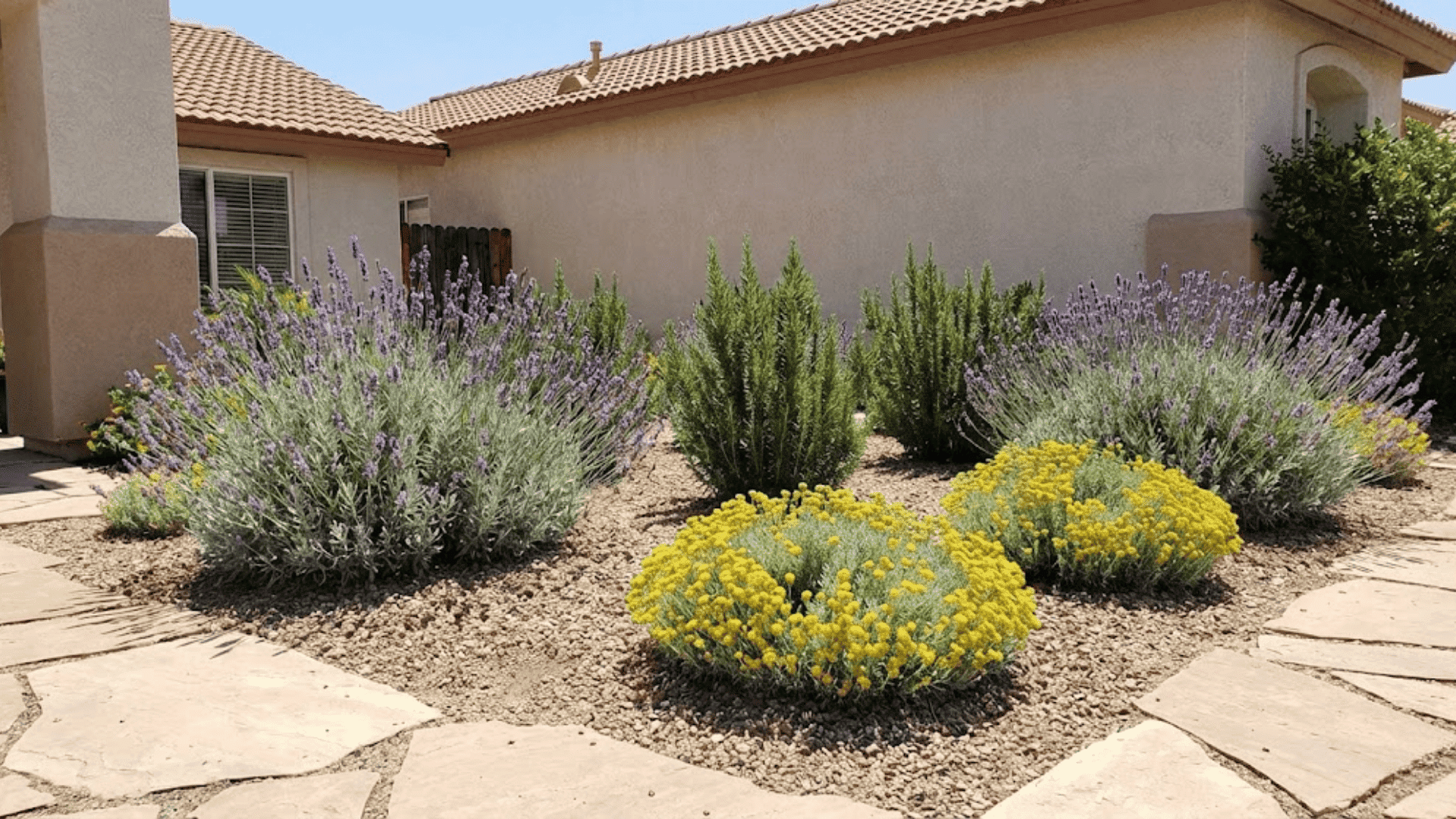
Plant Recommendations: Lavender, Rosemary, Santolina
USDA Hardiness Zone: 7–10
Aromatic silver-leaved herbs thrive in hot, dry spots with minimal watering. These sun-lovers thrive on neglect once established and perfume the air on warm days.
Well-draining soil is essential to prevent root rot in these Mediterranean natives. Shear plants lightly after flowering to maintain compact shapes and encourage fresh growth.
21. Front Porch Skirt Flower Bed
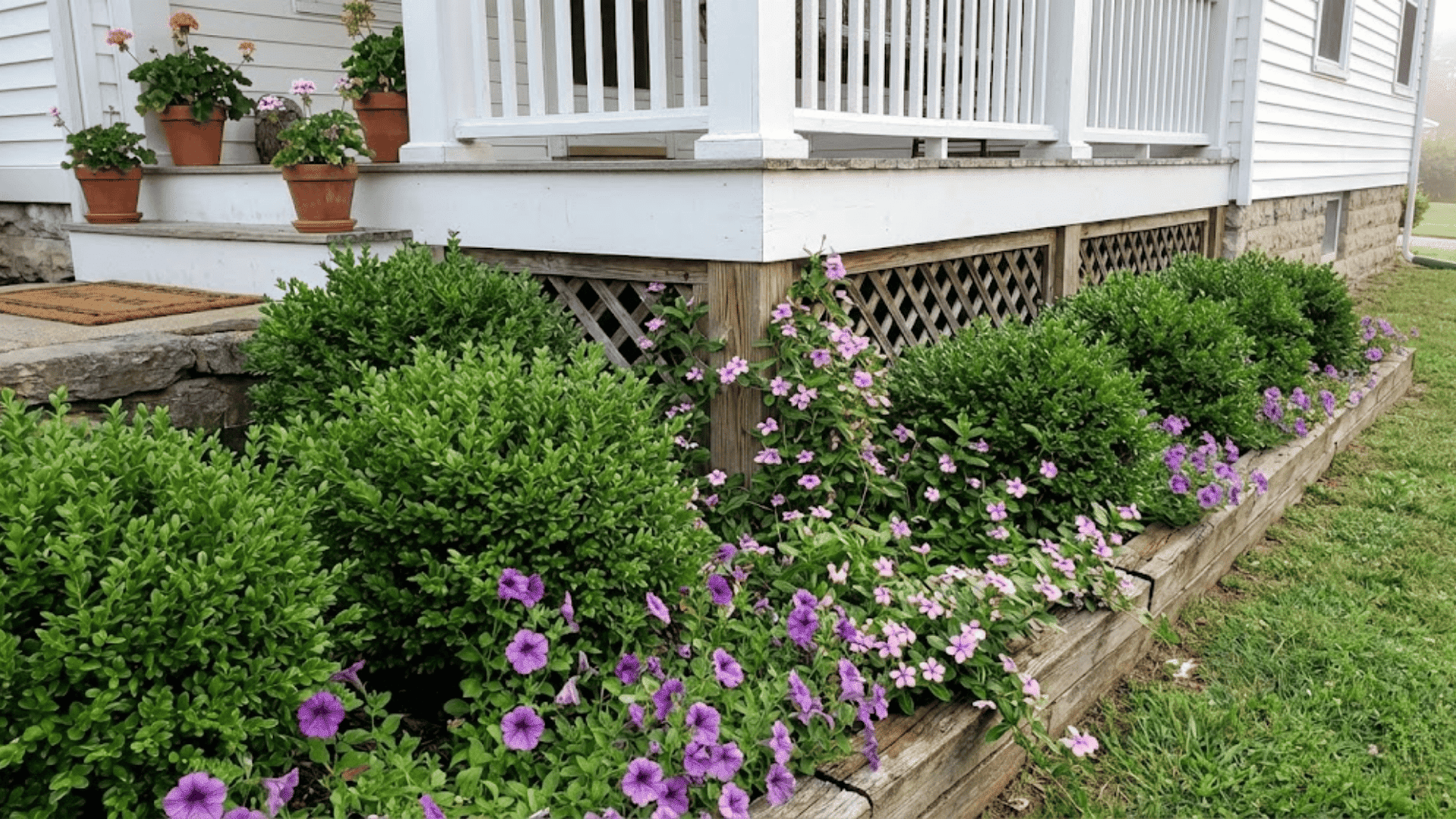
Plant Recommendations: Low shrubs, Trailing petunias, Vinca
USDA Hardiness Zone: Annual plantings
Soften the transition between porch and ground with plants that spill and trail gracefully. This foundation planting hides utilitarian porch supports while adding welcoming color at ground level.
Shade tolerance varies depending on your porch orientation, so choose accordingly. Refresh annuals seasonally for continuous color, or rely on evergreen shrubs for year-round presence.
22. Small Circular Bed Around a Focal Tree or Flagpole
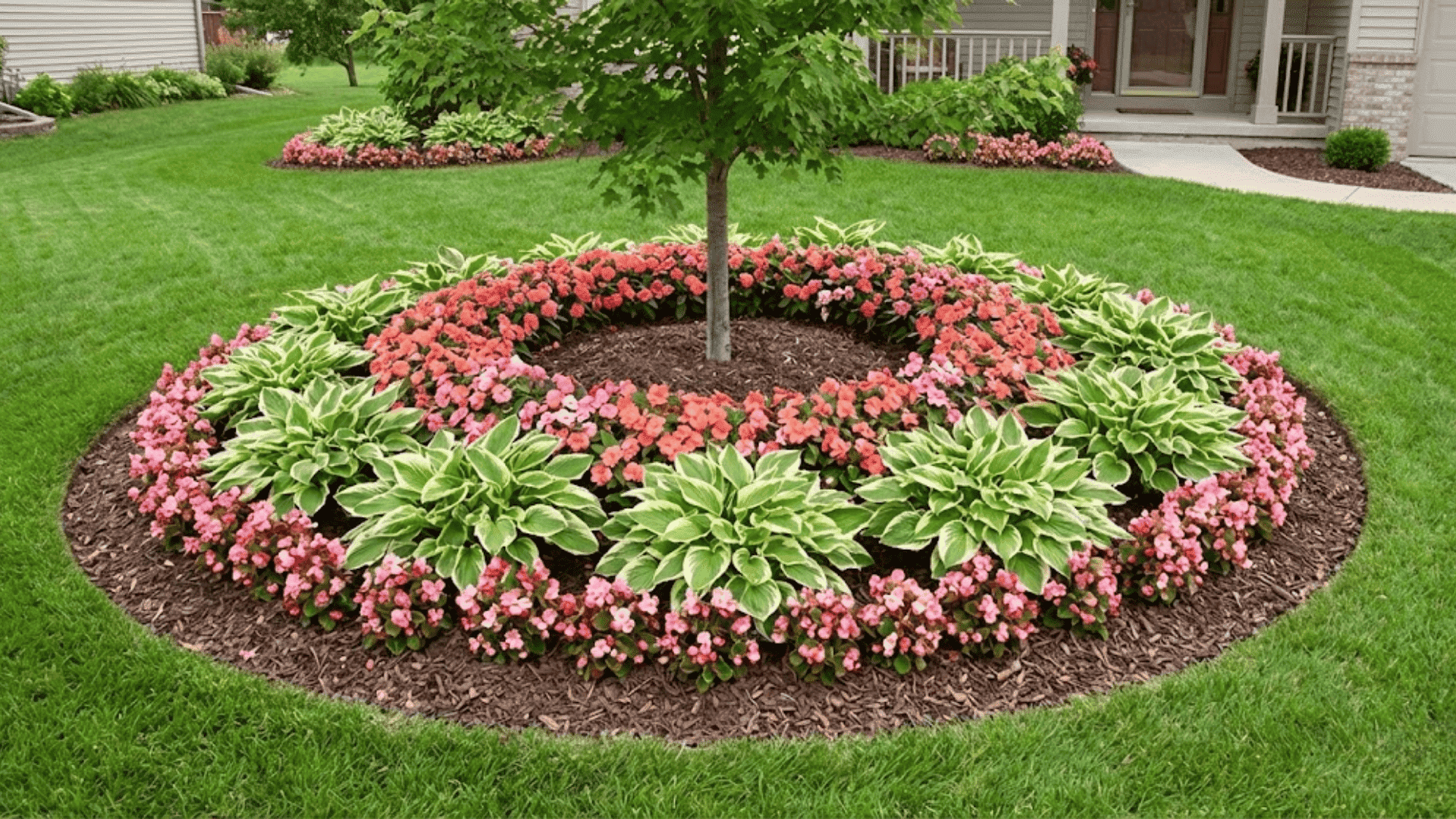
Plant Recommendations: Impatiens, Hostas, Begonias
USDA Hardiness Zone: Varies by selection
Ring plantings create intentional focal points while protecting tree roots from mower damage. Shade-tolerant choices work beautifully under tree canopies where grass struggles to grow.
Keep plantings shallow to avoid disturbing tree roots, and mulch generously for a finished look. This simple design trick makes even young trees feel anchored and established.
23. Shade-Tolerant Fern & Hosta Bed for Shady Front Entries
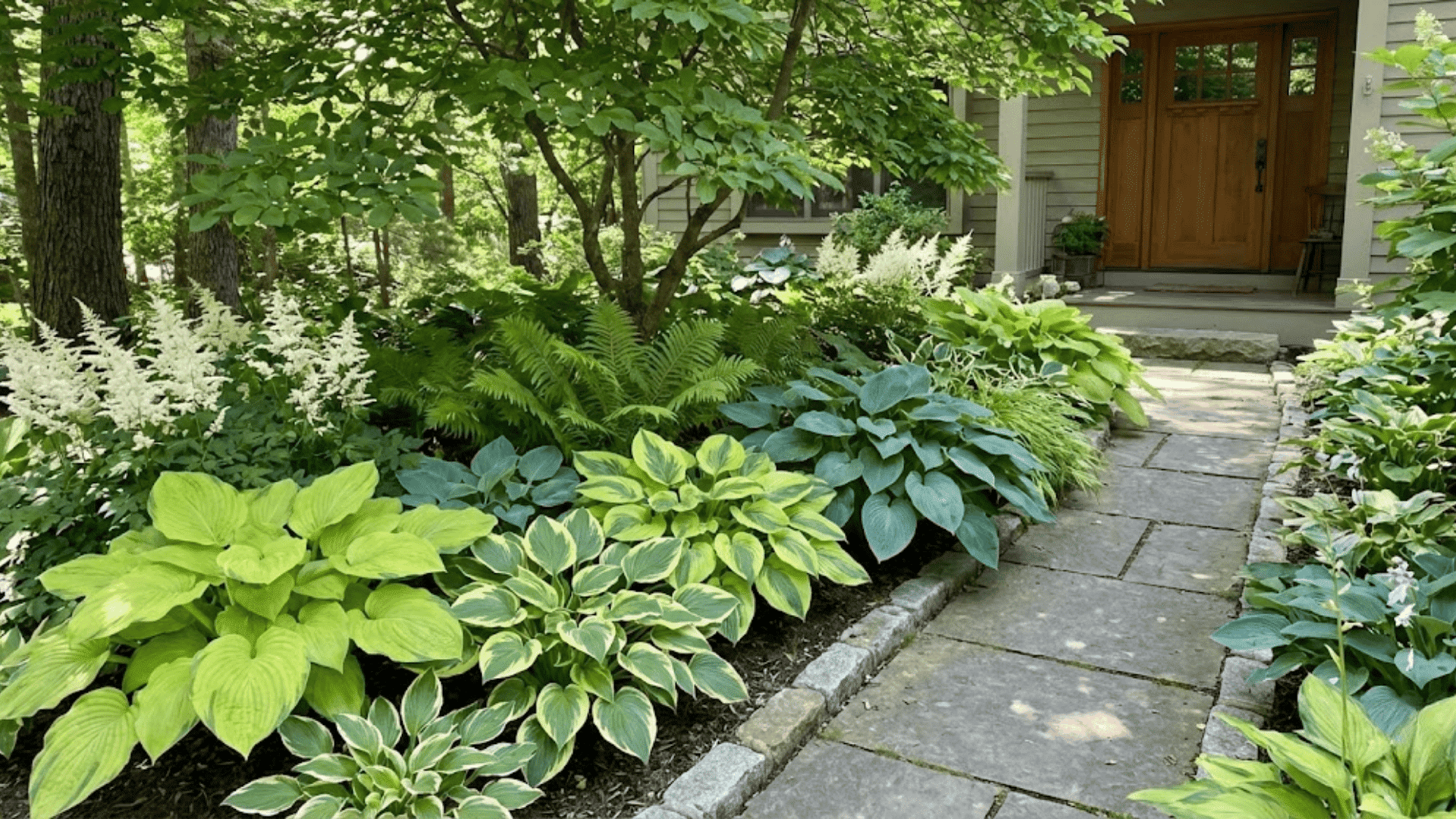
Plant Recommendations: Autumn fern, Hosta varieties, Astilbe
USDA Hardiness Zone: 3–9
North-facing entries and deep shade become assets with the right plant selection. Hostas offer incredible variety in leaf color and size, while ferns add delicate texture.
These low-maintenance shade lovers thrive with consistent moisture and organic-rich soil. Slug control may be needed in damp climates, but otherwise, these plants practically care for themselves.
24. Bright Annual Border for Maximum Colour with Low Cost
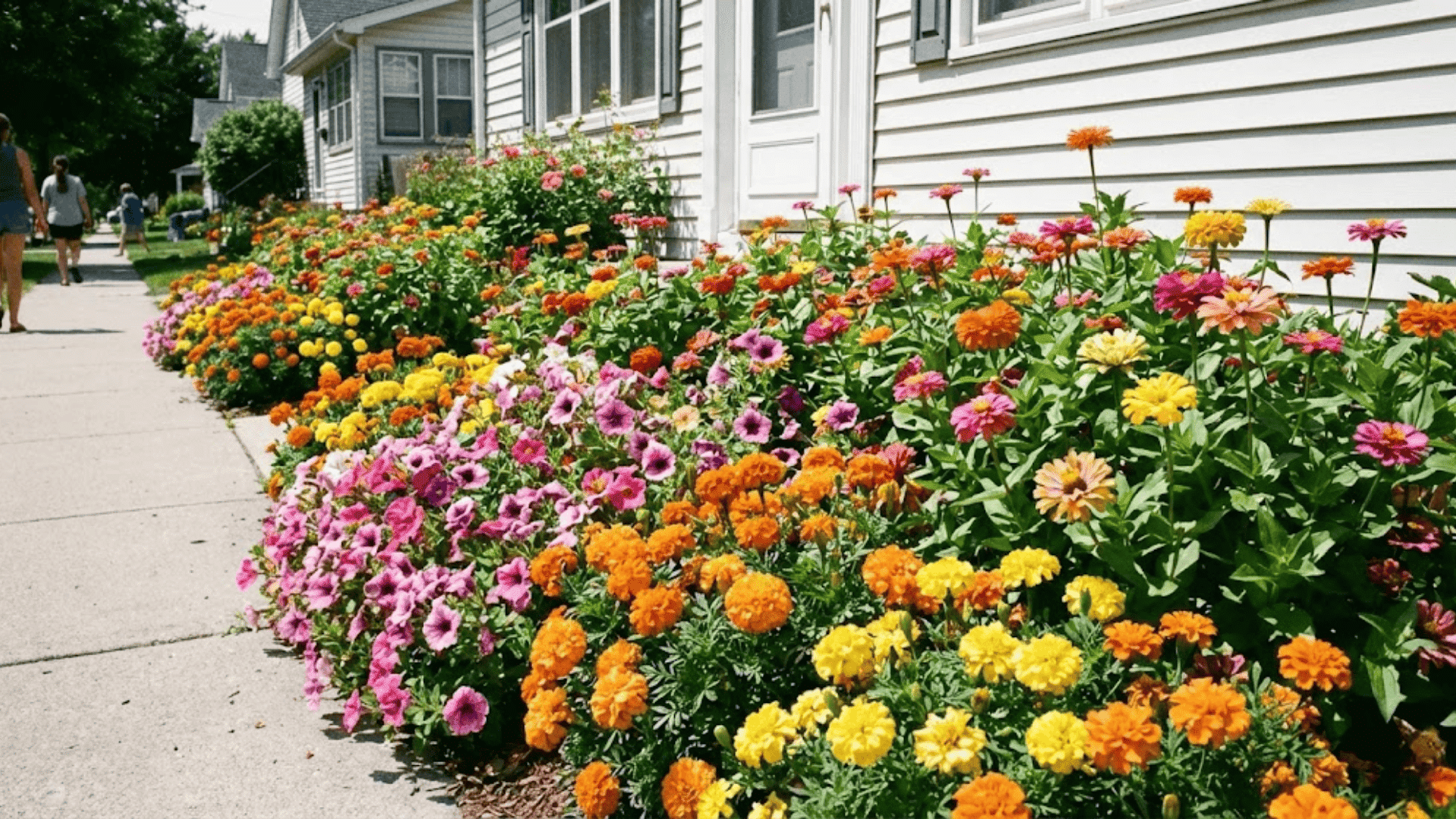
Plant Recommendations: Marigolds, Zinnias, Petunias
USDA Hardiness Zone: Annual plantings (all zones)
Budget-friendly annuals deliver serious color impact for just pennies per plant when started from seed. Full sun brings out the most vibrant blooms that last from late spring through frost.
Deadhead regularly to keep flowers coming, and feed weekly for peak performance. This approach lets you experiment with new color combinations each year without long-term commitment.
25. Coastal Cottage Bed with Salt-Tolerant Plants
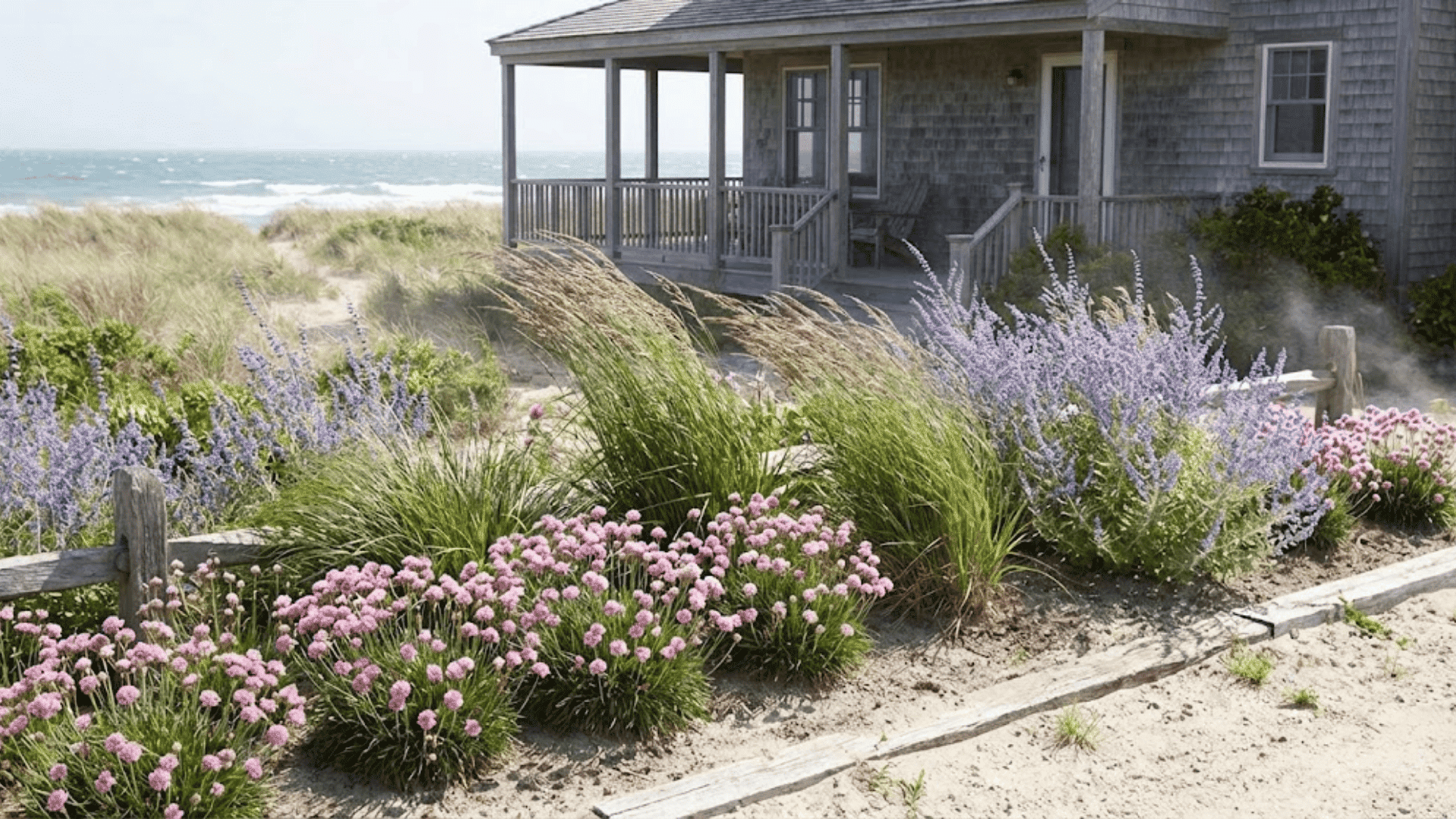
Plant Recommendations: Sea thrift, Ornamental grasses, Russian sage
USDA Hardiness Zone: 5–9
Salt spray and sandy soil require tough plants that laugh at harsh coastal conditions. These resilient choices handle wind, salt, and reflected light without complaint.
Full sun and excellent drainage keep these plants thriving in challenging seaside environments. Their natural toughness means minimal maintenance beyond occasional cleanup.
26. Succulent Mixed Bed in Gravel for Modern Homes
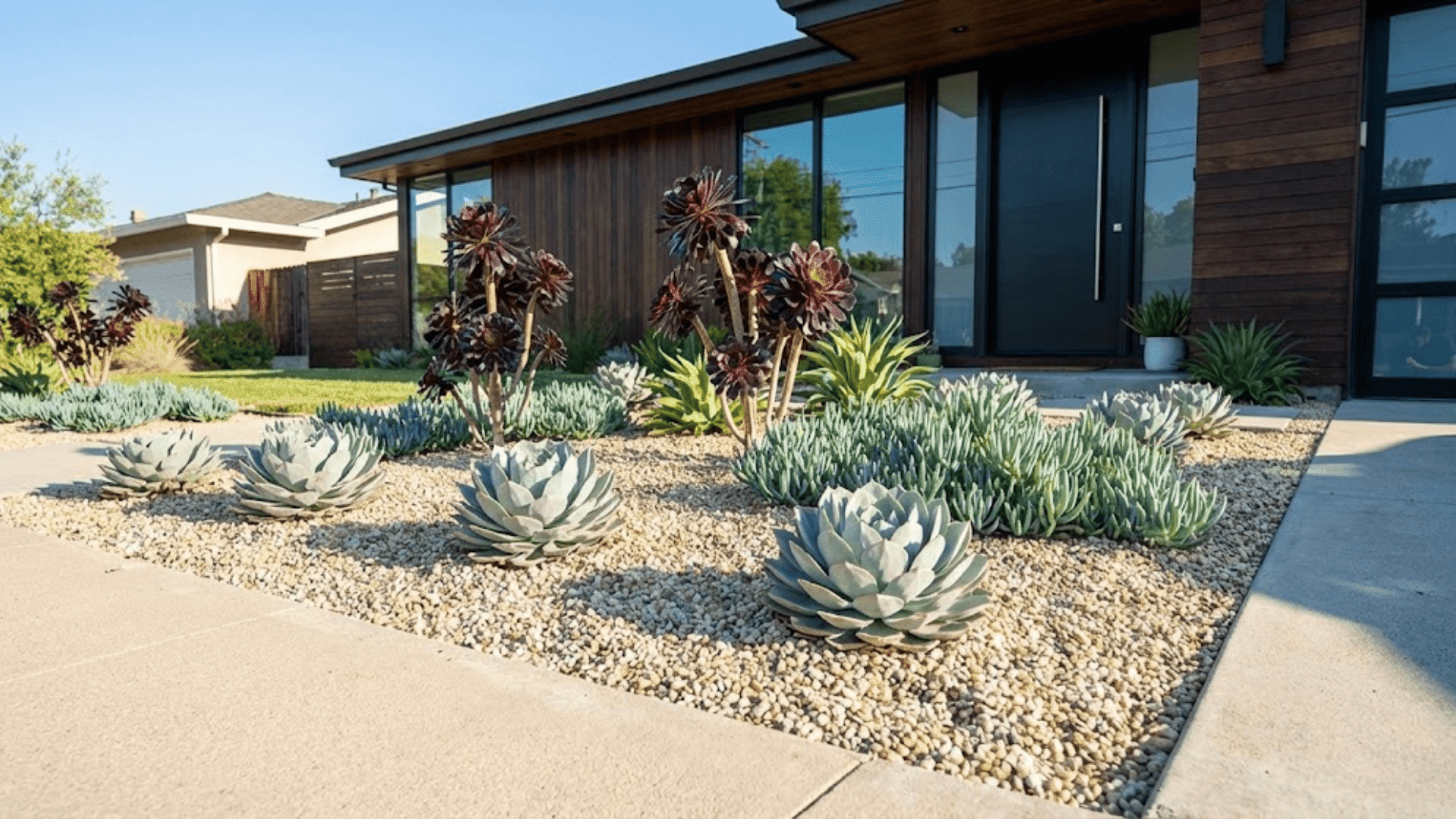
Plant Recommendations: Echeveria, Aeonium, Blue chalk sticks
USDA Hardiness Zone: 9–11
Clean lines and architectural plants create contemporary curb appeal suited to modern architecture. Gravel mulch completes the minimalist aesthetic while providing the sharp drainage succulents demand.
Full sun and infrequent watering are all these sculptural plants need. This ultra-low-maintenance option works beautifully in water-restricted areas.
27. Pollinator Hedge: Staggered Shrubs That Bloom at Different Times
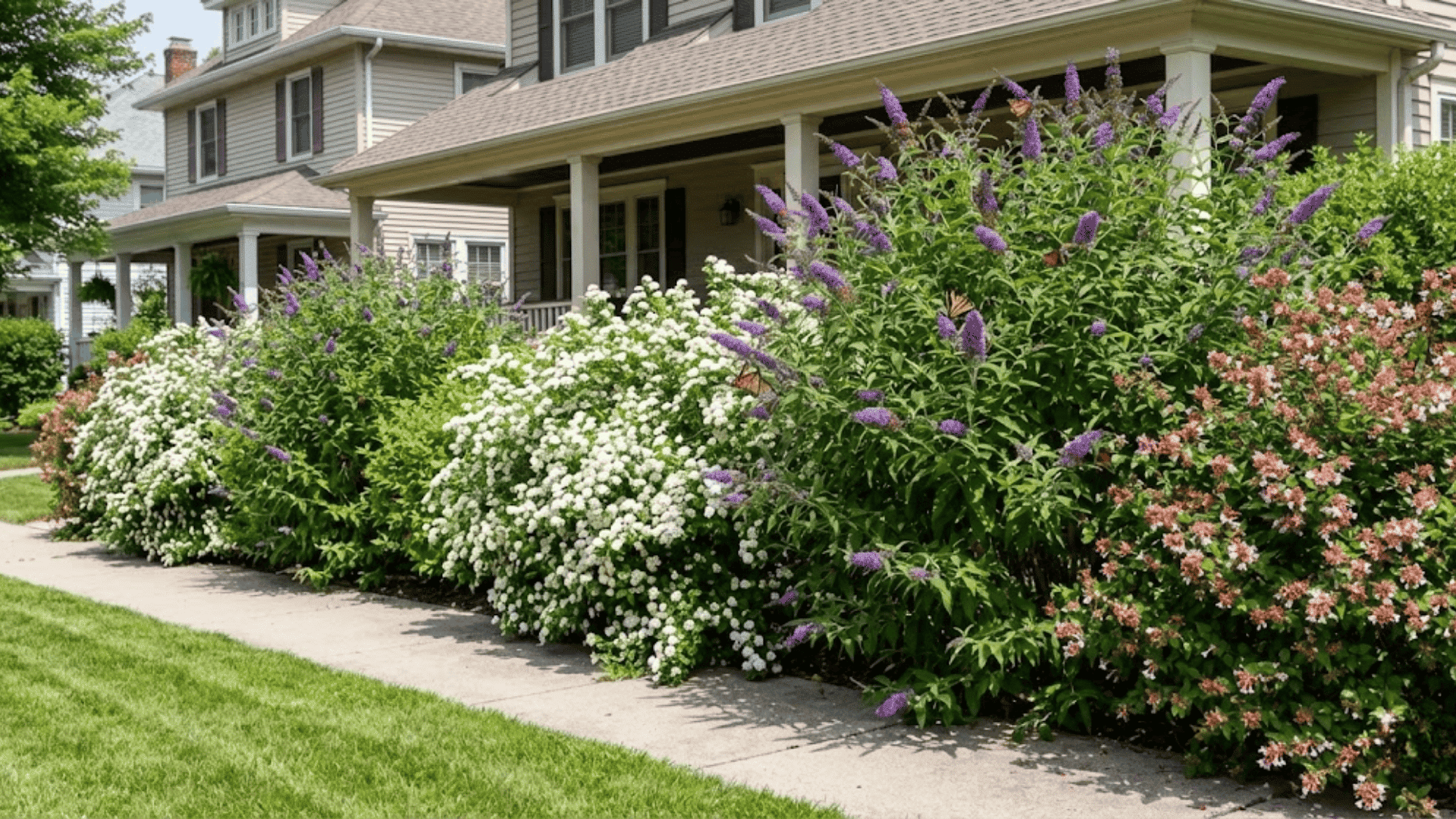
Plant Recommendations: Spirea, Butterfly bush, Abelia
USDA Hardiness Zone: 4–9
Create living privacy while supporting pollinators with flowering shrubs that bloom in succession. Early spring spirea gives way to summer butterfly bush, followed by late-season abelia.
This layered approach provides nectar sources from spring through fall. Prune annually to maintain shape, and enjoy the constant buzz of grateful bees and butterflies.
28. Cottage Stepsides with Trailing Petunias & Thyme
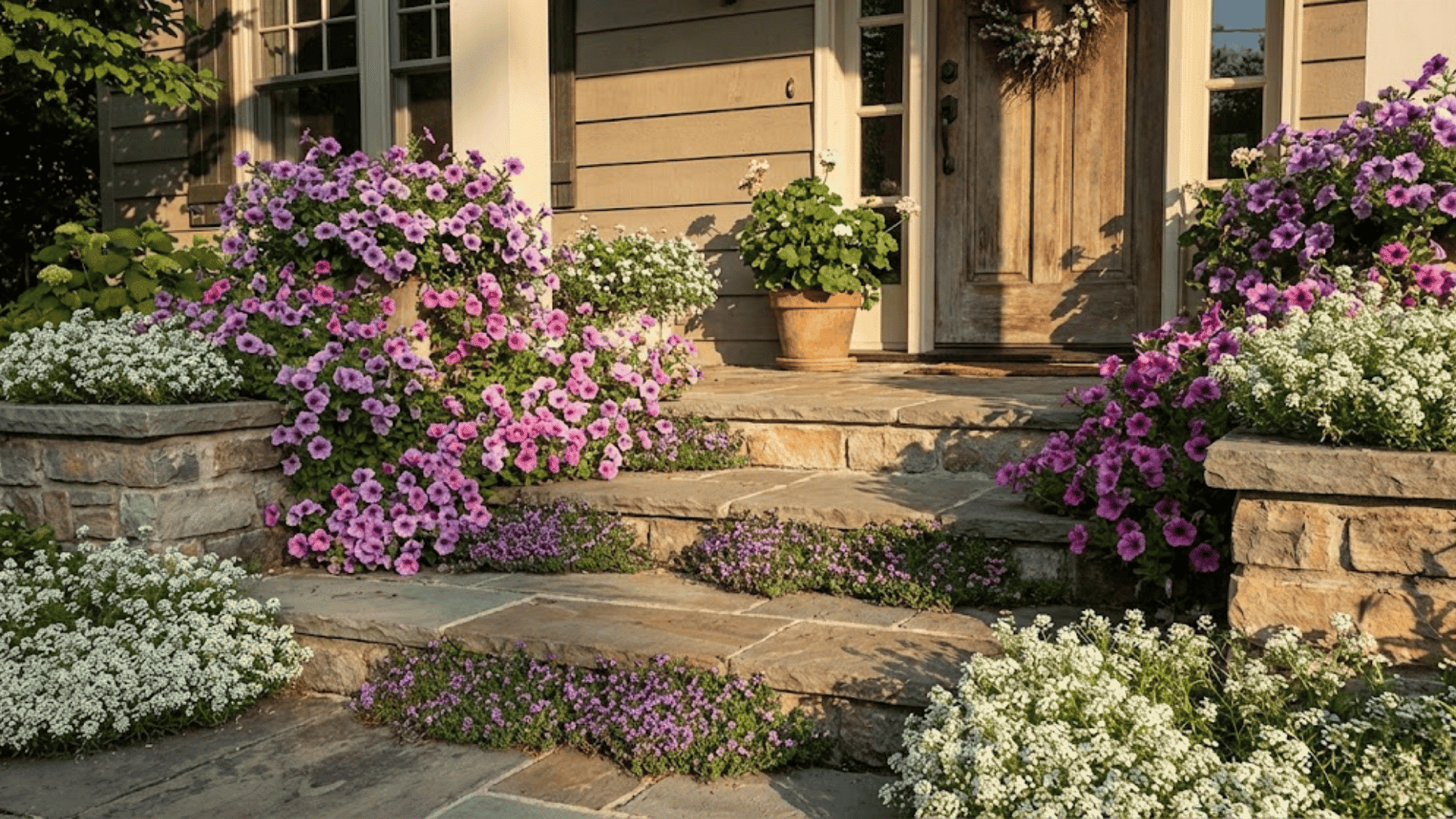
Plant Recommendations: Trailing petunias, Creeping thyme, Sweet alyssum
USDA Hardiness Zone: Annual plantings
Soften hard step edges with plants that cascade and spill without obstructing walkways. Creeping thyme releases fragrance underfoot and handles light foot traffic beautifully.
Full sun keeps these bloomers performing all season with regular deadheading. This charming detail makes even utilitarian concrete steps feel cottage-garden special.
29. Vintage Container Garden on Brick Piers
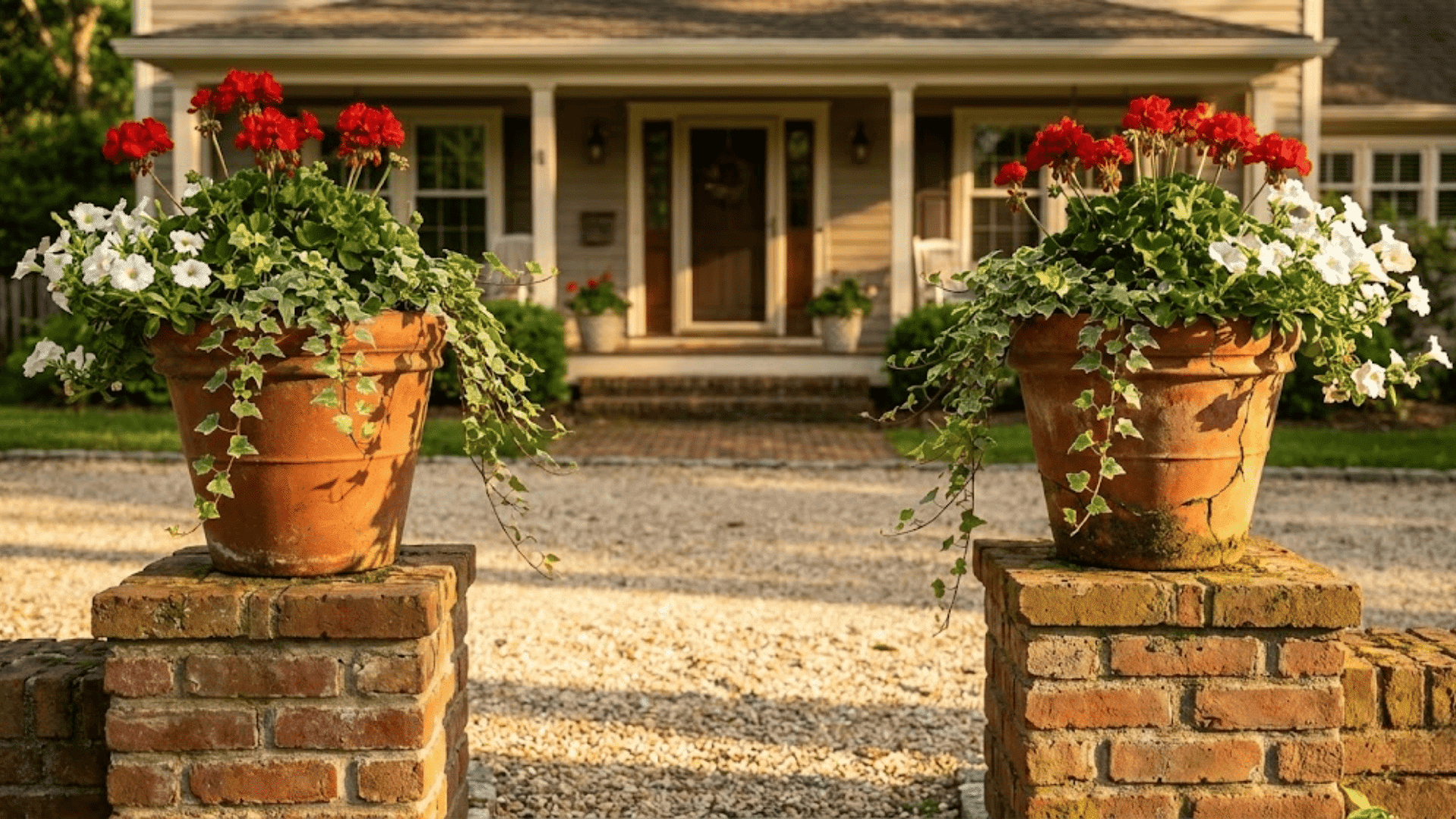
Plant Recommendations: Geraniums, Trailing ivy, Seasonal blooms
USDA Hardiness Zone: Varies by selection
Elevate container plantings on brick columns or pillars for added dimension and vintage charm. This approach works beautifully, flanking driveways or marking entry points.
Containers need more frequent watering than in-ground beds, but offer ultimate flexibility. Choose frost-proof pots in cold climates, or plan to bring containers indoors for winter.
30. Low Stone Wall with Mixed Perennials Spilling Over
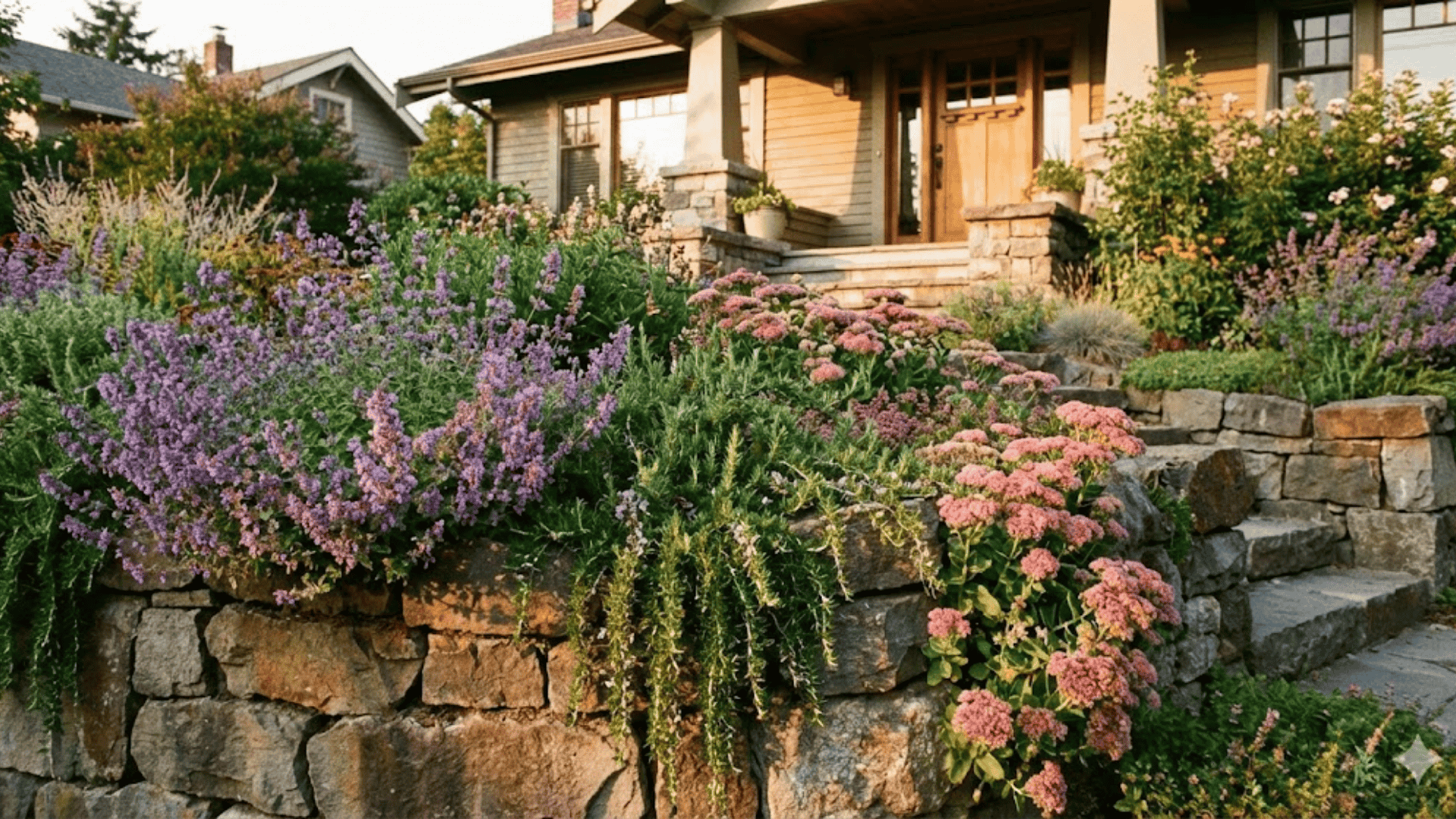
Plant Recommendations: Catmint, Trailing rosemary, Sedum
USDA Hardiness Zone: 5–9
Retaining walls become softened features when plants cascade gracefully over edges. These tough perennials handle the excellent drainage and reflected heat that walls provide.
Full sun brings out the best performance from these cascading beauties. Once established, they require minimal maintenance beyond annual cleanup and occasional shaping.
31. Tropical Look for Warm Climates
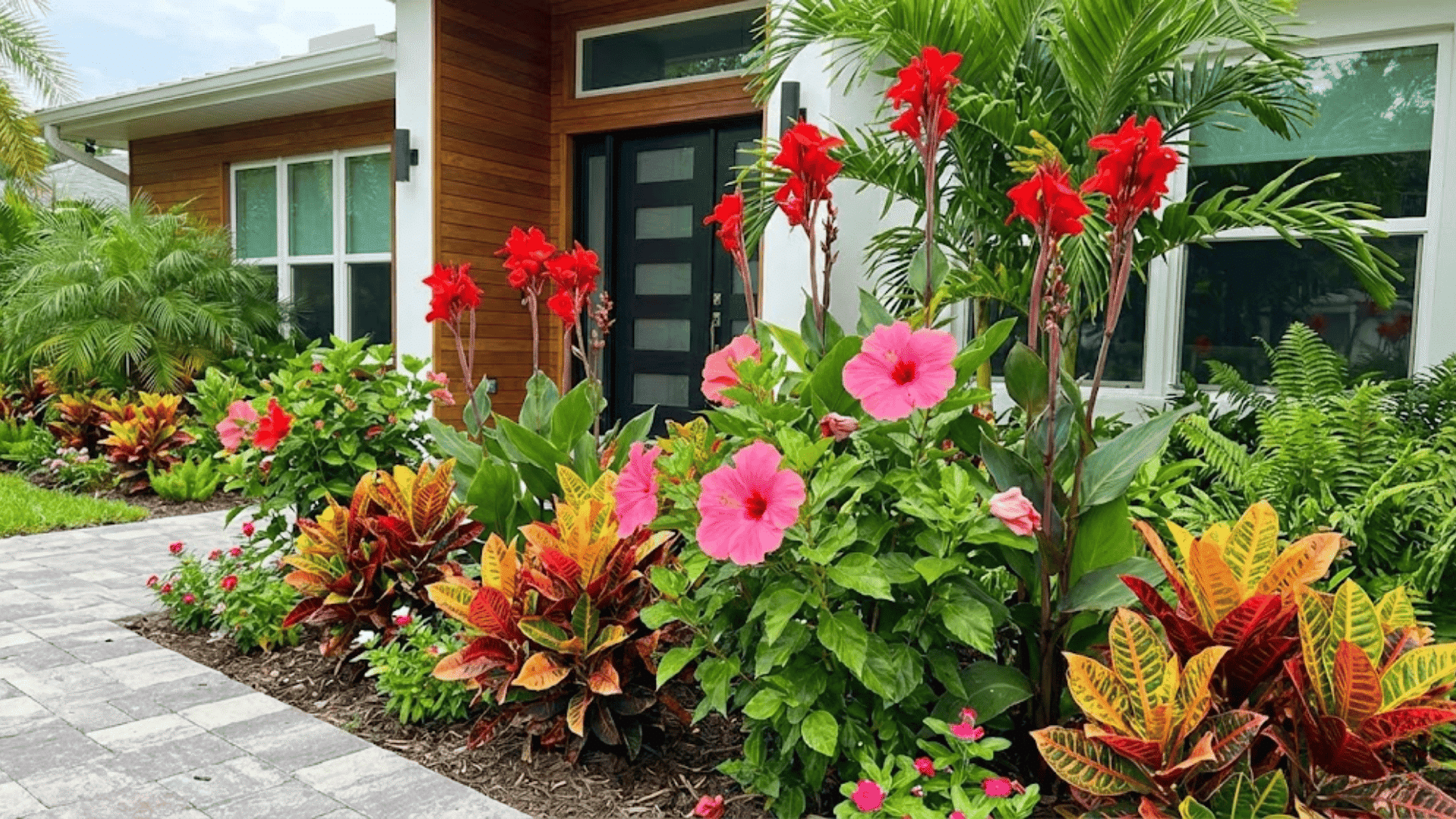
Plant Recommendations: Canna, Hibiscus, Croton
USDA Hardiness Zone: 8–11
Bold foliage and vibrant blooms create lush, vacation-worthy curb appeal in frost-free regions. These heat-lovers thrive in full sun with regular watering during dry spells.
Protect from occasional cold snaps in borderline zones, or treat as annuals. The dramatic scale and saturated colors make a major statement with surprisingly little effort.
32. Moon Garden with Night-Blooming, Fragrant Plants
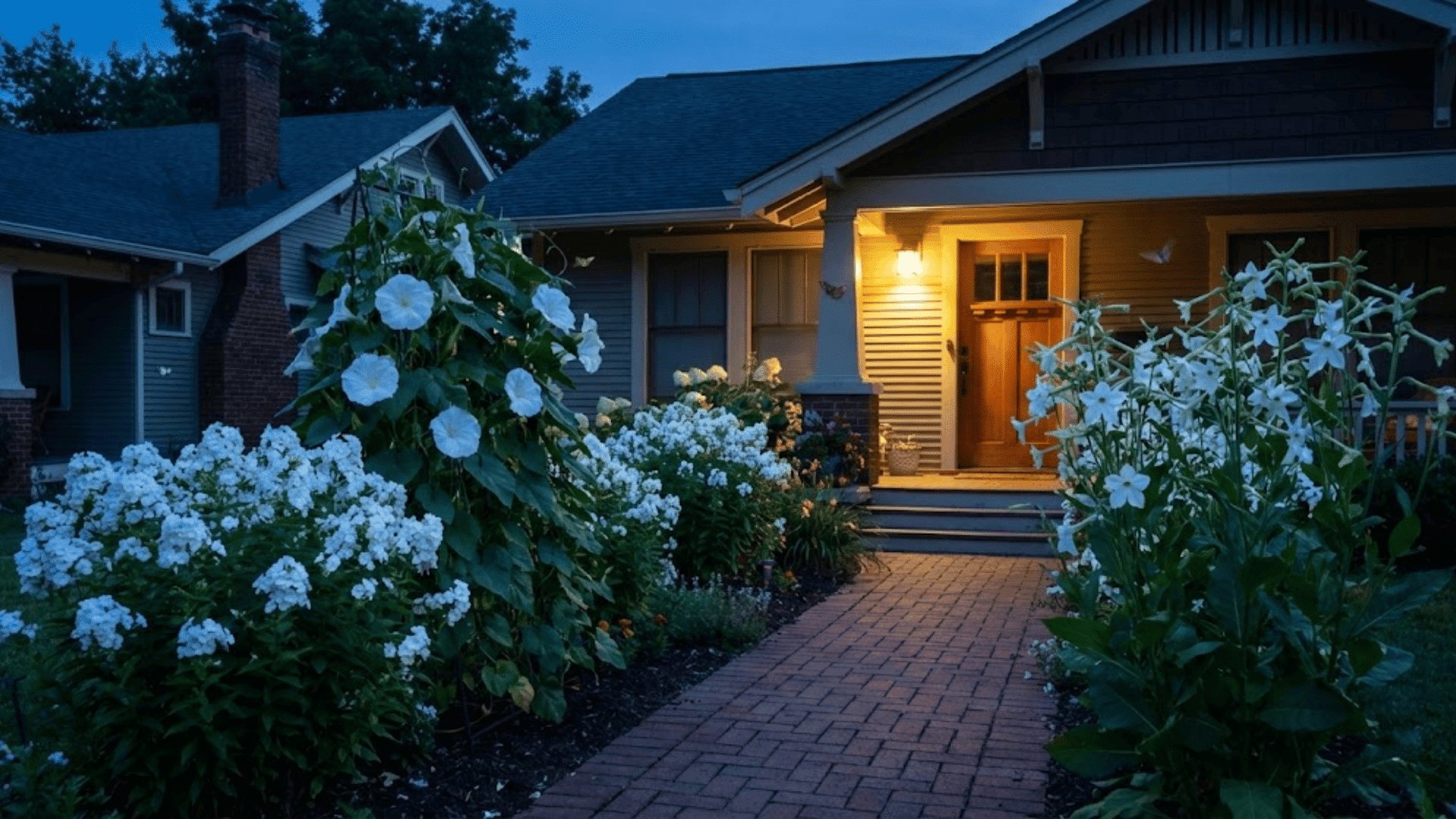
Plant Recommendations: Night phlox, Moonflower, White nicotiana
USDA Hardiness Zone: Annual plantings
Evening gardens come alive with pale blooms that glow at dusk and release intoxicating fragrance. Perfect for homeowners who arrive after dark, these plants reward evening relaxation on the porch.
Plant near seating areas to fully appreciate their nocturnal magic. Most prefer full to partial sun and perform best with consistent moisture.
33. Small Formal Knot Garden Using Boxwood & Thyme
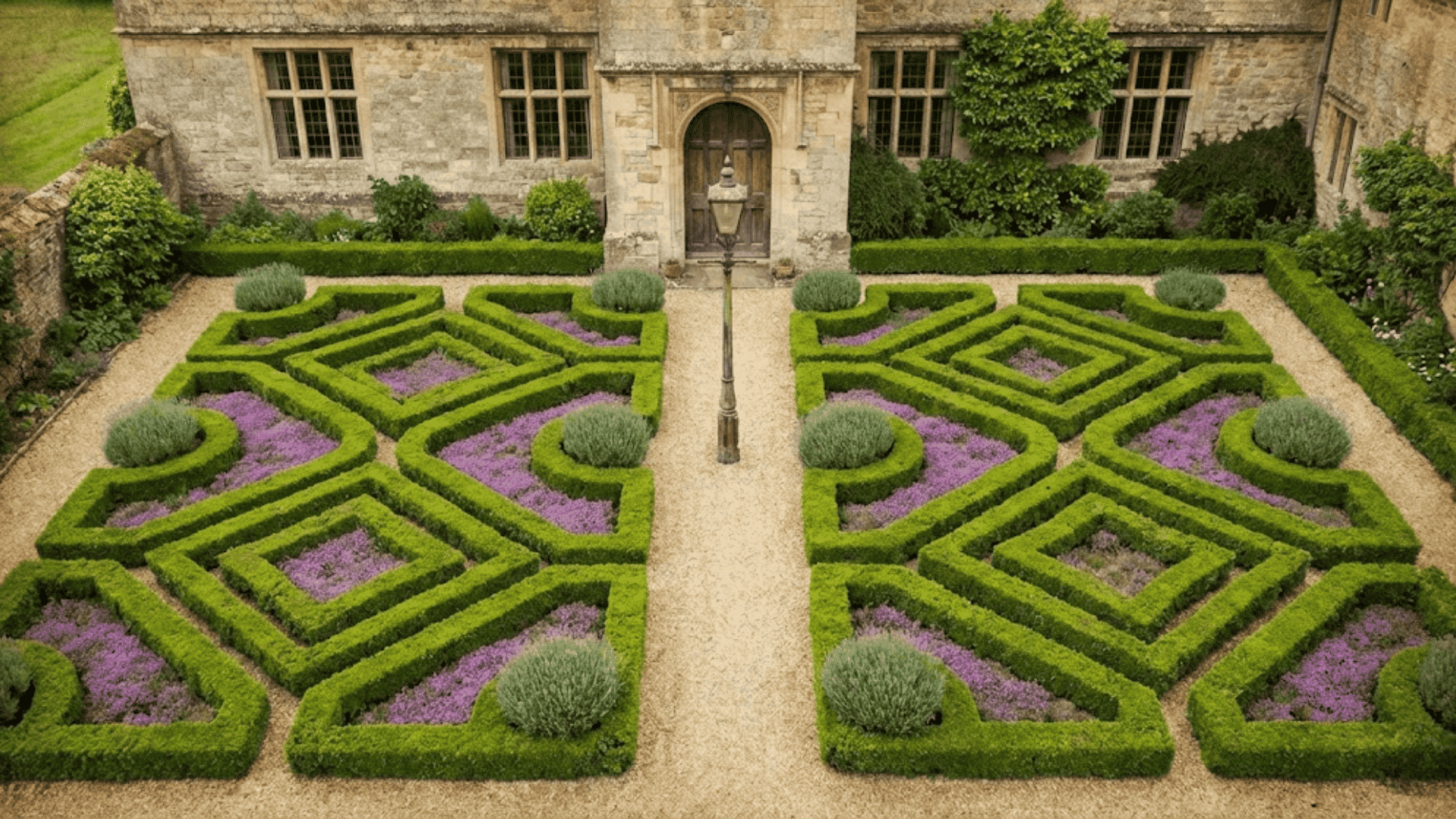
Plant Recommendations: Dwarf boxwood, Creeping thyme, Lavender
USDA Hardiness Zone: 5–9
Historic European-style knot gardens bring formal elegance to small front yards. Tightly sheared boxwood creates the “knot” pattern, while thyme fills spaces between.
This high-maintenance look requires regular shaping and weeding for geometric perfection. Full sun and excellent drainage keep these classic plants looking their manicured best.
34. Playful Kid-Friendly Sensory Bed
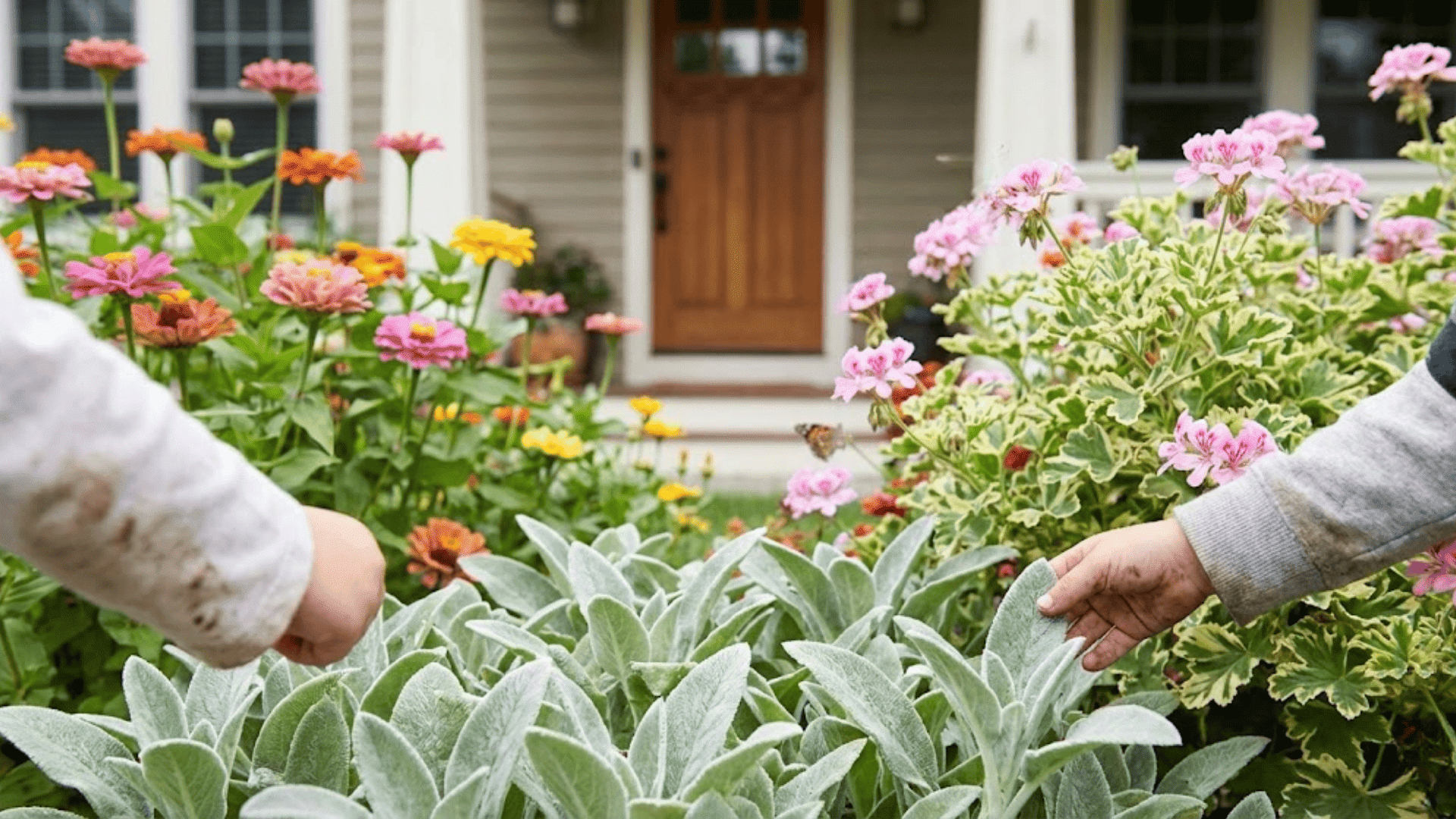
Plant Recommendations: Lamb’s ear, Scented geraniums, Colorful zinnias
USDA Hardiness Zone: Annual plantings
Engage young gardeners with plants that invite touching, smelling, and exploring. Fuzzy lamb’s ear provides tactile interest, while scented geraniums release fragrance when brushed.
Bright zinnias attract butterflies that enthral children and make excellent cut flowers. Full sun and simple care make this an ideal first garden for little helpers.
35. Minimalist Monochrome Gravel & Green-Plant Bed for Modern Curb Appeal
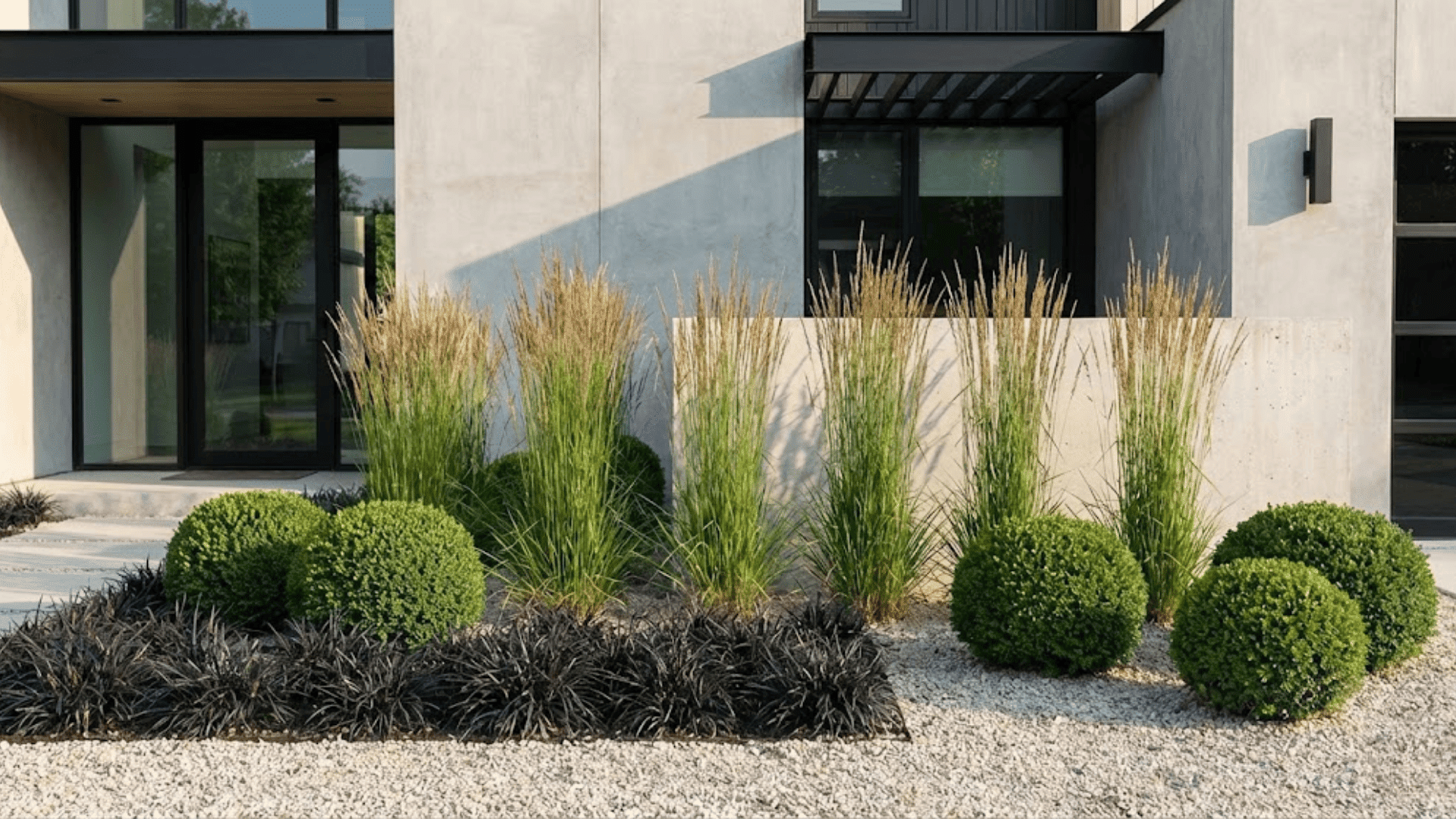
Plant Recommendations: Mondo grass, Boxwood spheres, Ornamental grasses
USDA Hardiness Zone: 6–9
Pared-down design with limited plant variety creates urbane curb appeal. Textural contrast comes from different shades and shapes of green rather than color variety.
Gravel mulch reinforces the clean aesthetic while suppressing weeds naturally. This low-maintenance approach suits contemporary architecture beautifully and ages gracefully with minimal intervention.
Quick DIY How-Tos to Get Your Bed Started Right
You don’t need contractor-level skills or a massive budget to create professional-looking flower beds. These foundational projects take a weekend or less and set you up for long-term success.
- Step 1: Cut four cedar boards to size, screw corners together with outdoor screws, level the frame in place, and fill with equal parts topsoil, compost, and peat moss.
- Step 2: Dig a shallow trench along your bed outline, set brick pavers vertically or slide in flexible steel edging, then backfill with soil to secure everything in place.
- Step 3: Remove grass and weeds, spread 2 inches of compost over the bed, work it into the top 8 inches with a fork, and test the pH to determine whether amendments are needed.
- Step 4: Skip landscape fabric unless weeds are severe, spread three inches of shredded bark while keeping it away from stems, and refresh annually as it breaks down.
- Step 5: Run soaker hoses in serpentine patterns before mulching, connect them to a timer at your spigot for automatic early-morning watering, or ensure your hose reaches all corners for manual deep watering.
These simple projects create the foundation for a thriving flower bed that looks intentional from day one. Invest a few hours up front, and you’ll save countless hours of maintenance down the road.
Seasonal Care & Maintenance Calendar
Knowing what to do when takes the guesswork out of flower bed maintenance.
This simple schedule keeps your beds looking their best without overwhelming your weekends.
| Season | Prep & Planting | Maintenance | Protection |
|---|---|---|---|
| Spring | Work in the compost, plant summer bulbs and perennials | Remove winter mulch, apply a fresh layer | Watch for late frosts |
| Summer | Refresh annuals as needed | Deadhead weekly, deep water twice weekly, fertilize monthly | Mulch to retain moisture |
| Fall | Plant spring bulbs, divide perennials | Cut back dead foliage, top-dress mulch | Mulch crowns before frost |
| Winter | Plan next season, order seeds | Prune dormant shrubs and roses | Cover tender plants with burlap |
Think of this as a gentle rhythm rather than rigid rules. Your specific climate and plant selections might shift timing slightly, but these seasonal touchpoints keep beds healthy and beautiful year-round.
The Closing Note
Your dream flower bed doesn’t require a green thumb or endless weekends spent weeding. With the right plant combinations and a solid foundation, you’ll create curb appeal that makes neighbors pause and compliment.
Start small with one bed this season, master the basics, and expand as your confidence grows.
The best part? These low-maintenance flower bed ideas actually get easier and more beautiful with each passing year as plants establish and fill in.
Share your favorite idea in the comments below, or tell us which style matches your home’s personality. We’d love to hear what you’re planning to plant.