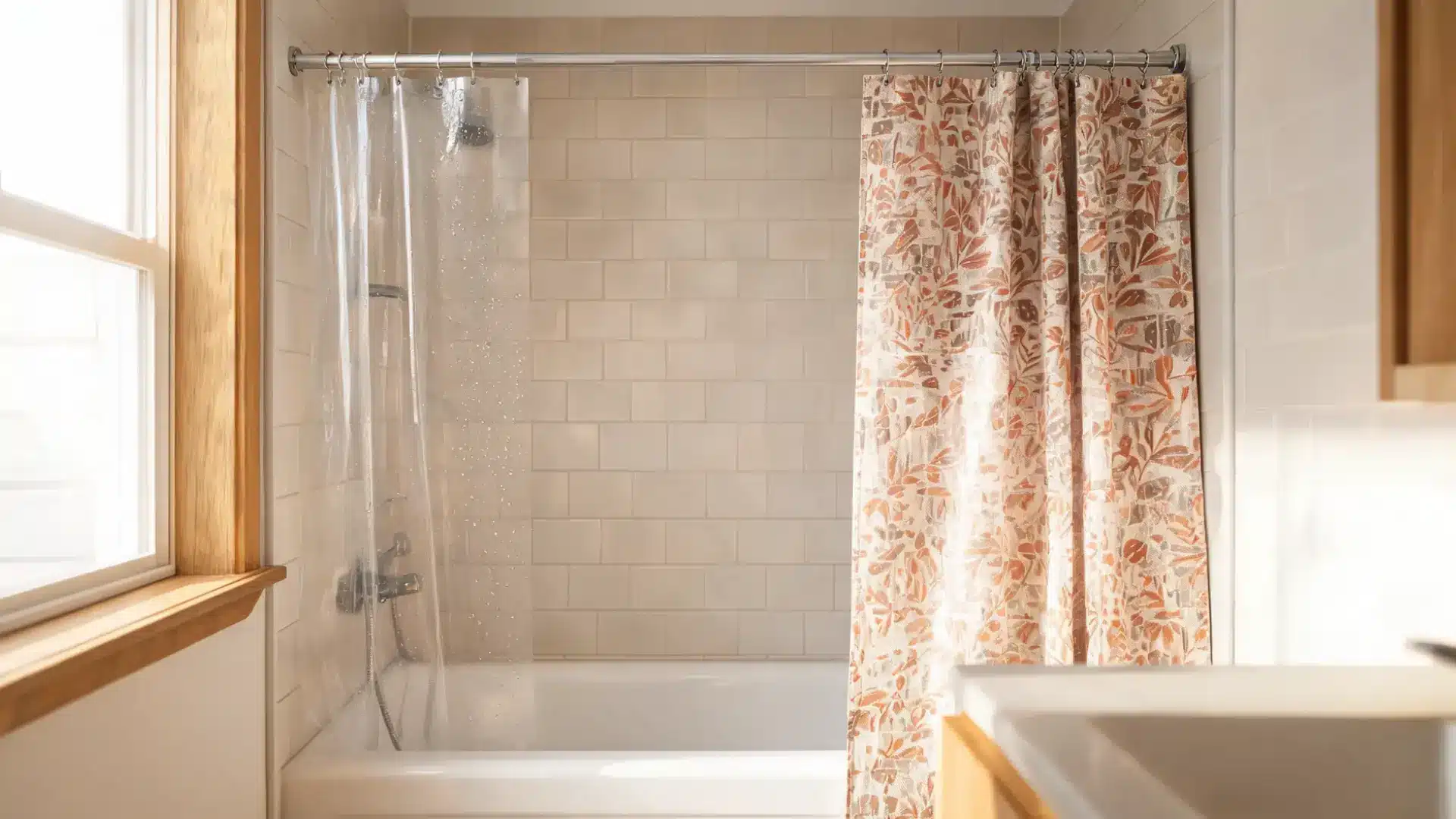
A shower curtain and a liner look almost the same at first glance. I get asked about the difference all the time.
Shower liner vs curtain is one of those questions that seems small until your floor gets soaked. Here is the short version: one piece works, the other just looks good.
Knowing the difference before you shop makes the choice easier.
Once that clicks, picking the right pieces gets simple. Your bathroom stays drier and looks better too. That knowledge saves you cleanup time later.
What Is a Shower Liner?
A shower liner is a thin, waterproof sheet that hangs inside a tub or shower. Its main job is to keep water inside the tub or stall.
The liner sits on the inside track, closest to the water spray. It stops splashes and drips from reaching the bathroom floor.
This layer protects walls, flooring, and nearby fixtures from moisture damage. Some liners work well on their own, with no decorative curtain needed.
Others pair with a fabric curtain for a finished look and extra water control. Either way, the liner does the real work of containing water.
What Is a Shower Curtain?
A shower curtain is a fabric or vinyl panel that hangs outside the tub or shower area. It adds style and color to a bathroom while giving bathers privacy.
The curtain hangs on the outer track, in front of the liner. It faces the room instead of the water spray. Not every curtain repels water as a dedicated liner does.
Some fabric versions soak up moisture rather than blocking it. This is why many bathrooms pair a decorative curtain with a separate waterproof liner underneath.
The curtain handles looks, while the liner handles water protection.
Shower Liner vs Curtain: Key Differences
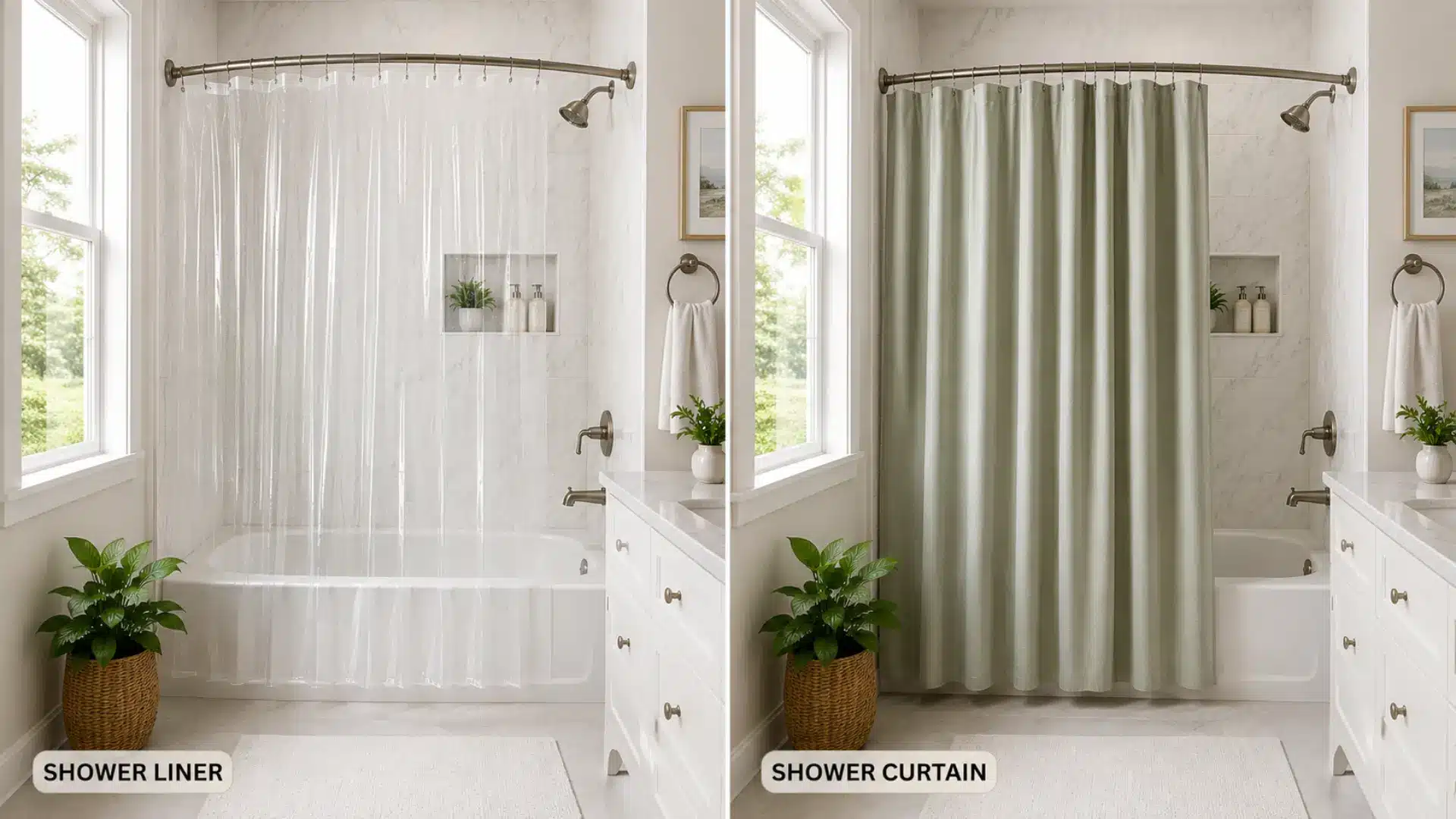
Shower liners and curtains might look alike, but I always tell people they serve different jobs. Here is how I break down their differences:
1. Position
Shower Liner: The liner hangs on the inside track, closest to the water source. It sits directly against the tub or shower wall to block splashes.
Curtain: The curtain hangs on the outside rod, right in front of the liner. It stays farther from the water and catches less spray overall.
2. Common Materials
Shower Liner: Liners are usually made from PEVA, EVA, or vinyl material. These options resist water well and clean up fast after regular daily use.
Curtain: Curtains come in fabric, polyester, or cotton blends most often. Some also use vinyl, but many focus more on looks than water resistance.
3. Water Resistance
Shower Liner: Liners handle water well since that is their entire main job. Most stay fully waterproof through daily use, steam, and repeated washing cycles.
Curtain: Curtain water resistance depends heavily on the fabric that gets chosen. Cotton curtains absorb water fast, while vinyl or polyester ones repel it better.
4. Decorative Role
Shower Liner: Liners rarely add much style since they usually stay plain white or clear. Their job is function first, not the bathroom’s overall visual look.
Curtain: Curtains carry most of the bathroom’s style through color, pattern, and texture choices. They often set the tone for the entire room’s design.
5. Maintenance
Shower Liner: Liners face constant water contact, so mildew and soap scum build up fast. They need regular washing or full replacement every few months.
Curtain: Curtains stay drier since they sit outside the direct spray zone most days. They need less frequent washing compared to the liner underneath them.
6. Using It Alone
Shower Liner: A liner can work alone in simple bathrooms without much added decor. It still blocks water effectively even without a curtain hanging over it.
Curtain: A curtain alone only works well if it resists water on its own. Fabric curtains without a liner often lead to leaks and mold growth.
8. Cost
Shower Liner: Liners usually cost less, often between five and fifteen dollars for basic PEVA or vinyl options. Premium or heavy-duty liners can cost $25 or more.
Curtain: Curtains often cost more, ranging from $15 to $40 for standard fabric options. Decorative, lined, or designer curtains can easily climb past sixty dollars.
Shower Liner vs. Curtain: Size and Fit Differences
Getting the size right matters just as much as picking the material. I always check both width and length before buying either piece, so here is a quick size comparison:
| Size Detail | Shower Liner | Curtain |
|---|---|---|
| Standard Width | About 70 inches wide to fit most tub and shower openings | Usually 72 inches wide, close to liner size |
| Standard Length | About 72 inches long for average shower height | Often 72 to 84 inches for a fuller drape |
| Extra-Long Options | Available up to 78 inches for taller showers | Available up to 96 inches for high ceilings |
| Extra-Wide Options | Wide versions fit larger or walk-in showers | Wide versions work well for bay windows or double rods |
| Fit Purpose | Sized to sit inside the tub and block water | Sized to hang outside and cover the liner fully |
Measuring the shower space first makes shopping for shower liner sizes much easier. A good fit keeps water inside and gives the curtain a clean, finished look.
What Do Homeowners Say About Shower Liners and Curtains?
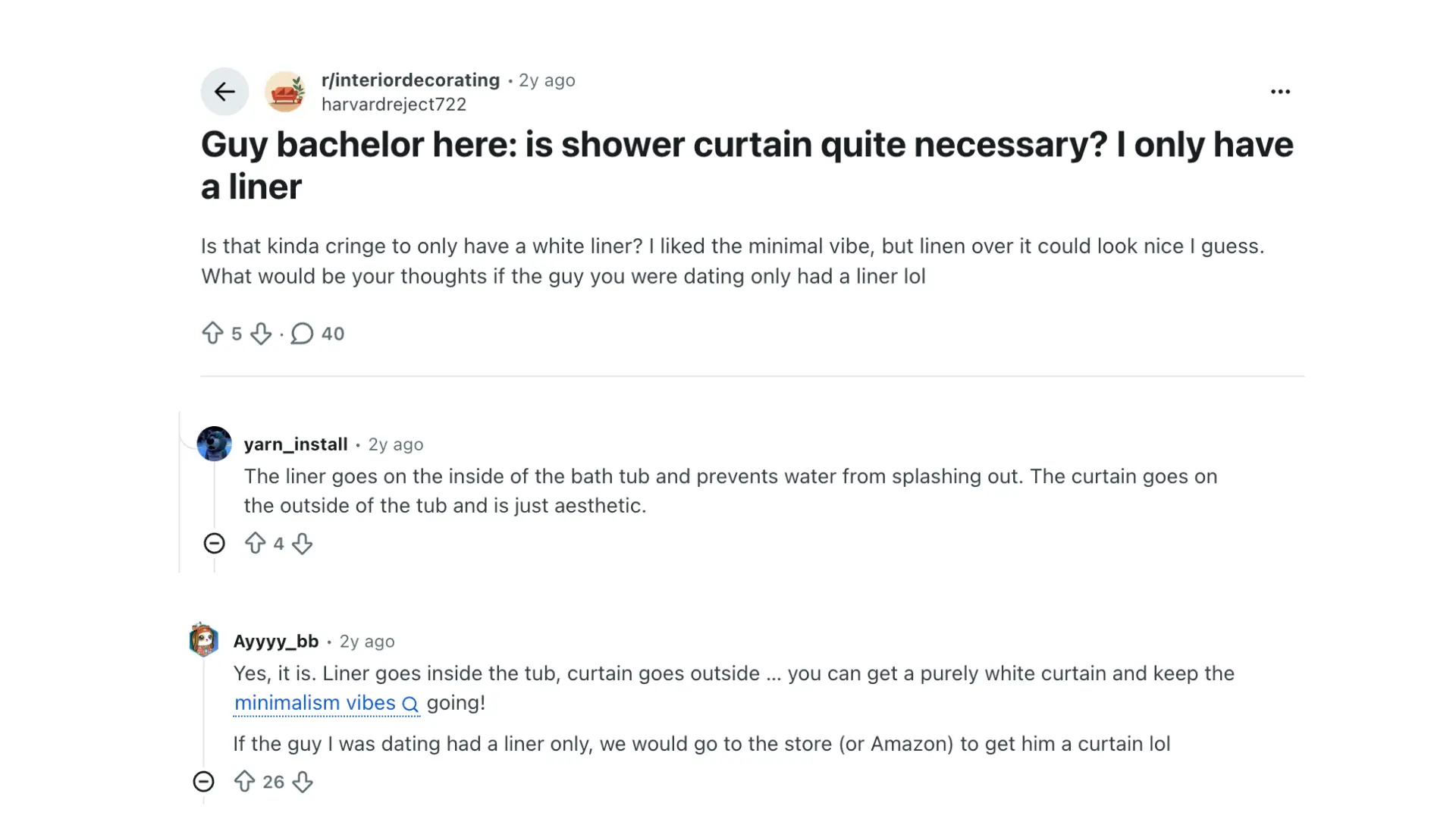
Many people turn to online forums when picking out a shower setup. One user started a Reddit thread asking for input on their bathroom curtain choice.
A commenter broke it down simply. The liner stays on the inside of the tub and stops water from splashing out onto the floor. The curtain hangs outside the tub and does not do that job.
Its purpose is purely visual, adding color and style to the room. This lines up with how most bathrooms are set up.
The liner handles function, and the curtain handles style. Many homeowners find this two-piece setup easiest to manage day to day.
Choosing the Right Option for Your Bathroom
Not every bathroom needs the same setup. The right choice depends less on trends and more on how your space functions day to day.
A few key factors can help you decide what fits best:
- Shower Type: Tub combos and standard stalls usually need both a liner and curtain, while a curbless walk-in shower with glass panels can often skip both altogether.
- Climate and Humidity: Humid bathrooms benefit from moisture-resistant liners that dry quickly and resist mold.
- Maintenance Preference: A wipeable liner suits low-effort care, while washable fabric suits those who don’t mind extra laundry.
- Budget and Style Habits: If you like updating your bathroom often, a plain liner with a swappable curtain offers the most flexibility.
Once you know what matters most to you, picking the right combination becomes a lot easier.
Frequently Asked Questions (FAQs)
Do Shower Curtains and Liners Need to Match in Size?
Not exactly, but the curtain should be slightly wider or the same size as the liner. This keeps water from splashing out around the edges.
Are Shower Liners Machine Washable?
Many liners can go through a gentle wash cycle with mild detergent. Air drying afterward helps the material keep its shape and water-resistant coating.
What’s the Best Material for a Humid Bathroom?
PEVA and EVA liners resist mold better than vinyl in humid spaces. Polyester curtains also hold up well since they dry faster than cotton blends.
The Bottom Line
Choosing between a liner and curtain comes down to a few simple points. A liner blocks water, while a curtain brings pattern and personality.
Shower liner vs curtain really comes down to what your space actually needs. Small bathrooms often do fine with just a liner.
Larger tub-shower combos usually work better with both pieces paired up. I always check the tub type, humidity, and my patience for cleaning first.
That quick check makes shopping smoother. Your bathroom stays dry, styled, and easy to maintain. Pick smart now, and dodge soggy floors later.
Drop a comment below and share your bathroom setup.