

The Night Blooming Cereus holds a quiet, moonlit charm that feels almost like a secret.
I have spent many evenings waiting for that rare, singular moment when the lovely blooms finally unfurl in the darkness.
That shared anticipation is exactly why we gather in plant groups, swapping stories and advice on nurturing these shy beauties.
This blog covers the important factors that support healthy growth and blooming.
So, with the right care, a night-blooming cactus flower can become a beautiful addition to your indoor or outdoor space.
What is a Night Blooming Cereus?
A night-blooming cereus, often referred to as Epiphyllum oxypetalum or Selenicereus, is a group of cactus plants known for producing large, fragrant flowers that open after sunset and usually close by the next morning.
You might hear them affectionately called “Queen of the Night” or simply the “night blooming cactus flower.”
I adore their wild, trailing stems because these epiphytes naturally cling to trees rather than rooting deep in the ground.
In their natural habitat, they thrive on humidity and dappled light, growing rapidly into sprawling, sculptural beauties.
With the right care, they become long-lived companions, eventually gifting us those massive, fragrant white blooms that make every bit of effort worthwhile.
Why Does Night Blooming Cereus Bloom at Night?
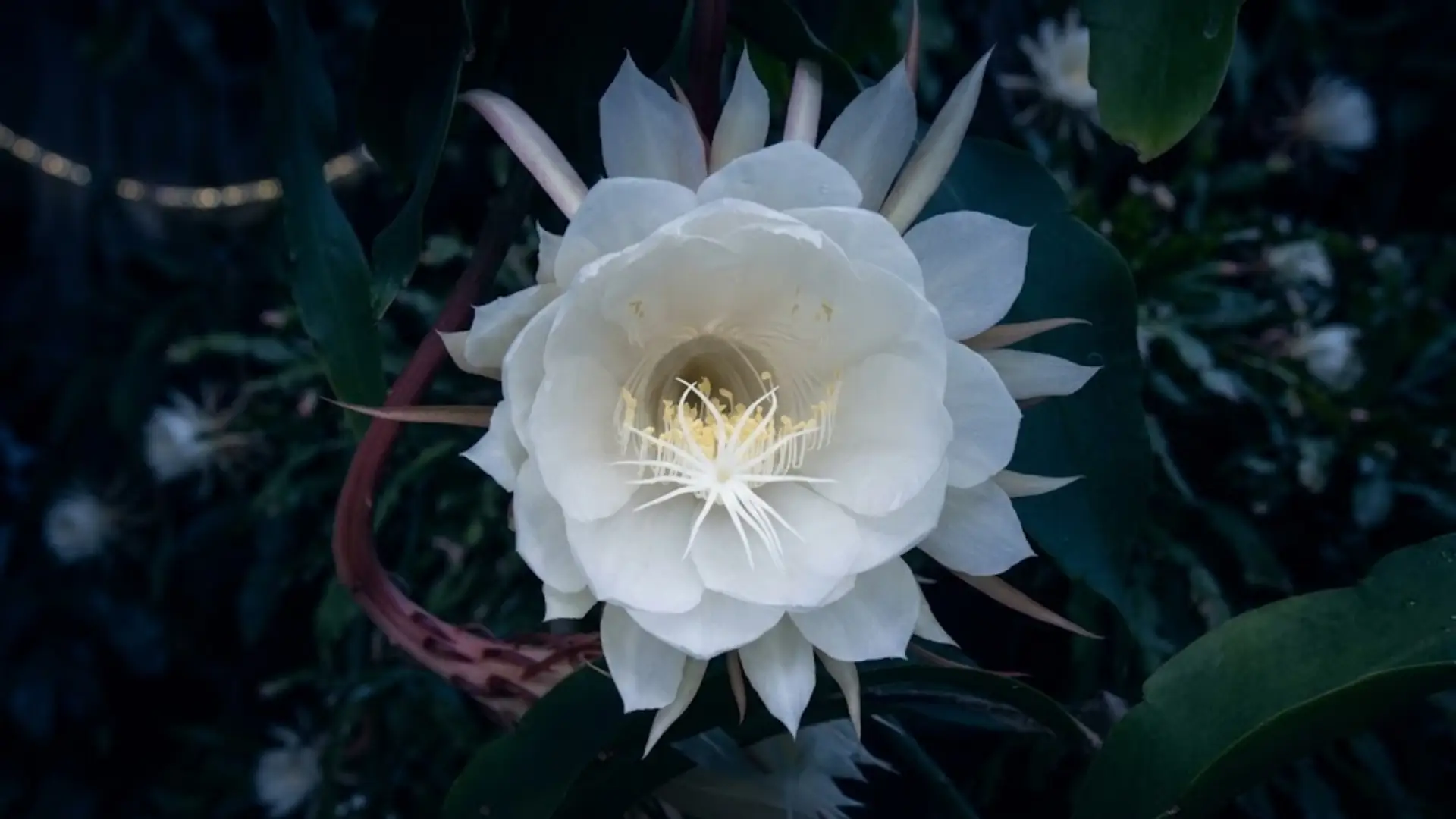
Night-blooming cereus blooms at night because its flowers are adapted to attract pollinators that are active after sunset.
Large, white, and strongly scented flowers are easier for moths, bats, and other nighttime visitors to notice in low light conditions.
This blooming pattern helps the plant improve its chances of pollination while reducing competition from daytime flowering plants.
The flowers usually open in the evening and remain fresh for only a short time, often closing by the next morning.
This rare flowering habit is what makes the night-blooming cactus flower so special among plant lovers.
Types of Night-Blooming Cereus
I often pause to appreciate the unique personalities within this family, as several distinct plants share the same interesting name.
While they all offer that magical nocturnal bloom, I have noticed they each have their own specific look and preferences.
| Variety | Common Name | Visual Identifiers | Care Nuances |
| Epiphyllum oxypetalum | Dutchman’s Pipe | Broad, flat, leaf-like stems that are smooth and spineless. | Prefers filtered light and forgives me if I occasionally overwater it. |
| Selenicereus grandiflorus | Queen of the Night | Ribbed, rope-like stems that can look a bit messy, with small spines. | Needs a sturdier support for its heavy vines and prefers drier soil than others. |
| Hylocereus undatus | Dragon Fruit Cactus | Triangular, fleshy stems with aerial roots and distinct scalloped edges. | Requires a strong trellis and needs significantly more sun if I want it to produce fruit. |
How to Plant Night Blooming Cereus?
Planting a night-blooming cereus correctly helps establish a strong root system and supports healthy growth over time. It is all about handling the roots with care and giving them a comfortable, airy home to settle into.
Planting From a Cutting
Propagating these plants is one of my favorite ways to share them with friends, but patience is key to ensuring the stem survives the transition.
- Step 1: Take a healthy four-to-six-inch cutting from a mature stem and let it sit in a cool, dry spot for several days until the cut end heals over completely.
- Step 2: Once the callus forms, I prepare a small pot with my well-draining cactus and perlite mix, slightly moistening it beforehand.
- Step 3: Gently insert the callused end about an inch or two deep into the soil, pressing down lightly to keep it upright.
- Step 4: For the first week, mist the soil surface rather than watering deeply to prevent the stem from rotting before roots develop.
- Step 5: Place the pot in warm, bright shade and wait until I see new growth before starting a regular watering routine.
Planting a Nursery Plant
When I bring a full plant home, I focus on helping it adjust to its new pot without shocking its sensitive root system.
- Step 1: Choose a pot only slightly larger than the current one, filling the bottom with a fresh layer of my airy soil blend.
- Step 2: Tip the nursery pot carefully, supporting the stems with my hand to slide the root ball out without pulling or tearing.
- Step 3: If the roots look tightly wound, I very gently tease them outward so they can explore the new soil easily.
- Step 4: Position the plant in the center and fill the gaps with soil, ensuring you do not bury the stems deeper than they were previously.
- Step 5: Finally, I give it a light drink to settle the soil around the roots and let it rest in a shaded spot for a few days to recover.
Night Blooming Cereus Care Requirements
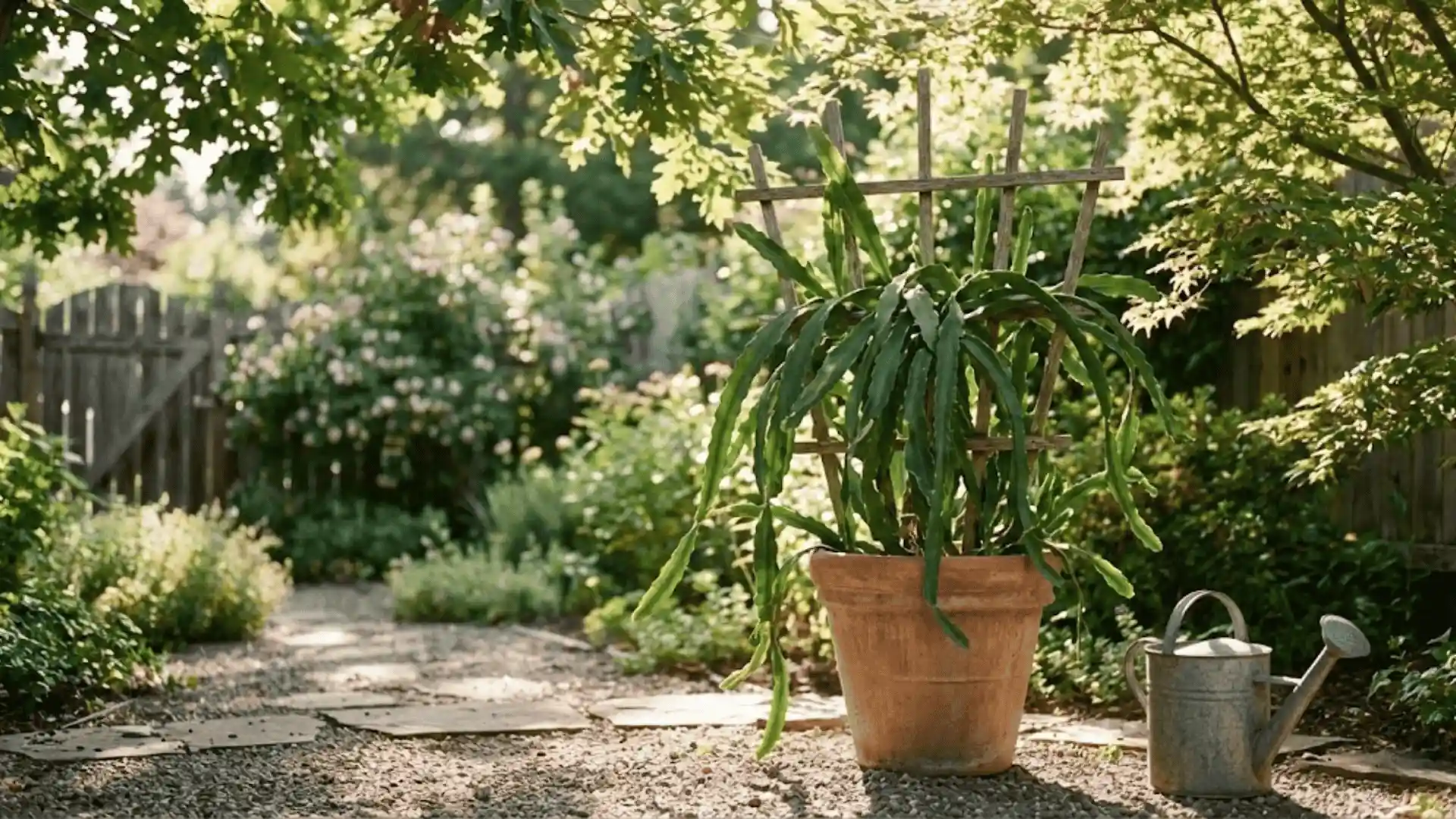
Growing a healthy night-blooming cereus depends on providing the right environment from the start.
So, understanding these basic care needs can help beginners avoid common mistakes and keep the plant thriving indoors or outdoors.
1. Provide Bright Indirect Sunlight
Night-blooming cereus grows best when it receives bright but indirect sunlight for several hours each day.
Indoor plants do well near a sunny window with filtered light, while outdoor plants prefer a spot with morning sun and afternoon shade.
Too much harsh direct sunlight can scorch the stems and cause discoloration. Low light can also slow growth and reduce the chances of flowering.
2. Use Well-Draining Cactus Soil
A night-blooming cereus needs soil that drains quickly because excess moisture can lead to root rot.
A cactus or succulent soil mix works well, especially when combined with materials like coarse sand or perlite to improve airflow. Avoid heavy garden soil that holds water for too long.
This same fast-draining approach works well for plumeria plants, since both plants suffer the same fungal problems the moment their roots sit in soggy soil.
Good drainage keeps the roots healthy while giving the plant the dry conditions it naturally prefers.
3. Maintain Warm Temperatures
Night-blooming cereus prefers warm conditions and grows best in temperatures between 65°F and 85°F.
It can handle slightly cooler temperatures but should be protected from frost and sudden cold changes. Exposure to low temperatures may slow growth and affect flower production.
Keeping the plant in a stable environment helps it develop strong stems and increases the chances of producing blooms during the flowering season.
4. Choose the Right Container
Selecting the right container helps a night-blooming cereus grow properly and prevents moisture problems. Choose a pot with drainage holes to allow excess water to escape easily.
The container should be slightly larger than the root system, but avoid oversized pots that hold extra moisture.
This cactus can bloom well when slightly root-bound, so repotting is only needed when roots become crowded or growth slows.
Night Blooming Cereus: Seasonal Care Checklist
I find that aligning my care routine with the changing seasons is the best way to keep this plant happy.
It has a natural rhythm: waking up, working hard to bloom, and then resting; and my job is simply to support each phase.
| Season | My Focus | Watering & Feeding | Maintenance Tasks |
| Spring | Awakening | Increase water slightly; resume gentle feeding. | Repot if rootbound; prune leggy stems. |
| Summer | Blooming | Keep soil moist; switch to bloom booster. | Mist for humidity; add support for buds. |
| Fall | Transition | Reduce frequency; stop fertilizing entirely. | Check for pests; bring indoors before frost. |
| Winter | Dormancy | Water sparingly (sips only); no food. | Maximize available light; protect from drafts. |
A Note on Dormancy: I realize winter’s quiet stillness is the secret to summer’s spectacle, as plants gather energy during this cool rest to produce breathtaking midnight blooms.
How to Water Night Blooming Cereus?
Watering correctly is one of the most important parts of night-blooming cereus care because this cactus stores moisture in its stems and does not need frequent watering.
Instead of following a fixed schedule, check the soil and water only when the top few inches feel dry.
During warmer months, the plant may need more water, while watering should be reduced in cooler months when growth slows.
Too much moisture can damage the roots, while too little water can weaken the plant. Check for the following signs:
- Overwatering: Soft stems, yellowing, slow growth, and root problems
- Underwatering: Wrinkled stems, dry appearance, and reduced growth
Keeping a balanced watering routine helps maintain healthy growth and supports flowering.
Night Blooming Cereus Fertilizer Schedule for Better Blooms
Feeding a plant is a delicate balance, less about constant growth and more about gently encouraging those flowers.
If I provide too much nitrogen, I often end up with lush, wild green stems but absolutely no buds, which is always a disappointment.
Therefore, rely on a routine that shifts as the season warms, using specific nutrients to nudge the plant toward flowering rather than just expanding its foliage.
| Phase | My Schedule | The Nutrient Mix | My Goal |
| Active Growth | Early Spring through Early Summer | Balanced 10-10-10 diluted to half strength. | To support strong, healthy stem development after the winter rest. |
| Pre-Bloom | Mid-Summer to Early Autumn | Low-Nitrogen, High-Phosphorus formula (like 0-10-10). | To signal the plant to stop making leaves and start forming flower buds. |
| Dormancy | Late Autumn and Winter | Stop fertilizing completely. | To let the plant rest and recharge its energy for the next year. |
Pruning & Shaping the Night Blooming Cereus
Little maintenance goes a long way in keeping this wild grower manageable and healthy. It helps me direct the plant’s energy exactly where I want it, rather than letting it take over my living room.
Managing Growth & Branching
Occasional trimming prevents stems from becoming too long or thin, encouraging the plant to fill out beautifully.
- Wait until early spring to do any major cutting, just before the new growth starts.
- Use clean, sharp shears to snip off any weak or damaged stems right at the base.
- Cut long stems back by a third, just above a node, to promote more flowering branches.
- Wear thick gloves, as even the smooth varieties can surprise you with tiny, hidden bristles.
- Save the healthy cuttings to propagate later, ensuring that nothing goes to waste.
Supporting the Vines
Since these plants are natural climbers, giving them a sturdy trellis allows them to lean comfortably and prevents a tangled mess on the floor.
- Insert a trellis into the pot while the plant is young to avoid damaging established roots later on.
- Gently lift the heavy stems and guide them upward, securing them loosely with soft plant velcro or ties.
- Spread the stems out horizontally, which exposes more surface area to the light.
- Check the ties every few months to ensure they aren’t cutting into the stems as they thicken.
- Providing this structure keeps the heavy blooms safe and fully visible when they finally open.
How to Make Night Blooming Cereus Bloom?
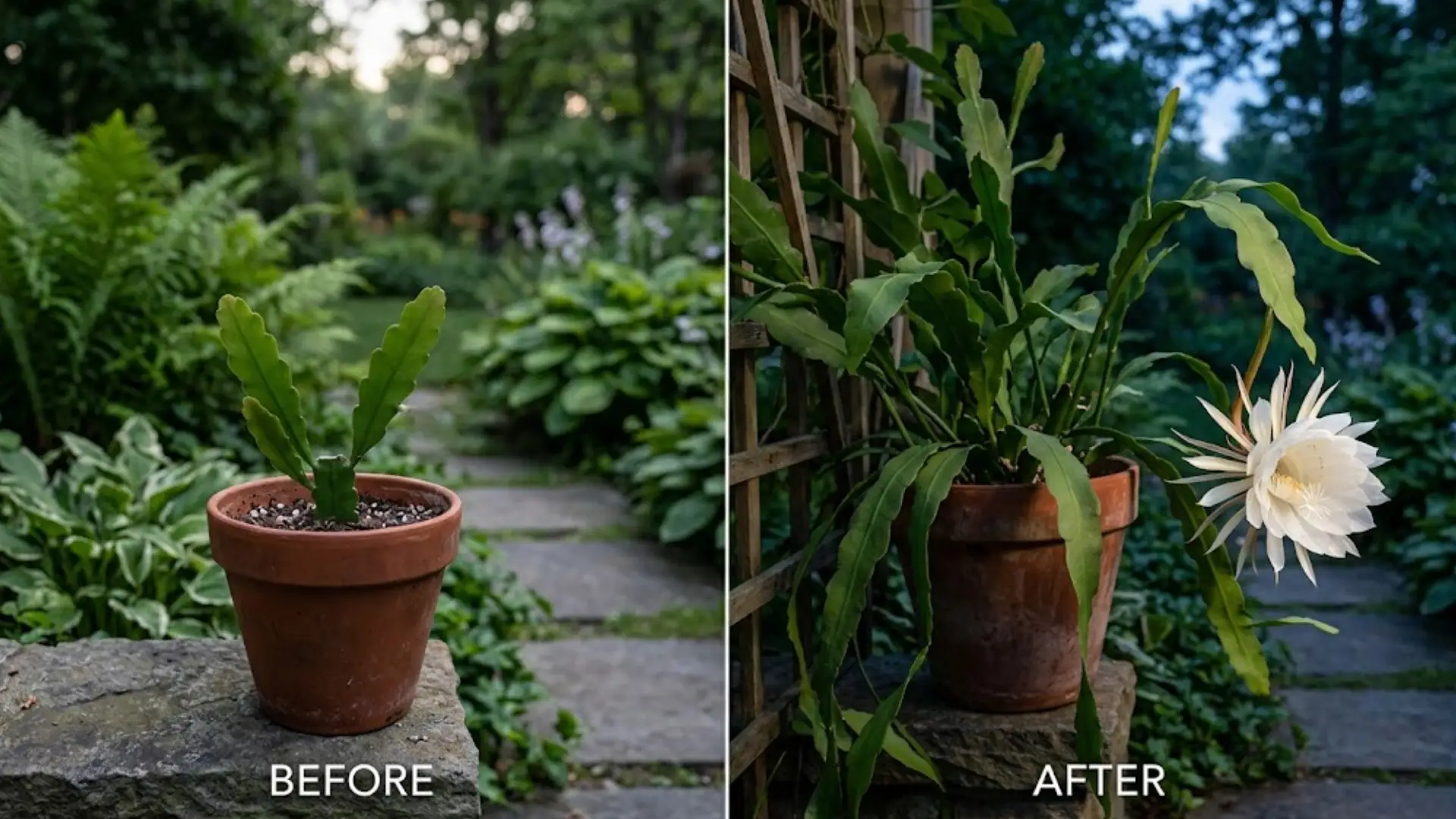
Encouraging a night-blooming cereus to flower requires patience and the right growing conditions.
A healthy plant needs enough bright indirect light, proper watering, and balanced nutrients to develop flower buds. So, avoid overfeeding with nitrogen because it can promote stem growth while reducing blooming.
Allowing the plant to experience a cooler rest period during winter can also help prepare it for future flowers.
Mature plants are more likely to bloom, so younger plants may need extra time before producing the night-blooming cactus flower.
Keeping the roots slightly crowded, maintaining warm temperatures, and following a consistent care routine can improve the chances of seeing large, fragrant blooms appear during the flowering season.
How to Propagate Night Blooming Cereus?
Propagating this cactus is a simple way to grow new plants from an existing healthy cactus.
While stem cuttings are the most common method, I also use callusing and planting a leaf segment, and I also use division during repotting to gently separate crowded clumps into their own pots.
For a safer route, layering works beautifully; I pin a low-hanging stem to the soil until roots form, then cut it free.
Once established, these young plants make thoughtful gifts. Passing them on to friends or neighbors feels like sharing a piece of the night’s mystery, keeping the cycle of growth alive in other homes.
Night Blooming Cereus Care: Potting & Repotting
Giving the roots fresh space is essential, but this plant actually prefers a cozy fit and blooms best when slightly rootbound.
It is a balance between providing enough room to grow and keeping the roots snug enough to feel secure.
| Action | The Trigger | My Method |
| Standard Schedule | Young plants (Yearly) vs. Mature (3-4 Years) | I inspect roots annually, but avoid unnecessary moves |
| Signs to Repot | Roots escaping drainage holes; rapid drying | Move to a pot only one size larger; loosen tight roots |
| Soil Refresh | The plant is too heavy or established to unpot | Gently replace just the top two inches of soil |
| Full Soil Swap | Old soil has degraded into dust or dense mud | Remove old mix completely; replant in fresh, airy soil |
Refreshing the soil or moving to a new home gives the plant a burst of energy. It ensures the foundation remains healthy without disturbing the plant more than necessary.
What to Expect During Night Blooming Cereus Flowering?
Watching the bloom unfold is the true reward for all our patience, feeling like a quiet, private celebration I get to witness.
- Bud Development: Small fuzzy buds appear along the stem edges and slowly grow into curved shapes before forming full flower buds.
- Slow Growth Process: The flower bud can take several weeks to mature, building anticipation before the bloom opens.
- Nighttime Blooming: The flower usually begins opening after sunset, creating a short but beautiful display during the night.
- Large Fragrant Flowers: The blooms can grow very large with white petals and release a strong, sweet scent similar to vanilla.
- Short Flower Lifespan: The flowers often fade and close by morning, making the bloom a rare event to enjoy.
- Best Photography Time: Soft lighting works best for capturing flower details without disturbing the natural appearance of the bloom.
Conclusion
Caring for a night-blooming cereus becomes much easier when you understand its basic needs, from bright indirect light and well-draining soil to proper watering and seasonal feeding.
This unique cactus may require patience, but the reward of seeing its large, fragrant flowers open at night makes the effort worthwhile.
Following a consistent care routine can help your plant stay healthy and encourage future blooms.
Have you grown a night-blooming cereus or witnessed its beautiful cactus flower bloom? Share your experience, tips, and thoughts in the comments below.
Frequently Asked Questions
How Old Does a Night-Blooming Cereus Need to Be Before it Flowers?
Most plants need about three to five years of steady growth before producing their first bloom. Younger cuttings need time to build up enough stored energy in their stems.
Can I Keep My Night Blooming Cereus Outdoors Year-Round?
Only in frost-free climates. Anywhere temperatures drop near freezing, bring the plant indoors before the first cold snap and treat it as an indoor plant through winter.
Is the Dragon Fruit Cactus the Same Plant as Night Blooming Cereus?
Hylocereus undatus, the dragon fruit cactus, is one of several species that share the night-blooming cereus name. It shares the same nighttime flowering habit but needs more direct sun if you want it to fruit.
Is Night Blooming Cereus Safe Around Pets?
The ASPCA lists night-blooming cereus, including the Hylocereus (dragon fruit cactus) type, as non-toxic to dogs, cats, and horses. That means an occasional nibble is unlikely to cause serious poisoning.





7 Responses
Thank you for this article. I inherited a night blooming cereus from my grandmother , born 1883, and along with it heard all her stories of summer night parties anticipating a bloom. I was.”busy” in 1966 and let it die. Now I’m nurturing one in hopes I’ll live long enough to see a bloom😊. Wish me luck. I just came across Robert Hayden’s poem on the plant. It’s wonderful too
my plant haslong skinny leaves on most of it. only one stem has full leaves as in picture . what should i do?
My night blooming cactus broke away from its root base today and I am so sad. it had been leaning to the side for about a month. I did not over water the plant and allowed time for the soil to dry between waterings. Last year it bloomed three times before the end of September. Is it possible to revive it or is the cactus dead? My cactus had a base that looked like a hot air balloon. Any advise is greatly appreciated, thanks.
I love my Queen of the Nille! I went out in the dark many times in pajamas to catch the blooms open. It froze this year unfortunately so I am working today to revive her. I appreciate your comments and will surely use them to hopefully save her. Thanks so much
In order to enjoy this amazing flower earlier, I observe the flower as it forms. This can take about two weeks in my experience. When the tip of the flower begins to open, I cover it with a brown paper bag tricking it into thinking it is nighttime sooner. Allowing you to enjoy the flower earlier in the evening.
I have a large Dutchman’s Pipe bought on a trip to Florida more than 40years ago. It has been a consistent bloomer when moved outside for the summer. My problem is the deer nearly devoured the plant last summer. A rooted cutting they ate roots and all! It seems to be a favorite food! Now I don’t know where to grow it so it will bloom but won’t be eaten. It’s been in the house all winter and has grown quite well. Should I just keep it indoors?
I had my first flower and I couldn’t stay all night to watch it. However is an event of unique connection. Should I cut the flower ? It is morning now.