I used to wonder about the real difference in the narcissus vs. daffodil mix-up. Every spring, I’d see those golden blooms and hear people call them by both names.
I thought they were two separate flowers. I started asking questions, reading plant tags, and looking deeper.
Turns out, the answer is more about names than plants. That got me curious, and I kept digging until it made sense.
Now it’s your turn to understand the full story. If you’ve ever stood in front of a flower bed wondering what to call those bright blooms, this will help.
You’ll learn what each name means, why both are still used, and how to tell them apart when it counts. Let’s get started.
Why Flower Names Can Be Confusing
Flower names can be tricky, especially when one plant seems to go by more than one name. That’s because there are two main types of names: scientific and common.
The scientific name is used by plant experts around the world. It stays the same in every language, which helps avoid mix-ups.
But common names? Those can change based on where you live, what people around you say, or even what’s written on a label at the garden store.
One plant might have several common names depending on the region. Gardeners, seed catalogs, and plant tags often use different words. That’s how confusion starts.
A flower might be called one thing in the South and something else in the North. This is exactly what happens with narcissus and daffodil.
People use both, often without knowing they mean the same thing. That’s why it helps to know the background.
Narcissus vs. Daffodil: The Simple Explanation
Here’s the easy rule: all daffodils are narcissus, but not all narcissus are daffodils.
Think of it like this. Narcissus is the last name that covers the whole group. Daffodil is one of the first names used for the most familiar members.
It’s like saying every square is a rectangle, but not every rectangle is a square.
If you want the quick answer, here it is. “Narcissus” is the scientific name for the full plant group. “Daffodil” is the common name for the most popular kind.
You usually hear daffodil when someone points to a bright yellow flower with a trumpet-shaped center.
Even though plant tags may say narcissus, most people just say daffodil. Both names are correct in different ways.
What is Narcissus: The Botanical Side
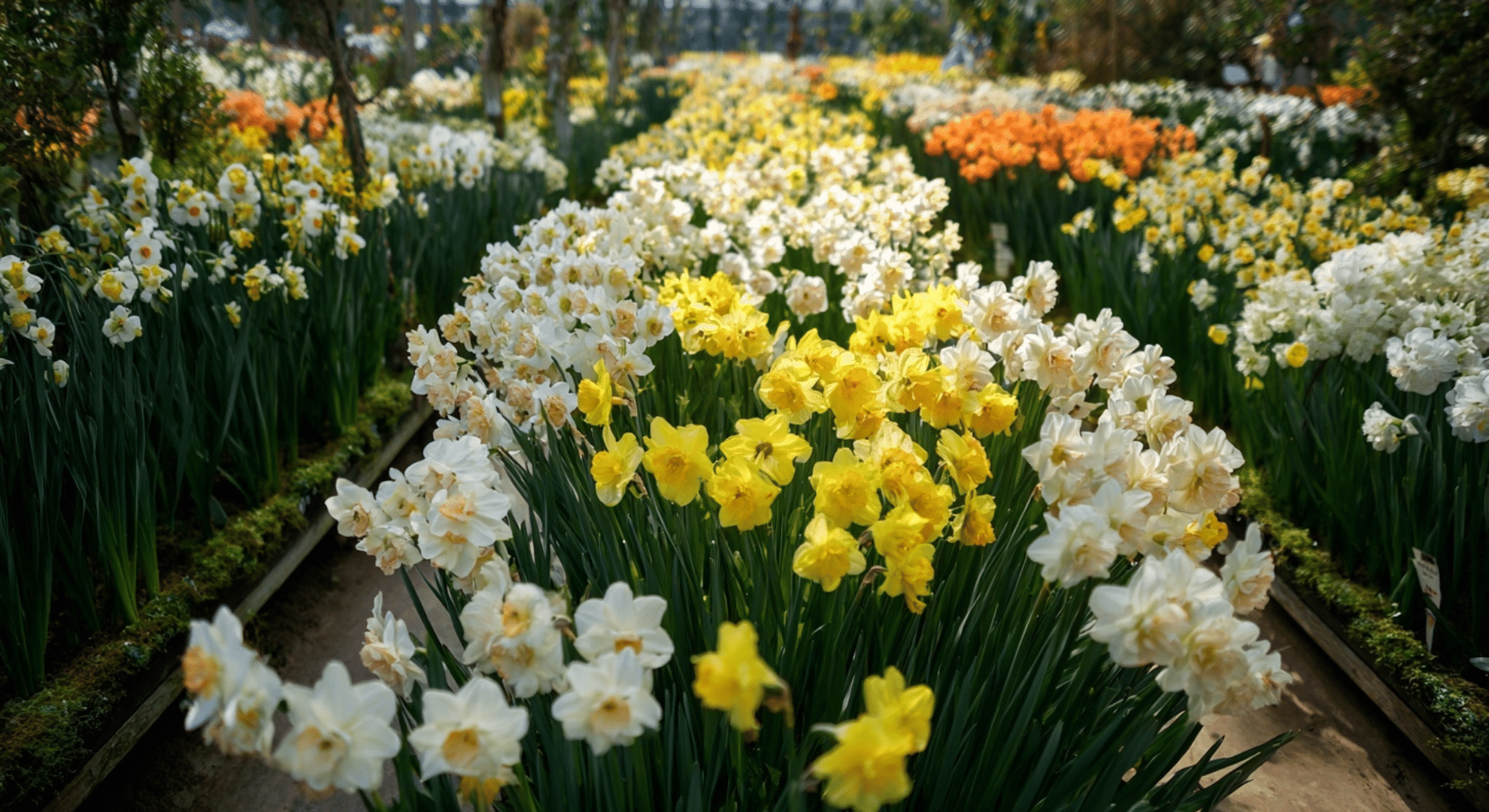
Narcissus is the plant’s scientific genus.
That means it’s the main group name used in science and gardening. This group includes several types of flowers such as daffodils, jonquils, and paperwhites. They all belong to the same large plant family.
When you buy bulbs at a store or see a tag in a nursery, you might notice the word Narcissus instead of daffodil. That’s because it is the proper group name used in plant science.
There are about 50 different species in the narcissus group. On top of that, there are thousands of hybrids. These hybrids are created by crossing different types to get new colors, shapes, and sizes.
You don’t need to remember them all. Just know that narcissus is the big group name that holds many kinds of spring-blooming flowers.
What is a Daffodil: The Common Name Most People Use
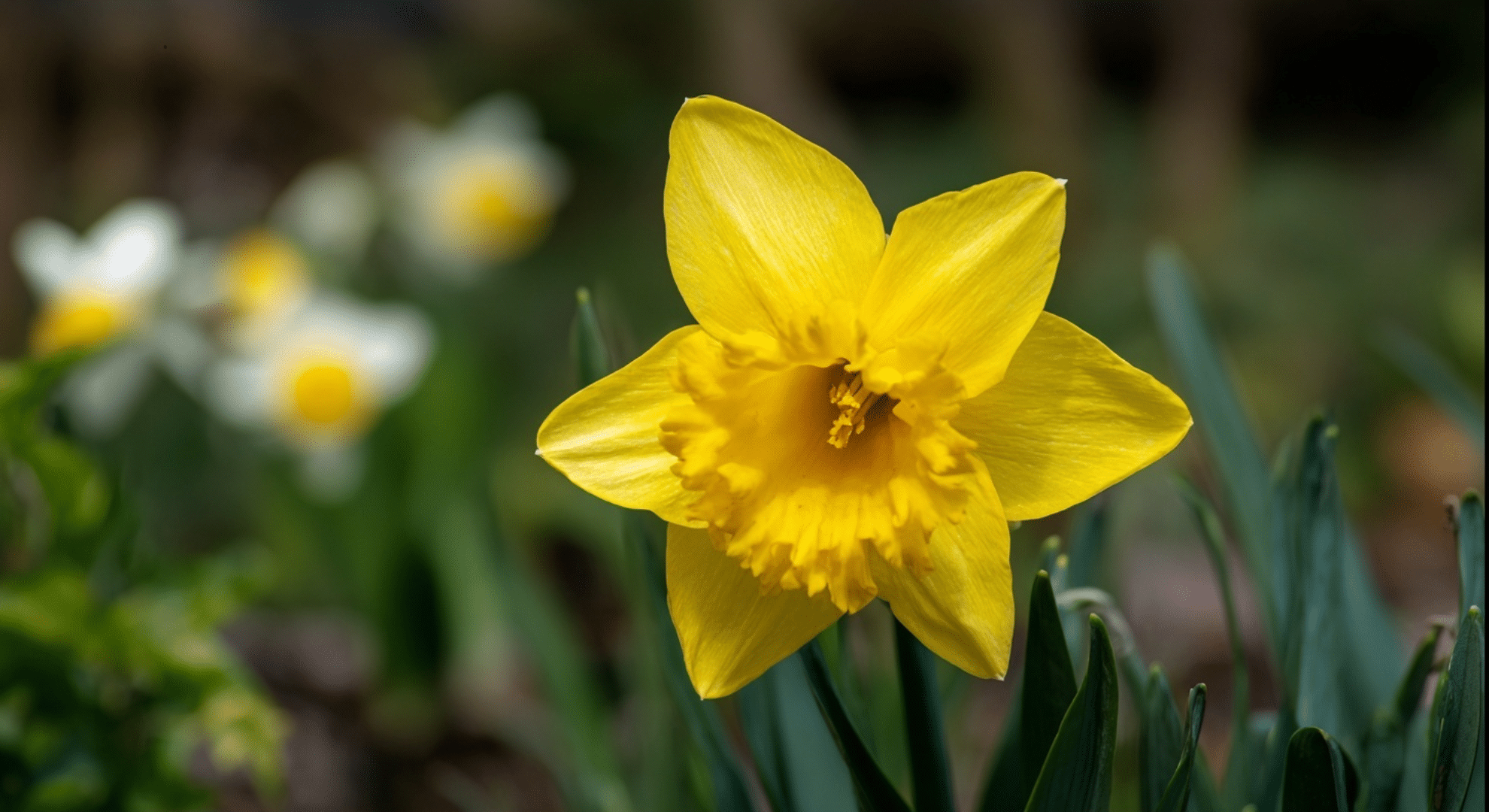
Daffodil is the name most people use when they talk about these bright spring flowers. It is not a scientific term. It’s a common name, and it usually refers to the most familiar kind of narcissus.
Daffodils often have a large central trumpet and six outer petals.
Most have one flower per stem, and they usually bloom in early spring. Yellow is the most common color, but daffodils can also be white, orange, or a mix.
Even though daffodil is not the scientific name, it’s the one people know best. It is simple and easy to say. That’s why many call all types of narcissus by this name, even if they technically belong to another group.
Over time, daffodil became the word people use the most when they see these flowers in gardens, parks, or flower beds.
Where Jonquils and Other Narcissus Types Fit In
The word “narcissus” covers more than just daffodils. There are other types in the group that look and smell a little different.
Two of the most talked-about are jonquils and paperwhites. These flowers are often mixed up or misunderstood, but they each have their own traits.
Let’s clear up what makes them stand out and why they still count as part of the narcissus group:
What is a Jonquil?
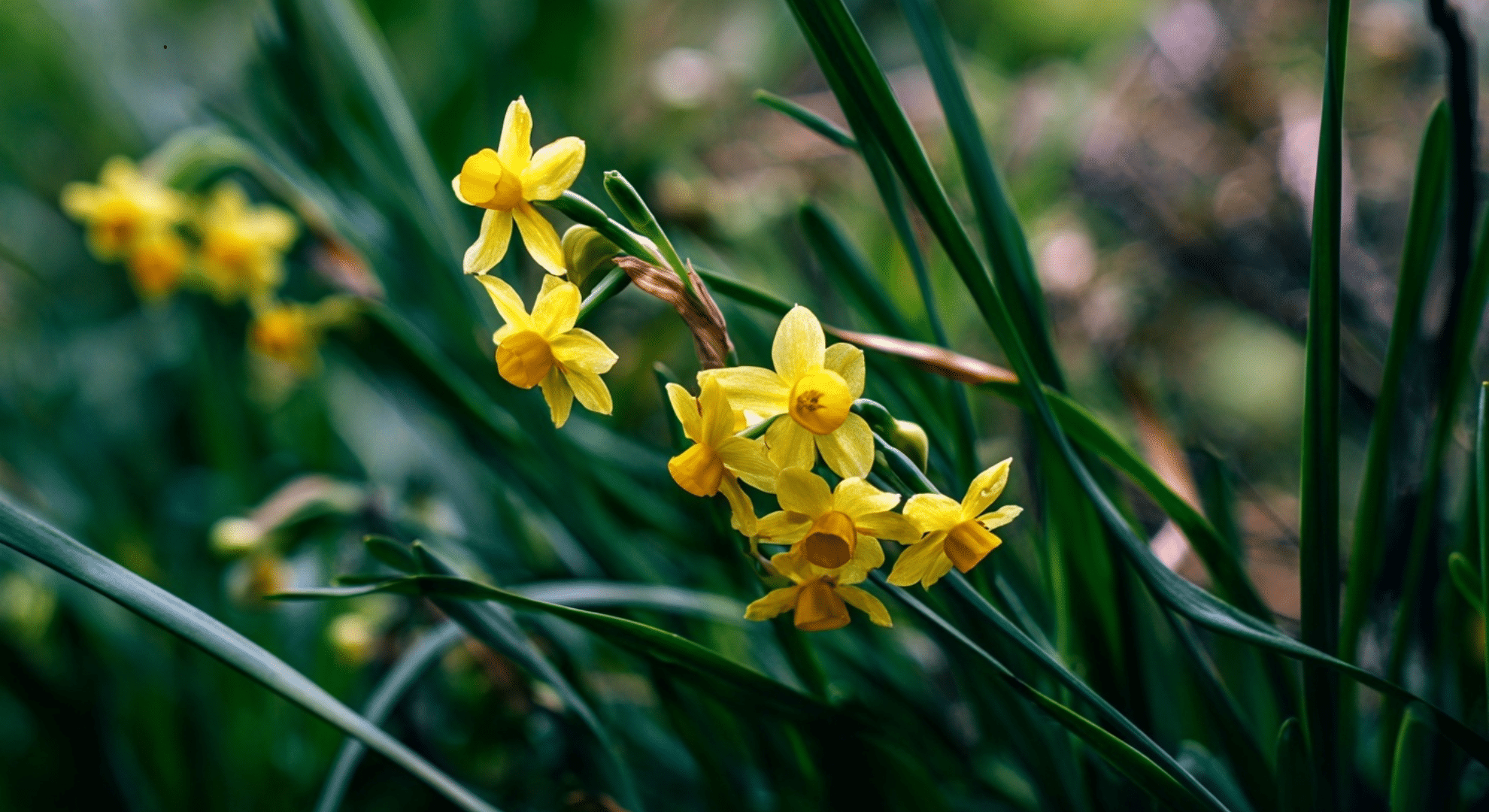
A jonquil is a type of narcissus known by its full name, Narcissus jonquilla. It has some clear traits that set it apart from the more common daffodil.
- It usually has multiple small blooms on a single stem
- The flowers are often bright yellow
- They have a strong, sweet smell that makes them popular in gardens
- Their leaves are thin and narrow, more like grass than the wide leaves of daffodils
Some places in the southern United States call all daffodils “jonquils,” even though not all of them are true jonquils. That habit stuck over time, even if it’s not technically right.
If a flower has a strong scent and thin leaves, there’s a good chance it’s a real jonquil.
What Are Paperwhites?
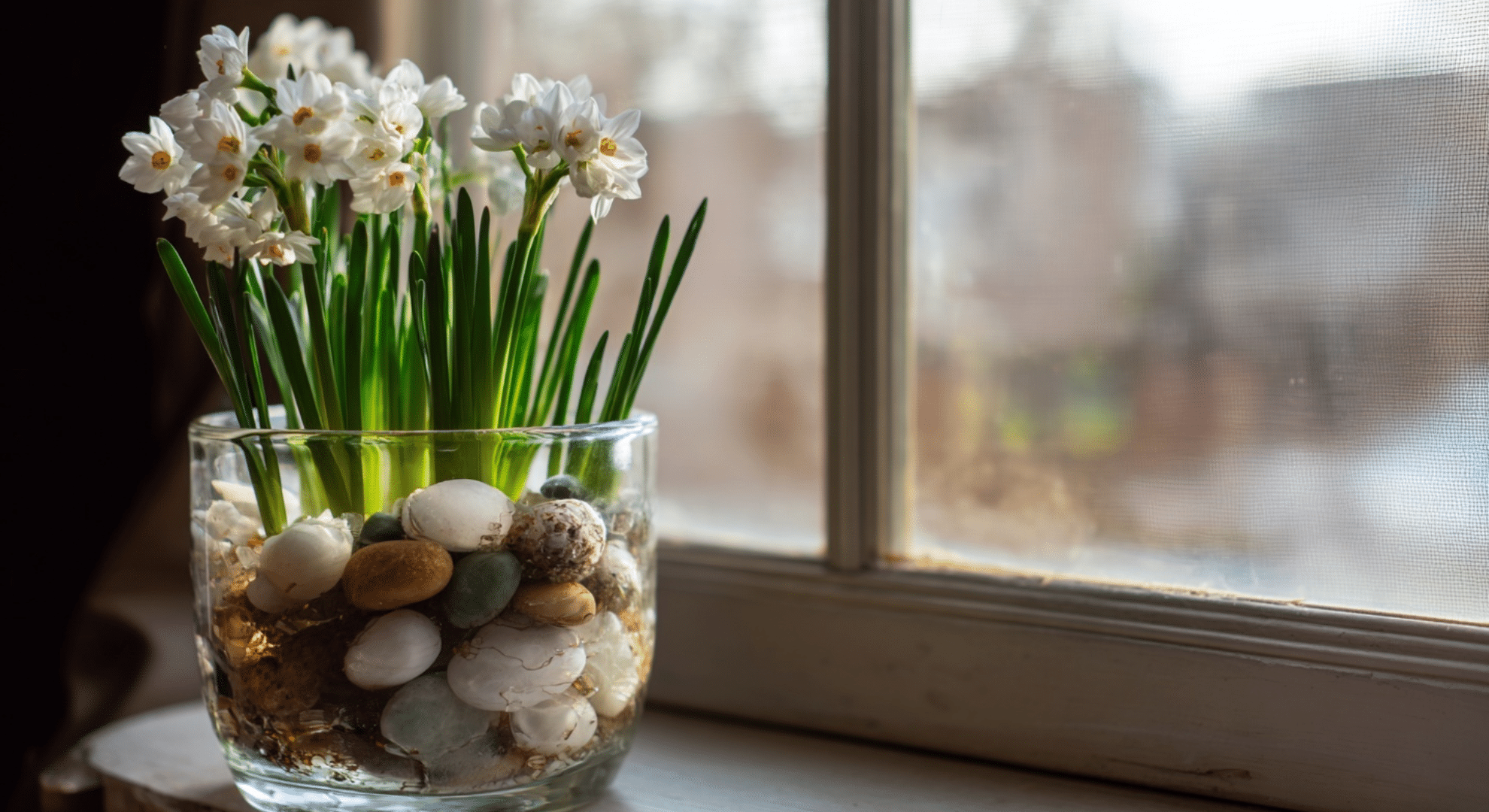
Paperwhites are another member of the narcissus family. These flowers are different from the daffodils most people picture. For one thing, they bloom in winter, not spring.
They are often grown indoors and are great for forcing, which means making them bloom early by changing light and temperature conditions.
Here’s what makes paperwhites special:
- They have small, white flowers with a cluster of blooms per stem
- They don’t have the large trumpet shape like classic daffodils
- They have a strong scent, which some people love and others find too much
- They are often grown in pots or glass containers with stones and water
Even though they look different, paperwhites still belong to the narcissus group. They are just one more branch in a very large family.
Their popularity grows each winter, especially for people who want something cheerful to bloom inside when it’s cold outside.
Daffodil vs. Narcissus – Why You May See Both Terms Online
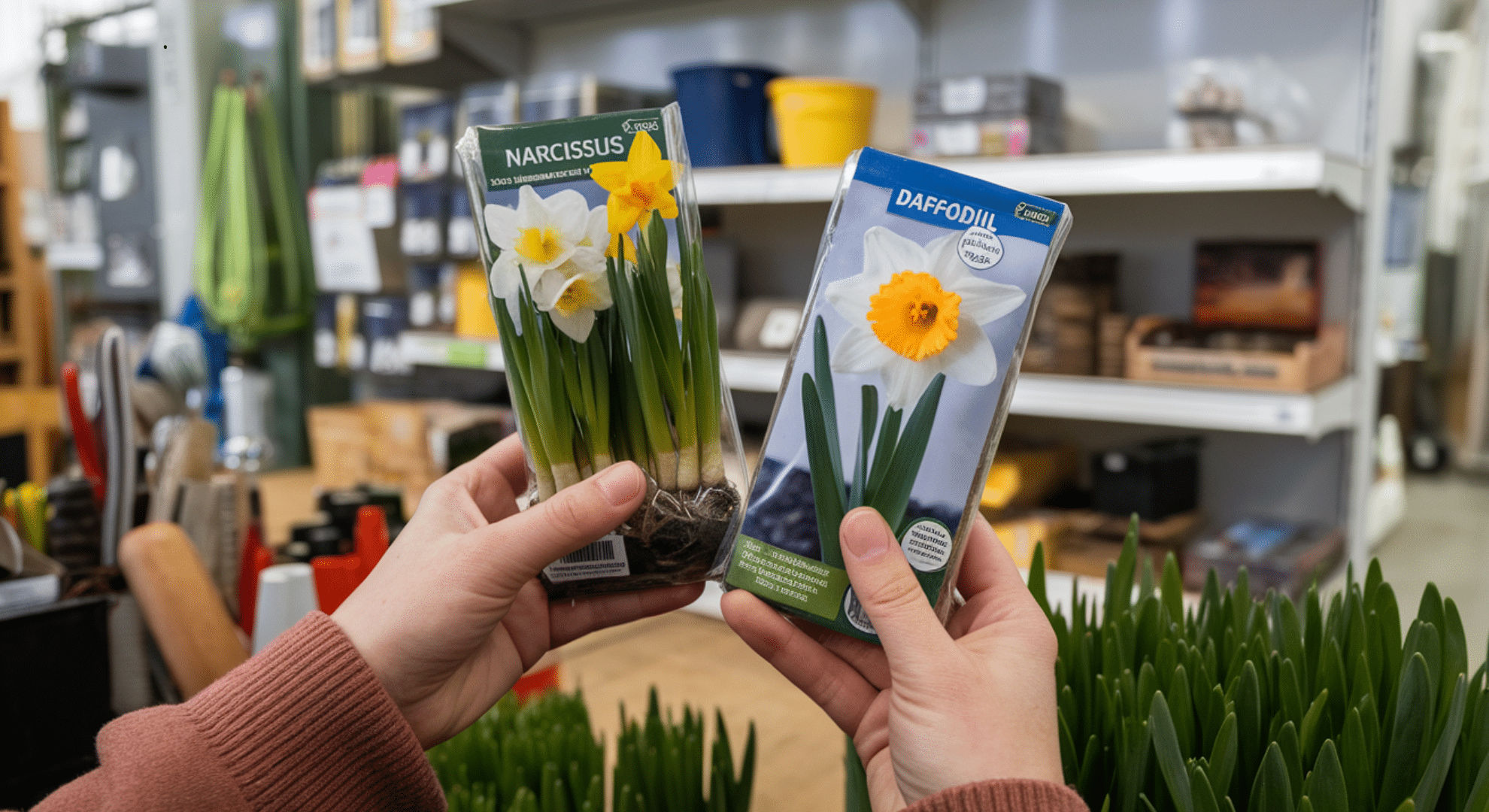
If you’ve searched for daffodil vs. narcissus online, you’re not alone. Many people type it in just like that, wondering if there’s a real difference.
Sometimes it’s spelled as “narcisus” or “narsissus” by mistake. That’s normal. Spelling can get tricky, especially with less common words. But all of these searches usually point to the same question: Are daffodils and narcissus the same thing?
The short answer is yes. Most people are just trying to figure out why the same flower seems to have two names. Garden centers, blogs, and plant tags often mix both terms. That leads to more confusion.
You’re not doing anything wrong by using either name.
The important thing is knowing that “narcissus” is the scientific group name, and “daffodil” is the everyday name for the most common kind.
Understanding that clears up a lot, especially when shopping for bulbs or learning about flower care.
How to Tell Narcissus Types Apart in Real Life
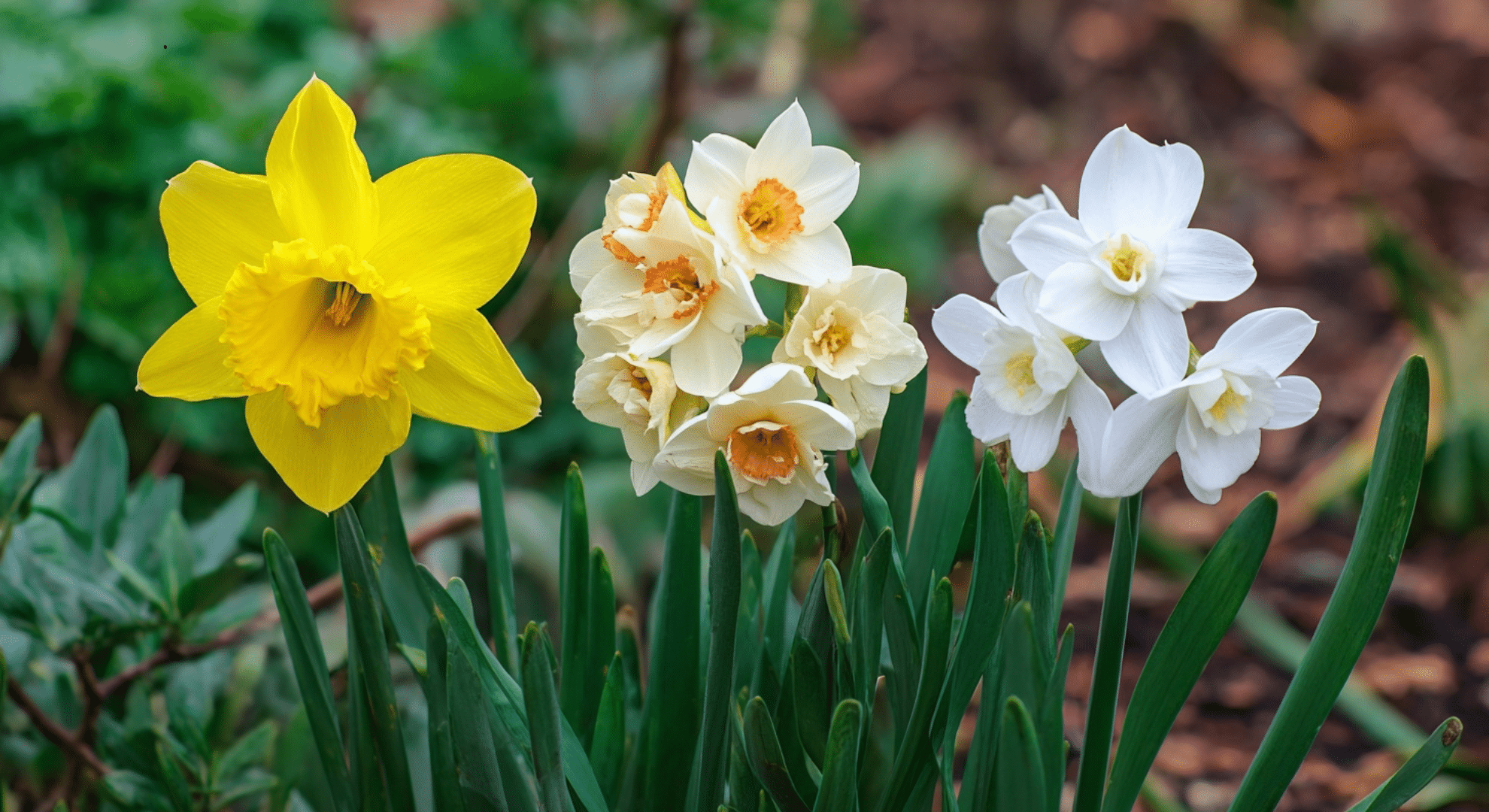
It’s easy to get mixed up when looking at different types of narcissus in a garden or store. But if you know what to look for, you can usually figure it out by checking a few simple details like the shape, scent, and blooming time.
Here’s a quick comparison to help you tell them apart:
| Feature | Daffodil | Jonquil | Paperwhite |
|---|---|---|---|
| Trumpet Size | Large and central | Small to medium | Small or no trumpet |
| Flower Shape | One large bloom per stem | Cluster of small blooms | Cluster of small white blooms |
| Blooms per Stem | Usually one | Several | Several |
| Scent | Mild or none | Strong and sweet | Strong, often sharp |
| Bloom Season | Early to mid-spring | Mid to late spring | Winter |
| Plant Tag Says | Narcissus or Daffodil | Narcissus (Jonquilla) | Narcissus (Paperwhite) |
This kind of detail isn’t always written clearly on tags, so it helps to match what you see to what you know. With a little practice, spotting the difference becomes much easier.
Do Narcissus and Daffodils Smell Different?
Yes, some types of narcissus have a strong scent, while others hardly smell at all. This is one reason people search for narcissus vs daffodil smell. The difference depends on the type, not just the name.
Jonquils and paperwhites are known for having a strong fragrance. Jonquils have a sweet, rich smell that many people enjoy in gardens. Paperwhites, often grown indoors in winter, have a sharper scent. Some people like it, but others find it too strong for small spaces.
Classic daffodils, the ones with large trumpets and usually one bloom per stem, often have little or no smell. That’s why many people don’t even realize they’re part of the scented narcissus group.
So the scent isn’t tied to the name alone. It depends on the variety. If you’re looking for fragrance, jonquils and paperwhites are your best bet. Daffodils are more about looks than smell.
How Nurseries and Bulb Sellers Use These Names
When you shop for flower bulbs, you’ll often see the word “narcissus” on the label or packaging. That’s because it’s the scientific name used across all types in the group.
It keeps things clear for growers and sellers, especially when dealing with different varieties like jonquils, paperwhites, and classic daffodils.
On the other hand, sellers use “daffodil” more often in ads, signs, and catalogs. That’s the name most people recognize, so it helps make the product easier to sell.
If you’re buying bulbs, check for details beyond the name. Look for pictures, bloom time, number of flowers per stem, and any scent notes. These clues will tell you more than the name alone.
To avoid picking the wrong type, decide what you want first: fragrance, bloom season, color, or shape. Then match those traits to the variety listed. Don’t rely on the name alone to make your choice.
Which Term Should You Use?
When it comes to choosing between “narcissus” and “daffodil,” it depends on who you’re talking to and what you’re talking about.
In most casual conversations, “daffodil” is the word people know and use. It’s simple, friendly, and instantly brings to mind those bright yellow spring flowers.
That’s why you’ll hear it more often and see it in ads or garden blogs.
Use “daffodil” when:
- You’re chatting with friends or family
- You want to keep things simple
- You’re talking about the classic yellow spring flower
Use “narcissus” when:
- You’re reading plant labels or shopping for bulbs
- You’re learning about different flower types
- You want to be more exact in gardening conversations
Knowing both names is helpful. It lets you understand labels, ask better questions at garden centers, and choose the flowers that match what you want.
Both terms have a place. Use the one that fits best for the moment.
Conclusion
I used to get confused by the names too. I’d see daffodils in bloom and wonder why some labels said narcissus.
Once I learned that daffodils are just one type of narcissus, everything clicked. Knowing the difference helped me pick the right bulbs, understand plant tags, and enjoy gardening a lot more.
Now it’s your turn to use what you’ve learned. The narcissus vs. daffodil question isn’t so tricky anymore. You can spot the differences, choose what fits your space, and shop with more confidence.
Just remember to check for scent, bloom time, and shape, not just the name.
If this helped, keep going. There’s more simple, clear info waiting for you. Check out other blogs on the website to keep learning and growing!