When you’re standing in the garden center aisle, staring at bags of mulch on one side and pallets of decorative rock on the other, that simple question starts swirling: which one actually belongs in your garden?
It’s not just about what looks pretty (though that definitely matters)!
Your choice between mulch and rock shapes how your plants thrive, how much time you’ll spend maintaining your beds, and, honestly, how your whole outdoor space feels when you step outside.
If you’re refreshing tired flower beds or starting a landscape from scratch, understanding what each option brings to the table helps you create a yard that works beautifully for years to come.
What is Mulch?
Mulch is a protective layer spread over soil to shield plant roots and improve growing conditions.
You’ll find it in two main categories: organic options like wood chips, shredded bark, and compost that break down over time, and inorganic types like rubber mulch that stick around longer.
Most gardeners spread mulch around flower beds, tree bases, and garden pathways to keep things tidy.
What makes mulch special is how it interacts directly with your soil. Organic varieties decompose gradually, feeding nutrients back into the ground while helping retain moisture and regulate temperature.
It’s living material that evolves with your garden.
What is Rock?
Rock refers to decorative stones like gravel, river rock, and crushed granite used as permanent ground cover.
You’ll spot these materials in hardscaping projects, garden borders, and xeriscaping designs where durability takes priority.
Unlike mulch, rock doesn’t break down or need regular replacement, making it a set-it-and-forget-it solution for low-maintenance areas.
The fundamental difference lies in how rock stays separate from your soil rather than interacting with it.
While mulch feeds and enriches the earth beneath, rock simply sits on top, creating a clean, polished look that stays consistent year after year. It’s inert, permanent, and completely hands-off once installed.
Pros and Cons: Mulch vs. Rock
Choosing between mulch and rock means weighing trade-offs that affect everything from your budget to how your plants perform.
Let’s break down what each option gives you and where it falls short.
The Mulch Balance Sheet
Mulch brings a lot to your garden beds, but it asks for ongoing attention in return. Here’s how the benefits and drawbacks stack up:
| What It Does Well | Where It Falls Short |
|---|---|
| Soil Health: Retains moisture, regulates temperature, and improves fertility as it decomposes | Durability: Needs replacement every 1–2 years, fades in the sun |
| Weed Control: Suppresses weeds naturally | Weather Resistance: Can be washed or blown away in storms |
| Cost & Style: Lower initial investment with a natural, versatile look | Pest Issues: Can attract ants, termites, and rodents |
The Rock Reality Check
Rock offers permanence and durability, but that long-term commitment comes with its own set of considerations:
| What It Does Well | Where It Falls Short |
|---|---|
| Longevity: Extremely durable, lasts many years with minimal maintenance | Installation: Higher upfront cost, heavy, and harder to install |
| Resilience: Excellent for erosion control, fire-resistant, doesn’t attract pests | Plant Impact: Absorbs heat that can stress plants, doesn’t improve soil health |
| Design: Wide variety of colors and textures, better long-term cost efficiency | Flexibility: Difficult to change later, weeds can still grow through over time |
Aesthetic Appeal: How They Look in Landscaping?
Mulch brings softness to your landscape with its earthy tones and natural texture, blending seamlessly around plants for that classic garden feel.
Rock, on the other hand, adds structure and polish, perfect for contemporary designs and clean-lined hardscapes.
When choosing materials, consider how colors complement your home’s exterior and existing plantings. Lighter rocks brighten shady spots, while dark mulch makes foliage pop.
The real magic happens when you combine both: picture-rich mulch tucked around your perennials with river rock edging the beds or creating pathways.
This layered approach gives you the best of both worlds, balancing organic warmth with lasting definition.
Maintenance and Care: Mulch vs. Rock
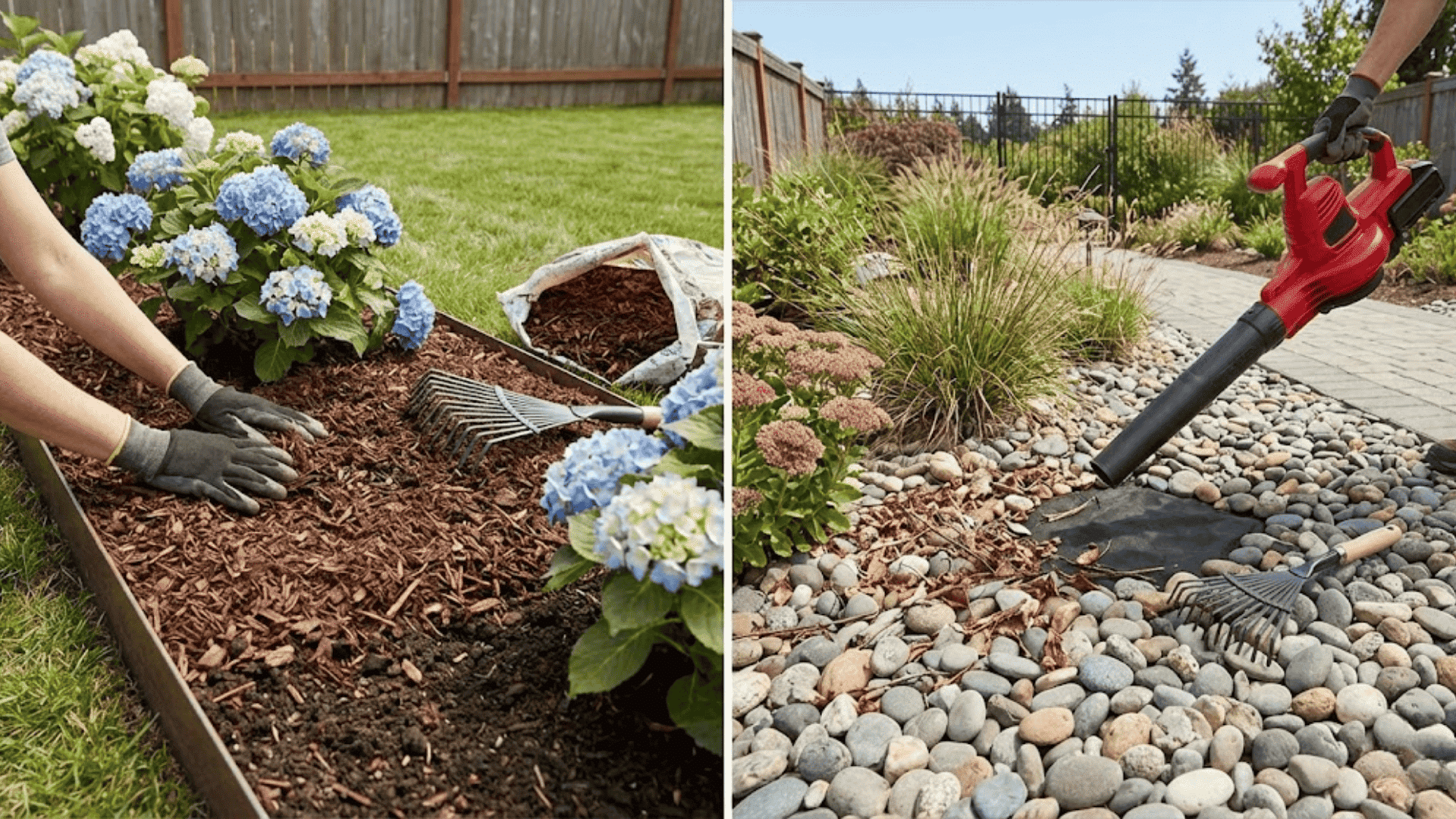
Both mulch and rock need some level of upkeep to stay looking sharp and functioning well. The difference lies in how often you’ll be tending to them and what that care actually involves.
Keeping Mulch Beds Fresh
Mulch requires regular attention to maintain its benefits and appearance, but the tasks themselves are straightforward:
- Refresh layers annually or biannually to replace decomposed material and maintain a 2-3 inch depth.
- Monitor for pests like termites or fungus, especially in damp conditions or near wooden structures.
- Edge beds seasonally to keep mulch contained and prevent it from spilling onto lawns or walkways.
- Time applications strategically by mulching in spring for moisture retention or fall for winter insulation.
Managing Rock Beds
Rock beds demand less frequent care but still need occasional intervention to stay pristine:
- Install landscape fabric underneath before laying rock to block weeds and simplify long-term maintenance.
- Pull weeds manually as they emerge through gaps, or spot-treat with appropriate herbicides.
- Remove debris regularly using a leaf blower or rake to keep the surface clean and polished.
- Level and redistribute rocks every few years if settling or erosion creates uneven patches.
Cost Analysis: Short Term vs Long Term
Understanding the financial picture helps you make a smarter choice for your budget and timeline.
Here’s how the numbers actually play out over time:
| Cost Factor | Mulch | Rock |
|---|---|---|
| Initial Cost (per cubic yard) | $30–$60 | $50–$150 |
| Coverage Cost (500 sq ft) | $75–$150 | $125–$375 |
| Replacement Frequency | Every 1–2 years | 10+ years (virtually permanent) |
| 5-Year Total Cost | $375–$750 | $125–$375 |
| 10-Year Total Cost | $750–$1,500 | $125–$375 |
| Best Economic Fit | Small beds, changing gardens | Large permanent landscapes, slopes |
What This Means for Your Budget: Mulch keeps your upfront spending low but asks for regular reinvestment. Rock flips that equation with a heftier start but minimal costs down the road, making it the winner for long-term projects.
Best Uses: When to Choose Mulch or Rock?
The right choice depends on what you need from your landscape and how your garden actually functions.
Here’s when each option makes the most sense for your specific situation.
Go with Mulch When
Mulch works best in garden spaces where plant health takes priority, and you want that classic, nurturing garden feel:
- Your soil needs enrichment, and you’re growing flowers, vegetables, or newly planted shrubs that benefit from steady nutrients.
- You’re cultivating annual beds or areas where you change plantings often and want flexibility in your design.
- You prefer a soft, organic aesthetic that blends naturally with foliage and creates a cohesive garden look.
Choose Rock When
Rock shines in situations where permanence and practicality matter more than soil interaction:
- Low maintenance is your priority, and you want a ground cover that stays put for years without refreshing.
- You’re dealing with drainage issues or erosion on slopes, around downspouts, or in areas with heavy rainfall.
- You’re designing high-traffic zones like pathways, decorative borders, or commercial spaces that need durability.
Combining Mulch and Rock (Hybrid Approaches)
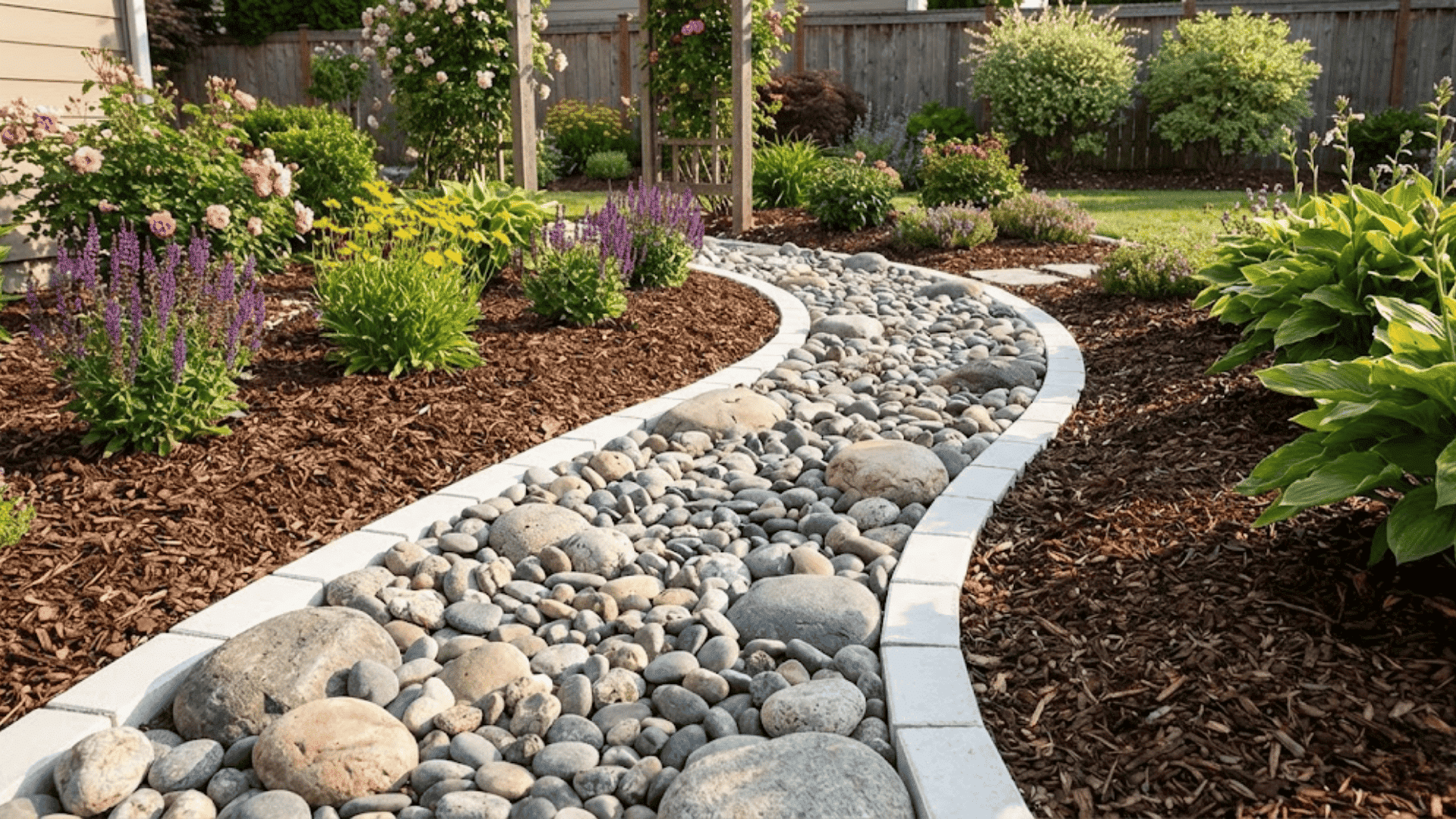
You don’t have to pick just one. Mixing mulch and rock lets you capture the benefits of both while creating visual interest in your landscape.
Use rock for high-traffic pathways, edging, and borders where durability matters, then fill planting beds with mulch to nourish your flowers and shrubs.
This approach works beautifully in cottage gardens with gravel paths winding through mulched beds, or modern designs where river rock frames vegetable patches.
When installing, lay landscape fabric first, then add rock in walkways before defining bed edges and spreading mulch around plants.
The contrast adds dimension while keeping each material where it performs best.
Common Mistakes to Avoid
Even small missteps can undermine how well your ground cover performs. Sidestepping these common errors saves you time, money, and frustration down the road.
- Skipping the weed barrier under the rock lets weeds push through and makes removal nearly impossible once the roots establish.
- Piling mulch too thick or against tree trunks invites rot, disease, and pest infestations by trapping moisture where it shouldn’t be.
- Choosing dark rock in full sun can overheat the soil and stress plant roots, especially in already hot climates.
- Neglecting seasonal refreshing means mulch loses effectiveness as it decomposes, and rock beds collect debris that dulls their appearance.
- Mixing soil types with rock creates muddy messes when rain hits, compromising drainage and creating maintenance headaches.
Getting these details right from the start means your landscaping looks better and works harder without constant troubleshooting.
The Bottom Line
Your garden deserves ground cover that actually works for your lifestyle and plants.
The mulch vs. rock decision isn’t about finding a universal winner but about matching materials to your specific needs.
Mulch nourishes and adapts, perfect for thriving plant beds. Rock anchors and endures, ideal for permanent landscapes. Maybe you’ll use both, letting each shine where it belongs.
Take a walk through your yard, think about what matters most to you, and start creating beds that feel just right for how you live and garden.
Have questions or tips from your own landscaping experience? Drop a comment below and let’s chat about what’s working in your space.