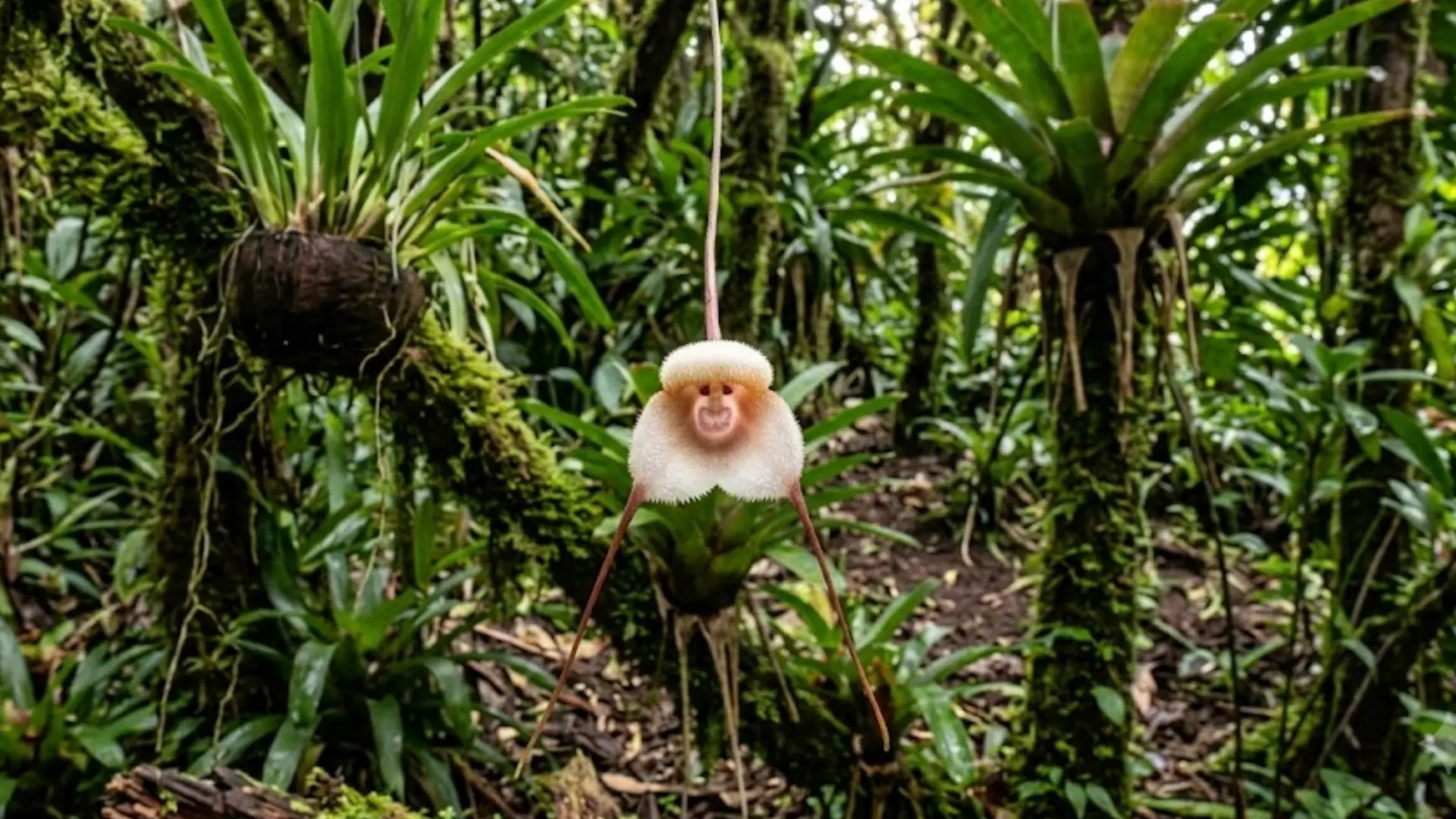
Its always the first time you see a monkey orchid and have to look twice because it is a really unusual and unbelievable feature for a flower to have a face.
I also had the thought that it might be Photoshop. But to my surprise, no, this strange little bloom really does stare back at you with tiny “eyes” and a monkey-like grin.
I felt that spark of childlike wonder, the kind you rarely get from a houseplant.
Nature has a wicked sense of humor sometimes, and this orchid is proof. It’s fragrant, fleeting, and a little bit mysterious, growing high in the trees where few of us will ever wander.
What is a Monkey Orchid?
The monkey orchid is a rare-looking orchid known for its flower shape, which closely resembles a tiny monkey face. Below, I have listed the details about it:
|
Attribute |
Detail |
|
Common Name |
Monkey Orchid |
|
Scientific Name |
Dracula simia |
|
Family |
Orchidaceae |
|
Genus |
Dracula (118 species) |
|
Elevation |
1,000-2,000+ meters |
|
Growth Type |
Epiphytic (grows on trees, not soil) |
|
Flower Color |
Reddish-brown |
|
Fragrance |
Smells like ripe oranges |
|
Height |
8 inches (20 cm) |
Why is it Called the Monkey Orchid?
As the name suggests, the monkey orchid gets its title from the unusual shape of its flowers, which can look, believe it or not, similar to a monkey’s face.
As given above, its scientific name is Dracula simia, and the word “simia” means monkey in Latin.
When you see the flower, you can notice 3 long sepals surrounding a detailed center that creates the appearance of eyes, a nose, and a mouth.
This face-like pattern is most noticeable when you look directly at the bloom from the front. Not every flower looks exactly the same, so some blooms appear more monkey-like than others.
The resemblance is completely natural and comes from the orchid’s unique flower structure.
This unusual appearance has made the monkey orchid one of the most recognizable and interesting members of the Dracula orchid group.
Where Does the Monkey Orchid Grow?

The monkey orchid grows naturally in cool, misty cloud forests where humidity stays high, and temperatures remain mild. It is mainly found in parts of Ecuador and Peru, often at higher elevations.
These forests provide filtered light, steady moisture, and good airflow, which help the orchid grow well.
- Grows in high-elevation cloud forests with cool, humid conditions
- Usually grows on trees as an epiphyte, not in soil
Because the monkey orchid depends on such specific conditions, it can be difficult to grow outside its native habitat.
Warm, dry air can stress the plant quickly. Growers usually need to recreate cool temperatures, high humidity, gentle light, and constant airflow to keep it healthy and encourage blooming indoors.
Growth & Care Conditions for Monkey Orchid
Growing a monkey orchid at home is a bit of a challenge, but I believe it’s not impossible. This plant is used to the cool, misty cloud forests, so your job is to recreate that environment as closely as you can.
1. Light Requirements
Monkey orchids need bright light, but direct sun will scorch their leaves fast, so you should skip a sunny windowsill.
Instead, aim for filtered or dappled light, similar to what the plant gets under a forest canopy.
An east-facing window with a sheer curtain works well. Too little light, though, and it will not bloom as much as you may.
2. Temperature
This orchid prefers cool temperatures. Daytime temps between 60-70°F suit it best, while nights should drop a little further, ideally into the 50s.
Avoid hot, stuffy rooms or spots near heaters and vents. Sudden temperature swings stress the plant out.
If your home runs warm year-round, a cooler basement, sunroom, or even a small greenhouse setup can make a real difference in keeping it happy.
3. Humidity
Humidity is non-negotiable here; it should ideally be 60-80%. Dry indoor air, especially in winter, will cause leaves to wrinkle or flowers to fail.
A humidity tray, pebble tray with water, or small humidifier nearby helps a lot. Grouping it with other humidity-loving plants can also boost moisture levels naturally.
Misting alone usually is not enough, so you should invest in a reliable, consistent humidity source.
4. Watering
Since monkey orchids don’t grow in soil naturally, their roots need consistent moisture without ever sitting soggy.
Water regularly, letting the potting medium stay lightly damp rather than wet or bone-dry.
Use room-temperature, filtered water or rainwater when possible, since chlorine and minerals can build up and harm sensitive roots.
Never let it fully dry out for long stretches; these orchids do not tolerate drought well at all.
5. Potting Medium
Skip regular potting soil entirely as it holds too much water and suffocates the roots.
Instead, use a loose, airy mix of fine bark, sphagnum moss, and perlite, which mimics the tree bark this orchid naturally clings to.
Good drainage is essential, so you should choose a pot with plenty of holes. Repot every year or two as the medium breaks down, since old, compacted material can quietly cause root rot over time.
When and How Does a Monkey Orchid Bloom?

Unlike many orchids tied to a specific season, the monkey orchid can bloom at almost any time of year.
Flowering happens in cycles, with several blooms opening one after another along the same stem, often lasting weeks to months before fading and cycling again.
- Successive Flowering: Instead of opening all at once, flowers bloom one after another along the inflorescence, extending the overall display.
- Long-Lasting Blooms: Each individual flower can stay open for several weeks, sometimes stretching close to three months under the right conditions.
- Fragrance Release: Blooms emit a sweet, orange-like scent, which tends to be strongest during peak flowering periods.
- Multiple Cycles: Healthy, mature plants can flower more than once a year rather than following one strict blooming season.
How to Propagate a Monkey Orchid?
Propagating a monkey orchid takes patience, since this species grows slowly and doesn’t respond well to rushed methods.
- Division Method: Separate a mature plant into sections once it has multiple growth points, ensuring each division keeps healthy roots and at least one leaf-bearing stem attached.
- Best Timing: Divide during active growth periods, typically spring, so the new sections have time to establish before any stress from temperature shifts.
- Tool Sterilization: Always use a clean, sharp blade to cut through the rhizome, reducing the risk of introducing bacteria or fungal infections into fresh wounds.
- Post-Division Care: Place divided sections in fresh, airy potting medium and keep humidity high while roots recover, since disturbed roots are especially vulnerable early on.
- Seed Propagation: Growing from seed is extremely slow and technical, often requiring lab-controlled, sterile conditions since orchid seeds lack the nutrients to germinate on their own.
- Time to Maturity: Whether from division or seed, you should expect a long wait, as plants grown from seed can take several years before reaching blooming size.
Most home growers rely on division rather than seed, as seed propagation is notoriously difficult and usually left to specialized labs.
Can You Buy and Grow a Monkey Orchid at Home?
Yes, you can buy and grow a monkey orchid at home, but it is more demanding than many common houseplant orchids.
Look for a healthy plant from a reputable orchid nursery and check that it is correctly labeled as Dracula simia.
A greenhouse, terrarium, or controlled indoor growing area can make these conditions easier to maintain.
Beginners may find monkey orchid care challenging, but experienced orchid growers can grow it successfully by closely matching the cool, humid conditions of its
Common Problems & Diseases Faced by Monkey Orchid
Most problems develop when the plant stays too wet, becomes too warm, or does not receive enough ventilation. Checking the roots, leaves, and growing conditions regularly can help you catch issues early.
- Root Rot: Constantly soggy growing medium can damage the roots. Improve drainage, reduce excess watering, and remove any soft or rotting roots.
- Leaf Yellowing: Yellow leaves may result from overwatering, poor drainage, excessive light, or natural aging. Check the growing conditions before making changes.
- Brown Leaf Tips: Dry air, inconsistent watering, or salt buildup can cause crispy tips. Maintain steady humidity and use clean water when possible.
- Fungal Spots: Wet leaves and poor airflow can encourage fungal growth. Improve ventilation and avoid leaving water sitting on the foliage.
- Bud Drop: Sudden temperature changes, low humidity, or stress may cause developing buds to fall before opening.
- Pest Problems: Aphids, scale, and mealybugs may occasionally attack the plant. Inspect leaves regularly and treat infestations early.
Conclusion
The monkey orchid truly lives up to its name, a rare, real-life wonder that turns heads with its uncanny primate-like face and surprising citrus scent.
If this strange little flower has you as curious as it left me, I would love to hear about it.
Drop a comment below and share your experience, questions, or even your own monkey orchid photos; I am all ears (or should I say, all eyes)!
Frequently Asked Questions
Is the Monkey Orchid a Parasite?
No. It’s an epiphyte, meaning it grows on trees for physical support only, absorbing moisture and nutrients from air and rain rather than harming its host plant.
Can Monkey Orchids Grow in the United States?
Yes, but only in USDA zones 10-11 outdoors; most growers cultivate it indoors or in greenhouses with cool temperatures, high humidity, and shade.
Where Can I Buy a Monkey Orchid?
Specialty orchid nurseries, botanical garden plant sales, and online orchid retailers occasionally stock Dracula simia seedlings or seeds, though availability is limited and inconsistent.