The front door of a house is a key in creating the first impression; that is, to the potential buyers, visiting guests or even your daily life as you enter into the house. Nonetheless, the contemporary front doors have been the neglected ones, especially in those areas where a major percentage of residential houses fall within the earlier eras of architectural designs. As an example, a considerable proportion of houses were constructed during the Victorian period and after the war. But with their smooth edges, elegant simplicity, and their minimalist charm, modern entry doors are quickly becoming popular with homeowners who long to refresh and enhance their houses.
The most interesting thing about the modern front doors is that they are versatile. They do not need to be restricted to modern-day homes, but can be carefully blended into the old architecture, forming a perfect transition between the old and the new. With the right choice of materials, colours and shapes, homeowners can maintain the integrity of their property, but with a new, modern look.
Elegance With a Contemporary Twist.
Symmetry, proportion, and classical detailing are some of the features of Georgian architecture. Such houses tend to have an impressiveness of order and eternal elegance. When it comes to including a contemporary front door in such an environment, it is necessary to be subdued and calculated.
The splendour of a Georgian house can be matched by a design that is in clean lines with very little detailing. The choice of colour is very important in this case. Deep burgundy, deep navy or traditional black can add a modern edge and still not compromise the formal nature of the house. To create harmony, it may be suggested to use period-inspired elements in the design of the doors, e.g., panel setup or classic hardware. Such a combination makes the door look up-to-date and, at the same time, not disrespect the architectural tradition of the premises.
A Modern Interpretation of Victorian Elegance.
The Victorian houses, most of which are still present today, are hailed by their elaborate detailing, decorative qualities and their great sense of character. These houses are normally terraced, with complex brickwork, bay windows, and ornate trims.
When designed in such a way that it reflects this beauty, a modern front door can add to this beauty instead of taking away. One of the solutions is to combine decorative glass panels with mild patterns, reflecting the motifs of Victorian design. This maintains the visual richness of the period, but adds a more streamlined overall appearance. Combining these aspects with simple hardware and a basic door design results in a harmonious mix of classic beauty and modern sophistication.
The outcome of this is an entrance that is both real and modern, one that adds to the curb appeal and does not violate the historical background of the home.
Mid-Century Modern Influence
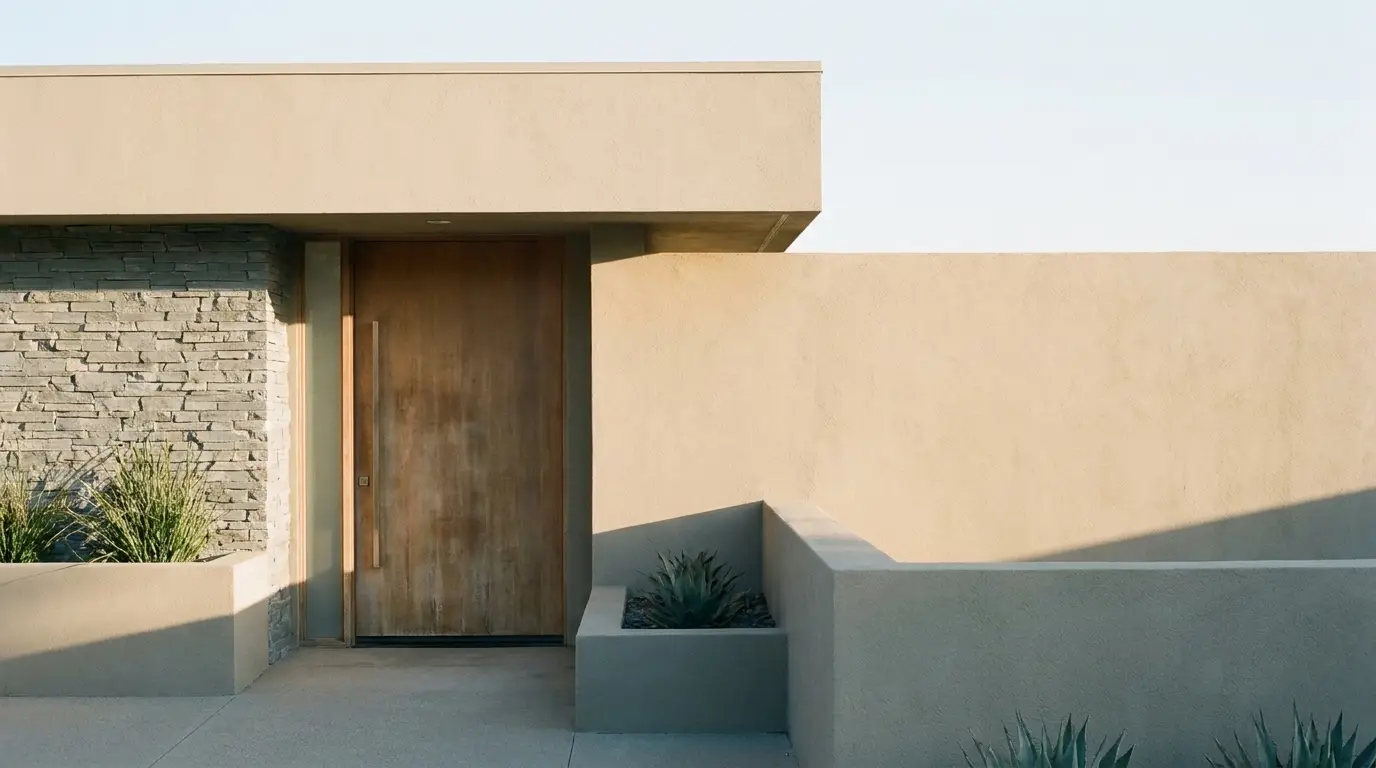
The mid-century modern architecture is characterised by a focus on simplicity, functionality, and integration with the surrounding environment. Characteristics of this style include clean lines, open forms, and understated forms.
Such homes are well-suited with front doors that have a minimalist style. There are no complications in terms of visual coherence created by smooth surfaces, geometric proportions, and the absence of over-ornamentation. The muted colours (cool greys, soft whites, or warm beige) also accentuate the look, enabling the door to blend with the entire design, yet exuding a feeling of reserved elegance.
Simplicity to Home of the Post-War Modern World.
Housing in the post-war homes that form a significant part of housing in many areas is often defined by practicality, efficiency, and simple design. They are not decorative but rather functional.
Contemporary front doors are in line with these attributes. The Post-War architecture is understated, which is coupled with designs that focus on smooth finishes, bare surfaces, and minimalistic shapes. You can choose either neutral colours or strong monochromatic colours, but the end result is to beautify the exterior of the home without making it too complicated.
High-Quality Timber Materials for Long-Term Performance.
Irrespective of the type of architecture, material selection determines the performance and life cycle of a front door. Classic timbers are also desirable since they are durable, naturally beautiful, and strong.
Oak, especially, is distinguished by its robustness as well as its classical style. Its solid and rich grain make it compatible with both modern and traditional designs. Timber doors can resist the varying weather conditions when treated well without compromising the aesthetic value.
The Seamless Blend of Style and Functionality.
Modern front doors are no longer merely functional doors; they are a design element that fulfils the needs of tradition and innovation alike. Although needs to be added to the symmetry of a Georgian house, to the baroque allure of a Victorian terrace, to the minimalist style of the mid-century or streamlining the austerity of a Post-War house, these doors provide a versatile and effective answer.