
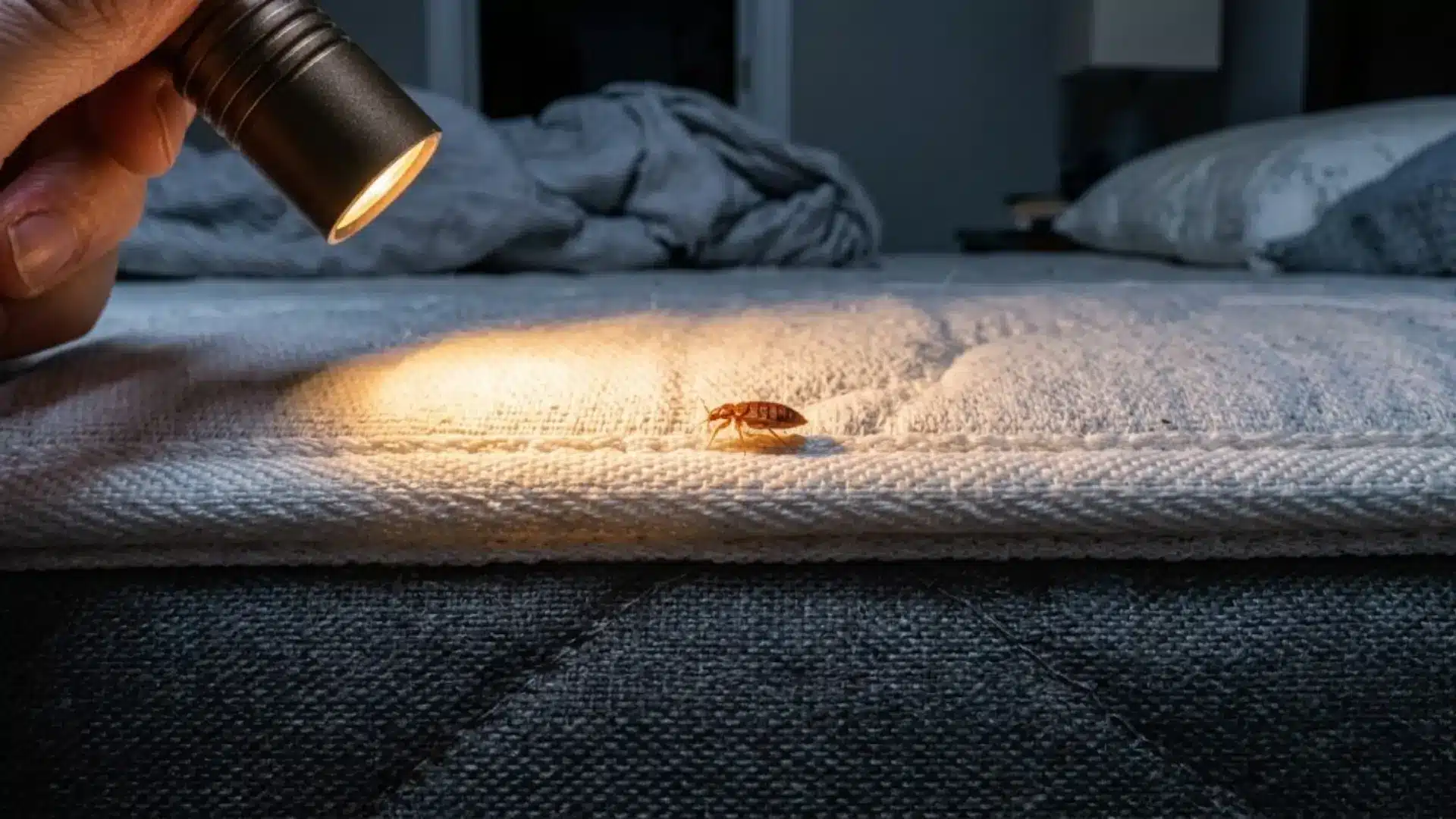
Not every bug you find in your bed is a bed bug.
Carpet beetles, spider beetles, booklice, and even some tiny cockroach nymphs all carry that same reddish-brown color and oval shape, so the mix-up happens more often than people think.
Size, color, and shape alone rarely tell you what’s actually crawling around your home, and that matters because the wrong identification means the wrong treatment, and sometimes no treatment at all when one was needed.
Here’s how to tell bed bugs apart from the insects people most often confuse them with, and what actually gives each one away.
How to Tell If It’s Really a Bed Bug Before You Panic?
Adult bed bugs are flat, oval, reddish-brown, about the size of an apple seed. Nymphs look like tiny, translucent versions of adults until they feed, then turn rounder and darker red before flattening out again.
Six legs, no wings, short bent antennae, and ridged abdominal segments complete the picture, the same checklist used on every client mattress before calling an ID.
Physical signs on your bedding often confirm what your eyes suspect:
- Rusty or reddish blood smears on sheets
- Small dark fecal spots near seams
- Pale, papery shed skins in cracks
- Tiny white eggs tucked into fabric folds
- A musty, sweetish odor in heavily infested rooms
- Bugs clustered along the mattress piping and seams
- Bite marks that appear after nighttime activity, not during the day
Spot two or three of these together, and you’re likely dealing with the real thing, not a random hitchhiker that wandered in from the garden. A closer look with a quick fecal spot test can confirm it in minutes if you’re still unsure.
Mistaken Kinds of Bed Bugs
These nine insects are often mistaken for bed bugs, and each one calls for a completely different response.
1. Bat Bugs
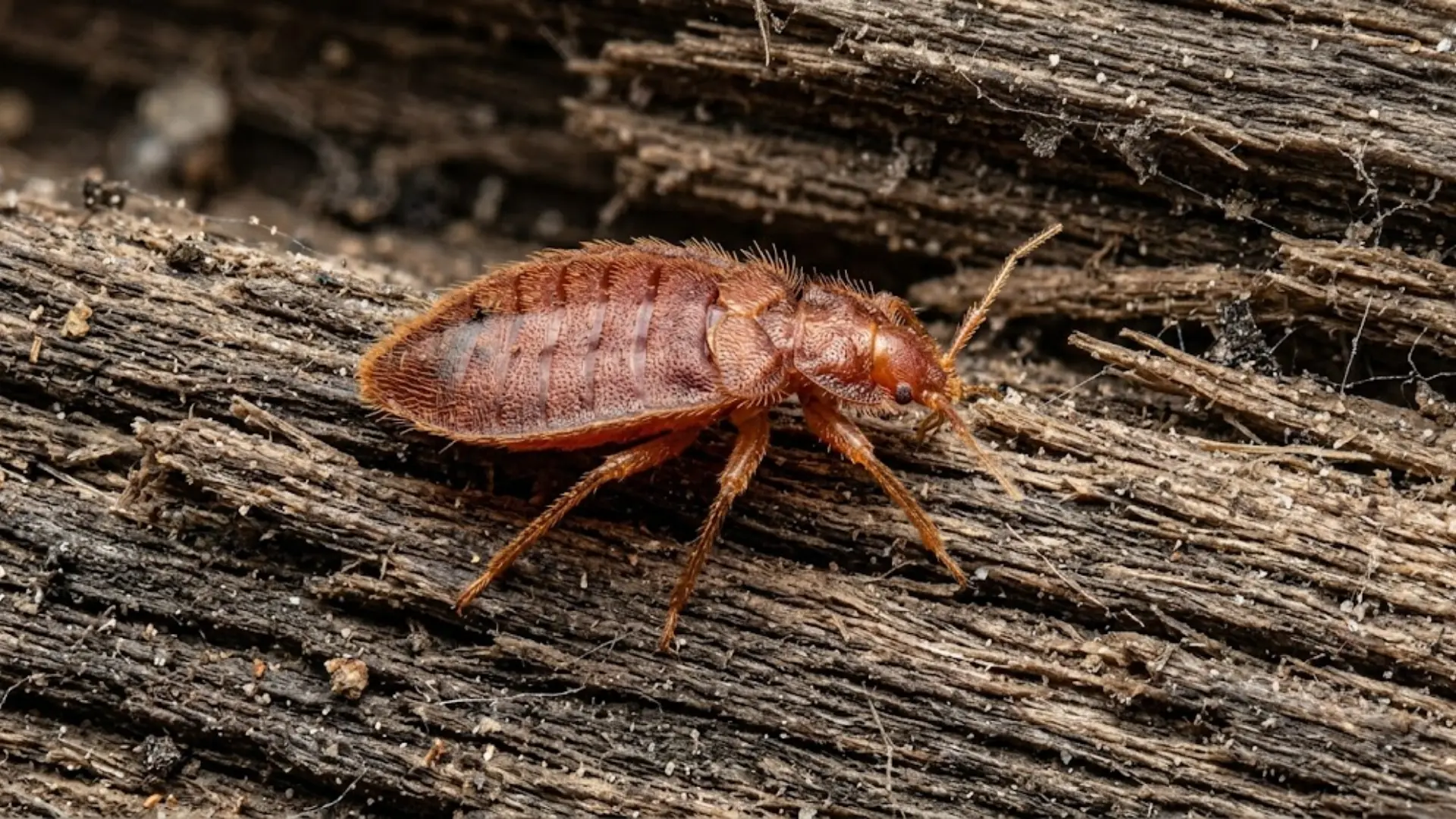
- Appearance: Nearly identical, reddish-brown, and oval
- Size: About the same as an adult bed bug
- Can Jump? No
- Can Fly? No
- Bites Human? Rarely, only when bats are gone
- Common Location: Attics, chimneys, near old bat roosts
These bat bugs carry longer fringe hairs on the upper body. They typically show up in homes with a history of bat colonies, and once the bats leave, these bugs search for a new blood source.
So, removing bat entry points and sealing attic gaps solves the root problem faster than any spray.
2. Spider Beetles
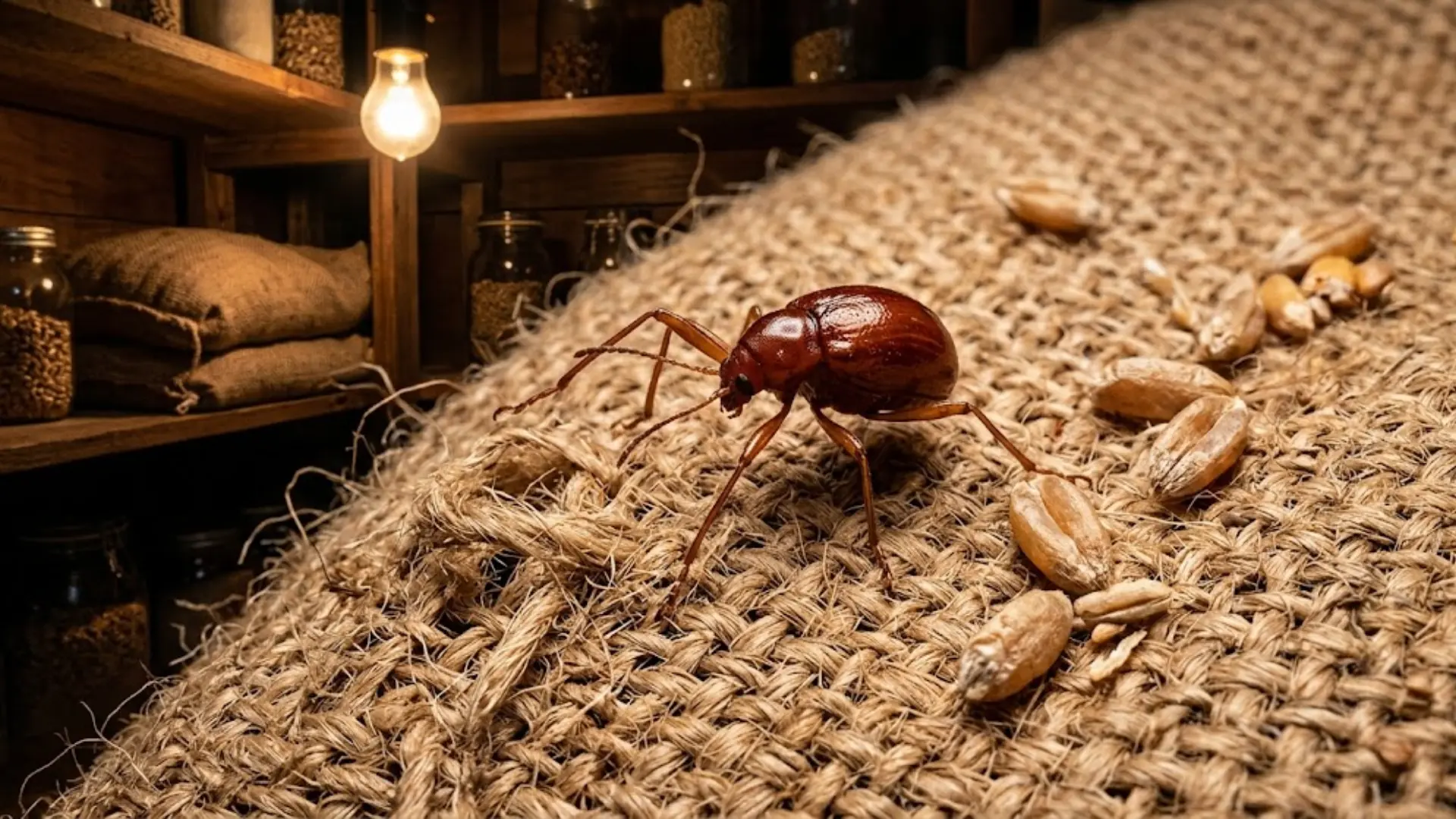
- Appearance: Rounded body with a shiny shell
- Size: Slightly smaller than a bed bug
- Can Jump? No
- Can Fly? No
- Bites Human? No
- Common Location: Pantries, stored grains, dim corners
Spider beetles have noticeably longer legs and a glossy, humped back that catches light differently than a bed bug’s matte finish. In dim rooms, they’re easy to misjudge at a glance.
Since they feed on stored food rather than blood, tossing contaminated grains and cleaning pantry shelves usually clears them out for good.
3. Carpet Beetles
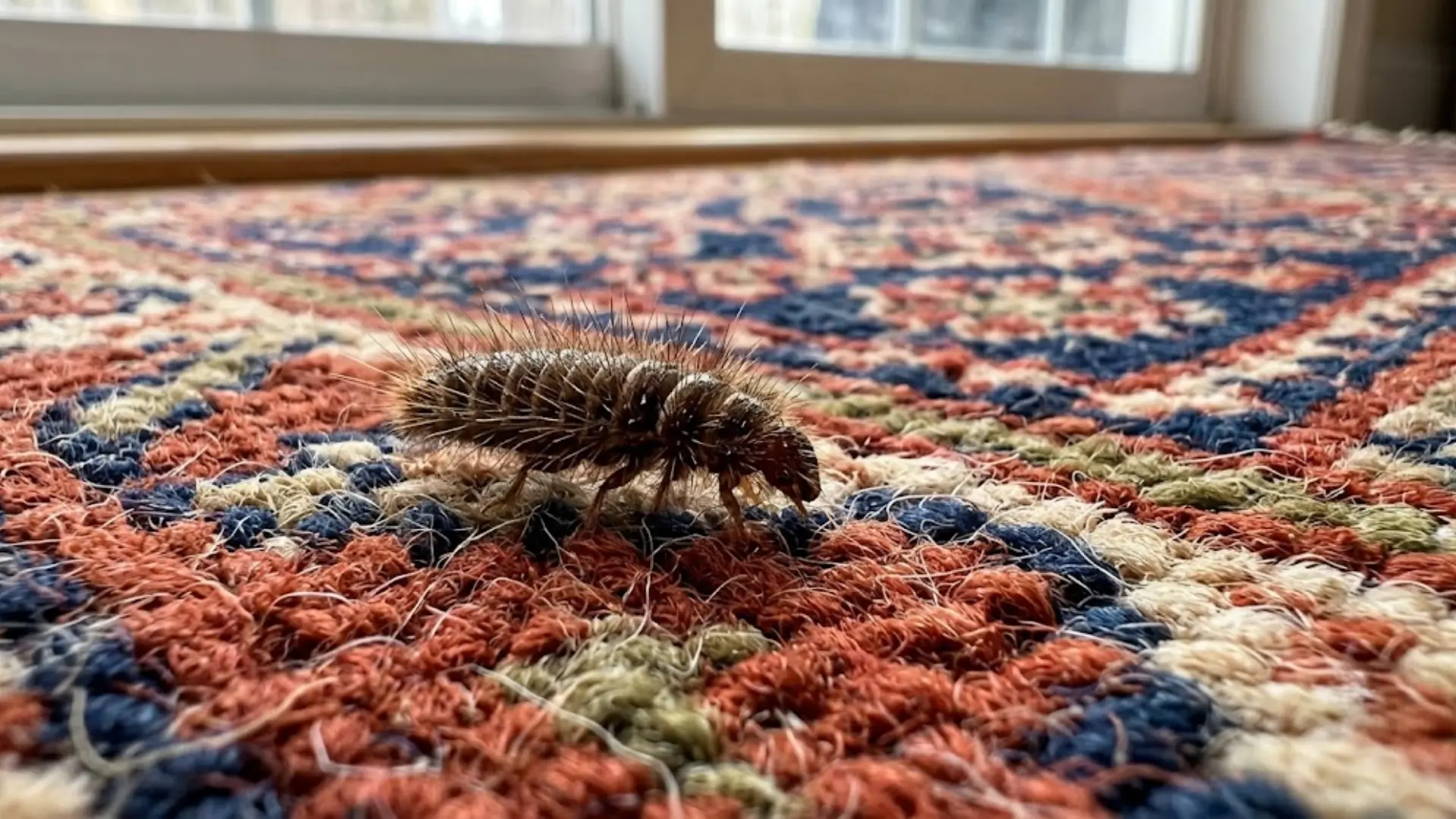
- Appearance: Adults are oval and patterned; larvae are hairy and brown
- Size: Similar to bed bug nymphs
- Can Jump? No
- Can Fly? Adults, yes; larvae, no
- Bites Human? No, but larvae hairs cause skin reactions
- Common Location: Rugs, closets, upholstered furniture
Carpet beetle larvae get mistaken constantly because their fuzzy texture resembles a bed bug nymph from a distance.
The real damage shows up on fabric, not skin, since they chew through wool and other natural fibers rather than feeding on blood.
However, vacuuming thoroughly and washing infested textiles on high heat handles most infestations.
4. Booklice (Psocids)
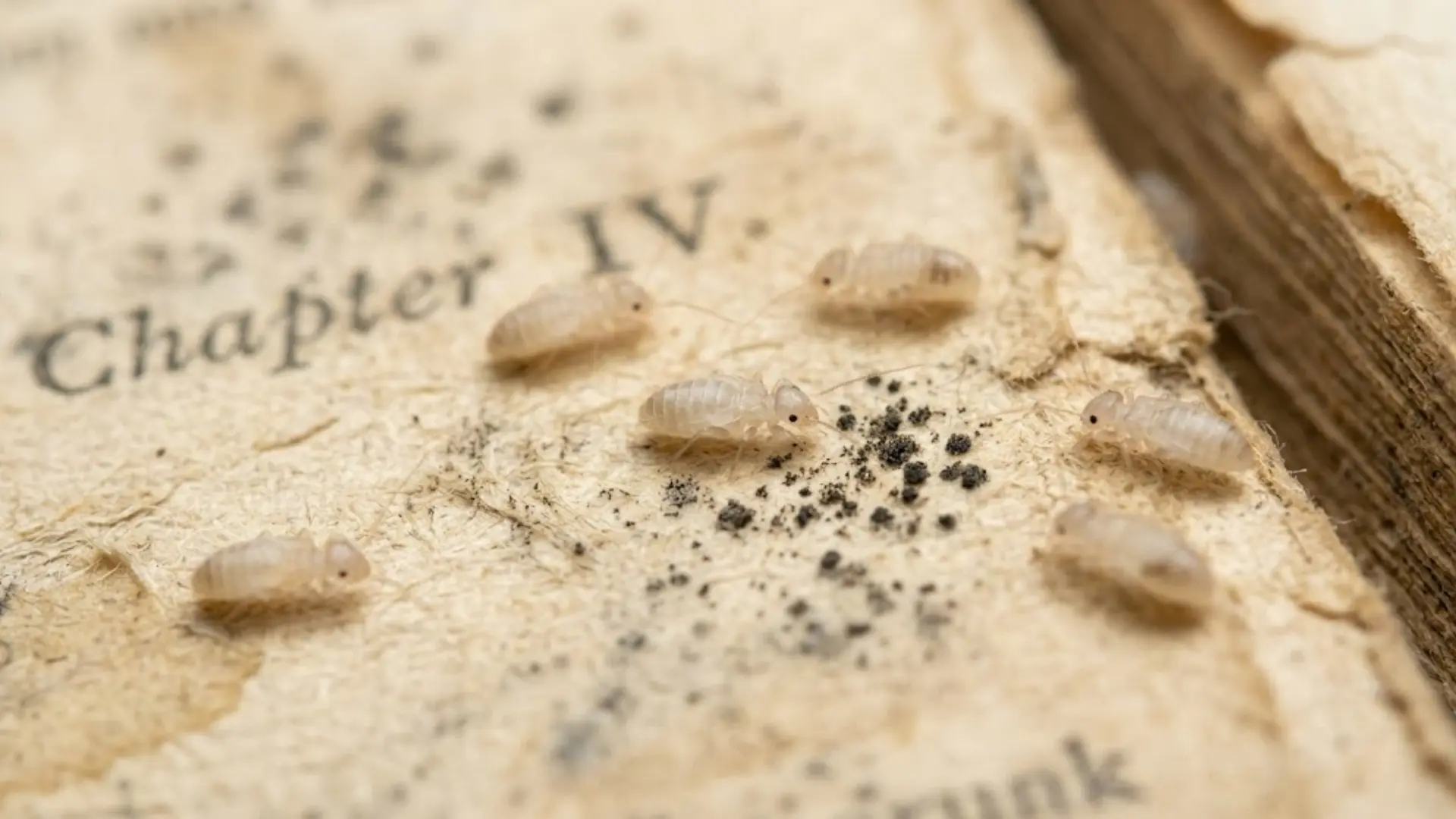
- Appearance: Tiny, pale, soft-bodied insects
- Size: Much smaller than any bed bug stage
- Can Jump? No
- Can Fly? Some winged forms, most wingless
- Bites Human? No
- Common Location: Damp books, wallpaper, humid corners
Booklice thrive wherever moisture and mold collect, and their pale, translucent bodies sometimes get flagged as baby bed bugs by anyone unfamiliar with either insect.
They’re harmless to people and feed exclusively on mold and fungal spores. Lowering humidity and improving ventilation usually makes them disappear on their own.
5. Fleas
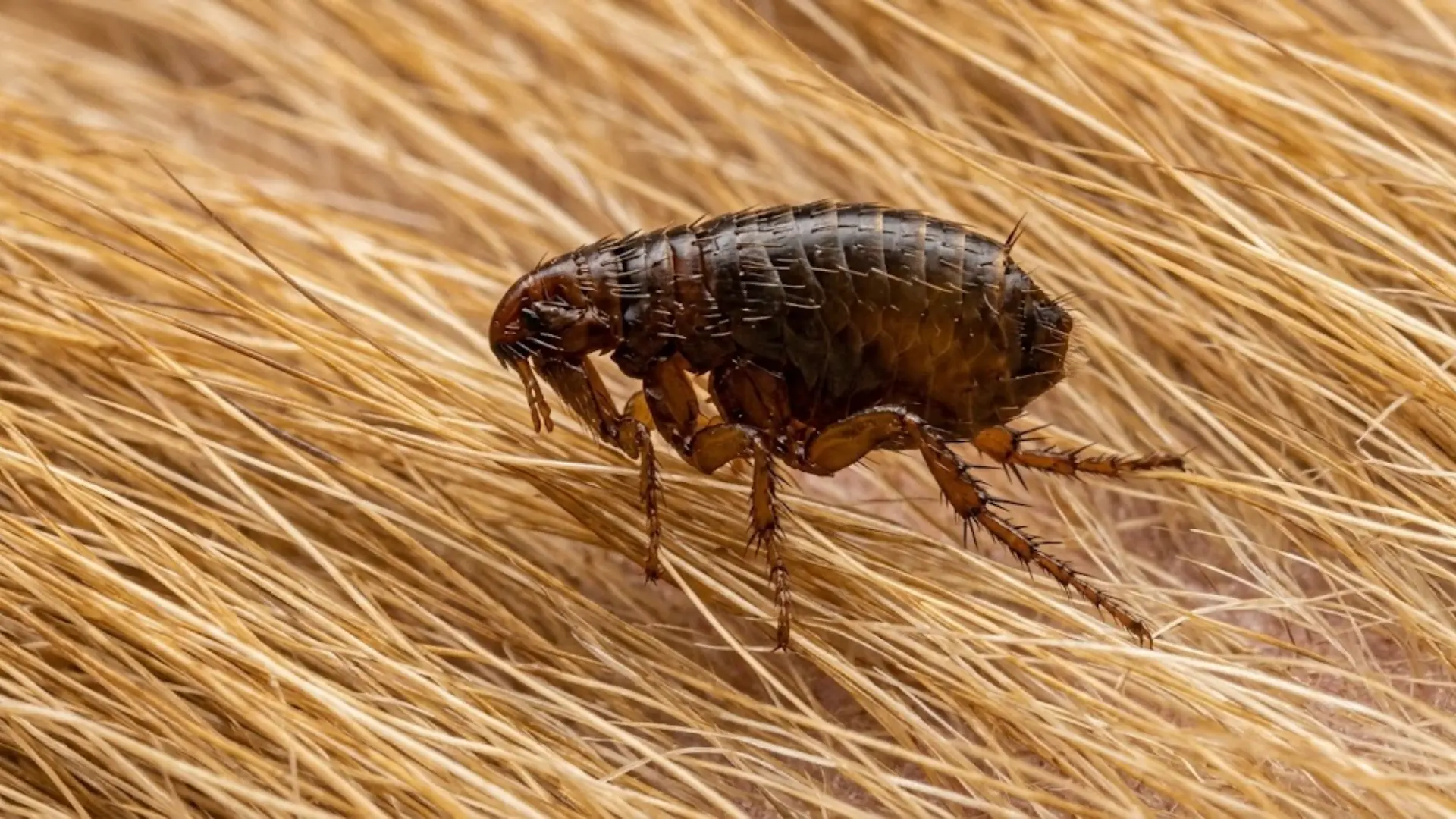
- Appearance: Dark brown, laterally flattened body
- Size: Smaller than adult bed bugs
- Can Jump? Yes, remarkably far for their size
- Can Fly? No
- Bites Human? Yes, in small, clustered bites
- Common Location: Carpets, pet bedding, upholstery
The jumping is the fastest way to rule out a bed bug, since fleas move in quick sideways hops instead of a slow crawl.
Their body is flattened side to side rather than top to bottom, and bites tend to cluster around ankles rather than exposed skin overnight. Treating pets alongside a thorough carpet cleaning routine breaks the cycle.
6. Cockroach Nymphs
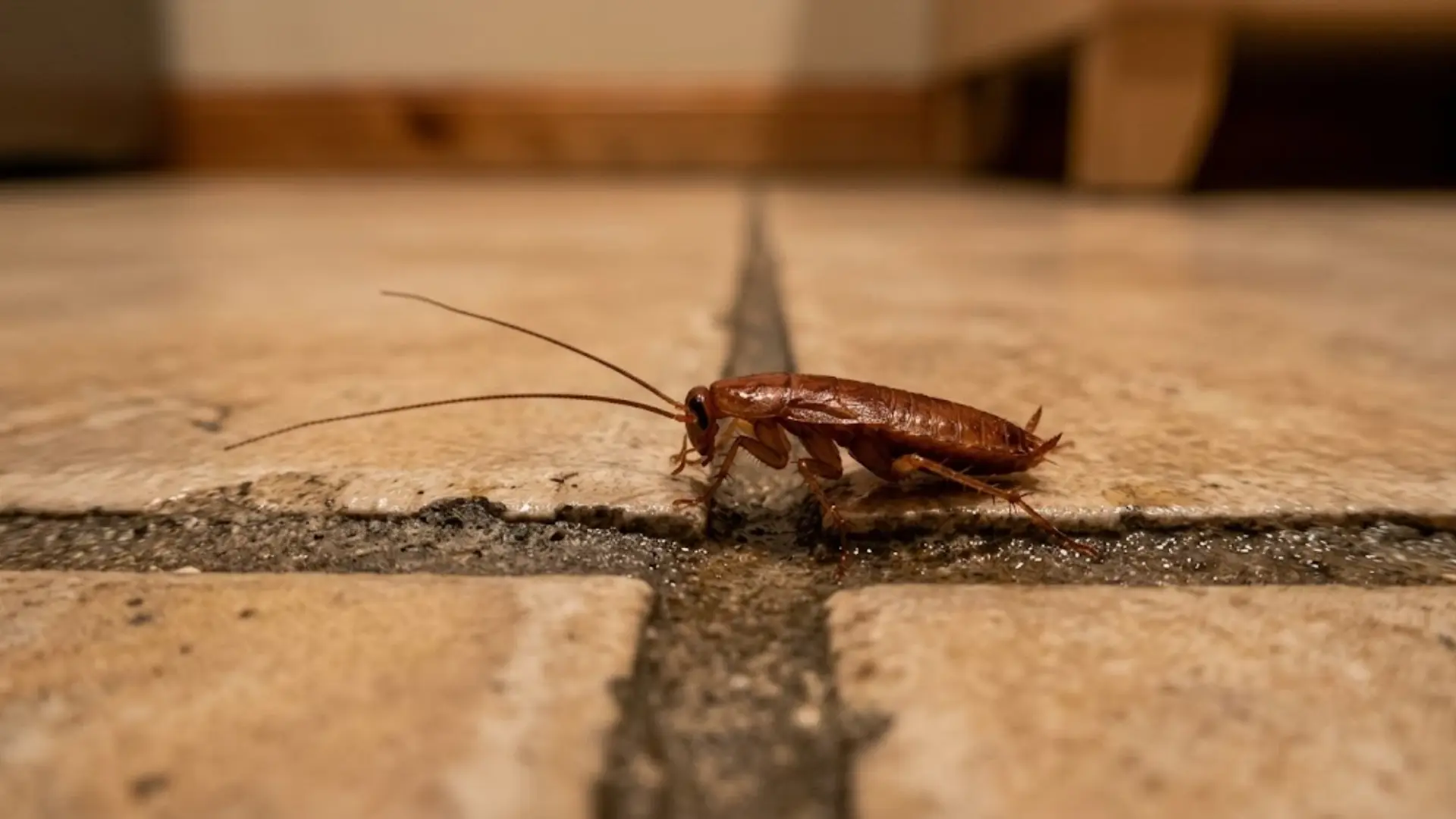
- Appearance: Small, reddish-brown, fast-moving
- Size: Comparable to early-stage bed bug nymphs
- Can Jump? No
- Can Fly? No, at this stage
- Bites Human? No
- Common Location: Kitchens, bathrooms, warm, damp cracks
Cockroach nymphs move quickly when exposed to light, while bed bugs move slowly and don’t react the same way. They also have longer antennae and a longer body than a bed bug.
You’ll find them in kitchens and bathrooms, not mattresses, since they’re drawn to food and moisture, not blood.
Sealing off those sources and using a gel bait works better than sprays.
7. Tick Nymphs
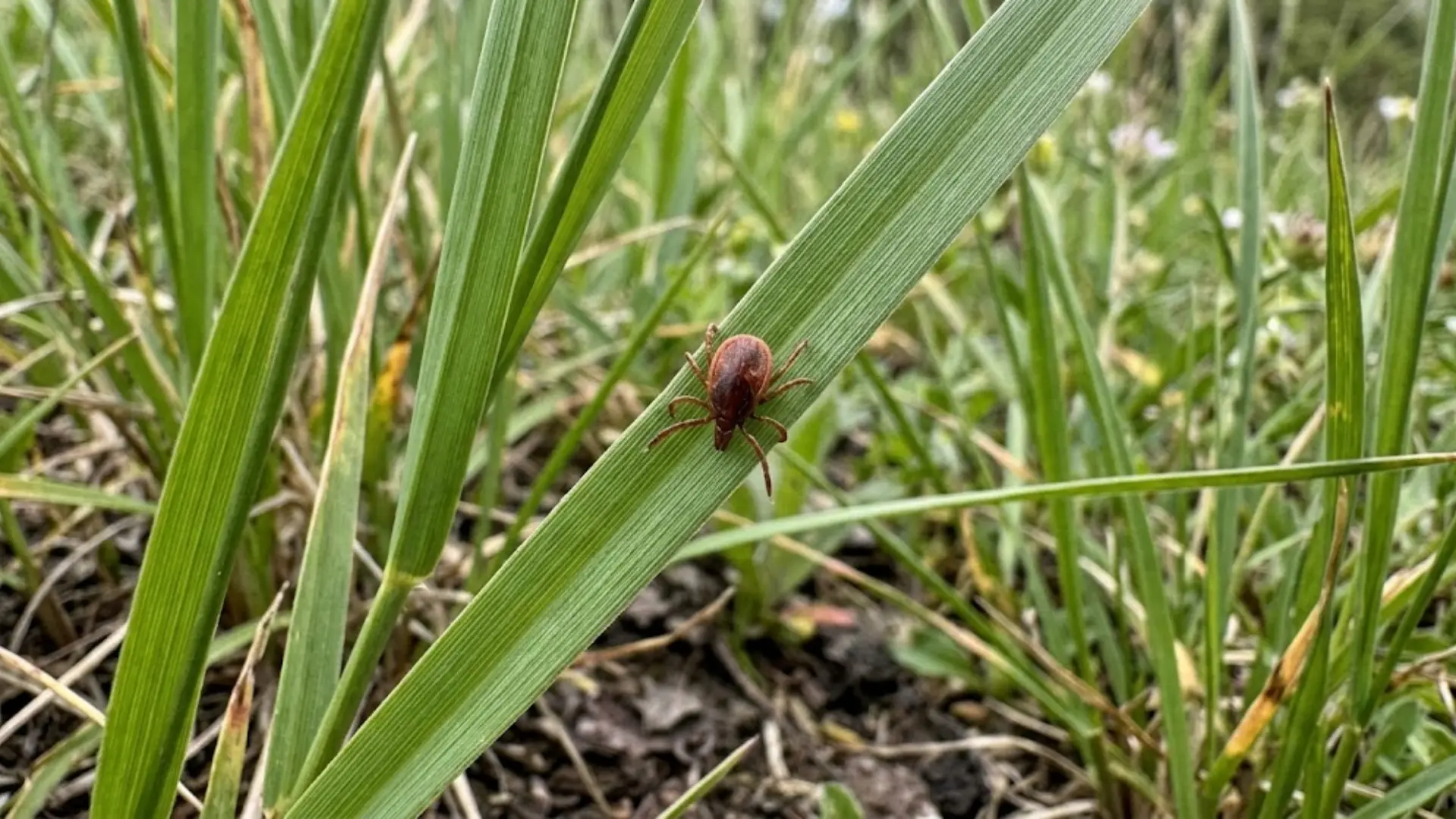
- Appearance: Small, rounded, brownish
- Size: Similar to a bed bug nymph
- Can Jump? No
- Can Fly? No
- Bites Human? Yes, and they stay attached while feeding
- Common Location: Yards, tall grass, brought in by pets
Ticks have eight legs while bed bugs have six. Ticks also latch onto the skin and feed for hours, rather than biting and retreating as bed bugs do.
So, checking pets after outdoor time and treating yards to eliminate tick habitat prevent most indoor encounters.
Ticks can carry Lyme disease and other tick-borne illnesses. This isn’t medical guidance. If you find an attached tick or develop a rash or fever afterward, contact a healthcare provider.
8. Pirate Bugs
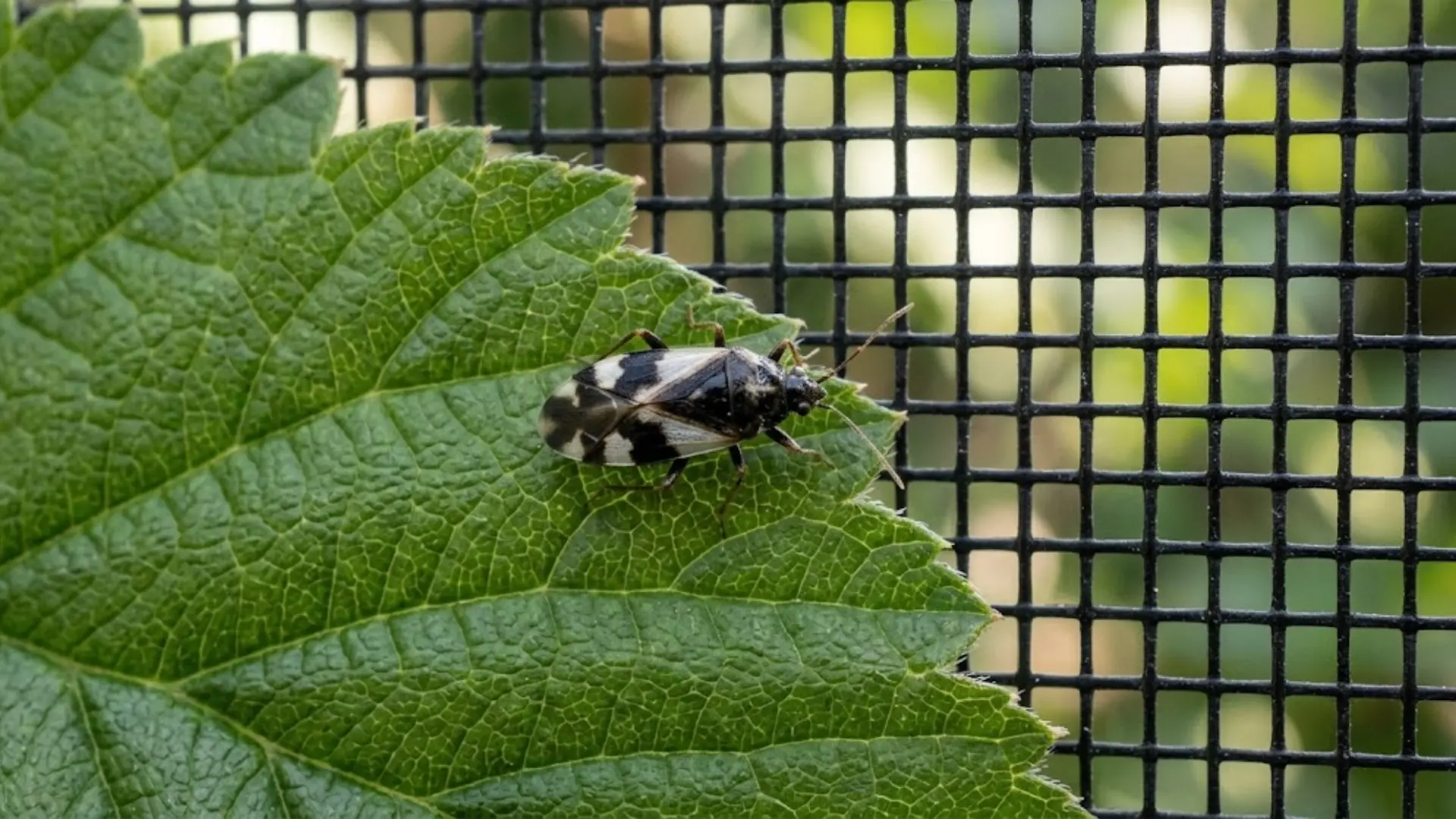
- Appearance: Small, black and white patterned, with wings
- Size: Smaller than adult bed bugs
- Can Jump? No
- Can Fly? Yes
- Bites Human? Yes, and it stings sharply
- Common Location: Near windows, gardens, late summer invasions
These show up seasonally, usually drifting indoors from nearby gardens or fields during late summer.
Visible wings and a sharp, surprising bite for such a tiny body separate them from bed bugs right away. Sealing window screens and door gaps during peak season keeps them from wandering in.
9. Swallow Bugs
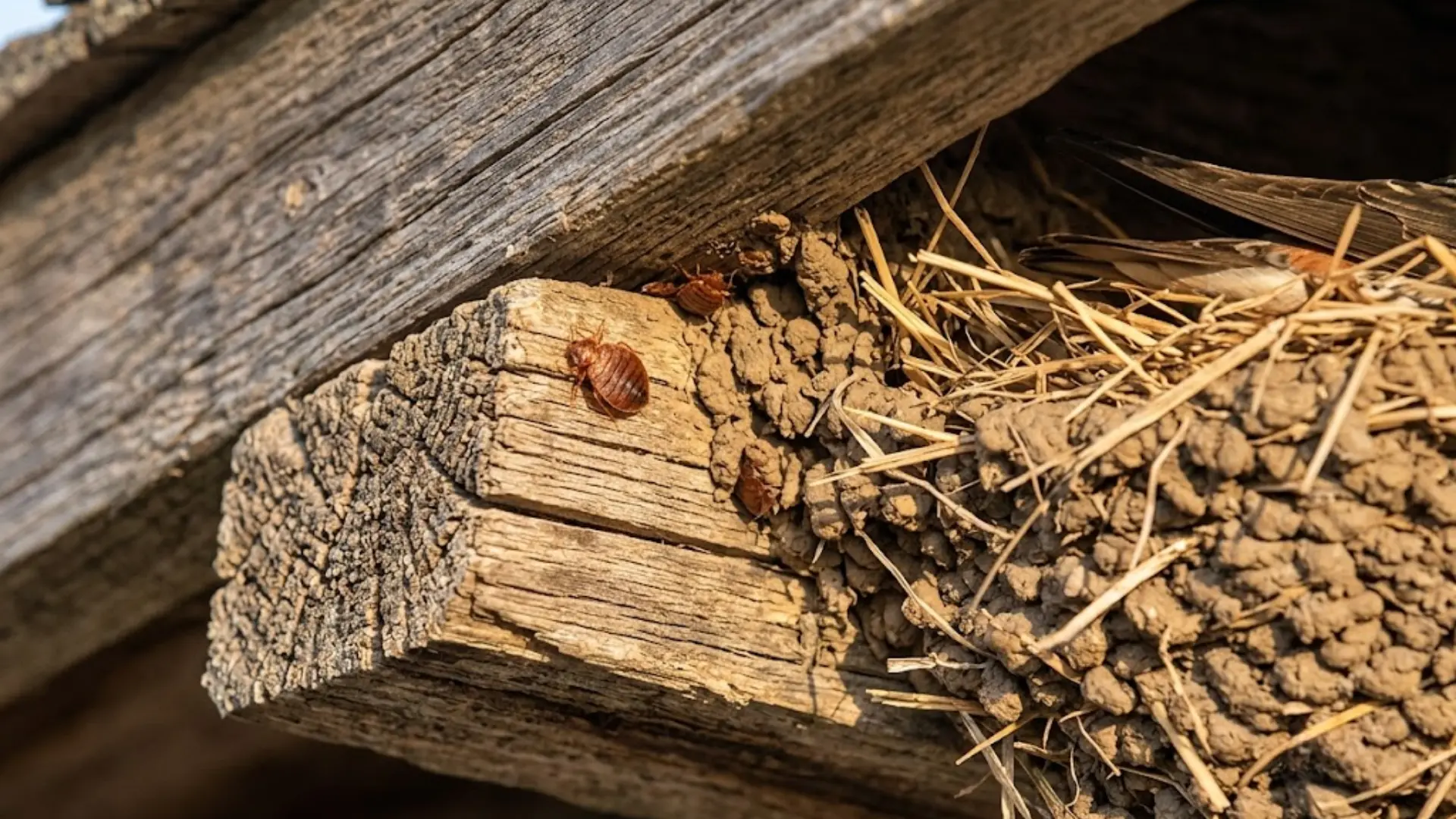
- Appearance: Nearly identical to bed bugs
- Size: Comparable to adult bed bugs
- Can Jump? No
- Can Fly? No
- Bites Human? Occasionally, when displaced from nests
- Common Location: Bird nests, eaves, attic vents
Swallow bugs are close relatives of bed bugs and share the same reddish-brown build, which makes field identification genuinely tricky even for professionals.
The strongest clue is location, since these bugs cluster near swallows’ or other birds’ nests under eaves.
So, removing old nests and sealing entry points around the roofline directly addresses the source.
Why Do So Many Bugs Look Like Bed Bugs?
After years of checking mattresses with a flashlight, one pattern keeps repeating: the confusion starts with evolution itself.
Several household insects share ancestry with bed bugs, which explains why the same flat, oval shape appears across unrelated species.
Nearly identical body sizes make a quick glance unreliable, especially since bed bugs, carpet beetles, and bat bugs all crowd the same indoor spaces, mattress seams, rugs, and pantry corners.
Dim lighting further distorts color, and immature stages rarely resemble adults. Even bed bugs complicate things, shifting from pale to reddish-brown right after feeding.
How Bed Bug Bites Compare to Other Insect Bites?
Bite marks rarely tell the full story, since redness and itching look similar across almost every biting insect on this list.
What actually separates them comes down to pattern, timing, and where on the body they show up, details worth checking closely before assuming the culprit.
| Insect | Bite Pattern | Itchiness | Swelling | Duration | Common Body Locations |
|---|---|---|---|---|---|
| Bed Bugs | Straight lines or clusters of 3-4 bites | Moderate to intense, delayed onset | Small raised welts | Fades in 1-2 weeks | Arms, neck, shoulders, exposed skin during sleep |
| Fleas | Small clustered bites, often in groups | Intense, immediate | Tiny red bumps with a red halo | A few days to a week | Ankles, lower legs, feet |
| Mosquitoes | Random, single scattered bites | Sharp, immediate itch | Puffy round welt | Fades within days | Any exposed skin |
| Ticks | Single bite, tick often still attached | Minimal at the bite site | Localized, sometimes a bullseye rash | Days to weeks, longer if the disease develops | Legs, scalp, groin, behind knees |
| Spider Bites | Single bite, occasionally two puncture marks | Varies, can be painful rather than itchy | Can be significant, sometimes with a hard center | Days to weeks, depending on the species | Anywhere exposed skin contacts a hidden spider |
| Chiggers | Clustered bites around skin folds | Extremely intense | Red welts, sometimes blistered | One to two weeks | Ankles, waistline, behind knees, skin folds |
| Minute Pirate Bugs | Single sharp bite | Sharp initial sting, mild lingering itch | Small localized bump | A few days | Arms, neck, and any exposed skin outdoors |
This comparison is for identification purposes only and isn’t a substitute for medical advice. See a doctor for bites that spread, blister severely, or come with fever.
What to Do If You Find a Bug That Looks Like a Bed Bug?
Before reaching for a tissue or your shoe, slow down. A few extra minutes of careful handling can mean the difference between an accurate ID and a guessing game.
- Step 1: Leave it intact; don’t crush it on sight
- Step 2: Trap it under a clear cup or press it onto tape
- Step 3: Snap a few photos from different angles in good light
- Step 4: Check nearby furniture, seams, and cracks for more of them
- Step 5: Look around for stains, shed skins, or eggs nearby
- Step 6: Peek at pets and attic spaces if bats or birds live close by
- Step 7: Match what you found against a trusted identification source
A Quick Note on Professional Help: If it still feels uncertain after that, a pest control professional can confirm the species in minutes with tools most people don’t have on hand. That second opinion often saves time and rules out unnecessary treatment.
How to Prevent Bed Bugs and Similar Household Pests?
Prevention across this entire list comes down to the same few habits, since most of these insects rely on the same conditions to move in and settle down.
After a decade of walking into homes mid-infestation, the pattern is almost always the same few gaps left unchecked.
- Keep Living Spaces Clean: Vacuum regularly, wash bedding on high heat, and encase mattresses to cut off hiding spots.
- Reduce Clutter and Moisture: Clear excess storage and control humidity so booklice and carpet beetles lose their preferred conditions.
- Seal Entry Points: Close cracks, gaps, and openings that let bat bugs, swallow bugs, and other outdoor pests wander in.
- Check What Comes into the Home: Inspect secondhand furniture and store pantry foods in sealed containers.
- Manage Animal-Related Sources: Treat pets for fleas, remove abandoned bird nests safely, and exclude bats from attics before they settle in.
Treat pets for fleas using scent-based deterrents as a temporary backup, not a replacement for real treatment; remove abandoned bird nests safely; and exclude bats from attics before they settle in
Final Thoughts
Bug identification gets easier with practice, and now the mistaken kinds of bed bugs on this list should feel far less mysterious the next time something small and reddish-brown turns up uninvited.
However, pay attention to where it’s found, how it moves, and what evidence surrounds it.
And the treatment only works when it matches the actual pest, so a few extra minutes of careful looking always pays off.
Found a bug you’re still unsure about? Drop a description in the comments and let’s figure it out together.
Frequently Asked Questions (FAQs)
Are Bat Bugs and Bed Bugs the Same?
No, they’re closely related but separate species. Bat bugs feed primarily on bats and only bite humans when their usual host is gone.
Can Baby Cockroaches Look Like Bed Bugs?
Yes, small cockroach nymphs share a similar reddish-brown color and size at a glance. Faster movement and longer antennae are the quickest way to tell them apart.
Can Bed Bugs Fly or Jump?
No, bed bugs have no wings and can’t jump as fleas do. They rely entirely on crawling to move between hiding spots.
Is Finding One Bug Enough to Confirm a Bed Bug Infestation?
Not usually; a single bug could be a stray look-alike rather than proof of an infestation. Checking for additional signs like stains, shed skins, or eggs gives a clearer picture.




3 Responses
Excellent information!! Thank you!
I found a live bug in bed that does not look like a bed bug. it is all black..it looks like an ant. not a tiny ant. it’s plump.
I have had bed bugs lately. very few! there’s the pee stains. i’ve been bit around my handle and legs..not many bites but itchy!! I’ve washed and dried on very hot sheets and blankets. now tonight I find a lone all black ant “looking” alive bug. it’s not exactly looking like an ant.. I’m sleeping on the couch.