I’ll be honest, my first tomato garden was a chaotic mess.
Plants crammed together, pests everywhere, and yields that made me question my entire life. Then I discovered layout companion planting tomatoes, and everything changed.
Turns out, where you position your tomatoes and what you plant alongside them can dramatically boost growth, naturally repel pests, and maximize your harvest without chemicals. It’s not just about throwing seeds in the ground and hoping for the best.
You need a strategy, a layout that works with nature instead of against it.
In this guide, you’ll learn how to design a companion planting layout that upgrades your tomato patch into a productive ecosystem. Ready to stop guessing and start growing smarter? Let’s get in.
What is Companion Planting?
Companion planting is the practice of growing specific plants together to benefit one another.
It’s based on the idea that certain plants, when positioned near each other, can enhance growth, repel pests, attract beneficial insects, or improve soil health naturally.
The core principle is simple: plants have different needs and offerings. Some pull nutrients from deep soil layers while others feed closer to the surface.
Some emit scents that confuse or repel pests, while others attract pollinators that help your entire garden thrive. When you pair them strategically, they work as a team rather than competitors.
The benefits are real and measurable:
- Pest control: Certain plants naturally deter insects that would otherwise destroy your tomatoes. No sprays needed.
- Improved pollination: Flowering companions attract bees and butterflies, which increases fruit set across your garden.
- Enhanced growth: Some plants fix nitrogen in the soil or provide shade and support, helping tomatoes grow stronger and healthier.
- Space efficiency: You can grow more in less space by layering plants with different root depths and growth habits.
I’ve seen companion planting turn struggling gardens into abundant ones. It’s not magic, it’s just smart positioning and understanding how plants naturally interact.
Best Companion Plants for Tomatoes
When I started pairing my tomatoes with the right companions, I noticed fewer pests, healthier plants, and bigger harvests. Here’s what actually works.
Herbs: Basil, Thyme, Oregano
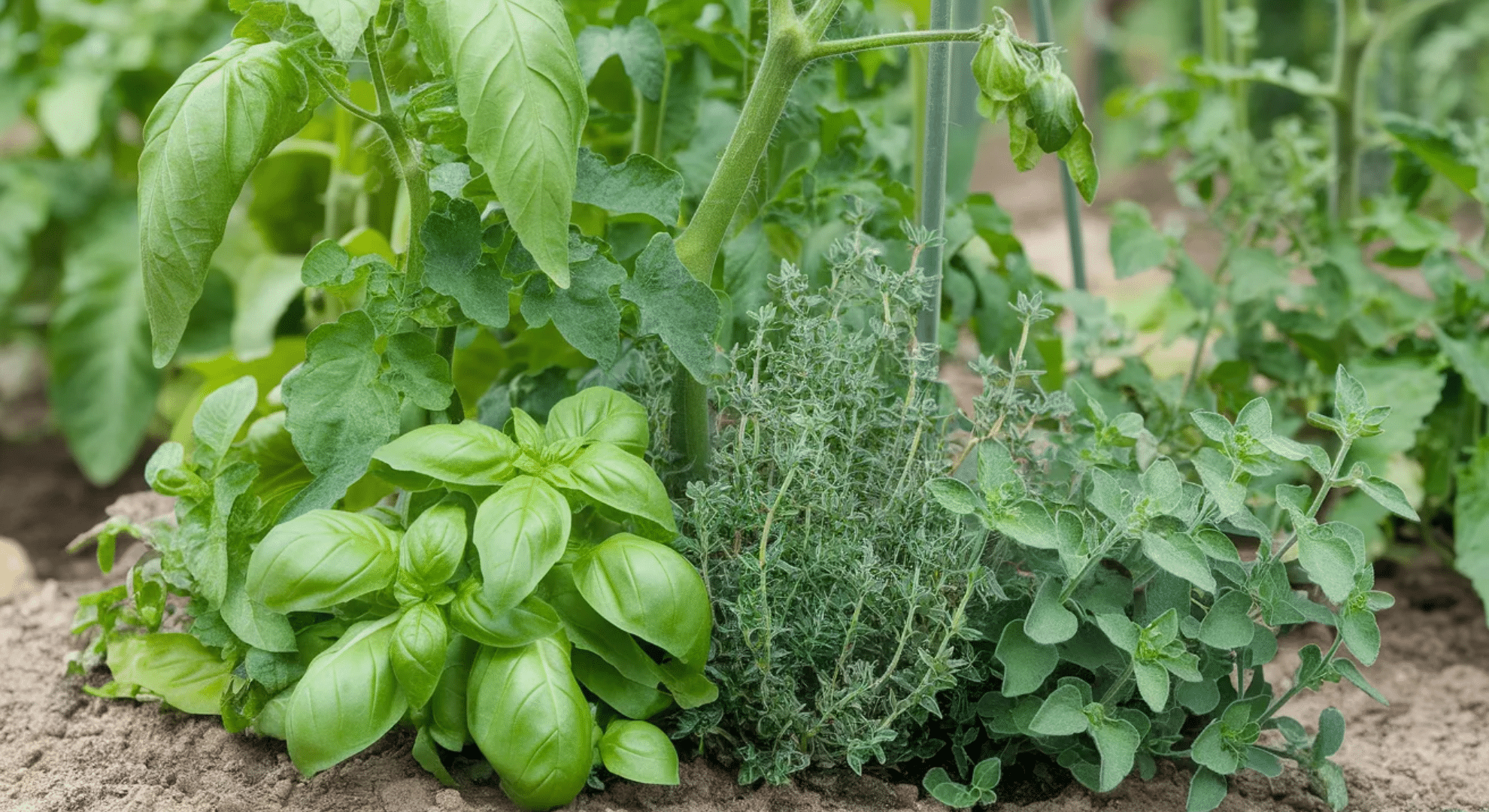
Basil is the classic tomato companion for good reason. It repels aphids, whiteflies, and hornworms with its strong scent. I always tuck basil plants around the base of my tomatoes—they grow well together and you’ve got both ingredients for caprese salad right there.
Thyme works as ground cover and keeps away cabbage worms and tomato hornworms. Its low-growing habit means it won’t compete for sunlight.
Oregano attracts beneficial insects like lacewings and parasitic wasps that hunt down pests naturally. Plus, it’s a perennial that comes back year after year.
Flowers: Marigolds, Nasturtiums, Cosmos
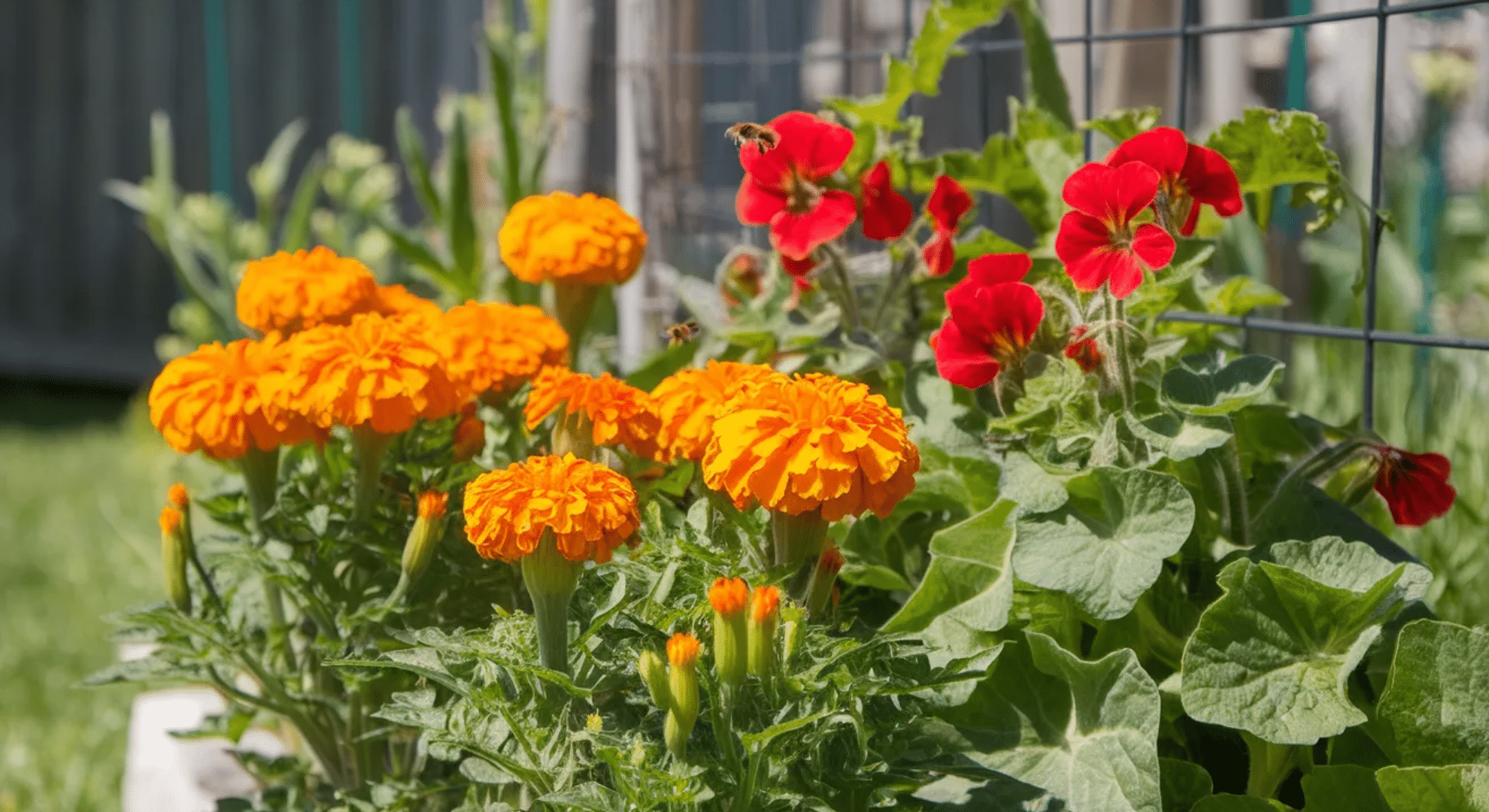
Marigolds are pest-fighting powerhouses. Their scent repels aphids, whiteflies, and nematodes in the soil. Plant them around your tomato bed as a protective barrier.
Nasturtiums act as trap crops; aphids love them so much they’ll skip your tomatoes entirely. They’re essentially a sacrificial decoy.
Cosmos attract pollinators and beneficial predatory insects. Their tall, airy growth doesn’t shade tomatoes but brings in the good bugs you want patrolling your garden.
Vegetables: Beans, Onions, Carrots
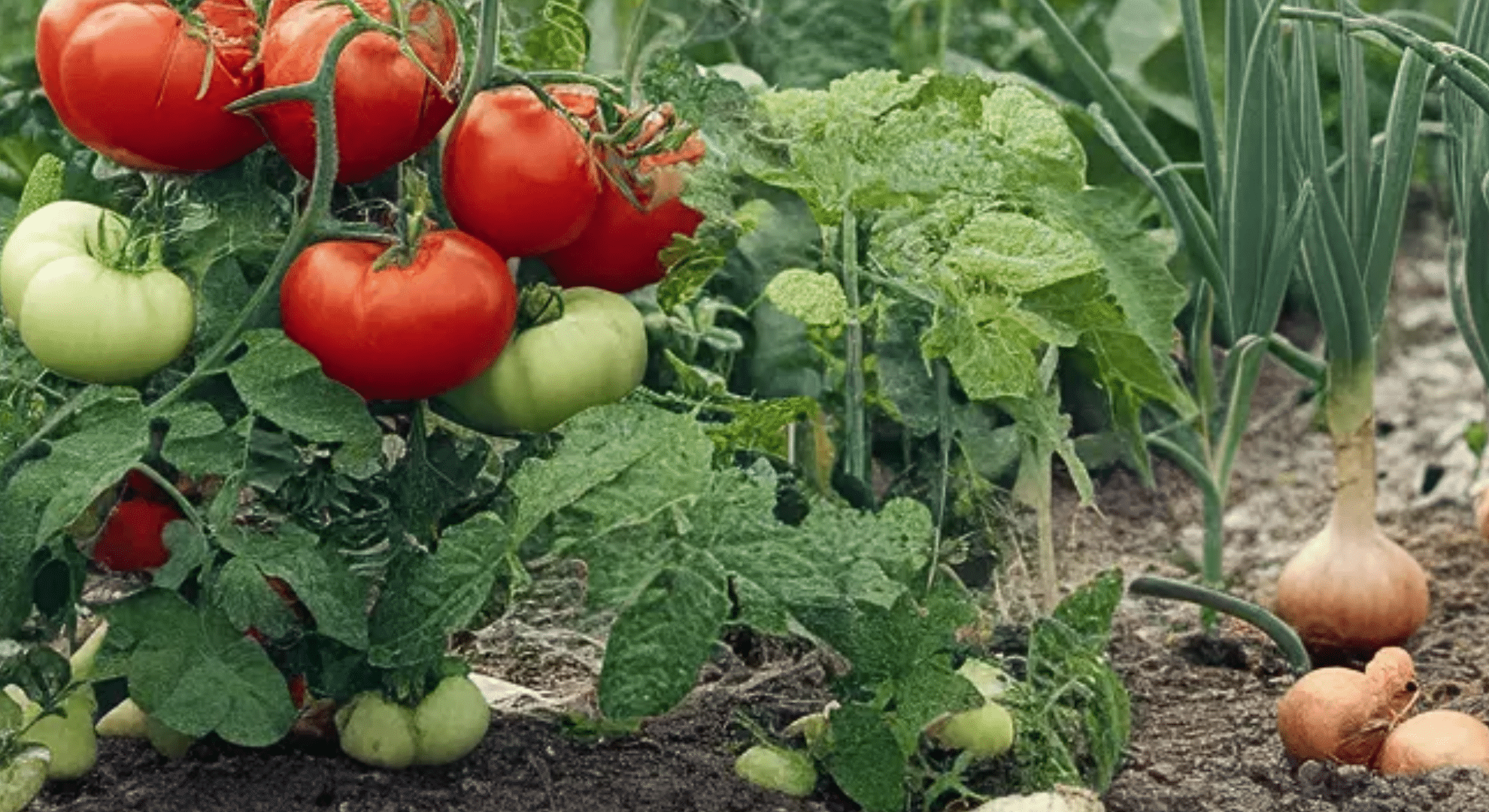
Beans fix nitrogen in the soil, which tomatoes love. Bush beans work better than pole beans since they won’t climb your tomato stakes.
Onions repel aphids and spider mites with their pungent smell. Their shallow roots won’t compete with tomato roots either.
Carrots grow deep while tomatoes grow wide, so they share space efficiently without fighting for nutrients. You maximize every square foot of garden bed.
Plants to Avoid Near Tomatoes
Not all plants play nice with tomatoes. Some will stunt growth, attract pests, or spread diseases that wipe out your entire crop. I learned this the hard way when I planted potatoes next to my tomatoes one year, both suffered.
Growth Inhibitors
Fennel releases chemicals through its roots that inhibit growth in nearby plants. It’s basically a garden bully. Keep it isolated in its own corner far from tomatoes.
Potatoes are in the same family as tomatoes (nightshades), so they compete for identical nutrients. Worse, they attract the same pests like Colorado potato beetles, which means double trouble.
Brassicas like cabbage, broccoli, and cauliflower are heavy feeders that hog nutrients tomatoes need. They also stunt tomato growth through root competition.
Corn attracts tomato hornworms and tomato fruitworms, you’re basically setting up a pest buffet.
Disease Carriers
Plants in the nightshade family—potatoes, peppers, and eggplants, can carry diseases like early blight, late blight, and verticillium wilt. If one gets infected, the disease spreads quickly to tomatoes since they’re so closely related.
Cucumbers can harbor cucumber mosaic virus, which tomatoes are highly susceptible to. Keep them separated to protect your plants.
Space these problem plants at least 10 feet away from your tomatoes, or skip them entirely in small gardens.
Companion Planting Layouts and Tips
The way you arrange your plants matters just as much as what you plant. I’ve tested different layouts over the years, and these strategies consistently give me the best results:
Raised Beds
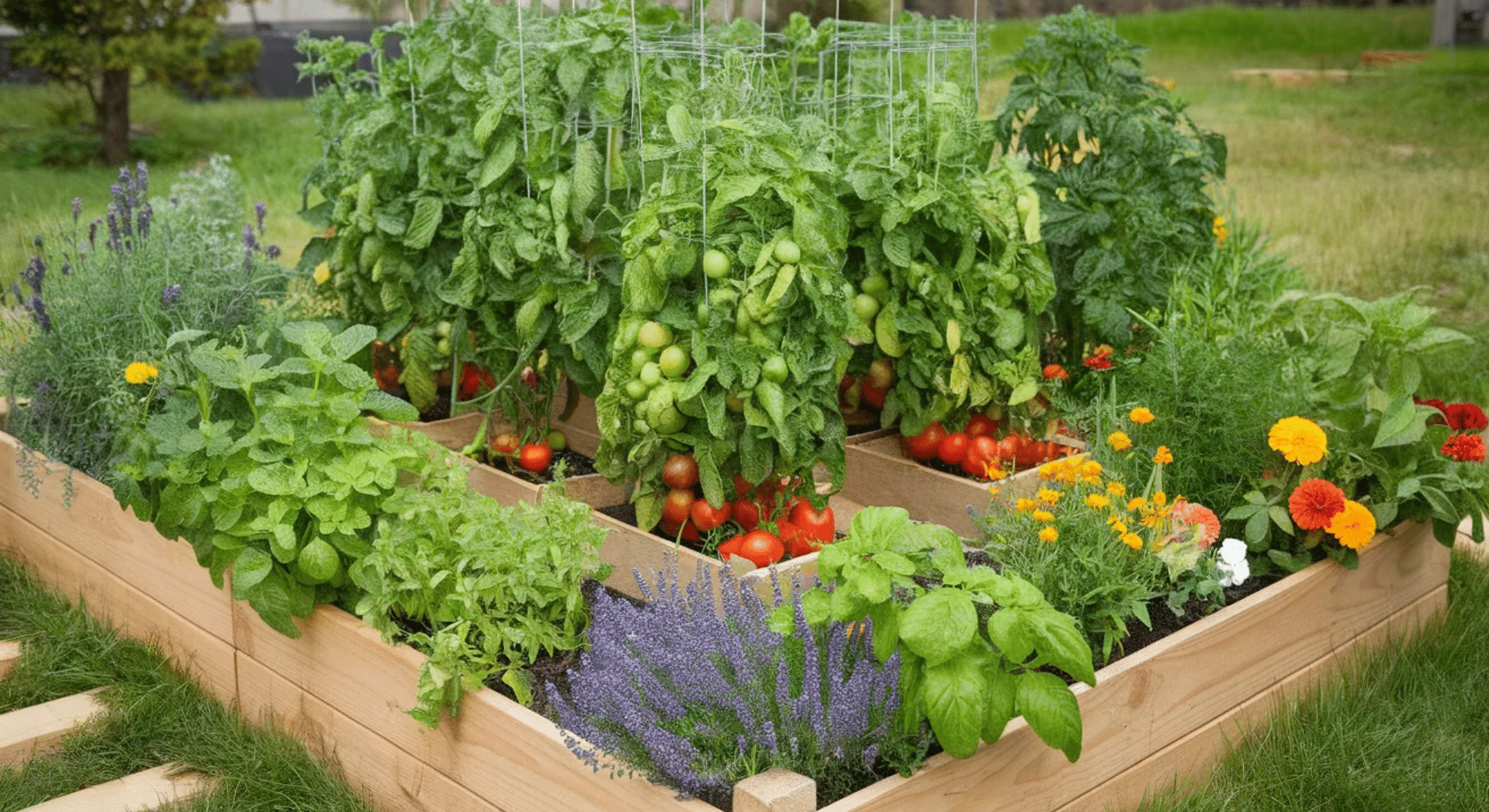
In raised beds, position tomatoes down the center or back if the bed is against a fence. This gives them height without shading other plants.
Plant basil and marigolds around the base of each tomato, they’ll fill the gaps and provide pest protection right where you need it. I space my tomatoes 24 inches apart, then tuck herbs in between.
Edge your raised bed with carrots or onions. Their shallow or narrow growth won’t compete with tomato roots, and you’re using space that would otherwise go to waste.
Add nasturtiums to the front corners as trap crops. They cascade beautifully and keep aphids away from everything else.
Vertical Space
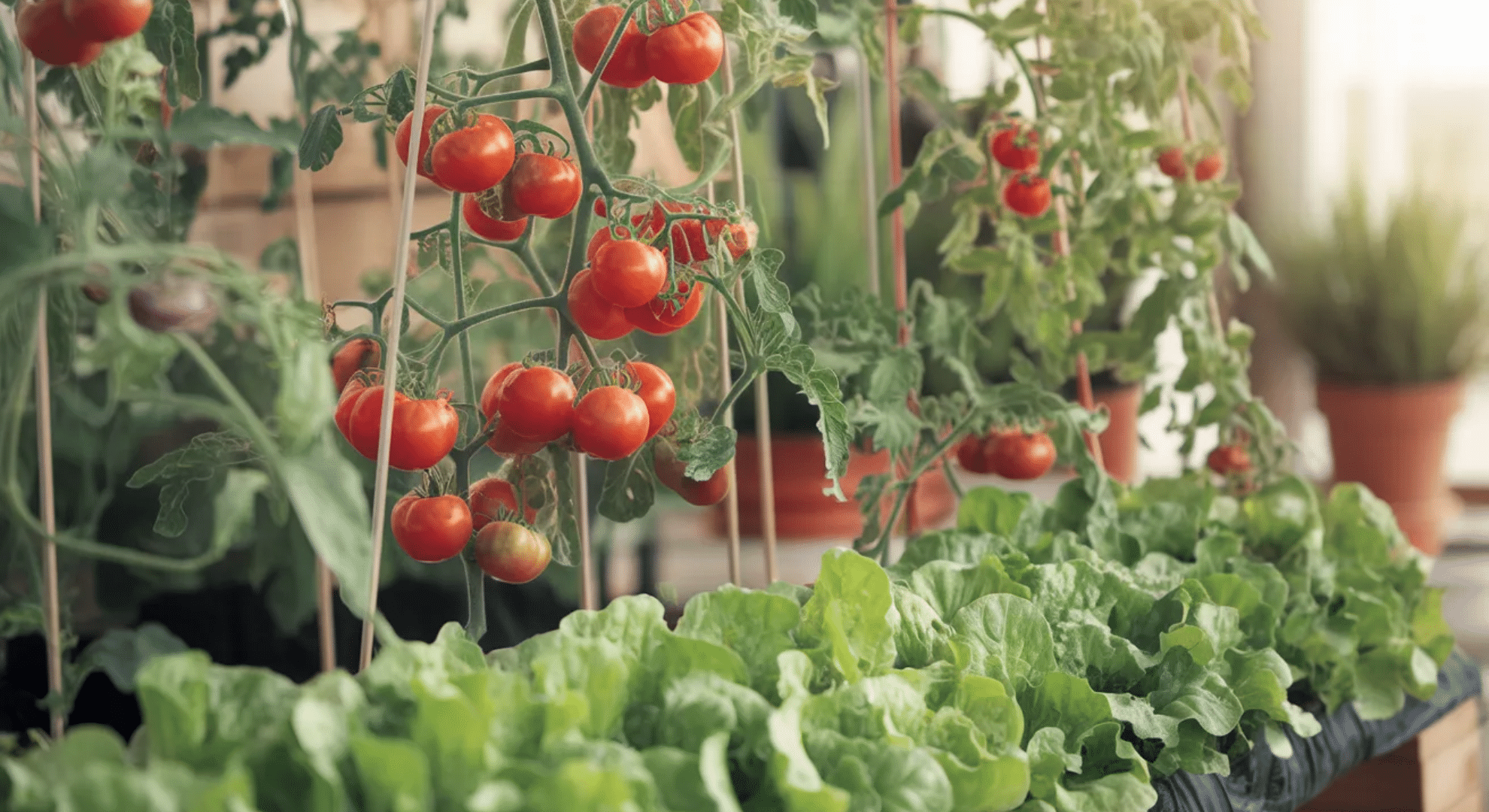
If you’re growing tomatoes on stakes or trellises, plant low-growing companions underneath. Thyme, oregano, and lettuce work perfectly here—they benefit from the light shade tomatoes provide during hot afternoons.
Beans can grow on their own trellis next to tomatoes. Just keep them slightly lower so they don’t block sunlight from reaching your tomato leaves.
Triangular Planting

Instead of planting tomatoes in straight rows, arrange them in triangular patterns. This increases airflow between plants, reduces disease risk, and gives you more planting spots for companions.
Place one tomato at each point of the triangle, then fill the center with basil or marigolds. You get better coverage and healthier plants.
Shade Management
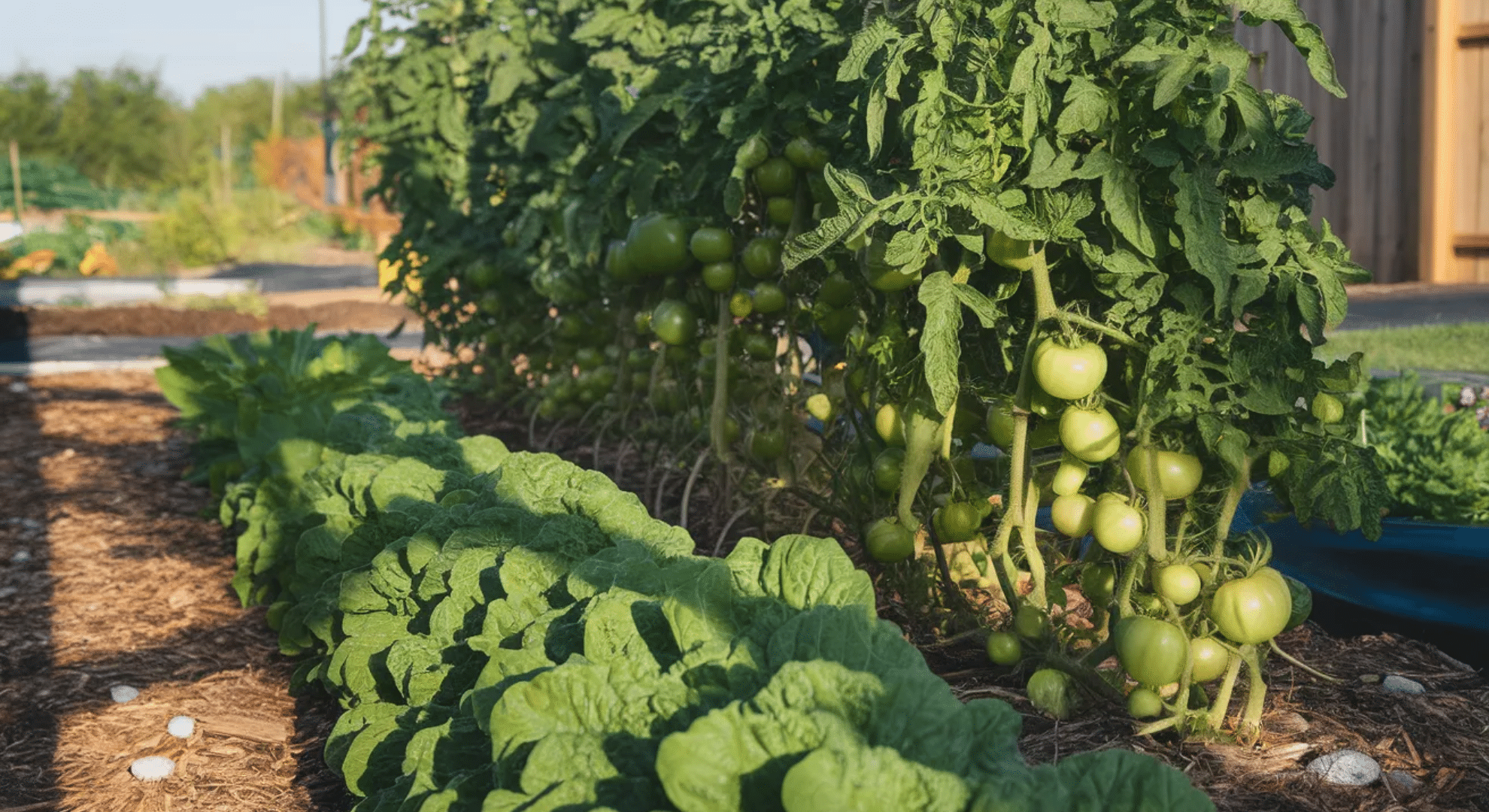
Tomatoes grow tall and create natural shade on their north side. Use this to your advantage: plant lettuce, spinach, or cilantro there during summer. These cool-weather crops bolt quickly in full sun, but tomato shade extends their harvest window.
I position my tomatoes on the south side of the bed specifically for this reason. You’re essentially creating microclimates that let you grow more variety throughout the season.
How to Start Companion Planting
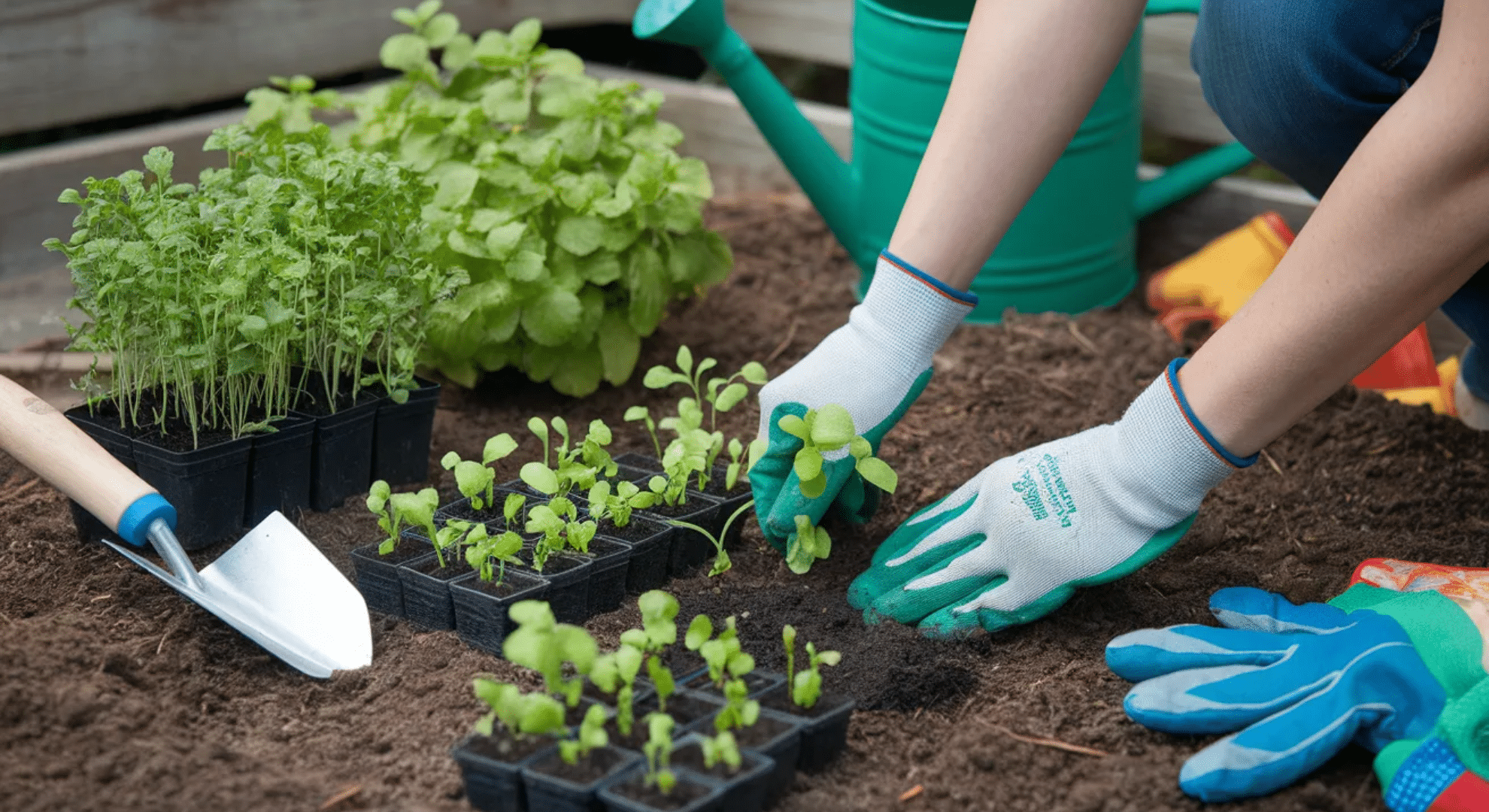
Getting started with companion planting doesn’t have to be complicated. I follow a simple process that sets up my garden for success from day one.
Step 1: Plan Your Layout
Before you plant anything, sketch out your garden bed. Mark where tomatoes will go first, they’re your main crop. Then fill in companions around them based on height, growth habit, and purpose.
Put tall plants like tomatoes toward the back or center. Low growers like thyme and carrots go in front. This prevents shading issues.
Step 2: Prepare Your Soil
Mix compost into your bed before planting. Tomatoes are heavy feeders, so I add 2-3 inches of finished compost and work it into the top 6 inches of soil.
Test your soil pH, tomatoes prefer 6.0 to 6.8. Adjust if needed before anything goes in the ground.
Step 3: Plant at the Right Time
Wait until after your last frost date to plant tomatoes. Soil temperature should be at least 60°F for good root development.
Plant cool-season companions like lettuce and spinach 2-3 weeks before tomatoes. They’ll establish before heat arrives.
Add warm-season companions like basil and marigolds at the same time as tomatoes. They have similar temperature needs.
Step 4: Space Properly
Give tomatoes their full recommended spacing. That’s 18-24 inches for determinate varieties, 24-36 inches for indeterminate. Crowding leads to disease.
Tuck companions in gaps without overcrowding. Herbs can go 6-8 inches from tomato stems. Flowers work best at the edges or corners.
Step 5: Maintain Throughout the Season
Water companions separately if they have different needs. Basil wants consistent moisture while marigolds tolerate dryness.
Prune tomato suckers to maintain airflow. Remove yellowing leaves from any plant immediately—disease spreads fast in crowded beds.
Harvest herbs regularly to keep them bushy. You’re feeding yourself while keeping the garden productive and healthy.
When Things Go Wrong in Your Companion Garden
Even with the best layout companion planting tomatoes strategy, problems pop up. I’ve dealt with most of these issues myself, and here’s how you can fix them quickly.
- Yellowing tomato leaves: Check for nitrogen deficiency. Add compost tea or fish emulsion to boost nutrients without harming companions.
- Stunted growth despite good companions: You might be overcrowding. Thin out plants to improve airflow and reduce root competition.
- Pests still attacking tomatoes: Some companion plants take time to establish their protective effects. Add row covers temporarily while companions mature.
- Companion plants overshadowing tomatoes: Prune aggressive growers like oregano and basil regularly to keep them from blocking sunlight.
- Wilting in hot weather: Companions like lettuce and spinach can’t handle extreme heat even with tomato shade. Replace them with heat-tolerant options like peppers or eggplant.
- Disease spreading between plants: Increase spacing immediately and remove infected leaves. Avoid overhead watering which spreads pathogens.
- Poor fruit set despite flowering companions: You may need more pollinator-attracting plants. Add cosmos, zinnias, or borage to increase bee activity.
Don’t get discouraged if your first attempt isn’t perfect. Companion planting improves as you learn what works in your specific climate and soil conditions. Adjust your layout each season based on what you observe.
Wrapping It Up
I’ve watched my tomato garden upgrade from a chaotic mess to a successful ecosystem using layout companion planting tomatoes strategies.
The difference is night and day when you position plants intentionally instead of randomly. You now have a roadmap to design a garden where every plant serves a purpose: repelling pests, attracting pollinators, fixing nitrogen, or maximizing space.
Start small if you need to. Pick three companions this season and see what happens. The beauty of this approach is that it gets better each year as you learn what thrives in your specific garden conditions.
Your tomatoes will thank you with healthier growth and bigger harvests.
Want more garden strategies that actually work? Check out other blogs for practical tips on the website you can use right away!